From Pain to Purpose: Turning Trauma into Triumph with Rebeccah Silence
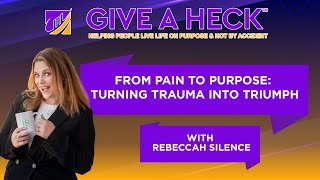
Rebeccah Silence, an incest survivor, discusses how she moved past trauma and built a life of purpose. She challenges the idea that healing takes years, argues that mindset work alone isn't enough, and shares her 4-step practice covering mind, heart, body, and spirit.
Chapters
The pain starts in a moment and it can end in a moment. So I am a little bit controversial with my perspectives and paradigms around how quickly we can heal. But the thing about it is it is comforting to stay in survival. It's not just comfortable, it's comforting.
Welcome to Gibahack. I am your host Dwight Hecht, and for much of my life lived my life in quiet desperation wondering how I was going to pay the bills, take vacations, save for retirement, and one day wondering if I would get off the hamster wheel of life and have purpose. A life that most of society lives which takes us to work, then home, then repeat and pays us hopefully enough just to survive. The harsh truth that most live with more months than money and have no idea how to live life on purpose, not by accident. This ensures the mass majority are living not just financially broke, however, emotionally and mentally as well due to financial pressures. In each episode, I will introduce you to thoughts, ideas, and guests that can help you to learn how you too can live life on purpose, not by accident.
Good day and welcome to Give a Heck. On today's show, I welcome Rebeccah Silence. Rebeccah is a self-healing and relationship expert. She's not just changing lives, she's redefining family happiness for audiences around the world. As an award-winning author, coach, and media personality, her mission is clear and deeply achievable. To ensure every child grows up with healed, joyful parents, and that every couple discovers a love that's not just sustainable, but blissfully transformative. Through her unparalleled expertise in healing generational trauma, Rebeccah turns the dreams of harmonious, love-filled home into an accessible everyday reality. Rebeccah's own story of resilience and triumph and 16 years of client success stories assures you that profound, lasting happiness isn't just possible, it's within reach. I'd like to welcome you to the show, Rebeccah Silence. Thanks so much for agreeing to come on and share with us some of your life journey.
Thank you, Dwight. I'm honored to be here, and I love this show, the give a heck message. Let, let's talk about what we give a heck about today.
Exactly. And really, at the end of the day, As you mentioned before we hit record, it is a play on my last name. And you think about how long I've been as a serial entrepreneur, how long I've been in business for 30-some years. Why didn't I do it sooner? But I had somebody during the pandemic say to me, why aren't you using your last name? And it was a branding expert, actually. I was listening to somebody else's podcast. It was being recorded live and they invited me to watch it live. And then asked questions. There was a group of us and this branding expert by the name of Alexandra Watkins, she said to me, why aren't you using your last name? Hasn't anybody ever told you that? And I had had business coaches over the years, I had tons of people, but really under— people don't understand branding. So Give a Heck was, was something that attracts people, makes them go, hmm, what's this all about? So I decided why not use it? And then I get great people like you that enjoy it and then apply to come on my show. And this is where we're at today. Just because of give a heck. So yes, so Rebeccah Silence, one of the things I focus on, and for those that are new to watching the show on YouTube or listening on one of your favorite podcast platforms, I focus on the origin story because really at the end of the day, we can listen to people talk, but unless we can connect to them, you know, through our heart, our mind, our soul, by their own trials and tribulations, or maybe great things that have happened, not everybody has had, you know, a troubled youth or our troubled, um, experiences growing up. But I find that the more that we share our lives with people, the more they can connect and really listen to what we have to teach. So could you do me a favor and share me your origin story? What key things from your childhood to adulthood that led you to where you're at currently?
Yeah, I think it's a big, beautiful question, and I would just dare to say, as a qualifier. No one is immune to trauma, no one is immune to heartbreak, and nobody is immune to disappointment or life just being painful or, or not going their way. Part of my origin story is at a very young age I really decided I'm not going to let my past or my pain define me. And I didn't know what that meant, and I didn't have those words even for a really long time. But I'm an incest survivor. I grew up in a domestic violence home with an alcoholic parent and a codependent parent, how that typically works, right? And, you know, I knew that childhood wouldn't last forever and that the abuse that I was going through also wouldn't last forever. And I knew there had to be more, there had to be more. And I knew that love was the answer. Again, without having the ability to, to put those words together that concisely, but I decided my past doesn't get to win, my abuse doesn't get to win, my pain doesn't get to win. There, there's something in me that will win and does get to win. And today, all of what I endured and overcame in my childhood is not actually my greatest testimony that healing is possible. I like to say healing isn't promised, but it's possible. And what I mean by freedom, or by healing rather, is freedom, right? So we can be free regardless of all of it. But my greatest testimony is the life I live now. I have survived, but I'm living. I'm living fully. I'm living on my terms. I know how to experience peace and joy even in non-preferential moments. And I have the family and life of my dreams that I created. And what I know for sure for all of you beautiful listeners is if I can create it, so can you.
Oh, absolutely. And, and I know if I remember reading correctly, this is your, this is your second marriage. And the reason I bring that up is people watching or listening, there's the timeline of healing from, you know, childhood to adulthood, or maybe your trauma happened in your, your teenage years into adulthood. There's no defined timeframe of how long it's going to take you to heal. The secret, though, is being willing to want to change, to leave that comfort that you've, you've wrapped yourself in. And that comfort can be still based on getting abused. It can be based on continued trauma, because you've gotten comfortable in it and not realized you're comfortable. So those listening, if you're willing to step out of your comfort zone, and understand it's, it's going to take time to heal. And for Rebeccah Silence, it took to a second marriage to finding the love of her life, as I was reading. And finding her peace and her purpose took time. It wasn't something that happened really quickly, was it?
Well, well, no. And, and here's what's so interesting. The pain starts in a moment and it can end in a moment. So I am a little bit controversial. With my perspectives and paradigms around how quickly we can heal. But the thing about it is, it is comforting to stay in survival. It's not just comfortable, it's comforting. And one of the scariest nights of my life was the first night I spent with my second husband. I was with an equal. I was with somebody safe. I didn't actually know I could survive that, like I could survive the abusers and the trauma I was so used to. It is something we don't talk about enough, that it's really comforting. And there's this sense of power and control that's really an illusion, but it, it feels real when we're navigating the waters. We know we can survive. We know we can survive survival. What we don't know is that we can survive what I call alignment with our own soul. But it wasn't overnight. And, and I think the other point I'll make here briefly to, to your point, Dwight, is it, it doesn't happen fast in terms of like, okay, I understand now, therefore the healing is intact. Healing is so much deeper than mindset and understanding. And I had a master's degree in counseling, a 4.0 GPA, and recreated my childhood all over again in my first marriage. And it wasn't because I wasn't healed or, or capable of healing, or I needed more time to heal. It's because understanding wasn't enough to change my life and to be the one to break the cycle.
Well, yeah, that programming, though you get past it, or we think we get past it, it's— certain things can trigger and turn back on bad programming, right? As you mentioned, the trauma and what you went through in your first marriage, which was directly related to your childhood. I've had that happen myself. Like, I, I, I look at the fact of the, the emotional mental problems faced today, right, because of our past, our childhood, by so many people. And some people I've, I've dealt with that have had great childhoods, but their adulthood is— they married into a circumstance of somebody that was traumatized and now get sucked into it, right? It, and it causes their own, uh, cycle of trauma. So you suffered yourself obviously with your own traumas, as we have discussed, and you turned to alcohol as well as developed anorexia as an adult, right? Who or what helped you realize what you were putting yourself through and get on the track of change through that process?
Thank you for that question. And the honest answer is the only thing that snapped me out of it and knocked me in a new direction was realizing that every time I starved myself or numbed out with alcohol, or tolerated abusive dynamics in my relationship. And by the way, not just romantic. I had dysfunctional relationships with bosses, with friends, you know, it, it wasn't just romantic. What I realized that really was the difference maker and the catalyst for me deciding to have a healed life was every time I reinforced self-harm on any level or abandoned myself or betrayed myself on any level. What I realized is I was letting my past win, and I'm stubborn, and I didn't want to let my past win, and I wanted to have the power and the ability to live my life and experience my life on my terms. I can't control other people's free will and agency, other people's behavior. As cliché as it sounds, it really is never about us. It's a reflection of the person. That doesn't mean I don't have responsibility in the dynamics in my relationships, but what I know for sure is when I am less of who I'm capable of being because of anyone or anything, now my past won. And that for me is a hard hell no, non-negotiable, not an option. And I just decided, because I was leaving a domestic violence marriage with a 2-year-old I'm going to model being as clean and as clear and as healed as I can possibly be, because that is what my child deserves, a healed parent.
Oh yeah, absolutely. But you mentioned, no, I've talked about this a lot, about the associations that help keep us stuck because we're somebody that drinks, or we're— and with that drinking, which is a depressant. We become sad and we communicate or hang out and drink with people, or whatever addiction it is, with people that are like-minded in that sense. They are this, they're this, they have their own trauma, and we're continually— it's like a perpetual motion feeding. And we need to understand to break away from those associations, those connections we have. And sometimes those listening or watching, it can be brutal because it can be close people that you've known for 15, 20 years. It can be family members that you'll literally have to disconnect from because they are feeding you the same type of, of energy that is keeping you down, not keeping you up, right? So being aware of your surroundings and reflecting is a tough thing when you're trying to heal, when you're trying to understand, do I want to heal? Oh, I'm starting to heal. What's causing me to stay stuck and not move forward? It's hard for us to admit that that friend we've known for a long time, or that sister, brother, aunt, uncle, mom, dad, whatever, is, is not helping us, and sever that connection, or at least limit that connection so that we can better enforce what we're trying to do to accomplish. And I see that happening far too often. People— and again, associations just aren't people, for those listening or watching that are new to my show. I just talk about this a lot. What are you watching, right? If you're a person that drinks a lot and you're watching TV shows where at 11 o'clock in the morning they walk into a business office and they're pouring, pouring drinks and having alcohol, don't watch shows like that, right? You shouldn't be reading, um, things about trauma that are negative, that aren't helping you feed your healing life, their healing process that you're trying to do. So many listen to You know, and those again that are watching, I've had people not like me saying this, but if you're a person that's got mental, you're stuck mentally and you have anxiety and trauma, don't watch or listen to true crime dramas, right? Don't listen to a true crime podcast that talks about serial killers and stuff like that. Learn to listen to things that uplift your spirit and make you happy. I don't know if you agree with that or not, but our associations of everything in life isn't just people-based.
Well, Dwight, I think what you're saying— I'll just say in a different way— everything we choose, it, it's reinforcing the pain and our survival and where we're not healed, or it's reinforcing our highest, wisest, best selves and our brightest. Not from a positivity or optimistic perspective, but our, our, our brightest future is available always. And that means the next level version of us that isn't reinforcing our pain. So you're either feeding the pain and avoiding what's possible for you beyond it, or you're in your highest, wisest, best, most healed self, connected to your spirit, blazing a trail you've not likely seen before, that you don't know how that ends. I was just coaching a client in her 70s last week, Dwight, and we were working on her being brave enough to love herself more than she was loved growing up. And it isn't that she wasn't loved growing up. It's that her capacity to love, her 100% capacity to love, was, you know, not the same as the 100% capacity of her mom. Her mom was like at 5% of her 100% capacity to love, but she was only giving herself the 5% her mom was able to give her, which was actually her mom's 100%, if that makes sense.
Right. Of course it does.
What are you reinforcing and how are you living and who you're surrounding yourself with and what you're feeding yourself? It's either healthy for you and healing for you, or it reinforces the pain. And it's not easy, but it is that simple.
Well, those patterns that we learn, though, like you talk about the 5% of the 100%, and then we get guilted into it by society or the committee of they, I call them, like our family and friends will go, Oh, well, it worked for your mom. It worked for your brother. It worked for this person. It's gotta work for you, right? Try harder, right? So they're— they— people aren't really listening to us because we don't understand that their advice isn't what we need. We need advice from people that are gonna challenge us to grow and change. And, you know, the past doesn't have to be indicative of our future. So The 100% of the 5%. The mom was, you know, in that process you talked about. Doesn't have to be them, but to be in your 70s and still want to change. Congratulations to her.
Oh, I said the exact same thing. I am celebrating you. Do you know how many people at your age and stage of life have just resigned? They've quit, right? And what she said to me, it was one of the most beautiful compliments I've ever received in 16 and a half years of full-time private practice work with gorgeous leaders and emerging leaders. She said, Rebeccah, I'm at the bottom of the hope staircase that I have been praying actually existed for the first time. All of what I've done got me ready for you, and I've wanted there to be hope, and I haven't really believed it existed. And now I'm standing at the bottom of the staircase, and I'm just going to need your help getting up these stairs because I don't know where they go. I know where the survival staircase goes. I don't know where the hope staircase goes, but it's here and it's real, and I wasn't imagining it. And And I just was so blown away and so inspired and in awe of her courage and her commitment to getting the most out of this life. She's going to ride this life like Ed Mylett says, until the wheels come off. Thank God. And, and we all have the capacity to do that. And we're not going to be, again, to your point, supported by society in freaking going for it. We're supported in reinforcing our pain. Yeah, it's just a decision beyond, okay, other people aren't gonna get it, may not like it, may not agree. And especially when it comes to our families of origin, they're very comfortable with life as they know it, as we do it in this family. So to be brave and raise your hand and go, I'm going beyond that, not because I'm making anyone or anything wrong, I just want more. We don't need a breakdown to give ourselves permission to go for it. We don't need a crisis, and we certainly don't need societal approval or our family's approval. It's a decision because we want more and we deserve it. And if you want it, you have it in you to create it, I promise, even if you've never seen it before.
Yeah, exactly. We all have the seeds of greatness, and then we just need to learn what's What, what do we need to do to water those seeds and make them flourish? And well, maybe all of a sudden when you think you should be blossoming, you're not. What outside influences are stopping that? And sometimes it's not outside influences, it's, it's just yourself. It's your stinking thinking and you're, you're not practicing things that maybe you've been taught. Like, you know, I teach people different things that they need to use to help with their own emotional and mental trauma. Because as a financial planner, if I can't help them with that, their financials are always in— they're always in uproar, right? They, they never seem to be able to stick on a process of success for their, for their family or themselves financially because their demons, their monsters, their money monsters, their life monsters are just overtaking them. And That's the biggest thing. So if you do learn some— something on how to help yourself elevate and climb and not stay camped every single day, you'll find that if you are a person with addictions and you go back to your addiction, oh, I'll, I'll, you know, I'm, I'm a person that drinks. We'll use as an example, cuz I had somebody on here recently that is a, a coach for helping people that, you know, are recovering or alcoholics and want to get into that recovering stage. And they, they basically said, you know, that addiction, if you decide, oh, you're going to a friend's house and, okay, I'll have that glass of wine, you've broken a promise to yourself where you said, no, I'm not going to do that anymore. I'm on a healing journey to stay away from alcohol because it affects my mindset and it affects my energy. And now the next day, you may think that wine didn't affect you, but it you have a negative thought and you can't seem to let go of it, or you make a wrong judgment call. Your brain is a powerful computer and it doesn't take much for it to feel like you've given up on it, given up on yourself, right?
Yeah. Well, and again, what are you reinforcing? Your self-worth or your insecurities? Your self-love or your self-loathing? And I think there's never enough alcohol, right, to fill the void, to heal.
Never.
The pain, to make the past and the trauma go away. And you can learn how to source from self-love in a way where maybe if you decide to drink, it's a celebration, it's high vibration, or you just don't need it at all. But it is so important to understand, is this decision reinforcing the best of me? Or my pain. And you always have access to choices that reinforce the best of you. And it might be a you you don't recognize. It might be a you you haven't even met yet. Rebeccah Silence is someone I created because I wanted to know I could. And that doesn't mean it's inauthentic. It's— I just think very true that we don't wake up one day and we know who we are as the best of ourselves. And in so many of our cases, we are just surviving way through our lives and trying to figure out what needs to happen to, you know, manage this moment or to live in spite of whatever I am dealing with that, that is difficult. But we do wake up one day and go, this isn't good enough anymore. Doesn't mean you're not good enough, but how you've been living, how you've been treating yourself, how you've been caring for yourself— is it good enough for you? If you're really honest, and if the answer is no, you get to design and decide who you want to be. And that is available to every single one of you. And the hack I have, just to plant this little seed here, is you've got to know what you're living for. What do you want to create? What do you want to do with your life? For so many of you, you want to serve. Well, I'm going to tell you right now, the best way to serve is to love yourself more, honor yourself more, respect yourself more, care for yourself more, so that you don't need the validation from the world that you're doing something with your life. You're doing something with your life. You're already sourcing from wholeness. You're already self-validating. That's a whole different level of impact.
Oh, absolutely. We loving ourselves first and foremost above others is, is so important. And so many people don't understand that. They're always looking for, like you said, validation from others. And at the end of the day, when you look in the mirror, when you go to bed at night and you're looking in the mirror, maybe you're brushing your teeth or whatever, do you like you? Do you appreciate what you've accomplished that day? Do you reflect on the great things that you've accomplished? Yes, there might have been some character-building moments. What did you learn from them? Did you say something wrong? Did you present yourself wrong? What are you going to do different tomorrow? Oh, and I did this great, and this person reacted and responded like that, that lady you were speaking about, that 70-year-old woman. You know, do you feed off the positive, and do you reflect on the negative to make it a positive? What little tools and what processes do you have in place? And if you do have a day where you are— it's more of a struggle and you're not able to shine as brightly as you think you should have, don't beat yourself up. That's one of the worst things when in self-love situations. We beat up too long. Just learn to understand that it's a life lesson. It wasn't a mistake. It was a character-building moment, and you're going to rise above it and learn. And if it's a big struggle, make sure you have a mentor like Rebeccah Silence or myself, somebody that you can text, reach out to, that doesn't even necessarily have to give you an answer, but just be that person that's listening and going— Rebeccah Silence goes, I hear you. I understand, right?
And I see you're great.
Yes. And I see the power and potential of you. Don't let this hold you back, right? Maybe you get to the point where they share what they went through and you can make them look at it a different way, right? Maybe you can pivot that mindset for them, but never devalue yourself and the fact of your growth path that you will be perfect. Like Rebeccah Silence said, you're going to have those moments. You're going to have those processes. They're going to help you continually shine, and you're going to have people within your circle. And it doesn't have to be a lot. Those associations don't have to be a lot. They can be just one or two specific people, and you can live a great life because you'll get to a point where you'll be able to reciprocate to many of these people when they're going through their challenges and struggles. And now you have a complete relationship and a perpetual motion for the rest of your life, whether you're 70 or not. We don't know— that 70-year-old doesn't know if they have 7 years left, 14. They don't know how many years left they have in their life. But the rest of her life is going to be in a moment of content. And don't we all want to live a life of content? I do. Yeah, right.
So it's about content with your own self and your own soul. And do you know what it's like to experience your greatness? Do you know what it's like to demand your greatness from yourself in a moment where you could easily justify being a jerk or just drinking or just disrespecting yourself or the person in front of you. It's so easy to be our best in the moments that are going well, not so much in the most challenging and triggering moments, but it's still possible. And those are the moments where it matters the most to rise into the you, you're capable of being. And what's so interesting about this conversation, Dwight, is it's intangible, but except it isn't. You within you, right? Like, you can know, did I show up? Did I do my best? And some days your best is breathing and chilling and watching Netflix, and some days your best is knocking out a couple chapters of a book or doing some great episodes of a podcast like this one, or listening. Your best is enough when you know you showed up and you gave your all and you and only you, when you go to sleep at night, can know, all right, I can honor and with compassion give myself grace. This was my best today and I showed up. And it took me a long time to be willing at the end of the day to congratulate myself for my best as just a rule, as just part of my evening routine. I go, thank you, God, I'm still here. Thank you, Rebeccah Silence, for giving your all today. And we're going to do it again tomorrow. It was not normal. It was not comfortable to do that as a practice for me for a long time. But now I'm almost unwilling not to because I do show up and I do give a heck. And I did give my all only every single day in the preferential moments and the non-preferential ones. And my God, that has to be enough. And it has to be celebrated because I say so, not because I owe anyone else anything.
Exactly. We don't owe anybody anything. We owe ourselves. The only person I owe in my own life, because, um, again, when I do my gratefulness, I'm praying to God, and the only person I owe anything to is the person that give me life that day, give me an opportunity to be alive, to make a difference and a change, to grow me so that I can serve others. That's the only person that I, that I might feel any sort of sadness when something hasn't gone right that was in my control to make sure it didn't go right. I don't beat myself up, but I ask God, you know, forgive me for this, right? Tomorrow I promise I will do better. And here's why I learned this. I analyzed what happened and I said, or I wrote, or I did this, and I, and I never thought about the consequences of my action of what I did. But now I can think about it tomorrow. I'm going to make it better. Maybe it's that's reaching out to somebody that I, you know, that what I statement did might affect. Maybe it's been a post that, that I should have worded differently and go back and admit your mistakes to yourself makes you continually grow. At least I believe it does. Right. And so many people are, ah, whatever it happened, it happened. Well, you're going to stay stuck. I prefer to be a person that's honest with myself, admit that I made a mistake That means an apology, genuine apology, right? So many people just, oh, I'm sorry. They don't mean it. Learn to be genuine with your words, your actions. Your brain understands, your inner being understands. You'll sleep better, you'll wake up better. And for me, I have gratefulness when I wake up in the morning. Thanks God I woke up. At night, I thank you God for allowing me this day. I analyze my day. I talk to him about it. I have gratefulness for it. I go to sleep, get up, start it all over again because I was given that glorious opportunity to have another day. And if not, I just ask that I go to heaven for me anyway, go to heaven, have my soul taken, right? And be, be able to go to my next journey of life.
Yeah. And I think every moment again is that opportunity to go Am I, am I using this moment to my advantage? And am I clean and clear with me? And if not, I mean, my definition of forgiveness is loving as much as you did before you got hurt. And I think a huge factor in just being frustrated and dissatisfied in our lives, or even suffering from what I call high-functioning unhappiness— we have so many people super high-functioning and super unhappy. And I, I just want everybody to hear, it doesn't have to be that way. And, and you taking on real happiness with you, because that's really what it is, you're clear and clean with you. There's no threat to taking on your happiness. There's no threat to the high-functioning part of your life. But there's a huge threat to the high-functioning part of your life when you're picking and choosing when to be your best for you and for others, when to be forgiving in a way where your heart stays open and you are the best of you. There's a threat to your well-being when you don't pursue that, not when you do.
Yeah, exactly. When we stop moving forward and we become stuck, we live on a hamster wheel, right? You just keep on going to work, go home, get paid. Come home, live for the weekends, live in that trauma, and our addictions take over on the weekends more so than during the week. For many people, we're excited. It's Friday, Saturday, we're still kind of excited. Saturday night, we're like, oh, tomorrow's Sunday, then I gotta go back to— and then Sunday I gotta go back to work, and we're kind of down and sad. And Monday morning starts, and we're, you know, and then we get the hump day. That's not what life is about. That's not what it should be about, right? Yes, it may be a process of having Monday to Friday where some people aren't fortunate, you know, to be able to control their time and other people are controlling it. But that Monday to Friday where they're working, you know, you work to live, you don't live to work, should be happy, should— there should be some contentment. You should be not feeling trapped. And I hear that time and time again from my clients. They feel trapped. They don't like their jobs. They're not happy. Like you said, they're high functional, right? They're sad, but they're highly functional because they've learned to live in that hamster wheel. And that's not what anybody deserves.
Of course not. And they don't like who they're being. When we're unhappy, we don't like who we're being. I think that's a really important point for people to hear. And what I mean by that is, if I've got a couple and I am mad at my partner and they're the scapegoat, I've made the other person the problem. What I know is really going on is this person is changing who they are in the name of trying to keep the peace or have this person be happy with them or want them. And that's what they don't like. It's not the spouse the problem. It's them selling out in the name of love, self-abandoning, self-betraying in the name of love.
And sacrifice constantly, right?
You don't need permission to be true to you, or some life-threatening moment or crisis to go, wait a minute, I don't actually have an agreement with myself for the rest of my life to betray myself in the name of love. I don't betray myself in the name love. And that doesn't mean you're selfish or a narcissist. It means you're true to you, which means you'll be able to attract like-minded people who are true to them, which means they're gonna be a better partner, a healthier relationship. You true to you with someone true to them, that's a healthier relationship. Two people going, I'm not gonna be codependent and abandon me to make this work with you. Actually, I'm gonna stay me I want you to stay you, and then let's navigate the relationship together from there. That's a different level. But I just see it all the time where people think their problem is with the person and not recognizing actually, I don't like me in this relationship and that's the problem. And that doesn't excuse other people's bad behavior. I'm not saying the person didn't do what they did. I'm not saying they're wonderful when they're not. But if you are really dissatisfied in a relationship, you don't like you in that relationship every single time, I promise. And that's good news because you can actually work with that.
Oh yeah. And through working through that, sometimes relationships fall apart. Sometimes they can get healthier. But at the end of the day, the most important person is you. You've got to worry about yourself. And so many people say, well, that's, you know, when you communicate with people that are selfish, they'll tell you you're being selfish by thinking that way, that you have to always give, give, give. That's the way out, you know. Give to your family, give to your friends, and bend over backwards. Like, that drives me crazy when people say you need to bend over backwards. No, you don't. You don't need to bend over backwards. You need to worry about you.
Alarm bells should be going off, right? Yeah, of course. You know, I, I, I just— I love this part of our conversation here today, Dwight, because I'm a, a relationship expert because I know how to not ever lose me in relationship. And that's what I'm teaching people how to heal through so that they're not trapped. And we're only trapped when we're being someone we aren't proud of or that we don't actually feel good about being. And that never has to be the case. We can be the best of ourselves. And so often people throw in the towel too soon in relationships I think we can give people an opportunity to rise and meet the me I am now before we throw in the towel or we take patterns with us. It isn't always gonna be the relationship has to end now that you're your best. I have a best friend of 20 years. She's met 57 Rebeccahs in 20 years, and I've met 57 versions of her, and we just reinvent. There are people that will grow with you and that will honor that you are growing and you're wanting to get as much out of this life as possible and to be fully expressed in this life. And then there are people that want you to be who they need you to be for them to want the relationship. But we don't know if we haven't gone, actually, I have to take responsibility for— I haven't told you the truth. I'm not happy about our sex life. I haven't told you the truth. I'm not really feeling good about how we're navigating this relationship together as married couple. I, I need more. And I'm not saying you're doing anything wrong. I'm saying I have to stop pretending I'm happy when I'm not. I have to stop pretending I'm happy when you're happy, and that's the metric. It's not real for me. I want to be happy. I want you to be happy too, but I want to be happy. And I've been sacrificing me so that there's this illusion of a peaceful, happy relationship here. You know, if you haven't gone, I need a reset, I need to reinvent with you, are you open to that? We don't know. And take responsibility for— you've been people pleasing for 20 years in the marriage, so your spouse thinks that's who you are, that's who you've shown up as. So now when you change the game, they might push back a little, not because they don't love you, but because they're like trying to catch up. It's like when a couple's getting divorced and the kids find out. Well, the couple's been planning it for years. The kid just found out. Like, they're going to need some time to catch up and some support along the way. The same is true in taking on reinventing any relationship. And the thing is, if you haven't taken on reinventing it at your best, you don't know if the person would grow with you or not. So I always say unless it's a very abusive situation or you're dealing with someone in active addiction, committed to active addiction and not to a healed, healthy relationship, we don't know if the relationship can work or not until you've tried to reinvent it.
Yeah, and it'll never be 100%. Um, and what I mean by that is we can't— now that we've worked on a relationship and we've come to terms and we've reinvented what our relationship stands for. Like you said, you admitted that you've been a people pleaser for 20 years, or whatever the case may be. You can't expect 100% perfection. It— I've also heard that from people. Their, their expectations are now too high. People are still gonna trip, they're still gonna fall backwards. You're gonna still trip, you're gonna fall backwards sometimes. And you just— the communication is so important with that person. Or a group. It can be a group of people where you just say, you know, I just realized I did what I said I wasn't going to do anymore. And this is what's occurred because of it. I seen your— I seen when we talked hours ago, I just realized your body language, that I did something that affected you. And let's talk about it. Communication is so important. So many people, just avoidance is their solution. But that's not the answer.
Well, and so many people are fighting with ghosts. Their relationship dynamics as adults in their adult relationships, if they're dissatisfying, are directly correlated to relationship dynamics that they grew up with that were dissatisfying. And if we don't get— wait, I'm fighting with ghosts, I'm expecting more of the same, therefore I'm creating more of the same if I'm unhappy and dissatisfied— that's okay. But going It's actually not a bad thing to admit, I'm used to these dynamics I have no use for anymore. I don't know what's beyond them. I don't know what else is out there for me, but I know I don't want this anymore. And that will mean you're going to have to be honest about what you need, how you feel, what you want, and who you are now, fearlessly understanding this person. They may or may not want to rise and grow with you. You, but it's still worth going for. And in so many cases my clients experience, the relationships make it. And if they don't, they can at least end with you respecting you and the other person, even if the other person isn't respecting you or themselves. And they're never going to respect you more than they respect them, by the way. This is why, like, the more healed you are with you, the more you are practicing self-love and compassion and just honoring yourself and living authentically. The more you do that, the more you attract people that do that, the, the healthier the relationships and a whole next level of intimacy that's available to you emotionally.
Yeah, I agree. There's, uh, and at the end of this, and we'll go on to the next thing, is that not everybody is designed for to be in your season of life forever. Sometimes it's just You know, like you mentioned, I have people in my life, somebody that's really close to me, but I put more energy into the relationship than they do as a friend for 30 years. Well, I've gotten to a point where I'm tired of that. So the relationship has to be redefined. I need to communicate with them about where I'm coming from, that I'm not going to be that person anymore. And do they want to continue on with the friendship in a different way, in a different light? Are they willing to work at it? And if they are, great. If not, Well, time for the next story of my life. Not even the next chapter. A chapter involves a flowing story from the past. I'm starting a new story. I don't even believe in that phrase that let's start a new chapter. No, I'm starting a new story. Right?
So it's a series of books.
Exactly. 100%. So one of the things that learned behavior due to family trauma is real, as we've been discussing. And still so many, as we, as we again, we've been discussing, don't know how to heal oneself and move on. The stories they tell themselves many times are stories that are broken. There's— the truth within that story isn't always correct. They've done it as self-protection, and they just keep on telling them that same story. And, you know, due to their past— what would be the most common stories or misconceptions that people believe about healing family trauma that you've experienced?
Oh, thank you so much for asking that question. I wrote my book Coming Back to Life A Roadmap to Healing from Pain to Create the Life You Want, all about using trauma to your advantage and really learning what you have control over in every moment is the option of alignment or survival. Alignment or survival. And, you know, I, I think the most important thing to understand in terms of misconceptions when it comes to healing is There are so many people that think certain things just can't heal. There's nothing that can't heal. I'm a cancer survivor. 5% chance to live. Thank God for my abusive childhood that taught me how to be resilient and how to commit to life regardless of the moment I was in. I had this moment when I was sick, Dwight, when I realized This isn't a reenactment of my trauma. This is my trauma coming in so that I can use it to my advantage because I know how to tap into a commitment to life regardless of circumstances. I know how to tap into connection to what I call God so that I can get guidance beyond me. Divine intelligence has way more data than me and can guide me. I can get Rebeccah Silence out of the way, connect to my spirit, connect to God, and get guided. I learned that. I have that in me. So the number one misconception is there are some things that just can't heal. The second, we touched on a little bit earlier, but I'll just emphasize it a little more here. The second misconception is that healing has to take a bunch of time. No, it doesn't. It has commitment that will allow you to be with the pain that maybe you didn't think you could heal, but the pain started in a moment. It can end in a moment. You don't get to keep it. Unless you nurture that healing. And again, my definition of healing is freedom. And then the third thing that I'll just say— that could go on and on— but the third biggest misconception is it's mindset work. I'm sorry, most traditional therapy fails because you're trying to heal emotions through the mind. What really is needed when it comes to healing, in my experience, what saved my life when I was sick, is what I call the practice of emotional healing. Spiritual work. It's emotional work. Mindset and strategy won't be enough.
Yeah, the, the thing is, is there's people listening and you don't necessarily believe in God. Maybe you're atheist, maybe you're agnostic, maybe you're spiritual in a sense that you worship trees, worship nature. And I, you know, at the end of the day, when you talk about nurturing and spiritual. It's your spirit inside. It's what is your belief system? What is your core values? What makes you sing? What makes you smile? What makes you strut a little bit more when you're walking? What is your spirit, right? What is your spirit? What is your— it's not always based on like, I'm being a Christian and I believe in God. And it isn't— that's my— that's mine. That's not yours. It doesn't have to be yours. Whoever's watching or listening to it, you— it can be whatever. But you need to work on your energy, your inner self, your spirit, and, and accept the fact that maybe it was damaged. Maybe it needs some work. Maybe you've been working on it and you, you're not— you have a higher expectation than probable at the time because of what extraordinary circumstances are crushing on you. But you're worthy. You deserve to grow and get past all the trauma that you've been experiencing. Your, again, past doesn't have to be indicative of your future unless you allow it to be, whether it's that family trauma, you know, that, and you don't, and you've been told that, oh, you just accept it. You're not gonna, you know, this was Last generation was like this. The generation before was like that. Why do you want to change? Don't let those outside voices crush your internal growth, your spirit, your joy, your happiness. I call it my internal— I have that fuzzy feeling. I have that goodness, like I'm talking with Rebeccah Silence, and I can feel that glow inside of me, that happiness. That is my spirit that I need to feed and continue to— for me, outside of that spirit, obviously, is God. But I need to have that energy, that happiness with every moment of my life, every day of my life, every conversation I have. I need to look at the good that I'm getting out of it. Does it make me feel good? Is my spirit feeling good? If it's not, well, reevaluation time. I do a lot of that. I don't know about you, Rebeccah, but I evaluate every day.
Oh, I love what you're saying here because there isn't a right or a wrong way, but there is an option of connecting to your spirit, which I will controversially point out, in my experience and opinion, your spirit has never been broken or threatened. Your heart— you aren't broken. Your heart maybe is, maybe has been, but your spirit, that's something. And, and there's nothing more powerful than your ability to connect to your spirit. My company is called Inspired Results, Dwight, because I want people to understand they can be in spirit, connected to their own spirit, regardless of results. And when we're connected to our spirit, a clear channel, able to access our spirit regardless of anything going on outside of us or the moment we found ourselves in, that is what I believe true healing is and where the true freedom I'm talking about when I'm coming to— when I'm discussing full-on healing, that's what I'm talking about. The freedom to connect to my spirit regardless of results and to be plugged in to me. Is your soul singing? And it can be. And, and I get it, you've been through a lot, and you're likely going through a lot right now. But let's measure our success based on how connected we are to our own spirit, not anything else external.
Yeah, exactly. We are all a work in project, even when we do think we've reached that pinnacle moment of, of, uh, understanding. You haven't. That's another thing I will add. I think we are the rest of our lives. We're working on ourselves. So the day we take our last breath, and we just got to learn to love, love ourselves. Enjoy. Like, like you said, our spirit and our heart can be different. I just, I gauge myself on my energy, right? And how am I feeling? Right? I gauge that. I reflect multiple times a day. Some people only reflect once a year. I reflect multiple times in a decade or when there's a crisis. Yeah. I reflect constantly, twice a day at least, minimum. Morning, night, right? Sometimes during the day because, you know, we get off a communication call with somebody or with a client, or I have interaction with my family, one of my grandkids, or I'm dealing with something and I just, I, I sit back and go, does that deserve the energy I'm going to give it, or did I just need to hear it and now I need to like toss it away, right? We need to get to that point in our lives too, is understand what to accept, internalize, resolve, or what do we just deflect and run away from, right? Sometimes we hold on to things and are angry about it when really at the end of the day that person or circumstance that made us that way is not thinking the same about us. They've already moved on.
They didn't make us that way, Dwight. We chose, we chose to be that way, but we're a vibrational match for that experience we're having until we heal it. So if it wasn't them, if it wasn't this moment, this person, this trigger, this situation, it would be something else until it's healed and the scar has healed over. I'm about to, in 2 weeks, weeks go into my 20th and 21st cancer-related surgeries, and I'm healthy. There's active cancer right now, but I had melanoma and it was so aggressive I had a 5% chance to live. And any area on my body, they're like, Rebeccah Silence, this is sketch. What do I know? I don't have to agree to the surgery, but what I also know is I am very willing to powerfully choose to have the surgeries that help me stay healthy, right? But I'm not being victimized. I am at choice. And the point is, I have access to my spirit no matter what. And anything in the way of my access to my spirit is an opportunity for me to heal. And nobody caused it, and it's nobody's fault. It's not the circumstance. Cancer, neutral, except for the meaning I put on it, expect— except for the narrative I spin. And that's all information about how healed I am and where there's more healing to do. So, Dwight, would you be open to me giving our gorgeous audience a quick 4-step process to be able to listen there so they can access their spirit? Because I, I think—
Absolutely. Go for it.
This is the game changer differentiator. You know, if you're here listening to this gorgeous podcast, And if you give a heck, you're one of the 1% of like the 1% that actually care about personal growth and self-development. And if you've stuck with us this far in this episode where we're talking so big about really self-responsibility and what you have control over and what you're gonna choose, you're, you're elite. You're an emotional billionaire in the making, or you're already there. You care about it, right? So how do you actually get clear and connect to your spirit? Here's my 4-step process. Process. And this is what I learned in a cancer bed. I call it the practice of emotional healing. This is what saved my life. I was emotionally clear so I could connect to my spirit, so I could be guided by my own spirit and something bigger than me to still be here with all of you today. So it starts with the mind. I want you to listen. This is a 4-step listening process to what your mind has to say, so that just like Byron Katie says, you can question it. What are your thoughts? What are your beliefs? What are, what are your judgments? And are they empowering or disempowering? That's where we start. And regardless if they're empowering or disempowering, we validate, we acknowledge, and we nurture the truth of the headspace we find ourselves in. But that's just the beginning. From there, if I'm having a thought, okay, I just got a cancer diagnosis, or okay, this just happened recently in my own personal life. The doctors are recommending surgery on 2 more spots on my body. All right. What goes on in my head about that shit? Another surgery or— okay, I have a choice. I don't have to do it. Well, we'll see. But I'm going to acknowledge the fear. I'm going to acknowledge the judgments. I'm going to acknowledge the beliefs, whether they're rational or not, and give them a hug like a newborn baby that's crying and just needs a little love. From there I go into my heart. How do I feel? And I teach there are only 5 emotions. Everything else is learned. Anger, fear, grief, joy, excitement. Human emotions, natural emotions. All right. How am I feeling? What are my feelings about what's going on versus the emotions underneath them? I have to feel to clear if I want to be clear. So maybe I feel betrayed, maybe I feel violated, maybe I feel abandoned, rejected, jealous. Okay, I, I connect to my heart so I can feel my feelings about what's going on so that I can get to the emotion underneath it that needs to be released and expressed. And this is a lot. You might want to go back and listen to this part of the podcast again, but I just want us to understand we start with the mind We validate it. We go to the heart. We validate the feelings about what's going on. And then we get to the emotion underneath it. From there, now I can connect to my body. I can be with the emotion. I can move through it, get that emotion in motion, connected to my body, clear the emotion. Now my body's clear. Now I can access my spirit. My head will tell me what I'm thinking. My heart will tell me what I'm feeling. My body will tell me what I need. My spirit will tell me what I want and what the next correct choice is. And I don't encourage anyone to get too far ahead of themselves. Know what you want to create, big picture with your life, but all that you really need is just what's the next correct, most aligned step for me, which in my experience only my spirit can give me that information. But I always have access to it if I'm clear mind, heart, body. Now my spirit will guide me to the next choice, and I let that be enough. And then I let my best be enough. And the absence of our humanity or emotions isn't the goal, or triggers, or challenges, or people no longer behaving like jerks. The goal is I'm emotionally clear. I connected to my spirit. I made the next best choice for me, and I let that be enough.
Yeah. Um, I talk about this. I got an actual start of a complete chapter starts and talks about the spirit, and I reference the Holy Spirit, obviously, because of my Christian background. But so many people well, maybe you don't call it your spirit. Maybe you call it your internal compass. Maybe you can call it so many, so many different things. I don't care what you call it. Start listening to it. Start, you know, and, and I'll, I'll go to bed and I'll pray. And, you know, for me, my spirit answers me because it's directed, you know, like I believe in the Holy Trinity. So obviously the, the spirit God and Jesus are within, within me, the spirit comes to me and gives me the answers that I might pray to God, right? Maybe I'm praying to Jesus for an answer. And I'll get that answer in my— I'll wake up and, and the answer will be there and I ignore it. And I'm going, you know, and I'll be still going through that circumstance, that character-building moment, and I'll talk to my spirit again, right? And not maybe not directly. Again, our spirit doesn't necessarily communicate directly, depending on what your beliefs your belief system is. Maybe you talk to God like I do, and God says, okay, Spirit, wake this guy up, give him a little bit of a smack, and he needs to respond this way. And it's because I'm not listening. I'm not listening to what the answer is. And after, you know, sad to say, sometimes 3, 4 times of talking out loud, praying about it, I finally have that lightbulb moment and go, huh, Oh, okay. That was the answer 4 times ago, 3 times ago. I'm gonna have to give that a shot. And usually it's right. Usually that compass that some people call it their internal compass was leading true north and giving me the right answer right away. And I'm just stubborn. So that's one of the things that I found can stop a lot of people from grow— growing, right? There's our, our nature to be stubborn, to resist. Can be a big boat anchor in our lives, right?
I mean, the pattern repeats until it heals. So like I said, the cheese just gets moved. And I really believe— here's another misconception when it comes to healing. It's not that health is the issue, or your marriage is the issue, or money is the issue, or sex is the issue, or your spirituality is the issue. There's an emotional wound showing up in an area of your life that if you don't heal it, it will pop up again like whack-a-mole. And again, let's make it simple. It's not easy, but what I think everybody wants to be when they grow up is loved and happy and sourcing from their own wholeness and spirit and connection to whatever they believe in, that divine love that exists that we have the ability to rest in the arms of no matter what. I think that's where we're all ultimately wanting to go. We want depth, We want intimacy, and it doesn't just happen. It, it's about your relationship with you and your spirit that will allow you to experience and access all the rest of it, all the good that life has to offer you. And it isn't about anything external that now it's happening and now you're good, that you can measure, right? There's no amount of money in the bank. There's no, you know, amount of orgasms or the right jeans size, and then now all of a sudden you're gonna be good with you. It's always going to be something until you're good with you now, with life as it is now. And that really is possible to achieve.
Oh yeah, it is. It's, it's hard to get to a point sometimes for people to look in the mirror and just go, I love me, I love what I look like, whether or not you're, you're, uh, you know, stick skinny, or you're BBW, big, bold, and, you know, you're beautiful, whatever you want to call it. It doesn't matter what other people's image of you is. If you don't like yourself, there's— it's a struggle, it's a challenge. And again, we've said this time and time throughout this whole podcast, we don't know the timing of this for you. We don't know the timing for ourselves even because we've reached specific pinnacles or plateaus, and then we climb some more, Rebeccah and I. But we don't know when this journey is going to end because it probably never will. The secret here for anybody listening or watching is start the journey. Take that baby step, right? Become vulnerable and be honest with yourself and say, you know what, I'm sick and tired of being sick and tired. Where do I go next? Hmm, I'm gonna go and get Rebeccah's book. Hmm, I'm gonna click on this link and I'm gonna reach out to Rebeccah. Hmm, I'm gonna get Dwight's book. Maybe it'll help me in a different way. He's got a different perspective. Give a heck and get both books. Maybe that'll really make it sure it's in your lives, right? Yeah. But speaking of books, I'd like you to share before we wrap up the podcast. I'd like to know more about your book. So Yeah. Again, tell the audience the title of it, where they can reach it, and what they can expect when they actually read it, please. Absolutely.
All right. So the book is Coming Back to Life: A Roadmap to Healing from Pain to Create the Life You Want. And the reason I called it Coming Back to Life, it's not about my story of survival, actually, in the title. This is the phrase thousands of my clients in my private practice have said to me after they work with me. I hear it all the time. There's life before working with Rebeccah and there's life after. But every time they say, I came back to life, and in many cases they didn't even know they weren't fully living. So I do share my story in this book to connect you to yours, and I share how you can connect with the you you want to be and the life you want to be living. And we all can plug into our spiritual GPS how we want to feel. If you don't like you, you don't like how you feel and you can feel how you want to feel. I promise, literally, no matter what, you can be someone you're proud of. I promise, literally, no matter what. So I'm so grateful to my beautiful agent and my publisher for this book. It's won several awards now, and it's here to help you, guide you home, because I don't believe there's a right or wrong way to live. I believe there's what works for you. There's the right direction for you, and only you can know that, but you can find it. At the end of every chapter in the book, do I have exercises to help people actually integrate? Because again, my work isn't about mindset and strategy. It's about integration and you rooting and anchoring in deeply to your own spirit and knowing how to do that and knowing that it's always correct to do that and it benefits everyone. Around you only, always, when you do.
Oh, awesome. That's the best type of book, though, that starts out with your origin, right?
Yeah, it does.
It starts out with your origin and then shares processes and steps that you've utilized to continue to be. So, because so many of us in life are camped or, you know, on that hamster wheel of life, and we feel stuck. And like we talked about, we go to work, go home, go paid, and then we spend the life, life of living through addictions. Again, addictions aren't just alcohol. It can be drugs. It can be porn. It can be watching, binge-watching television. It can be, you can be addicted to sadness. You just like it.
Drama.
Yeah. Sadness, drama. At the end of the day, right? That my book's the same way. There's a lot of commonalities to what you say. I'm the same. My book starts out, this is my origin. This is where I started. This is what I utilize. This is how I've helped myself. This is how I've helped families for the last 21 years. This is now where I'm at in my life. And, you know, good, bad, or ugly, hopefully it's something that can be digested easily. My book's not very long. I'm not sure about yours. Mine's like 140 pages, maybe 150 pages. I, I could— I should be able to tell you, but I, I don't recall. All I know is that it's, it's, it's not too much, but it's enough hopefully to be a catalyst to help people change. And that's what your book sounds like. It's enough for them to believe in themselves enough that they can either decide to utilize your services or they can go get help, right?
Well, and my work isn't about more is more. Like, I, I tried to get to the point with the book. In my course, for example, I have a course called the Emotional Survival Kit that you can get at rebeccahsilence.com, and it's just 7 20-minute lessons. It's the fundamental I want to get to it. I want to give you the best of you and what I've got to help you access the best of you quickly, efficiently, effectively, in a way where you can feel it, not just understand it.
Yeah, that's awesome. So, Rebeccah Silence, if you had to give our listeners one last closing message, what would you tell them in regards to giving a heck? And never giving up.
I would say be careful with each other's hearts.
Wow. What a powerful statement. Be careful with each other's hearts. Because at the end of the day, we can love and become and love ourselves and learn to love ourselves. But don't forget others. Right? Because my whole thing is, yeah, my whole thing is, you know, God, if I wake up tomorrow morning, allow me to continue to grow as a person so that I can continue to serve others. And that's what I say. Very simplistic. Help me to grow. If I've been given another shot tomorrow morning and I wake up and I open my eyes, please let that be a day now that I continue to grow as a person so that I can serve others. So, yeah. Careful about other people's hearts. I love that. Thank you.
Be careful with other people's hearts.
I love it.
Number one thing I want.
Put on a t-shirt.
Yes.
Put it in a t-shirt, put it, you know, and start selling it on your store. And I think that would be fantastic.
I'll call my designer, actually.
Yeah, I would, I would, I would do it, honestly. And then I think, as a side note, nowadays you don't even have to order and have a room with 5 boxes of shirts. There's on-demand places that people can order Rebeccah's shirt and they'll print it and send it to them.
Yes.
I like that. Thanks for that. So our time is almost up, and I want to respect our listeners and your time. However, before we end, could you please tell the listeners what's the best way to reach you? Did you talk about your website, but reaffirm that and anything else that you'd like to share in regards to how people can easily communicate with you?
Yeah, please visit me at rebeccahsilence.com. Rebeccah does have an H. R-E-B-E-C-C-A-H. I've got a gift right on my homepage, this free masterclass, The 3 Must-Know Secrets to Heal and Save Your Family, if you're interested in that. But you can also just get in touch with me at Rebeccah Silence, YouTube, Instagram, Facebook, LinkedIn, all of the social media platforms, TikTok. I, I'm all over all the channels at Rebeccah Silence and would love for you to follow me subscribe, message me, let me know where you're at. Let me know if there's a takeaway from this particular episode of the fabulous Give a Hack podcast that touched your heart. I want to hear from you. I'd love for you to be a part of my community, and I'm so honored, Dwight, to be part of the Give a Hack community now. And just thank you for the work you do in the world and for having me today and for this conversation.
Yes, you're welcome, and thank you for giving and investing your time because that's another thing people devalue so much is we can't buy that time back. So you've invested some of your time and your knowledge and your energy, and I appreciate it because the number one student of my podcast is me. So thank you, right? I appreciate that. And those new to the show that are watching or listening, go to giveahack.com, go to the top, hit the podcast tab and go in and you'll see Rebeccah's smiling face. And below that you'll have the abbreviated show notes, which will give you a breakdown of the podcast and what you experienced or are going to experience. Plus there'll be all the links to her social media as well as to the website that she mentioned. So one-stop shop. You don't have to remember how to reach out to Rebeccah from listening. You can go to giveahack.com. Those that have been listening to the show, I know you've been there a few times. Go back and check it out again. Check out Rebeccah's information, click on it, connect with her on social media. Your world is what you choose it to be. Your associations are what you choose it to be. And Rebeccah would be a great association for you to have in your life. So thank you. Any last comments you'd like to give, Rebeccah, before I wrap up the show? Jill.
Just remember, healing is possible, and happiness— high-functioning happiness— is accessible. And you connecting to your spirit, that's the medicine.
Oh, absolutely, 100%. So thanks so much for being on Give a Heck, Rebeccah Silence. I appreciate your time and sharing some of your experiences so that others too can learn. It is never too late to Give a Heck.
Thank you for taking time out of your day and listening to Give a Heck. If you find value, I'd appreciate you sharing with your friends and family so they too can learn how to live life on purpose, not by accident. So you do not miss the next episode, please subscribe on your favorite podcast platform and please also post a review. I look forward to reading your comments. This has been Dwight Heck. If you want to check out other podcast episodes or today's show notes, please check out my website, giveahack.com. And until next time, together let us all strive to give a heck.
More from Rebeccah





Free 5-Day Live Online Bootcamp for Mothers, August 24–28 4 PM EST. Replays available #shorts



