Healing Generational Trauma + Resiliency with Rebeccah Silence (part 1)
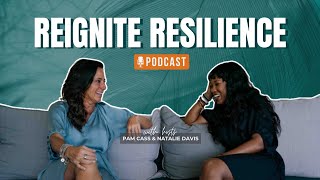
In this episode of the Reignite Resilience podcast, hosts Natalie Davis and Pamela Cass interview Rebeccah Silence, a trauma‑healing coach, author, and founder of the Unsilent Woman movement. Rebeccah shares her personal story of growing up in a domestic‑violence and addiction‑riddled home, surviving a violent marriage, bankruptcy, and cancer, and ultimately breaking the generational trauma cycle. She defines trauma as "heartbreak" and explains why merely recognizing or understanding trauma isn’t enough; true healing requires a conscious break of patterns, which she frames as gaining freedom. Rebeccah introduces several original concepts: "high‑functioning unhappiness" (the hidden, unaddressed pain that high‑achieving people carry), the distinction between a "generational curse‑breaker" and a "generational healer," and her step‑by‑step roadmap presented in her award‑winning book Coming Back to Life. She describes her coaching methodology—identifying age, trigger, and wound, then dismantling it—while emphasizing community support (the Unsilent Woman movement, her book club, and spontaneous help from friends). Throughout, she stresses that healing does not require a crisis, that alignment should replace achievement as a success metric, and that resilience is an innate resource everyone possesses. The episode ends with a call to listeners to apply these ideas, subscribe, and share the podcast.
Chapters
All of us reach a point in time where we are depleted and need to somehow find a way to reignite the fire within. But how do we spark that flame? Welcome to Reignite Resilience, where we will venture into the heart of the human spirit. We'll discuss the art of reigniting our passion and strategies to stoke our enthusiasm. And Now here are your hosts, Natalie Davis and Pamela Cass.
Welcome back to another episode of Reignite Resilience. I am your co-host Natalie Davis, and I am so excited to be back with you all today. And joining me, of course, is Pam Cass. Pam, how are you today?
I am fabulous.
I'm just giggling to myself because we were just complaining about daylight savings time and how the light is just not perfect this time of year when we're trying to do these videos.
Exactly. It is not working in our favor. And I mean, it's just like another reason, quote unquote, for us to actually have like a studio space. I mean, that's just it.
Okay, 2025. Well, that's like on our— that's on our plan.
We'll get—
Exactly. Nature is on our side for that. We're going to knock that one out.
Nature has spoken. The universe has spoken to us.
Exactly. Yeah. Recording in the summer is fine. The sun is usually up and bright and beautiful. And as we get into the winter and the time of day that we do these recordings, typically, um, typically Pam and I have already put in a full day's work worth of work, like, you know, our, our jobby jobs, as I like to call it. And then we do our podcast, which is our passion project after that. So, um, the sun is on its way down. Pam and I Although, or not. So we are here to bring you—
not, we're just getting started. And what the best way to end our day or work day is? I wouldn't have a positive— fills me with energy and gets me going through the evening.
So I love it. Exactly. Exactly. And our guest today is also feeling our pain because they're also in Colorado. So that's nice.
Yeah, we're neighbors.
We didn't even know it. So, Pam, why don't you tell our listeners who's joining us today and we can dive right in.
Absolutely.
Well, we are so honored to have with us today Rebeccah Silence. She is not just challenging or changing lives. She's redefining family happiness for audiences around the world. She is the world's leading coach for emotional healing and relationships. She is the author of Coming Back to Life, host of the Healing Is Possible Experience and the Tougher Together Breakthrough Podcast, and the creator of the Emotional Survival Kids course. Rebeccah teaches us how to become our own healer, how to love and trust ourselves, and how to be our best for others. I absolutely love this, such an incredible topic, and cannot wait to dig into this. So welcome, Rebeccah. Thank you so much for being here, and I'm gonna hand it to you and share your story with us.
Well, it's a wild one, so buckle up. Thank you for having me. And, you know, I, I've been told my name's Rebeccah Silence. The name is Resilience. So it was super fun to be invited to this show. And resilient is never a word I identified as until it was undeniable that if I had nothing else, I had resilience.
Mm-hmm.
And I want us all to remember that if you have nothing else, you have resilience. Whether you're tapping it, whether you believe it, whether you know how to turn the volume all the way up on it, it's freaking there and it's not going anywhere. Just like the light in us that no daylight savings time can take away. Right. You know, and my story is one of a journey to becoming a generational trauma healing master because of where I've come from and what I've survived. And, you know, what I think is most important, my story is not unique. We all have trauma. And I define trauma as heartbreak, right? So no one's immune and almost nobody officially heals it. What we learn how to do is manage and cope. What we learn how to do is love in spite of and lead in spite of and live in spite of with that resilience. But we don't know how to clear it. So at a very young age, I decided, why are we not behaving better? Why are we not caring about the impact we're having on others? And I'm talking like 4 years old. I hadn't understanding, growing up in a domestic violence home, growing up in a home riddled with addiction and every form of abuse. It just didn't make sense to me that people weren't choosing better and differently. And often the generational trauma healer in the family thinks something's wrong with them because nobody else seems to see the possibility that is so clear. So for a long time, I had this vision of what love could be and what love should be, and I was really confused, and I was really invisible, and I was really shut down to the point where later I had already tried to master human behavior and learned a lot. I had a master's in counseling. I had a 4.0 GPA. I was gonna do it differently. I worked at the state psych hospital in Denver, Fort Logan Mental Health Institute, 300-acre facility. I was going to figure it out. And you know, when I was working at the high, the hospital, I thought these people aren't crazy. They don't know how to manage their emotions. Didn't matter all this understanding I had. I married a guy with the last name Silence, and the marriage became domestic violence. And I had a 2-year-old that without her, I don't know if I would have ever left or become Rebeccah Silence. So the worthiness wounds that I had, that I must not be seeing what I'm seeing, I must be doing it wrong, I must need to be better, different, more for your bad behavior to change. Part of me got stopped in its tracks when I had a kid in the similar environment to how I grew up. So what I like to say is understanding trauma is not enough to break the cycle. Yeah, it took me in a domestic violence marriage with a kid, leaving, going bankrupt, foreclosing on the house, having to surrender my vehicle, pay my last $800 to the school secretary at the, the job I was working at as a school counselor. We named the van Rose the Unicorn. It had no heat. I had to figure it out, and I did. But I think What's more important than all of this trauma I've overcome and actually healed and broken cycles around is the life I have now is the testimony that healing is possible. My second marriage is my dream come true. I tell people and I coach people every day, have a magically delicious love story, have a magically delicious experience of family, you know, and we've been through it. I beat cancer during this marriage. We had another baby. He went bankrupt. He's, you know, changed jobs. Like we've had all kinds of different things. He had a child he gave up for adoption in his early 20s that found us the first week of quarantine and is now fully meshed into our world. Like, when I'm talking about trauma healing, I want you to get how freaking good it can get. So that's my long answer of, you know, the Reader's Digest version of my story. Wow.
Yeah.
So you were able to break that generational trauma that you had seen in your, your life.
100%. 100 freaking percent. 100%. And I help people every single day do the same thing. I coach the generational healer, and it's not easy to work with me because we have to get into what's the cycle, pattern, trigger, wound, hurt, whatever flavor name you want to give it. What age did it start at? What was the event? What emotions got stuck? And it feels like you're dying. When you heal through survival. Nobody's gonna tell you that, but it literally feels like you're dying. Yeah. You're not. You're letting go of who you're not. Mm-hmm. Yeah. And now you can be reborn. So yes, I have broken the cycle. That does not mean I'm a relationship expert because everybody treats me how I want, shows up perfectly. It's, I know how to not ever lose me again.
Yeah.
And I stay me. And you get to do you, boo. But I'm going to stay me. And I'm consistent AF.
Yeah. Love that.
So—
Well, you mentioned being able to recognize it and being able to work through it are two different things. Because even in your own personal journey, you recognize the trauma at age 4, which I think that's such a heightened level of emotional intelligence to see what's going on without getting into all of the specifics. And then fast forward to being married, having a child, and realizing this is not— we're not going to continue this cycle.
And that's—
is that when you made the choice that the work needed to begin?
Yeah, you know, it was wild. Women are so amazing. And I've also got the Unsilent Woman movement, so you can check out @theunsilentwoman on Instagram, theunsilentwoman.com. But you know what happened was I thought I had everybody fooled. I thought I was a really good actress.
Okay.
I had nobody fooled. So I'll never forget, like, I have goosebumps on my scalp right now. You know, it's good when there's goosebumps on your scalp. Sitting down with my book club and telling them I'm in trouble and I need help, and none of them were surprised. Yeah.
Wow.
And I almost fell out of the chair. And within a week, these women and 40 other people, like, they brought their spouses. We had 40 people show up at my house. To move my kid and I and my dog. And within 4 hours, I was in a new apartment. Window treatments were hung. There were new tires on my car. That place was unpacked and put together, and we were in our own safe environment.
Wow.
Wow.
The power of your community.
Yes. The power of being honest.
Yes.
Right. First with yourself, then with other people. And what you're saying, Natalie, is true. Like, it's— it's— you can recognize the trauma, then you can understand it, but neither are enough to break the cycle or the pattern. And I am the coach that is a lot of fun. Like, I deal with the heaviest, hardest cases that nobody thinks can heal. I'm like, you haven't tried me yet then. And we lighten it up. And, and my definition of healing is freedom. So you have to recognize something's got to change. And we don't wake up one day and know who we are. I'm sorry, it's not true. We wake up one day and know something isn't right. I'm in survival, right? So the recognizing is so important. Then the understanding, it's crucial, because how do I break a pattern or be intentional and I don't understand where I was coming from, what happened, why it happened, and what I want to be different? But the healing— I define healing as freedom. That's the part most people aren't trained to actually facilitate someone through in a way where the cycle is bye, bitch.
Yeah.
Yeah. Oh my gosh. That's huge. And I think it— one thing that, that stands out to me, Rebeccah, as you talk about this and being a generational healer, um, I love the power that comes with that, with saying that you're a generational healer, because oftentimes the term that we hear is that we're that someone is charged with being the generational curse breaker, right? And so tell me your thought on that. The same, different, same mission, same purpose. What are your thoughts on that?
Here's the deal. I wrote Coming Back to Life. It is literally a roadmap. So if you are listening to Pam and Natalie and I today and you are like, okay, this sounds great in theory, but Rebeccah must be an anomaly, or I don't know if I have it in me to like deal with this shit because doesn't that mean it's going to get a lot worse real fast? Like whatever you're thinking, this book is the how-to. It is the step-by-step. It's won best self-love book in the world, best self-worth book. It's won awards because I tell you what to do to find your way forward. Right? So let's differentiate between generational curse breaker and, you know, generational healer.
Yeah.
So I don't think trauma means less of life.
Mm-hmm.
And I wrote Coming Back to Life because I wanted a book to be out there that turned the trauma conversation into an empowering liberating conversation. Because most of the time when we're talking about trauma, it is a very disempowering conversation, and it's all about managing and coping, and it implies now you're gonna have to have less of a life.
Yeah.
Right. And my approach to trauma healing, and, and in some audiences I talk about it like, here's the issue that you might be going through. I call it high-functioning unhappiness. We talk about high-functioning addiction, high-functioning depression, high-functioning anxiety. Nobody talks about high-functioning unhappiness. High-functioning unhappiness is— there's generational trauma patterns that haven't healed. I just found a way to make it a little easier in the ears and a little more accessible. Right. But the deal is, like, we're trained to be high-functioning or to just give up on ourselves altogether. But if you're on this show, I guarantee you may be experiencing high-functioning unhappiness and not— you're just trying not to get off the couch and you don't have it in you to even try, right? And blessing and sending love to anybody in that place. I've been there too. But the point is, are you going to be the person in your family to free and liberate yourself? And I don't think we're broken. I think our hearts are broken. Right. So I'm going to be like, you ain't broken. Nothing's wrong with you. Nothing.
Yeah.
You're just not being you enough yet. You've been on love strike against yourself. Can we stop the madness?
Yeah, absolutely.
That's awesome.
I love that there's a roadmap.
I've never said that before.
Somebody write that down.
Somebody write that down. Love strike.
I love that.
Well, I love that there's a playbook, right? Coming back Life is the playbook, because that's often— there's not a book for this thing that we call life, right? No one tells us how to do it, or a manual, I should say. There's not a manual that tells us exactly how to do anything that gets us from point A to point B. But you've done that. You've taken us there in one segment. And I think, um, there are individuals, um, either listeners or maybe even people that are on this call right now, um, that can resonate with what you've said, like high-functioning unhappiness That struck a chord with me because that was a huge season of my life where that is not my reality any longer. But when I was in it, I had no idea. I just thought that was life, right? That's what I've been dealt. So this is what I'm going to— this is how I'll function for the rest of— for the rest of it. And then I— one day I realized that that's not my reality.
Mm-hmm. Yeah, well, it doesn't have to be.
I think sometimes it's, um, we believe that we don't deserve it. Like, we believe that this is, this is what I deserve. I don't deserve anything better. And so we just settle in and this just becomes our normal. And sometimes it takes some big event happening for a person to say, okay, this, this is, this has to change.
Well, and I'm the teacher that says you don't need a breakdown to break through.
Yeah.
Yeah, you don't. And most people wait for a crisis or for things to get worse, or they think it's not bad enough yet because they think when we take on healing, we're going to threaten the high-functioning part of life. And I say we're not going to touch that. I want to preserve it. I want it sustainable. I don't want it slipping through your fingers. So we have to threaten the unhappiness. But people think happiness isn't real.
Mm-hmm.
I don't want to, in the name of pursuing something that may or may not be real or may or may not stick, jeopardize the high-functioning part of my life. Right. And when I was getting out of the domestic violence marriage, in a way, it was easier because I had nothing to lose. I lost everything. Yeah. I had no dignity. I had no anything. No money, no house, literally no car. Like, it was crazy. And I had me though, and I had my kid in a safe place. And you know, I say, for the moments where you can't do it for you because you don't have the worth for you, who are you living for to keep you going in the moments where you don't have it in you to do it for you? Write that down. Find out for me, it's always going to be my oldest because for me, she gave me permission to become who I always imagined I could be that I never had before. And that's not pressure to put on her. It's just when I— I'll never forget breaking up with my eating disorder that I had forever. That was a really great self soothing path to keep self-deprecating, right? And all the things. And I had started my company, and I've been helping people heal since 2002, but I started the company in 2008, and I knew if I agree with myself to continue this eating disorder, I am not going to have the life I want, right? And so I couldn't even do that for me yet. But I wanted to be this woman, and I wanted to make a difference, and I wanted to be a mom I could, could breathe proud of, whether she is or not. I am proud of the mom I've been. And, you know, I just say that disclaimer because I think we think if we do it right, then the other people will behave better. If we do it right, the other people will agree that we're not insane. Well, I'm a little crazy and a little bit of a weirdo, and you might be too. And I don't apologize for that. Early on in my second marriage, my husband said to me one day, you're crazy. And I was like, do you want me to show you crazy? You haven't seen crazy yet. Happy to show you crazy because this ain't it. I can tell you I have it in me. Yes. Like the resilience, right? But it's like if you need them to get it. When I started my company and pitched a top 40 radio station and was private pay in a community that didn't have coaches yet, never even had heard of a coach, but he told me it was a good idea. Within 2 weeks, I had a 6-month waitlist, sold out every women's retreat I ever did, right? Like, don't care so much. And I know this is easy for me to say. But give yourself permission to stop caring so much about once they approve, then I can. Once they're not gonna be upset, then I can. Yeah. Once there's no conflict and everybody's happy with me, then I can. Someday doesn't come.
Right.
Right. So let's threaten the crap out of the unhappiness. It's real, I promise. And let's keep you high functioning, but in a way where your success metric is alignment, not achievement. You know, and that's what cancer taught me, was all the achievement that I was so hyperfocused on. I had a 5% chance to live. It was not serving. I got so sick. And I'm not saying that was my fault, but I'm saying I knew I don't have to go through anything that crisis level again to give me permission to focus on alignment and living a life on my terms.
Arms.
So you don't need a breakdown to break through.
I love that. Rebeccah, share with us a little bit about your healing process and journey. When, from the moment that you and your oldest are safe, you're in a space, you realize that you're doing things differently, and then there's this window of time, I'm assuming, between that and being diagnosed with cancer and, yeah, and what that season of life looked like. Walk us through that phase.
Well, it was a ride. So I ended up meeting my first coach. So I already had my master's degree, and I was a board-certified music therapist. I'm a very good student, and I love learning, and I will never stop. So I knew there had to be more healing available than anything I could find anywhere. So I called in— I— that's the only way I can describe it or make sense of it. I'm very intentional, right? So I was intentional about, I want to learn from the people that can actually teach me how to help people break generational trauma patterns, right? And cycle. So anyways, I meet my first coach. She's nuts. She's amazing. She's brilliant. She'd studied with Werner Erhardt. She was in her 70s and lived in Las Vegas and was doing events in Denver. I went to one event, event number two, I am running the show for her. Like, I showed up so well in the first event, she wanted me to help just drive putting these events together for her. So I started mentoring under her, ended up moving to Vegas to run the back end of the company with a guy that was doing music for her events. So I thought for sure this is going to be a good one because he's in seminars now.
He's growing, I'm growing, we're growing. It's going to be great.
Ladies, my God, was I a train wreck. So I do a year in Vegas. Start my private practice, you know, there. And I'm a school counseling coordinator, and I have this kid, and I'm with this guy, and it's not working out. And that really, I think, was the moment in my life when I found myself in Vegas where I figured out I was resilient, because I had put everything into getting us moved to Vegas, and it was a disaster from the get-go. And I figured it out, stayed there a year, and then ended up— my grandmother died. And my maternal grandmother, I love her so much. I got on a plane with my kid with a one-way ticket to go to upstate New York for the funeral. My sister says to me, you have the worst taste in men. Will you consider Mark? I had known Mark for 4 years. He's best friends with my brother-in-law. I did not ever have Mark on the radar. He was not my pattern. But Carol Reynolds, my first mentor, her voice was in my head and she's like, if it's your pattern, You probably want to run. And I'm looking at Mark and I'm like, wait, I've known him.
Yeah.
But now I'm seeing him and he's short and hairy and he has an aquaponic farm. He's a farmer and he lives in upstate New York and I'm Colorado and West Coast now. And, you know, I had made a list on the plane from Vegas to New York for the funeral, 11 pages front and back of what I wanted in my next partner. I was like, girl, you have missed some things along the way. So I make this list. My sister's like, will you just consider Mark? We do the funeral. Mark and I go out on a couple of dates. I keep telling him, I'm not going to be your girlfriend. I am not going to be your girlfriend. He's like, that's okay. We don't have to talk about it. Let's just keep dating. And on date 3, I give him my list and he doesn't run away. And I'm shocked. And he pulls out of his wallet his own list. He's like, well, I've been working on trying to bring in healthy, healed relationship too. So this is a half a page. Mine was 22, essentially. But anyways, from there we made it work, and I decided to move back home, and I decided to build the company and grow Roots. And the business took off, and I'm still 14 years later on that radio station every single week, talking to a few hundred thousand people, serving my hometown community. And, you know, it, it was a wild ride. I became a pillar of this community. I trained 19 coaches, or in the community now, there after I left. You know, if, if you think you don't have the power to make a difference in your home, in your workplace, in your community, I'm sorry, but I'm gonna tell you you're mistaken. It is wild to me, and I just blame it all on God because I just followed the guidance, right? But that company took off and it was doing great, and I didn't expect a second baby. You know, I never thought I would be a mom, quite frankly. The first one was a birth control baby. The second one was the rhythm method, which didn't work at all. And thankfully, now I'm, you know, 5, 6 years into being a part of this community with this company. And then I'm coaching a plastic surgeon and his wife, and they tell me, thank you for saving the marriage, but this thing on your arm— I was 7 months pregnant. It doesn't look good. And will you please come into the clinic at 7 a.m. tomorrow and let us take it off? And I was too busy. You know, I didn't get sick. I hadn't gotten sick for years. I had run marathons. I was very achievement-focused.
Thank you for joining us today on the Reignite Resilience podcast. We hope you had some aha moments and learned a few new real-life ideas to fuel the flames of passion. Please subscribe on your favorite streaming platform, like or download your favorite episodes, and of course, share with your friends and family. We look forward to seeing you again next time on Reignite Resilience.
More from Rebeccah





Free 5-Day Live Online Bootcamp for Mothers, August 24–28 4 PM EST. Replays available #shorts



