Healing IS Possible LIVE Hot Seat Breakthrough Session
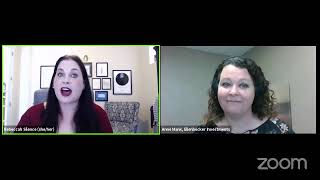
A live Hot Seat episode (Healing IS Possible) hosted by Rebeccah Silence with guest Ann Eelenbecker (integrative holistic coach and financial expert). The 30-minute session (part two of a series) focuses on healing financial shame and practical money habits: identifying money emotions (shame, scarcity, confusion), exploring origins of money beliefs, encouraging asking for help, automating savings (e.g., 10% of pay or $25/mo to emergency fund), avoiding credit-card balances, using consistency and compounding to build wealth, and teaching kids money via jars/goals/matching. Contact info and scheduling details are shared.
Brave volunteers that are ready to get hot and get through their stuck with me one on one in front of all of you doing their breakthrough work as I coach them into movement, through the stuck and into new possibility. This is 30 minutes that doesn't get the job done in one shot. But man, do we create movement and momentum and possibility in a short period of time that benefits all of us. Today I am so honored to welcome back Ann Mank, integrative, holistic coach and financial expert to the hot seat. And today is part two of our Heal youl Finances series, where last week we just woke us all up to possibility around how we can look at money differently, manage our money differently, and pay attention to money differently. Today she is here to talk to us about actually healing through the shame that is so commonly carried when it comes to our finances. So, Ann, welcome back to the hot seats.
Well, thank you. I am so excited to be here. After the last show, I was really excited to see the comments and some like what I mean, it was really connecting with individuals. So I'm hoping to extend the conversation and because I think we're really starting to hit a nerve of people who are just like, okay, I know I need to fight through this. And it is really starting to become a pain point for them. And so hopefully through this conversation we get, like you said, the healing going, knowing that it is possible and working their way through it. So I am excited.
Oh, it is such an honor to have you with us. And again, it just begins with some movement. We are not going to get completely healed spontaneously, whether it comes to money or our bodies or our relationships. But it just requires waking up to, wait a minute. This is painful and it doesn't have to be anymore. My definition of healed is it doesn't hurt anymore. And how many of you watching are carrying any sort of hurt when it comes to your finances or anything really? And you know, take notes. Everything Ann says, it applies to you or someone you love. So let's dive in here and take this opportunity to wake up to expanding our healing when it comes to money. So, Ann, just take it away. What on earth do we do about our shame when it comes to money? I mean, I've gone from avoiding opening bills, being a broke and bankrupt single mom, that thought, oh my gosh, there is absolutely no way out. Even after bankruptcy now, I didn't get child support. I didn't know how I was going to provide for this kid. And I'm sure there's more learning and education for me around money. But it is a completely different world for me when it comes to money today.
Right. And so what. When you're going through that, what really propelled. Was it your daughter that really propelled you to say, okay, I have to start looking at this? Because usually when I sit down with somebody first, I am always. I ask them the question, okay, why now? Why are you here in front of us? What was that thing that said, okay, now I need to make the call or to, you know, be across the table from you? So when you think back to yours, what was it that was that helped you finally say, okay, I gotta look at that bill?
Well, it was for sure my daughter motivating me. But it also, I feel like, was just survival mode, because I knew, okay, I'm working three jobs, and there are days where I have to choose between food for me or gas in the car. I mean, that's really how we were living. And I wanted more for her. I also really wanted to know that I, as a woman, could do it. I didn't have a lot of evidence from my experience with women growing up, seeing them financially provide for themselves. It was a lot of women being provided for by the men in my family system, which isn't a bad thing. But I just didn't know for sure I could do it. And I wanted to figure it out because our lives literally depended on it. It was just me.
Well, and you also bring up a good point, too, of, like, one really good motivating factor is making it outside of yourself. And, you know, you had your daughter depending on you as well. So the motivation not only came from within, but it was also something bigger than yourself that you could reach out to as well, which I find a lot of times when I'm working with individuals, it's like, I've been fine this whole time, but I'm seeing my son isn't launching out of the house like, I want to help them, or I've been fine with this, but now, you know, my significant other is sick, and I don't know if we can care for them. So it's always, you know, we always feel it inside. And sometimes it is that extra, like, motivating factor that really gets somebody to start talking about it. But you were talking about shame before, and I think those emotions really stop people from just asking the questions. And so the first thing I would say is that you're not alone. Almost everyone has these emotions when it comes to thinking about money, dealing with money. So if somebody thinks about money right now, like, what are those initial gut Reactions. When you think about it, is it shame? Is it anxiety? Is it scarcity? And so really being quiet and thinking about money, because so many times we're so busy with what we're doing. I got to work, I got to put food on the table. I got to do this. That we don't stop to think, like, what is our relationship with money? What is the emotion that drives us when it comes to money? Like, for me, it was mostly like, if I think back to that, it's really a scarcity. It's like, why did I do the corporate job, climb the corporate ladder? And it was scarcity. I was so afraid that if I stopped, the money would stop, the house would fall, we'd be on the streets, homeless. And it really took me looking within, saying, no, I have confidence that I will figure this out. It might not be exactly what I'm looking like, but if I have the confidence to figure it out, we'll get through it. But scarcity, that was the big one for me to kind of work through. And what really drove me to then go get the education, work in the world of finance, really understand how money works to help me empower myself to then move forward from that.
Yeah.
So when you're thinking about money, what would you say are your top emotions or top emotional blocks that might be stopping you today? Because you're in a whole different. I know. Sorry. You're in a whole different place than you were maybe 10 years ago.
Right. So today it's more like confusion. Like, what do I do now? Like, I don't. I don't know how to be smart about the resources that I have in a way that has me feeling confident. Confusion would be one. The next would maybe just be uncertainty, and that's a little different for me than confusion, because I am in a reinvention with my company. There was a level of certainty that the way I was running inspired results that I could count on. That's being shaken up today as I'm kind of changing the game and striving to have even more of an impact at multiple different price points. And then also excitement, I would say, is an emotion. I'm excited that there is possibility, and I know I just have to learn. So those would be my top three.
Well, and I don't want to box anyone, but I hear this story quite a bit, especially with successful women. It's, you know, and I'll just speak for myself. Do a really good job at home, running in the house. Do a really good job in my career, because I work so long and, you know, went to school and have all these years, but then when it came to personal finance, well, I don't want to look stupid over there, or I don't want to look like I don't know what I'm doing. And the first thing is it's never. It's never anything anybody ever did wrong. Like, when did you get the education? Did they teach you in school? They might have taught you to balance your checkbook, but they never taught you how to really attain wealth or how to understand money or what does it look like if you actually love your money and you have an abundance mindset versus it's out there to get me and have a scarcity mindset. And so the first thing I would say is that, you know, you're not alone. A lot of us feel these emotions. And like you were saying, it's the uncertainty of it. And so it's being comfortable enough to say, okay, I'm raising my hand and asking a question. And that's really what I'm trying to do with my clients. And being on your show, too, is just showing that there are resources out there that you only have to raise your hand and we come running. But it's being able to open yourself up to the possibility of starting, you know, as a freshman. You know, we're all scared of going into high school because we're a freshman. Like, in eighth grade, we were like, you know, we knew everything and we were, you know, tough stuff. And then a lot of times when you're dealing with finance, you're back freshman year, you're looking at those seniors saying, well, how did they do it? They're so cool. And it's like, well, they were a freshman at one point, too. And so it's learning those basic. Those fundamentals. What we talked about in the last show about learning some of these personal financial tips to get you the confidence to then raise your hand again and ask the next question. So, yeah, so a lot of times when I'm dealing with money and with financial planning, we do start with the emotion first. First. And then sometimes I also ask the question of what was the first experience you can remember with money? Like, where does that come from? And for me, I just. I don't know where this came from or I don't even know how old I was, but I remember stuffing pennies into those sleeves. Remember those paper sleeves? So we had a jar of coins, and we would sit there just putting money into these sleeves so that we could take it to the bank so that we could go to McDonald's. And so that just. That story is, no, I need to save every penny in order to do what I want. So that helped my scarcity mindset and has driven me this whole time. So asking that question of, like, what were the first memories of money for you? Were they happy? Were they sad? Who taught you?
I want to remind people, you know, use these questions as journal assignments. What are the top three emotions that money brings up today? What is your first memory of money? This is really good. And then also what Ann said about when we notice that there are some darker or more difficult emotions that come up around money, we don't need to figure out the answers. We just have to say, hey, I would love some support and education, and as long as we're coachable and willing to take that help, it's available. I mean, what Ann said is, we'll come running. There are multiple people, you know, Ann's just one of many that are equipped and educated and have learned and have, you know, followed the path. They have the roadmap. And we just have to say, hey, and not be afraid of being that awkward, awkward, geeky, acne face in the midst of transforming our money.
Right. I'm gonna have that picture the whole time when I'm starting something new, because.
Eventually you're a senior, and then you're in grad school, and then you're the professor.
Right, Right. And you're teaching others how this works. And that was definitely my path. I didn't, you know, I wasn't born into a financial family. It was more of. I saw money. Well, first of all, I saw money as a puzzle. Like, I love puzzles. And for me, it was the puzzle of putting together what's coming in with what's going out. Can I make that balance? And so for me, I saw it more as a challenge and something for me to figure out versus money itself. And it just kind of grew from there. So that was just my, you know, that's the lane that I took. But there was a point where I, you know, I was in those accounting classes pulling my hair out, thinking, I'm never going to know this stuff, or when I'm planning for to get my Series 7 or to get my certified financial planner designation. I didn't know, like, puts, stops, hedge funds. I don't know. So we all start from something very basic, and it's just that continual process of learning through it, taking the next step forward, and just realizing that we all start somewhere. So we're all Starting from square one. I was there. You were there. And learn from my mistakes. You know, take the wisdom I've gained. That's what I'm here for. And so that's what I reach out to my network a lot is, you know, what mistakes did you make and you know, what lessons did you have from that so that I could learn.
So I have two questions I want to hear more about, like, the top mistakes you've seen people make and then the possibility associated with those mistakes. But also, can you speak to why do so many of us hit fear and shame when it comes to money? Why is money such a sticky sore subject for so many people?
I think it's just the way that we've been brought up, and it's come down through generations. And so you had the baby boomers who had the Great Depression, didn't have anything, and they've just kind of had that mindset come through again. And then in my generation, it's the money is free for everyone. Have a credit card, have some debt, take out a mortgage. So you have kind of those conflicting stories, as now you're trying to realize, well, what's today's story? So a lot of time, I think the fear comes from the fact that nobody talks about money like it's not a subject in most homes. And I think it's because parents have the shame and the anxiety of not knowing the right answer. So then they don't talk about it with their kids, and now the kids don't know how to handle money. What does success look like? Because it's never been mirrored or shown in the home. The only thing that's been shown in the home was you have to save because you could always lose it. And we have the mentality of, you need to climb the corporate ladder. I mean, everybody's told, you need to go to school, you need to go college, you need to have a good job, you need to be successful, you need to work into your 60 or 70. And that's what success looks like. And we don't know any other picture, so we're afraid to step out of our lane and see what else is out there, kind of peek our head around the corner. And so I think that's what drives the fear. It's the not knowing.
And also what you're saying about success, I mean, another. Another word for that would just be self worth. So if people, and I've seen this over the years in my private practice and even with friends and family, people are associ their self worth with the numbers in their bank account. Instead of thinking about money, not about me and my self worth, but about just a reflection of the value that I'm providing to humanity. And then my worth is not a reflection of the numbers in the bank account. It's a reflection of just like a number on a scale where we are right now, like a temp check. And then what I've done beyond just using my daughter and survival as a motivation was I really looked at money today as a reflection of the value that I'm providing to humanity.
Yep. And that value doesn't have to come through money. And I think that's been the problem is that we've used money as the numerical factor. It's something that can be counted. Like we can't count the amount of love we give, or we can't. We can't count how much support we've provided, but we can count the dollars and cents. And so we've tied it to money. And I think what we should really be thinking about as we're thinking about prosperity and how we show up in this world is really putting it around the definition of wealth. What is your definition of wealth? What does that include? Money is going to be a part of it, but it shouldn't be your ultimate factor. Because over and over again, you can hear stories online, you can hear stories and autobiographies that individuals will go for a money number. They get to that money number and they're like, is this all? Is that it? So you can keep striving for a money number and it just gets bigger and bigger. But if you're not looking for wealth, if you're not looking for quality of life, quality of relationships, maybe using your money in order to help those around you, I mean, that's really what we should be judging and striving towards, not how much do you have in your bank?
Well, and how many. I don't know the answer to this, but statistically, you know, how many people that built a lot of financial wealth lost it all along the way. Right. And then built it back up. And I think that's one of the biggest gifts that I experienced in my financial devastation season was, wow, I can build it up. There was a starting over that showed me, okay, if it goes away, I can build it back up again. And you know, for those of you watching that are thinking, well, I have zero evidence that I have the capacity or the capability to do that again. You don't have to do it alone. So what are the other Just myths and mistakes and lessons that people can take from you today that you've already done or seen that they don't have to repeat.
Well, the one I still see constantly is the get rich quick plan. It never happens. It doesn't happen. That's where you get, you know, you get poor quick as well. So a lot of times individuals are asking me for investment advice.
You can get rich quick, but you can get poor quicker.
Oh, yep. And that's exactly what I see happen. So we've seen it with the dot com era. Back in 2000, we could see it in some areas, like bitcoin right now. There's certain areas where people are driving to that area because they think they can get rich overnight. And that is not how you get rich. That's how you accumulate money, but that's not how you build wealth. So it's coming back to that wealth definition again. So one is, there is no fast way to do this. There is no overnight success. What you need to do is start slow and start as soon as you possibly can and get consistency over time. So like Rebecca, if you are going to do this towards weight loss, I have been amazed at how much you've done in a year. But you didn't do that overnight. You know, it was slow and steady, you know, consistency and just making sure that if you said you're going to do it, you did it. So it's that tenacity that you need on the money side as well, because that's the only way to build wealth. That's how I built wealth over time was I just started early. I didn't know what the heck I was doing, but I started early and I just continued it over the way so that I can look at it now and going, okay, I've built this base, so now how can I help more people? How can I share my wisdom? How can I donate my time? Because now I have the base and the foundation. But it took 20 years to do that. It wasn't like I've had some good luck along the way. But that's because I've been in the game along the way and I think that makes the difference. So just slow consistent over time makes a huge. And that's one mistake I see people make.
And what if it isn't luck? What if it is just you have had some wins.
Yep.
You know, right. Because you have been supported, you have been consistent. And you know, what Ann and I were talking about before we went live was how it can also be really difficult when you have been so consistent.
To.
To notice the transformation that's happening because you're just in it. But a year, I mean, if you just committed even to the rest of 20, 21, a year makes such a big difference. And I think with money, it might be a little bit easier to see it than a physical transformation. But still, you've got to give yourself the time. And then what about Ann? I mean, I hear this a lot in my private practice. People, they hear the word consistency and they want to throw up or stick need in their eyes. This is not fun. This is not sounding like freedom to me. And that's what I want. And for me, the consistency brings me more freedom. Will you speak to that in your language for people as they're thinking about money?
Yep. So what I try to do is get the individual out of the way as much as I possibly can.
How do you do that?
And that's the easy part. With money, like, if you're trying to lose weight, you can't get yourself out of the way. But when it comes to money, you can set up automatic contributions into certain accounts. It could be an automatic amount. In a retirement account, you just set it, let's say, 10% of your comp, and you forget about it. You don't even realize how much is coming out each time. Or you set it up to go to the bank to an emergency fund, $25 a month. So you start with something that is not going to have a huge impact. So hopefully $25 a month, we all can find $25 a month to put into an emergency fund. Then human nature takes over, because then you're like, oh, I've been doing 25. I can maybe bump it up to 30. And oh, I have $1,000 in there. That didn't even hurt. Let's see if I can get to 2000 faster. So it's building that momentum. But the key is to get it started and to automate it so that you don't make any decisions along the way. The only decision you make is how much more do you want to put in. But at least you do that baseline. But that's how I tell individuals to get started. Because that's the biggest thing. The earlier you start, that makes the biggest difference in a plan compared to diversification or what exactly you're invested in. Because there's a. I think Warren Buffett says it's like the eighth wonder of the world, but it's compounding interest. And if you want to double your money. So let's say over 10 years, you want to double your money, which is a good rate to do that you start out with 10,000. Well, 10 years from now, you know you have 20,000. Well then 20 years from now you have 40,000 and then you keep going. So that by retirement you started out with 10,000, but in 40 years you have plenty to retire on. So it's that consistency of keeping it in there and starting early so that the money works for you versus you having to spend your whole life working because you don't have the money.
I love that what she just said. You could all write this down, make your money work for you. That's a great, I think, carrot to help people stay consistent when it feels like, why, why am I doing this? This isn't worth it, or this isn't fun. I have so many questions for you. So, so, okay, what about with our kids? What mistakes do people make with their kids with money? And what are your recommendations? Because I know I've done horrible job of basically I think programming my 16 year old to think money's just easy. And then in a way I like that because I see so many people making money so hard. But then, you know, I want her to become a great artist and profit from that. But she's like, I don't need to go to college, I don't need to have any continuing education. I'm just going to make art and that's how I'm going to make money. And I'm thinking the lifestyle that she lives is going to cost some money and how do I educate her?
Yep. So the first one is just being open with the kids on how much things cost. Like in my household, the kids ask me all the time like, well, how much does my softball season cost? Or how much was this house? Or how much do you make? Like we have those conversations and then we start putting it to them. For example, my daughter wants a dog. I'm not at a point in my life where I want to care for a dog. I have kittens. Yes. But if she really wants that dog, I would support her. But then she needs to do the work to help get that dog. And so I gave her a goal. So she is 11. So I gave her a goal of 2000, which is a huge amount, but she has no other costs. So I'm like, this is something that will take her one or two years to accumulate if this is really what she wants. So it's a long term goal. It has money attached to it, but it also has something that she loves. And I'm Supporting her along the way. So as she's doing it, it's well, you know, you got money from Christmas, should we put half of that away? Or you know what, why don't you take this babysitting certification so that you could babysit and maybe earn some money over the summer. So I'm constantly having her find ways where she will have fun but be able to attach money to it as well. Like she loves animals. Like, why don't you start a dog walking service? So her and her best friend are like putting things together. Like, how can I do a dog walking service? So how do you make money in a goal attainable? You help them along the way with the steps, but you have them put some skin in the game as well. Because if it's just something where you're constantly giving them the funds, like you say, they get out into the real world and they don't know how credit cards work, they don't know how rent works, they don't know what insurance they need. Like they don't see all of those factors that are in there that we're paying for for them, but they're just oblivious to it. And if you have really young kids, what you can do is the jar system. And so you can get three jars. It's save, it's donate, and it's spent. So you have three jars. Anytime they get money from Christmas, they get money for their birthday. You do a third in each one because guess what? Usually that's how it works out. A third you spend, a third goes to taxes and then a third you might save for later for retirement or something like that. So they work once they get older as well. And they learn the fact that just because you have $10 doesn't mean you have $10. And they also learn to think forward and how do we use our money to think forward? So they start the saving. So I think it really comes down to just having a conversation, letting them see you struggle and then also helping them to think about the steps to get from A to B when they have a financial goal.
That's so good. I'm wondering about now maybe with my 16 year old giving her a challenge that however much she has in savings between now and when she graduates, I'll match it when she graduates.
That's great. And if you put it into a Roth IRA like so she has a job. I see a lot of clients that do that. Okay, honey, you get a job. Anything you put in there I'll match at the end of the year. And so it's one saving for retirement Roth you can use to save for a rainy day. And it gets them excited because they get to double their money. I mean, I can't get a rate of return like that. So it's a great.
Idea. What else? Give us one more good one. Like a mistake people make what you've learned or seen and what will really help.
I think another mistake people make is that we're just so spur of the moment. And so Mel Robbins has that whole five second rule thing. There are different ways of being able to put that into your life. So one is just five seconds. Like if you're in a Target and you're like, oh, this is cool, hold it for five seconds and see if you really want it.
After that five seconds, Mel Robin says, 5, 4, 3, 2, 1.
Yep. And then you make a decision. Other one is you see something you like at Target, well walk all the way around the store and come back and get. More likely than not you'll forget about it and you'll just walk out without it. And then another tip to kind of put it in frame of like, should I spend money on this? Is it going to matter five years from now? So if you buy this thing, is it going to be in a closet five years from now that you haven't touched? And so there are just different ways of just taking a moment, taking a second to see if that value is there. Because a lot of times we're just so fast, credit card spend, credit card. We don't take the half second to say, what's the value of this in my life? And is it really worth all the effort I put in to get the money to be able to pay for this?
Oh, that's so good. Now what about credit? What tips do you have for people on how to use credit effectively and or invest? Because I'm making an assumption that shame can be escalated by lack of education and just fear.
Yep. And there's a lot of like I like to say talking heads out there that's always like. So if you listen to TV or the radio, you'll hear all these talking heads, end of the world type of stuff. And so I think that that builds our fear. But when it comes to credit, I don't necessarily think it's a bad thing. So I'm not a person who says you can't have any debt. You can't, you know, pay everything by cash. But when it comes to credit cards specifically, it is not a short term loan. It is not a way to leverage timing and money coming in versus money going out. If you have a credit card, you should always pay that balance off at the end of every month. No if, ands or buts. Credit card debt is probably the worst debt you can incur because of the incredible interest rates. And then what I see happening is that individuals get into this circle they can't get out of because they only can afford the minimum payment. Well, now you have this huge interest rate on top of it. So you could go and buy a $5 Starbucks copy and it'll end up costing you $40 because it'll take you a year to pay that off. And so from that perspective, I. Credit cards are something that I think are useful. I think it helps organize you. If you're a person who can just look at a statement, see where everything goes, but don't ever carry a balance on a credit card. That's why you need an emergency fund. Build that emergency fund up, use that. If you have a timing difference. No, credit cards are not that.
What if they're already in a credit card nightmare? Then what? When it comes to shame? Right. We got to deal with it. What do they do?
Yep. Unfortunately, when it comes to that, it is you need to dig down and attack this. So it is. Do you find another job for three months to pay off that debt? Do you find ways to reduce the amount of spending you have within the house? Like, look at your credit card. Are there things that you're spending money on, like that magazine or that gym subscription that you're just not using? Or are there things. And I'll just use myself as an example. It's like, well, if I get my nails done, do I absolutely need to get my nails done right now? Or is that something I put off for six months?
Or just do it yourself.
I started my own nails during this period. That's one thing I don't like doing myself. I have horrible fortune. So those little things, and that's a good point, those little things aren't going to make you rich. Like doing your own nails are not going to get you rich. But if you're in a state of crisis and you have overwhelming debt, it is the first place to start. Because there's no way you're going to get out of it unless you face it head on and you start attacking it and doing more than you've done in the past. Because obviously what you're doing right now isn't enough to get out of that debt. So it's being creative. What can you reduce from expenses? What Other job. What side? Hustle. What can you do to earn that extra money and just put it all in there. You know, you're going to have to delay vacations, you're going to have to delay giving big presents to individuals because there's just no way around it. And it's not fun. You know, that's where you're getting the. But to come out on the other side, like, imagine a world where you had investments that earned enough interest in dividends that it's more than the current salary you're making. So if you have money, let's say you make 40,000 a year. What if you had investments with interest and dividends that made more than 40,000 a year? And that's entirely possible and you can get there, but you have to get rid of this debt first because the two don't live in the same world.
You can't have both. And you don't have to do it alone. You can find someone to just say, hey, here's my credit card debt situation and I need help. And you know, I saw someone posting the other day that just $27.50 a day for a year is $10,000. And I think we don't realize these little expenses add up. And so even that just $27.50 a day saved for a year and then invested, how much could that become?
Right, because in 10 years, that 10 should be 20 and then 20 should be 40. And it's, you know, if it's just a little tweak you made, I mean, that's where the wealth starts to come in. And that's why it's not an overnight success, it's not a get rich quick. But if you put in those little steps and really start paying attention to where your money is going, like, you don't even have to stop yourself from doing stuff. It's just being cognizant of what you're spending it on. Because then you're like, oh, well, that was, that's not really getting me to my goals. I'm just not going to do it. So you're not restricting yourself, you're just making a better choice. Or you're making a choice that more aligns with you versus kind of going on autopilot and just going to the store and buying whatever you see. Yeah.
And consciously choosing to have your money work for you, consciously choosing the right support, consciously choosing to take on and tackle shame around money can make such a difference for you and your entire family. So, Ann, this is gold again. Any final thoughts? For us, this is so, so, so, so good and so helpful.
Now I would say just start the conversation. Just don't be afraid to ask questions, even if it's something like before you even meet with somebody, like, well, how much is this going to cost me? I think a lot of times we're afraid to even ask how much a service costs that we're going to get because we don't want to be that person. Ask the question, who cares? Ask like, how did you do that? Where did that come from? What did you learn from that? And then start having conversations, at least with the individuals in your household when it comes to money. Just be open, ask the questions, let them see your struggles and learn from one another. And then that will just start expanding your community so that more and more people are comfortable with talking about money and realize, you know, start reducing those barriers that we've set up for ourselves along the way.
I love it. I love it. Thank you so much, Ann. It has been a pleasure. And what if wealth, whatever your version of wealth is, can be your reality and it just starts with waking up and asking for support and making a choice. And thank you. We will look forward to you posting in the comments how to get ahold of you. But for those who won't be able to see the comments and maybe watching this on a replay, how do they get a hold of you specifically for help and support when it comes to their finances?
Yes. Thank you. This has been a blast. I love this. So in order to get ahold of me, you can either email me. So it's ann with an eelenbecker.com that's E L L E N V E c k e r.com or you can go to ellenbecker.com website and there's a whole section there. And you can see my bio. You can see a video I made like a couple years ago, but you can see more about me and what services we offer. But I'm happy to answer any and all questions through email because that's what I'm here for. I can help individuals if they don't know the basics about finance. And so I'm here to educate so that they can then come up with a specific plan that works for them.
And you can't help them if they don't ask. So ask. This is a resource that we are so honored to know. Thank you, Ann, for being here and I hope that if today's hot seat resonated with you, you will get in touch with Ann if you want to join me in the hot seat if you have a healing message, if you want some breakthrough coaching, if you're ready to change your life, get in touch with me as well. We are booking into April and May and would love to have you in the hot seat if you even have just a whisper of calling to hop in here. All right, thanks everyone and we will see you next time week and every week, Tuesdays at 10am Mountain for our live healing as possible breakthrough hot seat. All right, thanks. See you soon.
More from Rebeccah





Free 5-Day Live Online Bootcamp for Mothers, August 24–28 4 PM EST. Replays available #shorts



