Healing IS Possible LIVE Hot Seat Breakthrough Session.
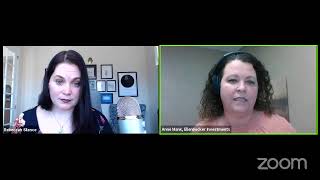
A live 30-minute hot-seat session hosted by Rebeccah Silence with guest Ann (Ellen) Becker, a financial expert and integrative holistic life coach. The episode offers Personal Finance 101 (the 50/30/20 budgeting rule: 50% fixed expenses, 20% savings, 30% discretionary), guidance for aligning spending with personal values, mindset work separating self-worth from net worth, and a practical 6-month money challenge (write a goal on a post-it and place it on your primary credit card). The session emphasizes education, choice, and using money as a tool for freedom rather than a measure of worth. Next session will explore one’s relationship with money and emotions it surfaces.
Mountain offering you a breakthrough session with a volunteer who is either leading in an area of their life that brings healing to all of us or they are here to coach with me and to have a breakthrough meaning movement through stuck energy, stuck emotions, stuck patterns, stuck beliefs, whatever they are stuck is in just 30 minutes. We won't solve everything in a 30 minute hot seat, but you will be astounded if you tune in, turn up the volume and pay attention to how much movement we can create in only 30 minutes. If you want to volunteer to join me in the hot seat, all you have to do is message me and then disclaimer, the hot seat gets hot. We are here to get to the deep, sticky, sometimes icky, whatever it is that is in the way of flow and ease, which is all of our. So with that being said, I have a very special guest that I am so honored and privileged to have with us in our community today, Ann Mank, who is a financial expert and guru, disrupting the money conversation, especially for women that has us stuck or not, in the possibility that we could be so annoying. Welcome to the hot seat.
Well, thank you. I'm all ready. Like I am ready for this. I was super excited for today to come. So thank you so much for having me on the show.
Oh, it is such an honor to have you. Tell us why you are so excited to be here and what you are here to do. What are you offering us today? What is important to you for our viewers to receive over the next 30 minutes?
Well, what I am really hoping to be able to do is help individuals kind of get through some of those blocks to maybe remove the shame, remove the embarrassment when we are talking about money. Because I love talking about money and it is not from a point of greed or being frugal. It really is from the point of the more we can talk about money, the more we can have power within our lives. Because I really believe money is energy. And so if you understand how that energy flows, we are really then using that as an opportunity, as a tool to be able to get the things that we want in life instead of being stuck and not wanting to address the money. So that's what I'm hoping is that the listeners will be able to understand. Money can be fun, it can be empowering and it is something that we should be talking about more openly with our girlfriends or with our partners or anybody that's important to us.
Even our kids.
Oh, definitely our kids for sure.
I am going to have a question for you about that. So we have Ann, for two parts. We have her today, and we have her again next week because this is such a big conversation, especially in the midst of a global pandemic. And Covid, my intention for bringing you on, Ann, was to help people really see and experience that they can heal their finances from where they are right now and. And that there is possibility for them, regardless of their current situation. So the other thing that I haven't mentioned about you is that you are also a trained, integrative, holistic life coach through Legacy Training International. So you are not just a money expert, but you are also a coach that really has the chops to help people get aligned with the possibility of money that they have for themselves, mind, body, and spirits. So, again, this woman is just a wealth of information, pun intended. And let's dive in to the deep end of the money conversation. I like that you're validating that people do get shameful and embarrassed and that this conversation is hard, but what you just said about the more you're willing to talk about money, the more power you have. I think that's so profound. So can you elaborate and share with us what we don't know, that we don't know and what we need to know?
Well, and when I was trying to prepare for today's conversation, I was really thinking about, well, how do I best heal? Like, what do I do when I'm trying to heal in a certain area? And over and over again, I go back to education. So the more I can educate myself on a subject, the more I kind of open my horizon. And so I think a lot of individuals, when they're thinking about money, they stay in their lane. So they are in their lane. This is what they know about money. Like, we learned in our coaching program is we tell stories to help us survive getting through. And so those stories keep us in that lane. And the more we can educate ourselves, the more we can see other possibility, the bigger our lane becomes. And then the more we understand, like, oh, so that's what that person is getting at, or that's what we really meant by this. Or really, this is simple. As long as I can clear some of those stories and the blocks out of the way. That's what I'm really hoping to do today, is provide some education so we can start opening the lanes for individuals so that they can see what's possible, so they can see what's out there and enjoy life a little bit more. So I thought where we would start is just kind of some personal finance 101. These are things that you can learn yourself. Like you mentioned, you can teach your kids, but it just gives you that initial path so that it's not so scary. And I like to keep things really simple. I think our industry sometimes over, you know, makes it seem like it's so complicated and we can really keep it to some simple properties and some simple tools. So the first One is the 50, 30, 20 rule. Okay. So this tells you how you should be spending the money that's coming in to your house. So the 50%, if you would just take all of your expenses, 50% of those expenses should go towards fixed costs. So that's your house, that's your car, that's basic food. 50% should go to that. Then what happens with the other 50%? Well, then we break it into two other buckets. 20% of that should be for savings.
So. Yeah, quick question. So is my understanding on track that basically you're saying whatever your total household income is, your fixed expenses shouldn't be more than 50% of that?
Correct. And if you would really important if you would look at it too. I think what happens, especially in the United States, is that we tend to have mortgages or home expenses that blow us past that 50%. Right.
So what do we do if that's the case? Before you give us the other 20, 30, can we just stay here for a second?
Sure. So if we are more than that 50%, sometimes that's where the tough choices come in. Because at that point, you really only have two options. You can either make more money or spend less. And so if you get to a point where you realize that your home is too expensive, that's really where the hardest part comes in. But that's why everybody got in trouble in 08 and 09, is that they were home, home poor, more or less. Everything they were making was going into their home. And so when Ethan and I, my husband and I decided to get our first house, we wanted to make sure that we could afford something on one income. And so that immediately got us to that 50% rule. But then there's other things you can do with by making more money. Can you get some further education so that you can then be promoted where you currently work? Is there a side hustle that you could do? Is there a way of changing what you do to ask for that raise that you know you deserve and you never asked for? So that 50% is crucial.
Everybody hear that?
Ask for a raise. Right? Right.
Oh, that's so good.
Okay. Absolutely. And we can have a whole conversation on that. But it really is knowing your worth when it comes to what value do you provide at your office. And so if you know your value, you can then ask, go in confidently and ask for what you really deserve. But to the point of 50%, that is a really hard conversation to have because when you first have money coming in, you're like, well, 50%, I still have another 50% that I could, you know, take a little from this, little from that. But that's where you run into trouble and you no longer have the financial freedom that you're looking for. So 50% fixed, that's your car, that's your house, insurance, property taxes, anything that you would need so that if you lost your job, you would still need to pay for these items.
Utilities, daycare.
Yep. The next part is the 20. So I'll skip the 30% for right now and we'll go to the 20%. 20% is what you should be saving for the future. This would be your emergency fund. This would be your retirement plan. This would be if you have any long term goals like buying a second home or paying for your kids college. All of that goes into your 20%. So I get the question a lot of am I saving enough? And my first question is, are you saving 20% in all the buckets that you're saving in your 401k, your 403b, your Roth, those are all retirement type plans plus your emergency fund, is that 20%.
So combined.
Combined, okay. It's just a really good rule of thumb. Each person is different, but that's a good place to start. So you have 50% fixed that if you lost your job, these are the expenses you have to cover. 20% is saving for the future so that you have flexibility when you want.
To retire or if there's an emergency of some kind, like the global pandemic that we're currently in, there's a little bit of a cushion.
Yep.
And anybody, I just want to say this, anybody that's like, this conversation is way too overwhelming or way too over my head. I just want to say, you know, I'm an example of someone who has transformed my finances. I was when I got divorced with a two year old, basically knowing that I would end up having to go bankrupt. We foreclosed on a house. I didn't want to open up the bills. I had no idea what my fixed expenses were. What you know, I was even making wasn't clear to me. So that even is an important place to start. Just being willing to go wait A minute. Do I even know how much is coming in every single month total? Do I even know what my fixed expenses are? Am I just winging it? And Ann talked earlier about the opportunity to break through survival mode, about our money. And she talked about education and talking about it as access to more power and just getting real about where you are. While it might be scary, it's critical you moving the needle and transforming your financial experience just from my personal experience.
And that's a great point. So what I'm trying to do is lay the foundation. But a lot of times it's just taking that first step, just opening your bill and looking at it. Because I know a lot of people that don't even do that. I had one client where, where she started from was just literally looking at her bank account every single morning. She didn't do anything with it, she didn't analyze it. She just looked at that bank account because that's where she had to start from. So it really depends on what you're comfortable with and then just taking one step further. And so this 50, 30, 20 rule is really for those that are like, okay, I am ready to tackle this and I have no idea where to start. And so that's what this does.
Right. And then it's even just that next destination to get to, to know that your goal is to get to the possibility of 50%.
Yeah.
And then 50% that you're getting really responsible with.
Yep, exactly. And it's just an easy way of giving you that gut check. So what I really try to do is develop my clients guts when it comes to money. So you don't have to, you don't have to budget, you don't have to watch everything. Because if you start getting the gut of, you know what, I know this is more than I typically spend or I know this is out of my ability right now. That gut will lead you. We use the gut a lot for like, is this the right person to date? Is this, you know, the right house for us? You can do that as well with money. But it takes practice and it takes the education and it takes just being willing. Willing to be open to talk about it.
Yeah.
Alrighty. So we got 50% that's fixed, 20% that we save. And there could be a whole conversation on that as well. Especially when we start talking about the possibilities, the dream, what does retirement look like? Where do you want to pivot? What do you hope for your kids? That's where that saving really like we say, you have a circle of possibility. Like, where is that circle Possibility in that savings account is what gets you to that possibility. So now we have 30% we haven't accounted for. And this is the fun one, because if we do 50% of expenses, 20% for savings, you can spend that 30% on whatever you want. No hold bar. It is yours. It is your fun money. It is your fun bucket. You can buy the shoes, you can buy the purse, you can go on the trip. But having those first two covered gives you the independence, gives you the freedom to then spend money the way you want to on the things that are important to you. So that's kind of my guide rails. It's Personal Finance 101. But it's a really good place to start when you're trying to say, okay, I'm ready to get rid of some of these stories. I'm ready to start facing my money. But where do I start?
Oh, it's so good. Now let me ask you a question. That 30%, is that where my continuing education would fall under? Not the savings?
Correct. Correct. Yep. So this is for everything if you wanted to, because you and I do a lot of personal development. So that's where that 30%, that's where.
We started a high performance mastermind.
I know. Which was I can't wait to get back to those days. Right. But that's where that money would fall in. So some individuals, it's. They just want to go out to a really nice restaurant once a month or they want to be able to take their kids to Disneyland. It's all of those items that fall into that 30% bucket. And because you have your fixed, it just. It relieves some of that shame and it relieves some of that guilt. When you are spending money because you're working really hard every day, you should be able to enjoy the money you earn.
Yeah.
I see a lot of people who be like, well, I bought this purse, but I know I shouldn't have. Well, if you have the first two buckets, go buy the purse.
And whatever's important to you, whatever is important to you is important to you. There's no right or wrong. Ann and I are going to keep going to school. We're going to spend all the money on seminars. And that's just what's going to happen.
Right, Exactly.
Going to take the family to Disney and whatever it is.
Yep.
You have a choice. And that's where the freedom lies.
Exactly.
That's a really important point because I think when people think about taking on their money or even their weight, it's like, well, then I'm not going to have freedom, so I'd rather just stay in denial. But you're actually creating more freedom.
Yes. Discipline. Yep, yep, yep. And I like, for me, I can relate that to time management because I am a. I just like to fly by the seat of my pants kind of person. But if I start putting time blocks in my schedule, what that. What happens is that I start getting things done. I then don't have guilt when I do the things I really do want to do. And I just have, you know, white space to do whatever the heck I want because I know I've taken care of the important things already. And that's what the 50, 30, 20 rule does, is it takes care of the important things so that you can enjoy the money that you're earning. So it's. It's a great tool to start with.
And it seems to me, correct me if I'm off track, that the sooner you start, the better. Because that 30%, if you don't spend it all and that 20% adds up fast.
It adds up really fast. Yeah. And it's amazing. Like, when I'm trying to help my clients plan, the most important factor in all of this is how much time do they have. Like, I can put them in good investments, quality investments, put them in the right risk for them, help them see how to get to their goals. But there is nothing more important in a plan besides how much time you have. And it doesn't take much if you have a long period of time. So even I remember when I first started work, I started putting $25 into a Roth. This was like 20 years ago, but I started putting the $25 in even during the downturn in 0708 09. And I just was consistent. And honestly, I set it up and totally forgot about it. And so it's one of those things that if you just set it up, have it go automatically, it will build really fast so that five years later you're looking at it, you're like, oh, dang, that accumulated quickly. But it's being able to know how much you can put in at first and then just getting started so that you have time in order for it to accumulate.
Yeah. Oh, this is so good.
So are you ready for another little nugget?
I am ready, everybody. I hope you have your notebooks and your pens and that you are taking what applies to you and enhances your possibility and opportunity to heal your finances. And really locking it in right now. This is gold that you are dropping.
Well. And this next one goes to the point that you originally said was, well, some, you know, where do you even start with looking and start addressing your money? So it's great we have this framework, but, you know, what's the step before that? And for that, what I like to go to is what, what are your values? What is important to you as an individual? So everybody just think about what your values are. So my core values are freedom, growth, and fun. So that that's what grounds me and what aligns for me and then what's important to me. So I might answer, well, it's my family. It's being able to have new adventures, to travel. Okay, so I have what's important and I have my values. Now what I want you to do is look at your bank statement, look at your credit card statement. Where did you spend the most money on those statements and do they align with your values? So, for example, I had a client that's so good.
Are you congruent?
Yes. Align? Congruent? Yes.
What is actually important to you and do you even know? So this isn't about creating more ammunition to beat yourself up, which we're all good at. This is about getting in the driver's seat and in power over your finances and your opportunity to heal your finances from where you are now. So good, Ann.
Yep. It's gaining the clarity is really what it does. Because if you've never thought about this, you don't know. You don't know what you should be spending your money on and you don't know where it's going. So it's gaining the clarity of what's important to you and then having your finances follow that. So I had a client who really, like, they were in a lot of activities in their local church. Very important. So religion was very important. Church was very important. Community work was very important. And so we did this exercise and they realized that not even 1% of what they were spending was going to the church. And so something like that was a real eye opener for them. And they didn't have to change much because as you're going through that statement, you realize, well, there's a gym membership that you haven't gone to in six months. There's that magazine you've never read. Oh, here's that annual monthly subscription. For us, it would be like a personal development person that we just really haven't done. The video is in a while. Well, we can take some of those things that we don't value as much and we can start Putting it into the value bucket. And so that's why I like starting with your values, what's important? Because the more you spend on things that are important, even if you haven't increased your income at all, the level of joy has increased, your level of alignment has increased, you start being happier and being open because you are spending towards what's, you know, what you're aligned with. Yeah, so. So that's the first, like, if you're really stuck and you don't know where to start, think about what's important to you and then go check your credit card and your bank statement to see if you're aligned.
And what's important to you is different than maybe what you learned was important. So this is also a really great opportunity to get honest with yourself about, okay, when I'm looking for my values around money and just life in general, what's important to me is no longer now that I'm adult about being in with my family or on the same page with my family, we can be in relationship, we can be a product of a family and have different values. So this is also, I think, just a huge opportunity to get honest. Not just about what do you think is important or what do you think the right answer is, but what's your truth?
Right. Oh, that's a great point. Because there's so much that we learn from family or as growing up, that were taught to us. One financial example of this is we were taught, okay, put money into your 401k. And so I have a lot of clients who are now retiring, and that's the message they receive. Great message. Put it away. Very good savers. Now it's all sitting in a 401k from a tax perspective. They're always going to be taxed on this money every single time they take it out. There's no more tax strategy. There's no more opportunity to take large lump sums out because they're going through tax brackets more and more that they take out. And so that's just an example of, yes, it was really good advice, but was it the right advice for that person? And were there other things that you could be doing as well? And that's where the education comes in. It's like, yeah, we've been told these stories, but the more you learn, the more educated you are, the more you expand your horizon, you can see that there's different opportunities. There could be three or four tax buckets you pull from. There could be different opportunities you could take advantage of because you put the foundation in place. And now you can start putting strategies in place. You can really start building your wealth. You can really have the financial freedom because you have a really good, solid foundation to kind of jump from.
Yeah. And the more in the know you are heading into your education around opportunities, the more you're going to be able to use your gut. Like Ann talked about earlier, around what aligns with you in the financial life and freedom. That is the one you see for yourself.
Yeah. Yep. And that's the important part, the one you see for yourself. I have clients that are perfectly happy spending time with their. Their dog, living a very simple life. They don't need a lot of money, but that's because they know exactly what they want and they built their life around it.
Yeah.
So it's just having that knowledge and that education and then having that savings. The biggest thing that comes from that is you start having choice. I see so many people go into retirement that no longer have a choice. And so the more you pay attention to your money, not to say that we're all going to be billionaires, but I want my clients to have choices so that when they need to go into a senior home, they have choices. When they decide to retire, they have the choice on that day, not being forced to retire when they're not ready. So I'm all about choice, but I'm also about making it simple and fun. And so having some of these basic frameworks will help relieve the stress, relieve the anxiety, so you can really focus on the fun stuff.
So what if I'm watching and I'm thinking, none of this sounds fun, Ann?
Well, they just haven't been with me long enough. I think for those that don't find this fun, I get it. There's plenty. Like, I don't find working out fun at all. But I also know the more I do it, the easier it gets. And then I love the results. And that's where the fun comes from. Yeah. So it can be fun, it can be enjoyable. But if you're just doing it because people are telling you to do it, it's not. It's not going to be fun. But if you have a vision of where you want to see yourself and we can use money as a tool to get there, that's where you start having the fun with it.
What would you say to the person that's like, well, I don't get to have this vision. I don't even know what the vision is. I mean, at least I'm getting by.
So for that, I would Challenge somebody to think about what their possibility could be. So take the time to say, and we don't even have to have it around money. So if money is really one thing I found interesting, sometimes the word money is enough to stop somebody.
Yes, that's a great point.
So don't think of it as money. Think of it as wealth. Like, what is your definition of wealth? What is your definition of freedom? What is your definition of prosperity or success?
Maybe you're. Maybe you're thinking, well, I don't value wealth. Well, what about success? What about fulfillment?
Yep. And that's a good point. I heard recently that I was one of the personal development things I was watching. But we ask ourselves, do we really want to make money? Like, I don't think we ever ask ourselves that. There are some people who really, they don't want to make money. What they want to do is make an impact in the community.
Yeah.
And so we keep driving as a society towards money. And that is not the answer for everyone. And not everyone wants to be a millionaire. But once again, it's just driven in like, we need to be a millionaire. If you could take like, get rid of all of that. Get rid of the money, get rid of the I need to be a millionaire. Or my definition of success is to have this much in the bank account. Really, what is your definition of success? Is it to get the kids to college? Is it to start your own business? Is it to live in the Bahamas when you're 40? What is your definition of success? And just forget about the money conversation. I think we need to dream more. A lot of times when I sit with individuals and we start the financial plan, you know, we always ask, well, what does retirement look like for you? And I get a lot of deer in the headlight looks because they've never stopped and given themselves permission to actually think about it because they think it's unattainable or they think it's so far away. And once we start thinking about it, like, well, where do you want to live? What quality of life do you want? Who do you want around you? What is important to you? Then all of a sudden it starts flowing in. Then it's like, oh, I want to live in Florida six months and then I want to live in Wisconsin. That's just where we are from. I don't want to live here right now. I'd rather be in Florida, a little bit cold. But where do you see your dream? And it's giving yourself the permission to start thinking about it and having those Conversations with your partner as well. A lot of times we come into financial planning and it's a married couple and the spouses have never talked about it. Like, oh, I don't know, where do you want to live? I don't know, where do you want like.
Or they're consciously avoiding talking about it because they don't want the clashing of the titan.
Yep, Exactly. Exactly. So there's a lot that we put into money, but the one thing I always say is just when you're talking about money, just remember that your self worth is not tied to your net worth. And we need to start breaking that. Think about your self worth, what's important to you and your values, and break it from the money conversation because it just doesn't belong there. Money is a tool. It's a piece of paper. But what do we put behind it? That's really what's important. And I think that's what we'll talk about next week is what is money really mirroring to you? What does it show about yourself that you might not want to see? What is your relationship to money? So there's a lot that we can talk about.
So separating self worth from net worth, everyone, is something you can do beginning right now, and you can define it for yourself. You know, what is self worth to me? What is important to me? What is the life that I want for me? Knowing that we don't know how much time we have, knowing that life can change on a dime. And again, pun intended. And then net worth. What if net worth just becomes a temp check to see how aligned you are living into your self worth.
That you use.
It's just like getting on the scale when it comes to money. How am I doing? How on track am I? And then again, you get to start over anytime you choose. And you don't have to do it alone. There are experts and people there and available to help you. You just have to be willing to take the first steps, to take a look, to get honest and then to challenge your actions with what's actually important with you and to challenge yourself to get honest about. All right. You know, your actions are maybe showing you what you value more than what you actually realized was important to you. You get to reevaluate.
Yeah.
So good. What else today that you want to make sure we are hearing and taking notes about before we get into next week and letting them know what they get next week?
Well, what I want to do is give you a really quick challenge. It is quick and easy, but I have Had a lot of individuals come back to me saying, you know what, that was just enough to get me to my first goal. So we were talking about possibility. What is our possibility? And sometimes when you think five years out, it's just too far away. So what I want everybody to do is take a look and say, for the next six months, what is my financial goal? So, six month goal, what? Where do you want to be in July with one item? So let's say it's an emergency fund. I want to have $1,000 in my emergency fund by July 1st. So it's very doable and there's a deadline attached to it. And it will then be the next step for getting you to the money choices and being able to pivot and have the financial freedom. So here's the pivot or here's the credit card challenge. So I want you to do is take a post it note. And I just made this example. Oh, I love it. Okay, take a post it note with the name of the goal, the amount and the deadline and put it on the credit card you use the most. Put this into your wallet so that every time you pull out your credit card, you see your goal in place. And a lot of times that's just enough for us to say, you know what, I really don't need this magazine. Oh, you know what, maybe Target bill is a little too high. So we'll put a couple of things back. But keeping it front of mind will make it more attainable. And by putting it on your credit card, you're putting it in the right place. Place for you to always see it. So whatever this might be, maybe it's your checkbook, maybe it's your debit card, but just do that. Put it right into your wallet and then it's always there as a really nice reminder. Some people put hearts on it, some people put happy faces. Because you want to start putting a happy emotion with this. It's not something that you should be, you know, dreading. This is something happy. This will make you happy because you now have an emergency fund. So thinking the happy thoughts, having it there as a reminder, it is just, it is an easy, quick way. And I hope everyone tell me what your challenge is because I would love to hear progress and how everyone is doing on that.
Definitely post in the chat what you are taking away from today, what you are committing to today. And Ann, I love this exercise because it is back to your self worth point. You know, your looking at this credit card isn't to remind yourself of how much you suck or how far you're not. It's to say I value myself enough to take the initiative to make the commitment to getting where I know I deserve to be in this lifetime from where I'm at. And if you're not going to commit to self worth in that way, it doesn't make you wrong or bad. But like Ann said, we're just wanting you to have choices that maybe hadn't occurred to you before or that you haven't seen yet. So that if today's message aligns with you, that you can heal your finances, you can make it fun and that you have more power than you give yourself credit for, you can start to build momentum.
Yes.
Yeah. And this is good. So good. Any other final thoughts for us?
No. But I would be happy to help anybody who needs some additional help. Whether it's a conversation, whether it's coaching, whether it's financial planning, I am here to help and I think it is really important. And that is why I did get the integrative holistic coaching certification. Because working with individuals it is all about the numbers on the finance side. But I could see that it was so much more that I really wanted to help the whole person and we can use money as a way to get in and help someone align with what's important to them. So happy to help any way I can. But thank you so much for having me on here. This has been a blast.
Such a pleasure to have you. Please post your information in the comments so that people can get a hold of you. But also can you just share your website for anyone watching that might not have access to those?
Absolutely. So you can find me@Ellen Becker.com so that's E L L E N V E c k e r.com or you can email me as well. So it's Ann with an Eelenbecker. Happy to help anyway. And if I don't know it, we have enough of a network that we can always point you in the right direction.
So good Ann, thank you for being here. Tell them what we are doing next week for part two of our Healing youg Finances series.
So next week I am super excited for because what we are going to talk about is your relationship with money. I don't think we have ever thought about it as a true relationship. And so we are going to talk about what is money really trying to show you and so what emotions come up and what is it really trying to show you so that it might actually point to areas that you need to heal that you just didn't realize you needed to heal. So it should be fun.
I love it. We are going to go deeper next week now that we have some basics and confidence about where we have power that we maybe didn't realize. And you know, bring a notebook, bring a pen, tune in, join us. Anyone that wants to join me in the hot seat again, just message me and we will book a time for you sometime this year. There is plenty of room available and it is an honor to offer an opportunity for people to lead with me in the hot seat in a way that helps everyone watching. Healing is possible, even with money. And we will see you next week. Thanks everyone.
More from Rebeccah





Free 5-Day Live Online Bootcamp for Mothers, August 24–28 4 PM EST. Replays available #shorts



