Healing IS Possible LIVE Hot Seat Breakthrough Session!
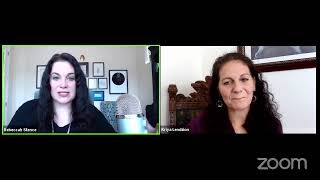
Rebeccah Silence coaches Kreia, a school counselor and parent, on connecting with teenagers who feel unseen by adults. The key: use curiosity and validation instead of judgment, say "and" not "but," own your own mistakes, and build shared routines that work for your family.
About parenting for all of us that are parents during these historic and challenging times. And Creah is an expert with being a parent herself professionally. As a counselor of children and families, she works in schools. We are so blessed to have her. What we do in the hot seat is in just 30 minutes. We pack a punch every week with a volunteer who is leading in breakthrough work. Whether it's a healer sharing their stories of possibility or a brave soul having me coach them through stuck into breakthrough every week. There is so much that can happen in only 30 minutes to move the needle forward in all of our lives. This one is for the parents. So if you are a parent, stop what you are doing, get out a notebook, let's dive right in. So with that being said, welcome Kriya to the hot seat.
Hello.
Such an honor to have you. Yeah. Tell us a little bit about who you are and what had you want to join me in the hot seat?
Yeah. So I have been a counselor to kids from 5th grade through college age, young adult age for about 20 years now in various school settings and community settings. And I'm currently a school counselor for middle school, middle schoolers and I've been a therapist for adolescents. I specialize in addictions and addiction prevention and early intervention into self destructive and addictive behaviors. And I'm also, I'm a parent. I've got a kid who's now 22 years old who I think it's important to say that I raised him largely in some pretty tough conditions, to be honest. You know, that weren't ideal and were challenging as a hundred percent single mom and he's a biracial child. And there's all these, you know, I mean there are all these rich things to my parenting experience there. And I have two step teens as well now. So I released one into the world, into the bigger world and took two more into my world to keep learning from and using as practice ground. So yeah, so that's my. And I, you know, and I feel like it's important to tell a little bit of just my personal story cause it does weave into my parenting experience and which is also that, you know, I was a fairly troubled teen, you know, and I and had a lot of things that were sort of missed by the grownups in my life as I was growing up, growing up, which is why I do what I do and you know, had went in some very pretty self destructive directions until that got turned around in my early adulthood.
Yeah. Well, thank you.
Part of the wisdom.
Yeah. And thanks again for just Being here and so real about who you are and your life experience as well. What. What is it that you wanted to get out of this time in the hot seat and to share?
Yeah, I think if. I mean, you know, there's a gazillion things right now that I'm hearing, you know, a lot of things I'm hearing kids needing. Particularly right now. And I think, you know, if I. If I simmer it down to one thing that is stands out more than anything that I hear in my office, whether it's as a therapist or as a school counselor every day. And hold on for this, because it's that our kids don't feel known and understood and respected by us. And I know that's really hard to hear because you're cooking them the organic meals and showing up at all of the horrible clarinet concerts and sitting through the sports you don't care about. You know, I mean, you're showing up in all of these ways and bending over backwards. And so it's hard to hear that your kids might not feel known, especially when you're like, what? I know that they don't like, you know, that they like their Brussels sprouts cooked like this, and they don't like, you know, Monday Mondays, and they don't. I mean, you know all these things about your kids and they came from you in all these ways, right? For a lot of us. And so how could you not know them? But what they tell me, this is particularly the older ones, because I work with the fifth graders and up, is that they say that they don't feel like, you know them for who they really are and who they're becoming. That you don't really know what their inner worlds and their outer worlds entail. I mean, you sort of know and are attached to them as their little kid selves. But I hear a lot that kids that we tend to. Let me pause for a second. I'm gonna finish that sentence because I feel like I need to say this first, is that whenever I talk about parenting, I wanna be clear that I didn't do this perfectly. I need to say that. And that one of my greatest teachers. Cause I didn't learn this in my grad programs or any of the. I got a lot of letters after my name that didn't come from, you know, I didn't. I didn't learn the parenting information. A lot of that came from the kids that I worked with and my own kid who I gave some voice to. And we can talk about that to give me feedback and let me know, you know, what he needed for me and what I was, could be doing differently. And they've been my greatest teacher. So I want to, I want to say that. So I don't want you to make sure I'm not coming from some, you know, place of like this is how to do it perfectly because I have a perfect parent. That's where I'm coming from. So we're going to enter the no judgment zone, the NJZ as we're talking about parenting because we can tend to go into like a, I'm really screwing this up and go to a shameful or guilt ridden place which isn't helpful. So yeah, just had to say that in the middle of my sentence, this little addness of my own. What was my sentence? We tend to as parents and I again was as an educator and a counselor parent was, I had so many lectures to give. But we tend to tell them who we want them to be, what we want them to, how they should think, should feel, what they should do. We just tend to do that a lot. And again, it's coming from nothing but love, right? That we just want them to be thriving out in the world. And with our bigger picture thinking and our much more years of life experience, we're pretty sure how they should be navigating the world and what they're destined to be and how we can help them get there. Right. We've got that big picture that we sometimes attach to and that, that is invalidating to them. You know, instead of, instead of us approaching them with a curiosity and a non judgmental curiosity, this is really important about their worlds, their inner worlds and their outer worlds. Like what are they, how are they experiencing their school day, how are they experiencing their friendships? What's important to them? You know, how are they processing all of this stuff that's, that's, that's coming at them, whether it's media, whether it's their relationships, whether it's, you know, news, just how are they processing the world and what are those worlds? Because their Worlds at, at 11, at 14, at 18 are completely different worlds. And they're completely different worlds from what our worlds were, you know, and we tend to do. You know, I hear a lot that, that you know, we tend to do that like well, you know, I was 14 and so I get, you know, and we don't get what it was like to be 14 in a technologically plugged in world where they are, they have access to and are bombarded by so much messaging, you know, and Pressures and temptations. We did not have that. You know, all of us that are parenting as Gen Xers or even millennial on the cusp parents, you know, you could shut things down and shut things off and had to go out of your way to sort of to be plugged in, you know, and now they have to. It's bombarding them. Right. So we don't know, you know, what their lives are unless we ask, you know, unless we ask them what they're experiencing. And this is tricky, doing it in a way that's coming from genuine curiosity. So that means that if we're like, Let me give some examples. Music, for example. Okay, so there is some music. Now, my, my uncensored instinct when I hear some of the music that my stepson listens to, I want to be like, are you flipping kidding me? This is crap. I can't believe you like this crap. Like this is, you know, and to just go off on it. And do I think that there's some problematic messages in that music? Absolutely. And. But is there. Is he going to be open to a conversation about misogyny and racial messages and, you know, hypersexualized messages and substance use messages if I have just slammed something that he cares about and that feels like it's part of his identity and an interest of his. Absolutely not. So there's a difference between saying, well, tell me what you like about this. I'm just curious. And I can't believe you like this crap.
I think what you're saying is so important. A couple of nuggets I just want to pull out because I'm also, you know, a former school counselor, school counseling coordinator, and also a parent. I've got a 6 year old and a 16 year old, and there is almost like a default to wanting to parent the teenager like the six year old, like the little girl in her. It's so much easier, quite honestly, at least in my opinion, when they're so much smaller to be guiding them and curious and just available for the trips and falls, literally, emotionally, metaphorically than when they're older. And so I would love for you to say more. Just about at what age does that parenting style need to shift where you're no longer parenting the little kid, you're parenting the young adult in them that's blossoming. Is there anything you found around, like when that transition should start to take place?
Well, I mean, it also depends when you choose to let them be plugged in to social media and to, you know, this larger world out there, which starts to sort of pull, you know, pull them into being influenced by people other than us, you know, so all of a sudden, it depends when they start getting that, oh, we're not the only ones with information. We're not the only ones that, you know, that have some tips, some guidance to give them how to navigate the world. You know, they start to sort of realize, like, oh, their friends are having some. Or the media, or the way, you know, has some divergent messages from what my parents are giving me. And so there's other options other than my parents, you know, as sources of information and sources of support, which can, of course, go in negative and positive directions. And we'll talk a little bit more about that next week. But, yeah, so. So I feel like, you know, there's. There's this. This cut, like, for me, fifth grade, right, where, you know, where I'm a school counselor right now, it's with fifth graders through eighth graders. And I love it because it's like that, right. That really rich moment when they start to also tune into, like, oh, my parents are, like, hella hypocritical. Yeah. That adults are full of hypocrisy, you know, and they start to sort of. That. That radar goes on where they're, like, looking for the holes in everything we have to say to disprove us. Now, this is another, like, I think crucial piece of communicating and connecting with our adolescents is number one, is owning those hypocrisies. Because they rule us out as, like, well, see, they don't know what they're talking about because they don't even know how to see themselves. Like, how can they call me out on something that they can't even see in themselves? So it's a beautiful thing to do for connection, but also to model when we can just say, you know what? I'm still working on this, honey. I know. You know? I know. I know. It's like, I don't like being yelled at, and I know that. That you probably learned it from me. Right. Like, I've really been working on that, and I learned that from my mom, and I'm really trying to disassemble it. It is still on the potter's wheel, sister, you know, But. But we're going to keep figuring this out together because I insist on doing better, and I. And I really want you to not struggle with it. Right. So to be able to say that first and just own it. We get there, we get their respect because they're really quick to. To not disrespect Us, I mean, to not respect us. But again, it's because they often feel disrespected by us. So I think owning our hypocrisy is really, is really important. You know, as well as just like what I want to say about what was the question that you asked right before that? Because it sparked something that I.
Well, I want to just speak to what you're saying a little bit because I have an example. Just yesterday I'm teaching my 16 year old how to drive and I have been rather snappy and you know, she's basically calling me out as a hypocrite and I have no problem saying, listen, I suck. I've never done this before, I'll get better. She's like, you're patient all day with people and then you're supposed to teach.
Me how to drive.
And you're being mean. And I'm like, you're right, I suck. You know, and I think part of them feel, feeling known is us also being available to hear how they feel, whether it was our intention or not.
Yes, amens, amens all over the place. So I think so there, there's a, I mean huge pieces of that are us respecting their opinions, their feelings. Right. Their thoughts. And it doesn't mean we have to agree with them. It's not the same as agreeing. It's, it's just respecting and so validation. I can't say this enough. I mean I talk constantly about the importance of validating, particularly right now in this moment when our kids have really tough feels and they're confusing and they don't even have names, ways to name them and words to give them for how unrooted they're feeling right now. And the more that we know, like just the very short version is like they are developmentally and brain development wise, they do over feel compared to us. Right? I mean their threat responses are extra high. Developmentally they're supposed to be, yeah, they're supposed to be kind of separating a little bit from us and orienting in their tribe, you know, they're supposed to be finding their tribe, figuring out their identity through that tribe, you know, and so there's something developmentally about being disconnected from that socially, that their, their survival system is literally telling them that they are in danger, that their survival is in danger because they're not interacting socially the way that they are used to and, and that they don't have the words for that. They just know they're all freaking kerfuffled and moody and feel off. They just know they're off, right? And so, so there we know, you know, science show research shows us that they over interpret threat in our tone, in our, in our expressions. You know, I mean that's been proven, right? How many times has your kid been like, well, you were yelling at me, mom was yelling at me and you're like, I, I didn't even raise my voice. It was just a look I had. But they interpreted as yelling. Right? But so all their, all their feels are real. And, and what they're telling me a lot is that, you know, parents, we tend to do the. Well, at least you're not gain with them, you know, like, well, I lost my job, you know, or the person down the street lost. They lost their grandparents to Covid. Like at least you're not X, Y and Z.
Or when I was a kid, at least you didn't this happen to you like I had, right?
Or we didn't even have cell phones, you know, when we were your age. At least you can talk to Your, you can FaceTime your friends, you know, like, come on. Like, so we just tend to go right to invalidating. And again like our intention is we, we just want it. We're trying to help our kids reframe and we want them to like snap out of it because we love the hell out of them, right? And we don't want them to be uncomfortable and hurting. But what we end up doing is invalidating them instead of saying, oh honey, I know this is hard, you know, and I get that this, I get that this has been really, really challenging period. Right? I mean just, just letting them know, like you get it that in, in their brains, in their bodies, in this moment, you know, that, that things are hard. So validating and beyond this moment, just validating their feelings, validating their thoughts. Like, well, I can see why you think that, you know, like, I understand, you know, I understand, I understand that or I recognize that. All right, you know, just starting with that at least before we disagree with them. And then, and then here's just two magical tips is I call it the Almighty and versus the big old. But so where we want to say, yeah, I understand that, but it's wrong. Yeah, I understand that you think there's no big deal with vaping because your friends are all doing it, but it's really, really bad for you versus just saying. And I'm. I have a different opinion about that because of what I've been reading, right? So the two things I did there. One is I just said and because the big Old, but invalidates. I mean, like, it erases everything you said before it.
Yeah.
So if it's an apology or if it's a validation, you just undermined it. You just wiped it away so that you could then prove that you're right, which is what they think trying to do all the time. So you can disagree. Yeah, I hear that. And. And here's what I think and here's what I feel, you know, and here's my values instead of. Again, because they're very sensitive to feeling like we are trying to turn them into us and into the people we want them to be. And if they're not those people, we're not going to approve of them and we're not going to love them. That's. That's honestly what I hear over and over again. So. So when we. We disagree with them with respect, there's so many things that are coming out of that.
Right.
I mean, we're teaching them an amazing life skill and we're really. We're teaching them how to argue, which is also really important. We're teaching them how that we really honor them and we can respect. We can love and respect who they are and still feel really solid in who we are. You know, there's boundaries there. Like, there's so many things that just comes out of that really simple skill. And, and then using our imessages, which. Yeah, I mean, you learn starting in kindergarten with like bugs and wishes or whatever, all those, you know, like. But. But just saying, you know, like, this is just. I. Here's my experience. I hear your experience. I see it, I feel it, I understand it. You know, I'm trying to. And here's mine, like, I'm coming from here. I. I feel differently. I have a different experience. I have a different opinion, you know, that those can both hold. Those both hold, you know, space at the same time. But we've heard them.
And to be available, like you said earlier, for that. Genuinely curious, wanting to know more. More than wanting to deliver what we think they need to hear.
Right. Well, I mean, the bottom line is when they feel respected by us, they're more likely to respect us.
Right.
When they feel like we, you know, it's that simple and it's really important. And we're not going to be able to be influential in positive ways in helping them navigate these crazy. This crazy complicated world unless they respect us and where we're coming from and what we're saying. And the crazy thing is, so our kids will challenge us. So get ready for that. If you're not there yet, this is where my son taught me some amazing things. Because, you know, he would say these things that were, like, knowing that they were, like, against my values or just to, like, you know, like to throw the recycling in the trash bin and, like, look at me smugly, you know, like, that kind of stuff where he's, you know, and I. And I realized that when I freaked out, right? And like, what are you doing? You know, better, you know, that we don't do this in this house or this family, whatever, you know, My response is that it would give them a little confirmation of, like, that's right. She's not going to let me be my own person, is she? She's just trying to. She is just trying to turn me into her and who she wants to be, right? So I discovered that, you know, when I again, I use the kind of the formula we just put out there, right? The ands and the I messages and the disagreeing with respect, I'm like, well, here's my values on that. Or that he, of course, a few years later, he ended up because he was soaking in all these values that, you know, I put out in all these. In all these accepting ways that he came back to them. I mean, he had them all along. He was just challenging me to see again if I was going to let him be his own person, you know, what would happen if I disagree, you know, what would happen if I go.
And their values aren't necessarily the same as ours. One of the most pivotal moments in my parenting shifting with my oldest was working with a coach and my entire family, identifying each of our own individual values. And they're different, and that's important and.
Okay, yeah, yeah, but we want it. You know, we're at this really interesting time, and I was just talking with a, like, a sociologist about this, which is like, I mean, if we really even back it up to this really interesting aerial view of where we're at historically is that there's this cultural shift between. So thinking about. And I'm assuming we're around the same age, right? So that when we. Not that long ago. I mean, it was literally like 10 years ago before the Igen. You know, right now we have the Igen where the kids are coming up for the first time, and these are available to them at every age and often handed to them as, like, please, I just need a break, right? So. So they're being raised with these. And so it used to be even 10 years ago that families were sharing, like, they would Sit down and consume media together, right? So you would watch a TV show together or a movie together. You would even listen to the same music together. You were sharing the same musical taste in the car or whatever, right? On the, on the radio that we could even, just when I was raising my kid up in high school five years ago, we could even like plug into their playlist and know what their playlists are. Right. So we are now at a time where the kids have a separate culture. I mean, there's always been a youth culture versus, you know, the adult culture, but never like now where their media, their model role models, their celebrities, I mean, all their references, their language are their own separate culture like we've never seen before. Because they have their own media, their own music, their own things that they are only sharing with each the memes, you know, these languages that they talk in that they are private, you know, jokes that are just there, which is, you know, the scary side of that to me. And I don't, I don't, I don't like to use that word, but I'll just say that the concerning piece of that is that it was like culture used to be transmitted vertically. So you're, you know, the way, like from generation to generation, you know, so there. So you would, you would learn your values, get your modeling, your information would kind of come from above, meaning usually your parents and your elders and your, you know, not that long ago and now it's horizontal, is that it's all these things that they are plugged into are giving them their information, their values. Right. And shaping them in these ways. So like no other time, we as parents are kind of, you know, feeling like we're swimming upstream with those forces in continuing to have influence in our kids lives. But this comes back to how these things that we're talking about, you know, right now, Rebecca, are like, they're, they're more crucial than they've ever been in terms of maintaining, maintaining that connection so that we continue to be a source of support and a source of information and a source of value, you know, installation, you know, for our kids. A main one that they respect.
Yeah, I love it.
Respect them, right?
Yeah. And the more we make our kids wrong, the more they push back and it doesn't matter how pure our intentions are. Right. They do want to become their own people and they do want to find their own way. And I love all of these delicious nuggets that you're providing with all of what you're saying today to all of the parents and even Just adults that have kids in their lives. How can parents and adults that you know, are involved in the lives of children, particularly teens, take care of themselves while they're, you know, kind of having to sit back and let go, ready or not?
Yeah.
How do we let go of control that I would love for you to speak to next?
Yeah, well, I mean I think that having, you know, having transparency and grace, you know, I mean there's the self grace and the transparency of our own very human processes right now that are really beautiful models for our kids because I think one of the, you know, one of the greatest things that they can learn is that humility that we're on the potter's wheel that we just, you know, we keep that receptivity to continuing to learn and continuing to better ourselves in all the ways, you know. And so our demonstrating, I mean when it comes to self care, I mean I'm just watching this in every household that I'm connected to as a counselor is that we have to be able to model what we want our kids to, what we want our kids to have. And we have to be able to at least show that we are aiming for that, we're working for that we're trying to learn how to do those things. And one of the greatest ways to also include our kids because our kids need self care strategies right now too. A lot of their outlets, a lot of their healthier coping tools have been stripped of them. From their sports to their theater to their, you know, their, their stuff. And so, so engaging them with, not that we, you know, having the bubble bath and having those moments of solitude are crucial for us too in making those happen so that we can recharge and be present, but also taking advantage of learning those new self care or practicing those new things with our kids. It's such a beautiful moment to do that. You know, like are there morning routines that you can wrap your kids up in? Like, and it doesn't mean you sit and you, you know, cross your legs and go into a, do a transcendental meditation for 30 minutes. Can just be, you know what, we're going to walk around the block together. You know, we're going to check in on like what's something you're grateful for today or what's a goal you have for yourself for the day to day checking in at the end of the day to see what they were grateful for. Like I can't say enough about gratitude practices. It's a whole discussion in and of itself. But what weave them into a practice with your kids has, you know, extra benefits to that for you and for them. And you know what they learn. Mindfulness practices like, and again, you know, that word freaks some people out. And so learning for yourself is. That just means being present in the moment. That just means being able to experience the everyday beauty in the everyday moments, you know, and those joys. And so you can take that walk with your kids and be like, wow, wow, look what the leaves are doing today. Like, I didn't, you know, notice that on the lawn, their lawn yesterday, like what their flowers are doing or what's, you know, it's like that is. That is taking care of yourself. And it is like teaching and modeling something and engaging your kids in it. But they need, you know, a lot. Again, a lot of their normal stuff that they had in pocket is gone. And so they need not just you saying, go find something to do or go do something healthy for yourself. Instead, put the screen down and go find something else. Is engaging in it with them will be good for all of us.
Oh, I think that's so important. And then I know in my house, just having that consistent time where my kids know I'm available. I'm working so much and it's hard to navigate that I'm here, but I'm really not available. What I'm trying to do is from about 5 to 7:30 at night, every night, I'm available to my kids. And so they know that whether we're talking about it or not, it's become this routine where I'm not working, we're together, we're having dinner together every single night. And I do think creating that consistent time where we know we're available is really helpful for our kids too.
Yeah, I mean, I want to just sort of like, I want to put a pin in that because I'm hearing that, that kids are, you know, that there's there's this like attachment anxiety that's, that's happening with kids that is almost this new phenomenon because for a lot of kids, and this is of kids of all ages, you know, when they used to be dropped off at school and they go about their day and then they come home and then sometimes, you know, like have the meals together or the presents with their parent and they're experiencing these hours where there's a lot of parents that are working from home while the kids are also schooling from home and, and they're feeling like they're spending all of these hours in the same space, but without connecting. Because a lot of us are Also have piles and piles of stressors of our own, which we're feeling a little overwhelmed with or we're feeling like, oh, my God, I'm around my kids all day long. How could they possibly need any more time with me? But Rebecca, what you're talking about is totally different kinds of time. Even if it's just an hour a day or it's a lunchtime. When is their lunchtime, you know, from their zoom classes and see if you can, you can, you know, have yours at the same time where you sit at the table in the middle of the day, check in. How's it going? What do you need today? Here's what's been awesome about my day so far or hard about it, whatever. All right, peace. See you in a few hours. You know, you go off to your corners of the house, but. But feeling again, it's one of those where it's like they feel cared about, you know, and respected when we make that intentional time and prove that our jobs and our stressors and our, you know, aren't nearly as important as they are.
Yeah.
And we don't realize when we get so caught up in it, how it's being experienced and how it's absorbing and how the kids make meaning of our, our absence.
And I think that's the most important thing that you've said today, how they, they have this threat response that is basically turned all the way up all the time. And are we thinking about how they are experiencing us or are we just doing our best in the moment? And I think caring about how they're experiencing us is critical right now because especially now, their need for socialization and peer interaction, it isn't even with all of the media enough right now for them. And so what we're going to do next week is talk more about specifically substance abuse prevention and support with our kids as they try to find a way to navigate these super challenging times. I'm really looking forward to having you back, Kreia, to talk about that. If you want to join me in the hot seat, all you have to do is reach out, message me, comment below, and let's do some breakthrough work in just 30 minutes. So much can shift. Look at how much just gold crea dropped today in our hot seat for parents to get some new perspectives, some new tools, and to be available for our kids because they need us. There are billions of other influencers on the planet that are influencing them, but we are still here in a critical piece to their lives and to their development. So Korea, I Cannot thank you enough for sharing your gifts and information with us today. Do you have any final thoughts for parents?
My final thought is to make sure that you shout them out and that you make sure you commend them for how amazingly they are doing. Because again, one of those things I hear a lot is a lot of sort of pressure about that they're not quite meeting the expectations of the teachers of school, of virtual schooling, of, you know, and they're like, well, I can't have normal expectations under these abnormal times. Right. But instead of looking at all the things that aren't happening the way we're used to happening, you know, to stop once in a while, even if it is in the middle of the day, you know, whatever, at 10:05 when we're like, hey, you don't have your calculator for math. And we throw it to be like, you know what this is that, like, the fact that you. You are adapting, you are being flexible, you are showing up even if they have their screen. Screen off and they're in their pajamas, instead of criticizing them for the fact that they're not fully clothed, sitting up in the, you know, whatever with the perfect zoom lighting, the fact that they are there and they are still showing up to learn something under these really tough, weird, you know, uncomfortable, disappointing conditions, you know, and how they're being incredibly resilient, like highlight and highlight and highlight and commend their resilience as much as you can, because they really are. And make sure you're putting that lens on where you're seeing it, because they really are doing unbelievable things, as are you.
Yeah. Yeah, exactly. Parents, good job celebrating Superheroes of the Year. Yeah. And just one thought about what you're saying about expectations. I found that encouraging parents to ask their kids, what is it that they want to accomplish? Like what? Get their perspective instead of us just being these dictators and calling the shots, you know, what do they want to achieve right now? What's important to them right now? And how do we help them win at that?
Yep. Yeah. I mean, it might be like this is a good enough year for the sake of their mental and emotional health. And what is that? What is that standard? You know, what is. What is the good enough for everybody, you know, for them that they'll just. At least. Because again, the most important thing is that they're mental and their emotional. And that health and that your family's relational health is on point and everything else comes secondary to that. Right.
I couldn't agree more. Thank you so much. Look forward to having you back next week. Thanks for tuning in, everyone. Parents, great job. Celebrate yourselves today.
More from Rebeccah





Free 5-Day Live Online Bootcamp for Mothers, August 24–28 4 PM EST. Replays available #shorts



