Healing the Healers in Healthcare - Life on Both Sides of the Curtain
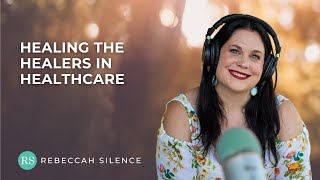
A recorded YouTube conversation (Healing is Possible Hot Seat) between host Rebeccah Silence and Dr. Tamara Bedford (emergency medicine). They explore what "healing" means (mind, body, spirit unity) and describe the heavy emotional burden on healthcare workers during the COVID-19 pandemic — continuous anxiety, depression/felt helplessness, burnout, increased resignations and suicidality, and exposure to repeated death (including non‑clinical staff). Dr. Bedford gives practical recommendations for public support (say “thank you,” wear masks properly, reduce spread, follow guidance, avoid hostile behavior toward providers) and explains pandemic dynamics (surges/waves, alpha vs. delta variants, faster transmission with delta, most hospitalized with delta are unvaccinated). She also shares personal outreach (posted videos of her vaccinations, getting vaccinated Dec 2020; booster appointment noted), promotes her Caring Docs project and a free virtual summit on gynecologic oncology (Oct 25–28), and emphasizes that caregivers are human and need empathy and structural support.
Questions this video answers
December 2020.
She said it was available for healthcare workers after September 20 (referenced in dialogue).
October 25–28 (year implied by context: same year as the recording).
"Your Caring Docs" (spelled as "yourcaringdocs" / "URCARINGDOCS") and the Caring Docs website referenced (written as yourcaringdocs.com in dialogue).
Welcome to the Healing is Possible hot Seat. I am creator of Healing is Possible. Rebecca Silence here with a very special episode where we are talking to Dr. Tamara Bedford about what do we need to know to support medical professionals to support the healthcare industry at this wild and crazy time during a global pandemic. So know that the healing is Possible Hot Seat is brought to you by my gorgeous team and rebeccasilence.com, where you can go for all types of services to support your emotional wellness. But I am ready to dive right in with Dr. Tamara. So Dr. Tamara, welcome. Thank you so much for being here.
Thank you so much for having me and welcome to all our listeners. Thank you, guys.
Yeah, this healing is possible. Family and community is full of leaders and healers and teachers and people that just want the most for people. And you inspire me so much. I am really grateful and honored to have you today and to get the chance to know you. What on earth does healing mean to you, Dr. Tamara and what do we need to know about healing?
Oh, that's a great question. So healing is really bringing unification. I think it's the best way. I think it unification of mind, body and spirit. Right. So when we're all unified, we really feel whole. And when we're whole, I think that that's part of healing. Whenever there is any aspect of us that is broken or feels destroyed or disjointed, then we are no longer feeling whole. And that's when we turn to ways to heal ourselves. I think people have different ways that they turn to different things to try to find healing. Some unfortunately are negative and then some are positive ways.
Right.
So when someone is going to or finding healing, they're usually trying to bring back and whole self. There are ways that some, like we said, there are negative ways. When we try to, people might try to use substances and to try to find ways to get back whole. And then you have beautiful ways, which is spirituality and ways of mindfulness, you know, not just of the physical realm like, you know, eating and exercising. Yes, that's way to heal. But also being one with yourself and recognizing that wholeness comes from within and also it comes from helping others to, to bring wholeness to them all, I think centers you and makes you whole and therefore heals you.
I love it. And then I wonder if we're ever not whole.
That's a great question. I think there are times, right, when you really think, like right now, this is such a. As you mentioned, we're in a pandemic. You know, one thing about the pandemic. None of us who are health care workers have ever been in a pandemic.
Right.
So we don't have. Usually we look towards something of the past in order or experiences to guide us forward. We don't have that right now. So we are all in uncharted territories. And with that, that's, yes, I could say that healing is challenging right now. And that's why I think this is such a beautiful question of how can we help those who are out there to heal others? How can we help them heal? You know, this is such a beautiful question because it's an ongoing process. And I love that you are here making us and also your listeners aware that, like healthcare workers, they need healing too, and support.
Right. And I really believe, as controversial as this might seem, that we are whole all the time, but we forget that. And then especially this audience, that is the trailblazer type of a person. You know, how often is there no path yet that we're creating on our own? And I think we can get insecure and we can feel like we don't know what to do. But what I believe anyway is that the answers are always here and we're always whole. We just forget sometimes. And then support is so important to make our difference and to get the dots connected as we're on this path of creating a new trail. And yes, let's talk about health care and what it's like, because ignorance over here. I have no idea what it's like for you. I know what I'm doing in my private practice with people during a pandemic and in my shows and in my podcast, but I do not know what it's like for doctors and health care professionals. Just shine some light for us. What's going on, what's it like and how can we help?
Absolutely. Absolutely. So we'll start off by going over what is it like on the other end when you enter into this, your doctor's office, when you're entering into the hospital or your clinic? Like, what are those people who are on the other end of those doors experiencing at this time? I'll say, first and foremost, there is a lot of anxiety that's going on. Right. And now some might be able to challenge, channel it in other ways. Like I was able to channel my angst by, you know, starting a company and by helping others, because that's one of the greatest way for you to have gratification is by helping. Right. You realize that it really comes full circle, but you still have a lot of others. Who are still suffering. You're anxious because. And I do want to really emphasize a lot of this anxiety is not only, like, from a financial standpoint, is really an anxiety of what is there to come. It's an anxiety of an unknown. It's anxiety of is there an end? And if so, when? You know, because we usually can deal with the turmoil that arises during a heightened situation. Right. For me, I'll let your listeners know. I'm an emergency medicine doctor, so anything that steps through that door, I'm in charge of it. And I'm used to that. Like, all right, it gets crazy. Like, oh, here goes. A heart attack and a stroke and someone's delivering a baby. Alrighty. So all three of them are coming in. And you're used to like, okay, how am I going to handle this? But that's probably maybe an hour and a half, two, three hours of your day. And then it goes back down to norm. We're in a pandemic. And we're like, okay, so when is this thing going to end? So it's the continuous heightened. So what happens during that time? You're anxious, and then you go through a period where some people go through a period of depression. And when we really think about depression, depression is really a sense of helplessness. Right? Right. It's a sense of, well, there isn't any hope. And so when that occurs within the healthcare workers, that's when you hear from the outside, you'd hear words like, in addition to. That's not the only thing. But you'll hear words like burnout. You know, you'll hear words like, wow, there's now an increase in the. A lot of people are resigning. Right. You might also hear that the rate of suicide have also increased. And that's because there's an increase of helplessness and hopelessness if. What am I doing? Is this enough? I, as an emergency doctor, I have a unique perspective. But then also those who are respiratory therapists, they have another unique perspective. They're the ones who are close to a lot of these patients who are dying on a regular basis in the intensive care unit. You have the intensive care unit doctor. You have the nurses, you have the techs, you have environmental services. These are all frontline workers in addition to the therapists. Can you imagine? You're an environmental service personnel, and you're there and your job is to help to clean the rooms so we can turn it over to have another patient. And then you go to the room and you. You're cleaning this room two, three, times in one day. And you're doing that because you know that two, three people have died that day. That takes a toll. Yeah. So this more than ever, and during this time, more than ever, it's really when we do need, like we said, healing and find ways to heal. The healer, as you mentioned, you know, those who are going through and seeing so much death and destruction on a regular basis, and you did mention a great point and that a lot of this wholeness and healing is within and coming out now when, you know, we're saying that we're not ignoring the fact that you can get help from, you know, outside factors, but even at help really brings awareness to what's within us, and that helps to augment what's in you, to realize that. That your healing also starts within you. Right.
Yeah. Well, and I keep hearing this word alignment, as you're talking. I love that you're speaking to anxiety as unknown and depression as hopelessness. And we're not oversimplifying it, but these are real triggers. And we don't know. And the pandemic exacerbates the fact that we just don't know what's next, and we don't know how long this time in history is going to last and there is no going back. And, you know, when I'm talking about I don't believe we're ever not whole. What I mean is we always have the ability to stay in alignment as the highest version of ourselves. And then I can't imagine, like you're saying, these gorgeous souls that are coming in and literally coming, cleaning up the aftermath of a death. How do you have the courage to stay aligned and inspired to do your job one after the other after another and not go into despair and anxiety and hopelessness? I mean, how. Dr. Tamara, can we help and thank you for being an emergency medicine doctor and staying in the game when so many people are resigning and throwing in the towel.
Mm. Yeah. It's, you know, I think help from our friends and our sisters and our brothers on the other side of those. Let's just call it the curtain or the doors. Right. It really is in recognizing what's going on. It's in, I think, also not turning against us. I have heard stories. Yeah. Some horror stories from even. I was talking with a physician colleague in Canada, and she asked me during an interview, she said, well, have you had people who were cheering you on at the beginning of this pandemic, and now they're chasing, just going against you and spitting in your face? And I said, What? I know you. And I had the same reaction right now, and I said, no. I mean, I'm like, you know, it's. But then she tells me that this has happened to her, and so she's resigning. Yeah. You know, they're upset because she, like, she'll ask for. I guess she might have mentioned to them, like, hey, you know, I'll prefer if you wear a mask right now. They get upset and they want to spit in your face. But how do you treat someone who wants to heal you in that manner? And how does that. Someone who wants to be a healer, how do they keep going on and continue fighting if you're being treated that way? So I think, you know, being mindful of what you say and do to those in the healing profession is one way. It is tiring. I'm just going to be honest. The fatigue does not just come. And when we're talking about this, we're not talking about. Okay, just patients and Covid, you know, that's the pandemic that we're in now. And COVID pandemic. But there a lot of other sick people in addition to the COVID people. Covid, you know, was just there. But there's some other people who still have heart disease. There's still others who have cancers. There's still others who have other medical. Very, very strong medical issues that needs to be seen and treated. And it. You've been trained to go and get it done. But we have not been trained to be robots. Right.
We're still people. And you're still people.
Absolutely. Absolutely. So, you know, when you. I think that I read somewhere recently, you know, if you're going to say a harsh word, stop and think first. How does this word benefit? Because, you know, once it's out the gate, once it's out the mouth, then you're unable to take it back. Right. So if you find yourself heated in the moment, and this is on both side of the curve curtains, so to speak, you know, if you find yourself being upset and you're gonna say something negative, really stop and think how. What are the words that I'm using? Is it used in to heal or is it using to harm? I think that's powerful way. Yeah. To help. Yeah.
And what do you wish people would be saying to you and to your peers that are so courageous and brave right now?
I do get some people who say thank you. And it works. It works because as you're going through your day and you're seeing patients, you get into. When I say into A routine. The routine that you get into is not a routine in that their patients are no longer people. It's really a routine to. To keep you functional, to get things done right. When someone. And I still do everything with care, that's just my personality. You and I were talking before we jump on. My personality is just. I'm a fun, loving and a very caring person. And when I go about my day and I'm fun and I joke with my patients, we laugh a lot and we just stop. And at the end, they said, you know, document. Thank you. I really, really appreciate what you're doing. Oh, okay. Yes. You know, thank you for letting me know because so many people probably are afraid to say it, and I know a lot of people are very thankful, but they might be afraid to say because they might think like, oh, maybe that sounds corny or it's cheesy to say this or they should know, but actually saying those words, as we just mentioned a few minutes earlier. Right. Are those words to help or to hurt, are they going to heal? And those words, thank you, actually heals.
It's so simple. It's two words and it's so simple. I'm sorry about my dog barking at the neighbors walking down the street, but thank you and. And thank you deeply and profoundly. I mean, what else can we be doing to support.
I think, support. So we've had, like, at the beginning of the pandemic, we had people who were sending meals to the hospital. That helps, I think, for the pandemic itself. One masking and, you know, adhering to the rules in the particular. Yeah, adhering to the rules in the place where you are, you know, it's asking please to wear your mask. You know, please wear your mask. While we're here in an environment where there are a lot of people who are sick, there are people who are coming in, you never know who's next to you. That person could be immunocompromised. You know, you never know you're here. And for. If you're being asked to do that, spitting on the person and the provider is not. No, that's unacceptable, actually.
Or even just not wearing the mask properly.
Properly, yes. Chin guards, nose. You know, I. I think that what I can say is that most of my encounters have been positive. Encounters with. And we use encounters like people that we're meeting in. The patients taking care of have been positive. I had any negative. But for those who are out there in the community helping to. The biggest help that we can do is to help to Reduce the spread of this virus. And when I say we're on wave.
Four right now, explain to us what that means. Yeah, let's educate people.
Absolutely. Okay. So the wave is really the rise in the cases of people who have been infected. So during the fall, when we had the fall of last year, believe it or not, I can't believe it's almost a year now. Right. So we had the fall of last year when they asked people to stay away and you weren't seeing loved ones. Because we're unsure how to get this surge or rise under control. What we noticed during that point was we were on probably the alpha variant, which is the first or second variant of this Covid. It took approximately two weeks after exposure, going on seven to 10 days, going on two weeks, you started to notice symptoms. And that's why we knew within Thanksgiving, two weeks after Thanksgiving, there was a huge increase in the amount of COVID cases. And with that increase, that's when we cause the surge. Right.
Whoa.
We're starting to notice that a lot of people are coming in with these symptoms. They're testing positive, they're getting really sick. And that was the surge. So we had that surge. We had the one after Christmas. We just kind of knew, oh, here we go, us as healthcare workers. Because if you had a gathering, then there probably will be people there who are infected, and then they're going to spread, spread the infection to others. And once you spread the infection, then there's a huge surge. The surge is the patients who are sick and they're coming to the hospital. And the concern from the standpoint of the healthcare is, do we have enough equipment to take care of the amount of patients who are coming in and they're sick?
Well, because like you said, there's COVID patients, but then there's other patients.
Absolutely. And that's the other concern. Right. So you might have someone. And Covid, it was especially. It affects a lot of times, you know, cause of COVID pneumonia. That was especially the first time during there, you'd have a lot of patients with respiratory symptom. But what about people who still had asthma? You might not have Covid, but you still got asthma attack. What about if you had copd? What about if you had lung cancer? You still had breathing difficulties. So. So what if you needed to be on the ventilator because of all of that? But then the patients who are now COVID patients, and they're getting sicker and sicker, they need the ventilator. You need the patients who have the Lung cancer or just came from surgery, a major surgery. It needs to be on the ventilator. So we have a finite amount of ventilators, but then we're having what appears to be an infinite amount of patients who need it. And that was the concern. So now the other concern is that this delta variant spreads a lot faster. So as opposed to two weeks now we have three to four days after exposure. Oh, wow. Yeah. So that's, so that's the concern about the delta variants. And you know, still the surge and the rise. And also the amount of patients who are being hospitalized with the delta variants is. You see the data that's out there in the majority of these patients are patients who are unvaccinated. Now, I know that the vaccine that brings about a lot of angst and anxiety and it brings a polarizing, it's a polarizing argument that's out there. But the data is showing that it works. And I see these patients, I, the patients are coming in, I ask them, have you been vaccinated or are you unvaccinated? When I ask, it's not with an attitude. It's not to say. So you should know. I really do want to know why? Because if I know that, I can spread that information out to you and your listeners. Because you guys are on the other side of the curtain, right? So you're not there sitting next to the COVID patient. So you want to know, well, are these people really unvaccinated or is this.
A myth and you're just saying facts. You're saying the majority of people that are hospitalized are vaccinated.
Yes, exactly. You know, so when, when we're there, that's what I'm seeing. And am I seeing patients who have been vaccinated catch COVID Yes, I am seeing that also. And that's, you know, I think I even made a video about that because I love making videos on health. If a lot of your listeners don't know, I have tons of videos out there that I've done on health related topics. I mean, tons. It's gone on hundreds at this point. Why? I just love, you know, to inform the public. And I feel like it's good for you to understand what's going on so you can make some great decisions. Right.
I think that's what's so beautiful. Right? Like we're not saying here's what to do or what not to do. Get educated so that whatever you're doing, you've got clear intention behind that decision.
Absolutely.
The information and do what's best for you, but from an educated place of awareness.
Absolutely. And that's exactly what I say as I put this information out there. I know that there was a lot of fear about getting the vaccine, so I made a video of myself getting the vaccine. So when I went and got the vaccine, it was in December of 2020. Yeah. I said, okay, I'm going to get vaccinated. Here's a video of me getting vaccinated and I am going to chronicle my symptoms. And then when I went and got the second shot, it said, hey, I'm going back for shot two. Here we are. And I've chronicled my symptoms. As a matter of fact, tomorrow I'm going for my booster shot. Ok. I'm excited.
Oh, my gosh.
Yes, yes, it's available for healthcare workers. We're on the front line after the 20th of September. They said, hey, yeah, it's available for yourself. Yes, and I'll take a picture. I'll send it to you guys. Okay.
Please do. Feel free to post it in the Healing as Possible Facebook group. And you know, I think it's so important to have this conversation today. Understanding the humanity of the people behind the curtain and understanding our impact and our ability to have an impact that supports health care workers and being seen and valued and supported and filled up. We all have the capacity to do that, to leave today watching this masterclass and how to be better for our healthcare workers. We can all go thank some healthcare workers. Any appointment we have with a medical professional, we can use those two simple words. Thank you. We can notice how we're being and is it supportive in healing towards them or is it doing more harm and creating more diseases? Connection.
Absolutely. Absolutely. And you know, we are humans and that's one of the things I, I think that it becomes a little bit disconnect. There's a disconnect that occurs especially for those who become doctors. I think that people at times forget doctors. We're just humans that just so happen to work. You know, there's a passion to go into this field, field and the field of medicine. But at the same time, we have families. You know, I, you know, an emergency medicine doctor. But outside of that, my kids are like, mama, they, you know, they see me as mom, I am a wife, I'm a daughter, I'm a best friend who just so happens to practice medicine, you know, so even you have to remember and, you know, keep us in mind. And so the same emotions that you go through, we go through that also. I mean, we've learned how to channel certain part of our training in order to get through. So, you know, the death and dying, that's. That's actually a class that we. We are taught in med school and how to deal with death and dying. Now, if you think about the average person, is the average person taught that? No, we're taught that because we need to be here for our fellow brothers and sisters out there until we get this specialized training. However, the specialized training doesn't mean that we become invincible. It's just the training that we have. Yeah.
Yeah. And like you said earlier, no one has training healthcare professionals or just the average people on the other side of the curtain when it comes to a global pandemic. And I think regardless of what side of the curtain we're on, we have to remember that the only really important thing is being a good human for our other humans and being a part of the healing. And I'm just so honored to have the opportunity to speak to you about these hard subjects. And again, I thank you so much for your gorgeous heart and for your willingness to lead in using your voice to make us better for each other. Right now, we need it. We always did, but especially now.
Oh, absolutely. And anytime you need me to come back, I will. Happy to. I had a great time. And I think that. What. There aren't a lot of people who are asking this in its entirety. You know, we might have some people who might brush over the topic and they might add it as a small part, but to have an entire show on just like, how can we help you?
Yeah.
That I think warms our hearts as healers to know that. Oh, you really care.
I really care, Dr. Jamar. I wouldn't be alive without medical professionals. It brings tears to my. I wouldn't be here. I'm so grateful on a level that words can't even describe. For the medical team, the holistic and traditional all of it medical team that has supported me in staying alive, I have no words to express the gratitude. And I know that everyone's working triple time, quadruple time, and superhuman in the medical world and as healthcare professionals. And I want to know, how can we be better for you? So we will. We'll stay connected. I would love to have you back to continue conversations as we continue to heal and grow and evolve together. And how do people get in touch with you to find more on you and information about what you're up to?
Oh, absolutely. So I am available on all social media platforms forms as your caring docs. You are c a R I N G D O C S and we are on our your Caring docs website. As I was talking with Rebecca. Silence. Prior to us jumping on. We actually are having a. A summit, a mini summit to help bring awareness to women and women cancer. So if you go on our www.u r c a r I n g-o c s.com your Karen docs, you'll be brought to the landing page where you can actually sign up for this summit. It's virtual. We're having doctors from actually I could say all over the world because.
Amazing.
Yes, we have. We're talking about gynecological and on oncology. So we're gonna have ovarian cancer specialists. We have an ovarian cancer survivor. We also have an immunotherapist. She's a doctor and she has her and her dad an immunotherapy clinic in Tokyo, Japan. And also have a breast cancer specialist and epidemiologist. She is here, here in the US at MD Anderson. Her name is Dr. Abena Brewster. She does research on breast cancer. She is a part of the team that's trying to get rid of breast cancer. How can we find out how it affects the population? That's the epidemiology part of it, the research part of it. And she also takes care of patients. So all in one, this is a wonderful summit between October 25th and the 28th. And the best part of it is that it's free. Awesome. Yes. So I would love for you and you know, we're going to REK and I are talking behind the scenes, so we'll let you guys. Yeah.
And I'm honored to support this summit and to support you and your caring docs and all that you do and all healthcare professionals, humanity and flaws and all deserve our love and support and need it. And they are going over and above and like Dr. Tamara said earlier, a lot of them are resigning. So especially the ones that are still in the game. They need us at our best for ourselves and for them. And let's just honor each other. That's the point of Today's hot seat. Dr. Tamara, thank you. I am so excited to continue our conversations and our relationship. The healing is possible Hot seat is brought to you every Tuesday, 10am Mountain. We don't skip a beat. And we're interviewing healers and leaders and I'm doing breakthrough coaching with brave souls that are ready to take on their healing journey. Find more@rebeccasilence.com and we will see you all very soon.
Bye, everybody.
More from Rebeccah





Free 5-Day Live Online Bootcamp for Mothers, August 24–28 4 PM EST. Replays available #shorts



