How to Heal from Anxiety NOW and Let Love In!
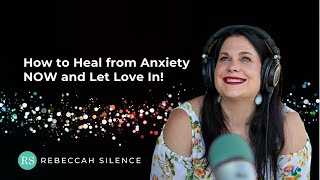
Rebecca Silence leads a solo YouTube talk (March 2022) inviting viewers to reframe anxiety as a momentary messenger and an opportunity for emotional healing and greater capacity for love. She shares her personal cancer story (2015 diagnosis, aggressive melanoma, treatment-related physical and emotional challenges) to illustrate how anxiety can intensify sensitivity yet also be used as a catalyst for honest self-inquiry. Practical suggestions include journaling prompts (rate 2022 anxiety on a scale of 1–10; identify next steps), listing accomplishments, examining self-betrayal and stuck emotions (fear, anger, grief), and compassionate curiosity toward anxious moments. Uses the 'Swamps of Sadness' (NeverEndingStory) metaphor and concludes with calls-to-action (subscribe, Instagram, rebeccasilens.com).
Hey, everyone, what if it's actually possible to use anxiety to your advantage? And what if it's actually possible to learn how to be with anxiety in a new way that allows you to let more love in? That's what we're up to and talking about today on the Healing is possible experience with me, your host, Rebecca Silence. This show is meant to guide you on a journey of hope and healing and to help you get back to more of you and to help you and support you in feeling more alive so that you can get more out of your life. I believe with all of my heart that the world needs you healed to make your difference. And I believe with all of my heart that healing is possible for you, for me, for us. And when we focus on our anxiety in a way that drains us, scares us, frustrates us, or just even maybe paralyzes us, we're not living as fully as we could be in that moment. Now, I want us to think about anxiety as a moment to moment process instead of as a rule that we live by, because what if it is? What if anxiety is a moment? What if anxiety is a feeling in a moment and not a life sentence? Now, I'm very aware, right, that it's real, that people have diagnoses and medication and true experiences of anxiety. And I'm not a stranger to that. Especially when I was quite literally being told that I was dying of cancer and my body was, was absolutely, positively giving out. I experienced anxiety on a level that I never had before. I had had a lot of experience with depression, clinical depression, being medicated for that, almost hospitalized for that while I was in college, suicidal ideation and moments where I just really thought I'd be better off, the world would be better off if I was dead. I never obviously attempted suicide, but man, were there moments where I wanted to. I had never had anxiety, though, until cancer. I knew what it was. I had a master's in counseling. I had worked at psych hospitals and in psych hospitals and had friends, family members, clients with anxiety, but I hadn't experienced it on the level that I did. That man was excruciatingly painful until cancer. And if you don't know me yet, or my story, in 2015, I was pregnant with my second daughter with a gorgeous second, you know, husband and an older child. That just was my world at the time. And coaching business and retreat company and radio shows and everything I had ever dreamed of and boom, cancer diagnosis. I think what happened for me and I think what happens when we're experiencing symptoms of anxiety. And that's how I want to invite you to look at it again. I'm not dismissing that it's real. I'm not dismissing that it's painful. But what I do want to acknowledge is that we're more powerful. The best of you, the highest version of you, is way more powerful than any symptom, and especially when it comes to anxiety. So I want to today talk about anxiety as actually a gateway to letting ourselves experience more life and letting more love in. And if that sounds crazy to you, great, keep listening. I don't want us to ever let any anxiousness or anxiety stop us from being the versions of ourselves that are more powerful than that moment, that feeling in that moment. And of course it's real. But it doesn't have to be forever. And when we think this is what it is and we resign to that, we're basically dimming down our power big time. And I just think that's unnecessary. I think it's the pain that we don't want to feel, and I think ultimately it's the emotional pain that we don't want to feel that has us want to give up or has us want to press pause on dealing with those difficult feelings. I think if we understand that anxiety doesn't have to be a life sentence. Cancer didn't have to be a life sentence for me. I chose to live like I was going to live, cancer or not. Very minimal odds or not. While my body was physically deteriorating and breaking down, and I was losing my hair and I was losing my ability to use my right leg because of the side effects of the chemo that I was on that were literally killing all of the nerves down my right leg, into my right foot, to the point where I lost the arch in my right foot and my toes locked like a ballerina with no arch. And I was told by a physical therapist, you know, you're like a kid with cerebral palsy. You're not going to heal this. I fired that physical therapist immediately. I just got done this morning with a Hamilton Peloton bike ride. That was gorgeous and beautiful. Thank you, Robin. We aren't statistics. And when it comes to anxiety, I think more often than not, people are defaulting to statistics to try to manage it. And I'm not saying there's any fault in that or shame in that. I get it. But I want you to consider that you are more than a statistic, that you are more than any symptom or feeling in a moment. And I want to talk about how I think anxiety can be useful again. I think the more anxiety we are feeling, the more sensitive we are. I think what happened for me with cancer is it just made me extra. It made me extra in a lot of ways. I'm extra in a lot of ways anyway, but it made me extra, extra, extra, extra, extra sensitive. And I had had at the time, I was 34 when I got diagnosed. I had the baby Emergency cesarean at 38 weeks, got staged three weeks later. What that means when you have cancer, they have to stage you to see how far and wide those cancer cells have spread. And they couldn't actually stage me while I was pregnant because they inject radioactive dye into the point of origin of where they found the cancer. For me. I had a very, very aggressive melanoma, the most aggressive melanoma. So it had become a, you know, very quickly, obviously scary change in a mole on my left arm while I was pregnant to the point where it grew so much it burst open and pus and blood had, you know, been just going everywhere down my arm. And we knew, you know, something's wrong here. And I actually had been coaching a plastic surgeon who said, hey, let me. Let me take care of that for you. Get it to pathology. Let's see what's going on. At the time, I was so ignorant, thinking, if it's skin cancer, who cares? They just cut it out, then you're fine, right? Well, no, it was already in my lymph nodes. It was already way more spread throughout my entire system than I had any understanding of or ability to have known. And I think the same can happen with anxiety. It can be so far progressed and so far spread that we don't even know how much of a hold it has on us or how much it's controlling our lives. And I don't care how successful you are. I don't care who you are. I think anxiety doesn't care. And it shows up when we haven't been sensitive enough with ourselves. Now, when I say that, please know I'm not saying it's your fault. I look at anxiety as a messenger to help me see how honest I'm being, how fully aligned I am with living the way that I want to be living. And again, it's not our fault, but it could be our work to look at when anxiety strikes, when we notice it, to look at that as an opportunity to face, move through, and conquer a moment in our lives that doesn't have to define us. And I think when we decide that anxiety is what it is, Our parents had it, our relatives had it, our kids have it, our friends have it. Our circle, inner circle experiences anxiety. Well, yes, but that doesn't mean it's more powerful than you, and it doesn't mean that you have to be stopped in your tracks as a result of it. I do believe that cancer made me more sensitive. And maybe I had been experiencing anxiousness and anxiety symptoms before I started to really pay attention and notice it. In a bed with cancer, I don't know. But what I do know is in that bed with cancer, I felt it. I felt it physically, I felt it mentally, I felt it emotionally, I felt it spiritually. And I do think that there are so many levels to anxiety. And for me, it is all an opportunity to heal and grow into living more honestly and being more honest about how I want to be living. I have had great coaches guide me along the way, especially while I had cancer, looking at anxiety and separating myself from it, looking at cancer and separating myself from it. And I just think that when we're anxious, it doesn't mean we've done anything wrong. It just means there's an opportunity to put ourselves and our lives under a magnifying glass so that we can identify and explore what's up, what's going on here. And I also think, and I think this is very important for all of us to hear and understand, that sometimes there doesn't even need to be a trigger, meaning it doesn't have to take a diagnosis or a trauma or a divorce or a transition in your career or something happening to a family member or a loved one. It can just be that you're at a point where you got still enough, that you got safe enough, meaning your life is set up in such a way where there isn't necessarily anything wrong and anxiety starts to happen. I mean, for me, with the cancer, I had been working six, seven days a week, 80 to 100 hours, easily a week, for years, pushing, grinding, pushing, grinding, because I valued that. Before I got sick, I thought that making a difference meant I had to work hard and I had to prove that I was working hard, and I had to stop somehow prove to myself and everybody else that I could be superhuman in this lifetime. And then cancer really had me reflect. And what I want to invite you to consider is that you can use a moment where you are experiencing anxiety or just the moment you're in. We don't even need anxiety to give us permission to do what I'm about to suggest. But you can definitely, in moments of anxiety, go here Knowing, okay, somehow, some way, I got still enough, I got quiet enough, and I'm being honest enough and my body's being honest enough with me, where I get the opportunity to explore this. And yes, I'm saying that anxiety can be an opportunity that you get to explore. Why not? I mean, what's the alternative? That it defines you, that it crushes you, that it paralyzes you? And I know those moments happen to the most successful. It's not our fault. But are we going to see anxiety as a door that we can open so we can see what's on the other side? Or are we going to see it as a door that traps us and boxes us in and suffocates the life out of us? Again, you are not a statistic. But you do get to live beyond the moments you are in, the circumstances you are in, the traumas you faced, the anxiety that threatens your freedom. And I think that anxiety definitely is a symptom of not feeling free and our bodies and our lives. And it quite literally does not have to be that way. This is tricky. This is delicate, I know, but I really appreciate you sticking with me on this, because I want us to just get some perspective today. I think life is supposed to feel good. I don't care what you have done, what choices you have made, what you have been through. Your life gets to feel good. And you are so worthy and deserving of love. And if we don't believe that, I want us to be asking ourselves, why not? If we won't believe that, I want us to be asking ourselves, why not? Is it worth it to be telling a story about what's wrong with us, what we don't deserve, why we're not lovable? I mean, when we go there, whatever that story is, we can only create more evidence to support it, right? So if you're believing that anxiety defines you, and maybe you've never thought about it that way, but I'd like you to. I'd like you to think about your relationship with anxiety and what you've made it mean about you. It's a great journal exercise. You know, for me, all I can do is share my experience and what I've learned about it and what's worked for me. To have anxiety be less and less and less and less and less and less and less and less and less in the forefront of my experience. And when it's right here in the forefront of my experience, you know, I'm just here today to share with you what I've done. That's helped me break through, kick that door down unapologetically and fearlessly so I can see what's on the other side. And we absolutely can get to the other side of anxiety in the moments that we're in. I think if we think about it as this all or nothing, we're damned before we even started. We're guaranteed to experience losing that battle. And what if we don't need to be thinking about it? Like, I have to ultimately beat anxiety or it beats me, and that's. That's all, end of story. I play the same game with cancer. I can't be thinking about. I've beat cancer, and that is a guarantee. Or if something happens when I go get a checkup, then I've failed. And that something happened in 2020 after literally months before being given the green light and the good news that I was finally in remission, I had a regular check. Tumors in my liver. Awesome. I got an email that said no other metastasis found before. I had talked to a doctor. I get those words in my inbox. Well, what does that mean? That I have stage four cancer. I was just told I was in remission. Talk about an opportunity for anxiety to take you out. Turned out those tumors were benign. But if I live like it's all or nothing, and if I live like the end game is going to define me, it's a trap. So I think of anxiety in several ways. Let's start to unpack this. I do think of it as an opportunity to get more honest with myself and to explore how I'm living. And what about how I'm living is working? And what about how I'm living isn't working anymore? And I think that it can be threatening to think about giving ourselves permission to quit living in a way that doesn't service anymore. And I think that however we've been living, it has served us. It's important, it's valid. It was our best at the time. And if we're not compassionate about that, what's going to happen? More anxiety for sure. For sure. There's no way around it. When you're criticizing yourself, beating yourself up, punishing yourself, using your opportunities to get more awake and more aware and more alive as ammunition against yourself, there will be more anxiety. But I just start by looking at anxiety as an opportunity to explore me, how I'm showing up in my life, and again, what's working about how I'm showing up in my life that I want to keep. And how do you know what's working about what you're choosing now for how you're living now. It feels good, it feels easy, it feels like flow, it feels fluid. It feels like you. How much of your day are you experiencing? Feeling like yourself? Feeling like the you you want to be? You know, and I say it a lot, but I'm going to say it here again. I don't think, you know, we miraculously wake up and whoo, found ourselves. You're not just going to someday wake up and know who you are and have found yourself. It becomes a choice, it becomes a decision. And I am telling you, how you have been living has only been one powerful decision after another. I think that is good news. So when we get to explore, okay, how am I living? That's working for me. What is it about how you're living that you feel good about? And if you can't find anything, I need you to. I need you to press pause, get out of journal and pen and, and give yourself permission to go here. One time I gave a client an assignment to write down his top 100 home runs of his life. He was an athlete, very at the time, insecure, low confidence, low self worth. And he wanted to be a difference maker in the world. He wanted to be a coach, he wanted to have an impact and he wanted to build a community and he wanted to change the way that people he came into contact with experienced life. Well, how are you going to do that if you are committed to not believing that you have ever accomplished anything? So this man did his homework and it was beautiful. He had 100 home runs, 100 accomplishments. And I think that is a great exercise to give yourself an opportunity to explore. When we are looking at, ok, how are we living? That is working whatever you did in your greatest accomplishments and you don't have to do 100, come up with your top three, but just start. What have you done in your life? Who have you been in your life that you feel good about? And don't think it has to be like this huge thing. It just has to be huge for you. It just has to mean something to you. It felt like an accomplishment at the end of my day last night to finish the latest Jodi Picol book, Wish youh Were Here. I've been reading it for two months, since the beginning of 2022. I love reading. I used to devour an entire huge book in two days. This time it was two months, but I read a book and I let myself have that and enjoy that and finish it last night on my couch with a Bunch of candles lit, wrapped up in a blanket. This morning I wanted to do a Hamilton peloton bike ride. That is an accomplishment. So I think anxiety gives us that opportunity to go, how am I living? That is working. And if you can't figure out how you are living right here, right now, that is working for you. What are your accomplishments? What have you done? How have you experienced yourself in your life in a way that worked for you, that you were proud of in your history? I'll take that. And then it gets a little more dicey, what I'm about to say next. When you're looking at exploring how you're living, that isn't working for you. Where are you lying to yourself? Where are you betraying yourself? And what do I mean by that? When we're telling ourselves things like we're not lovable or we're not deserving or we're bad or deserve to be punished, or any area of your life that you have shame and, and are doubling down on why that shame and guilt or, you know, seeing yourself as less than is happening, like all of that, it's betrayal, it's lies, it's bullshit. Where are you betraying yourself? Because guaranteed, if you would knock that shit off, anxiety and your experience of anxiety, I guarantee you would start to shift and change. I just focused so hard when I had cancer on emotionally what I had control over, that. It gave me this platform to be an emotional healing coach that is here to shout from the mountaintops, literally. I live in the mountains. They are right behind my house, that healing is possible. I don't care what it is that you think you can't heal emotional healing as possible. And sometimes in very dark, dangerous, painful, tricky situations, diagnoses, moments of anxiety, all we can control is our emotional wellness and healing. That is what we are here to talk about today, that you get to focus on emotionally. How healed are you? What healing is next for you. And that builds mojo and momentum and power. It allows you to experience more life and the best of you when you will go there. And we can always do that. And it's not easy to get honest about how are we betraying ourselves. But man, does that give you access to freedom and more life. If you'll go there without shame, if you'll go there without being cruel to yourself, mean to yourself, or beating yourself up in the process of just getting honest. I want us. I want us neutral and I want us shame free. Because everything we've ever done was the result of the best we had in that Moment I got in a tiff with my 17 year old the other day over the weekend and I told her she was entitled. Not my finest moment. And I have a kid with a voice and my kid looked at me and was like, mom, this feels like shit. I don't want you telling me that. I don't want to hear that out of your mouth. It hurts. How awesome for her to be able to say that to me. And then I, you know, owned it, apologized. Okay, you know, let's talk about this. Here's what I was experiencing. What were you were experiencing? What do you need now? Here's the solution I see for us now. And we were able to get to a win, win. And we were able to not be shame based and just honest with each other in a heated moment and get through it. And I think that we can do that when it comes to moments of anxiety, right? How, how can we get through that heated moment with ourselves neutrally, clearly, powerfully, knowing there's life on the other side of that moment, demanding that there's life on the other side of that moment, demanding that we be the best of ourselves, that we can possibly be in that moment, so that we can be free and get to the other side of that moment. And again, we don't need to wait for a crisis, a breakdown, a drama or a trigger to give us permission to start to unpack how we're living. If the global pandemic for three calendar years straight hasn't given us permission to look at how we're living and to put ourselves and our lives under a magnifying glass, what are we waiting for? And we have enough time until we don't. And I think fear of the future, fear of the past resurfacing, these are definitely factors that escalate anxiety. But. And what I don't think we think about or talk about enough is how the choices that we're making and how we're living are also factors to the cure to anxiety in a moment and also the experience of anxiety in a moment. But it won't heal you or have you get emotional relief to use all of this information in a way where you're damning yourself to hell because of what you're noticing. I want us to shine a flashlight on the truth about how we're living if we're experiencing anxiety. Because what I know is there's some type of self betrayal there. I know there's some way that we could be that we're not being and maybe it's been completely unconscious and likely it has been completely unconscious. The work I do with people, it is so unconscious. I am just helping us wake up, see what we can see about our part and our emotional experience so we can have the emotional experience we want to have. That is the work I am up to in the world because I believe that we can have the emotional experience that we want to be having regardless of circumstances or history. If I could do it with cancer, we can do it with anxiety. And what I think about, when I think about anxiety is the scene in the movie, the Never Ending Story, on my absolute favorite movies, if not my favorite movie. And if you haven't, if you haven't watched it in a while, go watch it. It's so good. But there's the scene in the Never Ending Story, the Swamps of Sadness. And if you've never seen the movie, basically there's a hero in the story that is trying to save the world. And when I think about anxiety, I think about it as powerful enough to, to crush and taint our experience of our lives. And then we get to be the hero in the story that says, you got nothing on me, anxiety. I hear you, I see you. You want me to pay more attention to how I'm living, to how honest I'm being with myself, to what I'm tolerating, to what I'm dismissing, not going to deal with. Yet all these things contribute to our anxiety. So in the movie, the Never Ending Story, and in the scene where there's the Swamps of Sadness, the hero has this horse and the swamps of Sadness are quicksand. The hero and his horse need to break through and get through the quicksand to get to the next level of their journey to save the world. The way you get through the quicksand is you can't let the sadness win. What I am asking all of you that are watching to consider is that you don't have to let anxiety win. You can befriend it. You can have compassion. You can lean into it. You can get curious and inquire and ask it questions. What are you here to help me see? What are you here to help me understand? What are you here to have me know do become? In this moment I'm in now, the sadness doesn't have to win. The diagnoses, the pain, it doesn't have to win because guess what? You're more powerful. And the way I see the swamps of Sadness is a reminder that whatever it is that we think could take us out at any moment, it's never as Strong as us. Unless we let our fear win, unless we let it win. We can just keep breathing into our power, breathing into our life force. And if your best in a moment is only your next breath, I'll freaking take it. I mean 12 surgeries, newborn baby I couldn't even hold, I couldn't walk, tubes coming out of me, the pain I can't even describe physically, emotionally, spiritually when I was sick. But I could keep breathing and I could keep asking myself questions and I could keep choosing into who was I going to be now? Who was I going to be now? Who was I going to be now? In some moments all I could do was breathe. But I never forgot about the swamps of sadness. I never forgot about am I going to let this quicksand take me out on my watch if I can help it? And I always knew it wasn't me that would heal or beat the cancer. I could just emotionally stay intact and solid and the best that I had in that moment. And I think that is really important when we are talking about, you know, you are never going to find yourself, you are also never, never going to be better than the best that you can be in a moment. And I also think that being our best, being the best of ourselves, being the highest version of ourselves is also a moment to moment process, right? Don't compare your best right here, right now to your best on your 100 home run list. Just what's your best right now? And keep that bar high and let yourself have that as a victory. Actually, you know, in this scene in the movie it's so sad because the hero gets through. It's not easy, but just one step and then the next step and then the next and the next and he gets through. Atrey you, the swans of sadness. And then his horse, this white beautiful horse, Artex, he notices isn't right there with him and is starting to sink. And Atreyu is begging our tax. Come on, don't let this the. Don't let the sadness win. Come on. And you know, I think often we don't talk about this enough either. But sometimes we stay connected to people we love through our pain and we don't want to get too far ahead of them because we don't want to, you know, leave them behind or insult or risk them rejecting us living in our full on power and truth. But we're not doing anybody any favors. What I love about this scene is it's so clear, it's so black and white. Are you going to let the sadness win? Replace Sadness with whatever it is that feels like a door that you can't get beyond in your life or a wall that you can't get over. Are we going to let that win? Or are we going to be who it takes to stay in our power, the best we have in that moment to get where we want to go. And we can always do that. We really, really can. We just forget sometimes, you know, and we care about people, so we want them to come with us. But at least in my experience, it doesn't work like that. Like, we. We've got to take on our right to live our lives our way, and then we get to see who sticks around. I really pride myself on. I don't boo anybody out of my life. Sometimes people leave my life, but I. I don't boot me out of my life, and I don't leave my life. And then the doors open. The door is open for me to love and embrace, you know, the people I care about. In this scene, the horse doesn't make it. Not everybody gets out of the swamps of sadness. But what if you can, if you choose to, if you'll be the person that steps into your greatness and your power and your best, one breath at a time, one step at a time, willing to see more about how you're living, what is working for you and what's not, and replace what's not with something that would work better instead. Is this simple? Yes. Is this easy? Not necessarily. I get that. But it is this simple. And the practice of emotional healing is this simple. And we will do anything but pay attention to our emotions, why they won't kill us. Your emotions are not the swamps of sadness trying to take you out. It's the lack of and the refusal to be with face, move through and conquer your emotions moment to moment, that has you in a position where anxiety could, you know, dim your life force, have you hesitating, waiting to live how you want to live, whatever it is for you. And I think that's the next most important piece of this conversation today to talk about. When it comes to anxiety, I believe there's always a stuck emotion that you're rejecting that you don't want to feel or move through. That is another contributing factor. And the way I look at it is there's fear, there's anger, there's grief, and there's joy and there's excitement. Brene Brown has a great TED Talk where she's basically saying, I'm paraphrasing, but if you don't let yourself feel Those darker, harder, more daunting emotions, anger, fear, grief, you don't get to have joy and excitement. You're flatlined. So if you're living in any way where you know you're flatlining, and maybe you didn't know it before this moment, but if you're resonating with what I'm saying and can identify that there are places in your life where you've been flatlining, what if we just choose not to let that be acceptable anymore? And what if fear, you just breathe through it, you just keep going. What if anger, you don't take out on anybody, you just notice it, feel it. What if grief, you let yourself cry, you let yourself heal, right? Creatively express any of these emotions. You know, the dark is where we regenerate. It's where we heal and recharge. At night, how beautiful is the moon? How come our darker emotions can't be as beautiful as the moon and the stars in the night? I love night. Turn on the candles, turn on the fire. Why not see our darker emotions as. As gorgeous as being more access to ourselves and our lives and our ability to experience love and be love, which is what heals us, why not? I think three pieces when it comes to anxiety that we can look at that maybe we haven't yet, and maybe if you have already heard this or seen this, it's just time to revisit and pay more attention. But what if when we're anxious, we get to take a hard look at what are we living, how are we living, how are we being that's working? What is happening in how we're being and how we're living that is actually no longer honestly working for us anymore, or maybe it never was, but we just didn't know what else to do and what would we do instead? And then finally, what's the emotional experience that we are rejecting that we're going, I don't want to face this emotion. I don't want to feel this right now. So I'm going to be busy or I'm going to go take care of everybody else instead of me. I'm going to avoid with all of my most favorite vices. Instead of just feeling and expressing this natural, healthy, beautiful emotion that my body is letting me know because it is so sensitive, then it is time to feel and heal and move through easy, not at all simple, very. And you are meant to let in the good stuff. Love, life. And when we are talking about love, you know, we are basically in month three right now. If you're Watching live or close to. When I'm filming this, it is the end of the beginning of the year. We're about to get into, you know, months. Four, five, six. It happens fast. How's your 2022 going so far? Scale one to ten. How anxious have you been? Ten being the most, one being the least. And what are your next steps? These are the journal questions that I would like for you to answer, if you are willing. How is 2022 going so far? How are you living? What's been your relationship with anxiety? Scale of one to ten, ten being the most, one being the least. And what are your next steps? After watching today's Healing is Possible experience with me, your host, Rebecca. Silence. If you can answer these, you are on your way. If you need more support, reach out or find a great therapist or coach to guide and support and help you unpack and note. We don't have to wait for a crisis or a breakdown or until that day where we find ourselves to start to feel better or take our anxiety on. And there's no right way or wrong way to live or to heal or to experience life. It's just, if you're not feeling how you want to feel, why not? If you're not experiencing life the way you want to, why not? Let's go. Game on. What are we waiting for? We are still in a pandemic. We don't need to wait. You're the master. You're the Oz behind the curtain. You're the author here, not anxiety. And I want us to see anxiety as an opportunity to let love in. And I just think of love as life and how it's supposed to feel. To me, love is the most powerful energy in the world. We want love. We just got through Love Month, Black History Month. Love. Are we loving each other enough? Are we caring about each other as much or more than we care about ourselves? Do we care about each other's dreams? Do we care about each other's wishes, each other's victories, each other's best? Do we celebrate ourselves and each other? And you literally won't be able to celebrate others more than you're able to celebrate yourself. So start celebrating yourself, loving yourself, honoring yourself, being with yourself at your perceived worst so that you can also be with yourself at your actual best. And from there, you can do that with other people, you know, every day. If you can't go to bed at night knowing here's something I did experienced was that I'm proud of. Let's take that step, make it a practice if you can't go to bed knowing that you loved and honored yourself that day and that you loved and honored others that day, let's make it a practice, not cliche or cheesy. Genuinely, you're worth loving. And what if anxiety loves you so much that it's letting you know it's time to love yourself more? Ultimately, that's how I see anxiety is a huge opportunity to love myself more, to get more still, to get more gracious and gentle and honest. And I think love is honest. It doesn't require nice or you placating people or being a peacemaker. That's actually the opposite of love. And it actually will create more anxiety when you're trying to make sure that conflict isn't happening or that other people are good with you. No, it won't have you feel stronger or healthier or more alive. It will actually drain you. So instead, just be honest and you can say to people, I love you too much to have this fight with you. I love you too much to step over this dynamic between us that isn't working for me anymore. What can we do instead? Can we please reinvent? But first and foremost, today and this episode is all about supporting you in reinventing your relationship with anxiety so that you can experience more love, first from yourself, then from life. And that is how I want you to think about it. Don't be needy for more love from people. Experience and expect to experience more love from life. But it won't happen before you've given that back to you and demanded more of yourself. I see anxiety as demanding more of us, not as something that could take us out. And I get it does take some people out. And I get cancer. Does, too. And I just choose to live like I'm going to live beyond the painful moments as long as I'm still here. What if you took that on? Live like you're going to live. I get it's real. I get it hurts. I get it happens. I get it happened, whatever it is. But it doesn't make you less lovable or less worthy of getting the most out of your life and the world. It really does need you healed so you can make your difference. And you are not here on accident. And you do have a big difference to make in this lifetime. And if all that difference is, is putting your anxiety in check so you can be your best, so you can love more, one moment at a time, one moment after another. Oh, my God, the impact you are having. Oh, my God, the difference that you are making. Oh, my God, the light that you are radiating that we need right now because we are in crisis. We are in crisis in a pandemic. Russia's invaded Ukraine. There's so much leadership needed, loving leadership needed now more than ever. And each of us matters, and each of us can contribute to more loving leadership. Don't think that you're not needed or that someone else can do it for us. We each need to do our part. And anxiety takes us out of our ability to be as much of a loving leader as we could be. And I think that's a damn shame. And that's why I'm here, to shine a little light on what's possible when it comes to anxiety and love and our leadership. Thank you so much for joining me. Subscribe to the YouTube channel, find me on Instagram Rebecca Silence. And know that the healing is possible. Experience is brought to you by my team and rebeccasilens.com where there's everything from free to premium services for you to go and check out. Healing is possible for me, for you, for us. Let's go. I love you so much, and I will see you soon.
More from Rebeccah





Free 5-Day Live Online Bootcamp for Mothers, August 24–28 4 PM EST. Replays available #shorts



