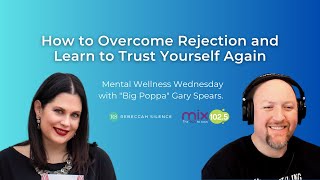
Rebecca Silence talks with a guest who breaks down rejection as a mask for five deeper emotions: anger, grief, fear, joy, or excitement. The key is feeling the underlying emotion instead of the rejection itself. Disappointment comes from your own expectations, so validating yourself rather than waiting for others to do it changes everything.
Depending upon the situation, it could be really, really traumatic. And other times, not so much.
Dealing with rejection, both have to do with taking things personally, right? Because, like, people are just doing what they do. Anyone that you feel like is rejecting you, guaranteed. How they're treating you is how they treat everyone. Underneath rejection, I just want you to consider there's one of five emotions happening. Anger, grief, fear, joy, or excitement that actually is what you don't want to feel. The rejection is easier, almost like a normal that you're used to. And that's hard, right, to admit. But I think if you'll admit when you're feeling like you're being rejected and if you'll admit that that's a normal that you're used to, still you get so much power back so fast because you don't need rejection to be a normal that you're used to anymore. And unless you'll feel the emotion underneath that. Emotions and feelings aren't the same thing. Rejection is a feeling, and feelings can, you know, release and change really fast. Emotions stay stuck until you feel them.
Mix 102.5 the best mix from the 90s to now. Big Papa in the afternoon. Mental Wellness Wednesday. It is life coach Rebecca. Silence, Tougher together. A breakthrough podcast. RebeccaSilence.com Rebecca, good afternoon. How are you?
Hello and happy. Mental Wellness Wednesday, everyone. I'm very well.
So I want to talk about something that people deal with on a pretty regular basis, and depending upon the situation, it could be really, really traumatic. And other times, not so much. Dealing with rejection.
Ooh, ooh. It's a thing.
Yeah. So what are some good ways for people to deal with either rejection or disappointment, depending upon what. What's, you know, a better word to use?
Okay, this is so good. Especially in love month, especially, you know, in winter still for many of us, right? Seasonally, wherever you're listening, but especially in central New York, right. February is cold, February is dark. February, especially if you find yourself single and alone, can feel more than ever like you are disappointed and rejected at the same time. Just double whammy. That's. That's just hell, right? And optional. So here's what I mean by that. So I think that where and when you're feeling rejected, it's really important to acknowledge that. That's the first thing I want to say. A lot of people try to numb out, shut down, get busy, avoid that experience of rejection instead of just being honest and being with it. Almost like a newborn baby, just gentle and loving and present with it and of itself. Will start to neutralize the pain. Instead of pushing it away, lean in and embrace it and just connect to it a little bit. And then from there I want you to go deeper, like, and we'll talk about disappointment in a second. Specifically to rejection. What's the emotion underneath that, that you really don't want to feel? Because I want to invite you to consider that rejection is easier than the emotion that stuck underneath it. So what do I mean by that? Anger, sadness, fear. It's usually one of those darker emotions underneath the rejection. But it could also be that you are afraid to experience the good stuff. So you're rejecting joy or excitement. So underneath rejection, I just want you to consider there's one of five emotions happening. Anger, grief, fear, joy, or excitement. That actually is what you don't want to feel. The rejection is easier, almost like a normal that you're used to. And that's hard, right, to admit. But I think if you'll admit when you're feeling like you're being rejected, and if you'll admit that that's a normal that you're used to, still you get so much power back so fast because you don't need rejection to be a normal that you're used to anymore. And unless you'll feel the emotion underneath that, emotions and feelings aren't the same. Rejection is a feeling, and feelings can, you know, release and change really fast. Emotions stay stuck until you feel them. So you have been, I'm sure of it, rejected in your past, quote unquote. But you don't need to reject your rejection anymore. Lean into it.
Okay, now with that being said, how. What's a good way to deal with disappointment, considering you said that there was a difference?
There is a difference and there are similarities and there's differences. But the differences that I want to really focus on today are, you know, disappointment, you actually have a lot more control over than that experience of rejection. Rejection can blindside you. Rejection can come out of nowhere. And I think both have to do with taking things personally. Right? Because, like, people are just doing what they do. Anyone that you feel like is rejecting you, guaranteed. How they're treating you is how they treat everyone on whatever day they're in that particular mood. And maybe you've seen them treat people better, but think about it as a bigger picture. They're doing what they do with you, and they also do that with everyone. So it's not actually personal, but we take it personally. Disappointment you have more control over because you're really. When you feel disappointed, you really Set yourself up with an expectation that got shattered, right? You wouldn't be disappointed if you didn't have this need for a person to be a certain way or for a situation to go a certain way to validate you. So when you're disappointed, you needed this thing to validate you, and so you have a ton of control over that, if you will. Look at what disappointed you. How did you get disappointed? And how could you have made sure that need got met through you instead of making it about, you know, I was feeling insecure about whether or not I'd get the promotion. So I needed my partner to, you know, give me a candle at dinner and flowers and tell me what a good job I did and tell me how great I am and tell me that I'm going to get the job. And my partner, when I came home, didn't do that for me. So they don't actually believe in me. So now I'm disappointed while I'm waiting to find out if I got the promotion. Like, this is the gross game that we play, and it's so much pressure that we put on people. So instead, if I'm insecure, I can just let my partner know, hey, I'm feeling insecure. Can you listen? Like you asking for what you need instead of, they're supposed to read your mind. They're supposed to be the solution. They're supposed to be the source of your validation, right? Another example with your kids, right? If you're disappointed in your kids, it's because you're making their behavior all about you, you and what you did or didn't do as a parent, they become a reflection of you. When you're disappointed in them, instead of seeing them as who they are in the world and actually being a place and a space for them to find their wings, spread their wings their way. That isn't you. We're not here as parents to, like, create cookie cutter versions of ourselves. We're here to figure out how to be there for our kids as they find out who they are and become who they are. So, you know, this is a huge conversation, but disappointment is all your fault. And I'm going to say it that harshly, because I want disappointment to no longer be, like, so fun for you, so acceptable for you. A sandbox that you, you know, get in and play in of your own accord. You don't need to be disappointed. You need to up your game of validating yourself and finding ways to get your needs met that are creative and resourceful and not put on one particular person or situation.
It is a mental wellness. Wednesday Life coach Rebecca. Silence. Incredible stuff as always. To reach out to Rebecca. Rebeccasilence. Com and she's the host of Tougher Together, a breakthrough podcast. Rebecca, thank you so much. We'll talk to you next week, okay?
You are so worth all the love in the world. No more rejection or disappointment, and I'll see you all soon.