Multistreaming with Restream.io
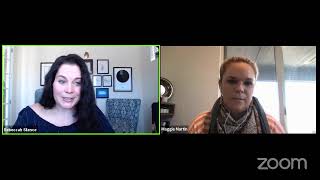
Rebeccah Silence coaches Maggie Martin Riley, a school leader, through stress and creative block during COVID. They surface what stalled creativity means, reframe "feel good" as "doing my best," and build practical tools: an inspiration hacks list, success story documentation, and inviting teachers to define their own best.
Every single week, same time, same place is breakthrough work with a bold and brave volunteer who has the courage to do their work out loud, vulnerably for all of us to follow along and do our own work with them. We're also bringing in healers and leaders in healing in an interview format at times. And if you are wanting to be in the hot seat, all you've got to do is go to rebeccasilence.com or message me and we are booking out 2021. We will get you in the hot seat with us, but the purpose of the hot seat is for everyone to see how much growth and healing and momentum can be created in just 30 minutes. 30 minutes is all we need to get the needle moving forward. We won't solve everything, but we will create momentum. And thank you for joining us. Wherever you are, follow along, do your own work with our amazing hot seat volunteer for this week, Maggie Martin Riley. Maggie is an integrative holistic life coach and a leader in the public school system bringing new possibility for teachers, parents and students every single day. She has committed her life to making a difference and she is making a huge difference. It is an honor to have her in the hot seat. Welcome Maggie.
Thanks Rebecca.
So glad to have you. Tell us what had you want to be in the hot seat and what you want out of our time together today.
Some things I have been thinking about are the intersection of my coaching work and school leadership and the new year. And I definitely lived through a January that felt very long. I feel like January can have that like quality to them and so it's kind of like a January feeling a lot of energy. But in that energy, some, some, some of the like chaos, like chaotic energy. And so now I'm in this place. So it really expanded my coaching work and then I'm still a school leader in the time of COVID and thinking a lot about how I am meant to be a school leader in this moment and trying to like re energized, sort of like inspired leadership, you know, on behalf for teachers I work with and the students they serve.
At first I just want to say thank you for the work you do, especially during these historic times. I cannot imagine being in a principal position in schools right now and that is the position that you are committing to and staying committed to regardless of difficulties. And I've been in schools before. You know that about me. I'm a former school counseling coordinator and school counselor and I, I just can't thank you enough for the work you're doing for These kids and families in the community right now. If we could do anything in our time today, what is it specifically that you would want to break through, meaning moving through to get to a new, expanded experience?
I'm going to be with a group of teachers this afternoon in a professional learning experience. And I just have been thinking, like, how do I want to show up there? And how can I show up in the best way, you know, with energy, with support, with vision, with creative, you know, creative force and that we still need. So that's like a thing that's happening today. But I think that creative energy, inspired energy, just in my leadership in general, is something I'm looking to kind of reignite. I felt a little out of flow. Like yesterday, I was planning something and it took me hours when it should have taken me an hour. Just kind of that stuck feeling a little bit.
So the result you're looking for, just to say it back and make sure I'm tracking and is inspired leadership and energy being more the rule versus the exception. And then is the breakthrough around whatever's in the way of flow?
Yeah, I think so.
Okay. So I always invite people to close their eyes if it's useful. I want us. And for those of you with us watching, doing your own work with Maggie, you know, how do you get more inspired in your energy and leadership and in flow? What's in the way of that for you? But my question, Maggie, letting your soul and your body and your spirit answer and not that brilliant mind of yours, is what's in the way of flow now?
Like, lack of clarity and resistance.
And what is the source of the lack of clarity and resistance? Is it a belief? Is it a stuck emotion? Is that a pattern? You're in an experience. You're in.
I think it's an experience. It's kind of. It's the energy I've been feeling of just like, less settled, less. I don't like unsettled. A little unsettled. And I don't have any, like, identity or connection to anxiety as, like, as part of me on a normal day. But I've had more, like, physical things, like my back hurts, feel anxiousness in my chest, my jaws hurting. So, like, kind of like my body talking to me about some. Some stuck energy.
Yeah.
And then when I sit down to create, which is really the work I love, it's just not coming as easily, not as focused.
And what is the belief or meaning you're putting on this experience of unsettled and anxiousness, and I'm not maybe as Productive or flowy in my creation as I think I should be.
One meaning I put on it is that sometimes my body knows that I'm stressed before my brain does. And so one meaning is just kind of to listen to those physical things that are going on. And then another meaning that I've gotten on it recently is I've been in these. There's peaks and valleys I've experienced before, kind of like sort of a. Like a slowing of the creative force before then and catapulted back out. And I have so much I want to do. And there's. I've seen the benefit of that pattern that there's some kind of, like, hibernating or something that takes, like a nesting. Yeah. And so this time I feel like I have that perspective. Like, okay, I think I'm in one of those before the creation places. And I've started to think about it as like a slingshot and kind of the tension of being pulled back. Like, I feel like I'm in that tensiony place and I'm just trying to think. You're gonna be released.
Yeah. And I love that, that you have that possibility that, okay, this moment is a moment. It's not forever. And in your experience, you know, when there's been that little bit of a slowing down or stuck, it's never permanent. But what part of the experience you're in now are you making wrong? Even though you get all that, it's fine to get it, but there's still almost dissonance, like in music between what you know, know as possible and not really being settled in to the moment you're in. Maybe that's part of the unsettled. Are you following me?
Yeah, I think on one side I'm. I've just had, like, tremendous opportunities to grow my coaching work, and I'm working with school teams and coaching them and coaching individual clients and really taken on more in this new year. Um, and kind of have the sensation of having run into a second career without maybe, like, really, really, like, deeply considering the structures that make it sustainable. And then going like, just be grateful. Like, just be so grateful. Don't, you know, get caught up in this, like, sort of these feelings, this energy, because it's so amazing that you have these opportunities. So making that wrong to kind of be like, whoa, okay, that was like, this is a lot. And then I think on the school leadership side, you, you know, I just see the work as being able to hold the light, like forging into the darkness and like, to have some weariness around that. I feel badly about that. Like, oh, I just don't want to host a meeting that isn't good for teachers or isn't inspiring or, you know, doesn't create possibility. And so I think just that kind of like doing it wrong or not being the best in the work. Those are.
Okay, so which one hurts more? We're doing great. Just kind of getting to the root of the stuck or whatever's in the way of this breakthrough versus dealing with the symptoms. So which is more painful? The fear around getting it wrong?
I think actually it's in the, like, not being. Not enjoying the schoolwork. Right. As much.
Okay. So that's honest. And, you know, for everyone watching. Did you hear, you know, as we're beginning here today, her throat chakra just opening up more and more and more. So. So what's it like to say that out loud?
It makes me want to cry.
Okay, that's great. And if you need to cry, cry when we need to cry. It's so important to allow that, because the tears aren't actually circumstantial. They're stuck inside of us needing to come out. And if we won't let ourselves cry when we need to cry, life will just kick our ass until we will. So I'm so inspired by your leadership right now, to just be with what's real. And what if that's all inspired leadership is, is being inspired to be with the moment we're in. I think there are all of these myths and misconceptions about what is inspiration. It isn't feeling good. I work out every single morning and do a bootcamp that I don't want to do almost every single day, but I'm inspired to do it because it's real and it's right action to move my energy and to move my body and to get grounded into my myself before I get the privilege of working with people all day, every day. So is there any part of you that thinks, you know, you should be feeling differently than you do or, like, thinking inspiration is more of a high vibe than where you are?
I think so. Like, I see inspiration as authenticity, and I. And vulnerability is inspiring. I just. A lot of my work or, like, my thinking about schools is. I just. I want there to be a way that isn't full of pain, that isn't, like, the path of suffering. And so I think I see inspiration as a little bit of the. The. The other opportunity, the other culture we could build in schools. And so, like, when I'm struggling with that Myself?
Yeah. Who would want to work in a school right now?
Yeah.
I mean, seriously, who would be like, oh, this is fun being an administrator or an educator or a support in education in any capacity. Who would want to do that right now? And who would want to lead in the world right now? And the leaders that are inspired to make a difference in this time are doing it, even though it doesn't feel good. What happens as I say that to you? Yeah.
I just kind of feel that, like, on. In my body. I think that's part of it is there's a lot about leading for education right now that doesn't feel great. Kind of the data of the last year is catching up, and we're seeing where our students have been really impacted. And so, you know, bringing the reality of the situation with the possibility of the situation is my goal. You know, and then sometimes I'm like, can I do that?
And you are a master coach, Maggie. You know, you're a recent graduate, but you've been leading for a long time. You've been in this position of leadership in the schools for a long time. And it's easy to lead and be inspired when everything's going well. And it's in these times of crisis and chaos where inspiration and leadership, in my opinion, matters almost the most. Right. Like, it's easy when it's going well. It's more of a challenge when shit hits the fan, if you will. But that's when those skills come into play. And it isn't always going to feel good. In my experience, inspiration doesn't always feel good. It just propels me into more and more integrity, meaning I use inspiration to keep me on track. So I think getting out of resistance to the pain and no longer making the pain or the suffering or the difficulty really wrong, but just looking at it as. As you said, reality that needs nurturing. Just like a student, you don't give up on any student. Yeah. Why not?
Just not an option. So life.
Why not? Why isn't it an option? Think of. Think of a student that you never gave up on. Can you find it?
Yep.
That you stood for even when it was challenging, painful and difficult. Why wouldn't you let go of the inspiration behind staying a stand for that student?
Like that is. That is the work. That's what I'm in, the work. That's what I'm an educator for, that student.
Why?
Because we all need. Need each other. I'm doing people to be a Stanford.
Keep going.
We need people to be a stand for each other.
Okay, so I'm going to do Dean and Tony Robbins. Dean Graziosi and Tony Robbins. Seven whys with you. So that's the work. We all need to be a stand for that student. Why?
Let's see.
And don't think about it.
Yeah, just like, I'm just thinking like some version of we don't need. Like, being alone is not what we're here for.
Okay. Why? Why is being alone not what we're here for?
Because community is part of our human experience.
Why is community part of our human experience?
Because connection matters.
Why does connection matter to you, Maggie?
Because it gets me outside of myself.
And why is getting outside of yourself important?
Perspective, possibility.
So what if your role right now as a coach and leader and administrator in schools isn't actually compartmentalizable? Like, what if it's not? Different boxes. It's all the same. And what is the possibility that you're leading in right now? Do you have words for that?
The possibility I'm leading in right now, the possibility I'm leading, I want to be leading for right now, is that we can confront that we can be with the tough reality of our schools and, like, the impact on our kids and show up as the perfect teachers or school leaders for them and create a better educational experience going forward. Like that there's something in this really hard moment for us.
And you believe that and you know that.
Yeah.
And then is it useful to think about your. Your cause and your message right now as just a different version of a student that you're standing for?
Yes, absolutely. And like, something that I can get clear on with kids that I can struggle with more with adults that I'm working with is like, for a student, there's times where, like your workout, there's times in the. They're learning that don't feel good in a moment. And I can kind of be with that. And I think I get more challenged. Is like a skill I have to keep working to be with adults, be with my colleagues when it doesn't feel good, but kind of knowing it's okay to be in that not great feeling and that the next feeling or next experience is going to be available to us.
Yeah. And I think this is where. When I teach about inspiration, and inspiration is so important to me. It's the name of my company, Inspired Results. What I'm talking about, when I'm talking about inspiration is connection to my spirit. What is my spirit feeling? What is my soul and my spirit giving? And it is so important to know, in my opinion, and in my experience, how to connect back to inspiration in those most difficult and painful moments. And what that means to me is like a never give up. Inspiration allows me to get through the part of me that's willing to quit. And I know that there's Carol Reynolds. My first coach used to say it, like, you can't leave the baby halfway through the birth canal. There's that painful part of growing through the growing pains that are necessary to the next level that we don't get to skip. If I'm here and I want to be here, if I'm leading in moving people, aligned with my message from here to here with me, A. I can't be attached to anybody coming with me. I just got to know where I'm going, going, and know that my commitment to that message, my living that message is all I really do have control over. Right. Our. Our coach, Heather Steele, taught me that, like, you can't be leading and going, are you with me? Are you with me? Are you with me? You gotta be like, here's where I'm going, and I'm going. Right? And then there is, like, the part of inspired leadership that is that fresh love phase where, oh, my gosh, this is so exciting. This is gonna be great. And then, boom, reality hits. And wait a minute. Here are all the things that aren't great. Here are all the pieces that I didn't see coming or didn't expect or don't want to face or deal with. It's in those moments that staying connected to inspiration, which is why I'm asking you your why. I think why only matters when it comes to why behind the inspiration that's going to create the new result. Why is something happening we have zero control over, and it's a waste of time. Does that land?
Yep.
What Are you getting anything?
Yeah, I think I'm the baby in the birth canal.
Yeah.
Like, feels really right. And. Yeah. Just the bigger why. I mean, just maybe I didn't get to it in the seven whys, but this work will matter. This work matters every single day. It matters. And I think what you're saying, too, is that knowing of, like, it matters, particularly in the really challenging moments, and that just like it's always mattered, particularly with kids who are struggling or a teacher who's struggling or whatever, like, where it's when it's hard to show up is when it matters. And then, like, the showing up in the hardness still might not feel good.
Yeah. And I play a game with myself, and everyone can do this assignment. I Have two assignments for. For Maggie and for all of you watching that feel inspired to participate. So I have a list of basically 25 inspiration go tos. So what that means is I look for my inspiration hack list. What are the things that inspire me that I can go back to in the moments where it feels like inspiration is lost or fading or not available? Right. So for me, getting outside, for me, exercising in the morning, for me, movies, books, bubble baths, roses, candles. Like these little things. See, we always have control over going back to inspiration and the moments where it feels like that light went out. And then the truth is, it never actually does. It never actually does. And Maggie, you've been called to lead, and I want to just invite you to make Your list of 25 inspiration go tos that in a challenging moment, you can go back to at least one of them. And then I definitely invite you to write about a moment with a student that felt like all hope was lost. Maybe nobody else on the team saw what you saw and you stood for that student anyway. And I'd love for you, as you write about that, to really be looking at, okay, what did you do that you can duplicate in the hard moments? You know, you wouldn't cave, you wouldn't give up. Why? What was there that you weren't letting go of that kept you inspired not to give up on that student? Okay, tell us what you want for schools and teachers and parents and students. What do you want for them?
What I believe is that when educators feel good in their work, like, they see their impact, they see the way they're being of service and the way they set out to be of service. That is like, what it means to show up for a kid. That's instructional excellence, that seeing how our relationship with kids matters. And then, you know, I think students in environments where they're loved, cared about, challenged, supported, and given the highest quality instruction, like, to me, that's. That's our future. That's the transformation that's available to us in education. So for everyone, part of the system, part, you know, doing their learning and conducting the learning, I want them to feel good, to be connected to their service and impact. And for our students, I want it to be an empowering experience that leads into the life that they most want to create for themselves. And, you know, rather than those stories you hear of, like, schools don't teach kids to think or don't prepare them for the world we don't yet know or stifle creativity, I want that narrative to be completely transformed into what into the it's opposite. Like, we learn, we teach kids how to, you know, how to think creatively, how to express themselves, how to, like, keep their gifts that they were born with. We don't train something out of kids and that they then go on to be, you know, and I mean, kids from all walks of life, which is who I serve, go on to just see life as their own possibility. So I want schools to be places that feel good and that have culture of possibility and of balance and of mutual care for everyone who's part of that system.
So can we replace feel good with something new? Because when we're growing, it doesn't always feel good. Right. So you're set up to lose. I love everything you said. I love that you're so about the students. I love that you're so about wanting teachers to. To know that they make a difference and that their service matters. But if the goal is for it to feel good, I think we might be missing the boat. So what could we replace that with that we do have control over?
Yeah, I guess where that comes from is I keep thinking that, like, if a teacher enters a classroom with the intention of, like, having an impact and then they don't feel successful, it's kind of like doubling down on past trauma or suffering and like that. What could ultimately feel good is to see your impact. But I hear what you're saying, like there's. You're walking through something to get there.
So you have a message to the world.
Mm.
What is it?
That being your best is possible.
So what if feeling good is replaced with doing your best as possible and that's enough? Right. Schools can be a place where we do our best, and then every day we use the challenges and the difficulties as access to more of our best, which will inevitably lead to triumph and victory. And we just don't know how or when. Yeah, I mean, how does that feel? These are my words, not yours. But I'm just wanting to play with you, being able to center within yourself and settle into yourself, knowing you did your best. And then my experience in leadership is we almost never get to know our impact. So I would love to hear you in your words, speak to teachers and educators and parents and anyone involved in education right now or caring about our education system right now. What would you say to them about their service and their best almost being enough, even when they're not necessarily getting the feedback?
Yeah, I think of what you just said and what you've taught me, like, the impact sometimes is none of our business. And that we can live that reality while being in a system of accountability. And we can use accountability measures to direct point us in the direction of, like, our highest impact wall. Like, kind of that dual knowing that we're striving for an impact while knowing we may never know. You know, most of my students, I won't see or know necessarily into their adult lives. That full, that continuous impact that education has, and almost just the possibility or like the dream of a continued impact, I think is something that's available to us as we raise kids and support them in schools and do all that work that will have ripples beyond the moment or the day or the pandemic.
How does that feel in your body?
It feels exciting. It feels energizing to me.
How do you know you've done your best.
For me? My best. I have to filter through my values. And it's just that, like, right next. Right. Action aligned to my values, which are love, joy, gratitude, service, and leadership. And if I can kind of say I've done my best within each of those, I think that's a good day or a good action within the work.
Even if it's painful or difficult or the feedback you're getting isn't necessarily the feedback you'd hoped for, you can go back to those values.
Right.
And does that process of checking in, temp check with did I do my best with your values energize or drain you?
It energized. It's settling. To me, it's grounding. Because I think part of this, part of this inspiration or this feeling more like, oh, I want to inspire. But in, like, that distorted inspiration, like cheerleader inspiration is, or back to wanting teachers or people who are part of our school to feel good is kind of that drifting away from my values because I've learned time and again that to be in leadership or to be in service sometimes requires challenging conversations or hard decisions, things like that. And that my leadership isn't based out of the. It can't be based out of because it doesn't work. Just the trying to control the feeling. And I tried that many times and not done it, and it doesn't work.
Yeah. And I think one of maybe the best gifts that you can give the lives in front of you, the world in front of you, and the communities in front of you and the teams in front of you is the opportunity to validate. This is hard, and we will get through it. And let's talk about why this is hard and what we're experiencing and how in community we can get through this together. What support can we be for each other? And you could inspire them, Maggie, to get back into. All right. What does being my best mean in this moment, today, this week, this month, this year? And let's get it defined and measurable, because no matter what else is going on in the world or with our students or in our schools, but we all have control over committing to being our best. And what would happen if we all did that? What's it going to look like? And this time isn't forever. And it sucks. This sucks is maybe one of the most powerful two words you could use in front of whatever groups are in front of you right now, because it does. This sucks. And there are definitely going to be moments where it feels impossible or like all of the effort isn't worth it, but you know it is. So tell them stories of success where you thought it's not worth it, but you wouldn't quit and you wouldn't cave, and here was the outcome. Yeah. And let them share with each other and with you what's painful and what being their best even though it's painful, looks like. And what are the possibilities if and when that happens collectively? Yeah. How does that feel in your body?
Yeah, that feels good. I've been thinking a lot about so many of our leaders and people from history who've lived through. I don't know, it's comparative suffering, I guess. But what I think you could make the case are very hard times, harder times. And like, they. The hardness of that time is part of what made. Allowed them to, like, fully be great.
Yeah, yeah, yeah. Get me all fired up. So I'd love to end with this. Tell anyone in education, thank you your way.
Such a good task and an honor. I'm just grateful for all educators, for parents, for all of us who are supporting kids in this time in dynamic and creative and innovative ways. And I've never been more aware of, like, the global educator community than I have been during COVID You know, I find myself in Facebook groups and reading more journals to learn about what my colleagues are doing and to be reminded that there's creativity and flexibility and the willing to adapt on behalf of kids all over this world. And knowing that energizes me, inspires me and leaves me feeling really grateful.
What I want to say to anyone involved in and supporting education right now is these kids are watching us. And our ability to. To navigate staying in inspired energy and inspired leadership as the rule versus the exception models that possibility for them. And we don't have to get it perfect and we are going to have hard moments. But I love Maggie's work around anyone can be your best and if you can be your best, why wouldn't you be? And figure out what that means to you and let it be enough. And thank you for giving and struggling your way into the next level of education that we're not sure what it's going to look like yet. And it does suck in moments. And then your heart and your leadership and your modeling possibility for these kids and you caring about these kids is an inspiration to me and a gift to all of our communities. And just thank you and Maggie, thank you for being vulnerable and just real about how hard this is right now.
Thank you.
Did you get what you needed?
Yes. Thank you.
What's your biggest takeaway?
I think just coming back to that idea of leading with that question of for myself, like what is being my best? What's possible? And then sharing that question or that invitation with, with the teachers that I'm collaborating with. And I'm trying to resist coming back to feeling good. But there's for me in being the best, it ignites like a good feeling even when it's hard. It's like those two things at once. So just that reminder and also just the validating of the tough moment or the being in the birth canal or you know, the slingshot like that it is temporal and it's, it's. There is going to be something on the other side of it too.
Yeah. And I think first it's painful and then we can use willingness to stay inspired, to be in the moment we're in, knowing we can't control it even if we have a different preference. And then from there, staying committed to service and not caving on people can eventually lead to that kind of natural high. But inspiration isn't just a natural high. I don't think that gives inspiration enough credit. I think inspiration is a process of moving through pain into willingness and neutrality and true commitment and knowing the breakthroughs happening into the next level. And we can't control that when it happens, but it will. It's not about feeling good, it's about staying in the game. And thank you for modeling that and for being here. And what you don't know is we have a two part series over the next two weeks in the hot seat where we're bringing in an expert to talk to parents about how they can be with their children at home during these times. And she's going to also talk about strategies to prevent and support with substance abuse with kids during these times because that's definitely an issue that is out there and we need support with that. So you're just beginning our little three part series for parents and educators around what they can do with their kids. So thank you, Maggie, for being here. Let us know what happens. Create those inspiration hacks. Write about your success stories so that no matter what, you can go back to that. Yeah, we're not going to always know when we're making a difference, but we can always do our best. So thank you.
Thank you.
And thanks everyone for watching.
More from Rebeccah





Free 5-Day Live Online Bootcamp for Mothers, August 24–28 4 PM EST. Replays available #shorts



