Navigating Toxic Relationships: Recognizing and Breaking Patterns
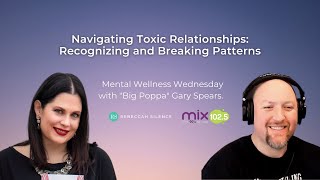
Life coach Rebeccah Silence breaks down toxic patterns in relationships: over-functioning, taking responsibility for others' happiness, repeating what you saw growing up. She calls out "self-betrayal in the name of love" and says healing the pattern matters more than leaving the person.
Getting out of a toxic situation, a toxic relationship, toxic situation.
How do you get out of toxic patterns so that you don't take them with you into the next relationship?
Okay.
Okay. Because what a lot of people think is, if I can just finally almost overcome my addiction to this toxic dynamic with this person, then I will be okay. People mistakenly believe the relationship they're in is the problem. Instead of recognizing, no, no, no, no, no. You've got patterns that you're comfortable with that even if you know it's a whole bunch of unhealthy for you, the patterns will repeat until you've healed your way through them.
Mix with a 2.5. The best mix from the 90s to now. A big papa in the afternoon. It's a mental wellness Wednesday with life coach Rebecca Silence online. Rebecca Silence dot com. Rebecca, how are you?
So, wow. Thank you for having me.
Well, it's kind of what we do. It's. It's like. It's. You know, it's me and you. It's. It's kind of. It's kind of. Kind of the thing here. This week. Let's talk about getting out of a toxic situation, a toxic relationship toxic situation. And not just getting out of it, because a lot of people have been like, that's it. I'm never going back. Up, up, up, up, up, up. But then a month later, they're right back in it, and sometimes even worse than they were a month prior. How can. Let's talk about getting to a point where it's like, all right, no, it's done. Dun, dun, dun, dun, dun. And no turning back, because there's good intentions and they want to, but it's. But staying strong and not getting sucked back in really is a problem for a lot of people.
Well, and I think there's two huge pieces to look at here. One is, how do you get out of a toxic situation with a certain relationship? But the other piece of it is, how do you get out of toxic patterns so that you don't take them with you into the next relationship?
Okay.
Okay. Because what a lot of people think is, if I can just finally almost overcome my addiction to this toxic dynamic with this person, then I will be okay. People mistakenly believe the relationship they're in is the problem instead of recognizing, no, no, no, no, no. You've got toxic patterns that you're comfortable with that even if you know it's a whole bunch of unhealthy for you. The patterns will repeat until you peeled your way through them. So. So let's Start with a specific relationship you're in and toxic dynamics before, before.
We go down the rabbit hole. Yeah, you, because you brought up toxic. Say that again. It was toxic patterns is what you said.
Right. So we have toxic relationships. But don't forget you've also got toxic patterns.
Talk about, give some examples of toxic patterns because people listening may not even realize the toxic pattern that they have or that they're, you know, because it's just life for them. Sometimes you just need that flashlight being like, no, you may think this is normal but this is actually toxic. And I, that's where I really like to get the like the, you know, the nuts and bolts of it here.
Well, because that really is where the healing work is, right? Is healing through the patterns and even understanding that there is a pattern of being able to identify it. So I'm happy to start there because really this is the work. It's not just about healing in a particular relationship, it's about healing patterns. So here are some examples. This is like Christmas morning for me. I could talk about this all day long. So if you're feeling like you're over, I guess to you I am so grateful. So if you feel like you're over functioning, if you feel like you're over responsible, if you keep feeling like you get betrayed, abused, neglected, rejected, lied to, cheated on, I could go on and on for days. These are, are all examples of patterns that aren't about the person you're with. Here's what I mean by that. You in some way shape or form. I'm going to try to make this as simple as possible with the disclaimer. Yeah, this isn't easy. Yeah, this is complex. But let's try to make the complex really clear and really simple. If for example, you've got a pattern where you're the one doing all the work and you're over functioning and you've kind of got partners that are lame and you're over it. Right? Let's just use this as an example. Guaranteed you in your childhood had one parent that was the over functioner and one parent that was lame and let your over functioning parent do all the work. So now in your brain and it's not conscious, the work with me brings to light and brings to awareness what we didn't even realize was going on. Right? But what you saw modeled was one person does all the work and one person kind of gets off scot free and doesn't have to do that much. So either you decided it was more valuable to be the one that doesn't do that much. Or you decided, I don't want to be the lame. Oh, so I'll be the one that over functions. But you're playing out a pattern that you saw, modeled. That doesn't have to be your story. It can be your parents story, but it doesn't have to be yours. But not, you know, enough of the time. Do we have adults having a relationship experience that is what they want, not what they saw. So the reason why we want to face the patterns that might feel embarrassing or shameful or even painful to face is so that they don't repeat and where we get ourselves into trouble. And I've got a client right now. She is seeing that her partner is not showing up how she deserves, is not meeting the standards of respect or excellence, frankly that she desires. But she thinks that if she just ends it with her partner. Now I've escaped. I'm saying, hold on. We've got to look at the patterns of why you're willing to betray yourself in the name of love over function in the name of love. Feel like you're at the effect of your partner's behavior. These are all patterns that have nothing to do with your partner. That if you just end it here, you pick a new person and you play out the same patterns and dynamics.
So, Rebecca, you just said betray yourself in the name of love. Explain what that means.
That is like the number one pattern that I see people playing out in their relationship that is so toxic. So what we are programmed in our American culture to believe is that codependency. Codependence. I can't even say the word. I hate it so much. Is love like even in marriage vows, you're going to sacrifice yourself for your partner? You're going to compromise in the name of love for your partner. I'm all about, you know, given an inch and working with your partner and negotiating and compromising as long as it's still a win for you. But we are trained. Lose yourself so your partner feels loved. And that's what we call loved. And that's what I'm calling betrayal. Self betrayal in the name of love. I'm going to hold back my truth. I'm going to take actions that I don't really want to take so that my partner can be happy. I'm going to make myself responsible for my partner's happiness and their suffering. I'm going to make them responsible for my happiness and my suffering. This is all so toxic. And we betray ourselves in the name of love more than we realize, and certainly more than we talked about ever before. And it's normal because we've seen it. People we love, people we care about, people we respect. We watch them betraying themselves in the name of love. And it can be as simple as they don't really tell the truth about what they want, how they feel or what they need. Or it can be, you know, as complex as, I'm going to quit my job. I've seen this a lot in my private practice. I'm going to quit my job to be the wife and the mother, and I'm going to resent my partner, but I'm not going to tell them that I'm unhappy or that I need it to be different. So often we're betraying ourselves in the name of love, but we haven't even communicated with our partner about what we would really want. We're just like, no, I'm going to be the good partner. And it's not just women with men. It's men with women. It's men with men, it's women with women. This is not a gender conversation. But it's just a good example, right? I mean, I had a client a year ago, gave up everything to support their husband's business and entrepreneurial lifestyle. Had the kids. I have no career. I've got these kids now. All I know is that I'm your wife. And their mother, well, the husband got real bored. Like there's no empowered partner anymore that they married. Now there's an affair. Now they're like, actually, I want a divorce. And this woman is saying, wait a minute, I gave up everything for you. But the point is, yeah, you gave up everything. You gave up you in the name of love. This is a problem. So if you find yourself wanting to sacrifice what you know would be good for you in the name of love, I want you to start hearing alarm bells. Re. Re. Like, this is not good and it only ends terribly for you. And I'd rather you let your partner. This is so important. I'd rather you let your partner be uncomfortable and frustrated with you because you won't sacrifice yourself in the name of love than worrying about avoiding your partner getting upset so that they can be happy with you while you're unhappy. There's no way to love. And that's certainly no way to love. And the most toxic pattern that you can break up with today, this minute, this week, is giving yourself permission to betray yourself in the name of love. Because I've got to tell you, as adults, it's a choice. Now, we don't know it's a choice until we even realize this is something we don't have to do. Again, it's so normalized, but it is a choice, kids. We just have to learn how to survive in our house. So it really isn't a choice for our children to shut their truths down or to not ask for what they want because they want our love. They don't even understand it. But as an adult, you can have a whole new experience of standards for yourself and standards in your relationship. And just don't think if you take nothing else from the segment, don't think ending the relationship you're in is what's going to actually heal you or make you happy. You've got to heal through the patterns. Otherwise it's just. And I used to say this all the time, it's the same guy, it's a different face. Like, oh my God, it is. Here we go again. Groundhog Day. What's going on? Well, it was me showing up the same, attracting the same patterns that hadn't healed yet. They're doing what they do. I get to heal the pattern or play it out. I always have that choice and so do you. Listening today. And I hope this is really empowering and encouraging. No more betraying yourself in the name of love. And don't forget, your kids are watching you. If you're betraying yourself in the name of love, what do they learn? That this is what love is. And someone's got to break that cycle in your family and it can be you.
Name of the book is coming back to life. You can get it wherever books are sold. It's a Mental Wellness Wednesday with life coach Rebecca Silence. Learn more and get all the stuff about rebecca@rebeccasilence.com Amazing stuff as always. We'll talk to you next week.
Thank you for having me. And if any of this speaks to you today, we've got an offer on the website. You can book a free call with me and we can start your healing roadmap right away. Take advantage of it.
RebeccaSilence.com Bye, everyone.
More from Rebeccah





Free 5-Day Live Online Bootcamp for Mothers, August 24–28 4 PM EST. Replays available #shorts



