Rebeccah Silence - COMMITMENT New Year, Best You Summit!
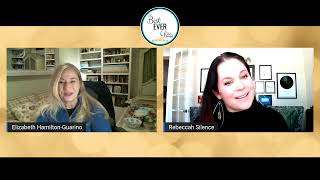
Therapist Rebeccah Silence, a cancer and trauma survivor, argues that healing requires unwavering commitment to yourself, not external obligations. She shares why people struggle with self-commitment, rooted in childhood unmet needs and societal pressure, and offers practical tools like nervous-system regulation and focusing on one inspiring commitment at a time.
Chapters
Hey everybody, welcome back to the New Year Best You Dream Big Summit. I'm Elizabeth Hamilton-Guarino, so long name, just Elizabeth's good. Here with Rebeccah Silence. How are you, Rebeccah?
Hello Elizabeth, so good to see you.
Hello everyone, happy New Year everybody. Yeah, we are, we're keeping true to the Best Ever You tradition in our community. We ask everybody to pick a word, kind of anchor to that word for the year instead of doing all the resolutions. I mean You can do what you want, but we find that picking that word really helps you focus, especially if along the way throughout the year you're kind of like, what am I doing again? You go back to that word and you can refocus and recenter. So you— I thought you were going to pick healing, but I looked and I'm like, wait, wait, wait, wait, wait, she picked commitment. I'm going to start though by asking you to just give us just a couple sentences about who you are so that I'm not reading your bio. Go ahead.
Awesome. So I'm Rebeccah Silence and My message is that healing is possible. It's not promised, but it's possible. And I've had a private practice now for 16, 17 years, been in the media for over 12 with a radio show, and recently published this book, Coming Back to Life, that is all of my just secrets to basically healing Even the seemingly impossible.
Sorry about that, dog. Hi.
Hi.
The summit. I just give you a break for a second. We have dogs, we have doorbells, we have kids, we have everything. So it's totally cool. Don't panic. Yesterday, as I was interviewing somebody who couldn't be here live, my doorbell went off, my dog started barking and everything. So you're in great company.
My dog just likes to be a part of all of the healing and all of the goodness.
Mine's peeking through the window over here, and I'm like, I need to just bring you on air. So anyway, all right. So all these wonderful things that you've done, you have Coming Back to Life podcast, Healing Is Possible Experience, and the Tougher Together Breakthrough podcast. You have an Emotional Survival Kit course. And then I wanted to have you mention what you were telling me before we went live. You have some trigger trauma. What is that?
So what my specialty is, is helping people master emotional health and wellness. We talk so much about mindset and strategy and personal growth and self-improvement work, but mindset and strategy isn't enough to change how we feel. And what I want people to know is they're more powerful than any circumstance and their emotions aren't too much. What I created was a free Trigger Trauma Release Masterclass that in less than 20 minutes can give you the tools and guidance to start to regulate and master your emotions so that you can feel How You Want to Feel. And then if you like that, you can progress to the Emotional Survival Kit course that takes you through my 7 steps to healing through survival and healing through emotional woundedness on any level for good.
Beautiful. Okay, now we're going to go all girl on everybody for a second here. Or if you love fingernails. Yeah, go. And yours have little decorations on them.
They do. I have stars.
Yeah, we both have blue on. So I'm loving this because I just love the connection with all the different speakers. It's like, it's super fun to see you guys and hear your messages and see your uplift and talk about these words and their meaning. And I think people are really enjoying this. So somebody just commented, I love what is happening right now. I'm trying to reinvest my energy to something bigger. You're in the right spot. So here we go. All right.
Commitment.
What, Rebeccah, what does commitment mean? And what does commitment mean to you?
Yeah, so to me, commitment is the key ingredient to creating healing. I love to say healing isn't promised, but it is possible, and then it's not possible without commitment. And again, I'm focusing on with my clients and in my own life as a cancer survivor, as a trauma survivor, domestic marriage, um, violent marriage, my first marriage survivor. There's always so much we have control over, and it's easy to be focused on what we don't have control over and the external that we wish were different in order to feel okay or safe or secure. And with commitment and awareness around commitment, we can start to pay attention to— we're actually never not committed. We're always focusing our energy and committed to how we're focusing our energy and to where we're focusing our energy, but we're not always intentional about it or aware of what direction our commitment is going in. So I like to look at commitment as a whatever-it-takes, as-long-as-it-takes process. And I like us to look at not what's good or bad or right or wrong, but what's good or bad or right or wrong for us, so that we can be more noticing. Is our commitment in a direction that actually honors our soul, feeds our soul, and is right for us? Or is it just what we've learned and how we've survived and what we've known and what we think we need to commit to, to cope. And there's so much to life beyond survival, managing, and coping. And we can up our commitment game in a way where we recognize we always have control over what we're committed to.
We sure do, don't we? Um, yeah, I, I believe that wholeheartedly. And, um, it's a, it's a tremendously important word. It's commitment goes hand in hand with success. It goes hand in hand with like dedication and consistency and discipline and that commitment to yourself. And I always think back to a moment when Todd Stottlemeyer, who's a really famous baseball player said, you know, you got to go all in. Yeah, go all in. And, you know, and that's, that's pretty much me to a tee. You know, I always kind of go, you know, 1,000% in, um, and, and just, and love that process. But it can be exhausting too. Commitment can be kind of, you know, if you, if you do too much, you can really burn out, um, in different ways. So you got to be careful with your cons— you know, your, your over overdoing it.
Well, and I think it really is about being deliberate and making a powerful decision about what you're committed to, because at least in my experience, commitment is never exhausting when it's in the right direction. Yeah, right. And I like to say commitment actually has no conditions. If you're actually committed, there's not a 'I'm committed as long as.' It's a 'I've literally burned the option of not succeeding'—your word from earlier—or 'crossing the finish line.' And to me, that's how commitment can become liberating. That's how commitment can become medicine, and that's how commitment can allow for healing. And when it's exhausting, it's a perfect opportunity to press the pause button and say, wait a minute, where is my energy misaligned right now?
Yeah, absolutely. I love that. All right, why do people have such issues around this? You see it right now, too. You see it really big time. People are like, I'm going all in on that. And like, 2 weeks from now, they're like, no, I'm not. Bigger than that, too. Sometimes there's just sort of a commitment issue phobia thing that goes with people, maybe they're wired that way or whatever. So there are a couple of things that we're talking about there, but why is it such a big word and topic and energy? Yeah.
And why does it have us automatically assuming we're going to feel drained or exhausted? And I think there are two big things. So number one, we learn as children whether or not our needs are going to be met and how confident we are about whether or not our needs are going to be met has a lot to do with our relationship to commitment. If we didn't experience our parents as committed to us, if we didn't experience our parents as committed to their own needs being met, on an unconscious level, we can just limit ourselves around what we think we deserve, what we think we'll get. And the other piece of it is we're not used to committing to ourselves. We're used to commitment being a process that has us trying to manipulate the external world versus commitment being all about a commitment to what honors our soul, what feeds our soul, what, what takes care of us and what respects us. So I love these 3 metrics when it comes to commitment. Does this honor, take care of, and respect me or not? And if it doesn't, this isn't something to commit to. And we think we have to be committed to, again, just surviving and managing and coping instead of transforming the experience we're having before the external is different. I had a 5% chance to live when I got diagnosed with cancer while I was pregnant with my second child. And they kept telling me all of the statistics and they kept telling me all of the worst-case scenarios. And I just decided to connect to my own inner healer, to connect to my soul's guidance, and to not participate in a commitment to just being a statistic. Instead, I committed to, I'm not a statistic. I need to take this on, lead my life. And I think we get afraid to hope and we get afraid to lead because we want to fail on our own terms. We want to prevent more heartbreak. But when we instead take pride in our ability to lead our own lives, be our own healer, and commit to just our next right answer, it's a whole new animal. We don't have to get too far ahead of ourselves. Just what's your next right answer? I like that.
What— and what is— if you think about that, you know, what is— what are— what does society teach us with that? You know, that's an interesting segue into just thinking about society and community and things like that. What does society teach us about commitment?
We talked about family. Yeah. Well, and society teaches us not to be too much, not to take up too much space, not to get too big for our quote unquote britches instead of like turn the volume up and be all of who you are, not who you learn to be to survive, who you decided to be, because you have a right and you're an adult and you are free of your childhood. So why not commit to no longer living in a way that's a constant reactivity to childhood? Say that again. Why not live in such a way that is no longer a constant reactivity to childhood and what you learned is possible and what you learned is acceptable? Decide what's possible for you, decide what's acceptable for you. So often we unconsciously are living based on our parents' paradigms and the rules about what was acceptable and what wasn't growing up instead of committing to making our own rules.
Yeah. What if you had a great childhood, though? Yeah. What if everything was fine and you get along just fine with your parents and everything was great and you don't have much healing to do in terms of your childhood and stuff like that? Yeah. Can you still— what does society think about it then?
What I would lovingly challenge, right? And no judgment. Here. But I've met no one who's immune to trauma. And trauma starts in childhood. So my work is about getting to the root of where the pain patterns started that we're unconscious of. So we can have a great childhood. I told my first coach I had the greatest childhood. And in a lot of ways I did. And it's not about blaming our parents. It's about recognizing where our spirit got stuck in fear. And commitment is either sourcing from fear and self-protection, or possibility and miracles. And it can't be both at once. And we learn what's acceptable in terms of what will give us a sense of praise and approval and validation and what's not. And when we feel unaccepted or unworthy, it's because we made it up in our childhood in a moment that we weren't getting the reaction that we wanted or that life couldn't handle us. And again, it's not our parents' fault. It's us as kids unconsciously putting meaning and boundaries around what we think is okay and what isn't that then follows us. And no one is immune to heartbreak. No one is immune to suffering. And that, that trauma that no one is immune to starts with our initial heartbreaks and starts with our initial experiences of our emotions being really painful and maybe even too difficult to navigate.
Yeah, when you're young, for sure. Um, is it true, do you think like younger generations are more resistant to commitment and what does that mean?
You know what I think about this because I have an 18-year-old and I also have a 21-year-old stepsibling. And you know what I think is so fascinating about the younger generations is they're just way more committed to themselves than generations before. They're committed, but they're not committed to anything that doesn't feel right or good to them or honoring or respectful or taking care of them. And they're really loud about it. If it doesn't feel right, they're a hard no. And I think we could actually learn a lot from these younger generations in that regard. And then, you know, the one thing that I think can be very slippery for the younger generation is they are learning— there's a lot of societal programming that says depression can't heal, anxiety can't heal, diagnoses are inevitable. And I just suggest it doesn't have to be that way at all. The symptoms can be real, but with commitment to getting beyond a limitation, including even a diagnosis or a physical symptom, again, there's so much freedom there.
Yeah. I like what you just said there about kids, because you're right. You're spot on right there with the— I have 4 boys, uh, 4 sons, and they're 21, 23, 25, and 27. And I would agree with you very much that if it doesn't resonate with them, eh, Right, they leave it pretty fast too, uh, for sure, for sure. And there, there's more and more and more, uh, self-help talk. There's more and more just general taking care of yourself mentally. And, and I think it— I think COVID, uh, moved that along faster, but I think it was happening anyway. I, I just noticed it in our own kids. They're way more in tune than my generation. I'm 53. Our generation was more of like, here's the appearance and nothing's wrong and don't say anything's wrong and all that stuff. And, and, uh, that's an interesting grow up. Yeah, well, and I also think over everything, you know, like, that's right.
And there's also like a programming for our generation that says don't make things worse. We're And if we address the problem, that means we're creating conflict and we're making things worse. And these younger generations are saying, the truth is the truth, we can handle the truth, can we please address the truth? And I just think that's so healthy.
Yeah, yeah, it's different though than, uh, than the way— I don't know, the way I was raised anyway, for sure. I've literally flipped the way I was raised a little bit, kind of like what you're saying. And I had a perfectly a pretty peaceful childhood, you know, not perfect peaceful childhood, but my trauma was more along the lines of my parents went bankrupt when I was 18. Yeah, definite, like, phew, you know, everything up in the air kind of thing from what you knew. And I put myself through college and worked full-time and did all these things, and, you know, very different. And it's interesting because I tried to make sure that you know, our own children didn't experience that. My husband too, he's like, I don't want them to go through what we went through. And so I think from that standpoint, you know, you, you do better, and hopefully they do better, and hopefully they do better, you know, that kind of thing. And I, I think that's kind of powerful. So you learn from mistakes for sure. Um, why— oh, here's one. Okay, I, I have a list of things to kind of ask you here, so I'm looking down a little bit at notes and stuff like that. I think that's fair with all 14 of you. I don't have all Um, but what's self-commitment?
So to me, self-commitment is the opposite of self-betrayal. And what you were just mentioning about your parents' bankruptcy and how that was traumatic for you, let's just use that as an example, right? Because, you know, it could be easy to think, oh, something happened to my parents, it didn't affect me. But now there's this new possibility that could happen to you too that maybe hadn't even occurred to you before. And then all that energy and the fears about money and the, you know, the commitment to trying to protect yourself from losing the money, all of that, it's generational. So for me, self-commitment, my self-commitment has been to learn how to use trauma to my advantage, to learn how to use trauma to break the cycles like you're saying so that my children can have a different experience. And I remember when I was going through all of the, the healing from cancer, I ended up with extreme nerve damage and actually drop foot from a side effect of the chemo I was having. And I had this moment where I realized I need to commit to quitting chemo, and my family is not going to be on board, and this is going to be very difficult for my loved ones and family members to understand why I'm making this decision. But I knew that more chemo meant it was more likely than I die. And I don't say that anyone else should make that decision, but a self-commitment allows you to connect to the truth that your inner healer knows is what's best and what's right for you now. And there is no trauma that can't be used to your advantage, and there is no issue that your inner healer won't have divine guidance for you around. And when we're not in self-commitment and a commitment to what honors us We're in self-betrayal. We are ignoring what's right and good for us and going against it. What? In the name of love? What? In the name of making peace, of not wanting to lose an already likely toxic relationship? The more you self-commit, the more you get to see what's real about what honors, respects, and takes care of you, and the more you are unlikely to be willing to self-betray on any level. Love it. All right.
Hold that book up of yours. We're both authors with HCI. We are. And it's Coming Back to Life. What's the roadmap to healing from pain to create the life that you want? Tell us about your book.
My book. It's my heart on a platter for all of you. And it's everything I've learned. It's me using my story to help you connect to yours. It's me showing you through my own life experience how patterns play out in such a way that we might even not recognize It's a pattern. It's how I have learned to regulate my nervous system and master emotions in a way where I can also use my emotions to my advantage. And I teach you about the practice of emotional healing. I teach you how to access possibility— not positivity, possibility— in the face of anything and everything. And I teach you there's nothing that you have faced, there's nothing you've experienced that's more powerful than you. And there is a way to actually heal your past so that you can design and deliberately create, with commitment to yourself, the healed, most inspired future you've always imagined for yourself.
Beautifully put. And where can we get your book?
You can get my book actually anywhere books are sold, but feel free to go to rebeccahsilence.com and click on Coming Back to Life, and you can get direct links to any of your favorite book stores. You can go to Amazon, you can go to Target, you can go to Barnes Noble. And there's also an audio version. And at the end of every chapter, there are journal exercises and processes to help you integrate, because again, we want to get just beyond the awareness and the conceptual understanding of what's possible and how to heal specifically emotionally and help you integrate into your beingness. Who you need to be to heal through anything and come out the other side more free.
Definitely. Um, okay, now it's— I've committed, I'm all in, right? Tell me how I'm gonna stay there.
I love that you asked this question. Thank you so much. Because often people commit until and unless it doesn't feel good anymore, until and unless they don't feel like it anymore. And here's how you stay committed. You get ruthless about what you commit to first and foremost, and take it one commitment at a time. And take the commitment on that inspires you the most, that you're in the highest vibration around, that you feel connected to the best of you. Don't take on committing to what you think is wrong or broken or needing fixing, or that feels heavy or like pressure, or that feels like something you need to be or do to prove yourself or to please Anyone else, find what brings your soul joy.
Commit to that. That's fine. That— what if I'm a— if I'm a human being and I'm sitting here, I'm closing my eyes, and I'm just like—
so what I would say, if you're having trouble finding that, write down what you don't want anymore and let yourself commit to, I don't want this anymore. And then ask and journal about what would be the opposite and commit to that. Sometimes getting connected to what isn't working anymore is the perfect way to connect to what you want next. Or at the very least, just focus on one word like Elizabeth has us all asking ourselves for this year. What's our one word? Pick the one word that you're committed to in terms of who you're going to be, how you want to experience life, and what you're going to bring to the table and what you're going to focus on in the moments that feel the hardest, the heaviest, the most difficult. But you just need a focal point to help your actions align to your commitment. Without a commitment, there's no focus, which leaves you at the effect of life. With commitment, you can get very neutral about what you're choosing and see very clearly whether or not that's getting you closer to the commitment or farther away. And if you have a commitment that you realize, I'm actually not all in, I'm not actually willing to do whatever it takes as long as it takes right now, give yourself permission to put that one on a shelf. And just pick what you are willing to commit to so you can build that momentum and that mojo and get even more alive. And that's the point.
Yeah, love it. All right, so, so far on the, on the conference, we've talked about purpose, we've talked about effort, and we've talked about commitment now. And I'm really grateful for your time and your energy. We're kind of at the mark where we've got to go. This— yeah, we're at the 25-minute mark. 20 to 25 minutes is what we said we would do with this, just to kind of get people they're, they're sparked to think about the word and enough information, and they can find more at your website. Go ahead and tell it one more time.
Yes, please visit rebeccahsilence.com.
Perfect. And hold that book up one more time because we're really proud of being an author. It's not easy. Thank you.
Not at all. And there's— I speak from experience.
It's one thing to write a book, it's a completely different thing to find readers. Absolutely. Beautiful. Yay. All right, everybody, thank you for having me. Rebeccah, I'm so proud of you and so grateful for your time and your energy. Beautiful energy and your wisdom. So thank you for being here with us on the summit. I'm very grateful. Yeah, healing is possible for all of us. There is.
More from Rebeccah





Free 5-Day Live Online Bootcamp for Mothers, August 24–28 4 PM EST. Replays available #shorts



