Rebeccah Silence: The Courage to Heal, Breaking Generational Patterns, & Your Best be Good Enough
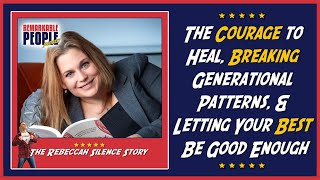
In this hour‑long interview on the Remarkable People Podcast, licensed therapist, author, and radio host Rebeccah Silence shares her life story of surviving childhood sexual abuse, domestic violence, and severe mental health challenges, and explains how she transformed that trauma into a mission to help others heal. She describes her early family environment of generational abuse, her teenage confusion of love and abuse, the pivotal moments in college that led her to therapy and the "Courage to Heal" workbook, and her subsequent professional training (music therapy, a 4.0 master’s in counseling, private practice). Rebeccah recounts her first abusive marriage, the birth of her daughter, the decision to leave, the financial collapse and eventual rebuilding through mentorship, radio work, and coaching. She details her battle with melanoma (5 % survival odds), the spiritual deepening that accompanied her medical journey, and how she integrated faith with emotional healing. Core concepts she teaches include the 1‑1‑3 partnership model, the anatomy of the abuse cycle (fight, flight, freeze, healed), true remorse versus manipulation, and a five‑emotion framework for emotional healing. She also provides practical resources—books, courses, websites, and social media—and emphasizes that "your best is enough" and that healing is possible for anyone willing to pursue it.
Chapters
Hello friend, welcome to this week's episode of the Remarkable People Podcast, the Rebeccah Silence story. Listen, these are the intros that pain me to create because the episode is so good and so powerful and has so much helpful information that I know if you listen to it, it will benefit your life and those you love. You just gotta listen. But how do I communicate that to you, right? So Rebeccah is an author, she's a radio host, she's a licensed therapist, this. She has years of success, not just experience, and she talks to us today about her life journey of abuse and dysfunction and how she found healing and how generational cycles can be broken and how she can start basically trusting herself and she can start helping others have a better life, reframed, free from the chaos and not under this pressure and burden of lies. We talk about narcissism and sociopaths. We talk about what it looks like for someone to truly be repentant, right? Because we don't want to let people in who are faking it, and they just mess with your brain and hurt you more. So this episode is packed, I'm telling you, packed with powerful information you can use to better your life and to share with those you love. And even if you had an idyllic life, it might help you to realize, wow, those people around me are throwing up some really major red flags. Jesus says to love God and love others as thyself. This might be the catalyst you need to wake up in some areas emotionally, spiritually, and really be able to pour in other people's lives. So I can't say enough about this episode. You're just gonna have to check it out with our remarkable friend Rebeccah Silence. Hey, Rebeccah, how are you today?
I'm so excited, David, to be here and for a life-changing conversation with you.
Amen. Amen. I just told our listeners a little bit about what to expect in this episode and how it can change their lives and the lives of those they love. So if you were to summarize, we're going to talk a lot— the good, the bad, the ugly, the pretty ugly of your past, right? What made you the woman you are today? But if you were to kind of promise our listeners that if you stick through this episode, you're going to get this information that if you apply, it will change your life, what is that message, Rebeccah Silence?
My number one message is healing is possible for you, and you're going to believe that if I've done my job by the end of this episode. What I mean by healing is freedom, and trauma doesn't have to mean less of a life. No one is immune to trauma. I define trauma as heartbreak, and you're you're gonna know not only that healing is possible for you, but also that you get to have 100% of the love you want in this lifetime. I think nobody answers the question, "What do you want to be when you grow up?" honestly. I think the honest answer is loved, and we try to focus on everything but that in so many ways, and I want love to be your day-to-day, and I want you to get 100% of the love you want. And by the time we're done, you're gonna know how. And finally, those of you with kids or kids in your life that are precious to you, I want you to understand that they can have you as a healed parent or a healed adult in their world. We need more healed difference makers on the planet now more than ever. The world needs you healed, making your difference, especially for the kids in your life. So we're going to all these places today.
Awesome. So ladies and gentlemen, you just heard straight from Rebeccah. We're going to talk about overcoming trauma, we're going to talk about healing, we're going to talk about love and just living a victorious Christian life. So we're going to have a short affiliate commercial, then come back with our friend Rebeccah Silence.
I hear every day about the products you all wish MyPillow carried. Well, guess what? We probably do. Slippers, bathrobes, pet beds, blankets, mattresses, sleepwear, loungewear, duvets, comforters, potholders, aprons, oven mitts, and so much more. And they're all on sale. For example, get our best-selling standard MyPillows for only $14.98. Body pillows, $29.98. 6-piece bath towels or kitchen towel sets, just $29.98. Multi-use MyPillow 2.0s with pillowcase $9.98. Save $40 on our spring percale and Giza Dream bedsheet sets. Any size, any color, and so much more. So go to mypillow.com or call the number on your screen. Use your promo code to save up to 80% on all MyPillow products. And I've never done this before. When you spend $100 or more, you're going to get 2 standard MyPillows absolutely free.
Shop mypillow.com using promo code REMARKABLE to support this podcast and get up to 80% off your order. Or call 1-800-644-6612 by phone. That's 800-644-6612. All right, welcome back, ladies and gentlemen. So Rebeccah, you're clearly passionate about what you believe and you help people with your life and you're going to help us today. How did you get to this? Where did your life start? Just start from birth and we'll work through towards today. Because all of us, I'm sure, can connect with different pieces or a lot of your journey.
Yeah, I— today I am the space where healing is possible. I believe there's no trauma that means less of a life, and I'm someone today who's learned how to use trauma to my advantage. And I've taught over 1,000 in my private VIP practice and over a million now in my media reach. How to understand using trauma to their advantage as well. And it started with me growing up in domestic violence and in an alcoholic home where there was every kind of abuse imaginable. And I believed that if I was silent, I wouldn't make things worse. And I think even at a very young age, I knew love was the answer and there had to be a better way. And I tried to be as loving as I could to everyone else, but I was only as loving towards me as those caring for me were loving towards me. And see, that's something you may or may not understand is happening in your world, world too. At first, we can't love ourselves better than we're loved, and the adults that are innocently doing the best they can caring for us are typically not loving themselves better than they were loved. And this is where generational trauma cycles begin and get passed on. So that's where it all began, David.
Okay, and then to go into this, so now you're in a home where there's forms of abuse, and you can go as deep or shallow as you want in that. And then you're growing up in your teens, because we learn behavior because we're looking up to our parents or guardians, the people around us for a model, and it's dysfunctional. What was your teens like?
Really hard and really painful, where I was trying to find love outside of myself but kept creating that in the same way I was experiencing it at home. And what we learn about love is all the ingredients going on in the family of origin. We start to believe our normal and our love. So in my teen years, because I was being verbally abused so often and mentally abused so often, and physically abused and emotionally abused, and there was sexual abuse in my childhood as well. I just thought abuse was love. So it was one of those things where I wanted it more than anything, but I didn't know that abuse wasn't love. I just thought the two went together like peanut butter and jelly. So I was very much thinking again I had to be more and better and different and love harder for people to behave better. But I thought their behavior was a direct reflection of me. I thought when things were going well, that's because I was doing it right, doing the right thing, loving them the way they would need to, to be good to me. When they were off, I completely took over responsibility for that, just like I did growing up. And, you know, my first 14-year-old love, I ended up being date raped, and I just thought, well, this is my boyfriend, so that's not abuse, right? It was very, very, very confusing, is the truth, in my teens. And I did a lot of stage work in every play, theater company I could get my hands on. I was singing in multiple groups. Singing all over the country. I was swimming and skiing and trying to escape the pain. And what I loved was I got to, on stage, be free and fully expressed and alive. But as soon as I got off stage, I was muting myself again, and I was only focusing on what do I say to manipulate outcomes. But I didn't know that's what I was doing.
Yeah, and that's so common, sadly, that you become accustomed to a certain way of life and you don't know any better. You have no— yeah, standard to compare it to. So you went from dysfunctional abuse to dysfunctional abuse. So was it in college? Was it after college? When did you start seeing like, hold on here, Yeah, this isn't how the world should be. I know in my gut, in my mind, in my heart, this isn't right, but my everyday thought says, oh, it's me, it's my fault. When did you start seeing that those were lies from Satan? That wasn't the truth.
I think I knew as early as 7 that something's wrong here. And I work with what I call the generational healers in the family, and when I'm talking about generational healing, I'm talking about the person in the family that sees and imagines how it could be. And often the generational healer in the family thinks something's wrong with them because nobody else seems to see the dysfunction or that this is off. And if we don't get that external validation that isn't there a better way, can't we do better? As the generational healer in the family, I've just seen it over and over again. With clients in my private practice, we start to question and doubt ourselves. But I'll tell you a quick story from when I was 7, and I write about it in my book Coming Back to Life: A Roadmap to Heal from Pain to Create the Life You Want as well. I had a grandmother, my dad's mom, who really was my hero. I called her Nana, and Nana was the stable, steady love source in my life. And I spent many, many weekends with Nana. I didn't know when we were driving around the car and she said it was the dancing car that she was drunk. I didn't know that she was an alcoholic, and I didn't know she had a dark side. So it went from this is my favorite person to one day she caught me with a relative who was molesting me in her home and beat me up. And I saw this new side of her, and I knew in that moment, something is wrong here, and I didn't do anything wrong, and I don't understand. And shortly after that, my grandmother ended up drinking herself to death and died at 56 or 58. I'm not exactly sure how old she was, but she disappeared from my life. And I knew none of that made sense. None of that was okay, but I denied that truth. So now fast forward to my sophomore year of college where I'm a voice performance and music therapy major, and I'm learning psychology, and I'm taking all of these courses and really wanting to help people heal in a non-threatening way with music therapy. And I started having nightmares. I started having nightmares about specifically that 14-year-old boyfriend and realizing that was rape. I didn't consent. I kept saying no. And I started to get suicidal for the first time. And I was very scared to start to cry because I was afraid if I cry, I'm never gonna stop. If I let myself feel this, I think it's gonna kill me. And I had a different boyfriend at the time, and bless his soul, I wanted him and his love to heal me. And that's just not possible, right? Like, your love can't heal the darkest corners of another person's soul or the darkest corners of their heart. And I wanted this boyfriend to be the source of healing my pain, and I wanted very much to not see what I was seeing. I wanted it to be a dream. And it went from memories about this boyfriend to other memories about childhood. And I ended up working with my first therapist at that time and working through the workbook The Courage to Heal. And it started to change my life. And I was told, either we have to put you into a hospital, or you're gonna need extensive therapy multiple days a week and antidepressants, which is the route I went. And the sophomore year was the hardest year of my life up until that point because I couldn't unsee where the healing was needed, but I didn't know how to heal, and I couldn't comprehend life on the other side of facing all this being better. It just felt like such a threat, and it felt really heavy. But that, that was the beginning.
So while all this is going on, did you 100% keep everything to yourself? Did you have friends you shared things with? Was it openly known within your family? Because it's so different within each situation. And yeah, what was your upbringing like and teen years like? Was it, um, just everybody knew and ignored it, or did nobody know?
That's such an interesting question, right? Because my perception isn't necessarily the facts, right? So when we're, when we're having this conversation, for all of you listening, you know, there's, I think, two ways to answer this question. What are the facts about what was going on versus what was my perception? So the facts about what was going on is everybody was in complete denial and wanting to look the other way because my mom's even said it to me. And we've done so much healing together, my mom and I, over the years that She's literally said to me, David, you're so brave, Rebeccah Silence, because you're willing to face and remember what happened to you. I don't want to know what happened to me because I don't think I could handle it. And so because that was my mom's way of coping, she couldn't be there more for me than she was for her. And then all of the extended family were looking the other way. I did find out Later, in my late 20s, I found out that my grandmother that I had just shared about had confronted my mom that way too much sexual abuse was happening and what was she going to do about it. My grandmother knew, I didn't know, anybody knew, and nobody talked about anything really in my family until I wrote and published with a major publisher Coming Back to Life: A Roadmap to Heal from Pain to Create the Life You Want in the fall of 2022, this book came out and then the family started talking. But up until that, there was very little conversation. My perception was everybody knows and nobody's doing anything about it, which just made me feel crazy and made me feel like something was wrong with me. Because if they weren't taking it seriously, was I just making a mountain out of a molehill? Were these just dreams? Was this memories? I really almost wished, especially at the time, I'm still a sophomore in college, that I was misunderstanding. I wanted to be the one that was wrong. I wanted to be the one that was dysfunctional, because at least then maybe it would make more sense, because none of it made sense to me.
Yes. And forgive me if you said this, but did you have any brothers and sisters in the house?
I had one sibling that I don't talk publicly about because her story is her story, but I wasn't alone in it. What I will say is that I did feel a lot of responsibility to take it for the team, and I really thought for a lot of years that I was. And that commitment, really, that I didn't even understand was a commitment. And think about the commitments we make growing up. We commit to what we believe, believe, and we commit to how we're coping. And so for a lot of years in my 20s, 30s, early 40s, I was still taking it for the team and not realizing it because I thought, I can handle it, I don't want anybody else to have to go through this. So that, that was a belief that I shouldered that didn't serve me at all, that I didn't even know was optional.
Yeah. And so And again, I don't want you— I'm not trying to pry into an area you don't want.
Yeah.
But having two daughters in a home with molestation, what I'm thinking is, did you and your sister ever talk so you could say, whoa, yeah, this isn't me, both of us, you know? So you're a sophomore in college, you're struggling. Did you ever think to talk to your sister?
Yeah, yeah. And in the home, there, there were people coming in the home that weren't family members that were also abusive. Because see, your, your parents doing the best they can, and they're a vibrational match, right, for what family and love means. And they attract people aligned with these normals that aren't necessarily normal, right? So what I will say is, yes, we've talked about things that went on and what's okay and what's not okay, and we've both committed to our own paths of healing and I look at it like it's not your job as the generational healer in the family. And if you're listening to this episode, I'm gonna just suggest you are. And it's not your job to fix or heal anyone else, but it is your job to break the silence so you know you did. You can't heal another person, but you can heal, and you can be available for healing conversations. And then You've got to let the person have their own journey. In my experience personally, and after helping people heal since 2002 with the work I do as a trained therapist and a coach in private practice, everybody has their own way. But you being willing to be brave, you being willing to break the silence, is the beginning of healing, and it models possibility for everyone else, right? Because the generational healer in the family isn't responsible for anybody else Parts is healing. It's just you are responsible for modeling getting 100% of the love you want, getting 100% of the life you want, and modeling next level possibility.
Okay. Yeah. There's so much to your story and so many questions. I kind of want to let it run. I'm going to probably come back, but you're in your 20s, you're in your sophomore year at college. You're starting to see like, whoa, there's real problems. Tons of unaddressed issues. And like everything in life, things get worse before it gets better.
Yeah.
And like you said, I'm not a big pharmaceutical guy, but there's times in my life where I've taken pharmaceuticals short term, get off them. You said in your life you got on antidepressants, you went to intensive therapy. Take us through that journey, the good, the bad, the ugly. And looking back now, you know, you professionally do this. What are some of the things you did then, but you're like, I would do it differently? Or like, man, I am so glad we went this road. Let's, let's take it through that journey so people struggling, yeah, they can kind of start their journey too.
Yeah, I, I think what's really important is your best is enough and trust yourself because you know better for you than anyone else what will be healing for you. And you know, everything is a spiritual yes please or a spiritual no thank you in experience, right? So at the time, I didn't know myself, I didn't trust myself, I didn't love myself. I blamed myself for everybody I love's pain, and I was way more focused on their pain healing than my pain healing, because at the time I was so codependent, I didn't think I could be okay if they weren't okay. And I didn't understand yet the people that care about me and that I love more than anything are committed to the experience they're having. So I would do it a lot differently now. I teach the practice of emotional healing, which we'll get into down the road. I am not someone that prescribes medication or would ever coach anyone off a medication, but I will tell you, I have like a 99.9% success rate in my private practice of people going off all medications with the support of their doctor. You know, because the problem with medication is it really masks the joy as much as it masks the pain, and you get really flat. For me, I probably would have killed myself if I wasn't on antidepressants for the year I was. But then I started talking to my doctor and talking to my therapist about, I'm not interested in being on these medications for the rest of my life. But I had to get out of the suicidality mode that I was in before I could even have that conversation, because it was so severe and so dark and it was so real that I wanted to die, that we had to do whatever we could do to just get me more solid so I could start really facing and moving through all of what my body, mind, and spirit had endured that wasn't okay. And when you start to understand, this isn't love, this isn't normal, this is abuse, this isn't okay. You know, I teach my clients and my audiences now, when you start to break up with survival, it feels like you're dying, but you're not. I didn't have anybody normalizing for me. You're not going to cry forever. The dam's just bursting open. And I didn't have anybody teaching me there's a huge difference between your feelings about everything going on externally and the healthy, naturally occurring emotions underneath it all that you need to to feel so you can heal. Nobody was teaching me any of that, so I was very, very alone in it. I did have, you know, some friends in college, but it was very superficial. I was really stoic. I was really trying to not make anybody else carry my emotional burden, and I put all the pressure on my boyfriend, if I'm really honest, and he was the only one that I was honest with at the time, and the team of therapists that I had. And I was only as honest with them as I was ready to be honest. I wasn't— people read my book now, it's won top self-love, top self-worth awards for books in the world. I've won in 2022 top emotional health coach in the world. I didn't have this roadmap, I didn't have these tools yet. But I knew I wanted to beat my past and I knew I didn't want my past to win, but I also didn't want to talk about it yet. That came much later. Yeah.
And one of the things I was going to ask you is what you mentioned about your boyfriend. So a lot of times, especially with codependency, such a thrown around term, right? It's like narcissist. It's, they're a real narcissist. They're a real sociopath, but people don't really understand it. It's like when people make jokes about OCD. Like, oh, I'm particular, I got OCD. No, you don't. Somebody with OCD has real issues. So I want to be careful with these terms. But when you are truly codependent, which it sounds like you were, a lot of times you go to the abuser looking for guidance during your worst lows, even though they're the ones that put you there. So when you were going through this your sophomore year, did you open up to your mom, your dad, your grandmother, your friends, your sister? Or did you keep it compartmentalized with just your therapist and your boyfriend?
I really kept it compartmentalized. I tried with my family, but they weren't ready to heal yet.
So you did try though?
Like, I tried, but when I say I tried, my 100% then would be like my 0.001% now, right? Like, I didn't— I made an attempt, but very passive-aggressively.
Got you.
Yeah, right. Like, I, I really wanted to have conversation with them. And, you know, to my parents' credit, they did get me in therapy. They did support me in my healing journey to the best of their ability. They weren't ignorant to the fact that I was suicidal. They weren't ignorant to the fact that I was clinically depressed and in really deep emotional hot water. But they just, they couldn't, they couldn't be who I needed them to be. And I knew that, and I really didn't try that hard at that time. Later on, both of my parents came to personal growth retreats with me that I was involved with, and they both tried to do deeper work, and way more conversation has happened later on. But at this point, it was just me me, my therapists, and my boyfriend carrying the weight. And I will just educate a little bit what I've learned, because again, I have a unique background. I'm a trained therapist, had a 4.0 master's degree in counseling, grade point average. What I learned a little later on, because I graduated at 21 with my music therapy certification, moved to Denver, Colorado to work at the state psych hospital as a music therapy intern, and I lived on the ground of the state psych hospital for 6 months, and I learned a lot because I had had my own bout with depression. I had had eating disorders. I was abusing alcohol. I understood so much, but understanding trauma isn't enough to heal it. I was working at the state psych hospital, and I realized these people aren't crazy. They don't have any ability to cope with their emotions, with their environment, and it's actually safer at the hospital for them than it is out in the world. And I decided at 21 years old I was going to become an expert in human behavior and figure it out, which is what led me to getting a master's degree and a 4.0 grade point average. But even all of that education and the beginning of all of my clinical experience, I ended up in my own domestic violence marriage. And that's how I ended up with the last name Silence. That was my first husband's name, and I didn't know how committed to silence I was yet. And I didn't know that you can understand trauma all day long, but it's not enough to break the pattern and break the cycle. So it was at the point where I'm finding myself now, educated and in a domestic violence marriage, with a 2-year-old that everything really started to change for me. And I began becoming Rebeccah Silence, and I've kept the name because I love who I've become. I had to get out of this marriage and be completely shattered and leveled, lose everything, lose the marriage, lose the house, go bankrupt, and find a way to take care of this little girl coming from a family system where no women in the family financially could take care of themselves. None of them. And so I didn't think I'd be able to take care of us either at the time. But that was the beginning of Rebecca becoming Rebecca, Rebecca really starting to heal, and the beginning of the rest of my life.
Yeah. And for our listeners, if you've experienced it, you know exactly what Rebecca is talking about. And sadly, there's too many of us, right?
Right?
But if you haven't, it doesn't matter if you're a man or a woman. If all you knew in your childhood is brokenness and dysfunction and manipulation, whether you liked it or not, you're somehow drawn to it. And maybe Rebeccah Silence can expound and explain it, but it's like, what's that saying? The evil you know is better than the evil you don't know. Yeah, or maybe like, as a child, stick with the devil you know. Yeah, yeah, and go screw the devil. I want to step on his head. But when it comes to—
I'll just blow him kisses and say, pick someone else, because nope, not—
oh no, no, no. In Romans at the end it says we get to step on his head, or Jesus does, but I hope I get a kick at least. Um, but no, when it comes to a child trying to process things, a lot of times, like you and like me, they feel like it's their fault. So they try to win the approval and they can't win it of their father or mother. So then they get a husband or wife and they try to win it and they're just as abusive or worse. So when did you realize that the husband you married was part of the model?
Well, I realized it on one really dark, terrible night where he went after the 2-year-old, not to hit her, but he was wasted and he was gonna take her with him because I was saying, you can't be here right now. And he was gonna take her with him. And that's when everything changed for me because I knew in that moment, something is wrong with you, Rebeccah Silence, that it's like you're okay taking this, but now that your daughter's at risk, you're ready to get out of this. I, I wasn't probably ever gonna leave for me, but I refused to be a mother that kept my daughter in an environment like the one I grew up in. And I'll tell you, I thought I was the best actress. I thought nobody knew how bad it was in my house. I told my book club I was in trouble and I needed help, and when none of them were surprised, I almost fell out of my chair. And within a week, 40 people showed up at my doorstep to move my daughter and I into a little apartment. 4 hours after getting us to the apartment, window treatments were hung, dishes were in the cabinets, all the clothes were hung. My friends, this beautiful book club, rallied and got a whole army to get my daughter and I into safety. My ex-husband never argued with me getting custody and basically gave his rights up at that time when my daughter was 2, and the beginning of the rest of my life began. But, but let's educate people on codependence and abuse cycles for a second, because I don't know if anybody's going to teach it this way. And I think this is what 20-year-old Rebeccah needed. This is what 7-year-old Rebeccah needed to understand in here. That it took me decades, and I spend 6 figures a year for almost 15 years on my personal growth to have this information. So let me give you the fast track so you don't have to learn the hard way, and you don't have to just try to understand more, because again, understanding more doesn't break a cycle, right? So here's what codependence—
yeah, and before you go on, this is very important, ladies and gentlemen, because even if you have a healthy, balanced relationship ship, you might be completely oblivious to real pain and danger around you. So when you hear the term codependency— again, codependency, narcissist, sociopath— there's so many words that are thrown around every day, and even some counselors don't really know what they mean. They literally don't know what they mean. They're, they're completely unaware of what that means. So when Rebeccah Silence explains codependency, think about it, pray about it, research it more, and see if you know anybody that has some red flags going up, so you can either help yourself and your family or other people around you. Go ahead, Rebeccah Silence. I don't want to cut you off, but I don't—
I appreciate that. Yes, because it— even if you don't think it applies to you, right, we all make an impact and have a ripple effect. And I had so many adults around me growing up that I'm not their kid, so it's not their problem. Or they're not even paying attention, right? So I do really appreciate that point. So codependence, okay, in relationship there's you, there's them, and then there's this us factor, right? So what I teach is healthy is my ideal partnership model: 1 1 3, meaning there's me, 100% me, with my own vision for my life, my own values, my own North Star, my own direction. I'm responsible for my intentions, my actions, whether or not I'm empowered, disempowered, in fear and survival, or aligned and authentic. There's the other person, all that's true for them too. And then 50/50, we co-create and we create a relationship as our most healed selves, ideally, right? That's the ultimate goal where we want to be. Codependence is There's me, there's you, there's us, and now we're all enmeshed. So I am 100% focused on you and how you feel and what you need and what you want. And I can't be happy if you're not happy, and you can't be happy if I'm not happy. And we've lost our individuality and we've lost our independence, and now we've just become one and we're suffocated and we're suffocating each other to death. And even in traditional marriage vows, it talks about compromise in love and relationship is the way. And we lose ourselves and we don't even know we did because we think that's what love is. So codependence is you completely adapting and morphing into— this relationship has become your identity instead of you have your own identity that you bring into the relationship and you want the other person to be free and have their own identity and their own path. And they bring that to the relationship. And now we co-create this third entity called the relationship together as the most healed versions of ourselves. So that's codependence. Depression is you've shut down your naturally occurring healthy emotions. And in the practice of emotional healing, what I teach is there's only 5— there's 5 human emotions. Everything else is learned. Everything else is how we're coping, and it's your feelings about what's going on. So anger, fear, grief, joy, excitement. Anger, fear, grief, joy, excitement. At the end of the healing, you've fully expressed yourself emotionally. You have moved through whatever naturally occurring emotion is present That's just your emotional weather. It's not because of the situation. The other person is never the problem, right? Depression is you've shut down anger, fear, grief, joy, excitement, at least one if not all. Anxiety is you're rejecting those emotions and your truth. So they're real, they're chemical. There's very much diagnosis and very real mental illness. But in almost every case, when you understand the practice of emotional healing, you don't need the medication, and you don't need the school of hard knocks, and you definitely don't need the situation to change for you to be okay. So that's depression and anxiety. And now the next thing I want to teach is the anatomy of an abuse cycle. Because this is really the heart of what I want every adult on the planet to understand. Because at the end of the day, my mission is that kids have healed parents. My mission is that kids grow up supported in being who they are, not who they're expected to be. And I want the adults in these kids' lives to not be threatened by their kids' emotions because they're threatened by their own But if you don't understand the anatomy of an abuse cycle, you're mistakenly and innocently manipulating your kids so that they don't make you uncomfortable, and that is not healthy. So in the anatomy of an abuse cycle, we've all heard the terminology fight, flight, freeze. We talk a lot more about fight, flight than we do about the freeze, but either you're sourcing in the moment from fight, flight, freeze, or you're healed. And that fourth option is the one we don't talk enough about. And we talk about mental health, but it's so much more because you can't understand and heal. Mental understanding and mental health doesn't change how you feel. So we've got to be able to identify, all right, if there's an abuse cycle going on, or a trauma, you either defaulted to fight— nobody gets to do this to me— freeze— I don't ever want to be the one that does the harm, I'm just gonna freeze— or flight, where you dissociate, you escape, you try to change and save the other person so that maybe someday it'll be your turn. Fight, flight, freeze, otherwise known as Cartman's drama triangle— victim, persecutor, rescuer. The freeze is a victim consciousness. I teach this a little bit differently because it's not about a role you're playing, it's about your consciousness. It's about where you are vibrationally and energetically. So the person that defaults to freeze doesn't want to ever do harm again, and they're in a victim consciousness so they don't ever have to be the one in fight that's doing the persecution or the perpetration. And typically in an abuse cycle, we unconsciously decided to be one or the other. So my abusers never wanted to be a victim again, and every abuser was abused, period, end of story. It doesn't give them a free pass, but we think the abuser has more power over the victim, and that's not actually true. In my experience, the persecutor, or the perp, is is just as powerless as the victim, and we're, we're just all trying to powerlessly take our power back. And then there's someone typically rescuing the situation so it continues, otherwise known as the flight role. So I'm not making it okay for the person doing the harm to have a free pass, but I've coached as many perps as I have victims into ultimate healing and cycle breaking, and they never are happy with themselves or liking themselves. They just don't know how to get to that healed place outside of the fight, flight, freeze.
And here's an interesting question. You and I haven't spoken beforehand, and you just brought this up. When the perpetrator is truly sorry and broken, what are some of the common I don't want to say signs, but the common behaviors and attitudes of someone who's truly broken versus faking? Because when people are hurting and when they have— yeah, yeah, they're ultra vulnerable to these sociopaths and narcissists. What does true brokenness look like in your experience?
Well, first of all, can we just call it true remorse? Because I'm adamant that people aren't broken. Our hearts are broken. We're not. So I don't believe they're broken. But what I'm, what I'm hearing is one of the most brilliant questions anybody's ever asked me in an interview here, because there is a massive distinction between is this person sourcing from wanting to be as healed as possible for the people in their life, or are they playing a game and trying to turn the tables and make themselves the victim so they don't have to take accountability or be responsible for their impact, because it's one or the other, right? Like, there's either true remorse and I want to be healed and I want to make a healed impact, or I want to manipulate you and gaslight you into thinking that I care and I'm sorry, and now I'm making myself the victim so you feel bad so I don't have to deal with the impact I had on you, because it's one or the other, right? And what I seen is if somebody hires me, they want to heal because I'm not an easy coach. I will change your life so freaking fast. There's not one case I haven't cracked since 2002 in my private practice. We get to the root of the pattern, we get to the stuck age, we get to the stuck emotion, and we make a new commitment. And we make, for lack of a better way to say it, amends. We repair and we reinvent if you're working with me. So if you care about making a healed impact, I would be a great coach for you. Now, how do you know if the person in front of you is manipulating you and making themselves the victim, gaslighting you so you feel crazy, or it's genuine? Couple things I would say are the primary indicators that I've seen over all my years of clinical experience. So number 1, the healed person is asking something to the effect of, how do I make this right with you? The person that really doesn't give a shit about you and their impact on you is never gonna ask you, how can I make this right? What do you need from me now? Can you ever forgive me? The second indicator, I would say, the healed person is willing to give you the time and the space to recover from what happened and to heal, and they're willing for you to actually do your healing because they know they're responsible for a really negative impact on you. Now, I really believe with all my heart, no one causes your pain. It's what you've believed about yourself and what you believe is now the way it is for you that hurts more than anything else. And I get controversial here, and I've done a ton of domestic violence podcasts, and I'm always asked about what are the signs for the abuser. And I talk about, no, what are the signs that you're losing yourself? Because that's way more in your power and control, and this person can't beat you down, bring you down when you're an adult. Kids can get abused, adults can't. When adults are getting abused, it's because they're a vibrational match for what they grew up with still, and they're at a stuck age. So hopefully, David, that answers your question. The only other thing I would say about the darker side of this— the person who's really committed to continuing to do harm They want you where they want you. They need you to be who they need you to be. They don't want you independent. They don't want you free. They don't want to listen to what you have to say. They don't want to hear the impact they had on you. Someone healed wants to hear their impact, and they'll take it in, and it's brutal, but they'll listen and they'll take it in and they'll want to make it right somehow. Someone who isn't wanting you healed is going to keep the focus on don't make me more upset versus how do I make it right, how I've done harm to you.
Yeah, I couldn't agree more. And I don't want to put words in your mouth, but I want express the people I've met that were truly sorry and repentant. They were the hardest on themselves.
Oh my gosh, they're in a living hell because they hate who they are. They've become their abuser because they don't know they could survive being a victim again. And they were abused too, and none of it's okay. Can I share a quick client story I had?
Yeah, 100%. This is a very delicate topic because there's so many people, even within Christian circles, you know, Christian means to be Christ-like, and there's a lot of people fill in churches that are not Christ-like, but they think, oh, somebody says they're sorry, they're sorry, they ask for forgiveness, it's okay. But you can say words and you can mean it. Those are drastically two different things. And even in the Bible, the model Jesus had, he called out the scribes and Pharisees and the liars. But people today are like, man, that, that person could commit murder, rape. They could manipulate and destroy everything to their own just benefit because it's what they wanted. And then they say they're sorry and put a couple tears and people are like, you should forgive them. And it's like, that's not real. So I want our listeners to know what real repentance looks like. You got the Bible, you got your experience, you got your instinct that the Holy Spirit gives you. But this is your professional opinion on what you've seen, and there's a legitimate brokenness— and not brokenness like what you're saying, but I mean broken heart. And I know in my life when I've been wrong, man, I'm the most harsh on myself. I know people have committed crimes that they're like, I need to be in prison. Yes, I'm forgiven, that God forgives me, these people even forgave me, but this is the consequence of my sins, or this is the consequence of my choices. And when people don't have that, it's fake. And that's my opinion and my history. What do you think about that?
Yeah, no, no, I agree, because there are people that are so committed to power and control that they don't realize they're powerlessly taking their power back by trying to dominate other people. See, if I need to dominate you to be okay, I have no power. It's an illusion of power. So the people that you want to watch out for are the ones that want you submissive to them, and they're the ones that are all about power and control. I had a client— this is one of the most beautiful cases. I have two examples. This man— I got a call from a lawyer client of mine who's a defense attorney, and he was saying You gotta help my client. And I said, okay, well, if he's interested, I'll see what I can do, because I don't force myself on anybody, right? Like, they have to want to heal, right? And that's really what you're asking here, is like, how do you know they want to heal and they're in the pursuit of healing? Well, this guy called me. He had gotten blackout drunk, beat up his fiancée to the point where she was unconscious, and the 10-year-old twins saw and had to call 911. Brutal. This man is horrified with himself, wanting to give himself a life sentence of being shunned from his family for the rest of his life. He's devastated, he's horrified. We ended up doing an intensive year of work realizing, all right, here's where we had extreme trauma in his childhood, here's where he was sexually molested. In foster care, abandoned by his own biological parents because they were addicts. He had never wanted to become this, quote, monster that he became and was identifying as. But again, he couldn't handle the idea of being abused anymore and being the victim. But he didn't know any of this. My work is so unconscious, bringing the unconscious to the light. Turning the lights on in the dark. So he did all this work. He got sober. He did his jail time. He— I worked with the judges, the lawyers, and actually got the point— this client to the point where now we can start working with the fiancée and the kids all separately and then bring everybody back together. And the fiancée had her own childhood abuse. And in my couples work, which is so near and dear to my heart, What happens is we attract what we haven't healed yet. So the fiancée had her own healing to do that had nothing to do with her fiancé. Her childhood abuse, just like in my first marriage, was being reactivated and reenacted, just like this man's childhood abuse was being reactivated and reenacted. And we at first attract what we haven't healed yet. So all relationships are for our soul's evolution, to help us heal so we can have all of the love we want and a whole next-level experience of intimacy beyond the abuse we grew up with. And I don't think anybody's immune to trauma. Trauma is heartbreak, and everyone's been heartbroken. But where we ended up with this beautiful family is the kids got to process and heal emotionally in real time. They didn't have to wait until their 20s, 30s, 40s to find a therapist. In the exact time in their childhoods this was happening, they got to work with me one-on-one. They got to learn it wasn't their fault. They got to learn how to express their emotions in a healthy way. They got to learn how to break the silence fearlessly, how to communicate what they needed, what they wanted, how they felt. And then I taught this couple how to create healthy, healed love while healing both of their childhood traumas at the same time. And it It moves me to this day. It gives me goosebumps everywhere thinking about the courage it took, particularly for this man to say yes to healing, because the abuser is typically the sun, moon, and the stars in the family, and everybody's life revolves around them. Are they having a good day? Are they having a bad day? Everything is about the abuser, and this man took responsibility, got sober, stayed sober, created a company, provides for his family beautifully. And to this day, I'm still in touch and the family is thriving, and the kids got to process in real time. I had another case where I got a call. I've been on the radio for over 14 years in upstate New York where I grew up, and I got a call from a caseworker. We have this girl in residential treatment, she just stabbed a staff member in the eye with a fork. She's been suicidal multiple times in the last 2 years. 12 therapists in the last 2 years. No one can help her. Can you? All we did was face the childhood trauma she had been through that she thought would kill her. If she dealt with it, took her power back in a healthy way, I was able to train all the staff at the residential treatment facility, create a new treatment plan. I'll be honest, David, they all looked at me like, who are you, little girl? How are you going to teach us anything? That girl is now on the board of the residential treatment facility. She got out, essentially had a life sentence to live there for the rest of her life. She wrote a book. She's on the board. She gives speeches. People don't know all we have to actually do to heal is heal the inner child for real with the focus on where we want to take our lives. We've got to learn how to use that trauma to our advantage. Those two stories of some very seemingly on paper dangerous individuals that wanted to heal, they just didn't know how, and they didn't believe it was possible to heal, are remarkable in my, in my clinical experience. And their case studies of possibility and hope and strength, and families got saved.
Oh, that's awesome. Now I'm going to ask you a couple hard questions, hard realities. But this is important, and we'll explain why. That first scenario with the husband and the wife and the girls, start to finish, how long would you say that took?
Roughly a year and a half before they were back in the same house together.
Yeah, a year and a half. And roughly, I know it's hard and people charge different things, but that took a significant amount of money, correct?
Yes.
Okay, we're just being real here. And if you're listening to this, you know, it's a lot easier to get help when you have money. Money is not the main thing, but money is a tool, and money makes things easier. If you're out there and you have money, okay, it's going to cost X dollars, it's going to take a year and a half of your life, but then you have generations to come of healing. Yeah, but now you have families who don't have the money to pay $150 a session, 4 people, once a week, twice a week, 3 times a week, whatever it takes. There's grants out there, there's different, you know, supports like financial support. Look for them, do what you can, pray, ask God for, you know, provide. Because it's not just paying, go to a counselor. You've got to have the right counselor and you got to make sure you're doing and not just showing up. But it's worth it. And if you have to sacrifice, okay, my family gets therapy, but I got to work 20 more hours a week. It sucks for a couple of years, but long-term, you're going to have fruit for generations to come. That's how I feel. Rebeccah Silence, what's your opinion on that?
Amen, amen, amen. And I, you know, we haven't even gotten to the craziest part of my story yet, where I got cancer and had a 5% chance to live, and all of the practice of emotional healing really gelled and came together. But post-cancer, I wrote Coming Back to Life: A Roadmap to Heal from Pain to Create the Life You Want that has exercises, that has steps to help you find your way. I produced a course that is $599 called the Emotional Survival Kit. That's the best of what I've got and the best of what I do. I've got a YouTube channel, the Rebeccah Silence YouTube channel, with almost 800 videos on it over the years. So I do agree, David, that yes, if you hire me directly, it's a significant investment, especially in 2025 and beyond, because I'm taking the best of therapy, the best of coaching, and I'm giving you a custom personalized experience and the fast track to heal as fast as possible. But I wanted to create products so that I was accessible and the practice of emotional healing was accessible to everyone. And if you're stressed and struggling with like finding the right support, I want you to pray about that more than anything, whether it's me or not. The people that want to heal will find a way. I was dead broke. I had to go bankrupt after getting out of that domestic violence marriage. I had no money, but I was unwilling to be an unhealed mother for my child. She was the carrot, she was the catalyst. I didn't have the confidence yet to heal for me, but I had a child that I wasn't going to pass on all of this shit to as much as I could help it. I ended up— here's how I ended up getting started with the right the right healing for me ultimately and the right coaching mentors. I figured out if I helped fill my mentor's retreats, I would not only get the work for free, but I'd get a commission. There are ways. I don't to this day know how I figured it out. I remember praying for it because I wanted to do this High Events ropes course seminar, and I'm like 27 years old. You know, getting divorced and completely financially wrecked. And I needed $3,000 to do this event. And I figured out if I got 3 people to go to the event, I could go for $300. And one day in the mail, I get a check from Denver Public Schools, the previous school district that I had worked for, for exactly $3,000. It was retirement money. Money that they gave me back that I still don't know how that all happened, that that money left that retirement account and came to me. But I figured it out two different ways just like that. So now I didn't need to use the 3 grand for the seminar. I had a savings account. If you're committed to the healing, God will be the source and provide the way. I am a perfectly beautiful living example of it. When I first hired one of my mentors, Brendon Burchard, because I wanted to figure out after cancer how to help as many people as possible with the time I had left because they only gave me a 5% chance to live. I didn't have any money to do his high-ticket mastermind, but I had the credit. I had a 0% credit card I financed with a 2-year payoff that I was able to pay off in 4 months because I started making money so fast after committing to that. That. You will be shown, you will be guided. And I don't want you burdening yourself financially. I won't take clients that, you know, the finances are a burden in the private practice. I don't get into people's business, I don't get into their pocketbooks, but I don't want coaching to ever be a burden. I always want it to be a blessing, right? But I'm just telling you, I've seen people find a way and find the right support for them. And traditional therapy is great, but it's trying to help you heal emotions through the And in so many cases, therapists are trained to help you cope. They're not trained to help you get to the root of the issue and actually heal the generational trauma pattern and cycle you've absorbed and inherited that isn't meant for you. It's meant for you to break it, especially if you've come this far with us on this show. Yeah.
So now let's go, let's wrap this all together because I think Awesome information. You're married.
Yeah.
You have your daughter. Husband comes home, or there's issues. Take us from there to today, how you actually made that click, and then the cancer and the first marriage.
Yeah. So the timeline of events is I got out of the marriage, my book club helped me get into this apartment, I had to go bankrupt. I had to advocate with my lawyer to have full custody and an arrangement in the custody agreement where I had in-state or out-of-state. I could leave the state. To this day, I just think that was God, because I didn't have a voice yet, um, but I had the courage to stand for— I want one agreement. My ex-husband signed off right away, didn't give me problems. And I had to completely reinvent myself from there. So I got introduced to my first mentor. Her name was Carol Reynolds, and she had studied directly with a man by the name of Werner Erhard, a pioneer in the personal growth world. And I started learning about actual deep, deep, deep healing. And Carol was— Carol was a force of nature. I ended up doing one seminar of hers and running the back end of the company not long after that, mentoring under her, doing deep coaching. She helped me deal with my sexual abuse. She helped me see that I was a leader who wasn't leading. I had put 80 people in a seminar, David, and in front of everybody she says, Rebeccah Silence, you're a leader who's not leading, you know. And I look around the room, and at the time I'm healing so much, I'm learning so much. I'm powerful. I didn't know that yet. Building these events. And I thought she had to be talking to somebody else. What do you mean I'm a leader who's not leading? I didn't identify as that yet. And she helped me see, like, look what you're doing and look at all these people you've put here and look at your influence and you aren't using your voice to lead and to make a difference. And so she mentored me. I started a private practice and I ended up beginning to become Rebeccah Silence. She was right, I was the leader that wasn't leading. I was afraid of my power. So she helped me so much find my voice, find my power, and she taught me a different way to do breakthrough coaching with people. And then I had another mentor that I worked with for 14 years that had a coaching certification company And I ran that for 13 years after I did the pilot year, and I learned so much about how to coach people into creating all of the possibility they wanted for themselves. That relationship ended up being pretty abusive and dysfunctional, which I didn't realize until I ended up leaving. I was very dependent on this mentor. She was very dependent on me. I learned so much. I'm so grateful. But it took all of these mentors and all of these years of growth to really understand all you need is the practice of emotional healing and to help people be more free and fully expressed and to support them in being fully alive and fully powerful. So in the middle of working with Carol and then transitioning to this other mentor, I met my second husband now. Who we've been married 14 years, and he's absolutely the love of my life. I tried to scare him off so many times. Date 3, I had an 11-page list front and back, everything I wanted in a partner, and I sat him down and I read it because I had missed it. I had had one boyfriend I had moved in with and moved to Las Vegas with while I was working with Carol. That was a mess. I had had so many bad decisions, um, and I couldn't scare off Mark. He goes, well, do you want to see my list? He had his own list, David. It was a half a page list. And my husband has been sober 20 years. He had already done a bunch of work on himself and was sober 7 when we first got married. And this man is beyond my wildest dreams come true. And in the beginning of the marriage we still had a lot of inner child healing to do that you can't do without relationship. Like, you can do all the inner child healing you want in therapy and in coaching, but applied to a relationship, you heal the most. And the beginning, there was some power and control, there were some epic fights, it was a little sketchy, but we wanted it. And I found someone who had a dream of family just like me. And I had told him about my crazy child, and he's like, all right, you want to hear mine? I couldn't scare him off to save my life, and I was convinced that I was too much and not enough at the same time. So Mark and I came together, and at the time we came together, I decided to full-time go for it with my company Inspired Results and get on the radio in upstate New York and help revolutionize the community where I had been been so severely abused and traumatized as a little girl. I got on the radio, and within 2 weeks I had a 6-month waitlist. I was doing 2 to 3 women's retreats a year that were selling out. My daughter was starting to thrive. I'm married again. All my wildest dreams come true. I'm a business person, which I never thought I'd be. I'm an artist. I never had formal business training. I get pregnant again. and I'm coaching a plastic surgeon and his wife, and they say to me, Rebeccah, you saved our marriage, you saved our family. That thing on your arm, that doesn't look good. Something's wrong. We need you to come into the clinic tomorrow morning at 7 AM. Let us take it off. Let us take care of you. It turned out to be malignant melanoma. I have no family history of cancer. I obviously don't I don't tan. If you're seeing the video of this, I'm very pale. If you go to my YouTube channel, I'm very pale Irish girl. It made no sense, this cancer diagnosis. And what I didn't know about melanoma was they can't just cut it out and then you're okay. And at the time of my diagnosis in the fall of 2014, there really wasn't a ton of research and there really wasn't very much available in terms of treatment options. So I've had 22 surgeries. I did 4 and a half months of chemo, which I ultimately quit. And what I will tell you is cancer is where I met God for real and where I met myself for real, because I went into cancer knowing a couple of things. One, I'm not a statistic. But also, I wasn't gonna be able to do this alone. And I had done so many seminars, participating in 100+ seminars as a participant, facilitating, you know, 50 to 100 seminars myself by then at that time, and workshops. And I just decided cancer was gonna be the seminar where I got to be who I said I was. I knew it was easy to be the best of who I am— solid, emotionally clear— when I'm making a lot of money, helping a lot of people, on the radio, have a thriving business, have this gorgeous marriage, my kids doing okay. Everything is how I want it on paper. But who was I gonna be now? And so I did my best to be my best and to practice everything I've learned, but then I also had a little bit of a spiritual crisis. Questioning it all. Like, I thought I knew what I believed in, who I was, but I let myself question it all. And God, like, what would you have me do? What would you have me know? What would you have me understand? What would you have me believe? Because this doesn't make sense. This isn't fair. But I love Byron Katie's quote: when you argue with reality, you lose, but only 100% of the time. And I knew I couldn't argue with this, and I knew all I had control over were 3 things: who was I gonna be, how did I want to feel, and what was I gonna create. And it was all about just mastering my emotions, processing the anger, processing the grief, processing the fear, processing even the moments of joy and excitement in real time as much as I could when I was sick. Because me emotionally clear is the only way I know how to connect with God for real at the deepest level. So I clear, like, an emotional clear channel so I could hear my own voice and God's voice, and my life became a complete co-creation with God ever since. It was brutal. It was the fight of my life. I only had a 5% chance, and I would never tell anybody quit chemo But I would tell people, become as emotionally healed as you possibly can so you can have your dream come true comeback love story, so you can meet your highest, most healed version of yourself, and so you can meet God in a next level way where God becomes your business partner, your life partner, your source, and you don't have to figure out anything ever again. And my guidance told me quit chemo when it was time to quit chemo. I was dying. And at that point, I had so many surgeries, it wasn't from the cancer, it was from the chemo. I had drop foot. All the nerves down my right leg had died. And they said, well, even if you live, you'll be on disability for the rest of your life. I hike mountains. I live in Boulder, Colorado. No problem. It was a journey. There's so much more to the story, but I'm here, man.
That's fantastic. Yeah. And Doctors are so mistrained these days. And I remember I had a tumor in my head, went through several surgeries and radiation, and the number one surgeon in the world, Dr. William Montgomery, he was head of Harvard, um, that part of the medical school, he was head of Mass Eye and Ear, he said to me, we may have all the PhDs in the world, but nobody knows your body better than you do. And if you went through 22 surgeries and chemotherapy, I can only imagine from the experience I had how exhausted you are. Um, so when you find God at that place, it's got to be authentic because you're like, I'm about to meet you, right? There's not much left in you to fight.
Absolutely. And it wasn't that I didn't have a relationship with God before, It just compared to now had the spiritual nutritional value of Cheetos, and I thought it was good, but it, it's been a beautiful gift to still get to be alive. And I surrendered. I was like, wherever you want me, I'm not gonna argue, but if you let me live, I will teach people the practice of emotional healing. I will show people there's no trauma that they can't use to their advantage. I will do my best to take care of your children as much as you've taken care of me. And I wasn't trying to bargain, you know, but I was, I was ready to do something with this. And I don't think God wastes our pain. And I have a brain tumor still that they caught right before I started chemo that was unrelated, that's benign, that they have to track. And I go every 3 months to my oncologist. And this is the rest of my life. I'm not guaranteed cancer could come back stage 4 any second for me, but I don't live in fear. Because every moment is so beautiful and precious. And I don't mean that in a toxic positivity way. There's so much here for us in every single moment, and we get to be the best of ourselves, which is a decision, in every moment. And it's justified to not be. And so many people pick and choose who they're their best for, but for me, I'm gonna be my best for every life in front of me for the rest of my life. And I let people have their free will and agency, and I respect they have their free will and agency. And not everybody likes me, agrees with me, wants what I want, but I keep my heart open. And if I had one wish for you, it would be that you keep your heart open and that you stay tapped into the healed you. And I remember when I was sick, realizing this isn't another opportunity to heal my trauma. I've done that. This is an opportunity to be the healed me I'm committed to being. And thank God for my trauma, because if I can survive that, I can survive this. And what you've survived can help you live beyond survival.
Yeah, 100%. Well said. And some of you have been sick who are listening to Rebeccah Silence, like critically ill sick. Some of you have watched people people you love struggle. Not everybody has the same outcome as Rebeccah and I, right? That doesn't mean God loves us any more. He just has a different plan. And Rebeccah, you've been struggling with this for years now, right? Obviously some was more intense and some was like you said, you go through a day, you don't even feel the brain tumor. But this wasn't like a took a week and everything's better, right?
Oh, it was a 10-year healing journey. I'm just now better than I've ever been. And it's been all these holistic healers. I had a different holistic healer assigned to my bed every day of the week for the first year and a half. That was the worst, where I couldn't hold the baby, I couldn't do anything but fight for my life. I still throw the kitchen sink at my health. It has been a freaking journey, but the pain isn't stronger than me. The pain isn't stronger than you. My vision for helping as many people heal in this lifetime as I can carries me through. And my dream of family being actualized in my marriage, my proudest accomplishment, my favorite thing about my life, is just such a delicious gift every single day. And it all carries me through.
Amen. And ladies and gentlemen, and again, Rebeccah, you correct me if I'm wrong or if you disagree, but God never allows— causes any pain. He might allow it in some areas because there's a greater purpose for your good, for his glory. And even though we don't understand in this short life, for eternity to come, it's going to benefit you. It's going to benefit those who suffer and stay faithful, right? But during that time, that doesn't mean Rebeccah Silence or I or you ever want to go back and do it again. Amen.
So, amen.
Yeah.
God bless and God, thanks so much.
Yeah. And our show's all about listen, do, repeat for life. We want you to listen to Rebeccah's story. We want you to do the advice she gives you. That's good advice. Repeat it each day. Stay consistent so you can have a great life in this world, but more importantly, in eternity to come. And it sounds like, you know, when I was sick, I already knew Christ, but my relationship got to such a deeper level when I was sick for those years. Because all I had was Christ to rely on. And Rebeccah Silence said she knew Christ going into her illness, but she came to a whole new level of understanding and a deeper relationship. So salvation, us knowing we're God's child and being with him eternally— it says, for whosoever shall call upon him, the Lord shall be saved. There's no bias, there's no bigotry. It's whoever calls upon the Lord's name is saved. And then from there though, it's like you can know your mom or dad, or you can know them intimately and grow and respect them more. And you know the person they are, like a good father, a good mother. The more you spend time with them, the more you know them, the more you're like, man, I love this person. Or like Rebeccah Silence said, she loves her husband. It's her most proud accomplishment in life. So there's a difference between salvation and then growing the relationship. But the first step's always trusting Christ. And it's awesome, Rebeccah, that you got to have that point where you not only trusted him, but you're starting to grow, and now you're carrying that on with others. So between your birth and today, is there anything we missed in your story before we kind of go deeper into where you are today and where you're headed next so we can help you now that you've helped us?
My story, there's so much, but the full story is Coming Back to Life: A Roadmap to Heal from Pain to Create the Life You Want. But I guess, I guess what I also just want to say is letting people's best be enough is one of the biggest healing gifts you can give yourself and them. I did do as much healing as I could with my father. I am continually healing and growing and developing my relationship with my mom. I let people's best be enough, and I don't force the river. And I just think that's important. You know, I've made a lot of mistakes. I used to, before cancer, be so about achievement. And what cancer taught me is achievement doesn't matter at all. It's about a life that fits in with you and a life with God in the mix. And what I didn't know before I was sick is that I cared about fitting in and achievement above all else. And after I got sick, there was no going back to life the way it was before. And when I realized I was actually going to live It was a really dark moment that was really depressing, and I was suicidal again because I couldn't go back to how I was running a business 7 days a week, 10 clients a day. That wasn't healthy for me, but I wanted to achieve, and I, I was so validated by the waitlist and how much I was doing and how hard I was working. And I remember this day in my kitchen realizing I'm actually gonna make it and there's no going back to how it was. And there was so much of the cancer story that we didn't talk about where every day the pain was so severe I wanted to die as much as I wanted to live. And I just kept the focus on, you know, committing to my life and living like I was gonna live and letting myself feel it all. And then I realized this day in my kitchen I had an opportunity to create a life that fit in with me. And you all have a life worth living that's precious, just like you. And you can design it on your terms, and you don't need a crisis to force your hand, and you don't need a breakdown to break through. And I didn't know that until cancer, that I didn't need breakdown to break through, and I didn't need a crisis to justify my needs being the priority. And so just know your needs matter, what you want matters, how you feel matters, and that doesn't make you selfish. The more you're taken care of, the more you're honored and respected and taking care of you by you, the more you can be the child of God fully expressed, making your biggest difference.
Amen. And yeah, for those of you who thankfully haven't experienced what Rebeccah Silence is saying— not just hours of pain or days of pain or weeks of pain, but years of pain— it's exhausting. Think about if you just get a cold, you know, a day you're all right, a couple days, 2, 3 days, 4 days in, you get the flu, you start getting depressed. When you're in agonizing pain for long term you gotta really have something to hold on to, to fight for, to fight with you, or you're gonna get in a bad place. You know, a lot of people get suicidal, they want to die, or they try to die. But when you know it's happening for a reason, even though you don't understand it, somehow God gives you strength to keep fighting. And thankfully, Rebeccah Silence had that strength, and we're here today. And that doesn't mean it's easy. That doesn't mean we have dark moments.
No.
But you keep going, you keep swinging, keep moving.
Well, right. And so much of the pain is emotional. I, I think this is a really important point to make too, right? The physical pain isn't your fault. The emotional pain isn't your fault either. But you always have control over processing grief in a healthy way, processing anger in a healthy way, processing fear in a way, processing joy and excitement in a healthy way and trusting it. You know, I love the cheesy social media meme that talks about we're not here, you know, healing to handle the trauma. We're good at that. We're healing to handle the joy, to let life be good. And the emotional pain and the emotional work, you always have control over. And I don't want you afraid that the emotional work will make things worse. It directly is correlated to the physical pain subsiding every single time, at least for me. And I think that can be true for you too. The emotional pain is there because there's emotional healing to do. And the practice of emotional healing about— is about— it's a healed act to process your emotions. It's not you healing when you process your emotions. It's the most healed thing you can do, processing your emotions in a way that doesn't take them them out on another soul. We take our emotions out on people and we don't even mean to. And that's the fight, flight, freeze. Healed is you responsible for who you're being, how you're feeling, the experience you're having, and committing and agreeing with yourself and with God that you're not going to take your emotions out on anyone. And that's something you always have control over.
So if someone wants to get a hold of you, Rebecca, what's the best way to reach you?
Yes, so you can follow me on social media channels @RebeccahSilence. Rebecca has an H. R-E-B-E-C-C-A-H Silence, S-I-L-E-N-C-E. I have rebeccahsilence.com, which is where you go to heal your marriage, your family, and your love trauma. RebeccahSilence.com is all about couples love, family healing. And then my second company is TheUnSilentWoman.com. This is a newer company, and it's where I work with women to be fully expressed and free to take back their voices and to lead in a way where they're taken care of too. The women in my membership, the Own Your Voice Society, which is another very accessible way to get me directly as your coach. They're not voiceless, but they're not necessarily using their voices to honor, respect, and take care of them so they can actually make their most healed difference. So we have theunsilentwoman.com, rebeccahsilence.com, @RebeccahSilence, the Rebeccah Silence YouTube channel. I can't recommend enough my book Coming Back to Life: A Roadmap to Heal from Pain to Create the Life You Want. If you loved today's episode, And there's also the Emotional Survival Kit course. All of the information, though, is on both websites.
Beautiful. And we'll put links in the show notes, ladies and gentlemen. So whether you're listening through your phone, whether you're on your laptop, whether you're watching on Rumble, or whether you're, again, just listening, you can check out the show notes, grab the links, and go check out Rebeccah's website and what she has to offer. Rebeccah, it's been a true pleasure having you on the show. Rebeccah Silence, before we wrap up today, is there anything we missed between your birth and today, or any final thoughts that you just want to share with our audience to help them?
Yeah, just stick around, stay tuned, join my world. I don't think you found me here by accident. And what I want for all of us is to become the most healed leader in our own lives and for every life we touch that we possibly can. I always end my shows saying, be careful with each other's hearts, because I think we need more calm, healed, centered, consistent, grounded, loving leaders now more than we ever have, focusing on being careful with each other's hearts.
Excellent. What a great way to self-ref— end the show with self-reflection. Is that who we are? You know, who does God want us to be, and who are we right now? You know, and there's a— if there's a gap, we need to fix that. So awesome, Rebeccah Silence. Well, I thank you for being on the show, ladies and gentlemen. Hopefully you not only enjoyed this and not only you got something you can glean and run with, but hopefully you can really think about this and pray about it and start applying it to your life or helping those you love apply it to theirs. Reach out to Rebeccah Silence. You can reach out to me if you have any questions. I'll help you as much as, as I can. Rebeccah Silence will certainly be able to help you. And then, like our slogan says, like we talked about before, listen, do, repeat for life. Don't just listen to this great content, but do it, repeat it each day so you can have a great life in this world but most importantly, an attorney to come. So I'm David Pasqualone. This is our remarkable guest, Rebeccah Silence. Rebeccah, thank you for being here again today.
Thank you so much for having me.
Oh, it's been an honor. Ladies and gentlemen, we love you. We'll see you in the next episode and share this one with all your family and friends. Not so we can be famous, but so we can help more people. Ciao.
The Remarkable People Podcast. Check it out. The Remarkable People Podcast.
Listen, do, repeat for life.
The Remarkable People Podcast.
More from Rebeccah





Free 5-Day Live Online Bootcamp for Mothers, August 24–28 4 PM EST. Replays available #shorts



