Rebeccah Silence with Mary Joye LMHC Post Traumatic Growth and near death experiences
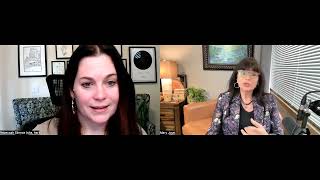
In this episode of the Mental Health Discovery and Recovery podcast, host Mary Joye (LMHC) interviews emotional‑healing coach and author Rebeccah Silence. Rebeccah shares her personal story of surviving childhood abuse, codependency, domestic‑violence, eating disorders, cancer and multiple near‑death experiences, and how each crisis became a catalyst for post‑traumatic growth. She explains her core philosophy that trauma does not have to define a person and that healing is a matter of choice, not victimhood. Central to her work is the "Practice of Emotional Healing," a framework that includes an Emotional Survival Kit, seven tools, and a focus on committing to life, distinguishing primary emotions (anger, grief, fear, joy, excitement) from learned feelings, and regulating the nervous system (vagus‑nerve exercises, guided imagery). Rebeccah emphasizes the power of deciding what you do not want as a starting point, breaking out of survival mode, and using the body’s innate resilience. She also discusses how cancer forced her to abandon a results‑driven identity and adopt a more authentic, purpose‑driven life. Throughout the conversation she offers practical hacks, encourages listeners to join her private Facebook community, attend retreats, read her book Coming Back to Life, and take her online courses. The dialogue balances personal narrative, coaching methodology, and motivational encouragement for listeners seeking to transform trauma into growth.
Chapters
Hello, everyone. I have a wonderful guest today on Mental Health Discovery and Recovery. It's Rebeccah Silence, and we won't be silent today. She's going to talk about post-traumatic growth. That's what we're going to share. And she is an emotional healing and relationship coach and author on Health Communications Incorporated. The HCI is the publisher, and her book is called Coming Back to Life. And no, it's not just one near-death experience, it's several. So we're just going to be having an organic conversation of how trauma doesn't have to define your life. And I love it that we have that common bond. So welcome, Rebeccah Silence, to Mental Health Discovery and Recovery. Oh, we're glad to have you here.
It is a joy and privilege to be here today. And I'm honored to have this conversation. I think so often when we talk about trauma, it automatically has us in a state of disempowerment. And I want to disrupt the conversation so that trauma and talking about it can become an empowering experience, because that's what's happened for me, and I know it's possible for all of us.
Well, talk us through that. We want to hear your story and how you did it. If you could kind of be the mentor and the inspirer. I know you do retreats. You just did one in Santa Fe, and people can find you. First, I want to know where— I like to do it at the beginning and the end. How can people find you?
Sure. Yeah, so rebeccahsilence.com is the website. You can find me there. You can find the Rebeccah Silence YouTube channel. You can also join the free Healing Is Possible Facebook community that's private, where you get a lot more access to me and to like-minded individuals on the same journey of hope and healing. That's an empowering one. Um, the book is Coming Back to Life, and you can order this anywhere books are sold. And this really is the story, but I'll take you through an introduction to me anyway, and this book will give you the full perspective of who I am.
And I didn't mean to interrupt you. Our podcast audience, I want to spell your name. It's Rebeccah Silence. The word silence.
Rebeccah Silence.
Yes.
Rebeccah Silence. Silence. S-I-L-E-N-C-E. My original coach and I had a joke that I was so committed to silence for so long that I ended up marrying a guy with the last name Silence. That is not a made-up name. And I certainly am not silent, nor do I want any of you in our gorgeous audience to be silent.
But correct.
My story begins with me being that person in the family. I think every family has a generational healer that's born into it. That is the target audience that I work with in my private practice, that person that saw what could be and saw that dysfunction, abuse, toxic patterns, the traumas that were going on didn't have to be the way it was. And I think often what happens for that child in the family, it's easy to think something's wrong with them. Versus recognize that what they're seeing is possible, is what's needed, is what's healthier. And it's not that the rest of the family is wrong or bad. It's just when they can't see what that child can see, it's easy for the child to make themselves wrong instead of to really understand they're right. So if you're here and you're listening and you're the generational healer, I just want to kick off by saying you're right, it can be better. You're right, it should be better. And your job is to break the patterns and the cycles for you and not to assume the responsibility of trying to heal your family, right? Because we all have free will, we all have agency, and we can only see what we can see. And one of my big, big messages is healing is possible, and there's no right or wrong way to heal. So when I was growing up, I was very codependent from a very young age, began being abused at a very young age, and I thought that it was my job to be the solution. And I thought it was my fault when abuse was happening because I should be equipped and able to keep the peace, to make family members happy so that we didn't have to behave this way. And I made it my mission to be the one that took it. So toxic, so unhealthy. But I had this paradigm and belief system that if I was the one getting abused, well, maybe that meant others weren't. And it wasn't true, but it was a part of what has shaped me and helped me become who I am today. That boot camp of taking it, that boot camp of thinking I had the power to heal, change, transform the abusive dynamics. I'm really grateful for those experiences that shaped me because I, I learned how to become someone that holds space for other people to do their healing. I don't heal anybody, but I am a space for miraculous healing, and I guide people back to the parts of themselves that's capable of healing themselves and the patterns and creating what they wanted growing up, what they wanted for everyone else growing up for themselves. So, you know, that was my early experience. And then because of my childhood, I was very available. For abusive relationships and abusive dynamics and ultimately was engaging in self-harming and self-abusive behaviors with eating disorders, with drinking too much. And I married a man with the last name Silence that ended up, you know, in our marriage helping me see the truth about abuse and what I was living in and living with. And as a single mom, I decided I'm not willing for my daughter to to experience these same dynamics. So I got out of a domestic violence marriage with a 2-year-old and, you know, and reinvented myself in my life, which wasn't easy because I had about this much self-respect, about this much self-esteem. You know, um, if you're listening, I've got my thumb and finger together with like no room in between them. I had none. No self-esteem, no self-respect, no self-love. But I wanted better. I wanted better for my daughter. So I got, you know, into therapy, hired coaches, did over 100 seminars. And you know what I think is so interesting is even with a master's degree in counseling, I couldn't figure out how to live in alignment yet with what I, what I knew had to be possible. And it took a lot of work and a kitchen sink approach, but I have become the person I wanna be. I have learned how to use life and trauma in all of its seasons to my advantage. And that's what I teach other people how to do.
and people are going to want to hear how you did it and how you work with them. So how did you go through the metamorphosis? But also they're going to want to hear how you help other people do it, because it's not a one size fits all. And I always say trauma is not a competition. It's absolutely not.
Right.
One person has a high resilience, another person does not. So how did you approach it? And how do you approach other people as individuals when you have to help them get post-traumatic growth instead of just post-traumatic stress?
Absolutely. So, you know, the first thing is I am a firm believer that each and every one of us— I don't, I don't agree some have high resilience and some have low. We have different resilience. We have different ways of tapping into our power and owning our power that will work for each of us. And the point about trauma not being a competition, that's so important. My very first coach, her name was Carol Reynolds. She used to joke, I don't care if you're pinned under a trouble, right? It doesn't matter, right? And, and I really—
so true.
None of us are immune to trauma. None of us. And then it looks different. And not just the trauma looks different, but the, the right way for each person to heal through it and emerge victorious is different. Um, I'm also a cancer survivor, so I want to talk about that in terms of how did I do it. I, I remember thinking, I'm 34, I'm pregnant with my second daughter, I'm married a second time, my private coaching practice is thriving, booked out for months. My seminars are selling out. I have a radio show every single week. I had, I had naively thought I beat the odds and that the, the trauma and crisis that I had lived through and survived was behind me. At the time of getting diagnosed with cancer, I was still highly results-driven. I thought results, that's everything. What I didn't understand yet was how to regulate my own nervous system and how to pursue a path of happiness and joy where the results just got to be a benefit and the fruit of my labor, but not the metric to determine success. Cancer taught me so much about how to challenge the, the success metrics that I was operating from and with, and how to become my own healer. And I remember thinking a lot of the childhood sexual abuse that I had experienced when I got cancer, I remember thinking, God, this feels like that. I'm alone. Violated. I'm in bed. I don't know if I'm going to live or die. I am in so much pain. I don't know when it's going to end. There was so much. I remember the moment being in bed and recognizing I can use the resilience muscles that I developed to survive my childhood now I know I can survive the impossible already. Yes, I did it as a kid. I got out of a domestic violence marriage. There was a lot more in between, and I actually have evidence that I'm stronger than I realize and that I have what it takes to survive trauma. So I remember the shift from the victim consciousness, like, here we go again, here's the abuse again, to I have every bit of evidence that I am stronger and more equipped and more capable than I realize. I need to use that inner strength now more than ever to combat and to not just survive cancer, but to emerge victorious. I made that my focus and my mission, that I was going to live like I was going to live, and I was going to live like there was a certainty that I would emerge victorious. Because why not? What's the alternative? I'm going I'm going to live like I'm dying. I had to say to family members and friends, if you're going to see me, if you're going to speak to me, if you're going to treat me like I'm dying, I will not be around you right now. I only want to be seen as capable. And the thing about it is, if we don't see ourselves as capable, how are other people going to see us as capable? They respond to our vibration and our energy. Right. And so I just want people to know what I did was I led my life without arguing about the circumstances into being the very best, most powerful version of me, trusting myself, my body, my divine guidance to know what was right for me. I listened and I, I became a version of me that relaxes into her power. I think power, that's a whole other big conversation, right? So much of the time we think about power as aggressive and force and squashing other people like bugs. To me, the only time we're powerful is when our nervous system is relaxed.
Correct. Peaceful is powerful. That vagus nerve. Keep that thing calm. I've got videos on vagus nerve and emotional self-regulation and the connection, because as counselors, we help people listen to themselves. That's what you do as a coach and a mentor and a counselor. And I was listening to you, and the abuse you suffered as a child and the cancer, those are both violations. Those are physical, mental, and emotional violations, an assault to your system. We call these things sexual assault, and your body is assaulted with cancer cells. So anybody who's out there that's violated in some way, because I always say that it robs you of something. And the word invalid, we use the word invalid, and it means invalid. So what I love is that you said you didn't let anyone invalidate you. If they validated your healing, you hung around with them. If they made you feel like an invalid— invalid, we really need to pay attention to these words we use because invalid does mean invalid human being. People take on shame when they are going through healing, when the opposite should be true. So how do you help someone who comes to you who's been violated in some way by trauma? What's the first step you take? I'm sure you gather information, but after the information gathering stage? What do you do to help them connect the dots?
And sure. So post-cancer, I created what I call the Practice of Emotional Healing, because what I believe and what worked for me to do with myself, and what I also do with my clients that has worked over and over and over again, even in the most seemingly impossible cases, is I help people understand that they're responsible for the experience of life they're having. They can change the experience they're in, in whatever circumstance they find themselves in. So what I mean by that is violation is, is an experience. So I had to decide that I was going to live like I was going to live, and I had to also decide I was going to be someone that was not operating in a victim consciousness in the face of cancer and everything that came before it. So what I mean by that is no one's a victim. No one. But our consciousness can have us believing that we're being violated and victimized like we were as children. And when we're adults engaging in an experience emotionally where we're feeding the fire of believing that we're being victimized, violated, invalidated, when we're invalidating ourselves, now the trauma gets more power and gets to win. And we have the capacity to fuse any narrative or emotional experience that has us feeling like we are less than because of whatever it is. And again, trauma can mean more life, not less of a life. But when we don't know how to create the experience for ourselves that empowers us in the face of circumstances that we can't change, we're automatically going to be a victim on a consciousness level to life, and that is disempowering, and that is a spiritual death sentence.
Well, address that to the person who has been, and I'm making quotations, who has— I tell people, you are not a victim now. You have been victimized, and you can choose to stay in that role or come out of it. So you're just saying, don't even think of yourself as a victim at all, even while you're going through it. How do you do that? Address that person who's like, wow, I feel like I was victimized, but I don't want to be this victim mentality. I don't want to have this persona living inside of me. Tell the how-to step to do that.
Okay, so number one, we do have to acknowledge what's real. We do have to acknowledge the inappropriateness, what is incorrect, what is disrespectful and dehumanizing. I always start with acknowledging the facts. The facts are, yes, this isn't okay, and it also doesn't have to define you. And my work is about getting to the root. Like, what Because here's, here's what's so important for people to understand. The emotional experience we're having, if it's painful, is because we are being reactivated and reminded of painful events from childhood that we would much rather not have to re-experience. So the problem is, as long as it hurts, it's not healed. As long as it hurts, you're powerless to the person, the experience, the scenario, right? So we have to acknowledge what is not okay while we also acknowledge this only hurts because you've still got unhealed emotional wounds and trauma that if it wasn't this perfect storm scenario happening right here, right now in your life, it would be another one giving you access to the emotional pain that isn't healed yet. So what I'm trying to say is that patterns repeat until they're healed. So you can use any trigger, any trauma to help heal the root of where the pattern started. So that you no longer have to experience the pattern. And when you go into a space, especially mentally, that you are asking, why is this happening to me? Why is this person making me feel this way? Why is this person doing XYZ that has me feeling this way? You've got no power. And you always have power to access. So the alternative conversation that you can have with yourself is, thank goodness I am brave enough and aware enough to feel what I'm feeling and to see it for what it is and to be capable of making a decision that regardless of what is technically happening, I am no longer going to experience it as a victim. I'm an adult with capacity and capability to come out stronger in the face of this, not to feel less than because of this, like I did as a kid. We can change the game for ourselves, but it starts with a decision. That I will no longer have.
It starts with a decision. So I want the listeners to hear it starts with a decision, a choice. There are choices and consequences, and consequences aren't necessarily bad. They're good. So what decision do people have to make? I tell them, don't accept the unacceptable, just accept that you can't change it. So how do you help them? That first decision making.
The first decision is you're more powerful than any diagnosis, any symptom, or any circumstance or anything that has happened to you. And if you refuse to own your power because you equate power with abuse, you're going to keep yourself in a holding pattern. So while it can seem like abusers have the power and we don't as the victim, the abuser is just as powerless as the victim. They're just trying to take their power— power back in powerless ways. And I just want everyone to understand, violence isn't anger. Abuse isn't power. Power is you knowing you can be the eye of the storm that doesn't engage with being swept up in the storm anytime you choose.
Yes, it's a choice.
It's choice.
Choice. You don't have to— you can change. You can change your response to it. You don't have to react. You can respond. And tell us how you teach people how to do that. I use a lot of vagus nerve exercises and a lot of neuroscience and guided imagery. But what is your method? That's why I love to share with other professionals about different methods? Because it's not a one size fits all. Again, it's really not. Drama is not a one size fits all, and healing is not a one size fits all. So how do you help people and what are different methods you use to help people?
So I will give you a little taste of the practice of emotional healing because that's ultimately my method, right? So it starts with an understanding that no matter what, no matter where you come from, no matter what you're facing right here, right now, in this moment, you can be the person that creates and designs a life that honors and respects you, where you love yourself and where you love your life. So often we are living our childhoods on repeat with different characters in different costumes, but the same dynamics. When I'm working with couples over and over and over, the only problem in any relationship is unhealed emotional wounds bleeding into the relationship now, and both people projecting their issues and unhealed issues with their partner, and, and basically they're fighting with ghosts, right? So we fight with ghosts. So what the practice of emotional healing does is it gives people a roadmap to understand how to live and heal their way. I'm not the coach that's saying I have the way. My way I outline in my book. I outline in my course, the Emotional Survival Kit. But the whole point is to guide people back to the part of them that knows what's right and best for them. And you know what's right and best for you when you have that experience of a relaxed, regulated nervous system and peace and trust where you trust you, you trust your life, trust yourself.
Most important person to trust is yourself, to pick people you can trust.
Exactly. So there are a couple foundational components to the practice of emotional healing. Number one, I want people to understand they are the hero in their story. They are the one they've been waiting for. They are the solution. The second thing is I want people to know the difference between their feelings about what's happening outside of them and the emotions that are human and natural and their birthright that need to be felt through to have a new emotional experience. We learn shame. We're not born knowing shame, guilt, rejection, abandonment, jealousy. The list goes on. Brené Brown's work, it's brilliant, but she teaches emotions that are learned coping skills. They're not emotions. There are 5 emotions that a baby is born with, and when we're babies, we're unapologetic about our emotions. Anger, grief, fear, joy, excitement. That's all I teach. Anything else, we learned it so we could cope and not have to feel anger, grief, fear, joy, excitement. Yes.
Right.
Because anger, fear, grief, joy, excitement weren't received in our childhoods. We don't know how to unapologetically express and We don't know the difference between our feelings about the external and the emotions internally that are our guidance system back to who we really are and to healing. So my work teaches the difference between feelings and the emotions we actually need to feel. It makes it really simple. It's 7 parts to healing with 7 tools that go with it. And I'll just give you a taste of the first part because it's the most important one. Okay. Nobody has commitment issues. We're all committed to how we're living, to who we're being, and to what we're doing and to what we're choose it, right? But so often our commitment is fear-based. We can choose to commit to life. We can commit to life in a way where we're fully expressed, fully fulfilled, happy, and healthy our way. And I think happiness, all it is, is zero resistance to trusting and leaning into our emotions moment to moment. We are emotional creatures. We have emotions every microsecond. Game. But it's so easy to disconnect from our bodies. It's so easy to disconnect from our emotions. And when we're committed to fully living, our emotions are a huge part of that. And we can't access joy and excitement without freely and unapologetically being willing to access and move through anger, fear, and grief. So commitment to life means commitment to the full-on emotional experience of life. And it starts with my 3 keys when it comes to commitment. Number 1, you have got to decide. You have got to decide to decide to live and design the life you want regardless.
Very important.
From there, right, we build momentum and continuing our commitment even when it doesn't seem worth it, even if it feels like nobody else understands, supports, gets it, validates. That's the beginning of life opening up to the infinite abundance available.
So how do you help people? Because I know you hear this a lot as a therapist and a counselor. People come in and they say, build the life I want. I don't know what I want. I don't know who I am. I address that a lot in the codependency things I work on with people. And I go, where do you start? I have my own method, but this is where we're talking to you today. And how do you start with the person who who just heard this and says, I'm supposed to develop the life I want. I've been so violated, I don't even know what life I want. What does that look like to me? How do you help them go from I don't know what I want to what they do want? How do you do that?
Well, a very easy hack here is if you know what you don't want.
That's my hack. That's a great hack.
Flirt with the opposite, right? You know what you don't want. Want, that's enough. Often I find it's more about people not really believing they deserve what they want than it is a problem of they don't know. If you don't know, just know that your trauma doesn't have to define you and that your trauma doesn't mean less of a life. And let yourself want that and be willing for that to be the start gate, right? Like, I no longer want to be living in a reaction to my trauma, my abuse, my experience. Experiences that feel harmful, hurtful, and painful. That's enough to start. I didn't know how I was going to make ends meet as a single mother with a 2-year-old. I had no idea. I did not have confidence. I didn't believe at all in my ability to create a life that was different from the life I knew. I just started knowing I didn't want to live how I was living. And if that's you, that's enough. And if you don't want to live how you've been living, First step is to give yourself permission to decide you're gonna start again and to decide that you are going to, as long as it takes, whatever it takes, build the muscle that would have you able to hear your own voice again. The opposite of survival is authenticity.
Yes, it is.
Right. And so many of us are living in survival mode, and my work teaches people how to break up with survival mode. And I have so many stories of so many cases. Yes. And I am the walking living testimony. Testimony that healing is possible. I mean, the life I have today versus the first marriage I had, the life I had before now, I mean, it's night and day. I did not have attentive parents that were addressing or supporting me emotionally. And I don't blame parents. They are a product of their environment.
Their environment, right?
Right. Like, they're parenting how they were parenting. But again, there's a person in every family system. I believe this in every cell in my body that has what it takes to be the generational healer. And if you even have the thought, this isn't good enough, what am I doing? Life could and has to get better than this. I'm just here to validate that you're right. And then it's a journey. It doesn't happen overnight. And often I find that knowing what you don't want is a great place to start. And it's plenty.
It is.
Great. From there you can trial and error your way through. Well, what would I want instead?
Well, I'm going to raise my hand on this one because a lot of people, not for you, but for the listener, I'll raise my hand because I can feel those listeners raising their hands. That empath in me feels that they're saying, wait a minute, we're not supposed to think about what we don't want because the law of attraction stuff says we're not supposed to think about what we don't want. And great if that's part of your belief system. I'm not diffusing any part of that belief system, but this is how toxic positivity became a buzzword in our business, Rebeccah, because to not acknowledge the fact— are you really supposed to just think positive thoughts all the time? And I can't think about not wanting to feel grief because I have to think about being happy. Well, you know what? Sometimes you just have to pause and wallow in some of the grief. There's a saying you have to feel it to heal it, which I do believe. And that deductive reasoning, what we're talking about here, what Rebeccah and I are talking about, you people that are out there now, I'm going to go to the opposite of law of attraction. I'm going to the scientific people. What Rebeccah and I are discussing is scientific, straight out of a textbook, deductive reasoning. If this, then that. If I don't want this, then I do want that. So I just want everybody to hear that because Rebeccah said it so beautifully. But this is not about please don't raise a flag or leave a comment that we're not supposed to think about what we don't want. That's where some people that have been violated, that's their only starting point. I know I don't want to feel this way. That's some— I know I don't want to raise a 2-year-old by my own. I'm scared to death. Okay, what do I want to do about it? I don't know what I want, but I do know, like, I don't want to be poor. I don't want my daughter to suffer. You had to start what you don't want. So what you do want is you want to be successful, and you are, and you want your daughter to see that you are the family generational healer and breaker of the old patterns. So anybody that's listening, I hope you got that from Rebeccah Silence, and I just wanted to stop and give a scientific version of it and then the touchy-feely version, because I have both kinds of listeners and they balance that. So this is not about the kind of thing where you don't think about what you don't want. You almost have to start over if you're really in a tough spot.
Well, and I love that you run with that ball here. Yeah, no, there's so much I have to say. So toxic positivity is pretending that things are okay that aren't okay. Right. Let's just bottom line that. And I spent years as Pollyanna, like, I am light and love and rainbows. And this is the way that everybody can be, even if this happened. But I haven't dealt with the shit yet, right?
Exactly.
That isn't really that compelling, right? Pollyanna, idealistic, toxic positivity. Law of attraction is critical. And actually, what I'm saying aligns beautifully with law of attraction. Law of attraction. And another way to say what you were just saying is cause and effect, right? Like, cause and effect. Yes. We are each responsible for the energy that we are sourcing from that causes the effect that we experience, and we can change it. Now, for me, this is, this is another thing I teach. Your brain cannot be in two places at once. It can't be sourcing from fear and able to access possibility at the same time. So what I teach people how to do is when their brain has fear bigger than possibility, I teach people how to get the fear smaller than the possibility and the possibility bigger again. And the way to do that is to recognize, like, grab— like, like a ball got thrown at you. You grab the ball, you take a look. Is this right for me or not? Is this a yes for me or a no? The reason it's so important to know what you don't want is because that's what gives you access to what you do want. So we don't sit in what we don't want and focus on what we don't want, because as the law of attraction teaches us, where our focus goes, energy flows. So if you're thinking about, you know, and I deal with this when I'm working, especially with clients on relationship, I don't want a partner that blah, blah, blah, blah, blah, blah, blah.
Again.
All right, well, now we have to take the conversation further because all the universe is hearing is what you don't want. So you'll get more of the same. So, okay, great. We now know what you don't want. So what do you want? From there, you have to declare it. Like it's already happened. I had a 5% chance to live with my cancer diagnosis.
Wow.
5%. Brand new baby, a 9-year-old daughter that— my pride and joy. She says to me, great, I don't have a dad and you're gonna die, when she finds out I have cancer. Oh, I was gutted. I was gutted. I knew what I didn't want was to die. I knew what I did want was to live. I knew that the choice I was going to make and the commitment from there that I was going to make is that I was going to live like I was going to live. I was going to let my inner guidance and divine guidance guide me every step of the way. And it did. I quit chemo. I found the holistic alternative teachers and methodologies and healers that were right for me. I am never suggesting that what has kept me alive and helped me heal and thrive and become fully expressed and authentic is the way for anybody else. But what I do know is every single human being has it in them to get back to a place where they become someone that believes they're unshakably whole and loves and trusts themselves again. And again, my book, my courses, it gives you everything you need to access your authentic truth, not the truths that were told to you, your truth.
And what I'd love to hear is a composite composite? Because we were talking earlier and I told you I had a near-death experience and I had this pervasive sense of peace. And that's all anybody needs to hear. I might do a podcast on it someday, but it's really just important to know that life moves very swiftly. I'm almost 66 years old and it's like it goes really fast, everybody. So live it to the fullest. What were some of the composite points that you got when you were awakened from your near-death experiences? The things that— because you said something earlier, you have to deal with the shit. I always say shit is fertilizer. We robe. We use manure fertilizer. And so what are some of the, you know, people hear, oh, death can't bring you back to life. Well, yes, it can. And other people's deaths can make you take inventory of your life. I always tell people that are grieving, this is time to take an inventory of your life. So help us learn the composite lessons you, you woke up with when you did finally realize, oh my gosh, someone just told me I coded. Coding meaning, you know, code blue, which means no air, heart stops. How what are some of the lessons you learned so you can help other people know that resilience is something you're born with, but you can also develop it? What did you learn from those things?
Well, and we are all so much more resilient than we give ourselves credit for and so much more capable than we give ourselves credit for. I love this conversation and I love this question, so I'll be very vulnerable and honest. What I experienced was what I would describe as a spiritual crisis. I began questioning questioning everything. Did I even believe in all of these words I'd been saying to hundreds of thousands of people a week on the radio and to coaching clients and to audiences for years? What was I teaching? Did I even believe it? Did I believe in God? Who was I? What was I? What did I want? Why did I want to live? If I lived, what did I want to do with my life? I, I had this really rude awakening that if I did get to live, a lot would be different. And what was so painful about that was I had thought I was living my dream life, but the way of pushing and grinding and being so results-driven, it wasn't fulfilling. And it didn't matter how successful I was.
No, it's just exhausting. It was exhausting.
I got sick. I got cancer. I almost died. Right. And I don't think I caused the cancer. Cancer. I honestly don't think I do.
But it can open your immune system up to not being able to heal itself as productively. It can do that.
Well, emotionally, the more clear we are, the more healthy we are, the more capable and equipped we are to lead from a high vibration wherever we find ourselves. So I end up questioning everything and really found my voice and my truth and my message as a result of cancer. What I want people to understand is that you do not need to wait for a crisis, and then you can get honest with yourself, right?
You don't have to wait.
It breaks my heart. I hear it so often, you know, it's not bad enough yet for me to do anything. Oh yeah, XYZ, right? Um, it's not that bad.
Threshold is just too high.
I can handle it. I was just talking to a different person that interviewed me this morning and offered up one of my programs based on what I know is going on, and they just said, I'm not ready I get it.
That's a tough thing to hear as a counselor, and I do hear it a lot. I know you do too. And you know what? They're really not ready. And everybody at their own pace. And I always say, well, that door is open 1,000 times if you want to come in 1,000 times and say, I'm not ready yet. It's open 1,001. Whatever it takes.
And our hearts, right? Our doors are open and our hearts are open. And the thing is, I used to put a lot of pressure not just on myself, but also on clients. To come on, your life depends on this. And I always treated emotional healing like it was life and death. But when I was before cancer coaching, afraid for the client, that's not empowering. And I did. I made that mistake, especially when I'm dealing with the level of trauma that I'm dealing with in my private practice. But the point is, you don't have to wait for a crisis. You certainly don't need a breakdown to break through. No, I've had teachers teaching me breakdown to break through. No, no, breakthrough is available. All breakthrough is, is you've moved through the hurt, the stuck, the suffering, what's in the way, and accessed possibility again. You know it's healed when it doesn't hurt anymore. And we can't skip the part, the, you know, the growing pains, the, you know, the time where we have to move through what's comforting and comfortable that we know we can survive to make room for new. And that's what's difficult. We know we can survive what we've survived. So often we stay there because it's comforting, whether we're aware or not. The life you want isn't comfortable because you haven't known you're the person who could create it for yourself yet. And you've got to decide you want the life you want more than you want to be comfortable. And often people wait for a crisis to give them permission to go for it. And life is short. And I got diagnosed on a Tuesday afternoon. Didn't see it coming.
No.
And then I thought, oh, it's skin cancer. They'll cut it out. I'll be fine. I didn't understand.
Oh, those can be so serious.
I have the most aggressive melanoma. It is my history, right? And I beat the odds. And I just want people to know they can too. And you don't need a crisis to wake you up to your power. You can connect to it just because you decide to. And so for me, I had to go through the unraveling of who I thought I was. I had to go through the crisis of recognizing the identity that I was measuring my success from. It went out the window. Successful business owner, sexy, healthy, radio personality, TV personality, all these things, mother, wife, they were gone. There was no way Right. To define my success based on results anymore, because the only thing I was capable of was breathing and just staying alive. I remember having a coaching session with my coach bawling that I wasn't sexy and was my husband ever gonna see me as sexy again? And she just said, your only job is to survive. He'll be fine.
I love that.
Right? And I was like, oh my God. All right. Tubes coming outta me. Like, I can't move. I ended up having 4 months of chemo, 12 surgeries right after having a baby. And who I thought I was, I wasn't. And what I will say to everybody listening is, who, who we've been, that was our best. And we can love and honor every version of ourselves, and we can reinvent ourselves moment to moment anytime we want. And what I'm teaching people how to do is be present to the moment they're and present to their ability to choose who they're going to be. There's nothing to do. There's beingness to focus on that I believe is the gateway to authenticity. And I ended up finding my truth, finding my voice, finding my message. And I've become the megaphone that will say to anybody that will listen, healing is possible.
And healing is possible. That's your Facebook page too, isn't it? Healing is Possible.
Private.
I just joined it. It's a private group if you want to join. It. It's a lovely community. Rebeccah Silence is teaching you beautiful things, and we have a lot in common. I used to be in show business. I always said, as a songwriter, I got people in touch with their feelings. I was on XM Radio for a while before they merged with Sirius. And it's funny because you have that show must go on mentality when you're in that. Sure. And we define ourselves by our accomplishments, by the numbers, by demographics. I mean, it cannot tell people— people in show business are not a bunch of narcissists. They're a bunch of wounded kids trying to be heard. And sometimes, especially actors, they just want to be in someone else's skin and with a script with a beginning and a middle and an end because it's more comfortable. But we have our own narratives. So Rebeccah Silence is teaching you how to change the narrative of your life today, which is what I think every good counselor does. You can change this narrative from trauma and drama to hope and healing. And it is possible. And even if today it feels impossible and you're not ready yet and you think it's a bunch of hooey that's okay if that's where you are. If that's where you are, you're doing your best. Because I think Rebeccah Silence and I now, I know I have been there. I have given up hope on hope.
I have.
And that's not a good day when you say, I'm just giving up hope on hoping. And it's okay. I always say rock bottom. You can push off of rock bottom. It's not a sandy bottom. It's a rock bottom. And rock bottom isn't the worst place to be. But again, I love it that you said you do not have to have a breakdown to have a breakthrough. Through. Post-traumatic growth is possible. So is there any closing words you'd like to tell people about? And I do want you to mention your book and how people can find you again and any retreats you may have coming up. They're on your website too, and coaching and things.
Absolutely. Yeah. So my work is for the ones that want to break the generational pain patterns, that want to learn how to use trauma and life to their advantage. Manage no matter what and want to experience themselves as in their full power. And, you know, I think the healers that want to be as healed as possible to make their biggest difference, that's who I work with. Like you said, in show business and in life, there are a lot of people in leadership and influence that aren't healed, that are looking for external validation to give them a sense of purpose. What I want everybody to hear is that your purpose, all it needs to be, is getting the most out of your one precious life. And I want you to know that when you're afraid to hope, that's the time to turn the volume up on your commitment to your life. And I get that we're afraid to hope, but when we're afraid to hope, we defeat ourselves, and our past and our pain and our trauma wins.
Yes.
I want you to emerge victorious. I don't want you to keep giving the power to the past and the perpetrators and the circumstances, right? It wins when you won't hope, when you won't live, when you hold back. And you can gently and softly relax into your power. You don't have to be public like we are. You just get to be the one in leadership of your own life and not on the sidelines. With that being said, the book Coming Back to Life, you can get it anywhere books are sold. There's a link right at rebeccahsilence.com for you to order your copy right away. We'd love a review. We'd love for you to read it. There are exercises in this book that will get you going. This book, especially in tandem with my Emotional Survival Kit course that is also at rebeccahsilence.com, it will give you everything you need to change your life in the time it takes to read a book and 3 hours to take my course yourself. And, and both of these products allow you to guide yourself back home to who you choose to be now and into a life that you love, that holds you. We all deserve to feel held.
Yes.
And supported, but we have to be the one to provide that for ourselves, and we can. And, and that is good news. Stay, um, with us. Join the mailing list at rebeccahsilence.com. You also can access my free trigger trauma release masterclass at rebeccahsilence.com and the is also where you can get updates on future events. Great.
Well, thank you, Rebeccah Silence. I just want to, as a closing note, that people that have been through trauma, and somebody out there is right now, somebody will listen now or in the future, whatever time you're listening, this is your time to hear it. I believe in synchronicity. Coincidences with meaning is the scientific term for that. And if you really think you can't have post-traumatic growth. Is it easy? No. Is it simple? No. But is it rewarding? Oh my, yes. You can come up from something with lessons that you can impart to other people as well, which is what Rebecca and I are both doing. We have a passion for this. Both of us do. And you can become part of this healing community of just people that are kind. Like Rebecca said, you don't have to be on the radio. You don't have to be a songwriter. You don't have to be an actor, singer, or the things that, you know, these are things that you do. You can't define yourself by what you do. That is who you are. It's not what you do. And, and that's why people that lose their jobs and define themselves by those, that's a trauma. I mean, it's particularly for people that it's their only defining moment. So anybody listening that feels like they just can't go on another moment, you turn this on for maybe a reason or a season. If you, if you want to doubt, you can doubt your doubts. That's okay. But do try to lift yourself up. Because near-death experiences aren't just about physically dying. We all hear that. They're great stories, aren't they? I mean, we have them, so they're great and we love them. But you know what? Like you said, you don't have to die to come back to life. You don't.
No, you don't choose to live.
Choose to live. And people are walking around who haven't had a near-death experience, but they feel like they want to die, or they feel like they're already dead inside. You can use that manure for fertile a lot of service. So you have the last word, Rebeccah Silence.
Yeah, I do want people to understand that the life you imagine for yourself, it's in reach. And I do believe healing can be simple. And I do believe it's easier to let the past win and to focus on what we're going to do versus focusing on how we want to feel and who we want to be. And I I just want to remind everyone that focusing on how you want to feel and feeling how you want to feel, that's ultimate freedom, and it's possible in the face of any circumstance you could ever find yourself in. Reach out to me. Thank you so much for having me on the show today. Oh, thank you.
You're a beautiful soul, beautiful conversation. Thank you so much, and I hope it helps a lot of people.
More from Rebeccah





Free 5-Day Live Online Bootcamp for Mothers, August 24–28 4 PM EST. Replays available #shorts



