"Trauma is the rocket fuel that feeds not just your life, but your soul too," says Rebeccah Silence
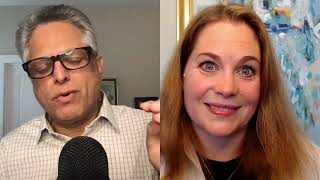
In this October 24, 2023 interview, host Raju sits down with Rebeccah Silence, an emotional‑healing and relationship coach, cancer survivor, and author of Coming Back to Life. Rebeccah shares her personal story of surviving childhood trauma, domestic‑violence, and a stage‑3 cancer diagnosis during pregnancy, explaining how those experiences shaped her mission to become a "space where all healing is possible." She reframes trauma as "heartbreak that hasn't healed yet" and argues that, when processed, trauma becomes the "rocket fuel" that powers both life and soul. Rebeccah differentiates her coaching from traditional therapy, emphasizing rapid root‑cause work, intensive couple sessions, and a blend of therapeutic training, music therapy, and her own proprietary methods. She introduces a concise emotional framework of five core human emotions—anger, fear, grief, joy, and excitement—asserting that all other emotions are learned. Her work focuses on leaders, entrepreneurs, and couples (including men), helping them move from survival to thriving by aligning with their true selves, practicing boldness, consciousness, and divine co‑creation. Rebeccah outlines practical habits (clear mind, body, emotions, daily rituals), the importance of supportive accountability, and offers resources such as a free Trigger Trauma Release Method masterclass, affordable courses, and VIP coaching. The conversation concludes with leadership insights that true leadership is about being enough and embodying who you are, not doing more, and a call for greater sensitivity and compassion.
Chapters
Well, I'm delighted to welcome my good friend, my co-mastermind participant when I met you, what, 4 years ago, Rebeccah Silence. Rebeccah has been recognized as the top emotional healing and relationship coach of 2022 by Redex magazine. As a survivor of a childhood full of trauma and later on in life stage 3 cancer that was diagnosed when she was pregnant, I could just tell you that Rebeccah is a force of nature. I love, love you to death. All of which you're going to be— what you do is going to be in the show notes. So I just want to welcome you. I know you're an author of Coming Back to Life, your book, and I've been on your show briefly a couple of years ago. Anyway, without much ado, here is Rebeccah. Welcome, Rebeccah.
Well, hello, Raju, and thanks for having me. I am ready for a bold, conscious conversation with you, sir.
Yes. So happy to have you. I know we were part of a mastermind in 2019, where we had a couple of different times we met over that year. And I really admire your your spirit so much. You're such a warrior and the work that you do, and I'm so happy to have you. But I want to first start by asking not what you do, and we'll talk about what you do, but who you really are, Rebeccah Silence.
Wow, that's a, a big question. And the very simple answer is I am a space where all healing is possible. And that is who I am. And everything I do stems from that identity. And I think people think about healing in terms of what can heal and what can't heal, and I just believe it can all heal. And I am a walking testimony of that. I'm not toxically positive or really about positivity at all. I am the space where all healing is possible and where anything I could ever imagine as a possibility for myself, I create, and then I help others do the same.
Well, so that's a great start to this rather bold conversation because ultimately, whether it's the traumas, and we talk more about what that means, what does trauma mean to people, and then challenges in our lives guide our, you know, guide us to through our life, if you choose to allow that to be guidance to you. What has led you to this journey? And I know a couple of parts about your story, but perhaps whatever you'd like to share, what led you to devote, you know, your life to this, you know, apart from the cancer, of course, that we just touched on.
Yeah, well, I think, you know, growing up, I definitely am and was that generational healer in the family system, but I didn't have those words for it. I just knew there had to be better for the people I loved so much. And even with the dysfunction and abuse that I grew up with, I loved my family as we all do. And I knew and imagined better for all of us. Later on, it wasn't until I was 23 and pregnant with my oldest that I decided on a soul level to become what I had always wanted for my family. But I think for a long time, I didn't think I could have it if they didn't want it first or create it for themselves. So now I'm bringing life into the world and I just decided, okay, I need to be my best. I need to create what I've always imagined for my child and I. I got out of a domestic violence marriage when she was very, very young and just made my mission being as healed and healthy and sound as possible for her. I didn't have the self-worth in the beginning, to be honest, to do it for myself. So I did it for my daughter. And then when my second daughter came along, it was again for my children that the fight for my life mattered so much and was a non-negotiable. And being pregnant with a diagnosis of cancer that the odds were very, very slim. They gave me a 5 to 10% chance to live, and I just couldn't imagine not going for it and made the decision I would live like I was going to live. And I did, and I beat the odds, and here I am.
Wow, that's got me goosebumps here. Truly, every time I talk to you, I get those. You know, I was thinking like I've been through, you know, the tsunami, for example, which was one of the 5 or 6 near deaths that I experienced. Now I can ascribe trauma to that and that I will heal from it somehow, whether it was the act of being swept away or the hydrophobia perhaps that I experienced and drowned before that, you know, thing happened. I'm just giving my example and I don't want to belabor mine. And there were others in our group that actually just blow it off as one of the things they survived. You know, we all had injuries. And we all survived. Nobody died in our family. You know, thankfully we didn't have to face the death of a child or anybody that we loved. What does trauma mean to an individual? I mean, because to those people, without being judgmental, I don't think for them it was traumatic as it was to me. So is trauma about giving it the meaning and then you want to heal from it? I mean, what exactly? I know you're in the thick of this work and I kind of do something similar, but not quite. What exactly feels like a trauma to me may not feel like that to somebody else. Is that true?
Absolutely. So I think, you know, you asked earlier, you know, who I am and what I do. And the what I do piece of it is that I am an emotional healing and relationship coach devoted to love and family and, you know, relationships being as healed and as free as possible. And here's what I really believe with all my heart. Number one, the trauma conversation, especially in the United States, it's a very disempowering conversation. So I wrote Coming Back to Life: A Roadmap to Healing from Pain to Create the Life You Want to disrupt the trauma conversation that most of us are in and to turn it into an empowered conversation. I really believe no one is immune to trauma. Said another way, no one is immune to heartbreak. So in the simplest form, I think what trauma is heartbreak that hasn't healed yet. So no one is immune to it. And what we do in the face of heartbreak is we try to avoid more. We shut our hearts down more. We guard ourselves and protect ourselves more and double down on survival more, which leaves us more disconnected, more disempowered, and more at the effect of not just our past, but also our desires. Because like no one is immune to trauma or heartbreak, no one is immune to being human and having desire. And then And if trauma is such that we don't want to go for our desires because it would hurt too much or because we don't want to fail or for whatever the reason is we're telling ourselves, we limit ourselves to less of a life. So the trauma conversation so often is trauma means less of a life. And I'm just here to go, oh no, trauma is what can be the rocket fuel that not just feeds your life, but feeds your soul and gives you as much of the human experience as possible in the best possible way. Trauma means we care, we're alive, we have desire. And once we get to the place where we realize there's no trauma more powerful than you, there's no trauma, no abuse, no diagnosis. I know you've lost your wife, you've been through many near-death experiences, as you've mentioned, as I'm sure your audience knows. But what I love about you, Raju, is you are a living example of someone that keeps putting yourself out there, keeps your heart open, keeps pursuing what your next desire is one at a time, even with the trauma that you faced. So the other thing that I think is important to mention here that happens in the trauma conversation is we don't understand there's more to life than coping with our trauma or just trying to survive it. There literally can be life on the other side. And that is my specialty work with people. So for example, when I've got a couple and they're in distress, whether they want to stay together or they want to end it, their distress is based on each of them being at a stuck age, each of them being prisoner to a past and a heartbreak that's resurfacing now in this relationship that has nothing to do with this relationship. So once we can unravel and get those healed ages definitely addressed so that now we have two adults in the room, release the stuck emotions, understood the pattern that we're in and released it, Now there's freedom. So just a little example of what's possible on the other side of trauma.
What is the difference? It sounds like therapy, sounds like a bit of, you know, you go to a family therapist or what have you, social worker, but you call it coaching. What are the similarities or differences between the two?
Sure. So I actually am a trained therapist. And the reason I call myself a coach these days is because there is so much more to it than what I learned in my therapy degrees and certifications. Now, I'm not knocking therapy. There are wonderful life-changing therapists out there. But I think the biggest difference between what I do and the traditional therapy model is I am getting to the root issue fast. I just had a couples intensive and the husband in the relationship, you know, what it is, is 2 days with me, a personalized seminar written specifically to you, your relationship. Your needs, wants, desires, and issues. And this guy said to me, in one day, you just did more for me than $75 grand of therapy has ever done. Again, I'm not discounting the power and the significance of therapy, but what is happening often in therapy is we're understanding better, super important, and we're learning how to manage and cope. But if you want more than understanding and managing and coping, and you wanna blow out the patterns and you wanna get to the root issues and you wanna take on as the generational healer in your family system, navigating in a way that you get beyond what these generational patterns that you inherited are, I'm definitely the place to go, the person to guide you as the specialist that understands human behavior, family dynamics, and trauma in a way where we help you get to the root issue, not just the symptoms. And I am not here to diagnose you, even though I'm trained in that. And I'm not discounting diagnoses or the traditional medical model. But the diagnosis isn't who you are. It's a way to try to explain symptoms. For example, anxiety I see as a symptom, not a diagnosis. Same with depression, same with any mental illness. We're managing and coping the way we learned. And then there's so much more available to us, but there isn't a lot of support to help us go beyond, again, just that understanding or the managing or the coping.
So there could be people that, I mean, they're doing, you could do both together as well, right? To have the therapy and also—
Oh yeah, I use both tools in my toolbox. Yes. And I'm also a music therapist. That was my original diagnosis. And my first job was at the State Psychiatric Hospital in Colorado. And that's where I just decided, you know what, I'm going to become an expert in human behavior because there is so much more for these people than what they believe is possible for them based on their circumstances, their environment, their coping skills and their understanding. And so that's where I say I am the space that all healing is possible. We can get to the point where the issues are just not an issue anymore. The present doesn't have to just be the past reactivated again with different characters in different costumes. We're fighting with ghosts every day without meaning to be and without realizing it. And there's so much more available.
All right, guys, if you're still here listening and watching, just get rid of the drama about the trauma in this case, because trauma is your fuel, rocket fuel. I love that statement. So processing versus healing. I guess there's a process of healing. Let's talk about what does healing mean. And so, so that is feeling free, part of it, what you just described and how you do it. So I'm going to ask you two parts. One is, so you mentioned you worked with a couple recently or a man. Is there someone specifically or a type that you work with? And then what is the process of this healing?
Who I work with today, the difference makers, the leaders that care about being their best for humanity. And they want specifically a more healed, healthy, and more fulfilling experience of love, relationship, and family than what they had growing up or even what they have now. So healing means alignment. We know healing is needed if there's any type of hurt. Hurt means it's time to heal. It doesn't mean you're wrong. It doesn't mean you're bad. It doesn't mean life is wrong or bad. Hurt just means this isn't good enough for me, the experience of life I'm having. So what I really want for everyone is the quality of life that they imagine for themselves. I want people to know how to love and trust themselves even when the circumstances they find themselves in are not ideal, are not their preference, aren't fun, aren't feeling good. What I know for sure is I can be the best of me. Me. I can be my best and I can make the best of every moment in front of me, committed to who I want to be and how I want to feel without needing the situation to be different. Now, you mentioned this word drama. Drama just means we're in fight, flight, freeze. We're coping the way we saw our primary caregivers cope and we inherited and we pick the parent to follow that we think is surviving the best. Without understanding there's life beyond our parents' methods. We might get that conceptually, but it's when shit hits the fan that we default to what we know until and unless we have an identity up level. So a lot of people want change, but they're not ready for it. A lot of people want to be free of all that stuff in Pandora's box, but they're afraid if they address it, they're going to lose something or they're going to make things worse. And I'm just here to say, oh, no. We want to make sure we understand every wound, every trigger, every place where you guard yourself, protect yourself, and go into survival so that you can truly be liberated and free. And you're the only one that can give that to yourself. I'm the guide. I'm the specialist. But you're the hero on this journey. You're the healer. And the other thing I'll just say here is I don't believe at all that there's a right or a wrong way. To live or to lead or to love or to heal. There's what works for you. So this is another big part of the work I do is I help people access their truth, what's right for them. I'm not the type of coach that says I have the way, even though I have proven processes that work and have worked for thousands in my private practice and upon hundreds of thousands in my audiences. You have your way. And I just connect you to that.
Well, it's beautifully said because I was just thinking that, hey, it's like when you were a kid or even now, if you get injured or you fall, you have to heal from it. You can't just let it go because either there's emergency medicine of some sort to do something for you. That's a standard practice, if you will. But it's the individual who's going to either heal quickly or some are going to take a while, no matter how much medicine you put on it or injections you take. Because your body is your body. Similarly, your heart and your way of dealing with trauma is going to be different than somebody else's. So you're saying, Rebeccah, that you really, you're just focusing on, on that individual in their particular circumstance and how they will heal given your processes.
Absolutely. And my focus is on emotional healing. I don't think that I survived cancer because of a healthy mindset, mindset, or the right strategy. And while those things are very important, knowing how to regulate your emotions and your nervous system and being able to connect to the truth of your soul and what you need and want and knowing how to trust that in the face of anything and everything, I just think makes us superhuman in the best way. And emotional healing is not something that we're taught and it's not something we understand. And for example, I think in Atlas of the Heart, Brené Brown's most recent book, there are 80+ emotions that she teaches about. I teach— there's a huge difference between our feelings about what's going on externally and the emotions that we need to feel. And I only teach 5 emotions. That's it. Because they're the 5 emotions that are natural and human and that we're all born with. Anything other than anger, fear, grief, joy, or excitement. It's learned.
These are the 5 you just mentioned?
These 5 core healthy human emotions. Anger, fear, grief, joy, and excitement.
Oh, interesting. Those are the first 3 are also considered core.
They're core. They're natural. They're human. They're normal. And when we're born, we cry when we need to cry without questioning ourselves. We have fear. We get startled. We don't question ourselves. We move through it fast. Anger, we're not taking it out on anyone. Sure. We just have this emotion, we feel it. And once we are able to experience and express without being threatened, anger, fear, and grief, we get way more joy, way more excitement. And I'm teaching people how to have joy and excitement as the default because none of their emotions threaten them.
Beautiful, man. There you go. Hey guys, this is a great takeaway right here. So, you know, I'm bringing guests these days who are really representative of who they are as far as being bold, okay? And certainly conscious. I'm calling this the Bold Chat with an entrepreneur, you know, like Rebeccah Silence here. So I was going to ask you when you were saying about the emotion piece, men in this country in particular, I'm not saying it's not true of other countries, run away from, oh, that's woo-woo, and this is like, oh, I'm not getting into this, as if they don't have trauma and they don't have anything to heal. Oh, heal sounds such a feminine energy. Can you talk to that a little bit?
Oh my gosh, I adore working with men. Men are just as sensitive as women. Men are just as emotional. Men want to be seen and experienced at the deepest levels as much as women do in my experience. Now, I'm obviously not a man, so I can't say that I know what it's like, but I can tell you after coaching hundreds of couples, when the men get to me and I am helping validate how difficult it must be, and I'll say this to, you know, not just heterosexual couples, but even same-sex couples, you know, I can't imagine what it's like to be a man in the American culture. We want you sensitive, but we also want you strong. Don't be too sensitive.
Yes.
Right. But oh my goodness, what if we all respected and embraced that men are sensitive too and emotional too and have every right to express their emotions, their needs, their wants, their vulnerabilities as much as women, right? We all are emotional. And, you know, there isn't always action to take, but there's always an emotion to feel more into and to process and to express. And when we are able to unapologetically and fearlessly connect to our emotion, regardless of gender, regardless of any external details, we're free. And we all deserve to get free. And people ultimately come to me because they want more intimacy. They want a deeper experience of connection and not just sex and physical intimacy, but emotional intimacy.
So these 5 core apply to men as well, clearly. You overlay that with the masculine-feminine energies that exist within all of us.
Yeah. Here's something to blow your mind for a second. Okay. We confuse, for example, victim consciousness with grief. Someone who's in a victim consciousness, and we talked about drama earlier, fight, flight, freeze, victim, persecutor, rescuer. Victim just means I don't think I'm capable and I'm more comfortable with grief than I am with anger. And anytime we're in a victim consciousness, the emotion that needs to be expressed is anger, but it looks like grief. So for example, I know when I'm in a victim set of tears versus just healthy grieving, because when I'm crying victim tears, my eyes get all puffy, I look beat up. When I'm crying grieving tears, I look so much younger. I'm 42, you know, people never believe me that I'm actually in my 40s. I attribute my Fountain of Youth medicine to my ability to feel through my emotions without that drama story trying to protect me. The persecutor energy, that fight energy, they're comfortable with anger. The emotion we need to express more than anything when we're wanting to fight because it's more comfortable is actually grief. And there's a big difference between that persecutor energy because I'm looking for something to blame my emotions on and just understanding anger doesn't hurt anyone. I thought because there was so much violence in my childhood that violence and anger were the same thing. No, violence is avoidance to actually feeling the grief that I need to feel and move through and express that has nothing to do with right here, right now, everything to do with my past. And where I got stuck that I haven't healed yet. And then with that flight rescuer energy, I would just rather distract myself focusing on saving you than being with my own fear and my own uncomfortability because I wish someone would have rescued me. So now I'm going to rescue. Just a little masterclass moment for you on what's really going on with fight, flight, freeze. What's really going on with victim, persecutor, rescuer, and if and when we'll be with and meet ourselves and our emotions where they are unapologetically, then that's intimacy. Intimacy means my heart is open and I am vulnerably willing to meet myself at my truth and express my truth without needing anything outside of me to be different than it is for me to be okay. And once I don't need anything different for me to be okay, that's the miracle. And the miracle isn't now all this changed. It's I showed up.
All right. That's so powerful. Breakthrough moment. Hopefully, guys, are you getting that too? I'm having one of these right now. Can you sustain it without help and without coaching once you get past that? Is it just you unleash yourself and it's done, or you just have to keep doing the work?
I don't know how. I think what can happen is there's this breakthrough moment, which, by the way, so often in personal growth, we're taught, oh, we need a breakdown to break through.
Sure.
Or, you know, the breakdown is the opportunity to break through. And while breaking through can definitely happen in the face of breakdown, I don't believe we need a breakdown to break through. I think we've been through enough already, and we can just decide to decide to be more who we are, to live more in alignment and authentically in the pursuit of our biggest, scariest dreams, right? As much as we want. So what I think is really important is, you know, growth work, not because we're broken. I don't think any of us are broken. Never have been, never will be. Our hearts, yes, our hearts are often broken and still more broken than we realize. And it's possible to get to the point where we have no more broken heart, our heart is healed, and now we're not living in survival as the rule. We're thriving as the rule. But you know, the point is, I can't emphasize enough how much the right support has changed my life. You and I met in personal growth work. I will always be the coach with not just a coach, a team of coaches. I have 3, 3 coaches on the payroll. My family spends more money on my personal growth than any other expense. Months because why not? I want to be more liberated, more free, more alive. I walk the walk, I do the work, and I have a dream come true life as a result of that. And my clients that are willing to make this very significant investment in themselves— it's not cheap, right, to work with me or the best types of coaches. And I'll say, you know, I'm not trying to be the cheapest coach, I'm trying to be the best at what I do. And I've gotten to place of mastering love, relationship, and family coaching, but only because I continue to invest and support myself. And again, there's not a right or wrong type of support. Just find what works for you. You know, in my work, I've got a book, I've got affordable courses that are all the fundamentals of, of what I teach. And then there's the VIP services, right? So, and there's free services. Services, even my YouTube channel. It's chock full of gold for your soul. But find the support. Find the support. Find the support that your soul knows is most aligned with who you are now and where you want to be. Find support that's aligned with this version of yourself in this season of your life, on the road to what you see for yourself next. And there is only good that will come for you as a result of boldly making that decision to invest in yourself and to have the right support for you.
Well, glad you mentioned the word bold. So I'm going to say anyone listening to you should, or watching you, should know that you're very bold. What does it take to be bold? What does it mean to you to be bold? And why is it important to not just you, but to anyone?
I mean, for me, I love this question. You know, being bold is just being fully alive. When I'm not bold, I'm cheating myself out of living into the moment as the most me I can possibly be. And to me, being bold means making commitment before I have any guarantee, without any guarantee. You know, I was told, for example, while I'm pregnant with cancer, that I had a 5% chance to live. I boldly decided to live like I was going to live, not to live like I might die. And I knew this bigger than me. There was never a God's business moment. You know, it wasn't up to me whether or not I lived or died, but it was up to me to pursue my life fully and to live like I was going to live at my best, even in the moments where the best I had was just to keep breathing. You know, I was basically in a coma, a cancer coma, dying for a year, and I just maintained my focus. And I knew at least if I could breathe and go back to my breath, I still had life force that was more powerful than any diagnosis, any symptom, any circumstance. So being bold is living for you, connected to source. For me, I believe in God and I have a co-creation with God every second of my life. I am just permanently in a co-creation with God. I am connected to the divine in me, connected to the power of divine. I don't have to figure a lot out because I just let the guidance come. And it's so wonderful. And it leads to so much more ease and flow, boldly living like my life is precious, like my soul is precious, like my life is mine to create.
Oh guys, you heard it here. So that's why we get along because, you know, in my stuff, I'm the woo-woo coach, by the way, that talks about as a man, who's a financial guy and all this stuff. And I talk kind of this lingo clearly, you know, divine creator, who's God, what's this? And I go, well, it's all you're here. If you don't connect to source, then I don't know what you're living. If you're living in fear of anything, leaving aside the flight, freeze, and the fight syndrome, you really are just simply living in fear of death of some kind. Yes, you don't have to survive a tsunami. You don't have to survive cancer to be bold, right? You could be bold as and when whatever you've been gifted with as you are. Right? That's kind of what you're, what you're saying doesn't matter. You had your situation and traumatic as it might have been, but you transcend that in ways that by connecting to the divine.
Absolutely. And I'll just say here, Raju, for me, I remember thinking to myself, it's easy to be my best when life's going my way. Yes. But who am I going to be now that it feels like everything is falling apart? The ground beneath me I can't even find to find any sort of footing. Who am I going to be now? For me, cancer was the ultimate seminar where I got to meet myself and decide who I want to become. I don't think we wake up one day and we know who we are, right? We're not going to wake up one day and all of a sudden have it figured out and we found ourselves. It's a decision and we don't need to wait for a crisis or a breakdown. We can just decide, even if We're highly successful already, which if you're here, guaranteed you've already had a lot of success. You're already successful. You don't listen to a show like this or follow someone like Raju and not have a lot of achievement already under your belt. But are you fulfilled? Are you free? Is your life yours? You can make a decision and decide, I'm unwilling to not have my life be mine. And who do I want to be in this season from here on out? It can be that simple. It's not easy, but it can be that simple, right?
Absolutely. Beautifully said. So the other word is conscious, and I know you're incredibly— practice consciousness. You do. What does it mean for you when I say conscious, and how do you practice consciousness in your daily life? You mentioned a few things like, you know, meditation and being connected with the divine. Are there specific practices that you have that you recommend, or those are just yours? It's okay. You can share if not, or not.
Absolutely. I mean, I see my life as pretty much a constant meditation where I am connecting to my soul for guidance. I am listening to my soul and focused on nourishing and nurturing my soul. So for me, the way I access my soul is clear mind, meaning I follow the thoughts that actually serve me. Anything else I just think about is God's business. It's just a thought. I don't have to give it power. So I know how to turn the volume up on any thoughts that serve me and my vision and my intention and the direction I'm going in as this version of me. I keep my body very, very, very, very, very, very clear. And thank God for cancer teaching me how to have a new relationship with my body. There's a whole body chapter in the book Coming Back to Life about my lessons and what I've learned about my body and how to have a healthy relationship with it. So clear mind, clear body, clear emotions. Now I have access to my soul and God and guidance comes through my spirit to me. And it's just all a co-creation. So sure, I have morning routines, I have evening routines, my lifestyle Every part of my life is built around the lifestyle I want. And again, my lifestyle, meaning what nurtures and nourishes my soul. I live how I want. I am 100% of the time doing what I want, how I want to do it. I am not saying there aren't moments that, you know, for example, the cancer checkups every 3 months. Is that my, oh boy, yay, I get to go see Dr. Robinson and get my tests and be a guinea pig and be under the microscope. I'm not saying that's my preference, but I powerfully choose it. So every moment I'm in, everything I'm doing, I'm powerfully choosing it, and it's what I want, and I'm behind it, period, end of story. That is my process that has served me so well. And for any of you that want more quality of life, want a lifestyle upgrade, just know you getting behind that, you have the power to reinvent yourself, your life, how you structure your days and weeks and months. You've got it available to you. And again, with the right support, sky's the limit.
Absolutely. The support is the key in holding somebody, holding you accountable with love.
I think it's about the support being a space where you get to hold yourself accountable, right? Like other people, I don't think can actually hold us accountable. But it's knowing I've got this call. It's knowing I've already said, here's who I would be this week, here's what I would create. And having that follow-up conversation to be able to check in, not judge yourself or to beat yourself up, but it's almost like so that the plane doesn't get too far off course, right? With the right support, we can course correct really quick.
So in the last few minutes we've got, I was going to ask you, I'm going to combine two questions into one. Greatest leadership lessons— you've touched on a few— for those listening, particularly guys who are entrepreneurs and others, or C-level folks feeling like wobbly midlife, where am I going, where's my purpose? One or two greatest leadership lessons that you've learned thus far, and then what advice would you give them to say, okay, in these weird times that we're in— they're always weird times, but let's say that they are weird, weirder for some— what would you say to them?
I think the number one leadership lesson I would love to offer here to the audience is the lesson that you've done enough already. So from this point forward, what if life is no longer about doing more, but now it's about really paying attention to who you're being? The best leaders are focused on who they're being for others, in my opinion. And not who I think I should be, but being all of who I am with an open heart. I think it's just the best gift I can ever give to humanity because the more I am being me without worrying about what do I have to do or doing more, the less I actually have to do and the more of a space I can be to hear you, to value you, to listen to you because from a priority of who I'm being, I've already been that for myself. There's not more to do. There's more of you to be. And the more of you that you're being, the more you're rewarded, the more of service you're capable of being. And again, just the more of the good there is to receive.
Well, this is totally congruent and aligned with what it is that I think we ought to be doing in life. It's not about the stage of life necessarily. Well, we, yes, we are. There are stages. When you achieved a you know, a lot and you climb all these ladders and you go, well, where else is the next ladder to climb or what now, right? So leadership is a lonely journey often for those that are founders and entrepreneurs and establishing new businesses. Yes. So I think it's connecting with your soul and the heart. And I think we—
and leadership is only lonely, I think, when you're disconnected from the truth of who you are, when you're out of alignment. And I'll leave us with this. There's a big difference between who you had to be to survive your childhood and who you are now. And when we're suffering or lonely or off in any way, shape, or form, guaranteed your subconscious— it's not your fault, but your subconscious is taking you into, oh, here's who you need to be in this moment to survive this moment and keeping you in survival. And we want to make the conscious effort boldly.
Yes.
So wait a minute. No survival required. No high stakes. Nothing is at risk the more me I choose to be just because I can. That's where freedom lives. And then from there, you just get information. Authenticity will show you what's real, but it doesn't make things worse. Inauthenticity and survival mode is just one form of inauthenticity that will have you spiral and that will have you less alive and suffering, and it's not necessary.
Is not necessary. Exactly. All right, so one last question before we go. I know that learning and wisdom, we don't take anything for granted. So the, the— no matter when I interact with you, I always feel like I'm a little bit wiser, a little— I learned something. Um, so I've learned a lot always, and, and, um, learning never stops. And it's, as you say, a co-creative process. So in that same vein, in the spirit of not taking anything for granted, is there anything that you might have discovered in this conversation You know, in this conversation, I'm just reminded of how important it is to be compassionate.
Everyone is highly sensitive. Everyone has been through so much. And the more sensitive we can be with ourselves, the more sensitive we can be with other people. And the more sensitive we are with other people, the more of a positive impact we're making on humanity.
Hmm. Well, guys, well, thank you so much, Rebeccah Silence. I can keep going. I have so many questions on the things you talked about that I could just keep going. Maybe we save that for another conversation if you're open to coming back. And really, I always admire and I'm always amazed by the work you do. And just keep healing everybody that you get, that you touch. You're amazing.
Thank you, Raju.
Thank you.
Thank you so much. @rebeccahsilence.com. There's a free Trigger Trauma Release Method Masterclass where I can just start guiding you past any trigger into more possibility in real time the second you press play. Raju, thank you for having me. I'd be honored to come back again. This was a beautiful conversation.
Yes. And I will put all the, all your details in the show notes for sure. And again, thank you so much for, for being here. Appreciate it so much.
My pleasure. Thank you.
Thank you.
More from Rebeccah





Free 5-Day Live Online Bootcamp for Mothers, August 24–28 4 PM EST. Replays available #shorts



