What Does it Mean to Heal Our Moral Hearts and Live in Social Justice? With Dr. Darlene Sampson
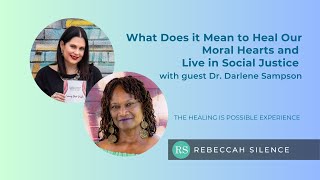
Dr. Darlene Sampson, an equity consultant and social worker, defines the moral heart as integrity, empathy, and sustained action, not performative sympathy. She outlines concrete steps: self-reflection, education, decentering yourself, building trust with BIPOC communities, and organizational audits. Allyship exists on a continuum from committed to performative.
Of healing is possible with a very special episode of the Healing is possible hot seat for you today. It is my absolute honor to be taking on social justice on this platform, and I've got a very near and dear to my heart guest here to share with all of you. The hot seat does get hot. It does get sticky. And we do address what's in the way of healing for ourselves as individuals, but more importantly, for our communities and humanity in general. So with that being said, I am so honored and privileged to welcome Dr. Darlene Sampson to the Healing is possible hot seat to teach us all how to heal our moral hearts. Dr. Sampson, welcome.
Thank you so much for having me, Rebecca. I'm just really pleased that I see work going forth everywhere around equity and social justice. We can never go back. We have to go forward with looking at all the issues that are just challenges in our country in terms of us coming together. But today, I want to talk about healing the moral heart because it helps us to think about others in a different way, anchored in cultural humility. Cultural humility says it's not all about me. It's about all kinds of different people. And because I walk the earth and it's been about me, I haven't even had the chance to think about others or I don't even know how others walk in their shoes. That's what I want to talk about today. I want to just do a little introduction because anytime we do this work, we have to be aware that it is a hot seat. It sometimes is a trigger. It pushes issues that we may be challenged by. And for instance, if I walk the earth, and I do walk the earth in my black shoes, there are things that I deal with every day that someone else doesn't deal with. So I always have to be cognizant that someone else may not feel what I feel. They may not even understand what my life may be like as a black woman walking the earth. But as I show empathy to them about them not understanding that, then they also show empathy to me. So it's intersectional. But I can't just jump in and say, these are all the things that happen. However, I don't think about what other people may deal with. And that's the problem with all kinds of isms, is we don't put ourselves in other spaces and shoes. We don't understand what other people deal with. Actually, it can be so painful that we don't want to, or it goes to the heart of who we are. I want to start with just anchoring first And I'm going to share with you my screen and so that we could talk a little bit from the beginning about healing our moral hearts and then we'll get into some discussion. And I may ask you also to drop a couple things in the chat because I do want to hear from you and hear your thinking as we work together today.
Feel free to post in the comments. Everyone watching. Yeah, we definitely want to hear from you.
Great. Okay. So healing our moral hearts. I just want to let you know a little bit about what I do. I don't know if people know that there are equity assistance centers across the country. I work for the federal government's equity Assistance Center. There are four across the country. They are commissioned by the 1964 Civil Rights act and the federal Department of Education pays for the centers to provide support, coaching and counseling, technical assistance to K through 12 schools in 13 states and three territories. So up until the pandemic, I was traveling, traveling, traveling. And I'm starting back again because the western region is huge. It could be Guam, it could be Wyoming, it could be California, it could be Hawaii. School districts reach out to the center to ask us to help them with the work that they need around equity, race, religion, bullying, title nine, sex and gender equity. There could be issues in a district around racialized issues. There could be issues around low performance. We travel to do the work and it is offered at free or no cost by the federal government to school districts in every territory. There's one in every state, but it may not be in your city. We are anchored in Colorado, but all of our staff are from all over the western region. That's what I do every day. Diversity, equity, inclusion, work in 13 states. Then when I can breathe, I also am a grandma and I look to my grands to anchor me because children tell the truth, don't they? They tell you everything. So this is my grandson Zai and my granddaughter Lyric. And I am a private consulting diversity, equity and consultants. So I work on the side providing, providing organizational assessment to agencies, sometimes schools, most of the time organizations. But I'm a social worker by training. But I have a PhD in educational leadership focusing on culturally responsive teaching. And that is the other CRT that people get afraid of. Culturally responsive teaching is not critical. Race theory. When we say CRT in education, we mean culturally responsive teaching carried about all kids, integrating history of all kids, understanding all kids and having high expectations. So I'm a grandma, mom and born in Pueblo, Colorado. That's another workshop. Can't talk about that right now. And Those are my pronouns. And when you name yourself, then you're more readily able to name someone else. So if you just walk around and you're like, culturally, I'm just me. We don't know where we came from. And for people who have had culture interrupted, removed or destroyed, they live and hold on to their cultural roots. And so when you name yourself, not only in the social construct of race, and I mean social construct, because it's made up, race is really made up, but racism is real. And so we'll have to talk a little bit about that closer. And I don't do a workshop in two seconds like this, but we are anchoring today how healing our moral hearts have to do with. What does it have to do with social justice and the movement in the last year or so. So the movement may be in the last year or so for you, but for me, it's a lifetime. It's how I walk the earth. It's what I've dealt with, it's what I have to pay attention to, and it's what other people will never let me forget. So we always have agreements, because why may be transparent and say what I have to say. It's great to have agreements. So drop some in the chat if you'd like to, and I'll tell you some of the typical agreements. But absolutely want to hear from you what you think are some agreements you should have as we talk about diversity, equity and inclusion. And these are some of the typical agreements. When I say rdei, that means race, diversity, equity, inclusion. Most people call it dei. But because I'm an RDEI specialist, I've put race first because it's the most scariest thing we won't talk about, but yet it's in front of our face all the time. The work is hard and intrusive. We have to presume positive intentions, which is a higher standard than assume. Give yourself permission not to know. We're all learners. Be willing to be uncomfortable. Go ahead and be uncomfortable right now. Just sit with whatever you need to. But when you have challenges, you push back first on yourself, not on someone else first. You push back on yourself first because it may be triggering something that needs to be addressed. And we always stay confidential. So what is said here stays here. What's learned here leaves here. So you take it with you. It's not any use if we just go. We went to a conference, went to a workshop, we went to Zoom. That's it, we're done. This work is a lifetime. We have a lot to learn. And we must authentically face disparities with truth and that. Remember, we all have thoughts we are uncomfortable with. The key is to challenge them, admit them and talk about them. And that's like your healing in other spaces. It's the same thing. We have to go first with that and then some disclaimers. I promise to be authentic today. Anything I provide you is not exhaustive. Everybody has developed their own journey and the work is a lifetime. But you got to pace yourself too. How do you think I look this beautiful? I'm old is because I pace myself. Yeah. So a two hour workshop is not going to get it. We have to continue the work in every space. And I'll give you some recommendations at the end. So the last thing I want to do before we go into our questions is I want you to think about something that maybe we don't think about. And this helps us with a concept of cultural humility, stepping outside of ourselves, understanding that it's not just about us. And even if the world has been built around us, that's not a fair equation. People talk about we're divided, we're not divided. Some people have only a quarter and Everybody else has 80%, 70%. There's no division because the math is off. It is not fair for everyone in this country. And we have to be aware of that. And that's a part of starting healing our moral hearts. So we're going to do a land acknowledgment. And a land acknowledgment says, you're standing on the land of native folks, indigenous folks. So as we gather here today, we honor, acknowledge and ask you to remember that we are in the traditional territories, the ancestral homeland of. Look at the tribes. There's so many. There's only over 500 tribes. But here where I stand in Colorado, this is some of the major tribes. The Apache, the Ute, the Cheyenne, the Rappaho. And we pay our respects and give thanks to the tribal nations and the ancestors of this place and reaffirm our relationship. Now, this is not a cute performatory thing because if we tell the truth in cultural humility, we remove lands, we denigrated culture, we removed kids. We didn't respect indigenous folks and still have issues to deal with. So a land acknowledgement says, okay, I'm starting with thinking about just where I'm standing and how did I get here and what was the purposes of talking about this and going ahead and putting it out there. So I'm starting with that's small compared to what Dei Work really talks about a land. Acknowledgement is small. So I want you to think about that. When I use the term cultural humility, where are you standing? Where are you standing? Not on physical land, but emotional spaces that recognize where other people come from. And that's very important.
Thank you. I do have some questions for you. And when I first reached out, first of all, Dr. Sampson and I have quite a history. She offered me an experience of empathy when we worked together at Montbello High School and Inner City High School in Denver and excused my ignorance beautifully, day after day, held space for my learning and taught me. So again, it's just such an honor to have you here, Dr. Sampson.
Thank you.
I want you to teach me. Teach us. And thank you for the graciousness that you are in the process. My first question is, what are our moral hearts?
So our moral hearts, it's sort of a misnomer because our moral hearts have to be attached to our brain and our thinking. So it's not like Kumbaya, I love everyone. It's not like that because when we do that, we don't even see things that are out there that need to be looked at. We will show empathy and empathy can even be manipulated. So the moral hearts, when I think about it, I think about my 7 year old granddaughter who she's like the social, emotional police right now. Oh, that's not nice. Oh, don't treat your friend like that. And I care about my friend. And I took my friend's hand in the lunchroom and no one was sitting with her. So that's just a small part of the moral heart, the empathy. The other part of it is very strategic and thoughtful and it's connected to the brain. The moral heart is really our integrity, our empathy, how we care for others. But we also are thinking closely about authenticity, cultural humility, cultural responsiveness, equity, for instance. It's totally incongruent to heal from a wound of childhood abuse or domestic violence as an adult. But we still don't like a large person sitting next to us on a plane. We still clutch our purse in an elevator when a black man gets in there. We are scared when we see a Muslim family or a person differently able brings up bias in us. So when we are truly healing the intersectional part of all of us, that moral heart takes us to multiple intersectional spaces. It doesn't just go, I'm just healing from this man. I had to get away from this relationship. Oh, I cannot stand him. But yet over here, I don't like unhoused people. So the moral heart is. Comes in alignment with healing, and we don't get trapped in empathy traps. Empathy traps can be someone saying, don't let those unhoused people stay in your neighborhood. They're going to tear it up. It's going to be bad. As opposed to saying, how did they get there in the first place? What happened to them? Why is a society, do I have all this food? And nobody has nothing? So the moral heart guides us with the brain and authenticity, not just the piece of, oh, I love everyone. It's not simple like that. We have to work on ourselves, and we can't pick and choose our wounds to heal. You can't just go, you know what? I want to heal this part of me, but this other part of me that's racialized. I don't like a person like this, and I don't like a person like that. That's not healing our full selves.
Yeah. And I've. I've heard it said multiple ways that how you do anything is how you do everything. And I really love thinking about that. You're healing. The least amount that you're healed is the most amount that you're healed is what I'm hearing you say. And that's really important for us to all consider. Okay, so how does diversity, equity, and inclusion align with our responsibility to our moral hearts?
Well, it helps us tell the truth because we have the brain and then we have the healing. And it makes us look at our biases. We are wired for bias. We know that if you see someone that you're not connected with, you don't have experiences with. Pulse rate may heighten, heart rate may change. We know that when we don't have experience with others, we tend to look at them negatively or only from social media or what we don't know. And so when we look at diversity, equity, inclusion, it's a part of moral and civil rights to care for others. It's in general, something that we should be doing. But we have many competing interests for our moral heart, and they're not always good. And those competing interests, if they look like you, you may be more likely to listen to them. So if I said to you, I work with children in school, Native American, black children, white children, we all work together to talk about what differences they have and what similarities. We'll often find that they think they're so different from each other, but we know because of DNA, they're often not very different at all. But we've trained them to act different and Treat each other differently. We know their intellect is not totally different. That's what I mean about the social construct of race. But it also could be around disability, skin color, lots of different things. And so diversity, inclusion underneath all of that. To even be talking about this is simply caring for others in the space they're in, recognizing that our space doesn't have to be like theirs and it's okay.
And can you separate the moral heart from overall heart health and mental wellness, Wellness in general?
I don't think so at all. I think people think they can because they have. They're working on a particular issue. But during that time, how do you work on some sort of issue, Childhood trauma, some sort of, you know, the adverse childhood experiences or an adult experience or anything to do with caring. But yet this. You put the other caring on the shelf. The caring for others that are different from you is over here. But the caring for yourself and your situation becomes the formal space. I don't think you can come in alignment. I don't think it's a good marriage. I think it's a bad thing if you cannot talk about the other things that are not healed. Your biases, your issues, your preconceptions, how you think of others, what you think of people are poor. What do you think of people from a certain zip code? Oh, I don't go on that part of town. I'm scared of those people. Well, those people live their lives just like you. They want some of the same things as you. So when you heal your moral heart, you really become caring. It makes you conscious. Actually, I would say, Rebecca, like more conscious around. What am I really saying when I say that? How am I characterizing people? Yeah, so that's important too.
Yeah. And then what if you've only focused on yourself in the past? What if we have people watching that are maybe shame based or confronted by possibly not thinking about any of this up until now?
You know what? We can start at any time. Because I have to walk there and deal with it doesn't mean that you can't start at any time. I'm always happy for people to come into the DEI circle. Diversity, equity, inclusion. To recognize what has happened in this country, to tell the truth, to live it. You don't have to be on, have a sign on the corner like I may do. I do all kinds of things. I go to the legislator, I teach, I support, I consult. But even in your family, when Uncle Joe makes a remark about people who look a certain way, you could say, you know what? I don't go with that. I really like that look. Or I don't see what you're seeing. Tell me more about what you're thinking. You don't have to go in close. Like, for me, as a black woman, I have to call in and call out. But when you're first starting, you want to call people in, and you don't want to ruin all your relationships. But when you really, really are anchored in this, you may find people, they're not going to be in your circle, or you have to limit time with them as you really, really realize. My moral heart tells me it's not right to treat people that way. It's not right to be in circles that are disrespected to LGBTQ folks. It's not okay to say, oh, she shouldn't wear hair like that, or why does she look that way? Oh, look at those people talking in another language. That's not okay. They need to speak English. So we need to understand that as we really become the persons we say we want to be, the moral heart comes in alignment.
So good. As we become the person that we say we want to be, our moral heart comes into us.
It's in alignment. Yeah. Yes. But we're practicing, though. We're practicing, but you got to start somewhere.
Yeah. So with that being said, how do we become allies for those that don't have the same opportunities and rights that we.
Oh, there's so many ways to do it. I'm going to share again so we can talk a little bit about it and we'll go from there. Let's see if I can share. So I'm going to give you some recommendations to start the work, because people always say, what can I do? I'm only one person. Where do I begin? This work is inside out. It starts with us first, and we could simultaneously be working on pieces while we're also thinking through what does my moral heart need to do? I think one of the first things you need to think about is allyship. Are you like this person that you go into the bushes? You're like, I'm not talking about that. I don't know anything about that. I haven't said that. I'm not sure. Okay. Or are you going to be a conscious voice because your voice is so imperative? I always have to speak up. That's why I'm always under racial battle fatigue. I feel tired. I worry. I want a world for my grandchildren, just like you want for your children or grandchildren. But because I always have to speak up, I get Exhausted. Everybody has to. And so think about, how are you in terms of your action around this work? Where do you fall? The continuum. Take a look at that and think about, where do you fall? Am I actively participating? That means using your voice. Using your voice to vote, thinking about your community, not allowing disparaging statements and behavior about others, educating your family. Who's on this other end of the continuum, supporting and encouraging. Do you even know people outside of who don't look like you? You don't even know anybody who doesn't look like you. One of the first places to start is to integrate. Go to festivals, look at movies, read books. Start to understand the experiences of others. Because if you're only around the same people, that will not heal your moral heart because they often are the same people like you. So where do you fall? Think about that. That's your first thing. And then we don't want performative allyship, like performative is. All of a sudden, Organizations are calling, Dr. Sampson, help me with my mission statement. What shall we do about this? But I haven't done anything for 25 years. So they got to start small. Maybe they've never done anything before. On the right side, at least my right side, there's a sign that's my neighbor's sign. We believe black lives matter. No human is illegal. Love is love. This same neighbor has never spoken to me one time until I went to ask about the sign that's performative. Because while he may have thought why I really need to connect and talk to her, I believe these things inside. There's no connection with me. You didn't really hear my story or understand. When I walk past your house and see you and your children, you don't talk. So our performative space, we step out of our spaces and go right back into our comfortable space that makes us feel who we are. And that is a space of privilege often. And that privilege creates a space for us to think. Okay, I did a little bit. I watched this program. I say hello to somebody. But that's not what we need. So we really want. We don't want ally theater because it's not helpful. We don't want to sign.
It's not actually a give. It's more of a take.
It absolutely is. And anchoring and centering yourself in that. So we'll talk about how you kind of get in there and do more things. I love the sign. I love his thinking. But how do I. How am I in your neighborhood? And you don't even speak to me, not even look at me. I'm not invisible. So is difference invisible to people when they have a sign? Do they feel good when they say, at work, let's talk about diversity, or don't talk at all. Do they even speak to the people around them that look different from them, or do they turn their eyes away and avert them? So it's a privilege to educate yourself about all kinds of isms, really, instead of experiencing it. That's a form of privilege. So we have to be aware that it's really difficult. What were you going to say, Rebecca? Isn't that true?
Wow.
Yeah. But you know what, Rebecca? You could substitute racism for all kinds of isms there. Sizeism, colorism, socioeconomicism, all that could be substituted there if you don't have to be in the middle of it. It's your privilege as a part of entitlement. You don't even realize that those are the challenges. But I do think people do need to know the differences. Well, a lot of different differences are out there that they don't recognize. So here are some to take a look at. These are. These spaces are where people get treated less respectful, denigrated. Just look at some of those. There's so many. Each one of them carries with it a lack of kindness, a lack of empathy. So there's many. So while you may walk the earth and you don't have to deal with any of these, maybe you have some of them. Each one, think about it. If they're overlaid over and over. So your person of color, you, you have issues, you're single parent, you're Muslim, I don't know. Think about all the different things that are overlaid, and then that's how you get closer to who I don't have in my world, who I don't even know, who I haven't even thought about. So some ways to demonstrate allyship as an individual. First reflect on how race and cultural differences shape your life. Who are you? Where did you come from? From? Who were you told was good? Who were you told was bad? Because those things still stay with us and we have to challenge them. Educate yourself about all kinds of things. How is it that a person who is in the same neighborhood as you bought a house at the same time as you, but their interest level is double yours, but they're a person of color. Like, do we think about what people do, how systemic issues work, how one community gets something and another community doesn't? One school has something another school doesn't. Do we think about that when we take our kids to school that someone across another zip code do not have the same books and technology did we know during the pandemic that equality was giving everybody a Chromebook but equity was making sure they had the Internet. Then we think about stuff like that or we don't even have to worry about it. So start to practice humility. How do we gain understanding? And if you really want to come close to caring for others and heal that moral heart, your actions and values have to be aligned. And we talked about that earlier and you take on the struggle. It doesn't mean all of the different things you see and out in the media and you have to be aware but like in your own spaces. Just start with you. Just start with your family, start with people around you. Start to build up your equity competence at work. If you're working, be authentic and decenter. You so often people, well, some white people don't know that they it's all about them and they don't think about it. Bring anybody else to the table in hiring, in thinking about the work you do, in making sure other people are there with their voices and know that trauma and historical mistrust can compromise engagement of bipoc. BIPOC is black indigenous people of color. So because we don't trust, because we know we've dealt with, we are always going to engage. You have to develop a relationship first. You can't just come up, tell me how you feel, how you living your life, what's going down. Just talk, say hello, ask people how they're doing, how they're kids. Because we like and have commonalities in some of the same places and give time and space for people differences to feel that trust. And that's because you've included them. And we want to advocate in our jobs for anti racism and representation. I may say there's nobody at the table who looks like me or who looks like another woman or looks like who has LGBTQ status. If they have, they are out and they're talking about who they wore. But you can say I'm wondering about other voices. How can we look at that? Ask, do we have everyone we need at the table? That's the diversity table, it's not a symbolic table. And ask what are we doing to make sure we're embedding equity in our practices in our organization. Now when we think about social justice, do we need to do organizational audit for equity? I'm just wondering. But you may want to find your equity peeps first. Those are your people who are right there with you because when you try to do things on your own, you're not liked. In this work, people get mad at you because you're moving them outside of a space that they're used to having power, privilege and control. And there'll be other people around who will be like, that's bull. What are we doing that for? We don't have to. And so I want you to know you gotta pace yourself because you need to find other people who are like minded to help with the work. It can't just be you, just like it can't be me always speaking up. And in your community, recognize your own privilege. How I walk into a mall and I'm looked at and how you walk into the mall is two different things. Recognize and think about how that works. When my son is stopped by the police, when your son is stopped by the police, you. It is two different perceptions. And how am I having to talk to my son and grandson about safety? The talk it's called in our community. Whereas you don't. Why is my grandchild afraid if the police are near him or come near him? But yours doesn't have to be. So think about other kinds of ways that you're not thinking about. Transfer your benefits to those who lack it. You can advocate when you are silent. It's complicit. Can heal our moral hearts by being complicit. Vote your values and watch how you police the bodies of others. And that is, I can be in line purchasing something and someone will just talk over you. Black people tell you this. Latino folks will tell you this. Indigenous folks will tell you this happens their whole lifetime as if they're not there. They're invisible. Stepping over, looking through turning heads, invisibility. And support businesses. So you get to know people and talk to people and find out what they're doing and what's happening. Those are some things you can do with your family and friends. Ooh, that's a hard one. They're gonna get mad at you. If you really are living with your moral heart and you say something about what they have said, they're like, what the hell is wrong with her? And we always said this before in our family, we always talk this way. So for me, I'm going to be more calling in and calling out. I use them at different variables. But for you, when you're starting, it's like, you know what? I don't feel comfortable with what you said about people who are struggling with mental illnesses. So tell me more. And people may be on different journeys when you really get your heightened knowledge going. They'll wonder what's wrong. Or like, we've always acted this way, we've always talked this way. We've always made fun of people we think are fat or big or different or we love people who look this way. We don't love these people. So start to practice. You could even say, you know, I'm really working on myself to be more of a caring person. And so I don't want to use disparaging jokes. I don't want to be involved in that. But be ready for people to be mad at you. But you can model when someone, I'll go to schools and they'll say, that little black boy. They'll talk about little black boy, he's so bad. I say, wow, he's a leader. I just changed the language. So you don't have to directly go to people. You can model your moral heart through your mouth. So that's one way to do it. So the transformer could be around all kinds of different things, but it's telling you these are all the ways, because it's with your whole body that you change. It's like when you're working on yourself, you can feel it in your stomach, your heart, your brain, your feet. So the transformer says, use your mouth, use your heart, use your outstretched arms, use your strong back to push. Keep alert. What's going on? Ground your feet and dig in for the long haul, because it really is. So these are some of the things that you can watch for. But it's not just racial. This could be around discussing people who are different. Anybody that's different, what are you going to have to do? Roll up your sleeves and show your moral heart, that loving heart. Respect and uplift the dignity and humanity of every person, no matter who they are. That's what the moral heart does. So here's your homework. You want to tell them what to do with their homework, Rebecca?
Yeah, absolutely. So, as always in the hot seat, we offer homework. And typically that's just for you to take with you to reflect on, to chew on. But with this training today, we would love for you to please post your homework. And if you're watching on YouTube or on another platform and you're not a member of the private Healing is Possible Facebook group, please join. Because where we want your homework is posted to the Healing as Possible private Facebook group. Let's see it. Let's share our homework with each other. Let's not just be consuming this information, but let's start integrating it and let's move the needle forward so that we are advocating for healing and it starts with our moral hearts. But there's not healing without connection either. So we want to see your homework, we want to connect to your homework and to other people's homework and respond. So post in. And if you haven't already, join the Healing is Possible Facebook group, please.
Love it. Here's some resources for you. There's so many out there. And there's also my contact information. There's some books and some information. When you get stuck on a word that talks about who you are, dissect it. How does it make me feel that way? Why are people thinking I'm fragile? Why does someone think I'm unable to talk about issues of difference? Start to ask questions first. Before you say, oh, I can't believe the title of that book, try to understand more about what it is. But these are some of your resources that you could take a picture of or start to read to understand more about our country and how it's anchored and what we can do. And I will send these resources to you, Rebecca, as well.
Excellent. And would you mind just going back and explaining the homework to them?
So Rebecca's told you where you can place it and what you can do. But what's your overall impression of me saying, how do you come to action for your moral heart? How do you start the process or continue? Maybe you're already far along in terms of you're grounded in it because. But what's the call to action for you as individual? What is it that you're going to do as a result of thinking about bringing your moral heart in alignment with what is happening in our world, our country, in regard to equity? We don't want equality, remember? We want equity, doing something different to make sure someone's successful. And how will you think about all that in your world? As we talked about individuals, family, community, start small, make some goals for yourself, maybe in each place, and then think about your overall wellness. Like you. Maybe you're working on just being a better human being, just eating better, just taking care of yourself. We all did so much during the pandemic. I mean, the pandemic exposed everything. Unresolved issues, things we need to work on. It was economic, it was health. There was so much to be done. But how does your moral heart fit in there? Because you can do physical health and wellness, but where's your allyship? Where's the emotional caring? What do you need to do politically to align with your moral heart? Where do you stand. What if you're not even there? What if you're not even there? You don't even know if you want to be there. Because there's a cost for having a true moral heart. There is a cost. So what steps would you take to begin that process?
Yeah. And what we will do, everyone, is we will start a thread right in the Facebook group to guide and have all of our answers in the same place. And then, Dr. Sampson, I'd like to add a fourth piece. Not just what steps can you take to begin the process, but we'll have the fourth bullet be, what step, step will you take?
I love it.
Right, let's get this party started. Let's go.
That's right. We gotta start somewhere, thinking about it.
All the damn time. What can I do? Well, what are you gonna do? So I'll add that. We'll start a thread.
Beautiful.
Thank you.
I love it. OK, well, how does everybody feel?
Dr. Sampson, I am so grateful we need to be having this conversation. And I know that your schedule was booked out months. It took us a minute to be able to get you. And taking the time, being with us and being this voice of actual healing, not just the possibility of healing, is profound and moving. What final thoughts do you have for us today?
Well, I'm thinking about when we talk and go deep like this and really set recommendations, a lot of people get overwhelmed and they worry about, wow, I hadn't thought of that. I hadn't been doing that. It is never too late. It is never a situation where we can't start the process and we can reach out to others who aren't like us to start these conversations in our communities. But it's so helpful if you reach out to someone who looks like you first, because that's who maintains these systems. That's who creates the imbalance, and they don't want to talk about it. So it's so great when you say, wow, let's talk about this. What do you think? And you will really find out who your friends are. You'll really find out who's like you or not like you. But if you're not there, I have something called the equity car. And I want you to think about where you are, and that is a good place to start. So the car, the C, A and R. The C stands for those already committed, and some people aren't there. That's okay. If you're not there, you're not there. Start where you are. The A in the car stands for those who are accountable. We're only doing this if it benefits us. But I love the reflective people. They're kind of like this, ooh, what should I do? Or how should I say it? They kind of waver back and forth. The reflective people want to come on board, but they need support from others to do that. So you have a whole group out there that you can outreach to, to start. And if you're in reflective, we can start the work. You can start it at any space. You can even say, you know what? I haven't cared for others that have been different from me. That's the first acknowledgement or I have shown that. But not in voting, not in reaching out, not in monitoring my biases, not in saying microaggressions in the workplace, in the community. Just tell the truth and tell the truth about what happens in this country in terms of not everybody receiving the same or being treated the same. And that's the place to start.
Thank you. How do people get in touch with you?
So they can contact me on my email, darlingsampson.com which is my website, but I think I shared my last in my last email, my last sharing. You can see my email there. DSA mps05su denver.edu and you can email me. I do private consulting work. I am very busy. The work is really hard and heavy right now. There's lots of pushback against social justice. That's why we need you. So, so you can contact me there and check out my website, darlingsamison.com and I'm happy to follow up with everyone.
You are a voice for the voiceless. You are a teacher and a healer and an angel on earth in my opinion. It is such an honor to know you.
Thank you. Thank you very much. Thanks for having me.
Oh, what an honor. The healing is possible. Hot Seat is brought to you by my team and rebeccasilence.com and if what you're getting here is resonating, take your healing, work on, take it deeper. There's a $27 five day challenge you can access that will rock your world and change your Life. Right on. RebeccaSilence.com but let's go. Let's keep moving. Let's keep healing. And that is the only way to make our difference. Thank you everyone. We will see.
More from Rebeccah





Free 5-Day Live Online Bootcamp for Mothers, August 24–28 4 PM EST. Replays available #shorts



