Why Healing is Possible For Anyone ft Rebeccah Silence, founder of Rebeccah Silence—Inspired Results
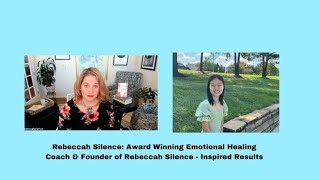
In episode 6 of the Empathy Gaps YouTube podcast, host Tiffany Tseng interviews Rebeccah Silence, an award‑winning emotional healing coach, author, and founder of Rebeccah Silence Inspired Results. Rebeccah shares her life story—growing up in an abusive, alcoholic household, surviving a violent first marriage, and beating a life‑threatening cancer diagnosis while pregnant. She explains that her greatest accomplishment is not merely surviving those traumas but living a vibrant, self‑knowing life today. Throughout the conversation she reframes common ideas of strength, describing it as the willingness to be vulnerable, listen to inner guidance, and act unapologetically. The core mantra “healing is possible” is unpacked as a mindset of possibility rather than forced positivity; it is about trusting that freedom and joy can be reclaimed despite past pain. Rebeccah introduces the concept of the “survival self” – the persona created to endure childhood trauma – and contrasts it with the authentic self, urging listeners to recognize, love, and move beyond the survival self. She critiques why schools rarely teach emotional coping, citing fear of opening “Pandora’s box” and lack of support structures. To address this gap, she describes her Emotional Survival Kit course, a seven‑lesson, 20‑minute‑per‑lesson program that guides participants through commitment to life, understanding anxiety and depression, and cultivating personal power without waiting for crisis. Practical advice for teens includes daily self‑love affirmations in the mirror, setting high‑vibe intentions, and following one’s inner “yes.” Rebeccah also offers strategies to combat mental‑health stigma: reframing diagnoses as labels, not identities, and encouraging people to own their power over symptoms. The interview closes with a call for listeners to heal themselves so they can make a larger impact in the world.
Chapters
Hi, my name is Tiffany Zhang, and I'm the host and founder of Empathy Gaps, an online YouTube video podcast. Welcome to episode 6. What does healing is possible mean? It means exactly what it sounds like, that healing is possible for anyone. Take it from Rebeccah Silence herself. From growing up in an abusive and alcoholic household, to being abused in her first marriage, to being diagnosed with cancer during her first pregnancy, Rebeccah Silence has lived through it all. However, she has always managed to bounce back stronger than before and use her story to help and inspire others. In this episode, I will be discussing with Rebeccah Silence how, you guessed it, healing is possible and how to destigmatize mental health. Rebeccah also shares advice for teens going through a tough time right now. Here is my conversation with her. Hi everyone and welcome to Empathy Gaps, an online YouTube video podcast focused on creating a safe space to discuss mental health and psychology in social media while also working to address the needs of the current mental health crisis. I'm Tiffany Tseng, your host, and today we have a very special guest, Rebeccah Silence. Rebeccah is an award-winning emotional healing coach and founded Rebeccah Silence Inspired Results, LLC, an emotional healing coach provider. She has also written the book Coming Back to Life and is the creator of an emotional survival kit course. Additionally, she has been featured in Fox, NBC News, Time, and many others. Rebeccah, thank you so much for being here today and taking the time to join me. Before we start, is there anything else that you want to add regarding to what you do and who you are?
I'm just the space where all healing is possible. You know, I'm so grateful to be here with you and your beautiful audience, Tiffany. And more than anything, I just want people to know that that thing you think you can't heal, that you have to live in spite of, it can heal. And that is a promise.
Definitely. Okay, so I guess I know it's just an introduction, but I guess I kind of want to hear from like your own words. Tell me like a little bit about yourself and like your journey to where you are now.
Yeah, so one of the things I like to say is my greatest accomplishment to date and healing victory, it's not getting through my abusive and traumatic childhood or getting out of a domestic violence marriage with a 2-year-old in my 20s or in my mid-30s beating cancer after I got diagnosed while I was pregnant and given only a 5% chance to live. The true victory is the life I'm living now, and I am healthy, I am vibrant, I know myself, I trust myself. And that is what my clients and audience get as well when they work with me, is this ability to know themselves, to love themselves, and to trust themselves, and to completely heal and clear that past so they can actually have a happy present that again isn't just living in afraid of, or worse, going through the motions. In the book, it's not called Coming Back to Life because of my diagnosis and near-death experience. This is the actual phrase every single client uses with me, even if they're already high achieving, which almost all of them are, and successful on paper. They're not happy and fulfilled. And then they get to experience healing in a new way that brings them fully alive. And that's the point of healing. Healing is about freedom. And I saw a quote recently that I loved, Tiffany, and it said, we're not healing to handle the trauma, we're healing to handle the joy. And I thought, that is so good, right? Because we want joy and happiness and fulfillment, but do we really believe we can have it? And I want you to believe you can have it if you're here with us today, because you can.
And I know you mentioned a little bit like the trauma abuse and getting diagnosed with cancer while pregnant. I guess like, how did you manage to stay strong through all of that?
Oh, I wasn't strong. I let myself get so vulnerable and fall apart, and, you know, Humpty Dumpty couldn't get put back together again. But I could because I wouldn't let myself resist any emotion, any feeling. And, and I separate them because I think our feelings are about what's happening around us. Our emotions are internal and natural. And so I had to do a lot of paying attention to what I was feeling in the moment so I could get to the emotion underneath that. And then underneath that emotion was my truth. So my husband would literally say, some days, I don't know which hospital to take you to, the psych ward or the oncologist to get your chemo infusion, because I would scream when I needed to scream, cry when I needed to cry. I was paralyzed with fear so much of the time. So I don't suggest I was strong in terms of like being strong. I think it takes a lot of strength to be vulnerable, but it, it was a soft, gooey, mushy, messy strength that carried me through. And I really questioned everything. I had had such a road and I thought I had beat my past for real. And then I got cancer and I thought, Well, I guess this is going to be the ultimate seminar where I get to meet myself, because at the time I had a thriving business and a beautiful second marriage, and my older daughter was thriving. I was pregnant again. Everything was my dream come true. And I remember just thinking, it's really easy to be your best when life's going your way, but who are you going to be now, Rebeccah Silence? And then I went through this very dark night of the soul, questioning everything. Do I even believe what I've been teaching to hundreds of thousands of people a week on the radio, in my practice in my retreats. Who am I? What do I believe? And really what emerged out of, you know, the experience of cancer was me. And internal guidance led me to make really hard decisions, and I was strong enough to make them because it was like undeniable it was the correct choice. So for example, I quit chemo. I really believe that was a huge part of saving my life. I had a holistic practitioner assigned to each weekday to work on me in my bed, even if I wasn't really that with it, which I wasn't a lot of the time. So I would never suggest anybody else quit chemo. What I will suggest is the truth of who you are doesn't require some massive health scare or breakdown for you to be able to access it, and it's in you. So I know you're asking me about strength, but I want people to understand, maybe maybe a different perspective on strength. I think the ultimate strength is listening to your own inner guidance and trusting it and following it unapologetically. Mm-hmm.
That's a very different definition of strength than I feel like most people think of. I feel like most people think of just like strength as in like, I guess like in your case would be like looking at the positive, like reminding myself that like I will get through this. But I feel like your definition of strength is something very unique and different that a lot of people don't really talk about, Yes. So I guess like my next kind of question would be, I know you talked about like healing. So I guess like kind of talk to me about the phrase healing is possible. Like what does that mean to you? Like, is that something you used to like believe it, like not believe in, but like you believe in now? Like I guess it kind of talked to me about that.
Oh, I love that question. That's so good. So I've been suicidal multiple times in my life to the point where when I got diagnosed with cancer, I thought, did I create this? Because there were so many years where I just wanted to die. So You know, I'm not a positive person, and that's really important to say because, you know, my approach to life isn't about being more positive or trying to find the positive. What it is is I know there's possibility. If I had a 5% chance to live, that's a 5% chance. So I've always been able to understand possibility, and that's given me so much hope in really difficult moments. I knew it was possible that I could be a successful single mother and get out of my first marriage. I knew it was possible that I could get a master's degree. I didn't know I was worth it or capable. I knew it was possible. So I think that's really important. And then for those of you that have seen the movie The NeverEnding Story, there's a scene in that movie that I couldn't get out of my head while I was sick. And the scene is the Swamps of Sadness, and the hero and his horse are going through quicksand. And basically how works is if you let the sand win, you die. The sadness— if you let the sadness win, and the sand is the sadness, it's quicksand. If you let the sadness win, you die. And if you don't, it's possible to get to the other side. So for me, healing is possible is about there is freedom possible for me, even if I've been through this circumstance or have this diagnosis or the doctors are telling me We've got to plan your will because you likely are going to die, especially now that you quit chemo. You're likely going to die. So, you know, it's possible. It's possible. It's possible. Those two words have been everything to me in my life. It's possible I'm going to get through this night. It's possible I'm going to get through this season. It's possible I'm going to emerge more me and more powerful than anything that ever happened to me or is happening now. That's not my preference. Fair. Okay. So yeah, that is what healing is possible means to me. And I say it's not promised because it's not. Like, if you're not committed— I played this game, Tiffany, where I decided I have to burn the option that I might die, because if I live like I might die, that is a slow spiritual death and physical and emotional and mental and all the things. So I decided I'm going to live like I'm going to live. I'm gonna put all my energy into. I'm living like I'm gonna live, like there's another side of this. And that commitment to life and to possibility, I don't know a more beautiful medicine, and we all have access to it.
Yeah, I feel like some people, like, they don't, they don't want to think about the possibilities because they don't want to get their hopes up. So I feel like Yeah, no. Yeah, you know what I'm talking about? They don't want to think about the possibilities because they don't want to get their hopes up. I don't know. When you were talking, it kind of just reminded me of that. But I feel like it's always important to change your mindset, I guess, because even— yes, it's a possibility. But if you think about that possibility, it can change your mindset and, as you said, change your outcome maybe because of your mindset. I don't know if that made sense. Yeah.
Well, and I would take it even deeper than mindset because your mind, it, it's a really terrible place to try to create miracles from because we've got a battle going on between our ego and our survival self. And it's your survival self that never wants you to get your hopes up and is trying to avoid disappointment. The truth of who you are is capable of rising to the occasion of anything. So I say it's deeper than a mindset. It's embodying being the person who— this is who I am, and this is what I do. I move forward as if healing is possible. I move forward as if there's life on the other side of this, even better. There's nothing to lose. There's nothing to fear. So I want us to understand it's more about who you're being and the version of yourself you're embodying that will carry you through than your mindset. And it does start with a mindset of I am committed to this intention unwaveringly, right? And so many of us— I mean, I grew up in a family system, for example, where women were financially dependent on men. So if that was the modeling, I'm unconsciously going to believe that's going to be my reality, right? So how does that apply to you? And this is what I work with clients on every day. What's the mindset that you're stuck in because of what you've seen as possible for you versus what's the mindset that carries you into new possibility. And then from there, who am I going to be? I'm going to be the person that lives like it can happen until it does.
Yeah, I think that's a better way of thinking of it. And I know at the beginning you mentioned like people, like it's like the survival mode to just like not get your hopes up. I guess that kind of phrasing was kind of interesting to me because like, I guess like, do you believe that humans are like naturally wired to like not, I guess, like get their hopes up and stuff because like the way you worded it kind of like reminded me of that.
Okay, so here's how I'll say it, Tiffany. We all have a survival self. That's who we became and decided we needed to be to survive our childhood and our family of origin or the family we grew up with. When we're unhappy and suffering as adults, it's because we're playing out and being that survival personality. And denying the truth of who we are. We're confused that that version of ourselves that we created to survive is who we are. And if you're suffering, you're in survival. And so what I actually would suggest is we are hardwired to know, love, and trust ourselves. But very early on, we decide we shouldn't. And it's not our parents' fault. It's never the parents' fault what the kid makes up about themselves and who they decide to be to survive the family system. But no one is immune to a survival self that they created. And so many of us haven't even thought about what is my survival self's name? Like, how do I recognize when me in survival, keeping myself small and safe and limited, is taking over or wanting to take over? So You are not your survival self. And give that survival self so much love and compassion. It's not judging ourselves that's gonna heal the survival self. It's fully embracing that survival self so we can make a decision about who we wanna be now. And I think that's the next point that's so essential in this conversation. We're not gonna just wake up one day and know who we are as adults. We can know who we're not. And then it's a decision, you know. And Rebeccah Silence was created because I knew what I wanted to do with my life, and then I had to be the person that could carry out that mission and those dreams. But it was my own internal compass that guided me to, this is who you're gonna be. It didn't just one day lightning struck and I suddenly knew who I was. Mm.
And I guess like, why— kind of pivoting, I guess like, why don't you think that schools teach like healthy coping mechanisms to the current youth?
Oh my gosh, Tiffany, I started out as a school counselor early on and I was teaching emotional resilience and healthy communication and healthy, healthy coping strategies. My very first job as a music therapy intern at a state psych hospital had me realize the majority of these people, nothing was wrong with them. They didn't know how to navigate, cope with, or survive their environment at home. And I was working with a lot of at-risk youth and just horrified. So I, you know, created the Emotional Survival Kit so it could be in every high school, so it could also be in every household hitting the parents' hearts. I think people are afraid that if we deal with the deep emotional work that's needed, it will make things worse. And I think that's ultimately why schools are not teaching emotional health and safety and resilience, because at the end of the day, that's what I think it is. We have all this mindset work, we have all this physical heal your body, you know, clear your body, but emotionally we're so unclear. And there's this weird stereotype that if we really deal with our emotions, that's Pandora's box and there's no coming back from that. And what if it makes it worse? And certainly in schools, you know, there's not necessarily the support to handle if all these kids are spiraling. But the course I created is designed to actually make it liberating and simple and clear and refreshing and comforting to address what isn't true about what we believe about ourselves and how we're living and what we're expecting. The idea of being afraid to hope and get your hopes up, that guarantees hopelessness because you're more committed to hopeless than hopeful. And you have the power to shift gears anytime you want. But the thing about it is 1% of the world's population does personal growth work, and even less implement what they learned. Most just consume the information. So what we need are more people, whether it's in school, or, you know, just wherever you are modeling. I'm unwilling to be emotionally clogged up and funky, wondering why I'm unhappy. I'm going to get emotionally clear so I can be free and content regardless of circumstances. That's the ultimate gift, Tiffany, that cancer taught me, was that I could be free and peaceful, genuinely, and connected to my soul. Regardless of what was going on, how much pain I was in, what doctors were saying, what family members and friends were saying.
Mm-hmm. And I guess part— I feel like for me, I guess why I think that schools don't teach like healthy coping mechanisms is I feel like it's kind of like a cycle. Like I feel like if you don't learn it, you're like less likely to teach others about it. And like if you're— and then that's like kind of a perpetuating cycle. So then like the people you don't teach, like they're not going to know how to teach it either. And it's just like a cycle. But also, I wanted to ask you about your Emotional Survival Kit. I guess, like, can you kind of talk to me about how you developed it and like— yeah, like the process?
I would love to. Yeah, and you're making a really good point. If I'm an unhealed, emotionally unhealed adult, how can I teach emotional healing and support to the children? Um, so the Emotional Survival Kit course is designed to help you guide yourself home. What I mean by that I have 7 lessons that I teach and 7 steps to fully being alive. And what happened was I looked back about a year and a half after I realized I actually am going to live, I actually am going to beat cancer. And I looked at it and I thought, well, what did I do? Like, how did I survive cancer? And then I realized the same way I survived and came to life in cancer was how I got out of the domestic violence marriage. And I just kept going back even to my earliest childhood trauma. And I realized, no, this is what I've been doing the whole time. So I broke it up into really clear, simple steps. So for example, the first lesson is commitment to life, because you're either committed to life or you're committed to a slow spiritual death. So nobody means to be committed to a slow spiritual death. But when we don't believe anything else is possible or we're asleep in our own lives, just going through the motions, you know, and one of the ways we're asleep is we just try to achieve. And so if you're really successful and unfulfilled, What you can know is getting more success on paper, it's not the answer. So what I wanted was to teach people, where does anxiety come from? Where does depression come from? Where does the part of you that is letting survival win and take over coming from? And how do we navigate? So now you're committed to life, knowing what you're living for that's bigger than you, knowing you have an impact. So either you're blessing the world in the direction you would want for the world, or you're just perpetuating the fear. And we go on and on from there. But what I did was I broke it up into 7 20-minute lessons. So many people have spent years, so much money in personal growth work and therapy, getting an understanding of why they are how they are, what happened, but they don't break through. So my course is designed to help you learn the art of self-healing and to help you break through. And again, we don't need to wait for a breakdown or a crisis to breakthrough. It's not required. You can just go, I'm unfulfilled. And I have so many clients that come to me and they'll say, I have no reason to be this unfulfilled. Everything about my life on paper is great. And you're not alone if that's how you feel. It, it's just you don't know again how to let in that joy and how to be in alignment even when life isn't going in a way that's your preference or when someone's behaving badly. And that's the point. Like, the second you change who you are because of what's happening, you lost all your power. So my course is your path to maintaining and holding your power no matter what.
Yeah, that sounds like the Emotional Survival Kit course sounds like a great alternative to like years and years of therapy, like especially if you're with the wrong therapist.
Yeah, or even coaches. A lot of coaches are great and their intentions are pure, but they just give a lot of advice. So my philosophy is is there's not a right or wrong way for you to live, lead, heal, love. There's what works for you. And this course is designed to actually teach you how to access what works for you so that now you have a roadmap.
Yes, that makes sense.
Yeah.
And then I guess kind of going back to like the healthy coping mechanisms, I feel like how can teenagers today develop healthy coping mechanisms?
Okay. I love this question and it's a big one. And number one most important thing is I want you to look in the mirror and I want you to literally say out loud, there's nothing wrong with me. There is nothing wrong with you. There might be a lot wrong with things you've been through and how you've been treated. But if you are now treating yourself the way you were treated, parenting yourself the way you were parenting, that brought on shame, guilt, depression. Here's my definition of depression. It's you depressing your soul, your truth, your emotions, your voice. Newsweek quoted my book, and the quote was, we don't lose our voices, we stop talking. So I want you to literally look in the mirror and lock eyes with your gorgeous spirit and say out loud, there's nothing wrong with me. Never has been. I am worthy of love. As cheesy as it is, Tiffany, healthy coping starts with self-love. The next most important thing I can say, and I'll give us 3 tips here today, the next most important thing I say is you've gotta have an intention for your life. So it doesn't have to be, I'm gonna become, you know, the first female CEO of XYZ type of a corporation. It can be, I'm going to break through survival and be the me I wanna be. Or it can be, if you— I wanted to be a published author from the time I was a little girl. Books saved my life as a kid. I'd read a 400-page book every 2 days, right? So that was a dream. But you've, you've gotta have that dream become an intention, meaning it's locked in, it's non-negotiable. And the other tip, when you come up with an intention for your life, is please make sure it's high vibe and don't have it be something you think you should do to get approval or because it would be your parents' dream. What is your dream? They ask that question in the movie Pretty Woman, you know, at the beginning. It's an older movie. Some of the teenagers might not know, but it's my favorite. What's your dream? And then decide you're gonna live like it's going to happen, and then be the person that creates it one breath at a time until you cross the finish line. And the power of intention, it's everything. And then the third thing I would say is, if you can, go to rebeccahsilence.com and take my emotional survival kit so you can get that crash course understanding what's going on inside of you, so that underneath all that you connect to your truth again. I'll call it this for right now: following your yes, right? So locking your eyes in the mirror with you— nothing's wrong with me, I am worthy of love. Number 2, pick an intention. Number 3, follow your yes. And what that means is every option in front of you, it's a spiritual yes please or it's a no thank and when we give ourselves permission to agree to the no thank you, it's a lie, and we're gonna feel awful about ourselves. Plus, we're training people to believe we're somebody we're not, right? And then your self-worth tanks. So follow your yes and let other people have their reaction, their meltdown. Only one of three things will happen. They'll either work with you and they'll be proud of they'll get upset and they'll get over it, which is fine, or they go away. And in my experience, if they go away, they were always ultimately going to end up going away. So now you just got the information sooner. So don't be afraid to follow your yes.
Yeah, definitely. I feel like that was really powerful, like, oh, yes, yes. But going back to like kind of the first point you said, I feel looking at yourself in the mirror, I feel like that's— I feel like I've heard that a lot, but also I feel like people don't do it because, like, as you said, like, they feel like it's cheesy. But I feel like that is important, especially because since you're like actually like locking eyes with yourself in the mirror. And I feel like a lot of people, they like internalize things. So like if something like, I guess, bad happens to them, they think it's like their fault, or like they internalize it, or like they see it as like a reflection of their self-value, which like not true, as you said. So I feel like reminding yourself, like waking up every day, like making it a habit to just like look at yourself in the mirror and tell like yourself that you're worth it is really important, right?
And look for your spirit, not just the surface. Look in the mirror until you can see yourself as a soul, a beautiful, magnificent, deserving to be in this body, in this life soul. That's what people don't do. We don't see ourselves as a sacred spirit worth nurturing and nourishing, and we all are. And it's so easy to just go through the motions, right? Disconnect from our bodies, not even look at ourselves, avoid cameras, or it's just an act. Look at your own soul. It's game-changing because ultimately nobody's going to love you better than you love you. And it's so cliché, but it couldn't be more of a true statement. And when you get to the place where you can self-validate because you truly do love yourself, you need nothing from anyone, which means you can give so much more powerfully. I serve so powerfully because I don't need anything back. It's just who I am and what I do. And because I don't need anything back, it's overwhelming how much I get in terms of love coming my way. To receive, but that's not the agenda. So I'm not saying like, go be of service and be alone on an island. No, the more you're serving and giving, but you already love yourself, the more love is going to come back to you and the more you're blessing the world with love. Mm-hmm.
And I guess kind of pivoting now, I guess what should we do to kind of combat the stigma around mental health?
Girl, number one, you can't believe the statistics. Depression is just you depressed your emotions. You depressed your truth. Anxiety is you're rejecting your emotions. You're rejecting your truth. Don't be afraid to tap into those emotions so you can actually live and thrive. And so you're not a statistic. Your emotions can only serve you. They will never hurt you. And please understand, you are more powerful than your past. Literally no one is immune to trauma. No one, but almost no one heals their trauma, which means they can't have a happy present because they have this unhealed past that's bleeding into their now and has them just literally fighting with ghosts and playing out patterns instead of healing them. So Attraction 101, this might be a weird way to answer your question about what do we do about mental health, but Attraction 101 is you being attracted to the ghosts of your past and your patterns and your wounds that you didn't heal. Don't be afraid to go, I want to know where my weak spots are. I want to know my triggers. I want to know what derails me because I want to become someone who's unshakably whole, which you already are. You just forgot as my default, right? Attraction 201, we'll just call it, or 2.0, is I just attract who I am. But I can't attract who I am as the me I want to be if I didn't get through all the wounds of the past. So the darkness is real, but so is the light. The past is real, but it doesn't get to win. And you're more powerful. You get to win.
I agree. And also just like reminding people that like their illness doesn't define them and like realizing that mental I guess illness is not a choice. I feel like this also kind of goes with what you said.
Well, yeah. And I was trained in diagnostics. I'm a trained therapist and I'm not saying the symptoms aren't real. I'm not saying the diagnosis isn't real. But as a cancer survivor, as someone who is clinically depressed and suicidal, and I could go on and on with the labels I've been given, I never identified as that. So here's a mental health hack. Don't identify with this symptom 'Now has power over me,' or 'This diagnosis has power.' No, you're more powerful, I promise. And get the help you need, but don't identify as it, or you've just given away all your power.
Definitely. And I think you kind of answered this before, but I guess like, I feel like you kind of touched on this before, but I guess like, what is your advice for like people, especially teens, going through difficult time right now.
Yeah, so the difficult time and the heartbreak, it's real, and it's not going to last forever. It's not the end of the story. You get to decide where you want to take your life. And I will just empower you with this as well: every trauma I've been through, it's like a sword in my back that I get to pull out and serve humanity with now. There's not a case I haven't cracked in 16 years in my private practice, and I have dealt with some of the darkest trauma cases imaginable that no other practitioner had been able to crack before me. And part of how and why I'm able to do that is because of my past. And I'm not being positive here. It's just possible to use this dark moment to become someone who serves humanity, because now you just learned these lessons, and now you get to model there's another side. This isn't the quicksand that's gonna take me out. So I'll just use me as an example. I'm such a better woman, leader, healer because of cancer specifically. And whatever you're going through, you're gonna be able to use it to help change, heal, potentially even save lives down the road if if you want that. And you can use this moment— just the last thought I'll say here, Tiffany, is you can use this moment to rise to the occasion of being your best and to creating a next level identity of you beyond survival, or you can be a victim to circumstance.
That was such a beautiful note to end this interview on. Thank you so much, Rebeccah Silence, for coming onto my podcast and speaking. It was so nice, so lovely chatting with you. I truly enjoyed it. And yeah, is there any like closing remarks you want to say? Like anything— everything that you said will be linked in the description box below.
Awesome. Well, I'm just so grateful to be here, Tiffany, and I love that you are a leader using your voice, making an impact. And I just will end with every single one of you: the world needs you healed so you can make your biggest difference. And you do have a big difference to make, and you are making a difference every day, even if you don't realize it.
So thank you so much. That was so powerful. Again, just like spitting facts right now. Like, thank you so much. Thank you so much, Rebeccah Silence, for coming on, and I will see everyone next time. Bye.
Thank you.
More from Rebeccah





Free 5-Day Live Online Bootcamp for Mothers, August 24–28 4 PM EST. Replays available #shorts



