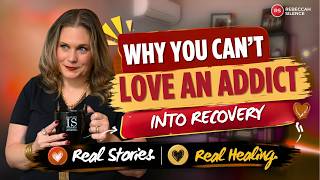
In a live interview on Mix 102.5’s Mental Wellness Wednesday, love and emotional healing coach Rebeccah Silence discusses why loving an addict cannot force their recovery. She clarifies that addiction is a disease, not a choice, and that no amount of love or control can make an addict wake up. Drawing on her therapeutic training (since 2002) and personal experience growing up in an alcoholic family, she explains how many people become "addicted to the addict"—a form of codependency where their thoughts, feelings, and sense of self-worth revolve around trying to manage, change, or rescue the addict. She outlines telltale signs of this codependency, such as obsessive attempts to control the addict and tying one’s safety or value to the addict’s behavior. Rebeccah emphasizes the necessity of healthy boundaries, self‑care, and focusing on one’s own emotional regulation rather than trying to fix the addict. She recommends resources: her free Emotional CPR Masterclass (available via Instagram @rebeccahsilence), and Elizabeth Gilbert’s book All the Way to the River as a guide to setting boundaries with addicts. The interview concludes with a plug for her website theunsilentwoman.com.
Chapters
We're live and local. It's Mix 102.5 on a Mental Wellness Wednesday, Big Papa in the Morning, welcoming the world's leading love and emotional healing coach She is Rebeccah Silence, online theunsilencedwoman.com. Rebeccah, good morning. How are you?
Well, I am so happy to be here. Let's change some lives.
Okay, we're gonna get, we're gonna get, we're gonna just jump right in on this one. Okay. Um, what I have written down is loving an addict. Okay, they may not be, you know, they're harming themselves, they're in addiction. They may not be physically or mentally harming you, like, but I don't want to say firsthand. I don't know if that's the right way to say it, but there's— it's definitely causing issues in, within everything. I don't know if— I don't know if I— if that made sense or not. I'm just gonna say loving an addict, but there is no physical abuse.
Uh-huh. There is an aftermath. There is collateral damage when we love an addict that we can't save. And, you know, I've been helping people heal since 2002. I have the background as a trained therapist, trained to diagnose people, but I never want to claim to be an addiction specialist. That is an area for other experts, right? I don't help people get sober that are struggling with addiction, even though I have helped a lot of addicts on their journey to sobriety, getting to the trauma underneath it all that has been a catalyst for the addiction to continue, right? So just a quick disclaimer there. And then this one is so near and dear to my heart. Growing up in an alcoholic family and in a home with extended family, it, it was almost like everybody I loved was an addict growing up, and then for so many years I would attract relationships with people in different types of addictions because this is just my normal. So personally, this one hits really deep for me, and professionally I have a lot of experience here. But one of the things I really want to make it clear to everybody today is when you love an addict, you can't love them enough or do enough for them to want to wake up, get help, and heal. There will be nothing you can do. And there are amazing programs out there that can support you on your side of things in not being addicted to the addict you love so much. Because for so many people who have a history of loving addicts— and if you're an addict, we're going to be best friends and I'm going to love you. It's so easy to not even recognize you might be addicted to them.
Oh, say that again.
They have their addiction, but have you considered you might be addicted to them?
That— I have never thought of that. That is— wow.
This one, it really does weigh so heavy on my heart for all of you listening today that might be addicted to an addict in your life and not even know it because there is no way to win.
So what's a telltale sign of you be— someone being addicted to the addict?
All of your thoughts are about trying to manage them, trying to control them, trying to change them. All of your feelings are about they need to be different for me to feel safe, for me to be okay, for me to even know my worth. So many of you are positioning yourself that if this addict doesn't heal or change or get better, somehow you make it about you did something wrong. Then like, you're God. Like, you're actually playing God. Like, you have the power to get somebody to wake up and want something different for their lives. But another big second piece— so you might be addicted to the addict in your life is the number one big thing I'm wanting everybody to consider. The second is You can't make it about you have the power to change them. Addiction is a disease. We, you know, have talked about over the years on this show, I'm a cancer survivor. I beat cancer with a 5% chance. That wasn't my fault. I didn't cause the cancer, and all I did was live emotional healing work that I teach to stay alive, which isn't easy to do, but but I get to be here. Addiction is a disease like cancer, right? We look at it— if, if you're not someone who has addiction in you and have experienced it, it's really easy to judge someone and just say, hey, this is a choice they're making. But it literally is a disease, and it literally is going to have to get to a place where their spiritual experience and awakening guides them into something different. There's nothing another mere mortal You can't do it for them. No, and there's nothing a mere mortal can do to like wake them up, right? And again, this can be so heartbreaking, but healthy boundaries. Elizabeth Gilbert just wrote the most killer book, All the Way to the River. I read it in a day. And this is the author of Eat, Pray, Love. And for anybody going through this, I want you to do two things. Number one, I want you to follow me on Instagram @rebeccahsilence and just DM me CPR. So I can send you my free Emotional CPR Masterclass so you can emotionally heal and regulate and do your part to get yourself together and focus on that, not changing other people. And the second thing is you might wanna consider reading All the Way to the River, 'cause it's a masterclass in and of itself on how to have the strength and the courage to enforce boundaries with addicts you love so you're not enabling them. They've got to have their own wake-up call moment, and you can't make that happen.
And if you want to, uh, learn more about Rebeccah and everything that Rebeccah has going on, you can go to theunsilentwoman.com. Mental Wellness Wednesday, the world's leading love and emotional healing coach, Rebeccah Silence. Great stuff as always. Talk next week.