Wine Tasting 101 with Sommelier Renée Sferrazza
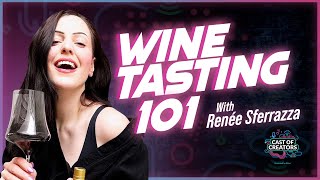
Sommelier Renée Sferrazza walks through wine tasting basics, Ontario regions, and cellar management, then pivots to her pizza obsession and upcoming spirits trips. She's lived in Italy, runs an importing company, and says modern sommeliers need to know spirits, coffee, and tea.
Chapters
The vacation hoax is a very big.
Yeah, like a vacation wine tastes better.
Yeah, vacation wine does taste better. Listen, I fall in, like, fall into it, too, as well. I just feel so stupid.
I bought so much wine for nothing.
Got home, it didn't taste as. It tastes like vacation.
It's okay. It happened. You know, you can be in the Mediterranean and try wine that you've never had before, and you eat all the food there, and it goes perfectly well, and there's nothing going wrong. You're tanned, and you're on a.
And then I sit on a. I'm in a snowstorm in Canada, opening up my Mediterranean. Mediterranean bottle of wine and curious, why does this not taste the same?
Renee, welcome.
Thank you. I'm happy to be here.
Oh, it's wonderful to have you here. You are our first sommelier on the show.
Really? Wow, that's amazing.
Before we break into this bottle, Renee, tell me a bit of that crest you got going on there. Is that some Somalia crest Ralph Lauren
shirt that I got at a vintage store?
Very nice.
Nothing to do with absolutely anything. Nothing to do with small eggs? No, other than I really like velvet, and that's very nice.
I love velvet, too.
Isn't that a wonderful coincidence?
Yeah, well, you know, to me, it's a sommelier crest. Okay.
The sommelier crest is. Is basically the head of Dionysus, which is the God. The Greek God of wine. Basically a guy who's just known for, like, drinking a bunch and then throwing up and drinking more, which is pretty cool.
Damn, that's a Somalia.
Wait, so then who's Bacchus?
Bacchus is also the God of wine, but.
Very nice.
Can we just take a second?
Wow. Very nice.
God. Not the Greek God. So the Greeks and the Romans have similar gods, basically, like Zeus and Jupiter are the same God.
Oh, yes.
Yeah. See, I love. Lachis and Dionysus are the same God, and it's basically that with, like, a bunch of fig leaves around it. And there's, like, a pin, but I'm not wearing it today.
Did they give you that when you actually graduate?
They give you. You get a pin at every level. So for there's two categories of wine expert. There's sommelier and then master of wine. So basically, w set, which leads to master of wine and court of the master sommeliers, which leads to master sommelier. So the master sommeliers, they're the ones who are famous for the pins. Got it. So you have, like, introductory sommelier, which is where I am then advanced, and then Master. If you've seen Psalm on Netflix, that's the master sommeliers.
Okay. They do a lot of. That's unbelievable, that thing.
It's a lot you do learn.
Like, how do you get through it?
A lot of those techniques as you go and stuff like that. But the master sommeliers are the smallest amount of them in the world. They're very high level. It's basically like doing a PhD all in one test.
And we were talking about sommeliers. Why don't we see a lot of them? And why do you think people start and then kind of switch gears?
So that also falls into, like, the W set and the other wine learning as well. So there's different levels of just like, wine enjoyment. So I like to call people, like, there's wine curious. There's wine enthusiasts, which is perfect. So wine curious and wine enthusiasts. These are people that like, you know, they like wine. They're gonna learn a little bit more. They're not gonna spend money on a class. That's what they're gonna do. But they're probably gonna. Like the wine enthusiasts. They'll probably start edging towards that. Now, these are just consumers. If you have people that are thinking about making it a career, they've already been in restaurants, or they maybe they had a family that had a seller or an interest in it, that's a lot deeper. Or winemakers, they'll get into that more sommelier level of production of studying if they're going into restaurants. And then if they want to go into, like, production and sales, they'll go into W set, which then they could become master of wine if they'd like. Or they could just take a class in, like, winemaking at Brock University. We also have stuff at George Brown here in Toronto. So there's a lot of stuff going on. And why people don't stick with it is because they might have an interest, but might not want to turn it into a career.
Right?
Yeah.
So before we continue, why don't we,
you know, tell us?
I'm too curious. I'm too curious to just sit here.
So I brought with me a bottle of Domaine Kalus. This is an Ontario wine. Has anybody had Domaine Caylouse before?
No, never.
Ah, what a bummer.
With a qu? With a qu?
Yeah. Quinous. Yeah, it's a. It's half French, owned from some people in Quebec. However, the winemaker of this wine is Kelly Mason, and her assistant winemaker is Brooke Husband.
Now, what about an aerator? You ever dabble with an aerator? No, that's a. That's a com. That's sort of a, you know, a prosumer type concept.
You don't really need an aerator.
Okay, well, time, though. If you. If you sit with it for enough, it'll air. Right.
Trick.
You won't need an aerator.
And I noticed a little cork.
Yeah.
Okay, so smell it.
I'll show you aerator tricks.
First, I always look for crystals on the cork.
So this one had crystals because it's diamonds. Yeah, Wine diamonds.
Wine diamonds.
So you don't need an aerator. Here's why. A wine aerator is basically like you can attach it to the top or anything like that. If you want to aerate a wine that is older, you should just decant it.
Yeah, okay.
You should just decant it. You can decant any wine to add air into it. But here's what you can do to aerate your wine. Take your glass, little spin, put it on the table, draw a circle over and over again, or pick it up and keep drawing a circle. And there's your aeration.
Well, I'll tell you, there's definitely something to a good aeration.
Yeah, but look, you see how the wine. The room just filled with the smell of wine the moment that we started doing this.
I always say, I'm like, ooh, look at those legs.
So the legs. I'll watch a thing. Yeah, no, it is. I'll walk you through all of it. So why I smelled the cork. I wanted to make sure that the wine was good. Like it wasn't faulted or anything, which you can tell on the cork. Everybody thinks that they're not going to be able to smell if, like, a wine is faulty. Trust me, you will. It smells like cardboard and nail polish. It sucks.
Okay.
You will know if the wine is bad in terms of the legs. So I like to do something called academic drinking. I'm going to walk you all through it right now.
I love these terminologies today.
This is.
My episode's going to need a glossary.
I know, right? This is my own term, academic drinking. And it's what I call, like, really diving into a glass. So the first thing you're going to do is basically following, look, smell, and taste. All right.
Okay.
Yeah.
That's generally how I go.
There you go. So, look, a lot of consumers don't really need to do right off the bat, but it does help you if you're trying to, like, form a better wine lexicon. You're going to take your glass and put it at a 45 degree angle over the table. And you're just going to put your hand under it and see how much of your hand you can see through it. So you see, so that's going to tell you the transparency. This is a Cabernet franc. So it's about a medium transparency wine. It's also almost a purple hued color.
Yep.
All right. You don't really need to do that. Very osprey.
Pretty opaque.
But if you'll.
Oh, yeah, it's not as opaque as it can be.
See, this is, this is how you're starting to now add this in. You're going to add it to your brain and say, oh, Cabernet franc. Isn't that that opaque?
Totally.
Not as opaque as a Cabernet Sauvignon or a Zimbard. Now we're going to give it a swirl and we're going to look at the glass and look at these legs that are falling down. If you see they're like ears or legs, they're fairly defined and. But they're falling quickly. So the more defined they are, the higher the alcohol, the faster they fall, the lower the sugar. So I'm going to guess that this is about a 13% alcohol wine between 13 and 13.5. And if I look at the bottle, it's 13% alcohol.
Dang, you're good.
Okay, so if there's more sugar, it's going to be more like a syrup and they're going to fall slower. If there's more alcohol, it's going to also fall faster.
No, the legs will be more defined or more defined.
The more alcohol, the more defined.
And with age.
Age is a. It's a whole different thing. But it doesn't. You don't really increase alcohol with age. So now we're going to just give it another little swirl, continuing that aeration. And you're going to put your nose in the glass, but you're going to leave your mouth open and breathe through your nose like this. You can close your mouth like this, but you're going to smell so much more. That's so.
You know what, that's embarrassing that I didn't know that and I worked at a winery for so long.
See, isn't that amazing? So this is a Cabernet franc. Like I said, it's from Domaine Caylouse. Winemakers are Kelly Mason and Brooke Husband. And Cabernet franc is known for those wonderful berry fruit notes. You get a lot of like red cherry and red berry and BlackBerry A little bit of earthiness in there as well, and a bit of peppery notes. And now we're going to taste it.
What don't you get in there? What's another flavor that you don't get?
Pepper.
Like brisket. Brisket. Brisket.
No, but, like, what's something that would be a dominant characteristic and maybe another wine that you're not.
You won't.
You're not getting any, like, meaty notes in this wine. So another, like, blue toned wine is Syrah. Syrah tends to have a lot more like. Here's the thing. Cabernet Fran has more like actual pepper food, like the. Like the actual vegetable. Syrah has more cracked pepper, but it also has cured meats, so you can fool yourself with it if you don't know it very well. This has vegetable pepper, but no cured meat. Got it. You see? Right. All right, now we're gonna taste it. And when you taste it, don't just open your mouth and let it go right down the hatch. Swirl it around your entire palate and then chew it. Chew your wine.
Chew the wine.
Now, when you swallow, you're gonna notice two things. How much you're salivating right after and how dry your mouth is getting. And where the parts is getting dry is you're getting dry right in the front part of your teeth, around the sides of your tongue and the top of the roof of your mouth. And you're probably getting a lot of salivation in the sides of your mouth.
Yeah, that's my.
I was just like.
You really know you're stuck. That's because structure doesn't change on all of our palates. I'm feeling what you're feeling, so it's easy to know what you're feeling. Yeah, and that's basically the tannins and the acidity. Acidity makes you salivate. Tannins makes your mouth feel dry. And those leftover flavors that are coming is a lot of earthiness, a little bit of toastiness. And then you also get some berry notes.
Wow, that was fantastic.
And Cabernet Sauvignon is more.
This is Franc. Right. But Cab Sauv.
Like, a lot of people will compare the two because that's typical varietals.
So Cabernet Franc is the parent of Cabernet Sauvignon. Right. Cabernet Franc and Sauvignon Blanc are the crossing that has created Cabernet Sauvignon in the region of Bordeaux where all three of those grapes are from, which is why they're Called Bordeaux grape varietals.
Interesting.
Fun facts.
Fun facts.
Great.
I know, right?
Yeah, it is great.
Now, what would you pair this with?
So this is because this wine has a good level of tannins, but it isn't too meaty. It has a lot of florality to it. You have a lot of options, especially with Cabernet franc across the board. So you can go with something like on the vegetable side, like a cauliflower steak. I know a lot of people hate using the words cauliflower steak, but like, those large. They're really good. Yeah, they're good.
They take a lot of patience.
They do.
To make a good.
Make yourself a nice slab of cauliflower, put in the air fryer. Air fryer. Air fryer buddies. Yeah, we're an air fryer.
Oh, yeah.
See, that's not bad. So a cauliflower steak with this would be great. You can also up the spices in it because of those fruity aromas. Spice with this is gonna become a lot more radial, which is good across the palate. For meats, I would go with doing something like, you can do a steak with it, but it's a little bit too light for that. I would go more. So with chicken or duck or something like that.
With duck.
Duck would be nice. Cause it has a little bit more
fat and a little bit more greasy.
Yeah. And then at the same time, you can also start to pair this with kind of things that are more roasted across the board. Like, I like doing Cabernet franc with, like, barbecue dishes, especially in the summer. 13% alcohol is not going to kill you in the middle of the summer.
Yeah.
You can also do one of those, like, more sweeter glazes that you can do on the barbecue.
Oh, we could have had this with lunch.
I know, right? I wasn't invited for lunch. All right.
Next time we wouldn't have liked it anyways, based on what you're saying.
See, there you go. Well, depends. If I was here for lunch, I would have helped order lunch. Isn't it nice?
Yeah, it is really nice.
I always find people are very surprised by Ontario wine, especially when they have one that's a little bit more full, which is specifically why I chose the wine, this particular wine for today. And also because it's one of my personal favorite winemakers. Do you still like?
It Depends. I find, like, I found when I went to Niagara Falls a couple of years ago with my wife, we ended up at a restaurant that had one of those Ontario wine, like, sort of tasting things.
Which restaurant?
It was the one, the closest one to the Falls. It's.
Oh, the Falls. I don't know the ones near the Falls, but I do know this is like.
Falls. Yeah. No, no, no. This is like the. Okay. And they were really. They weren't great.
The Falls is.
Well, yeah, you're going, you're going in tourist, like.
So that's probably saying this is.
I'm just giving you a mother in law to the Falls. She liked it. She doesn't drink.
Yeah.
I would say if you wanted to get a good representation of Niagara, go to Niagara on the Lake.
Oh, yeah, that's not what I'm saying. I'm just saying. Yeah.
I took a flight once, just like a really short flight with a bunch of media people to the Two Sisters from Toronto. So it was like a. They took a bunch of us just like one plane and we had a lovely time there. And that place was just beautiful. Their restaurant's amazing lunch. It was, it was great.
That must have been fun. You must have had a fun day.
Yeah, I just like hopped on a plane, flew there in 40 minutes or so and then had lunch and flew home.
Honestly, it's a great. That little flight's amazing. And Two Sisters, their winemaker is doing great things with their roses and also their red wines as well. I think that's where they really shine within that winery. But you basically, across Ontario, you have like three major things, like Prince Edward county is all crisp and light, so light Pinot Noirs, light Chardonnays. Niagara Peninsula is divided into two areas, the Bench and then Niagara on the Lake. So there you'll get a lot more warmer fruited wines. Cabernet Franc is amazing there, but you'll also find really great Riesling. So you'll see Pinot Noir and Chardonnay across Ontario, But Cabernet Franc and Riesling do amazing in the Niagara Peninsula.
And I think people get so impressed when you actually explain why Niagara separated into the different regions. Because it actually will taste like the. You can have the exact same grape. But if it's in Beamsville or if it's in Niagara in the Lake, it's going to have two completely different tastes because of the soil and the ground that it's based on. And people don't know that. And the environment has so much.
Do you know what the fun wine term is for that? Terroir. Terroir. Terroir, which means it's a. It's a French wine term that basically sums up. It tastes like it tastes because it's where it's from, and that's why it tastes like. It tastes. Oh, yes.
Great.
Well, it's like, are you.
You.
If you grew up somewhere else?
No, no, I would not be me.
See, there we go. If you went to a different heavy accent.
My family's from New Zealand, so if I grew up where they grew up, I would have an accent like my parents.
See, which is why you can have, like, a Cabernet Sauvignon from California or from here or for some more. Or from Bordeaux, and it'll kind of taste the same, but it'll be different.
Even, like sweetness. Like, if it's warmer, the sugar level is higher.
Look at you knowing so much about wine.
Well, it's how I grew up.
Most kids, like, had a job at McDonald's, and my first job at 14 years, 13 years old, was a winery. And I spent my entire childhood in a winery, which eat me. I feel like it's very illegal, but
we won't talk about it. But if it's like, it's a different time.
It was definitely not family, but it's okay. So you.
This bottle that you. This wine that you picked for us today, you mentioned that it was from your cellar and you have a lot of bottles there.
I sure do. I have about 700 bottles at home. That does tend to fluctuate.
So full bottles.
Full bottles, yes, full bottles. No, they're not.
They're six bottles.
I know. I can see the collection is going.
They're empty.
I know. They're all full bottles. The cellar is divided into, like, aging wines and wines that we'll just pull from to drink from time to time. Cool. Yeah. I know it sounds like a lot of wine to. No, no, I think if that's your. Yeah, that's your. You know.
You know, there's a lot of dresses at my house. I can tell you that.
Nelson's wife is a stylist. See, there you go. I'm sure you have a couple of favorites.
I do. And you know what? Funny enough, she doesn't quite have enough, which is probably how you feel about.
Oh, I wish Sean said that about all my coats.
Yeah, I'm still hunting for odds either.
Oh, we're always hunting for odds and ends stuff.
I get it. And honestly, like, when you. When you're starting to collect from places that you'd like, as you become more knowledgeable in wine, and like I was saying, there's wine curious people and wine enthusiast people that really starts to define your cellar. So the wine curious people. They'll probably end up just, like, creating a small cellar with stuff they have on hand because, let's face it, we're AD who don't need to go to the LCBO every time we want something to drink. That's ridiculous.
Yeah, yeah.
If you're an enthusiast, then you'll be like, oh, wow, I really like Brunello's. I'm going to start collecting some nice Brunello's from different places, and I'll buy more and age them out.
Do you have a favorite wine in your cellar or not in your cellar?
That's such a hard question. I know. I was like, I don't know.
I don't.
Always such a hard question. It's hard because I've dedicated my life to wine. I really love it. I usually tend to drink lighter styles. This is probably one of the heaviest win I have actually in my cellar outside of Barolos. But honestly, champagne. I could drink champagne every day, no problem. Or Aetna wines. Cool.
Yeah.
Those would be my top favorites.
Champagne.
Champagne is amazing.
Gives me a headache.
I always get yelled at because I always say sparkling. It's not sparkling, it's champagne.
Sparkling.
It's champagne.
I know.
I'm sorry.
No, but it's funny because for, like, just a casual. Like, normal people would just be like, hey, let's. Or if you say champagne, but it's sparkling or sparkling and it's champagne, like, I say it so casually, and it's like a big.
No.
No.
I'll tell you a funny story. When I first started working in wine, I was getting to know, like, what I wanted to do. And there's a bunch of, like, wine trade shows across Toronto. There's tons of them that happen every month. I was in my early 20s. I would go with, like, a resume. Yeah. And just tell people, I want to work at your winery. Please hire me. And I got hired to work at this winery in Prosecco region in Veneto. And they had tons of people coming in for the summer. I was there during the summer from all over Europe. People were coming for vacation. No matter where they were from. They called the Prosecco whatever they thought people would like. So when the Russian tourists came in, they were like Sampansky as they were pouring it. And they were like, whatever. As long as it sells, we don't care.
Yeah, exactly.
There is a. A time and place, but depending on the people you're around, I would say, well, right.
So when I'm around sommeliers, they're like, what did you just say? I'm like, they'll kind of. I'll just pour you to.
Okay. Like, that lady, she needs the. She needs the good stuff. She needs, like, the crappy wine.
Exactly.
Yeah. So shiver the brute. Yeah, sure. Fire away to get yourself some brute Prosecco and some scented champagne. There you go.
Renee, where are you from?
I'm actually from here, so I'm from Woodbridge, just a little bit outside of Toronto. Grew up here, lived in Italy for a little bit, came back here.
How old were you when you lived in Italy?
That is math.
Like, in your teens?
I was. No, I was like in my early 20s. So, like mid to early 20s, around that point in time. In my 30s.
It's a great time to live there for a bit.
Yeah, well, it's great. You got no responsibilities and you can just move places. It's awesome. Now doing that sounds.
Were you already into wine when you went?
No, I had been. So I have a very, like, traveling dad. He'll still go. If we do not go on vacation with him every year, he will go for a trip by himself for a month. He'll drive across Canada. He'll do whatever he wants to do.
Oh, he sounds cool.
He's a cool dude. He's a real cool dude. But he took us on these, like, massive European trips, and we would just like, drive all across Europe. Awesome. So I would start going back and started traveling when I was about, like, 14, 16. So would just keep going back ever since. And now that I just keep traveling for work every month, it seems impossible to move. But it was very fun for going and living in Italy for a bit. I'm also Italian background, so it was very helpful.
Do you speak Italian?
Si, Palari Italiano.
Wow.
Melting.
Works like a charm. Yeah, definitely done.
I'm already blushing.
There we go. That's great. That's just straight.
But it's the same as if you have, like, your accent.
Because I'd be like, I've been places where, like, I'll like. I had a New Zealand accent, like when I was a kid, because my parents, we knew people from Australia, New Zealand, and. And sometimes it's like, I'll talk like that and feel. Be like, oh, you should keep talking like that. I like, thanks.
I end up doing that. Then I run out of words or I get to a word I don't know, and I'm like, ah, dang. The facade is ruined. Dang it.
So at what point do you become, you know, you go from wine curious to wine Enthusiast to like, oh, I really like this. I could do this, take this seriously myself. Yeah, yourself.
So it, the funny thing for me is that I, I liked wine, but I didn't necessarily know that I could make it into a career. And it's kind of like almost anybody in any career, like you watch, you have somebody near you that does something that you like and they're making money doing it. So automatically your dream becomes like a viable thing. Otherwise it would just be like, wow, look at this fun hobby I have. Which is exactly why some people don't end up going into it. But I had not started in wine. This is my second career. I actually used to work for the city of Toronto and I have.
Doing what?
I have a degree in environmental policy and urban development. Oh, how are they doing in Toronto?
They doing well in those regards?
Well, it was, it was like a really long time ago when I worked through the city. I was like 19, 20 at that point and I just graduated university. But it wasn't a really good climate for environmental jobs because of the Prime Minister at the time. So I ended up working in restaurants. I didn't have any. Aha. Wines. Harper. Yeah.
Harper.
Yeah.
How did you know?
I know, right? Wild guess, wild guess. With all those clothes I left. Anyway, so I started working in restaurants and one of the managers there had run this wine class and I started learning more, started trying more different wines. I'm Italian, so I grew up around wine, but it's basically wine that my family made. And it was terrible, awful. And starting to really understand like this is a viable career where I could travel a lot, I could write, I can do a bunch of different things and be under this umbrella of wine, which is what I really liked. And then I went straight to work for Italy. I came back, I opened an importing company. I've sold that importing company in the time I became a sommelier. And then I made two renditions of the business that I have now. One that was in restaurants. And then the pandemic hit and now I basically talk about win for a living on various platforms.
Yeah.
So the import company, wine importing is
not for the fate of heart.
No, I know, I know a couple people in the business.
It is not for the. Every time people ask me if they should start an importing company, I'm like, do you enjoy having the money that you currently have?
Yeah, well, the select few who are doing well in it do very well in it, but they've been in it for like the 10 year generation.
Actually the Break even Mark for an employee.
Anybody I know? When it has been it, basically.
Yeah, exactly.
So then why get into it if you know know it's going to be.
Well, like, the reason why I had gotten into it is because I, I liked a wine from a place and it wasn't available here. I, I was like, oh, wow, this looks like a really sellable product. The label's great. I like the people behind it. I got a good relationship with them and I had a lot of restaurant partners. I'd worked for so many restaurants during my twenties that by the time I decided to start the business, I was like, this seems like a great idea. Yeah, youth was on my side and that like, covered a bunch of stuff. But yeah, it's a, it's a very difficult business. There' a lot that you have to put into it. I don't think I've worked harder than doing that.
Well, a lot of restaurants probably are sort of signed to a guy and really like you can come in with to a restaurant where they already get all their wine from one importer and they're going to let you in and
you know, well, that's where the salesmanship comes into things. Yeah, I'm sure that you good at that. Yeah. So there's a lot of people that are probably out there doing everything that everybody else is doing, but there are multiple different ways to get into that door. And a lot of that has to do with relationships, which is exactly what sales is.
Yes, absolutely.
Such is life. And it doesn't hurt to pull a good bottle from a home seller that they haven't seen in a while.
Yeah, that's true.
Yeah. I bet that's like.
You can impress some people with that trick.
Pretty good one bad one at all.
So how many different restaurants are you supplying to at the peak of the business?
Oh, to be honest, I don't really remember, but I think it was more than 10. Yeah, more than 10. We had like a good couple dozen in there.
Yeah, very nice.
Very small business.
And then. And then how did you end up exiting that business? Does somebody then acquire that import or how do you get out of it?
I had business partners in the business that were just far more invested in it than I was. I was just really quite tired of doing it, honestly. Like, I liked it and I enjoyed it, but it wasn't what I thought it would be and it wasn't to like my major skill set and why I liked wine. I enjoyed seeing people interact with different wines and like having a good experience with it. But running that kind of a business, it's a lot more about volume and sales, which, which is good. And you get to do that like later on down the line, but not in the beginning.
So yeah, for sure.
Some other people were more invested in it than I was.
And were you the key salesperson though?
I was running it as the CEO and I was doing parts of the sales.
Oh, there you go. Yeah. Okay. So after the importing get, get out of that. And you know you've got this talent for wine.
Yeah.
And you're exploring avenues to monetize the talent. So what are, what's at your disposal at that point? You can work for a restaurant. You can, you know what's on the table really.
So after that I had, I started becoming kind of like a freelance sommelier.
Okay.
So I was doing a lot of work for Liberty Group Entertainment. So I was running the Chibo on King street there. But I was also working with various other.
Oh, my brothers wife worked there. And do you know Laura Panova? Yeah, yeah, I'm really close with Laura.
Wow, I didn't know you knew her. She's lovely.
Yeah, she's wonderful. And my, my brother's wife is named Vivian Zurich.
I worked Laura, she was so amaz. She's like the best person. Look at your face is wonderful. I work, I did work for them there for about like three years. So I had such, she was just such a great.
Yeah, we've been friends with her for
like 10 years and her new son.
Anyway. Shout out, Shout out. Anyway, so I had mainly done the Chibo on King street, but I was also doing work with smaller restaurants that didn't really need a sommelier full time, but they needed someone to come and change their wine list like two to four times a year, train their staff, make sure things are fresh and like paired with their food. Mainly bottle lists that are about like 20 to 30 bottles long. Like nothing really big.
Great.
So I did that and then.
So are you constantly dealing direct with the supplier? Who do you deal with to bring in the product?
So for those, there's like about 100 different agencies that are in Toronto. So it's really quite a large amount of them. I have connections with a considerable amount.
Do you deal with Halpern at all?
I haven't. When I was working in terms of
when it's not a name drop, it's a company.
No, it's not a name drop, it's a company. When I was working in that particular version of my business. Yes. Ordered stuff from Help Earn. But now where I'm at, I don't necessarily have, like, I would order from them just for those ties and those businesses.
Okay.
There's other projects that I've done that have grown past that, which is really nice. And those agencies have been moving on into, like, the current work that I'm doing. No shade on Halpern. Halpern, please don't get mad at me. Your wines are amazing. Please give me some Roman a Conti.
Shout out again.
Shout out again. But, yeah, Halpern Profile. Noblesse Estates. Those are really big ones. Then we have, like, Nicholas Pierce and all the other ones. So I would put in. I would put together basically, a possibility of portfolios. I would call in the agencies to bring through a couple wines to taste with the owners. If they like them, we taste them with their foods, create a wine list for them, and then train their. Like, usually their staff was, like, under 20 people. So quick staff training. Now they know how to sell the wine, and they're good to go.
Yeah. That's great. Do you still do that?
No.
Okay.
So come the pandemic. I am now a.
Okay. Like, the pandemic hits and that, like,
oh, that's, like, way too much money to spend on absolutely anything. This is like, I'm a frivolous thing at this point. Yeah. As nobody really needs that. They're like, we're just trying to keep our heads above water. We're trying to sell out all of our stock, and when we sell it, we'll buy more. So it was kind of a useless thing to do. But I had about 5% of my business that I was bringing online, and then that became, like, the entire business
afterwards and, like, branded. I'm pretty sure I did a couple of different things with you that were with brands that were like, we. They would send the bottle. You know, a wine company would send bottles to a couple different people, and then we'd join you for a wine testing. But it was a virtual tasting. We all got, like, Jess and Rueda
did a few things where they would
send, like, different kinds of food from Spain and the wines from the region. And then we tasted them all together. And it was actually a really, really nice thing because you're not hanging out with everyone at an event, but we got to learn about them, you know, but in the comfort of our own home.
And were you, like, doing it virtually like, everybody was on at the exact same community?
You're still. Exactly.
You're still socializing and feel like you're,
like, on a zoom but everyone has the wine and everyone also has the snacks.
Exactly.
That's fun.
So it was really fun. And those are. That's what I'm saying. Those. Those partners that I had at different agencies that kind of moved into the new work that I was doing. Right. So the new work became doing writing, doing social media stuff, doing those virtual events, working directly with wine regions and those agencies, and then also moving into like TV and YouTube and all this other stuff. Yeah.
Is that the first time you started writing?
Yeah, actually I had pitched to write for the first place that I've ever written for, which is the Distillery District magazine. I'm dyslexic with adhd, so when I pitched the idea to do an article, I was just like, please, just friggin like the thing. Just read it and like it. I basically wrote a whole essay style of how to pair food. And the editor came back to me, he's like, I'm gonna publish this because it's too late to do something else. But like, you gotta. This is like an essay, like an actual essay. I'm like, okay, I will change that. Don't write a thesis here. Okay. I basically wrote a thesis about food and wine. Eric just couldn't stop. Like, her passion's so strong and she's like. And I have more to say. I did. It was far too long and it was not bad.
But it was like, oh my God,
this woman doesn't shut up on U.S. behavior. So I ended up like changing my writing style after that. That was very helpful. But honestly, when I first started writing, I was just like, please somebody like it and. And read it. That. That's it. That was my only goal. And now I. I've started to write for about five to six different publications. Awesome.
That's great.
It's really fun. And each one has a different writing style. So I get to write in a different way and put different things in different places.
I love.
Awesome.
Really not that bad.
No, it's great. And that then carries into the content that you're doing. Like, will you create content off of the piece that you've written?
Yeah. So the whole version of Like Wine by Renee now started with making content. First. I just decided to put out into the world the thing that I was really good at in wine and just like translating things and being a lexicon for that, for people really trying to understand wine a bit more. And everyone was drinking a lot during the pandemic. So they really. You're all my customers. They needed you. They all needed people like me. It's like, what should you be buying? Because y' all be drinking.
Yeah.
And the LCBO is the only thing open.
It's an essential service. Essential service. It was very essential. Very essential. So it went from, like, content creation into writing. And then I had had a friend of mine who was working at CityLine, and then she invited me onto there, and it kind of just snowballed. I would have people that liked my work and then introduced me to other people and then ended up working with more wine regions and agencies and on more platforms. And I've just kept doing the thing that I like doing, which is talking about wine and keeping it as unpretentious as possible.
Beautiful. You enjoy pouring it?
Yeah, sure. Oh, gosh,
yes, I, I enjoy your content. I love when you do.
You do, like, a blind, candid wine review. Yeah. You're candid wine. Yeah.
Oh, that's great.
Yeah.
So Casey showed me, I mean, just
the way that I, I, I love
your content and following you. I just, I mean, I don't drink that much wine, but I just enjoy the way that you explain things and you talk about it, and you're very knowledgeable, and it's like, you know, sometimes you consume content to make you laugh or evoke emotion. And I feel like I learned something every time I.
Well, it's easily digestible and relatable, whether you're somebody who is an expert or if you're just somebody like me.
Yeah, exactly.
I actually thought I had a wine allergy. I don't. But I lived in Australia, and I drank a lot of bad wine. And then when I came back, my friend, we had a lot of bad wine and a lot of red meat. And my friend that I went there with actually developed gout. That's in her 20s, which is not common.
No, it's not. It's basically preserved for, like, old people and people that have died. Yeah, yeah.
It's for real. But that's why they said it was from, like, the, the wine that we drank and a lot of red meat. But when I came back, I, I think all that wine just wasn't good for me. And I mean, it was. I was not. I, I was poor, so I drank a lot of crappy wine, but I hadn't drank wine for a long time. And then, you know, now to learn more about wine and try nicer things, you know, I realized I do not have an allergy.
But I actually built. I built up an allergy because I used to drink so much wine.
Right.
And I Drank so much wine that every time I swallowed, my throat would gross. Drinking all nagger. The lake wine.
Oh.
So what they said is I actually developed. It's how they process.
Very unique. Yeah.
And it said. They said how they process it. So I was actually allergic to, like, there's this one. It's called the Brewery Exchange. And so it's like, with beer, but they just do it. So I'm trying to like.
It's a beer wine.
No, I'm just kind of like, giving an example. They do, like, the process, and they make sure, like, they take out everything so it's as pure as possible. And now that that's other than liquor, that's the only thing, like, till this day that I can drink. Like, I'll drink a little bit of this, but, like, I won't drink.
How about natural wines?
That's what I'm gonna have to try.
Yeah.
What's the difference? This isn't natural wine.
No, it's how you process it.
Like, is it a pasteurization going on here? What do you mean?
I'll tell you.
I guess this is pasturized.
No, no.
Is it heated up?
No.
So, okay, so here's the thing. You can form allergies from. I have a lot of people that tell me about allergies, and I try to, like, really ask them as many questions as possible. Some people will say they filter. Yeah. That filtration is a bad thing. So there we go. That's it.
We'll get into that.
Sorry. Cheaper wines. If you're drinking cheaper wines, a lot of the times. Listen, there are some really great wine regions in the world that make very inexpensive wines. But cheap is a whole different thing.
Right?
Just like cheap clothes. You can see your body right through. There's a reason. Or cheap meats. Why is it so cheap? It should not be that cheap. Right. So it's the same with wine. There is chemicals that can be used to make something taste a lot better. Something called mega purple is very common in that kind of stuff. And just various levels. Mega purple.
I was just thinking about baby duck.
I know. Baby duck is different, though. And so cheaper wines, you can start to form an allergy to chemicals.
Oh, that's probably what the wine allergy that I had.
There you go drinking box. So your allergy then goes away once you start drinking better wine. So that's the case here. Such is the case. There are people that can have an allergy to different filtration tanks, so. Or like, if you're doing charcoal filtration you probably are. Okay. Like filtration happens at most most consumer levels of wine. There are cultured yeast that'll be a part of it. Not everybody use natural yeast. Different filtration methods are used and fining methods are used. So you could have an allergy to that. If you switch to natural wine, then you really going lower on that fining and filtering and you're being. You're drinking a wine that's produ, that's produced with wild yeast. So like just what's on the outside of the grapes. And then finally you can have like a tannin allergy. Those things that are making your mouth dry, they're super long molecule structures that clear fats from proteins. And we are the proteins in that equation. So they attach themselves to us. Which means that you can develop a little bit of an allergy to it, but mostly it just gives you like a bit of a headache.
Like, this is very interesting.
I'm thinking, look at that. So much like, oh, I guess you
don't have a wine allergy anymore because
I started drinking wine. You have a chemical.
I have a chemical allergy, not wine. And you can only drink allergies. Good wine.
Sorry. See, this is where we get into like quality wines and what makes a wine quality, not quantity.
Cheap wine.
Yes.
Yeah. See, just spend more than $10, like more than 10 bucks, 15 bucks, you'll be okay there.
Like, maybe they make four wines under $10 that I actually think are like, not bad. But it's a very small category for sure.
What regions are they from?
I'm not going to promote anything. Okay, tell me later. I don't remember all of them, but there's some cheap region. Write it down for later. I'll do it for later. He doesn't have one. That's not wine. Wines from Portugal that are really nice. It's also.
That's what I was gonna say.
Portugal is a cheap region. New Zealand does not. No, it's very far. See?
Yeah, it's far.
Yeah.
Those boxed wines.
No, that was Australia. Oh, but those don't they.
They stay there.
Boxes ship easy too.
Yeah.
Quality wines. You people don't think that they're going to be able to taste quality, but you'll see, like when you get handed a quality wine, when people don't take the time to actually appreciate a glass of wine, it's kind of like, you know when you're a kid and your parents are like trying to get you to eat something, they're like, just take a proper bite. Just eat it yeah. Instead of those, like, little baby bites, your parents, like, you know, it just sucks. Yeah. Just actually eat it. Then you'll actually taste it. The same thing is with people when they're just like, smelling it fast, and then it goes right down your gullet, essentially, and you're not really experiencing it. So you're saying. A lot of people will say, all wines to me, taste the same, but if you take the time and actually sip on it and drink it and enjoy it, quality wines will show through. They have a higher sense of quality to them, a lot more harmony. Usually have more balance in them as well. So you don't need to drink them as fast. You're not just getting alcohol out of it. You're getting an experience.
And that segues to what we were talking about, which was how wines can change based off of, like, your mood and everything like that as well.
Yeah. So the vacation hoax is a very big.
Yeah, like a vacation wine tastes better.
Yeah, vacation wine does taste better. Listen, I've fallen, like, fall into it, too, as well.
I just feel so stupid. I bought so much wine.
It didn't taste as. It tastes like vacation.
It's okay. It happened. You know, you can be in the Mediterranean and try wine that you've never had before, and you eat all the food there, and it goes perfectly well, and there's nothing going wrong. And you're tanned and you're on a.
And then I sit on a. I'm in a. A snowstorm in Canada, opening up my Mediterranean bottle of wine and curious, why does this not taste the same?
Next thing you know, you have gout.
There you go. Oh, gosh, no, no. I will not mention her name. Shout out. Shout out to gout. Awful. Anyway, so it also has a lot to do with, like, the place that you were. It's a little bit saltier region. It's a warmer region. You're here in Canada where it's, like, dry and cold and not salty. Salty. That's basically it.
So is there a wine word for this? Okay. I find some of the most expensive wine I've been fortunate enough to dabble in.
Okay. Getting into those Halpern tastings, I see
some of it has been them, but, you know, across the board.
But, yes, they are great for that. Oh, yeah, they're great.
And I find that. But a lot of other wine does this too. I find that the flavor changes from the moment it hits your tongue all the way through the swallow. Like, it completely evolves through the whole, like, experience. Is that called something so that is a.
That's the wine's length, and that is a note of quality. So the. If you taste your wine again, because you all still have it in the glass, you just take a sip, roll it around. Nelson's like, glass three, I've been tasting.
Yeah.
It's so nice when you open your mouth and take a smell.
Isn't it nice when you open your mouth, take a smell. So I've swallowed it about like three seconds ago. Now. You want to just keep track of how long it takes until you no longer can taste what you've tasted. You know, we're about, like, 20 seconds in almost now. It's starting to drop off. That's a quite a long flavor. A long palate that's there. It's a. The length of palate is really great for that level of quality. So that's a quality marker. It changes because, you know, flavors do change on the palate. They are being oxidized and exasperated by the chamber of your own mouth. Mouth. So change.
If you're drinking multiple wines, part of. If you're drinking multiple wines at once, what do you cleanse your palate with between the two wines?
You know, so here's the thing. I think a palate cleanser.
Yeah. No. Well, what do you do if you
are drinking multiple wines? The first thing I recommend you do is drink from lightest to heaviest, because then you really won't need to cleanse your palate as much. When I do wine judging, and I've done wine judging, where you have to judge, like, you have three days that you're there. You're judging about 100 wines per day to finish off 300. I actually usually don't drink water to clear my palate. I'll eat, like, a little piece of bread. They always give me bread because it's such a different flavor. So I'll eat a piece of bread, and then I'll have a bit of water, and then I'll wait a bit until, like, I feel like my mouth is back to neutral, and then I'll take the next wine and have a sip. That being said, if you are having a sparkling wine followed by, like, a rose wine, and now we get to this Cabernet Franc. They're all different enough that you really like. They are their own palate cleansers. They are. Each wine is having a different reaction on your palette.
Is it socially acceptable to chew and spit the bread, too?
No.
No. That's too bad. Trying to wait for a socially acceptable way to chew and spit bread. No, but you can do it with the wine.
Yeah, because I don't want any carb free. You take.
I'd swallow the wine. I should come to that. To rate it. Swallow the wine, chews with the bread.
Nobody. Nobody wants to eat the bread there.
Right? That's what I'm saying.
I love bread.
But you're spitting the wine.
These are like the packaged breadstick. It's just. It's basically people will have, like a little bite.
You're not. I. I think that's delightful.
There you go.
So you have a little piece. That's it. Just like a cracker. And then you're good.
You're not grill. Cheesing it.
No. Oh, my gosh. No. Teeny, tiny piece of bread and then right back to it.
Yeah, the wine.
Right back to it.
With a grind.
The grind of wine.
Yeah.
You got. Mainly spitting all the wine because.
And you're spitting all the wine. Right. You have to be drunk.
At the end of the day, you can't.
Or you got to be like, I
gotta go there and sleep with.
Listen. There is an unwritten code in the world of wine. Actually, I did 17.
17 wineries in four days. Four or five days in Spain. And at first I was, like, drinking the wine. Then after, I. After I was like, I need to spit this out. Because, like, I was like, I didn't know, but I was with some wine sommeliers who were experts. And then I was like, I need to start doing this like them. Because by the end of the day,
I'd be like, what is this? I went to. I do a lot of media trips with people that are not in wine. And like, one of the last media trips we went on, it was also to sp. And the first thing that we did was go to a room filled with, like, 40 different wines in it. And there's this one person from media, a couple. Actually a couple of people from media that were, like, trying to taste all the wines. Just like I was. But they weren't spitting. And I was like, by halfway through the room, they're like, oh, God, I'm crossing. I have like, listen, if you take these teeny, tiny sips first, there's no way that you're going to know how it's. How it actually tastes.
Right.
Second off, do you want me to show you how to spit? Because you're gonna. It's gonna be a whole thing if you don't know.
If you don'.
And there's an unwritten thing rule in the world of Wine, if you are drunk, you should not be there, right? Yeah. So like people, the events that you get drunk at when you work in wine are the after party. There's so much work with wine in the, in the daytime and any other parts, like even wine trade shows and stuff like that. The people that are getting drunk are like, oh, well, you actually don't work in the trade. Amateur came here for fun and that's okay. And you do you. But. But most of the time people will be like, oh, great. Where do you work?
Oh, that restaurant.
You're a server. That's amazing. Like, if you want to be taken seriously, you're not getting drunk in the day and you're getting drunk at the after hours event where everybody is drunk. But noted, spitting wine is. It's a good idea.
More to add to the notebook.
It's a good idea working in wine professionally. Just kidding. But spitting wine is really good because if you do it right, you'll actually feel like you had an entire sip of wine but not be drunk.
And less calories.
And less calories.
So you talk about telling the stories behind the glass, right?
Tis me.
Oh, I love. So when you walk into your cellar, will you look at a bottle and be like, oh, I remember that night. I can tell you a story behind that. So what have been some of your favorite memories around what bottles?
So like, even the wine that I picked today, the Domain Caylous. This is the Domain Reserve Cabernet Franc. The reason why I picked it up is I had Kelly. Like I said, Kelly Mason's the winemaker. She's an amazing human being. We've done a couple of events together. She starts her. She has started her own winemaking project. She's very prolific. But when I had saw her making this particular vintage about a year, two years ago, when I went to go visit the winery. What's the vintage on that? The vintage should be 2020.
Oh, 2020.
Yeah. So in 2020, I went to go visit the winery and she was working on. She was teaching somebody how to do like a punch down on the Cabernet franc or. No, she was doing the pneumatic punch and I was seeing how the wine was being made.
Punch down.
It's when you. Okay. So as grapes are fermenting, especially in red wine, you have to push down the skins because it creates bubbles and the skins come to the top.
Okay.
But there's a lot of pressure in there. So you use like a pneumatic press and they punch them down. You could literally like, push on it really hard with your hand and you won't be able to push it down.
Wow.
It's very heavy. So, yeah, you saw your eyes even wide, you're like, wow, I gotta try this out. Out.
Does this have Merlot in it?
It has 7% merlot.
And so why didn't it like it says? Because it's. But because it's so small, they don't need to put in the.
Yeah, it's under 10.
So that's why. But if it's like a mix, then they have to state it.
If it's over 10. Yeah. So then she told me that she won an award for this wine, which is awesome. They won gold at the Canadian Wine Awards. But I have some other wines that I really love too. Like last two years ago when I was in Aetna, I had met this insane winemaker named Steph, who owns his own winery called Scaranova. And he took us to this like super high elevation vineyard, 200 and 2700 meters above sea level on Etna Mountain, which is the volcano. And to just go taste some old Grenache vines that he found. So I picked up a couple bottles of that. There's always great stories.
Do you grow grapes? Food with us. No. Growers. No. Some Italians are growers.
I am not. I am not.
Okay.
No.
Casey's a propagator. Well, at least during the pandemic, she
just killed every basil plant. I'm still a plant lady.
And I can't wait for gardening season.
You'll have to help me out at my place. Maybe a little. Planting teacher.
I purchased plastic plants.
Yeah, that'll be me.
I tried because I was married to a farmer, so there was no reason why. There was so many things that were dying in my home, but just gotta care for them.
I like, have a wall of propagating plants and I just. It gives me so much joy.
The only plants I've survived were my cannabis plants. And I sang to them and I loved them and cherished them, but that was for an entirely different reason.
That's fair. I like to say I'm more of a winemaker than a viticulturalist. I'm not a green thumb person in any way, shape or form. I've kept zero basil plants alive. I had a tomato plant that died. I'm gonna hurt pets.
You good with pets?
Good with pets. They usually tell you when they're hungry. And I do have a pet. I do have a pet. I have a white husky named Togo.
Wow, you've Had a husky.
Yeah. Done all of my best efforts to make sure none of his hair is on my clothing today. So it's a bit. It's impossible.
Would his first stain if you drop red wine on it?
No, but I. He hasn't really gotten around. He. He sees the glasses and he knows they're important. He's smelled them and been like, he doesn't like wine, but he's also very careful around wine bottles and wine. He knows. He knows. He knows I'll be really mad at him.
You're doing pretty well with this black velvet. Because I haven't seen a. I know.
Like, I'm actually impressed. Like, I'm always covered in hair.
I found one. There's one on the guides.
Are you rolling constantly?
Yep.
Yeah.
Yeah.
I bet.
It's really unsurprising. Yeah, I bet. No, it's. It's hard to live in a house filled with a giant white dog who pays his rent in hair. So.
Yeah.
Yeah, it's impossible. But, you know, he, like. He doesn't really like wine, so.
Yeah, note it. Imagine he did.
He hates it whenever we're drinking, and I'll put it near him. He'd be like, what is this?
It's probably really strong to him.
He doesn't like it. He likes when we're cooking food instead. So while I'm not like a green thumb person, I will spend, like, four hours in an evening making, like, a delicious meal and, like, wine, doing wine pairings and stuff like that.
You like to cook? Cook?
Love to cook?
Oh, yeah.
Love to cook. Well, not a single thing.
Baking and cooking's my thing, so I do cooking with K. And I just want to always try new things, and I never make the same recipe twice, so that's a weird thing about me. So I have, like, a collection of cookbooks that are, like, always mean something to me and that represent me in some way. And I'll collect them. I'll go from start to finish. I'll rate them. So I rate everything from, like, all recipes out of 10. And then I will, like, if I do any modifications or if I learn something, I'll write it in the notes. And then for Christmas, I'll, like, wrap it and add it to a gift to, like, a friend, and I'm like, pass it along.
Oh, that's nice. And so I feel.
And then they open it, and then they get all my notes, and hopefully they don't make the same mistakes I did. Or they'll be like, oh, that's a cool modification. And, you know, you're so much nicer than me.
I have no time for this. I just, like, make food and tell people to come over and drink wine and food. They can figure it out on their own.
Yeah.
I am, like, not that nice. And, like, come to my house. House.
Yeah.
What are some of your favorite Italian dishes to make?
I make a really amazing pizza from scratch. I do not buy pizza anywhere.
Right. Love that.
We don't. So, like, would you say pizza is, like, your dish?
We had somebody on a podcast that they were all about brisket. We're talking a lot about brisket today,
but that was something. That's a big theme. Yeah, but they.
They were on the show and they were like, brisket is my thing. So what's your thing? Is it pizza?
My pizza and my gnocchi recipes are probably, like, the two highest ones.
Ones.
But, like, I'll eat gnocchi out of the house, but I will not buy pizza from anywhere. Right.
What's your oven strategy with pizza? Do you use the stone?
Yeah.
And preheat the stone?
She's like, of course.
Yeah. So you slide it into a stone
in the oven the whole time? Yeah. Because it turns your oven into a convection oven all the time. It makes it hotter. Yeah.
So I keep it in no matter. Keep it in no matter what's on the lowest rack. And you even use the middle rack.
The whole thing with the stone is it has to heat up and cool down with the oven. So.
Yeah.
Oh, that's just lives there.
Yeah, Ours lives in the oven.
It lives in the oven.
We got a stone.
Get a stone for my oven.
Yeah. Guys, you don't have one.
I don't want to be tempted to make too much pizza.
All right. Honestly, like, if you. If you commit to making a cauliflower crust. Hey, yeah.
It's time consuming.
You can make the dough from scratch. You don't have to put cheese on it. That's the thing. If you make your own pizza, you decide what you want.
No, I mean in the cauliflower crust stuff.
Yeah.
You end up having to use it for a binder.
See, There you go. So I'll make the. The dough from scratch. I also do. I'll do what I call, like, a red and a green pizza. Green pizza is actually avocados and basil pesto together.
See?
And then I'll put, like, sliced bocconcinis and tomatoes on top.
Delish.
Yeah, Beautiful. See, there we go. It's not too bad.
No, that sounds amazing.
It's great. Then I love doing that. And then I'll make gnocchi, but then that's so time consuming. It's like so much work. Yeah. I usually do it when like my mother in law comes over and like, she'll help me and then that's it.
Like, okay, today we're doing.
Today we'll do the gnocchi. And she's very happy about it, so. Yeah. Yeah. Done.
Any exciting trips this spring or summer?
I go on a trip a month. So this month I was in the Okanagan for a new wine and scotch release. Next month I'll be in Ireland for a gin thing. I know, right? I don't just do wine. Sommeliers should know about wine, spirits, coffees, tea, all that kind of stuff. But usually I'll be somewhere in the world once a month going to some wine region or some production region.
That's wonderful.
Isn't it great?
It sounds amazing.
It's not fab life at all. Yeah. There we go.
Amazing.
Thank you for making the time to come here.
Oh, thank you.
Yes.
Yeah. We love this studio and, you know,
happy to have you here.
Thanks. Ireland next time. Yes.
And thank you for sharing this. It's beautiful.
Cheers, guys.
Thank you.
More from Renee



Is the Most Famous Rosé Champagne Actually Worth the Hype? | Billecart-Salmon