
Rich Bello, Jeff, and Christina Labreco demo Aruda, an AI coaching hub that combines goal management, habit tracking, and decision-making tools. Bello explains how the platform uses AI to support coaching methodology and accountability in the process.
Welcome everyone to today's demonstration of the Aruda hub, our next gen AI dashboard. Unifying our five coaching tools, projects, decisions, actions and goals into a single AI driven command center. The goal is to have a pocket companion for your everyday life, instructing you what you need to do at any given time.
So.
Coming starting from Aruda, our vision comes from our founder Rich Bello and the methodology. And Aruda's whole ethos comes from his mentality, driven from his coaching approach. Rich comes from a deep background in financial services alternative investments and has a plethora of coaching experiences both in executive coaching, career coaching and holistic coaching as well. So Rich.
Thanks, Jeff. So Aruta is all about talent, right? That's our, we're about mission, maximizing potential. And we start with the different stages of talent. So as you can see on the screen, we start with the acquisition, that's the first stage. We have a talent acquisition division. Then we move into development, which is really what most of this is all about. Coaching. We do a lot of, a lot of seminars and webinars on talent development topics, executive function skills. Then we have an assessment division. We work with retention and all the way to transition, which can be termination. So that's what a route does about. So we have a kind of a simple formula. Route to formula is we start with knowledge. So some of you may have seen some of the books that we have. We've got a deep library of content, we read a lot. I think we've written 16 books over the last three years. We're very curious people. We start with knowledge, but knowledge doesn't apply itself. You need to have a process to apply the knowledge not going to apply itself. So we develop a process to apply it. Coaches are steeped in that process. Then we add technology. We have a lot of technology. My colleague Christina is going to go through some of that with you. The technology really is used as a leverage, a lever to get the most out of the process, get to get it done efficiently and effectively. And then we have the coaches, coaches kind of supervise that whole process, work you to get really clear on your goals, on your mission and yeah, and then this is what leads to results. So I'm going to bring up my colleague, Christina Labreco, executive coach. She works with our coaches. She does coaching herself. She's really steeped in the technology. She's going to go through the technology right now.
Okay, so we've got a hub here and you can think of the hub as an AI companion. We call this AI companion Aria. She's providing insights, potential bottlenecks and also potential next steps in between your coaching sessions. So unlike you, she's available 24, 7 to the client and guiding the process where you can't be there directly. What's nice about the Hub is that it's integrating five different pieces of technology and so a lot of these technologies you may have seen somewhere else. But the beauty of this is it's all in one place and the coach has access to it. So in between sessions you're able to check in as a coach, where your client's at, what happened in between sessions, and where to pick up in your next session. So we'll be going through some of these briefly. We start with the Goal Manager app. This is where we're going to be tracking goals, progress on those goals, deadlines, start lines, all of that. We have the decision Manager for complex decisions, helping people make decisions without cognitive or emotional bias. We have the Project Manager for complex goals. So things that have multiple areas and categories within those action plans. And then the Time manager. That helps to really allocate time more than just a schedule. It's really showing you where your highest priorities are, where you should be spending your time and most importantly you when. When you should be spending your time there. Habit Manager of course, the quality of our lives are basically dependent on the habits that we make daily. So this habit manager is tracking that progress. We'll go into that in a little bit detail later. And the Goal Manager overview. Like I said, this is where every coaching engagement starts. This is where the coach is guiding the client through understanding where they want to be spending their time, what's most important to them. And we do this in a 10 step process, looking at the areas and categories first, breaking that down into which of these is most important. Then of course, how are we going to measure it, by what are we going to measure it with and how frequently are we going to be measuring it. And those kinds of data points are inputted throughout the whole coaching engagement. So we're getting real time status on how far or close we are to completing that goal. We break down each of these goals into understanding why it's important. So there's a place for this person to write in the rewards for achieving the goal, the consequences for not achieving the goal, what makes their motivation for getting this goal so important, Objections or possible obstacles that might come up. So we can have a pre situation plan for that. And then we make an action plan for each one of these goals that includes start lines, deadlines, priority order, of course, accountability strategy. And some of these actions can be a one time action. Some of them will be decisions, which is where we go into the Decision Manager app. And some of them will be habits which are repetitive actions which a lot of these goals tend to have. When we're really trying to change behavior, it starts with that habit. So this is giving an overview of everything you're trying to be working on. It gives you what we call a master plan where all of your goals, all of those things we just went over are available in one place. And of course that's also integrated into the hub, which we'll talk about later. Also, one thing that I really love about that goal Manager app is it's tracking plan progress as well as goal progress. So you can see the effectiveness of the plan. And as a coach, know if you have to change strategy mid engagement to make sure that you're really driving the results that the client's expecting. Here we've got the Habit Manager app. So this is where you're tracking your actions. Daily things you want to eradicate, things that you want to actually start building. You're giving yourself a daily score. The coach has access to this. They can see are you sleeping that eight hours that you said you're going to, why or why not? And kind of getting onto the bottom of this. And it's really important, I think, for consistency, for even the client and the coach to understand why. Where are you falling short on the things that you're committed to do? Why are you not doing the things that are in your best interest? Let's uncover that. So this is giving us an overview of that. We have of course, the Decision Manager app, which is so important cause so many of us make decisions based out of emotions. It's very easy to do that. But when you're buying something like a house or maybe even choosing a career, there's a lot of things that are going on and it's not always that a pro and a con mitigate each other. So sometimes they're not equally weighted. So we have a criteria based scoring method which allows you to really understand what's an ideal outcome here. What does it look like? Is having a square foot more important than the location of the house, et cetera. So you rank these in priority order and then you score each of the options there, which gives you a really clear, logical way to make a decision. And of course the coach can then bring in that intuition piece of how does this feel now that you know that this seems to be the best choice Maybe the criteria is not in the right order, what have you. But this way you can also be collaborative in decisions because there's a rubric that makes sure scoring is consistent.
It's all, this is all filled with AI. It makes it go so much fast. We had it without AI. We started like, wow, it really cut down the process and made it so much better. You're getting options, you're getting all kinds of options. What are the, you know, how should I score this? What should the criteria, what should the weighting of the criteria, you don't have to agree with that, but it gives you options for, for the tools. So it goes so much faster, so much better now that it's all infused with AI.
Yeah. All of our apps that I've gone through so far have that component. So it's really good as a thought starter, brainstorming any of that that the coach can use. Even with the measurement, which I find really helpful. The suggestions that it gives to how to measure a goal, which is sometimes a hard decision to make. And then of course we have the project manager again, a lot of project managers out there, but what makes this so special, it's integrated into the suite of tools that are all here. So the coach has one place to go into to see everything that that client might be working on, which is really important when we're working with enterprise level engagements where there might be a huge project and some people might be collaborating on things. The project manager is a place to actually break that down and monitor progress, to make sure that that plan is really achieving the project that they have set There deadlines can be put in, delegating, giving responsibilities. All of that's located in one place and again populating onto that hub that we talked about earlier. And then we've got a Time Manager app because if you're not scheduling things, they're not going to happen. And so the Time Manager app is now saying, okay, now we know all of the goals you've got planned, we know what your habits are, we know the projects you're working on, we know how much time you have during a week to get some of these things done. And yes, you have to sleep and yes, you have to eat and all of these things are kind of integrated. It's going to suggest when you work on that thing and what time, how much time, when are you going to put it in and it'll even indicate when you might be over promising your time because you've decided to put too many things into a calendar and you don't have. Have enough hours to actually complete that.
And they're also prior. We prioritize all the goals. Goals. We go through a whole process. You're prioritizing every goal. So the time manager knows, hey, this is your priority. If it's a health goal, it might be sleep. This is your priority. Make sure you're getting your sleep so it goes through that process as well. It'll know at your priority and then the coach can work with it. Hey, if you want to do, say, I want to do this, I want to do that. Say you yourself, we went through this process. This was your priority. You came up with it. The coach will remind you. So they'll hold you accountable to that.
And then, yeah, Brings us back to looking at this hub where everything we've just talked about integrates in one place. This is a place where the coach can look at, get a quick overview of everything that you're being. You're working on knowing what's happening in between that sessions. And of course, aria, which is the AIA companion, is there to support in between those sessions, providing insights where the client might need it in between sessions and instructing the coach of where to pick up on the next session to make sure that those results are really being driven.
Right. So this is not optional. If you're going to coach with the route or be coach with the router or be a coach route, it's not optional to use the tools. That's how strongly we feel about this. You've got to put this stuff down. There's too much coaching, I think people just talking, talking, talking, talking. It's like, yeah, that's great, that's great, that's great. And you don't put it down. Not going to happen. You're not going to be held accountable. Hold yourself accountable. Coach can't hold you accountable. It's just like, see you next session. Like, wait a second. Here's what we talked about the last session. I mean, they can have the coaching sheets, but this is a real place to put it down. Accountability is such an important part of coaching. It's really just such a huge part of it. Because most people kind of know what they should be doing. They kind of know what they're doing. The problem's accountability. Like, yeah, I know I should do that. I knew she did it. Let's talk about I should do that. The problem to me is accountability. And accountability is, is rewards and consequences at the end of the day, right? Like Christina was saying, it's rewards. And what if I Don't get this done, right. I miss a deadline. Everybody knows you gotta have a deadline, but deadlines mean nothing unless there's a consequence, right? You can just blow right through. Is there a consequence? One of the. As an example, the books that we've written, and Christina's helped me write a lot of these books is my coach. I was trying to write a book for 10 years, and finally she said to me, you want to get the book written? I was like, yeah. I was like, well, here's how you do it. I was like, oh, what? So she said, tell everybody you know, in three months, you're going to. You're having a book launch party. Three months. I remember Driver's like, no, not that. I don't want to do that, right? Because the con. What's the consequence?
Public humiliation.
Public humiliation. Showing up, hey, we've got the book on time management. Like, where's the book? Well, I procrastinated. But, Rich, you do procrastination seminars. You talk all about procrastination. So, yeah, I showed up with the book. I was like, wow, let's write another one, right? I think that may have been four or five months. And let's write another. And now we can do it in three months. Right? Now we've got it done. So this is our strategy. So come up with some type of accountability strategy. There's all kinds of them. Another one that, that. That I've used is. It's. It's. It's basically a strategy where you tell everybody you're going to do something. It's sort of public elimination. But you offer them money. If I don't do it right, it's bet against me. If I don't do it right, then I owe you money. I might owe all you guys 10 bucks, right? But if I owe all of you 10, you. You'd go into it with. All you would have is $10, but I'd all of you $10. This has worked with. With some of my clients. They really wanted to get something done. Tell everybody, you know, if you're comfortable doing that anyway. So the idea is to come up with some. Some accountability strats. A big part of a route does coaching is we always. When we set a goal, we. What's the accountability strategy? We have a lot of them as part of our tools. The habit tracker. That's holding yourself accountable at the end of the day, believe it or not, 63 habits that I work on, and I see a score at the end of the day. Now it's Gotta be quick, right? The habit tracker's gotta. You'll be able to do it in like two and a half minutes. Like, boom, one to ten, boom, boom. How'd I do for the day? So you're working, competing against yourself. This is the habit tracker.
And all of these things that we're talking about now, like, are integrated into this hub, which is really great because as a holistic view, as a coach, there's so many things to, to keep track of. And just having it in one place at one spot where you don't have to think about it. Everything that you need to know going into the session is there. And everything that your client needs to know about the things they've committed to, why they've committed to it, habits, reminders, even mindsets that they are trying to plan is just in one place, easily accessible, and constantly being like, it's constantly learning about you. And so the insights and suggestions that are making are really tailored to each.
Individual person gets to know you more and more and more. I was like, that's not what you want to do. This is what you. This is really what you want to do. I'm going to give you the example.
So, of course, technology is nothing without coaching in this environment. And it's really all about people and so, Rich, why don't you just tell us about why you love coaching so much?
I love coaching. So we use this acronym, csa. So the C is getting really clear. The coach gets you really clear, clarity. What, what is my mission? Why am I here? Right? What, what am I, what am I passionate about? So we have a whole process that we go through to get you really clear on what your mission is. And then from there are your goals. Now get really clear on our goals. Coach helps you do this. The coach helps you to prioritize your goals, what's most important. So that's the C clarity. The S is strategy, plan. Goals aren't just going to happen. What do most people say when you ask them? Hey, do you have a plan? Right, you got your kneeler, you have a plan? Where's their plan? They say, yeah, I got a plan. Where's the plan? What do they do?
It's not good enough.
Like, where's your plan? Like, yeah, here it is. They go, no, that's not gonna work. It's in my head. No, no, that's where the project manager, or there's also planner and the. And goal manager. So you have to have a plan strategy to achieve it. Then the hard part comes. What's the hard part executing the plan or you gotta execute the plan. Any business person knows you're going to invest in somebody. It's better to invest in a management team than that can execute with not, not such a good product as opposed to having an amazing product but the team can't execute. That's accountability. So the coach holds you accountable. I love my coaches because they will not let me get, get away with not accomplishing, not achieving my highest priorities. They'll do whatever it takes and that's what the Aruta coaches do as well. Whatever it takes to help you to achieve your highest priority. You gotta know what they are first though, right? I think our and our pride is finishing up here. So if somebody wants to, if anybody wants to sign up for, for coaching, we call these coaching results calls or just to call if they want information on, on. On Aruta coaching.
Yeah, this link goes right to my calendar. So if anybody's interested in knowing more, feel free to book a call and I'd love to meet every one of you. So thank you so much for your eyes.
Appreciate.
More from Rich



Goal Setting Workshop: Set Your Top 2023 Goals & Create a Master Plan to Achieve them! NYC

Goal Setting Workshop 2025: Design Your Master Plan for Success! AROOTAH Advisory & Coaching | NYC

Redefining Success: Arootah President Talks with Christyl Murray on Culture, AI, and Much More!

Rich Bello Best Practices Keynote to Family Office Leaders | Parrish Museum The Hamptons | Aug 2025


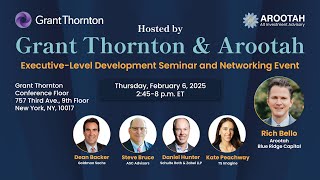
Rich Bello Keynote for Executive-Level Development Seminar with Grant Thornton | Feb 2025 | NYC