Rich Bello Speaks to NYU for the Coaching & Technology Summit | July 2025

This is a YouTube video titled "Rich Bello Speaks to NYU for the Coaching & Technology Summit | July 2025" featuring Rich Bello as the primary speaker. The content is a recorded talk or panel discussion from August 2025 where Rich Bello discusses whole person coaching, executive and health coaching, the integration of spirituality in coaching, the impact of AI on coaching, and the importance of prevention and research in health and wellness coaching. The session includes audience questions and interaction with other participants, focusing on leadership performance, coaching methodologies, and addressing bias in AI.
Good afternoon. Great to be with you today. What an incredible event. So today we will delve into the flavor of whole person coaching, health and well being through coaching. And I am thrilled to be joined by these brilliant minds to just learn from them, learn from their experience and hopefully listen to your thoughts and questions. So I would encourage you, as we are talking, having a conversation with them, to really think and reflect and prepare a question or two so we can ask them. As an executive coaching firm and you're working with high performance leadership and kind of thinking about well being and whole health from your lens, how do you delve into the return on investment on leadership performance from your work and what you do?
Yeah, that's a good question. So yeah, Ruto, we do whole person coaching. So we're also life coaching, health coaching, career coaching and executive coaching. So when we're doing executive coaching, we're looking at all four eventually going to get into spiritual coaching as well. So we look at mindset. We always start with a mindset and the mindset is especially for executives, especially CEOs and people are in charge of businesses. So you're going to get a very high return on investing in your people. Get a high return investing in yourself first. You get a very high return investing in people. It's funny that a lot of CEOs don't get that for some reason the HR folks do. They get it. They always want to invest in their people because that's, that's their job. So they always have a hard time with budgets. So when we're looking at this, when we're coaching, we've written a lot of books. So one of the kind of two, two versions of the books are executive function skills and then wellness principles. So the wellness principles are things, they're kind of common sense things. Mind, body, spirit, those types of things, emotions. So it's a four part series of the books actually. They're, they're upstairs and once a grab a copy and then we look at executive function skills, time management, it's a top skill. So we write books on all these. Put the knowledge together, time management, decision making, communication skills, these are all skills that people can identify with and they understand return to getting a high return on investment if they invest in this knowledge.
What made you think about the importance, the urgency to why it is critical for leaders to achieve high performance?
I learned it myself personally. Right. Just, you know, as a type A person, it's critical that you invest in yourself in order to do that. Reason why I went into coaching is because if you want to learn something yourself, the best way to do it is to teach it to other people, right? If I really want to learn something, it's like, oh, boy, I got to explain it to other people now. I got to really, really dive deep. And that's where I write the books, do that. Really writing them for myself to start, and then, and then teaching other people about the skills.
AI is an exciting thing. This is the time for it, and we discuss about that and leveraging it to access, to promote equity, to increase access. That's a great point. I'm also curious about how it may, the limitations where it can backfire. One of the challenges with AI, and especially when we're talking about responsive AI, it can discriminate against users, it can discriminate against people. So how do we address that?
You can't just blindly follow AI and you can prompt it. You can prompt out biases. Also somebody doing, hey, I mean, a lot of times AI will just agree with you. Well, it's really smart question, brilliant answer. Yeah, do it that way. It's like, wait a second, hold on, you're just kissing my blah, right? Don't do that. Prompt that out, right? Prompt that out if you can. So for me, that's, you know, that's a big part of. It's all about the prompts, right? It's all about the prompts and how to, how to get the right answer. The plus side, though, is it does give you a lot of options, right? That's part of the route process, is we want options for our clients. Is it directive coaching? Maybe somewhat. It's all about how you, how you do it. But you want to give people options. For instance, I'm coaching somebody on health coaching. I'll talk to them like, yeah, I want exercise. Wanted to go exercise. I was like, how's your sleep? Like, ooh. But they don't think about it, so they, you know, so you gotta give, give them, give them options. A lot of what we do at Rooter, we'll show some of that later. When we do show some of our.
Technology, I want to maybe build on this and thinking about the whole person health from your own personal experiences and to what brought you into this field. What was maybe your speaking of generative moments, your aha moment that really led you to the field of coaching and what empowered you to go into whole person health? Just, I'm curious.
So I was exposed to an ashram at a very early age, probably around nine years old. An ashram, lots of yoga, a Lot of meditation, a lot of eastern philosophy there. Also lots of nutrition. So I got exposed to this very young and then as a peak performance, always interested in peak performance type A and then enter the business world maybe 20 years later. Julian Robertson's Tiger management, most successful hedge fund to that point. And he was all about corporate wellness, all about everybody had a trainer, was a chef making healthy foods. The people that he hired were top, top performers. All about peak performance, all about understanding you get a high, high return on an investment in his people. Then we started our own hedge fund, John Griffin and I, Blue Ridge Capital, same thing, corporate wellness program. And now to route we're giving back. People do more for other people and they will for themselves. To your point, I think they, you know, if they're compassionate. So I'm just really passionate about getting this message out there and helping people.
Thank you for sharing that. I want to take the opportunity to allow our audience to ask questions. So please raise your hand please over there. Yes, please.
Thank you very much for this discussion. I'm a current graduate student in executive coaching and organizational consulting here at NYU and I'm really interested in the topic you brought up about the bias in AI. And Rich, you said you could potentially prompt the bias out of AI coaching. But my question is then who's generating those prompts? And so I'm curious, what does collective cross cultural prompting look like in your organizations and like what are you seeing in the field to help mitigate this bias? And I realized I was just question stacking. So thank you.
That is a rich question. So maybe actually we can leave the mic there just in case they need to hear the question again. Who would like to answer that one?
Well, I think it depends on whatever the, the, the issue is, whatever the question you're asking. A lot of times people are concerned with AI and AI interviewing. For instance, you want to make sure there's no bias in interviewing. There's actually laws out there. Be really careful now when you're interviewing people. So it really depends on what the question is. Don't, don't bias. You know this. If you are, you know, if you're asking this particular question. I want the right person for the job, right? I don't care about what their color is or anything make you give me the answer. The questions to ask them for the right person for the job is just an example. It really depends on whatever the question is.
Thank you. I'm really excited about this conversation. My name is Becca Spirit. I've been a spiritual wellness and health Coach, mindset, coach for the last 13 years. And I was feeling like I needed to reach more people. So I entered the master's of science program at NYU and executive coaching organization consulting, which I love and felt like, okay, I need to enter the corporate space. This is how I reach more people. But I'm going to shove my spirituality in my back pocket. So I'm really interested to know how you're bringing the spiritual conversation to the coaching space and what that looks like. You know, I've really been expanding with methods grow model, you know, rigid organized coaching methods. And I'm curious how you weave spiritual coaching and that conversation into the corporate space.
Thank you for sharing that. That's a great question. Specifically in the corporate space. So that's, that's actually, I mean for.
Me when you talk about spirit, people may confuse spiritual with religion. So that happens a lot in the corporate space. So I'm very careful about that when I talk about, I talk about in spirit inspired, right? Inspiring people figuring out what their passion is. A lot of career can be career coaching as well. So what inspires the people that you're coaching? So figure their passions out. We're actually working on a book on a career book right now and that's the biggest part of it for me. What are they really passionate? If you can figure out what you're passionate about, you're never working another day in your life. You gotta figure that out. And you want to make sure that the employees that you're hiring are passionate about what they're doing. Right. So it's really. That's that. That's how I look at it. Just as a quick little sound bite.
In one word, maybe two. Where do you see a blind spot or an opportunity for coaching and whole person coaching specifically to support this field and take it to the next level.
I would like to take this focus on prevention. This is really one got to focus on prevention.
Prevention.
I'll leave it there.
That's a great word. I want to conclude with just something that I had a couple of people earlier ask about coaching and especially the earlier session, the research and the science and was wonderful session. I appreciate it everyone. I wanted to add the point of view of health and wellness coaching research. As someone who is embedded heavily in that and National Board for Health and Wellness Coaching through my work at Mayo. Health and wellness coaching is actually one of the fields that is heavily supported by research. There is over 500 published peer reviewed articles, over 100 randomized control trials about the impact of health and wellness coaching. On healthcare, self care, employee wellness. So different fields. So I would encourage you to look up that. You can look up the Compendium Health and Wellness Coaching Compendium and you can read more about that because for me, that is an opportunity for cross pollination and multidisciplinary support and collaboration between all fields of coaching. So with that, thank you very much. I appreciate the brilliant minds that came today. I appreciate you have a great day.
More from Rich



Goal Setting Workshop: Set Your Top 2023 Goals & Create a Master Plan to Achieve them! NYC

Goal Setting Workshop 2025: Design Your Master Plan for Success! AROOTAH Advisory & Coaching | NYC

Redefining Success: Arootah President Talks with Christyl Murray on Culture, AI, and Much More!

Rich Bello Best Practices Keynote to Family Office Leaders | Parrish Museum The Hamptons | Aug 2025


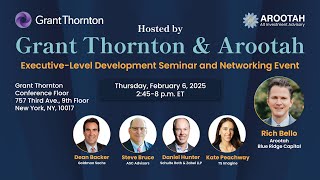
Rich Bello Keynote for Executive-Level Development Seminar with Grant Thornton | Feb 2025 | NYC