Leading with Wellness: The Secret to Peak Performance with Rich Bello
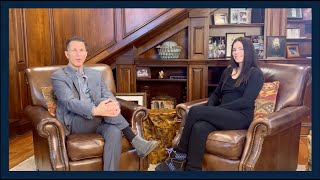
Fireside-chat transcript of Rich Bello with Lana promoting his upcoming book The Energy Principles, Volume One: Physical Body (Feb 27, 2024 upload). Bello frames health as synonymous with energy and outlines the book's focus on 10 principles that enable peak performance. He recounts early influences (ashram, yoga, corporate wellness at Tiger Management and Blue Ridge Capital), describes workplace programs (gym, trainer, chef, culture benefits), and highlights key principles: 1) Prevention (principle one); 2) Sleep as foundational to energy and performance (principle two) — including sleep quality, hormones, and measurement with devices like Oura — and 3) Nutrition (principle three), emphasizing individualized metabolic profiles and the role of community/Blue Zones. The conversation also covers structure/alignment, core strength, and exercise (aerobic + anaerobic balance), closing with an invitation to read the book and attend seminars/workshops.
Questions this video answers
The Energy Principles, Volume One: Physical Body
10 principles
Prevention
Sleep (principle two)
Principle three
Chapters
Well, hi, Lana. Thank you for coming to my home to do this fireside chat, even though there's not really fire here, but close enough. I appreciate you coming in. And I know we're going to talk today about the book release that we have coming up. The Energy Principles, Volume one, which is Physical Body, will keep you folks at home in suspense about the other volumes. For me, the Physical Body is all about. And Energy principle is all about health, and that's what this book is about. And health, to me, equals energy. If you're healthy, you have energy, and you have the energy to accomplish whatever it is that you're trying to accomplish, to accomplish your mission, to achieve your goals, you need that energy in order to do that. So that's why we focus on energy first at Aruta.
That makes an incredible amount of sense. Rich, thank you so much for having me here. And certainly, even though we don't have a fireplace, it's a very cozy setup, and I'm happy to be here to discuss health and energy with you. I have spent many years learning from you, and I am very grateful for everything that I have learned about health and wellness and how it transforms into energy and the energy that we need to sustain our lives and to pursue success in our lives. So thank you so much for having me. I was wondering if we can begin with you sharing with us where your passion for health and energy originated.
Yeah, it does go way back. I was, fortunately exposed to an ashram, really, in the Poconos, which is near where I lived. We were just driving by one day. My family and I were driving by one day, and we were like, what is that? There's this ashram deep in the. In the. In this. In this valley and this big. And at this ashram, there were people who were studying yoga and meditation. It's, like, really wasn't a big thing back then, even though it's been around for thousands and thousands of years, but not in the West. So we went in there, and we were exposed to this swami, came up to my family and said, is there anything that I can do for you guys? Give me your biggest problem. So I was like, all right. So my dad said my brother had epilepsy. And I was like, my son has epilepsy. Can you help us? Not thinking that this guy could do anything. He was sort of joking with him. This guy's in white robes and weirdly fast forward. He talked to my brother, asked him what brought it on, gave him breathing exercise. Now my brother was seeing all kinds of doctors, all the best doctors in New York City, in Manhattan. He was on even remember the drug he's on, Phenobarb. They tried everything. Epilepsy is a really horrible condition. So, you know, the family was suffering. Of course my brother was suffering. Fast forward. He never had another seizure in his life.
That's amazing.
This dude knows something.
Wow.
So we're like, all right, yoga, what do you got? Yoga, meditation. Yeah, yeah. What else you got? Nutrition. So they were all about it, all about being healthy. Really. It's preparation for meditation. Yoga's priorities. You know, as a yoga instructor, really the purpose behind yoga, the main purpose is preparation for meditation. So they wanted to be real healthy. So I learned a lot of that stuff when I was a kid. And then fast forward to my first major job, which was at Tiger Management hedge fund there. There was Julian Robertson. He was obsessed with athletes hiring peak. All about peak performance and hiring athletes. You know, people who had. Were triathletes, like really top, top of their games. So we had corporate wellness program there. We had a trainer. There was my first trainer. I was like, I have a trainer. Cool. Paul Gerarde. Just great, great, great guy. Actually saw him not too long ago. So, yeah, I got exposed to it at a, you know, at an early. An early age. I was also in sports when I was younger. So if you're going to be into sports, I love basketball. I really wanted to be the captain of my basketball team. I had to really learn about physical structure and working out and all that stuff. So, yeah, I was exposed to it at an early age.
And those are some of the things that you touch upon in the book that's coming out soon. The physical structure I have.
Yeah. Well, the first chapter we start out with is prevention.
Okay.
For me, it's. It's all about prevention. As Ben Franklin says, an ounce of prevention is worth a pound of cure. Absolutely not just a saying. Right. That's a really. Makes a lot of sense. If you have to get into the cure stage, you're in trouble if you can even be cured.
Right.
It makes much more sense to focus on prevention. I believe that the top 10 causes of death are all preventable. So what does that mean? That means we're choosing to kill ourselves. Right. At the end of the day, that's really the bottom line is we are choosing to kill ourselves because it's the choices that we make to not prevent these diseases that are leading to an untimely death or to just an unhealthy life and an uncomfortable life at a minimum. As we get older. So prevention is really. That's the first principle. The, the book is about 10 principles. So that's the first principle is prevention.
So, Rich, you were at the forefront of corporate wellness programs. Can you tell me what inspired you to develop a corporate wellness program at Blue Ridge Capital?
Sure, yeah. It was what I was talking about before. It was really Julian Robertson set one up at Tiger Management. John Griffin, my co founder at Blue Ridge Capital, also had the foresight to do the same at Blue Ridge. So the first thing we did was we hired a trainer, still a good, good friend of mine, and we set up a gym at the firm and everybody used the gym. We were a small firm, but every, every single employee that was there. It was probably a little peer pressure also, I bet, but it was also fun. And you know, as, you know, being a trainer yourself, your trainer also becomes your therapist. Right? So. So people wanted to go. This is a high pressure environment. So we would go there and we'd work out from there. We set up a nutrition plan. We actually hired a chef. I know not everybody's fortunate enough to be able to do that. And I insisted that the chef only do organic foods. People had little different likes and stuff that they wanted the chef to do. So but for the most part, everybody ate the same stuff. So it was really that inspiration. Now, John Griffin himself was a super dude. He's a triathlete. In fact, the first month that we started Blue Ridge Capital, he went into an Ironman triathlon. Hey, we just started, man. You're doing an Ironman triathlon. He's like, yeah, everything will be fine. So. So he did that. So he's really, you know, really himself is really into health.
That's really interesting that that kind of speaks to the correlation between health and energy that we were talking about before, how even though he was taking on a huge endeavor in his starting his new company, he was also taking on simultaneously another huge endeavor in the triathlon. So at the same time, he has both of these. Right. And I feel like you talk a lot about in your book is expanding energy. So he's. It was so expansive on two fronts. And I'm. I kind of wonder if that energy spoke to each other.
Yeah, it's a really good. It's a really good point. And John himself has the most charisma of anybody I know. He is a leader's leader. So he's always, you know, on. He's always on and really inspiring people. And you may notice this on, on meetings. I have a lot of Energy myself. I'm going, going, going. I'm like this all day long, every, every time with a meeting. You know, I'm working with, you know, people's energy. And as you know, I'm an intermittent faster. I don't eat until probably 6:30 every night, sometimes even later if I'm busy. So the energy doesn't really come from food. You have to be healthy. We get into nutrition stuff later. So yeah, energy and health are directly correlated. There's no doubt in my mind you've got to be healthy in order to have the energy to achieve your goals and to accomplish your mission.
Yes, certainly your energy has inspired me over the years, years that I've known you and I strive to keep up. So I just try to follow what you're doing in terms of energy. I won't rub it in too much.
Stop, stop.
I have to ask, I know that there were so many benefits to establishing this program, but were there also any challenges that you faced when introducing wellness into the workplace?
Yeah, it was yoga really was the first one. So I had a yoga instructor. I was the only one with a yoga instructor. I remember, you know, people would walk and make fun of me. Now I was kind of, I was the co founder, so I was also a boss. So they would do it gently. I was like, what are you doing in there? What is. That's not exercise. Like, you'll see. I've been doing it for a long time. Yoga's probably, as you know, probably the best exercise you can do. I think you can get, you get all three. You get structure, you get aerobic and anaerobic.
That's right.
You don't think you can get aerobic, but you can with yoga.
Yes. And flexibility, which is often overlooked.
Right. Flexibility is probably the biggest one. So, yes, nobody did, did yoga and then became a fad and everybody started doing it and everybody wanted to do yoga. Like, oh, can we get a yoga instructor? It's like, well, you were all right, fine. So yeah, so we had a couple of yoga instructors, as you might recall. So really that was probably the biggest challenge. But everybody liked to work out, really. The trainer, it's not just a trainer being there, really getting your butt in the gym, having a trainer get you in the gym, you've got an appointment, you get there. So having a trainer, that's, that's kind of 50% of it at least is just getting into the gym.
Right.
And then having a trainer, that's, that's likable, you know, really good guy who can really talk to you about your problems and they get you. When you're, when you're really working, it's like, so you become, you open up a lot more now. Luckily, the guy was very. Held everything in confidence. He used to call it attorney client privilege.
Yeah.
Like, hey, what is Rick. What does Rick really think about? He's like, oh, I know, tell us. Like attorney client privilege. Can't tell you.
Yes. It sounds like you, you almost needed a clause for that.
Yeah, yeah.
Can you describe the impact that the wellness program had on your employees performance and overall well being?
Really didn't have any impact. No, I'm kidding.
I was like, really? That's impossible.
What, what are we even doing this? It had a tremendous impact on, on our team. Not only just on them individually, but it was culturally an amazing thing. The camaraderie, people would work out together. We would also do events together. We had a kickball team, we had a basketball team. So there was a lot. Wellness was just part of our culture. So it was a lot of camaraderie. And for me, people would say we can only work out. Some bosses or leaders that say you can only work out in the morning and after work. No, you can work out anytime you want. It's so good. I get a high return on my human resources by investing in them. They're working. I wanted them working out. If I needed to find them, I knew where I could find them. They're, you know, they're in the gym. I can go get you right in the gym. Or we actually yoga. I can, I can go get you if I need you. Hardly ever did I need to do that. Right. People didn't abuse it and you know, you just know like people hardly ever seem to be sick. I didn't never did any statistics, but people seem to be generally very healthy. And at Blue Ridge I'm sure the statistics would bear that out energy wise. It had to have increased people's energy. You know, when you're not working out, sometimes you go on vacation, you get kind of behind. Sometimes I dread going on vacation. You get into good routine, you're working out hard, like on top of my game. It's like vacation. Oh no.
I know.
Absolutely no, I might get out of my routine. So we talk a lot about that actually in our other, in our habit principles book we talk about that setting yourself up for success, you gotta plan ahead. Pre situation. When you're at work though, you're in the routine, people would work out. So I definitely increased their energy, reduced their time out of the office, people hardly ever got sick and was amazing for the camaraderie and the culture of our firm.
That sounds like an incredible experience for everyone involved.
Absolutely. Yeah, it was really, it was really, really amazing for the team. Have you talked to any folks now that, you know, we wound Blue Ridge down, You talk to them. It's really hard for them to recreate that, that culture and people that understand leaders that actually understand you're getting a high return on your time and on your dollars by investing in your employees. The best investment you can make is in your first is in yourself and then in your employees. It's kind of like the oxygen mask. You gotta invest in yourself first. You won't be able to help your employees.
Absolutely. It sounds like that's what you're trying to reestablish for other companies is to create that culture for them.
Yes. Yeah, that's, you know, that's what we're doing. We're offering corporate wellness programs for our clients. And you know, we've set up, there's a lot of different services that we can provide for them. The key is getting them to understand the best investment you can make is in your employees. And you get a high return on that investment in those areas that I was just talking about, in the camaraderie and the collaboration, in their energy and in their reduced sick days. Yes, you get a super high return on them. And if they have a lot of energy, they're going to be better at their jobs no matter what they're doing.
Absolutely. That sounds like in an environment where the energy is increasing and everyone is thriving. And that sounds like a perfect environment for peak performance, both in terms of health and in terms of success in business.
That's we're all about is elite performance. Peak performance. That's where you have our life coaching, health coaching, career coaching, executive coaching. We're all about peak performance. And it starts with health. You've got to have health first. So. And then, you know, when I am the second principle of our book and in the seminar we'll be talking a lot about this and you know, I insisted on really focusing on this. I focused on this with my clients as well. Usually the first thing I'll ask them, these high powered executives is sleep. I had one guy that I'm coaching, a super, you know, senior guy at Goldman Sachs. My first meeting with him was I asked him like, hey, how's your sleep? He's like, how's my sleep? Like, what are you like this must be executive coaching. Like what does sleep have to do with that? He's like, hey, I coach a lot of executives. Usually their sleep sucks.
Right?
It's like, how's your sleep? He's like, it sucks. You're right. It sucks. It's really bad. It's like, help me. Yes. We focused on that. That's first, because sleep leads to energy. It's renewal of energy. There are so many benefits of getting sleep and so many detriments of getting. Having a lack of sleep. So it is the number one, number one principle. It's before a lot of people think, oh, I got to get more exercise. Like, nope, sleep comes first without sleep. Then we talk about other areas, but you really have to focus on sleep. And not just any sleep, not just the amount of sleep, but the quality of your sleep as well. When you sleep, when you go to sleep, when you wake up, people may get seven, eight hours and they're still exhausted. And there are reasons for that. Sometimes they may be taking medications for sleep. They think that helps them to fall asleep. Do they get a good deep sleep? No. People will drink before they go to sleep. They'll fall asleep, but they're not getting good sleep. And you can see that. I have the Oura ring on. I measure my sleep so you can really see the statistics yourself. I really insist on anything that we do. And any goal you set measurements really where it's at, Right? Yeah.
That puts it right in front of us so that we know exactly where we are. And that makes it so powerful for us to, I think, as you would say, close the gap. Right. Of where you are and where you need to be.
Right, Right. Most people are not where they need to be, certainly in sleep between seven and eight hours. Generally, it does differ for different people.
I think that would also contribute to the company culture. When your whole team is rested, everyone is getting along better, everyone is producing at a higher level, as opposed to if your team is feeling tired, if they're feeling sluggish, then you're. You have a group of people who are kind of just not able.
Yeah. Low energy. That's not elite performance. You can tell people are just not performing well. And then. Yeah. And sleep does impact your mood. Right. People know that you kind of get grouchy. Right. You get grouchy when you're not getting enough sleep. You're waking cranky. Grouchy.
I know I get grouchy when I don't get enough sleep. I prefer nine hours, but I don't always get it.
That's a lot of Sleep and it is interesting beyond a certain amount of sleep is also not good for you. I was just looking longevity statistics. I think people get between seven and eight hours live. The longest beyond nine hours, it actually goes down like by 10%. Your longevity was a 10% and even more like even, even beyond that.
So I'll have to be careful.
Yes.
Although I usually don't have the opportunity, but.
Yeah, well, it's rare as somebody, you actually get nine. It's impressive. I would kill to get nine every once in a while to get to get nine hours of sleep. There are studies on hormones. They can see the different hormones and why people are actually grouchy. A lack of sleep leads to weight gain. There's two hormones that one hormone leads you to not be satiated. Right. So you're satiation, so you don't know when you're full, so you just keep eating.
Right. I noticed that in myself. If I don't get enough sleep, I feel like I'm looking for something more to eat.
Yeah, people are starving. Like, ah, right, you're hungry.
I'm not really hungry. It's like.
And that's why I think when people have a hangover, right, they think it's from the alcohol. But what it is, they just got a lack of sleep. A lot of they may have slept seven or eight hours, but they didn't get a good deep sleep. So that hormone goes down and they're just hungry. And then the other one is the hormone that actually makes you hungry. Right. There's one that tells you whether you're full or not. And then there's one that actually makes you hungry. So they both, they both act in, you know, not in your best interest when it comes to weight management, which is another, another topic that will, you know, that we talk about one of.
Our principles that's, that's excellent. I think the word for that hormone might be Griselin and I could be incorrect, but I think.
Yes.
Yeah, I think it might be.
Yeah, it's a G and yeah, it's a G word. It's a G and an E. I'm forgetting the exact ones myself. It might be Laurin and Garen, something like that.
Yes, something close to that. Rich, can you tell me a little bit about principle three from your upcoming book on nutrition?
Sure. Nutrition Principle three. You know, a lot of people think that, you know, it's exercise. He was saying that before that it's exercise is so important, but it's really nutrition. Right. That's what feeds us. That's what fuels us, and it also can be what makes us sick. We'll talk a little bit more about that and high risk to avoid principle. You know, my belief on nutrition and diets, people, there's no one diet that fits everybody. There was a book that I read way back called Metabolic Profiling Diet, and basically what it was was the premise that everybody's different. We all have a different type of fuel that serves us. Not everybody's the same. And a lot of it is based on where we come from, from our genetics, from our, you know, the regions that we lived in. And. And that made a lot of. That made a lot of sense to me, as opposed to just everybody should eat this and this. And this made a lot of sense to me. And I think that probably is why some of these Blue zones people do well in the Blue Zones because they're there, they're eating what they've with their men to eat in these cultures. It's probably not a lot of processed foods there as well. But I know you're working with me on that particular principle and chapter let me turn it around on you.
Okay.
What can you tell us about nutrition?
Well, thank you, Rich. So certainly I have had a really interesting experience in studying the Blue Zones and also in studying how your ancestry might impact how you process your foods and how your body responds to certain foods is just a really worthwhile study. And you can see it everywhere. Everywhere where we are, people are responding to their foods differently. So whereas I've followed a vegetarian diet for many years, and I know that that works for me, and my body feels really good, and I feel energized through eating, through fruits, vegetables, grains. And whereas some of my contemporaries, some of the people that I work with, they prefer to have more proteins, they prefer to have more fats in their diet, and they're thriving as well. So I think it's. So it's so interesting to note that. And I think it also brings us back to just an awareness of our bodies. If we can slow down and we can become more aware of what our body is telling us, which we can find in a yoga practice or we can find through meditation, we can find in a long walk, we can find.
That's really what mindfulness is about, being mindful about what you're eating and how does it impact you?
Exactly.
And really, that's where the metabolic profile, if you do it on your own, you test things. I mean, clearly, if you drink alcohol, you do not feel well the next day.
That is absolutely true.
You're poisoning yourself.
I can attest to the. That rich that when I have more than one glass of Prosecco, it's forget it the next day.
So that's not. We wouldn't say that's nutrition, but it's just a gross example of if you put things into your body. And probably the same thing, if you're putting a ton of sugar into your body, you're eating junk foods, you may go out and do whatever. Yeah, you don't feel good. You know, you don't feel good.
Sticking to yourself is so important. And also knowing what your options are, something that we discuss in the book is the different types of diets that are available, the different types of eating that are available to us, because knowledge is power. And as you always say, it does not apply itself. Just looking into all of those diets, gaining the awareness of them, knowing. Does a Mediterranean diet work for you? Does a paleo diet work for you? Vegan, vegetarian? What works for your body? And exploring that and giving yourself the room to explore that I think is really important. And also knowing the basics about what is fuel. Let's break it down to the absolute simplest things. The proteins, the carbohydrates, the fats, and what are the grams that your body needs per day, where it's going to be processing and working optimally. And I think that that's something that we do explore in our nutrition chapter, and we try to offer our readers that baseline of, of understanding and understanding what is available to them and how they can best use this to serve them.
Yeah, I love that. And it really is. It's an experiment. I always look at my own body as an experiment, as a science experiment and just testing things out, different things that I eat. Now. People think the reason why people, you know, get addicted to these junk foods, they've been exposed to that early on, a lot of commercials, they meant to follow the money. And they think that without this, they'll live miserable lives. Right. So, I mean, I was fortunate to, you know, be exposed to some good stuff when I was, when I was younger. And, yeah, going to college also got, you know, exposed. I was vegan also, for a long time, went to college. There were these things called cheesesteaks, and my friends were loving them. It's like, I want one. No, you can't have one. You're a vegan. It's like, finally I broke down and I started eating some cheesesteaks here and there. I was like, oh, yeah, they're. They're pretty good. And then, you know, Also, so the sugar and all that stops. You know, it's immediate gratification, and you get trained on this stuff. So I'm not really a coffee drinker, but I will drink decaf coffee. Sometimes I'll drink it without sugar. I would have, like, one half of, you know, the healthy sugar. No sugar. Really. Sugar in the raw then went down to just a few granules, and it tasted sweet. I see people putting in sugars. Like, that'd be disgusting for me. Like, I'd puke if I had, you know, all that sugar. Like, I can't. So my body is. I've trained my body not to like it. People think, oh, you need that sugar. You need this. No, no, you don't. People think that they won't be able to enjoy their lives. It's a limiting belief, as we say in the coaching world. So I can eat things with very limited amounts of sugar and really enjoy it, you know, so I'll have blueberries at night with a little bit of almond butter. My son saw me. He's like. He's like, what's wrong with you? He's like, something wrong with you, dad? Like, where's the bread? Like, why don't you make yourself a peanut butter and jelly sandwich? Like, we got jiffy over there. Like, jiffy. That's disgusting. Yeah, right? So, yeah, never. Like, for me, that feels bad. I can really. And I really enjoy the. The blueberries. And that's a real treat for me. For most people, that. That might be like eating a piece of cheesecake. It's really. I get the same amount of pleasure, I'm telling you, because I have had periods of my life where I can. I can have that type of stuff. I think in college, way back, there was a store downstairs, a little deli downstairs. In college, at nighttime, I would want a pint of ice cream. For some reason, Rich, I fell into.
The same trap when I was in college. It was. It was a Ben and Jerry's fish trip.
It's Ben and Jerry's. Yes. That's what it was. It was Ben and Jerry's.
Like.
And I could like, oh, my God, I'd eat a pint. I could never think now of eating a pint of ice cream. Like, that's disgusting to me. But I was able to put it down then and enjoy it. But now, you know. So people think that they won't be able to enjoy their lives without this. It's not true. It just is not true.
It's not true. And that kind of reminds me Also of the effect of community and environment on how we're living our lives and what we're putting into our bodies. And that was one of the tenets of the Blue Zones and is the only thing that they really all had in common. None of them ate the same foods, none of them practiced the same lifestyles, but what they all had in common was a sense of community. And it just goes to show how much your community and your environment or your workplace really affects the choices that you're making and what you're putting into your body and how you're living your life. So that's another testament to why workplace wellness is so.
Yeah, it is a huge. Has a huge impact just to social. We are social beings and it's a really important. If you look at it, I'm sure we're gonna. We'll talk a little bit about that when we get to the longevity principle. Yeah, it's a big part of why people have long. And it's not just as we'll talk about, it's not just lifespan and living longer. It's about health span. Right. Living longer and living healthier and, and living so you can enjoy life. It sucks to, you know, when you get older, people live longer, but they're in, you know, they're in nursing homes drooling all over themselves. They don't know what's going on. That is not a quality of life that, you know, great, you're living longer. Right. So the insurance companies can make money, the nursing homes can make money. They just want to keep you there in the beds. And we'll just keep cranking out the money, but you. We want to live a healthier life, you know, be a hundred and still be able to go out and play tennis and basketball.
Absolutely.
That's. That's what we're looking for.
That is my goal. Can you tell me a little bit about structure and alignment as it relates to the human body?
Yeah. So, you know, I found out about structure and alignment really, when I started doing yoga, and I realized, wow, this is really important. Right. And when we were working on deciding which principles would come first. Do we talk about exercise first? Do we talk about structure and alignment? And you and I chatted about it and yeah, it is. Structure and alignment comes first because without that won't be able to exercise properly.
Right.
Right now the yogis really, again, goes back to meditation. You know, having the right structure and alignment helps you to meditate. It's just such an important, important area. And then when you, when you learn Learn this when you become, when you get injured. A lot of times those injuries are as a result of you not being in alignment. This guy, Pete Agostew, I was turned on to him by Tony Robbins. And Tony swore by this Katoni had back problems. He found Pete Agoscue. Now, Pete really studied the body. It was all about alignment. You'd go there, you'd see him or his people and they would, they would actually film you and show you that you're out of alignment. They put a little, you know, line down so you walk. It's like, oh, wow, a little out of alignment here. And what they do is he giving you these exercises to get you back into alignment. Like this is what you need to do, these compensating exercises until you're back into alignment. And they had all these weird names for them. It was like, wait, that's cats and dogs. Wait, wait, that's. These are yoga. He was stealing. So he's the western version of it. No, God bless him. Doesn't matter. I love the guy, but he was just trying to make it so the western world would appreciate it. So he'd give it all these different names. I mean, he's just using yoga to get people back into alignment. So I was like, wait. So I was doing the rights of yoga. That's where it's at. And I know you being a yoga instructor, Pilates instructor, you know a lot about this. And I know you're working, you know, working on these chapters with me. Tell me what your thoughts are on this.
I am happy to be working on these chapters. Structure and alignment is so just integral to our well being and because whether we're exercising or not, whether we're doing anything else or not, we're still moving around in the world. We're existing in our bodies and we are moving around with them. And we need to maintain proper structure and alignment for ourselves in order to move with ease, in order to allow the energy to flow through us. I kind of think of it like this. Like if you are out of alignment or if your structure is lacking, you're creating like kinks in your, in your chain. So if your body is like a chain, like your spine and you're out of alignment, then you're creating these kinks and it's making it harder for you to move through that. So I think that establishing your structure and alignment is just so important. And I know that when I started yoga I had back problems just like so many people when they start yoga. My lower back was, I had been A ballerina for many years. And I just had lower back, really a weakness there. There was something that was not structurally correct. And through practicing yoga, it has gone away. Like, it's completely gone away. And it was something that just kind of followed me around every few months. My back would give way for no apparent reason.
That just makes perfect common sense. Also, you know, even as you're saying it, I was thinking when we're out of alignment with our values, right? And you're saying it's easier to move through life when you're out of line with your values, it's also hard to move through life.
Exactly.
That's taking it to a different topic. But. But the point I'm trying to make is that it's just common sense. If you're out of alignment, things are not going to go well for you, and they're just going to get. They're just going to get worse the longer you're out of alignment. So this chapter is one that means. Can you tell me a little bit about core, or is that more on the exercise? Does core impact our ability to be aligned properly?
Absolutely. So our musculature in general will affect our ability to maintain alignment. So the way that our muscles interact with our bones and our ligaments is going to affect how we're holding our bodies. So our core needs to be engaged. And not only does our core need to be engaged, but the muscles on the flip side on our back need to be just as engaged. So for us to hold that structure. So oftentimes, I have worked with clients who oftentimes are lacking in their core. That's just a common thing that happens and something that we. I use a lot of Pilates exercises to correct that. Joseph. Pilates is one of my great inspirations. And I think that Pilates is an exercise routine that anyone really can incorporate into their lives. Yes, maintaining your core is definitely essential. Also your back. Right. And also the muscles that are alongside every one of our bones are integral to the process of maintaining structure and alignment.
I think it's so important, you know, when you're describing it and you understand the importance of it and what it actually does. You know, when I'm doing my next plank, this will make it like, oh, yeah, this does wonders for me. For the reasons that you're talking about, it makes it a lot more enjoyable. I'm not sure planks are enjoyable, but it makes it a lot more palatable. Let's just say when you're doing it, you know that you've got a Real purpose behind it. And you're envisioning, you know, this is. Getting me into alignment is great for my align. My core is great for building. My core is great for my structure. Structure and alignment, certainly.
Yes, that's a. It becomes fulfilling when you know that it's leading to. To your proper structure and alignment and to you feeling really good in your body. So those. Even those difficult moments of plank, which is one of my favorite exercises to integrate, and it's not the favorite of many of my clients. They kind of look at me like. They're like, again, plank again. Yes, plank again. And all of the variations of plank that I'm going to introduce now to you. But yes, plank is. It's. It's incredible. And on the other side of it, on the other side of that effort, on the other side of the discomfort is living in greater ease in your body, which is sort of cool, I think.
Yeah. As opposed to disease.
Exactly.
Disease. Right. Which is. Which is where you go unless you're fine. So this is a good segue into exercise.
Yes. Rich, can you tell me a little bit about the chapter on exercise?
Yeah. The exercise principle. It's usually where people think about what people think about when think about health. Health's. That's it. Exercise. So much more. And it's really, really important. Of course, it's just one of the 10 principles that we talk about. So I think the key to exercise is doing something that you enjoy. Right. Figuring out something that you enjoy. So. And there are different ways to do it. One of my favorite coaches, Tony, would talk about, if you're going to do something, you have a goal, always add to it. How can I do this? Right? How can I run and then add to it and enjoy the process? Always add to it. Because your brain is. Your brain is still the best computer that there is. AI is catching up, but humans are still catching up. You can get ideas from it, but always add, how can I. How can I exercise and enjoy them? There's so many different ways to enjoy the process. So, for instance, you like running or whatever you. Music. Music really gets you there. So that. And then you can become even addicted to it. A lot of people talk about, you know, this runner's high and, you know, all those things, you know, whether I happen to think they are people saying they're debunked. No. Because if you're living, it's like, yeah, you get addicted. These are. There are good addictions. These are. These are things that are good to be addicted to, meaning they are Routines, they are habitual. If you don't do them, you feel lousy. Like, oh, my God, I didn't exercise. I've got to get my exercise in. So I think that's one of the, you know, one of the big keys to exercise is figuring out something that you enjoy the process. Sign up. I love basketball. Sign up for a league. You go, great exercise and you're having fun and you're getting the social benefits that, you know, that we talked about definitely before. That's also healthy. So how do you do it, you know, and enjoy the process? And then, you know, again, this is another chapter that you're, that you're an expert in. Tell me, what are your thoughts on aerobic? There's always a debate. Aerobic exercise, anaerobic, it depends on who you talk to and. Right. The weightlifters or. Yeah, oh, it's all about anaerobic. Aerobic exercise means nothing. And they talk to the runners like anaerobic weight of lifting. No. So what, which is it? What's the answer?
I've certainly heard all of those from different clients that I've worked with, people that I've worked with, friends. And I have to say, I hate, I hate to just be neutral, but I think that they are equally important. I do, I think that aerobic exercise is equally important to anaerobic exercise. And I think both should be integrated into your weekly routine. That's something that I do for myself and it makes me feel great. And it's something that I recommend for all of my clients and I see incredible results for them.
Well, it goes back to common sense. That is, I, you know, I haven't been able to figure it out myself and, you know, I do both. It does seem to make common sense. So it balance.
Right.
You know, our bodies are made to move.
Absolutely.
Right now we have muscles. So. I'm sorry.
No, it's okay. No, thank you. I think. Yes. And it goes back to something that you were saying before, which, when you enjoy what you're, do what you're doing and you make, it's so much more likely that you're going to do more of it. Right? So if you think about exercise, it's maybe a half an hour of your day, it's one hour of your day, and if you're enjoying it, then it, it becomes something that you're going to look forward to doing and it's good for your body at the same time. So it's a, it's a win. Win.
It's, it is common sense.
It's a win, win.
I can go hours. I love it. If I have the time to do it, I'll just go. I'll go be down there for hours. And just like, I'm fortunate enough to have a gym in my home, I was like, I love being down there. Yes, I love being there. You listen to books, you know, again, my coach, Tony, talks about double time. So that's another way if you want to listen to read a book, you can listen to a book or a podcast while you're exercising, while you're doing certain things anyway, and, and you get double time. You get really, really high value out of it. So I really, I really enjoy exercise. Now. There. There are some things obviously I don't enjoy doing. I'm not crazy like you and enjoy playing posture. I do enjoy, but I, but I, you know, I try to distract myself. It's kind of like the, the. The marshmallow exercise. You know, if you're going to be successful at something, the most successful people, when they're doing difficult things, they figure out a way to distract themselves. Just talking to my friend Melissa about this. So there are ways to distract yourself when you're, when you're working on a difficult exercise.
And certainly you touched on one of the best ways with music. And also music then also speaks to another, like sound therapy that you can incorporate. So that's also doing double time. So sometimes I become intentional with, like, the hertz frequencies that I'm playing while I'm moving, and I feel like it's just an incredible experience because I'm going through my yoga or I'm going through my Pilates routine, and I'm also listening to the hertz frequencies, and it's just like my whole body is absorbing those sounds as well as moving from the inside out. So, yeah, that's great.
That's very interesting.
Yeah, that's something that I really enjoy doing, and it's incorporating all of your senses. And also, you know, something that we do every day at Aruta is gratitude.
Yes.
And maintaining gratitude for the ability to move our bodies, the joy that it creates when you can feel what your body can do is. I think that's one of the best joys in life, is really experiencing that and all of our senses and our strengths and even our weaknesses.
Well, thank you for coming. I know it's late, really. Hopefully you guys will come to the seminar webinar workshop, read the book, and I think you get a tremendous, tremendous amount of benefit from it. You'll live to at least 100.
Definitely centenary.
That's what we're looking for. Thank you. Thank you, thank you.
More from Rich



Goal Setting Workshop: Set Your Top 2023 Goals & Create a Master Plan to Achieve them! NYC

Goal Setting Workshop 2025: Design Your Master Plan for Success! AROOTAH Advisory & Coaching | NYC

Redefining Success: Arootah President Talks with Christyl Murray on Culture, AI, and Much More!

Rich Bello Best Practices Keynote to Family Office Leaders | Parrish Museum The Hamptons | Aug 2025


