Copywriters' Roundtable: An Interview with Business Coach Rich Schefren
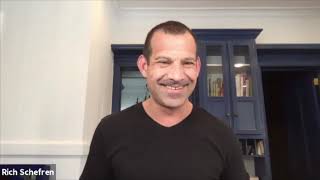
John interviews business coach Rich Schefren about marketing strategies and business growth. They discuss how copywriters and entrepreneurs can adapt to market shifts and leverage opportunities during uncertain times, with Schefren sharing insights on marketing value and personal work styles.
Today we get a chance to sit down with Rich Jeffrin, who is in quarantine like the rest of us, somewhere outside of New York City. For far from New York, I guess. Out on Long island somewhere, I think.
Yeah, the Hamptons.
The Hamptons. And I'm sure a lot of you guys have heard about Rich and he might know his background, you might not. He's been doing this for quite some time. He's worked with several of the top Internet names that you're sure to know. John Carlton, Jeff Walker, Ryan Deiss, Russell Brunson, and I'm sure, many, many others. Jay Abraham, Michael Masterson. He's been either. He's been friend of and coach to many of these people and has a lot of insights to offer. So I thought it would be nice if we sat down and talked to him today. So. Hi, Rich, how you doing?
Hey, John.
Glad to be here.
I'm a fan of yours, so this should be fun.
So, Rich, I gave kind of a little background about pulled from your bio and things like that, but maybe you could just talk about what your relationship is to a lot of what we're doing here. A lot of the people on my copywriters roundtable list are they're aspiring copywriters or working copywriters. Some of them are business owners. So that's kind of where they are. And I think a lot of them, like a lot of us, are trying to reorient ourselves in this world. So your background now is maybe more pertinent than ever.
So, yeah, I guess so. I mean, I've been, you know, before I was online, I was in the clothing business, music business, and then did well there and got out of that business and then kind of pursued whatever was interesting to me. And then the next thing that was interesting to me was hypnosis because I was. I found out I was highly hypnotizable and so very powerful experience for me. That experience in hypnosis then led me into opening up a hypnosis business. And it was there that I learned direct response because I knew image and PR and that type of advertising and marketing and was pretty good at it and thought that would carry over into making the phone ring. And it didn't. And so the more I liked an ad, the more it was right on the things from a image and positioning side, the less it did making the phone ring. So that set me on a pursuit that put me in touch with a lot of the direct response legends like Dan Kennedy and Jay Abraham and Gary Halpert and John Carlton, Clayton, Mapeace, et cetera. Clayton I met later in life. And then I got online, struggled a little bit because I kind of had bought into this lifestyle Internet business idea in addition to the fact that my hypnosis business kind of went. We were skyrocketing up, and we were on our way to 13 and a half million in 2001, but it was in Manhattan. And when 9, 11 happened, we lost our phones, we lost a lot of stuff, and I had never failed before then, so I just assumed that I would be able to turn it around. So I threw a lot of good money after bad money. And so the end of my hypnosis period, I remember, like having a payroll of over 100 employees and. And sweating every two weeks to make that payroll. And so when the idea of the Internet lifestyle with no employees, that really was very appealing to me because I had just spent like a year of my life every two weeks counting down 14 days, 13 days to get to the next 100 grand in the bank that would then go to zero as payroll went out. So then I got online, struggled, then realized online business is like every other business. So then I started doing well, and then I did a couple programs with Jay Abraham and kind of found that my spot while good at marketing. And I think I'm probably. That's one of my best skills. The other side of the skill I have that maybe a lot of other people online didn't have was really how to build a business, how to grow a business, how to bring in team members and really get your business to a place where you're kind of irrelevant as opposed to the spoke in the middle, you know, being so critical to the business that you never get a break. And so I've been doing that, I guess, since. Wow, it's been like 17 years of that and have built a reputation, I guess, as being very good at it. So I get a lot of calls. Pretty much when people call me, they're not calling me when things are going really well. They're calling me when there's a problem that they can't solve. So par for the course, I guess, like, these kind of periods of time are times that I'm very much used to, because even when things are going great for the world, it's not going great for a certain entrepreneur. And that's when they call me and have a problem.
Right. So would you say, do you find yourself advising more about building a business, just a general business strategy, identifying somebody's strengths that they focus on in the business? Or are you more specifically focusing on marketing challenges? And when you talk about, when you talk about the marketing, is it the. I mean, I think one of the things for people who are just kind of considering getting into some kind of business, changing their industry, they start reading all these things. They don't know, you know, what the difference is between the strategy of just figuring out what kind of business to launch or the strategy of how to get names and things like that. The technical aspects of marketing and then the parts of marketing that sounds like copywriting, the psychology of the customer and figuring out what prospects want, things like that. So when you're advising clients, I imagine many of them are entrepreneurs who've been in it for a while. They have sizable businesses. Their concerns are going to be different than somebody starting out some of their concerns and some of them are going to be the same. So what do you find yourself focusing on with those people?
Both. I'm going to turn off this light behind me because I can see right. So yeah, wide range. And I know a lot of my peers or colleagues like to kind of stay away from the beginners because they're so non knowledgeable. But I've never, that's never bothered me. I like working with anyone that's ambitious and is willing to roll up their sleeves and do stuff. So yeah, it's a wide gamut. I wouldn't say that I'm the best person in the world to help someone discover what their strength is or something like that. Ideally, I can give some instruction and some guidance on it, but I don't know that, you know, I'm not a psychologist. And so ideally, you know that at least some thinking has already been done there. I certainly have a lot of clients that I've helped with that. But really where my expertise comes in is that once someone knows something like that, how do we package it, build a business around it and then how do we grow that business in a way where the person at the center isn't necessarily having to do it all? And yeah, you know, for copywriters especially, there's this Dan Kennedy. I don't know where I came across it, but Dan Kennedy had a story and I shared this story the other day and I think it's just a great story for where we're at. And that is that when he was growing up, he grew up in Ohio and he had, there was in Ohio on New Year's Eve, everyone went to the same restaurant. Like that was the New Year's Eve party to go to. And you know, it Was packed the whole town, right. You know, you couldn't. Like, the bar was packed. People would reserve tables six months in advance. And they had four valet parkers there. And those valet parkers were friends of Dan because of the same age group. And the night before New Year's Eve, they'd all be praying, not Dan, but the four valet parkers for the worst weather possible. Because when the weather was really bad, when it was snowing or hail or whatnot, the valet parkers would have a tougher night that night. But they'd get like four times the tips. Right? Because there's a lot more value to parking someone's car when it's a really crappy night out than when it's a beautiful night out. And fortunately for Dan, he lived in Ohio, which has generally crappy weather, so his friends were able more often than not to make that 4x. So you can kind of think of the world as kind of being that right now. And copywriters are kind of like ballet Parker's in the sense that, you know, in times like this, someone who can move the needle and make sales is even more valuable than before. And in times like this, what's really going to determine what you make, aside from your ability to market it, is the value that you provide. And, you know, you can't market no value unless you're trying to find the idiots of a market. And that's never really a good strategy. But so, you know, who can you provide value to? And is that now actually, like, because of the world that we are currently in, can is that value more valuable? And if so, that should be a. At least an indicator that this can be a very good time for you as opposed to certain parts of the population where it's a very bad time for. And my experience right now is that most of the. I haven't spoken to an online business owner whose sales are down, and it's very consistent. I'd say at least 90%. I don't want to say 100%, because I'm sure I might be forgetting one call or two, but at least 90% are telling me these are the best weeks ever. Not just that it's good, but that it's the best because of the price that they're spending for advertising has gone way down and conversion rates are equal, if not better. And so. And that's not just like in the Internet make money area. That's across the board. And so, you know, fortunately, none of the big advertisers, like, none of the big advertising Platforms are my clients, because they might be hurting a little bit, but, yeah, I think it's a righteous time if it's. If people approach it correctly. Yeah.
Well, I was reading something in Forbes about businesses that are thriving right now in the, in this current situation. And they were, you know, they were talking about that the. Obviously, if you've got a hotel or, you know, a hotel, for instance, you're. You're probably in trouble. If you got an Airbnb, it's probably empty. But the businesses there are restaurants that were doing takeout are now doing something like 400% of the business that they were doing before they even said that fortune tellers were. I don't know how they measure this, but. Because who knows where you talk to a whole bunch of fortune tellers, but the business is up 136% for fortune tellers.
And they knew that it was going to happen.
Yeah, exactly. They've been, they've been planning, they've been charged, putting stuff on the charge card because they knew it was going to be.
Even Airbnb. And that's a good example. It depends, because Kim, my partner in life, she has quite a few Airbnbs. And, you know, they're. Fortunately, they're not like one room kind of Airbnb's, they're bigger than that. And so actually, there's been a lot of volume of people who, like, we have a couple in. Or she has a couple in Delray beach, and she's actually been renting them to other people who live in Delray and Boca that are now, they just don't want to be in a small ramp. Right. So, you know, there are certain Airbnb people that are probably sitting on properties that haven't thought, like, who could this be valuable to? Versus, like Kim thinking, okay, there are probably people that are confined. They don't want to be. And that opens up a different market. Now, generally, no one's. If they have an apartment in Boca, they're not renting a big house in Delray, but right now they would. And Kim seized on that and has done really well. And so it really, you know, this is kind of that thought like, of, like, where can you, you know, as a copywriter, your services are just more valuable in times where there's uncertainty and lack of sales. But even looking at the assets that you own and think about, like, who's hurting now and how does, like, what I got help that? And, you know, it's always been a function, whether it's a copywriter or a marketer like myself, you have to connect the dots for people, right? Like, you have to show them how that's valuable. You can't just sit on the sidelines hoping that someone connects the dots and then leaves themselves to you. And so I think that. That appreciating that perspective is kind of important.
Yes, that's. That is. I think that's a big. That's a. I mean, these are. These are not pandemic lessons there. They are definitely business lessons. Seeing a need, filling a need, going along and finding people. I mean, I have had, over the years, many readers that have written to me saying, I'm trying to figure out how to get started and should I buy this course and buy that course. And a lot of the people that are my friends and colleagues, they are selling courses and they're very good courses. And I think there's a lot of value in always educating yourself. But I do try to tell people, like, look, you've got that course. Why don't you finish it and then try and apply it? Yeah, just go find somebody and say, I'd like to, you know, I'd like to take a shot at writing this ad. I like your product. Or, you know, I saw this ad and I think I could improve on it. And now we're in a situation where everybody is re evaluating their approach to finding new customers and cracking into new markets and maybe reorienting what they do. And that is an ideal time.
I think it is an ideal time. I would say the only copywriters that might not be in an ideal time and might want to switch their specialty is in writing newspaper ads. I think this is gonna, like, I hope the government doesn't step in and save the newspapers. But that's just my personal opinion. I think this has greatly accelerated the death of. Of newspapers because, you know, who's going out, at least in New York, like, who's going out and buying newspapers? And so, yeah, there are certain areas that are going to be hit, like, you know, especially offline retail. That's not a good scenario. I think also offline retail has been hurting for a while. This is just greatly accelerated it. And my experience in retailing is that newness sells, and every store is pretty much sitting on their inventory, not selling it. And when they reopen, they're going to be, I mean, in the. In the fashion business, they're all going to have last season's clothes, like, and I don't know how they're going to even survive that. You know, any of the department stores Stuff like that. So. But outside of that, I can't think of very many industries where copywriters can't play more of a role now than ever before.
Well, something else that struck me when I was reading that article I mentioned in Forbes was they were, of course, drawing a connection to businesses that have some kind of online component, some kind of ability to deliver their product. If it's a physical product, how those ones are doing better, which is obvious that that would be the case. And I was thinking to myself how. How hard it is to believe that there are that many businesses out there that don't have some kind of online component, and yet they're the majority. Yeah, yeah, a lot of them.
A whole lot of them.
And I mean, some of them, clearly it would be very difficult because of what industry they're in, some kind of service industry or something. You just can't replace that. But it does seem like, you know, nobody wants to capitalize on catastrophe and bad times, but you've got to do what the situation requires. I like good journalism. I like to read good writing and analysis by smart people. And I hope the newspapers figure out how to keep doing that with some different model.
See, I don't. I guess I just don't see. I don't see.
I don't want them.
Like, I think you can have great journalism and it doesn't need to be printed on paper. That's all.
Yeah, that's me, too. I don't. When I say newspapers, I'm only using that as a orienting thing for the industry. I think newspapers are dead as well.
The thing is that, like, I don't think there's. Look, I think there certainly is something wrong with gouging people and capitalizing on people's unfortunate right. Or, you know, but that's not. But that doesn't. This, that's not this. And that doesn't mean that you could make more money now than ever before by just providing more value than ever before. And. Right. Like, you know, it's. It's one of the reasons why, like, I can even charge a high rate in general because by the time someone comes to me with a problem, they've already tried all the easy things. Like, that's like, if I had, like, if they had an easy answer, they wouldn't. They wouldn't come to me, nor should they come to me. Like, they come to me after they've struggled with a problem for a year and a half, figured, like, gone through every course and tried to figure it out on their own. And can't. And so, like, my time with them is very valuable to them because they've already exhausted every single easy thing. And it's the same here. It's like, you can be more valuable now than ever before to any business that doesn't know how to write copy or to bring in business online through compelling, you know, sales letters or whatever marketing devices that the copywriters can create. So it's. Yeah, I think people have to separate profiting, right. Versus, like, gouging. And gouging is wrong always. But profiting by providing value is like, that's just commerce. And most businesses would prefer to spend money if they know they're going to be making more money in. Regardless of the time. But even more so now, right?
So when you are, you know, I had some. I think that this is a good, good way to talk about the meek and meek to the bold thing you talked about in the video that first made me think about asking you to talk on the copyrights roundtable thing. And you're basically saying that in times like these that you can't sit back on your haunches like that.
Well, you can. You can, but you're gonna watch. Yeah, you're gonna watch parts of the market, like, get capitalized by other people. Because like I said earlier, advertising costs are down. In my whole life online, which spans 20 years, I have never seen the price of advertising go down ever. Like, ever. Not during the Great Recession of 2008, not in 2001. Like, never, right? So this is the first time I've ever seen advertising costs go down. And that means that the cost to acquire a customer is less now than ever before and ever will be. You know, like, I'm. I'm not religious, right? And. But I had a friend that listened to Angelica Christian, like, the real, like, you know, and, and I remember one statement. I think the guy's name was Mike Murdoch, was the, was the evangelist. And he's like. And it's one of those evangelists that's like, tied into money and stuff like that. And he was like, today is the brokest day of the rest of your life. Like, today right now is the broken stay of the rest of your life and, you know, whatever else. But I love that concept, right? Like, you know, well, he stole it from Mike Murdoch because this goes back a long time ago. But yeah, I mean, so if you capitalize on the fact that you can acquire new customers for less than ever before, right? Like, advertising might have to be adjusted to work right now. But if you can get it to work right now. Yeah, you can get customers for less than ever before. And so that opens up possibilities that might not have existed before. And it might not have made sense before for a copywriter to be advertising in Google AdWords or on Facebook because of the economics, but it might. Just because it didn't make sense then doesn't mean it doesn't make sense now. And what we can be certain of is that there will be a time again where it goes back to normal as far as the cost of advertising. Right. So that's where, like, being bold really starts coming in. It's like, recognize that there are certain opportunities here that you can capitalize on completely ethically that can really make a difference for your business. And really what that requires is really thinking about value. You know, where can you, like, where are you all of a sudden more valuable than you were before? And leverage, I guess as well, is like, what can I do where I get the most leverage from? And so those two components, value and leverage, I think, are really the two things that people, if they're going to sit down and reflect on, those are the two things that they need to be reflecting on. Who can I provide value to that maybe I couldn't provide value to before? Or who have I been providing value to that now I can provide even more value? And like, in the value I create, is there opportunities to leverage it more so now than ever before? And I think those are the kind of. Yeah, I just think that those are the things that if people start reflecting on, I think they'll come up with answers that are unique to them.
So if you were looking at people who are looking at this time right now to make a big shift in what they do and starting a business and things like that, what in your experience are the big mistakes that people make at that kind of early decision phase or one of the big mistakes.
I'll tell you the one that I love talking about the most, because it's a mistake I see pretty much all but the most successful entrepreneurs make. And it's not anything that anyone is going to come across any place, I don't think, except from me or from people who've learned it from me. And that is. And I develop this out of necessity. And so I'm a very flawed individual. And a lot of people laugh when I say that or whatever, but I am. I'm a flawed individual. I have add. I procrastinate, I'm a perfectionist. I am lazy. There's a lot of stuff that like, you know, I can productively procrastinate for weeks on end reading stuff that I don't need to be reading. I'm very good at it, right? And because. And my, the same skill that I can use to market, I use on myself like to rationalize stuff that I shouldn't be doing. But it sounds so convincing, like in my. Right, in my marketing, to myself. And so one of the reasons why I. But so then people look at my success and they're like, well, that really doesn't make sense. But it makes total sense because there's one thing that like, one perspective I've always had that most people miss, and that is, is that in business, you, in your own business, you make all the rules. And most people, when they think about a business, whatever the business is, they think about like, the way it should be done or like how in an ideal world they would do it. And I've never like, kind of bought into that. I've never like, I. So, okay, yeah, it does suck. It sucks that I'm a procrastinator. It sucks that I'm a perfectionist. And my psychologist would say that this is what I'm about to say is a cop out. But like, on a business level, it's the recipe for success. And, and that is like, I'm going to assume that I'm never going to change. And I've got 25 years worth of journals that support the fact that personal change is really, really hard, much, much harder than business success. So then the question is, is that if I'm not going to change, how is this business going to succeed? Based on that, based on who I am today, not who I should be, not who maybe one day I could be, but who I am today. And if I can't design a business around who I am, like what my proclivities are like, then I. Then that business is going to fail. And what I find is that most entrepreneurs, either one, they don't really get that they have the permission to make up the roles and do business any which way they want, or they don't know themselves that well. Right? It's one of those two. But the end result is they design a business that's not perfectly situated for them to grow. So, like, how does that break down? I mean, I could give 100 examples, but I'll just give like one for now. Like, there is, you know, every program I ever developed, I sold first because I'm a marketer and I'd rather sell it right and validate it before I create it. But then also, like, if I were to go somewhere and create a program, it would never get done. Like, even when. So I had to sell something first, deliver it live, and then those live things became the program that we would sell long term. And I found like, so in the programs that I did, right? Like, I remember the very first one, the Business growth System, I was delivering one module a week. And let's say it was every Wednesday, 3pm is when I delivered it, right? And everyone was coming on live to have it delivered. I found that it did not matter if I started at 5pm on Wednesday after I was done with that one, working on the next one. It didn't matter if I started that at 5pm on Wednesday and had a whole week, or if I started the following Wednesday morning at 9:00am I was not finishing ahead of time right now the only difference was going to be like, at 2:59 is when I was going to finish, right? And then. So it was just a choice to me, how much time do I want to dedicate, right? And I wanted to dedicate a lot. But like, I wasn't going to fool myself into thinking like, oh, I'll finish this, you know, I'll start this as soon as the first call is done, then I'll have the whole weekend just to relax. It's not going to happen for me, right? But like, but that realization allowed me to create a lot of programs that wouldn't have been created. And you know, and so that's like, that's the gist. And there's nothing that you have to be in your own business. There's nothing like, there's no way you have to work, there's no way you have to deliver. Like, these are all the rules that you get to like create as long as you provide value. And so I'd say that that is the number one mistake, hands down, that I see consistently because I don't see anyone really talk about it. And so they just like, you know, they think that it should be done this way, right? Like, so even during that time when I was. And during that time I was doing a lot of coaching too, like personal coaching. I was coaching like a little under 200. So it was somewhere between like 187 and 200 people. Like that was my coaching workload. And to coach that many people, right? I was talking to each person a half an hour every two weeks, right? Even still, that works out to be about 50 hours a week of just being on the phone. And there's no way in the world that I could stay on top of that many people. Right. So then, you know, that just changed the way I coached. And it was like, look, part of my success has been that I knew the right questions to ask when I had the right opportunities. I didn't know I was going to be in front of this person at that moment. But because I knew what I was like, the goal I was searching for and what was important and what was in my way, I was able to seize on that moment. When I'm coaching you. Right. This was during that time. Right. Because I don't really do that much coaching these days. But when I'm coaching you, you have to assume that I'm not going to remember our last conversation. That's up to you. Right. Like, it's your job to make the half an hour with me as profitable as you can. Right. That means that you have to do the prep before the call, not me. Right. Because I'm not like. Because what happens when we're done coaching? Then you're just relying on the next person to draw out from you. Right. So is that the way coaching is normally done? I don't think it is. Right. But that's the way it had to be done for me to have the number of clients I had. Right. And to be like. So, you know, most coaches would say, like, oh, I have to review their file first. And like, that would immediately cut the number of people I could coach in half again. It would be too much.
So you go crazy, too.
Yeah, so. But. But the point of it is, is just that it's your business. You make the rules. If you can provide value, how you provide value is really up to you. And you shouldn't be positioned into a box of like, the way it's normally done, the way it should be done, how it should be done, ideally, because none of that really matters.
I think that's a very good insight because it's like people who want to get in shape and they say, I can't get in shape because I don't have that bike that was in the, you know, with the screen on it. So I can do virtual rides through the country, or I can't get in shape because I don't have the right sneakers or et cetera. The aspirations are kind of an abstract version of that bike, that aspirational person. It seems very respectable. It seems like a good thing to want to be the person who gets up at 6am and does all their stuff or whatever. But if you're not that person. And you're never going to be that person. You'd be crazy to be the one who says that I'm going to become a chicken farmer or gets up early.
So, I mean, I've done a lot of projects with, like, in the past. Like, I did a bunch of projects with Clayton Makepeace. Clayton Makepeace at that time was getting up at 4 in the morning. Like, me getting up at 4 in the morning is insane, but me staying up till four in the morning, relatively easy to do. So, like, we would just overlap. Right. I would plan my day, wake up a little bit later than I normally woke up, and would make sure that we overlap so that, like, his beginning of the day was my end of day. And it was just like, that's just the way it's gonna be. While I was working with Clayton, like, I was totally fine with it. I had the choice I could get up at 4 with him or 3:30 or whenever. But, like, that just was so unappealing to me because then I'd have to go to bed at like 6 o' clock at night and I just couldn't do it. So. Yeah. So I just. But I think that liberty is just. It's just missed on most people. And I don't understand, you know, maybe it's because, like, my parents, my dad was an entrepreneur. I was around entrepreneurs, I was around gangsters, and they always made their own rules. They could give a crap about even society's rules. So, yeah, I don't know, maybe it was like my past. But yeah, that is.
I think that's. It's your past, your culture or something like that. You're trying to impress somebody who's not really watching, or you just think that.
That'S the way it should be done. It's like, there's no way it should be.
There's no should.
Yeah. It's just the way it gets done. And if, you know, if it's easier for you as a copywriter to create the first draft by selling your friend on the phone, then create the first draft that way. Like, what they're like, just because, like, the legends of direct response were good at writing it down. Like, so what? Like, you know, and so, yeah, that's a. That's a thing that I just. But the people that are most successful don't feel that way. They feel like I do it the way I want to do it and you'll judge me based on the outcome, not on the process.
It does make me think that I want to interject some reading recommendations for people who haven't read them. One is Michael. I think it's under Michael Masterson. The pen name is the Ready Fire, Aim. Yeah, it's a very good book. That's definitely his best book.
I take credit for that, by the way.
Well, good. Good.
Yeah, I think you're. It was based on a seminar, and when he was about to give that seminar, he called me and he said, can you come over to my office? And, you know, we. My office and his office were, like, a couple blocks away. I was like, yeah, sure. And he's like, okay. Because it was Mary Ellen. She had sold, like, a $10,000, like, event where he was gonna teach business. And he's like, I've never taught business my whole life. Like, I don't know what to teach. And I'm like, okay, I know what I want to learn from you. And then I told him, like, there are different stages. I've only been in the first two stages. I've never had a business nor since, even since then, had a business go through all the stages. And I was like, I'd really like to know what's. Like, how it changes. And then I gave him a book, Blueprint to a billion, which also, like, talked about stages of business growth and, like, what would be different? And. Yeah, that's what. That's what, like, was the basis of his presentations and then the book. And my experience was that I guess I'm a much better entrepreneur than leader or manager because, like, my businesses would get to a million so much faster than Michael's or Mark. But then, like. And it would get to 5 million or 10 million so much faster than Mark's. But then that was it. And then, like, his businesses would just keep. Keep growing and. And, yeah, mine wouldn't, because I think, like, then you have to give up on it just your way. Right, Right.
He's a. Mark has got. When he. When he. When he's into Michael.
Mark.
When he's. When he's on a path of something that he wants to do. He's a very determined person.
Yeah.
Which. Very, very methodical. Not methodical, relentless.
Relentless. And he's going to do it whatever way he wants. Like, whatever way he feels he should do it. Right. Like.
But I think that. That the Ready Fire Aim is a very good, good book for people to read because. And it doesn't matter whether you're a copywriter who's serving a business or you're somebody who wants to launch a business, because even the copywriter has to understand the psychology of the business that there are working for or accounting as a client.
It shows you. But even in, like, Clayton's. Right. Like in Clayton's model, like, that was a different kind of model than most copywriters follow. Right. Like, I will work for one company. You will pay me 10% of the gross that I'm responsible for, and I will be here every day writing copy every day putting out stuff. Like, I'd be your whole marketing arm, you know, and. But that worked for Clayton. You know, maybe other people would want to kill themselves because, like, it's part of the allure of copywriting is being able to discover new things and get excited by new things and learn new things. You know, Clayton wasn't doing that at all. Right. Like, he was so. But to each their own. That's, I think, the important lesson there. But anyway, I interrupted.
Yeah, well, no, I. What I was going to say is that it just gives you that. It gives you that clear idea what it is to be somebody starting out where you're wearing all the hats and you're trying to figure out all those different things. And.
Yeah. What I would say, though, just to, like, jump on top of that is that the easiest way to grow a business or to start a business is kind of what I was saying, like, what I had to do because of my issues. Nonetheless, like, as a comprehensive model, it's like service to product deliver. A service that you're getting paid to deliver, that you can productize, because then you're getting paid all the way through. And you're also removing a lot of the risk that you end up with a product that nobody wants. Because if you couldn't sell the service, you're probably not going to sell the product. And what that also allows you to do is. Is bend where you need to bend so that the service is valuable, that the people are happy with it, so that by the time you're done with the product, whatever it is, it is that much more likely to succeed because it's had interaction with the public. You know, like the famous Mike Tyson quote. Right. Everyone's got a plan until they get punched in the face. Like, you have an idea of a product, but until it meets the market, you don't know whether that's what the market wants, what they appreciate, and what they'll pay for. Right.
Well, the other. The other one I was going to recommend that I think fits well in. This is your Internet business manifesto, Marketing manifesto. I don't know what it's called, but it's possible. I'm not sure if that's free online or not.
It's free online and it's like there's.
A, there's an older one and then there's a 2006 final chapter one.
No, what happened was, is that like. So what happened was, is that I, I was coaching and I was coaching a lot of the big gurus that people know of and I had. And that was the time I, that first coaching program, I just didn't know what I was gonna be teaching. Didn't like say nothing has changed. I just had a guarantee. I had a guarantee that I would double the amount that you're making now and I would cut your work hours in half. That was the guarantee. Right. So 4x and that I wasn't going to be done until that happened. And so I thought I could do it in a year and it ended up taking me 18 months. So my original coaching program was 18 months long. Then I had a project with Agora that was going to start three months from then. And so I was looking at three months of not very good cash flow. And I was like, there's no reason for me to do that, so what can I do in this three month window to make some money? And so I decided I would create a 11 week version of my 18 month coaching program. And I felt like I could because there was a lot of things that I taught that I could have made simpler, that I could have gotten rid of. But I didn't know that until I had started teaching it. When I taught project management, I taught project management with NAT charts and timelines and all that was so complicated for people. They didn't really need to know that. They needed to know the basics of project management and things like that. So I felt pretty confident that I could, I could, you know, I could teach it in a short period of time. But then the next question was, well, where am I going to find the customers? And I was hoping to get like 10 clients that was like 10 or 12 clients just to kind of work with over the next 11 weeks and then I'll do this project with Agora. And like that was the thing I was really looking forward to. And then I wrote the Internet Business Manifesto and that was based on a few things. Like it was based on one. I remember listening to a Dan Kennedy interview where he had this boot camp coaching and consulting boot camp. And he came with like four follow up calls and someone asked a question that had been on my mind like forever, which was, I had So I was building this coaching program, but I didn't have like a front end. I didn't have like. And as I began to think of a front end, I was. For people who aren't aware, a front end is how you actually acquire the customer, the first purchase. And generally, if you're selling a coaching program before someone decides they want to be coached by you, it's a lot easier for them to make that decision if they bought a product from you that they like. I kind of felt frozen because I was like, well, I don't want to cannibalize my coaching program. I don't want to take the good ideas from my coaching program and put it in the front end. And yet I'm putting everything I know, my coaching program. And so someone asked that question, that exact question. I still remember his answer because it was that, like, powerful to me. Kennedy just laughed at him, would have been laughing at me. And thank God I didn't ask the question. And he said, bubba. That was his answer. Bubba, you just don't get it. You take the best stuff from your coaching program and you put that in your front end product. So that was like, oh, okay, I get it. And he's like, because then that's what's going to make them want to buy your coaching program. So, okay, I get that. And I just didn't even. And so the next thought was, well, I don't even have time to create a product and then sell it. And then, you know, then that opens up a whole thing. And Michael Masterson, Mark Ford and I, we had, we always used to have these conversations at night about, like, what is marketing? Like if we had, like. Because Mark likes to theorize and I like to theorize. You know, it makes us happy to come up with concepts that we get intellectual entertainment on. And so one time when we were having this conversation, we were. It was kind of went down like this. I mean, I don't remember who said what, but like the final. We got to this idea that, like, okay, if you're selling something that you believe in that you think it would be like, great for the prospect, and they don't currently or they would have already bought it then you've had certain experiences that have led you to that conclusion that the prospect has not had. And if the prospect had those experiences, they might end up to the same conclusion that you had. So one way of looking at marketing, not the only way, but one way, is to think of giving prospects an accelerated experience of what you experienced that have led you to that conclusion. If you kind of combine those ideas. Yeah, if you kind of combine those two ideas, take your best ideas, give them away for free, and give people an accelerated experience that has led you to the conclusion. And my conclusion was that you will make a lot more money online and work a lot less if you understand business than if you don't understand business and just focus on marketing, you know, all the time that marketing is probably the most important part of business. But it's not the only part of business. There are other parts and those things if you don't know them or you don't have a business. So those two came together and I wrote this 31 page report and the report went like insanely viral. And I didn't get 10 customers, I didn't get 10,000 either, but I got somewhere in between, I got thousands of customers and built a business off that report. And then if you had that experience, I'm sure you'd come to the same conclusion. Like, what do you do after that? Well, you write another report and another report and another report, because why not, right? Like if one report gives you X, then, you know, so that's what I did. Over a 18 month period, I wrote seven reports. So there's the Internet Business Manifesto, there's the missing chapter, which was part of that initial campaign that I wrote during the campaign because people were asking me questions like I asked people like, okay, now that you've read the manifesto and you understand it, what stands in your way? And the, and the, and the feedback I got was all kind of pointing to something that I thought was kind of like you, I thought was obvious, but apparently not as obvious to everyone else as it is to me. And that is that like the business that you start, the industry that you pick, the niche that you focus on is vital. And just because they're like, this was the metaphor that I used in that report just because, like, because I remember like studying all the direct response legends and they would say, you know, find a need of and fill it, right? And that's a great idea for a promotion. That's a horrible idea for a business. And the reason I say it's a horrible idea for a business is just because there's a need to be filled doesn't mean that you're the right person to fill it. Just like, you know, the if, yeah, if you want to get married really fast, go find the most desperate person and propose and you will get married. That's a strategy to get married, but it's not a strategy to have a good marriage. Like, and that's, like, the strategy a lot of people were following. Like, just find the most desperate market and fill that need. And so the Missing chapter was all about, like, that the two biggest decisions you're probably gonna make in your life are who you marry, the business that you decide, because those. That's where you're gonna spend the majority of your time. If you're not at home with your spouse, you're at work in that industry. So, like, you know, and most marriages fail. So we pick wrong there. So at least spend some time picking, because you're probably gonna pick wrong anyway, but at least giving it some thought, right? So that was what the missing chapter was about. The Final chapter, which was part of the Manifesto series, that was like, the third one that was all about Agora and why Agora grew and other ones didn't. And everything I learned from Agora, I got interesting feedback just as an aside from that, like, you know, so Mark Ford's always been like, a mentor to me and almost as like a. Also like a surrogate dad, as is Jay Abraham, and as was Clayton Makepeace. And I think that's just. My relationship with my dad wasn't so hot. So I think I was always in pursuit of someone to replace him for me, like, psychologically. And so Mark's approval was always extremely important to me. And. And he liked.
We could form a support group.
And so he liked the Manifesto a lot, and he liked the Missing Chapter a lot, but he didn't like the Final Chapter as much. And the reason he didn't like. And it's some of my best materials in there, I think, But. But it's true, like, what he said to me, he's like, I didn't understand it at the time. When he explained it to me, I did, but not when I was writing it. He said, your ego got in the way here. And I'm like, what do you mean? He's like, there's a lot of stuff in that report that you put in because you knew it, and you wanted people to know it and know that you knew it and that it didn't advance the sale. But you wanted people to know it and know that you knew it and get credit for teaching it to them, even though it had no business being in that report if your goal was to move someone to a purchase, and that's accurate. So anyway, so that was the. That was the Missing chapter, and those were the three manifestos. Then I wrote two doctrines, which was the attention age doctrine one and two and the attention age doctrine one. This is so this is all 2007. Attention age doctrine one was, attention is going to become the scarcest commodity online. And how do you get the most from your own attention? And how do you. How do you provide value for your prospects? Attention. And then the Attention Age doctrine two was like, okay, I figured out where people's attention is going to go. It's going to go to this new thing called social media, and they're going to look for people who are authorities in the marketplace. I called the mavens because the Internet's going to get so full of stuff, they need people to kind of point the way. So those were pretty on, like, on point. And then I wrote the Maven Manifesto with Jay Abraham, which was like, I was behind more online gurus than anyone in the world, and he was behind more offline gurus than anyone in the world. And so we kind of compared notes and it's like, okay, here's how we establish gurus or mavens or authorities in a marketplace. Here are all the ingredients we use to kind of bake the cake of a guru. And then the final report I wrote was the Entrepreneurial Emergency, which was all about really how the range of options just increasingly grows and people are placing so much importance on some initial decisions that they get frozen. And that my perspective on it was that people were looking at it completely wrong because they were looking at it from a potential standpoint as opposed to a constraint standpoint. And so I opened up that report by, like, really confronting and contradicting a lot of beliefs that people probably had, because I asked people, like, what do you think is going to be the single biggest determinant of your success? And I list, like, 20 things. You know, how hard you work, what you know, the people, you know, how passionate you are, blah, blah, blah, blah. And I was like, well, what if I tell you it's none of those things? Because all those things just really define your potential. And I've never met anyone who, when I ask, are you at your full potential? That they say, yes, this is the best that I'm capable of doing, Right? So if it's not your potential that defines your success, what is it? It, you know, it defines your range, but it doesn't define your success. It's the constraint. It's the constraint that prevents you from tapping into your full potential. And most people don't even know how to think about that. So then it talks about how I discovered that and what I think people needed to do to understand constraints and think through that lens. So there was the manifesto series, the Doctrine series, and then some random ones, right. Like, you know, and I kept writing them primarily because I didn't understand why the manifesto worked so well. And I wanted to keep writing them until I could understand because I really. I was hoping to get 10 clients and like my whole life changed. Like there is before the manifesto and after the manifesto. That's like my life was one way. And ever since that time, it's been a totally different way. And so the second best report that I ever wrote as far as sales and virality, etc. Was the entrepreneurial Emergency. Because I finally had figured out what it was that at least outside of like the right message at the right time, which is certainly a significant part of it, where the message had to focus on and why. And so that's why my. That was why I didn't need to write a ninth report.
Right. I'm going to. I think I'm going to. I think I know of a site that has a few of these free online or I don't know where they'll find. I mean, unless you're. Unless you're worried about losing your royalties.
But no, they're all free. All those reports are free. Like they were all because. And just to be clear with people when they read them, because, you know, you have a copywriters audience, they were all designed to sell something. At the end of the day, I write other reports and those reports are totally different than all the reports I just mentioned because those are for clients. And so at that point, I'm telling them what to do and exactly what to do. And I don't really care if it's difficult or not, because you're my client and I'm just going to tell you what needs to get done. Right. Like, the reports I just mentioned are all true. Right. But they're more about mindset. Because I've always sold stuff that no one else was selling because it was what I believed in. Like what that conversation with Mark, like, I have been led to certain conclusions that the market hadn't. And so each of those reports was getting people up to a perspective that I had that if they had that perspective, they'd appreciate the product. And if they didn't have that perspective, they'd be like, why would I ever want to buy? Like, you know, that last one, the Entrepreneurial Emergency sold a course on Theory of Constraints. But this is back in 2008, when almost nobody really knew of Theory of Constraints. Not that it's so well known now, but like more people know about it now, but no one was interested in it. So, like, why would you be interested in a course on constraints? Well, you wouldn't be unless you already had come to the conclusion that you're not at your potential, that you actually are sitting on a lot of potential and you don't know why you're not getting more of your potential. Right. So those reports were all about shifts of perspective. I think they're all shifts of perspective that are beneficial, but that's what designed to do.
Well, I'm going to post a link to this because I do think, you know, I think that the feeling of inertia, which, you know, I'm certainly a flawed individual too. I have that same. All the proclivities you describe and probably some more, but there's always that feeling that there's some aspect outside of yourself that you haven't figured out yet or you don't know the name of yet, and that's why you're not doing something. But what you're describing is it's a little more difficult to put your mind around because it is abstract, but it is a mindset issue. It is a, it's like, look, look, stop. Don't make the, the 30 page to do list and feel like you've accomplished anything because you haven't. You just, you need to figure out, okay, what am I, what can I do right now? What's like a one thing I can do right now to get started, see what happens, build on it and what are my capabilities going to direct me and where they're going to take me.
And what I would say also is that if people are going to spend time learning things, probably the most valuable things to learn are perspectives. And that's not, that's not me trying to set up people going and running and downloading these reports. What I mean by that is that I hope that in the beginning when we were talking about value and the valet parkers and during bad times, there's actually an opportunity to provide more value just doing the same things or what Kim is doing with her Airbnb, which was shifting the customer and therefore providing more value at a time when she didn't even have the ability to provide the normal day to day value. Is that like, I'm fascinated by this one concept that I'll describe as best I can, but I don't feel like it's as good as it could be described. I just don't know how it can be. And that is distinctions. Like this idea that distinctions are things that live in language. That when they are, when you get them, when you embody them, you see the world differently. And because you see the world differently, you can do different things. When you are able to see things you didn't see before, you can do things you haven't done before. And so, like, one of the things, right? So it's like the way to describe it is like, I walk through a forest. I just see trees because I know nothing about trees and I know nothing about forest. And so every walk through the forest for me at this point is the same. I see a bunch of trees. If I were to walk through the forest with a forester and they were to start pointing out, that's a maple, and you can tell it's a healthy maple because of this, and I started to really appreciate and understand it, then every walk through the forest from that point forward would be different than had it been in the past, because I would see things that I hadn't seen before, and therefore I might be able to do things I hadn't been able to do before. One of the commonalities of the original Internet marketing gurus was that we came on with distinctions from direct response. So whereas the rest of the world just saw Internet, right? That's all they saw because they didn't have the distinctions we had. We saw like, you know, customer acquisition channels and ways to increase lifetime value. Because we came with those distinctions. Because, like, those distinctions existed, right? So tying it back to what we were talking about at the beginning of the call, like, the beginning of the zoom, like, what I hope people take most away from this are, like, ways of looking at the world just a little bit differently. So they might just be able to spot the opportunity that works for them, because not that the landscape has changed, but the eyes that they have that is looking at that landscape has changed because they're bringing a few new distinctions to that landscape, if that makes sense.
I think that's a very good point. It's probably a good time way to end the call. Because we've used up a lot of your time here and you got. I'm sure you've got other zoom calls, but no, I think it's. I could go on for forever. I would prefer if we were sitting at a bar with a couple of beers and doing this. But I think, you know, that just as you were saying that about walking through the forest and the trees, getting the insights from somebody else, I think it also comes back Nicely to what David Ogilvy said in Ogilvie Own Advertising about the hiring criteria that he used to tell the people in his ad agency for copywriters that they have all kinds of different qualifications and experience and come in at different ages, etc. But that the one thing that he seemed, that seemed to be more of a determining factor of who's good and who's not is the level of curiosity that that person has, the inquisitiveness that they have. Because. And of course that can be a curse too, because you can go down too many paths. But if you're not asking the questions, you're not going to hear what that expert says. So the whole world is, for better or worse, thrown into a situation where we have to start asking questions about what we're doing. So it is an opportunity and you.
Know, if it works for you and it works for the people that you're sharing this with, if you want to schedule a follow up where we just like where either you get people's questions in advance and we just like tackle those questions as it applies to this, I'd be glad to do it. So, you know, just let me know.
All right, that would be great. And in the closing aspect, I did want to talk about your Steal Our Winners thing that you've launched. I don't want people to feel like I'm just using this as an opportunity to launch something. But I did watch the launch thing. I think some of my readers probably got a chance to watch parts of it where Rich sat down and did a marathon session. 24 hours.
Was it 24 hours?
24 hours with just about every marketing, copywriting, Internet guru, business people and had conversations like this and a lot of really fascinating stuff cropped up. I know that some of those are going to also probably be available free at some point to rewatch.
Yep.
And I'm gonna post links and things because I think people should check that out. Because one of the things that being inquisitive like this, you hear what those other people say and it just sparks ideas. So yeah, just to talk about that for one minute.
The program is called Steal Our Winners and it's kind of like a hybrid newsletter membership, whatever. And what it is is every month I Talk to about 10 of the top people like online in some capacity. And I have about 50 contributors. But the 10 I talk to are the 10 that have something to share. And what they're sharing is a strategy that is currently working that most people have no idea of. And they share it over A zoom call like this and then we take it and we turn that into a strategy document, like step by step blueprint how to do it. And people, the members get the strategy document and also the interview if they want to watch it. But this way they don't have to watch any interviews that they're not interested in because they know exactly what we're covering and where we're going with it. And they are. There's no format to it specifically. It's a conversation. Some of them are short, some of them are long, depending on what's being shared. So like ones from last month, just too fresh in my mind that just really show the range, right? Is one was with Nick Shackelford, who's one of like the top E commerce guys and he like one of his products that most people are familiar with is the fidget spinner. That was him, right? And so like he walked through what he believes is the best marketing channel out there and how to make a lot of money and grow a business off it. And that's using influencers and you know how you can do it, right? And then so that was like an in depth call that he walked me completely through, like where to find the influencers, how to know what to pay him, like how to know if it's gonna make sense for you, how once you got the influencer, how to make it work for you through multi channels and all kinds of stuff. Right? So that's, that's Nick. And then I had a call that, a zoom call that month with Jordan Menard. And Jordan Menard is a top media buyer and he helped scale Sam Ovens, he helped get Jordan Belfort going like in YouTube in a bunch of places. He's Bob Proctor's media buyer and a bunch of others. And he shared two words I'm not going to tell him because that would defeat and steal our winners subscribers because it's so easy. Two words that he puts at the beginning of any text ad that has boosted response and he proves it. He shows one account after another, shows split test after split test. But that's a very short call. It's just those two words, right? And then it's just proving it over and over again, right? Like that. And so it's a wide range, but generally these are strategies that I would hear that other people at the top would hear that by the time the public heard they would no longer work or they would work at a fraction of what they did work before. And this isn't marketing hype. What I'm about to say, although it will sound like it right now it's 49 bucks for a year which works out to be like $4 a month and 40 cents. Like one of these strategies. It's not going to last at that. Once we have the momentum that we want and, and we'll have the momentum once we start marketing it. We're not really marketing it right now. It will eventually move to a monthly like charge. It won't be $45 a month but it'll be a monthly charge which will be more and then the price will consistently go up over time. So if someone's interested in it, we even have a lifetime that I'm going to kill it pretty soon because like it's just ridiculous. It's, you know, we charge 49 and 250 for lifetime based on just the standard Agora model of what that is. But this is not a standard Agora product. And so it'll eventually, you know, move more out of like Internet marketing pricing as opposed to Agora pricing. So if people are interested, find it.
I mean I genuinely, I genuinely think that's extremely valuable. I mean I have, I have a recording on my, I was just going through and cleaning out recordings on my voice memos, things, meetings that no longer matter and stuff. And I have two and a half hours of recorded voice memo of the launch, the launch promo pitch which was free but it was really just people sitting around talking and chatting and sharing those kinds of ideas. So I mean I think anybody who is running a business, yeah, it's a.
No brainer running or marketing.
I think that's like instant. Somebody who runs a business and they run across these challenges to them, that's instant value. They already know that. But somebody who is launching a business or who again understanding how the business that you're working with is thinking as a copywriter, if you only. I mean I don't necessarily want to talk about limitations. I don't want to become somebody who launches an Internet information training business. I love teaching stuff but I like being solo. I like being in my apartment here in Paris instead of showing up at somebody else's office or getting up at 4am to do their stuff. But, but knowing that this is the kind of things that they're thinking about and that they're interested in, that is invaluable.
That plus also like I could like a specific one that I'm thinking that you. That's not out yet. It'll be out this month. But I did it already. I did a hour plus Call with this breakthrough. Molly Mahoney and I saw that one. Okay. No, no, that was in the. Oh, and the. You saw it in the promo. Like, this is a different one. This is like one I just did. And if you are ever gonna write a script or help any client with a live stream and you're gonna do it on Facebook Live, like, she. Like this whole hour and a half was just our hour and a half. I don't know how long it was, was her breaking down all the ways to get engagement that you will not think of on your own. I would not think on my own. Like it blew my mind. And like really easy ways. And now, you know, like, you can't say comment. You can't say like in the video. If you do like your deducted points, they will not share it the way they will share it if you have organic interaction and engagement. And so she walked through a tremendous amount of strategies and tricks to get that engagement that like copywriter and you ever help a client like on a Facebook Live and you don't know these things, you're gonna have worse performance. And if you know these things, you're gonna get the added bonus of Facebook sharing that video in a lot more places. That's how it drives organically. So yeah. And at the price point, one idea, one month should pay for a lifetime of that subscription. So that's the goal. And then our goal is to send people into more expensive stuff, you know, so we want to over deliver here for sure.
All right, well, I'm gonna put a link to that down below because I do think people should check it out. And Rich, thank you very much for your time and I may probably certainly will take you up on that follow up. So take care. And thanks to you and Kim for hosting in the Zoom call in your house. So next time, hopefully we'll be able to get together in person.
Great.
Talk to you soon.
Bye.
More from Rich





Russell Brunson Reveals Why He Brought Rich Schefren to Funnel Hacking Live (AI Edition)





