Jay Abraham and Rich Schefren Live: Hot seats and Rich's book notes on The True Believer
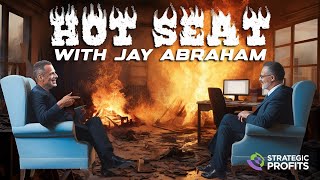
Jay Abraham and Rich Schefren discuss hot seats as a tool for business growth, their long professional relationship, and insights from The True Believer. They cover marketing strategies, entrepreneurial problem-solving, and mention collaborative coaching work with Tony Robbins.
Give you a really quick distinction, Rich, you can play with it. I'm the accidental business growth expert. I started out at 18, had no education. Nobody cared because I wasn't tied to a clock. I was able to do lots of different things, but I did them quite accidentally in different industries. And after about 10 industries I realized people in one industry don't really know what other industries do. That's how we, we grew just tons of companies around the world.
You took everything from direct response and brought entrepreneurship market and I did the same. Like I saw it worked so well for you.
I helped people make billions and all I did was take very fundamental methodology from the direct marketing world and translated it to people who'd never heard of it. I think what Rich does is bring you all these distinctions from the digital social marketing world. But I have a very interesting distinction. Great breakthroughs do not normally come from inside an industry. They come from outside.
Hello, hello, hello everyone. We got Jay Abraham with us. This should be a lot of fun. Jay's working on something that's really cool. So I wanted to bring Jay in because I wanted him to share this project. Then we're going to dive deep into Eric Hoffer and the True Believer. And I was just reviewing some of my notes for that and it's just so relevant to the world situation that we live in right now. In addition to. It's one of the most influential books that I've ever read as it relates to marketing because it talks about the necessity of hope and how people look at their current circumstances. We got a ton of people here. Why don't you tell them about this thing that you got planned for tomorrow that they'd be insane to bypass. Tell them like set it up, what it's all about, how it came to be, like all of that and then we can dive into.
Yeah, yeah, the setup's pretty cool. Rich and I have had a relationship for how many? 20 some years.
20 years. Yeah. And I told the story the other day, like how I shorted you and then made good and then. Yeah, and then you trusted me.
Then he went and zoomed into prominence because he became the most definitive source in online marketing when it was really needed to be understood at a seminal level. But so I. Anybody that knows my back on those that don't. I've been doing very complex multi domain type marketing for just decades. But I probably, I would think, Rich, I'm one of the first people that really did hot seats. We were doing them back in the 80s and with Gary Halbert and everybody but I have evolved it and I've gotten, I think, very good at it. But once a year for the last five or six years, Tony Robbins and I, when we could do it live, we would get together usually in Amsterdam or in London, along with Tony's two highest level groups. He's got platinum partners that pay, I think $85,000 a year to hang with him. And he's got something called lions who pay $150,000 a year. Pretty heady prices. And Tony and I together for six to eight hours would do makeovers, hot seats, problem solving, ideation, opportunity mining, interventions. And it's very interesting for three reasons. One is here's this man who's 7ft tall. And here's this guy who used to be 5, 8, who now, as I've gotten older, shrunk, and I'm probably five, seven and a quarter. Tony is wearing shorts and a T shirt, I'm wearing a $10,000 suit. He has a different vocabulary than I. And we come at the problems in very interesting collaborative ways. Think about WWF or something, tag team wrestling or fighting with two people, tag teaming somebody's problem and bang. And we've done this for hours and hours for five or six years. This year I flew to Palm beach and we did it in that. And Uzbek's got this outrageous studio where you can get 4,000 people on the screens. But every year I do it, I get the rights to use the video and I have not done much with it. But there are enormously significant. One guy was able to sell his business with the advice we gave him in about 10 minutes for $100 million. Another one quadrupled the interesting stuff. And Tony. I've had a relationship with Tony for about 30 years. When I met him, he didn't do any business. And then he became very interested in business. And now he's very adroit at business and he calls it pitch and catch. I call it collaborative tag team. But the point is I have all the great videos of all these very high level hot seats, makeovers, restructuring, problem solving, opportunity mining. And we've taken 12 hours worth and we have distilled the very best ones. There's 63 that are totally different. Total spectrum of problems, issues, challenges, insights, discoveries. And we're doing a marathon. And it's from, I think on the East Coast, 8 o' clock till 8 o'.
Clock.
And there's breaks about every 90 minutes for discussion where I'll be live. But it's the best distilled hot seat you can imagine. And the only way, very frankly you could have watched them in person or even gotten access other than for me is if you paid 85 or $150,000. And it's just very stimulating. And I think anybody who's ever seen a hot seat will be very. Without being crass or arrogant, will be very, very impacted by the way that these are conducted. They're very powerful. Rich has seen them and I think they're very unique. But the most point is you can't watch. I don't expect people to stay for the whole thing, although you'll be able to re watch. But you can't watch these and not get a spectrum of ideas that would not normally be exposed to you in the normal scope of whoever you, you hang with. Just because Tony's background is so diverse. I've done a thousand industries, looked at hundreds and hundreds of different strategy models, business revenue approaches, marketing approaches, lead generating conversion approaches, online offline approaches, approaches to get preemptive, you would call it Rich. The blue ocean defendable moat. And this all comes together in really rapid time. And we give people. It's hilarious because most of the ones we've done, I'm more, let's say I'm not as gentle as Tony. He's actually more gentle. We give people a maximum of three or four minutes to share what's the problem? What's the issue? Why do you want it answered? Why is it important? And they got to be able to clearly articulate. And then we give them about something, seven minutes to get an answer. And you'll have two lines of 40 or 50 people standing for the privilege of doing this. So it's got a drama and an excitement and a suspense. A couple of them, we actually take different people from similar industries or similar marketing or selling approaches and we pick their minds of their biggest methodology or technique or concept that is working that everyone else might be able to benefit from. So it's really, it's a mind blow. And people like Rich and I love that stuff. You may not. It's peanuts. It's $95 because we want to start relationships with people. Because I want to do more high level hot seats. I do hot seats myself, but they're 25,000 and we do them very exclusively with people. But this is a really, it's a unique, I think experience. And I would say that I can't believe anybody who really is expansively growth minded and is. Has got a prejudice towards discovery of higher performing alternative realities would be anything but enthralled watching this. That's a pretty. Is that a good enough? Good.
And Todd Brown is in the house. He says the two most intelligent marketers in the game. Thanks, Todd.
Thank you.
So I've shared on this live stream before that like one of the cause I share a lot about how about paradigm changes and how when you learn new things, you see the world differently and how I learned a lot of your marketing tactics. But it wasn't until I had the consult with you that I saw that these were more than just marketing tactics. These are ways of solving problems in any business. And so this is a great opportunity. Right. Because the people who are in that room paid at least 85 grand to be in that room. So they have to have somewhat substantial businesses. They paid a lot of money to be there. And then. Yeah. I also haven't kept it a secret that Tony and I don't really get along very well, although I have great respect for his mind. And I can't think of two better people. Cause you got Tony on the psychological side of the entrepreneur, and they got you on the business growth side of the entrepreneur. So I can't think of two better people. But other than it being just intellectual entertainment. Right. I'd love you to talk about for a few minutes, like what's the best mindset to watch hot seats. Like how do you get the most out of it? What should they be thinking? Like when the person is describing their problem? And then also when you and Tony are doing an intervention on their business, what should they be paying attention to? What should they be thinking about to translate it into their business? And now I'll unmute you.
Yeah, that's great. And I forgot to say, also, there's cutouts. Damon John and I did a really interesting session about a month ago on some really provocative subjects. And the best excerpts are intermittently shared. So it's a sort of cool thing. But I got started. I think if I give you a really quick distinction, Rich, you can play with it. So I got started. I'm the accidental business growth expert. I started out at 18, had no education, had a family of two children. Nobody cared. I had the needs of somebody far older. And the only jobs I could get were not jobs. They were like, eat what you kill things where you got paid for results. And because I wasn't tied to a clock, I was able to do lots of different things at the same time. But I did them quite accidentally in different industries. And after about 10 industries, I realized people in one industry don't really know what other industries do. I was able to take very simple techniques from outside an industry, combine two or three together into hybrid, add it to an industry, and that's how we grew icy hot 20,000% in the first year. That's how we grew entrepreneur magazine 900% and in seven months that's how we, we grew just tons of companies around the world. So if you think about it, and this is a really interesting challenge because I think what Rich does is bring you all these distinctions from the digital social marketing world. But I have a very interesting distinction. Great breakthroughs do not normally come from inside an industry. They come from outside. If you think about it, those of you old enough to remember fiber optics, for example, that transformed telecommunication, didn't, wasn't originated, it was originated in aerospace and borrowed. Fred Smith created a whole industry with Federal Express overnight. But it's because he borrowed what is called the hub and spoke system of clearing checks first thing in the morning and applied it to packages. Rogaine was, I think Pimples, Hydro was. Yeah. And then I don't have any but a ballpoint pen or a roll on deodorant. And I believe there's one more distinction. I'm trying to give you context and.
Jay, giving two things out, right? One is that because when I talk about this, and I learned it from you, is that you also did it to get your foothold in the entrepreneurial market. You took everything from direct response and brought it into the entrepreneurship market. And I did the same. I saw it worked so well for you. I took everything I learned from the big world of consulting like Accenture and Anderson Consulting when I worked for them, and then brought all that into the entrepreneurial market. So it's not like a tactic. It's also, it could be a whole like catalog.
Yeah, no, you're exactly right. But when I got started and I helped people make billions, I made an enormous amount. And all I did was take very fundamental methodology from at that point, the mail order and direct marketing world and translated it to people who'd never heard of it. And I was the one eyed man in the land of the blind. You're going to see two things happen. You're going to see profoundly logical and immediately obvious. But it's going to be somewhat forest and tree because Tony and I are really good at making super logical, very critical strategic connections that the moment they're made, you can see the faces because they're so evident, but they don't see it. We ask questions that are very, very Focused on performance, correlations, implications, quantification. And by playing back the answers, we're able. Do you remember Drew Kaplan?
Yes. Dacked the DAC 2000 catalog. Right. Is that what it was, DAC 2000?
He was somebody who took $50 or $100 from his. From his college rent money and he parlayed it into an aggregate a billion just by testing and analyzing the data. And he and I did something once and the headline of the promotion was the data speaks. We're very good at making people play back experiential, analytical things they've never looked at. Telling them what it means and telling them how to leverage it up or how to move it, how to either multiply it or move to a higher performing. And it just. It's very stimulating. I was going to say one more thing that I believe, Rich. And you may want to challenge it or evolve it or just examine it. I believe there's an inherent fallacy with a lot of the thinking on best practices, because I think a lot of best practices are confined to one or two industries. So they're best linear practices. Whereas if you take the totality of what's out there, there may be a marketing approach, there may be a strategy approach, there be an access approach. And you may know this, you may not, but the majority of what I've done for people, they didn't have to spend one more penny and they didn't have to take on any risk. We just used access, assets, markets, partners. I was doing very sophisticated strategic alliances, power partnering, joint ventures way before anyone even conceived of affiliate. And it's much more possibilities inherent in utilizing and accessing other people's access to markets is so much more profound than most people. That's just one thing, but it gets really interesting.
It does go back to the question again because one of the things that I think is that one of the benefits of hot seats is that you can gain the experience of many years in business in a very short period of time by hearing challenges and problems and then also hearing the ways around them. But look like you've been doing hot seats longer than I've been doing marketing. And so there has to. I would assume that you have some good distinctions for people as they watch you and Tony, what can they learn from that? Like how you're listening, the advice you give and stuff like that.
Yeah, if I were to analyze clinically, I would say one of my great strengths is two things. It's Socratic interviewing and it's being a great listener and being able to Connect the dots. But I'm very focused. I look at it the way a doctor might. I don't really care about the symptom. I want to know the cause and the reasoning. And I'll give you an example from things we used to do in the old big seminar days. Somebody might say, I'm doing a million dollars, but I want to do 10. And the first thing I would say is why? And it's. What do you mean? I'd say, I mean you want to do it because you want to be a $10 million company. You want to do it because you're making 150,000 and it's the only way you see right now that you can make a million five. Because if that, if you don't change your dynamics and you're only getting $200 a sale one time, you're going to have to do 10 times the business. You're going to have to have a lot more capital, a lot more space, a lot more management. Whereas if you think differently and you get only half of the customers or the clients necessary, but you get three times the purchases and three times the profit, you can get to your million five about two thirds faster. But I ask questions, first of all, trying to understand what they think the issue is. And then I want to tie it to what the real issue is. And then I want to understand why they think that issue is the most important. And we may confirm it, we may challenge it, we may redefine what the real issue is. And it's very stimulating. But I think if you can watch and you can think, how can I ask questions like those of myself, number one? Number two, Rich, I just got done with a group service where they paid $15,000 a piece. These are another group of Tony's high end lions just to ask me questions every month and most or twice a month, and most of them didn't have any questions. Because people, when you say, okay, what's your biggest question? What's your biggest problem? What's the biggest issue you need help on? On the revenue side, which is what I do. Tony's more everything. What's the biggest opportunity you're not taking advantage of or you don't even see, you think they don't have? They don't know what to say. Most people don't. And yet you will see evidenced in these 63 totally unique makeovers, hot seats, want to call them that you will see over this 12 hours. They are fundamentally many of the same issues you are dealing with. But you've Never really verbalized or acknowledged.
Yeah, that multifaceted thinking is one of the ways that I learned from you is how we're growing, steal our winners, that we're not only doing it the standard way by trying to sell it and stuff like that, but I've set up like a licensing deal and then I'm also talking to the guys who are e commerce experts and those are like multipliers. It's not incremental but. And this might be too difficult, but I'm going to put your feet to the fire here for a second. Let's talk about three different entrepreneurs. We're talking about like a startup entrepreneur. They're passionate, they're not a dreamer, but they're just at the startup stage. But let's talk about an entrepreneur that now is like taking home six figures, maybe has a business at a half a million, a million. And then let's talk about an entrepreneur that's got a business that's a couple million dollars or higher. What should each of those three, as they hear you dissect a business, as they hear Tony talk to the entrepreneur about whatever the self imposed roadblocks are like, how can they just maximize the payoff for them? As I listen to this great, I'm.
Going to do the unimaginable. I'm going to try to answer it in three and a half minutes because I have to be on another zoom that my own people are doing of a broadcast of me. So the first answer is that there are an extraordinary number of strategic insights and just outright strategies we both give on how to take what you're doing and make it produce a lot more for no more time, effort, risk, that's the first thing. Second, there's a ton of ways that we give people that are very unique, way beyond affiliate to get other people, other influencers, other organizations, even media to let you access their market. The third is if you are committed to being a successful business, you will see all kinds of different phases and cycles of business represented. So you'll have preparation because the key to everything is not having to learn by mistake, is to learn by observation, interpretation. So the next thing is we take a lot of people there that are at their ad plateaus and they're trying to get from 2 million to 10, from 10 to 20, from 20. Or we have a bunch of people that are trying to package it as an asset to sell on an exit. You're going to see the whole spectrum. And the thing you have to do is every time you see something, make the Question a prisoner. Like I would have a pad and I would have the question on the left and the answer on the right. And as soon as we are done with the broadcast or as much as you want to watch, I would then go and put those same questions and those same recommendations overlaid to your business either today or as you progress. It'll give you roadmap. It'll give you circumvention of impediments and constraints. It's pretty expansive. And I would say with actual truth, it really doesn't matter where you are on the food chain or on the progression or on the business cycle or growth. You're going to get insights you've never thought about. You're going to get answers to questions you probably have tormented or struggled. You're going to get insights into ways to multiply performance without increasing cost. And you're going to get a mindset on how to be a really very formidable, preeminent competitor. And I'm going to have to go. But I'm flattered. And Rich, in my opinion, opinion is the preeminent authority on digital marketing. But also he's force of nature in his ability to distill and present all kinds of enormous brilliance from all kinds of outside elements and give you perspective that I promise no linear thinker could do. Thank you, Rich. This was great. Thank you, everybody.
All right, there we go. And I wish Jay could have stayed for the whole time, but this was a last minute thing. I do think that you'd be insane not to take Jay up on this offer. It's incredibly inexpensive. It's 97 bucks and it is for, I think it's 12 hours for 12 hours of Jay and Tony working on different businesses. A no brainer as far as I'm concerned. Jay is like a surrogate dad to me. Him and Mark Ford are the two primary mentors that I've had in my life and God knows how much I've learned from both of those gentlemen. And so it's a great opportunity to learn from Jay and Tony. I do want to make this more of a dialogue because we are going to dive into my notes. Eric Hoffer was self educated and I also just wanted to bring back for a second that what Jay said, that he's self educated. Jay is one of the smartest guys I know. He's one of the most creative marketers and one of the best marketers that I've ever met in my entire life. And he's self educated. Some of the smartest people I've ever met in my life, have been self educated. If I'm. If I remember correctly, you can't quote me on this. I don't think Jay ever went to college. And if he did go to college, he dropped out. And so his vocabulary he learned on his own. His way of thinking he learned on his own. And it really just speaks to the opportunity that every one of us has. When we are focused and disciplined and we're clear on what we want, doing the work becomes easy. 1 and 2. The results, over time compounded, are pretty insane. So back to Eric Hoffer and True Believer. I first heard of this book from Dan Kennedy. Dan Kennedy recommends it as one of the top books to read. I think a lot of people read it and they think it's interesting, but they don't really necessarily see the connection to marketing because it really is all about mass movements. And what's interesting today is that a lot of the seeds of discontent in our society right now are very prevalent. And that's what True Believer is all about. So even though on its own, even in times of tranquility, it's a book that you can learn a lot about the psychological dynamic of how we all are. And therefore that is what allows us to be better marketers. Even with that, the fact that it's talking about mass movements and societal discontent is very timely, even though this book is timeless. All right, so with that said, so very cool. And there's Todd. Todd is someone that I've known for about 15 years, so a long time. And actually Todd was a client that then became a friend, that then became a partner, and then he became a guru in his own right. And so I've gotten to see Todd all the way through. And it's. What's really interesting and funny is we had this contest. I came across it about two years ago and I sent it to Todd. We had this contest when I first released the manifesto where I was going to give someone a hot seat, what Jay was just talking about. And I was going to redesign someone's business. And we were doing that to get extra momentum for the launch. But the manifesto was so powerful that I had all the momentum that I could ever want. And so now it was like, I don't need more momentum. And some of the things I do might take away from it. And with hot seats and maybe with Jay and Tony in the room, they can really bang down on people. But if someone's not clear about their problem, it could take an hour just to get. At least when I do it to get at what the issue is. And so since that was the case, I figured instead of doing it live, the hot seat, I was going to do it recorded. So anyway, we had a contest on our website. We had people apply and tell us like why we should pick them for the hot seat. And Todd wrote, we got a couple thousand emails. I think my team went through them. They probably selected it down to the top 10. And they brought me the top 10. And Todd's was one of the top 10. And Todd offered to like, if I thought it was a waste of time, after half an hour he would donate X amount of money to some charity. And I was like, that takes balls. So I picked him. And at that time, Todd was serving the massage market and he was too skilled to be serving that market. There's not enough money in that market for a good marketer. So part of our conversation was him getting out of that. And he eventually moved to chiropractic. And that was still when he was in Jersey. His direct response business hadn't grown as much because he was satisfying the wrong market masseuses. He eventually moved to chiropractic. Crushed it in chiropractic. Then a lot of done for you. And it was only a matter of time for him to actually be seen as the great marketer that he is. That's the story of Todd. That's not his whole story, but that's my story of Todd Brown. Francisco. I mentioned Charles Austin Bates. Which of his books are good is good advertising and where it's made one worth to buy or does he have better ones? I don't know. Sean Vosler is the guy that turned me on to Charles Austin Bates. I have a feeling that many of the things that Dan Kennedy pulled from the past might have come from Charles Austin Bates. Dan Kennedy consulted many times to Frank Kern and Frank Kern has like the money getting email sequence, right? Or something like that. Charles Austin Bates back in 1900 has the money getting letters, right? So there's a lot of similarities when you look at it that like everything old eventually gets recycled by people who plumb the past to actually take the best ideas and bring them forward. And it seems as if Charles Austin Bates is the definitive source of all of it. I think in some of the promo videos for the CSIB campaign I was sharing how I've always been a fan of history and the history of our business. And so when Jay and I became close friends and partners, I really pressed him as to who he learned from. And it turns out that he learned from a gentleman by the name of Dan Rosenthal, because, like, I am so always fascinated by, like, how did all of this knowledge get passed down? And who were the people that were passing it down? So, Galen, I saw your question, and I hope I got Jay to answer it for you. That's why I asked him about the three different types of entrepreneurs. I don't promote everything of Jay's. He does a lot of things. But. But this is something that I think anyone can learn from. And I think you'd be missing out on a great opportunity to learn from two really intellectual heavyweights as they address problems that many of you either have, will have, and therefore really could be probably one of the best uses of your time on a weekend to really grow your mind as it relates to marketing and business growth. How do I do it? Well, that's a good point. So let me first talk about. When I'm the person who is the expert, the first thing that I'm thinking about is why is the person talking about this problem? What do they believe this problem is causing them? Assuming that they don't believe that they've got my ear for more than one question, they have to sort and pick a question. Right. What I've often advised on my coaching calls is that when someone's asking a question, try and put yourself in that person's shoes and try and understand the emotion that is behind that question. Is there frustration? Is there hope? What is it that you can project into that person's emotional psyche? Because that gives you just a better perspective as a marketer, period. Right. Because behind every question is a belief, is an emotion, and the better you are at identifying that, the better you are going to be as a marketer, period. Right. So I want to learn. I'm thinking about that one for just my own benefit. And when someone asks this question, if I can detect the emotion, if I can detect what they think the answer to this question might provide them, that just makes me a better marketer going, but that would be the first thing right. Now, I often have this unique rule, and it's something I've taught a lot of other experts in the field, and I think I developed it, but I don't know. Certainly could have been other people who did it before me, and I just never heard it. Was that when I'm doing a Q and A and there's lots of people on the call and I want to make sure that I get everyone's questions answered, because generally I will stay until everyone's question is answered. One of the things that I require is for people to start with the question, because a lot of people want to build up to the question. They want to tell me the story, and then end with the question. Now, for me, what that forces me to do is listen to everything, not sure where it's going to, and then at the end when they ask the question, then review in my mind all the details. It's not a good way to ask a question, just period. What's much better is to ask the question and then give the backstory so that the person can now listen to the details from the filter of that question. Right. So asking the question first has a lot of power. Okay. That might not have anything to do with this hot seat session, because I don't really know how Jay and Tony did it, but I think that's just something useful to think about going forward in your life. And Jay mentioned something interesting. Actually, I was a guest on that, to that group that he had, that $15,000 group. I spent one session talking to his people about front ends and how to build a product that actually creates the marketing and a bunch of things like that. But when I used to do one on one coaching, I only gave people a half an hour. And so it was their responsibility to come on that call with me with the question in mind that they wanted answered over that next 30 minutes. It wasn't my job to figure out what question, like, they should be asking me and therefore what my answer is. And generally, when I would do this and when I used to coach the first time, people were like, bewildered, right? And befuddled. They weren't as prepared as they should be and could be. And by the time the second call came around, they were much more like locked and loaded. Because they're paying a lot of money for my time, and therefore they wanted to maximize it. That led me to teach people, as it relates to just business growth in general, is that you should always be clear about the two or three questions that you're looking to answer. That if you knew the answer to those questions, your business would grow a lot. Now, those aren't necessarily easy to come up with, although sometimes they can be. But it behooves you to know what those questions are because, one, you never know when you're gonna get the opportunity to meet someone to ask them those. And two, the likelihood of finding the answer is just that much higher if you know what the question is. Right. If you don't know what to look for, you're not gonna find it. So that is Useful. So now, as a person who has listened to a tremendous amount of hot seats, because I've listened to all of Jay's programs and I probably consumed all of Gary Halpert's as well, and all of Dan Kennedy's, I would say that. Yeah, I'm listing one. Does this problem apply to me? Could this be my question? That's the first thing. Because a lot of questions, even if they're not your question, could apply to your business. And so that first is like the very first sort. Because if it applies to me, I gotta pay like very careful attention. I can't even go meta. I have to state in the question and the answer, but let's say it doesn't apply to my business, right? Then I take metaphorical step back from the question and try to categorize the question. Is this a question about acquiring customers in general? Is this a question about building better products? I'm sorting it by different categorizations really, so my head, I can now be listening for takeaways as it applies to, to that topic that I've decided as a listener what it's about. Because all learning is associative. This is like that, right? That's like naturally in our brain, what we do, it's all relationship driven. Our brain makes connections, and it's those connections that allow us to remember things, apply things, and really understand things. So I try and give my brain a head start by thinking consciously about the connections and what the relationships are and how to connect these thoughts. And I think if you do that, you'll walk away with a lot more insight. And it is a way to get a lot of experience in a very short time by hearing about problems and then hearing about solutions. Like, I spent one semester at Harvard. I didn't spend any time at Harvard Business School. But Harvard Business School teaches by case study. And case study is one of the best ways to learn. You read about a situation for a business and then you and your peers break them into groups and you come up with solutions. And you do that all day, every day for a length of time. And you acquire years of experience in months or weeks because you keep going up against what the bigger problems are that a business faces. So the case study method is a very valuable method for learning, especially about business. And that's why some of the best business schools in the country rely so heavily on it. A Hot Seat is a abridged case study, right? You're not going to get all the background, you're not going to get a sense of all the players. But you are going to get the essence of the problem and you're going to get the essence of the solution. And that has tremendous value. So hopefully that helps. Feel free to ask me any more questions about hot seats. But that, Marcus, is how I would say you dissect and extract the value of hot seats. What I also would say, though, is I love Jay's idea. If you were to take a sheet of paper, put a line down the side, and then on the left write the question, on the right write the answers or the takeaway answers. And then you looked at those questions and applied them to your business later. Hey, Damon, mind sharing what your disconnect is with Tony? He doesn't like me for some reason. I really don't know. So Jay and I were supposed to interview him for this project that we had. We were supposed to interview him in person. Then we did the interview on the phone instead. And it was supposed to be an hour interview. It took five hours. I had half the questions, Jay had half the questions. When I asked a question, he didn't answer me. But I never felt so belittled. Okay, I'm gonna get away from this for a second. I'm not saying Tony's like this. I don't know him well enough to say he is. But what I've noticed, there are certain types of people in business, and one of the types is someone who becomes your best friend when they need something from you. But that's my experience. And I still am a fan of the books he's written. I've been a fan of every audio program he's created. I'm a fan of pretty much everything he does. I'm gonna listen to it. Cause he is talented. And I don't let my personal feelings about someone interfere with the knowledge that I can gain from it. Heidegger, probably my very favorite philosopher, Martin Heidegger, which all ontological stuff is primarily based on, sided with the Nazis and buddied up to the Nazis during World War II. He actually did some pretty atrocious things like his mentor was Jewish and he pushed him aside out of the university so that he could favor in with the Nazis. So Heidegger, like, also from a standpoint of ethics, morals and the type of person, probably a real asshole. However, he's my favorite philosopher because his ideas are that powerful. And I'm not going to let my judgment of his personality interfere with the concepts that his mind created that are incredibly powerful. I don't know if that makes me different than most, if that makes me similar to most. But at least a lot of people I know let their feelings of a person interfere with the message that person is carrying. And a lot of times the messenger might not be perfect, but the message might be extremely powerful. And I'd rather focus on the message anyway, because a weak message by a really nice messenger, like that's just a waste of time. The ideal is obviously a great messenger and a great message, but if I had to choose, I'll take a great message over a great messenger anytime. And I feel like Tony is one of those. I don't need to like him and he certainly doesn't like me. There you go. That's the deal. Wow. Lester Wonderman. Yes, that's true. Lester Wonderman. He wrote a great book called Being Direct, which is all about direct response. And a lot of people did stuff like what Wonderman did, but on a much more manual way, without the accuracy, precision and at the scope. So for sure, that's a great book. For those who've never heard of Lester Wonderman, Being Direct, I think is the name of the book, if I'm remembering correctly. I was wondering if you had any suggestions for an affiliate marketer moving forward with all the craziness in the world. I know you're ahead of the curve. Affiliate marketing is a huge business and especially in the world of E commerce and things like that, what's challenging is one thing that I got to experience. We could have a promo at Agora and we could run it or try to run it on Facebook, like under a gentleman by the name of Jim Rickards. And Jim Rickards is a world renowned economist. But if we wanted to run a promo with Jim Rickards of Facebook, it would get declined. We take that same promo and we put it in Robert Kiyosaki's name, who is nowhere near as respected, like by bankers, economists and stuff like that, but is much more known, the brand rich dad, poor dad that sells through Facebook, no problem, because it's a brand. Brands get much better treatment from social media, from all big tech than entrepreneurs do. And so that's one of the challenges with affiliate stuff, because they know that you're not the brand and they would much prefer the brand there than you. So I don't know what that says long term. I'm just sharing what I know. But brands get preference, they pay less, they get exposed to more. And it's unfair. It's one of the reasons why I feel that entrepreneurs get the short end of the stick. Big tech does what's best for big tech? Just like most people do what's best for them and they give a preference to themselves. And then next in line is big brands. We are at the bottom of the list. At the very bottom of the list. And you, John, unfortunately an affiliate are even lower than that. So it doesn't bode well. I think if anything, you gotta create your own following. You gotta get people trusting in you. You gotta build more relevance for yourself. Then it's easier to be an affiliate because you can point in that direction, but people are following you. Right. And then get behind things you believe in. Ron, have a $1.5 million a year company that is three years old with a partner. It's a service business and I hate it. I'm 52 and looking to start something else. If I was in a hot seat, what's the one question you would ask? One of the things that, like we do at Agora all the time, this wouldn't be a question. This is, I'm just sharing. Is something called the shootout clause. A shootout clause is at any time, one partner can make an offer to buy the other partner out. And what happens is that the partner who is receiving the offer has two options. They can either take the offer, sell their side for that price, or they can buy their partner out at that price. Right. So ideally you have a shootout clause. If you don't, maybe you can put one in the next question. I don't know what kind of service business it is, nor am I asking, but many service businesses can be turned and productized. Might not be a possibility here, but many services can be productized. And in fact, many business owners that I coach, if they want to have a productized business, I push them in the direction of first starting it as a service because there's so little overhead in getting a service business off the ground. And then the next thing I would say is, what is it about your service business that you hate? And do you have any idea of what business you want to do next? And I would want to play with that more because if we're going to chart your future, we have to take a look at what did you get good at in this business that we can take and learn and apply in the next? And then what is it you hate about this business so that we can avoid that going forward? The biggest mistake entrepreneurs make when they move from business to the next business is that they move too far. You should move one degree away. You should take something with you. Either your knowledge of the customers, your Knowledge of the product, your knowledge of the industry. The worst thing an entrepreneur can do is jump into totally different industries where they don't get the benefit of bringing anything that they learned in the previous one forward. And then doing that again. And then doing that again. All right. Wow. Time has gone by really fast. I do want to get to this book, and so let's dive into it. All right. Okay. We're going to look at the highlight parts. This phase is dominated by the true believer, the man of fanatical faith who is ready to sacrifice his life for a holy cause. That's what this book concerns itself with. Among the early adherents of mass movements, they usually join of their own accord. One that frustration itself, without any proselytizing prompting from the outside, can generate most of the peculiar characteristics of the true believer. An effective technique of conversion consists basically in the inculcation and fixation of proclivities and responses indigenous to the frustrated mind. And some of this won't make sense yet, but trust me, even if it doesn't make sense yet, it will. Okay. The desire for change. It is a truism that many who join a rising revolutionary movement are attracted by the prospect of a sudden and spectacular change in their conditions of their life. So get that right. They want a change in their own life. Some kind of widespread enthusiasm or excitement is apparently needed for the realization of vast and rapid change. The nature of the desire for change. That's what we're going to inquire about. There is in us a tendency to locate the shaping forces of our existence outside of ourselves. Success and failure are unavoidably related in our minds with the state of things around us. Hence, it is that people with a sense of fulfillment think it's a gerd world and would like to conserve it as is, while the frustrated favor radical change. So that's a heavy duty sentence. Okay, so whether we are successful or not, we will link our situation with the situation in the world. So if our situation is really good, we think the world is good. If we think our situation is bad, then we think the world is bad and needs to be changed. Right. The tendency to look for all causes outside ourselves persists even when it's clear that our state of being is the product of personal qualities such as ability, character, appearance, health, and so on. It is understandable that those who fail should incline to blame the world for their failure. The remarkable thing is that the successful do too. Okay, let's keep going. Let's see. The outside world. Yeah, the outside world seems to Them a precariously balanced mechanism. And so long as it ticks in their favor, they're afraid to tinker with it. That's the successful. Thus the resistance to change and the ardent desire for it spring from the same conviction. And one can be as vehement as the other. Discontent by itself does not invariably create a desire for change. Other factors have to be present before discontent turns into disaffection. One of these is a sense of power. Those who are awed by their surroundings do not think of change, no matter how miserable their condition. When our mode of life is so precarious as to make it patent that we cannot control the circumstances of our existence, we tend to stick to the proven and familiar. We counteract a deep feeling of insecurity by making of our existence a fixed routine. So in other words, like when there's massive change in the world, right? Like actually that. That is not like the ripest time for change. When we are so busy just living our life, when it takes everything from us to just be able to exist on a daily basis, we don't even have the bandwidth, we don't have the time to be discontent. It's when we lose hope is really the underlying thing here that this book is going to get to. That hope is one of the most important psychological needs that we have. And when we lose hope for a better future, and we're not so preoccupied with staying alive in the present, that extra time and that lack of hope can quickly turn into something much more powerful. So let's see here, let's keep going. Okay, so here you see that underlined. They must know how to kindle and fan an extravagant hope. Those are people who lead a movement. Thus the difference between the conservative and the radical seems to spring mainly from their attitude towards the future. Fear of the future causes us to lean against and cling to the present. That would be conservative. While faith in the future renders us receptive to change. As for the hopeful, it does not seem to make any difference who it is that seethed with wild hope. Whether it be an enthusiastic intellectual or a land hungry farmer, a get rich quick speculator, a Soben, a sober merchant or industrialist, a plain working man or a noble lord. They all proceed recklessly with the present, wreck it if necessary, and create a new world for men to plunge headlong into an undertaking of vast change. They must be intensely discontented, yet not destitute. And they must have the feeling that by possession of some potent doctrine, infallible leader or some new technique, they have access to a source of irresistible power. They must also have an extravagant conception of the prospects and potentialities of their future. Finally, they must wholly ignorant of the difficulties involved in their undertaking. The desire for substitutes There is a fundamental difference between the appeal of a mass movement and the appeal of a practical organization. The practical organization offers opportunities of self advancement. This is important, and its appeal is mainly to self interest. On the other hand, a mass movement, particularly in its active revivalist phase, appeals not to those intent on bolstering and advancing a cherished self, but to those who crave to rid of an unwanted self. A mass movement attracts and holds a following not because it can satisfy the desire for self advancement, but because it can satisfy the passion for self renunciation. If we're not happy right with where we are in life, we have a choice. We can blame ourselves or we can blame the world. If we blame the world, then our goal is to have the world change. And if there's someone out there who's promising that they're gonna change the world and they want our help, we get the opportunity to abandon our own self disregard by believing in this thing. Like I wanna make sure that gets across their innermost craving for a new life, a rebirth, or failing this, a chance to acquire new elements of pride, confidence, hope, a sense of purpose and worth by identification with a holy cause. An active mass movement offers them opportunities for both. If they join the movement as full converts, they are reborn to a new life. To the frustrated, a mass movement offers substitute either for their whole self or for the elements which make their life unbearable and which they cannot evoke out of their individual resources. A practical concern cannot endure unless it can appeal and satisfy self interest. A rising mass movement depends on its capacity to evoke and satisfy the passion for self renunciation. So much more than the idea of self advancement is what Eric Hoffer is saying. It's much more about the ability to distance yourself from your current lot in life, from your current position in life, from your current level of happiness in life, from your current prospects, etc. Here's the underlined thing, right? Faith in a holy cause is to a considerable extent a substitute for the lost faith in ourselves. The less justified a man is in claiming excellence for his own self, the more ready is he to claim all excellence for his nation, his religion, his race, or holy cause. And guys, this applies as much as Hoffer will say here to like selling false hope from a standpoint of people who prey on opportunity seekers, right? People like who the get rich quick scheme as it does to whichever side you want to call a mass movement. That is dangerous. And I'm not even going to go there politically. One of the most potent attractors of a mass movement is its offering of a substitute for individual hope, right? If the person wants to renunciate themselves, wants to get away from who they've become, who they are, right? They have nothing that they can place their own hope on, right? If you no longer trust yourself, if you no longer believe in your own ability to get an outcome and you're not really that satisfied where you are, and you don't trust yourself, what other alternatives do you have than to trust in someone else to get you there? Whether that's a mass movement, whether that's fly by night guru, whether that's whatever, right? And that's why this book to me is so powerful, because this really shows the dynamic behind how gurus become gurus, how movements become movements. Like this. Is it like this guy nailed it. One of the most potent in modern society. People can live without hope only when kept dazed and out of breath by incessant hustling. That's what I was saying. Someone's busy, too busy making a living. You don't have to worry about them going off the rails because, like, they don't even have the time to go off the rails. The despair brought by unemployment or right being in lockdown comes not only from the threat of destitution, but from the sudden view of a vast nothingness ahead. The unemployed are more likely to follow the peddlers of hope than the handers out of relief. Think about that. Mass movements are usually accused of doping their followers with hope of the future while cheating them of the enjoyment of the present. Yet to the frustrated, the present is irredeemably spoiled. Comforts and pleasures cannot make it whole. No real content or comfort can ever arise in the minds. But from hope. All forms of dedication, devotion, loyalty and self surrender are in essence a desperate clinging to something which might give worth and meaning to our futile, spoiled lives. Hence, the embracing of a substitute will necessarily be passionate and extreme. A substitute embraced in moderation cannot supplant and efface the self we want to forget. We cannot be sure that we have something worth living for unless we are ready to die for it. The interchangeability of mass movements. I want to go a little bit further here and then I want to talk about some takeaways. Talk about a little bit and we'll go a little bit over and then we'll call it a night. I think it's really important you guys tell me, like as we wrap, whether you agree. It's so easy to read these sentences and just pass over them, but there's such deep truth in this. When people are ripe for a mass movement, they are usually ripe for any effective, not any specific one. They're just ready. They're ready to pop. And that's what I was saying earlier when you asked me about why I think, like, big cities are dangerous right now. Since all mass movements draw their adherence from the same type of humanity and appeal to the same types of mind, it follows that all mass movements are competitive and the gain of one in adherence is the loss of all others. All mass movements are interchangeable. The problem of stopping a mass movement is often a matter of substituting one movement for another. Thus, in countries where Catholicism has recaptured its mass movement spirit, it counteracts the spread of communism. This method of stopping one movement by substituting another for it is not always without danger, and it does not usually come cheap. Part 2 the potential converts the role of undesirables in human affairs. They see their lives and the present as spoiled beyond remedy. And they are ready to waste and wreck both their recklessness and their will to chaos and are anarchy. Thus they are among the early recruits. Though the disaffected are found in all walks of life, they are most frequent in the following. The poor, misfits, outcasts, minorities, adolescent youth, the ambitious, whether facing insurmountable obstacles or unlimited opportunities. That's interesting. And then we get back to that. I know further in the notes. Those in the grip of of some vice or obsession or addiction, the impotent in body or mind, the inordinately selfish, the bored and the sinners. Okay, now he breaks this down. The new poor, right? Not all who are poor are frustrated. It is usually those whose poverty is relatively recent. The new poor, right? So it's usually those whose poverty is relatively recent. The new poor who throb with a ferment of frustration. The memory of better things is as fire in their veins. They are the disinherited and dispossessed who respond to every rising mass movement. The present day working man in the Western world feels unemployment as a degradation. He sees himself disinherited and injured by an unjust order of things and is willing to listen to those who call for a new deal where people toil from sunrise to sunset for a bare living. They nurse no grievance and dream no dreams. Right? They're just too busy working. Misery does not automatically generate discontent. Nor is the intensity of discontent directly proportionate to the degree of misery. Discontent is likely to be the highest when misery is bearable, when conditions have so improved that an ideal state seems almost within reach. A grievance is most poignant when it's almost redressed. The French found their position the more intolerable, the better it became. In both France and Russia, land hungry peasants owned almost exactly one third of the agricultural land at the outbreak of the Revolution, and most of that land was acquired during the generation or two preceding the Revolution. In other words, they went from owning nothing to owning a third. But once they owned a third, they were much more prone to revolt. The intensity of discontent seems to be an inverse proportion to the distance from the objective fever desired. This is true whether we move toward our goal or away from it. Our frustration is greater when we have much and want more than when we have nothing and want some. We are less dissatisfied when we lack many things than when we seem to lack but one thing. We dare more when striving for superfluities than for necessities. Often when we renounce superfluities, we end up lacking in necessities. A rising mass movement preaches the immediate hope. It is intent on stirring its followers to action. And it is the around the corner brand of hope that prompts people to act. Later, as the movement comes into possession of power, the emphasis is shifted to the distant hope, the dream, and the vision for an arrived. Mass movement is preoccupied with the preservation of the present and apprises obedience and patience above spontaneous action. And when we hope for that, we see not. Then do we, with patience, wait for it. Okay, so what they're saying here is that what gets a mass movement going is this desire for an immediate change, right? As a mass movement starts gaining momentum in order to protect itself, it now starts talking about distant change so that it can keep everyone in line in the near term. So this was one of Franklin Delano Roosevelt's favorite books. Here's a different note by somebody else. Let's see. President. Oh, it was not Roosevelt. It was Eisenhower. President Dwight Eisenhower recommended it as an essential book. Mass movements, why they start, how they grow, how they end. They grow out of frustration and boredom. A man is likely to mind his own business when it's worth minding, when it is not. He takes his mind off his own meaningless affairs by minding other people's business. So we'll get to these notes and these notes more at some point, but for right now, I'd love to hear if you got anything from what I've shared, What I want you to get, though, this book is one of my favorite books because marketing at the end of the day, in many ways, is selling hope. And we cannot live without hope. Some of the best webinars that I've ever crafted. Or you could even say this about the manifesto. Okay, so let's make it about the manifesto, just because that's the thing that I have created that most people know, right? One way to look at the manifesto, and you wouldn't be wrong, is that what I tried to do was remove all hope for the way that people were currently doing things to be successful, then offer people, like, a hand and a new way to go where new hope can be found. So, in other words, you would never succeed in the way you're going and getting people to that realization and then putting people at a crossroads. You can continue down this path that you already have experienced is not getting you there. And I can tell you, based on my experience, it never will. Or you can go down this other path, the path that I took this person down. The path I took that person down the path I took that person down when I was first creating that very first automated webinar back in 2007 or whenever. And creating webinars was brand new to me, and I studied a lot of stuff to be able to do it and do it like, at least the best I could. And I shared it with Todd because back then, Todd and I were working together, and he watched it and he said, man, this is awesome. He said, when I watch, I feel like if I'm going to keep doing it the way I've been doing it without you, I should just hang up and quit. And that this approach is by far so much superior that there's a transference of hope there. And that's what Todd said, and that's what I was aiming for. So one way to think about at least demand creation and creating demand is how can you remove hope that the current approaches out there will not lead to the outcome. And that's easier to do than you might expect, because most people in the market have already tried some of those things, and they're in the market because they haven't gotten the outcome. People are waiting to be pushed off the rail, so to speak, to no longer have hope that's going to work for them anymore. But they're not going to give up all hope because we need hope to survive unless you give them another lifeline. And that's one of the elements of Creating demand is to remove hope from the current method and then offer this other method that new hope is built into. If you get that we can't live without hope, and you remove hope from the old method, there's only one way that someone can go, and that's through the new method. My marketing style, mine is unique, and there are a lot of people out there who can sell things that people want better than I can. What I got really good at was selling things that people didn't think they wanted. What led me to this kind of way of marketing was my experience reading the book driven to distraction, and me feeling this epiphany of, like, all the things I tried in the past couldn't have worked because I had add and I was. That was the deeper cause. And the problems that I was experiencing were just symptoms. I try and recreate that in a lot of the marketing that I do. And this. Right. This is also part of these very influential books that impacted me at a very deep level because I could see my own experience in it. I could see the times when I didn't have hope and how quickly I cling to something else. So that's the idea here. This book really impacted me. It's one thing to say hope's important. It's another thing to say that without hope, you're gonna die. And then this other part, if you're so dissatisfied with your situation and yourself, it's easier to join a movement to get away from yourself and get swept up into the mass mind than to live your current reality anymore. This book is timeless. You can't help but see the plight of many people. People can be led to insane things when they don't perceive any hope. Part of what the true believer was saying there, the movement is irrelevant. It doesn't matter what the movement believes in, as long as it's an escape from, like, my own personhood and my own reality at the moment. It's really powerful. So let's see. I'm gonna backtrack a little bit here, see what you guys are talking about. So Werner Erhard. This is something I learned from Werner Earhart. Not personally. Like, he didn't teach it to me just from consuming as much stuff of his that I could. Who you think you are is not who you are. It's just how you wound up being. Different circumstances would have led you to wound up being someone different, who you're being. We act in a way that's perfectly correlated with the way in which the world shows up for us, the way the world shows up for us is very dependent on who we're being. Like, how we see the world, right? We all see things differently. So I think, like, one of the biggest things that changed within me when I went through my midlife crisis and I went through all this, like, transformation work was to recognize that no matter how crazy someone's actions seem, no matter how selfish, no matter how wrong, no matter how whatever, that there is a context, there is a worldview, there is a way of seeing things where that makes complete sense. No matter how much it seems crazy to me that if I were in their shoes, what I'm saying would make no sense and what I see as crazy would make entire. What would be the most logical thing ever. And when you really get that, like, when you truly, not as a concept get it, but you get it, you recognize that, like, it's very hard to like, to really treat people poorly because they happen to see a different worldview than you. And now with social media creating these bubbles that we all live in, it's 100 times worse. But even before that, we didn't even need those things to see the world differently. Look, I don't think, like, even back to Tony Robbins for a second, he didn't do that by accident. Like, he thought, I don't know what the hell he thought of me, but there was something there. I assume he doesn't treat most people like that. Like, I don't like being on the receiving end of it, nor do I choose to be on the receiving end ever again of that. But he didn't do it to hurt me, and he didn't do it just to be an asshole to me. Although that's how I received it. I also, this all happened pre my midlife crisis, my thing in transformation. Maybe I would have handled it better. I think I would have been more probably forceful about the conversation. I might have said something, but. But yeah, look, we all have our own struggles. And I definitely believe with every fiber of my being that quote, that is not mine. But I can't find who the hell said it first. And that is that which is most personal, is most general. We all have our insecurities. We all have our self doubts. And no matter who we think has it all figured out, they don't. And no matter what, how much we think that, like, we're struggling with something that no one else is struggling with, we're wrong. We just don't share these things. And that's an understanding that's made me very good at marketing because it Allows me to, like, to get at my deepest insecurities and to appreciate that they're not just mine, that they're a lot of people. Now one of the things that I need to work on myself, right, Is that. And I've profiled, like, now three people. There's a new steal. Our winners. I'll introduce you guys to another influencer. So what I've noticed is that Katrina Ruth down in Australia, Wes Watson out in California, and now Shea Rowbottom down in Miami. These three influencers have tremendous followings because of their willingness to be vulnerable. People are attracted to vulnerability, but vulnerability there is on a spectrum. I'm gonna, like, step outside of myself for a second and analyze. I don't really get vulnerable. And I'm not sure what that's about. I think, like, it's a block I gotta overcome. I'm not sure how to overcome it. I'm willing to talk about my problems, right? Like, I'll talk about add. I'll talk about different things, but you don't really see the emotional side. And I think that the next level for me to get to is to be able to share that. I don't know what prevents me from sharing it. It's not a conscious decision. It's not something that, like, I'm purposely stopping myself from. I just don't even tap into it. Truly vulnerable people not only talk, like, about ADD or something like that, they shared the emotional cost of it. Right. Like, it's much more visceral. Mine is not. And so that's something that I have to work on. That's why I'm so fascinated by people that are right. Like, how do you do that? How do you tap into that and be comfortable in the moment in front of other people, like, really baring your soul. And I don't think I bear my soul. And if I never did, it wouldn't be the end of the world. But I want to keep growing. I want to keep learning. And I think that's part of the process, right? That ability to bring you not only to the situation, but help you feel it by really, like, sharing that feeling. And I don't know if that makes sense or not, but that's where. That's my project. That's not my most impressing project. My most pressing project right now is grow. Steal our winners. Relaunch my coaching program. Get all that, like, house in order. But once I get all these things going, then the next thing is to then begin to work on myself again and see how much, like, I can grow and really be the best I can be at helping others. And certainly being more vulnerable will help more people. Because it's one thing to academically know you're not alone. It's another thing to be like, holy crap, that person is feeling the same shit that I feel. All right, Lisa, if you're talking about assistant stuff, then go and post something in the group. There it is. If you're not a member of our Facebook group, it's free and there's the info on it. Would love to buy your book notes library if you ever sell it. When we're done covering True Believer, I will have processed these notes a little bit more and I will put them in the Facebook group. Powerful. Is there a way to get your book notes? I post them from time to time in the Facebook group after I cover them. I don't see why I shouldn't share them with you. So I will share this. I thought we blamed the world for our failures, but take creative personally. When successful, it depends, like, if we have enough to do, if life is good. Right? But I'm not alone. What triggered a midlife crisis for me or an existential crisis was my success. I could no longer hold out hope that things were going to get better because I already achieved everything I wanted and I wasn't happy, and I didn't know what to do with my life and I didn't know how to spend my time. And, like, in that moment, I was so unhappy, I could have gotten swept up into a lot of things. And it's not necessarily that we blame the world, right? But, like, we vacillate between blaming ourselves, blaming the world, and we're talking about getting to such a level where you don't have any hope. So in the moment where I had achieved everything I wanted and I was so unhappy and, like, at that moment, there was no hope, all the things that I thought I wanted that would make me happy were not. So that's what we're talking about. I see the power for marketing. I'm struggling to see how you could use it for good. One of the things, Matt, in helping people recognize that they couldn't have succeeded in the way that they were looking at things or the way that they were going about things is for good. Because it's like when I was reading that ADD book, in that moment, there was a tremendous release from the burdens of all the things I had tried in the past that were unsuccessful. That did not get me to my goal. So anytime you have the ability to impact people that can be turned positive or negative. Right? So that's how it can be used for good, but just as easily be used for bad. Growing up in Buffalo, I witnessed the Newport exponentially grow in the 70s and 80s as steel mills and auto plants shut down. Yet the people I knew who were most unhappy were the people who had lots and then lost everything. They were much less happy than the people who never had. Covey taught the See do Get Model the way you see the world determines your behavior, and the way you act impacts your results, which in turn reinforces or modifies your paradigms. And that is spot on, Glenn, because that's what I'm always saying. The way in which the world occurs for you is perfectly aligned with how you're going to act. That's what it's all about. That's why the context is decisive. Like the no Broken Window theory. That's about changing context and then that changing behavior. Anyone looking to wonder the data info Inside the Mind of Rich Getsow it literally has all you need to learn and more from an online biz. And I haven't even finished yet. You never will finish. We'll keep it going Davey, but thank you for that. Powerful how do you get sow? Go to strategicprofits.com rich when you have the vulnerability, you've grown beyond it and the emotional charge has diminished. When the vulnerability has you, you are still drowning or feeling it too much. And when you share, it's more about you and not at service of your audience. Huh? Yeah. Maybe. It's also that it's not processed as much, so the likelihood of bringing it out is more scary because you could lose it. Like emotionally break down and cry. All right, as always, guys love it that you're here. It really is one of the highlights of my week every week. The higher profits at Beyond Chef. For now.
More from Rich





Russell Brunson Reveals Why He Brought Rich Schefren to Funnel Hacking Live (AI Edition)





