livestream test
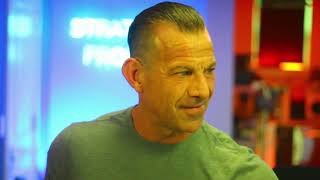
Rich Schefren tests a daily morning show format, discussing business growth, marketing, and productivity while taking viewer questions across social platforms. He covers journaling, theory of constraints, and biohacking, gauging what his audience wants to see.
Okay, we're live. But then I don't see here now. This should be. So supposedly I'm live there, but. Okay, there we go. Oh, that's interesting. So right now, when I go live on. When I go live on Instagram, it is making it a, you know, a letter box, like on a letterbox. On. On a, you know, on a 16 by 9. I see people joining on Instagram. Do you see that? Probably not. Yeah. So that right now, like, I can see that there's people on Instagram. Hi, Daniel, Vance. Mike. Hey, Mike Emery. I'm playing around with live streaming right now because I am planning on starting a daily show and in order to do that, I need to be able to. I need to be able to broadcast effectively. And so that's what we're trying to do here. I'm just going to be sharing my screen with my friend here so that he can see what's going on. Going on there. Sure. So you can see Garen on the. On like, what's going on on Instagram? Like, Stephen, Stefan just said, what's up, Rich? And Mike Emery said, hey, Rich. Right. So we're seeing that come in on Instagram. Do you see that? Yeah. And then like on Facebook in Streamyard, we have Stefan saying, if it isn't Rich Sheffern himself. And then we have Vance Dotson who said webinar con attendee. I guess right now that means that we don't have very many people, if any, watching on YouTube because we don't see any YouTube comments, nor do we see any X comments, nor do we see any LinkedIn comments. So thanks, Mike. Thanks for keep an eye out. I know you got copy to write so that I don't like how that looks though, on Instagram. Like, we definitely need to figure out a way to port over differently. And are you seeing it right now, like on. On YouTube? Okay, yeah. Stefan, all of the comments so far though, I see is in Facebook. What's the username in? I think it's strategic profits is the channel on YouTube and. Oh, okay. Ash there in Twitter. So we see that that's working. And what does it look like in Twitter, do you know? Does it look like. I mean, do I need. Do I need to change the stream size? Like, maybe. I wonder if I should. Like, I'm just taking play around for a second with like, tell me what changes when I do this. Stream size, stream shape same. So it looks like what it looks like in Instagram full screen. Oh, so okay, so if I go like this. Yeah, no, that doesn't even change Instagram if Even when I'm changing the output. That's interesting. All right, all right. And then I see. All right, so what's the YouTube username? I think it's just strategic profits. Stefanos. All right. And. Oh, this is cool. Okay, we got a comment from Chuck. So YouTube is live. Awesome. Instagram. Instagram Ash is the real rich. Sheffrin is where that's on. And let's see. So what are we thinking, Garen? Yeah, so like right now. So for example, if you were to, I think, click on any of the comments, they would come up on screen. So let me. I'll. I'll click on Stefan, for example. See, now I see that in Streamyard. I wonder. It does not pop up. Oh, no, it did. It popped up also in Instagram. That's interesting. So it's in the Instagram feed too. All right. As it should be. Okay, well, I'm curious, I guess. Might as well have a little bit of a conversation here, you know, why not? So let me kind of just expand out my screen a little bit so I can see what's going on here. All right. Yeah, yeah. The. Oh. So the. For those few people that are here right now, I'm seeing about 11 people in total. I think about two people from Instagram and nine people from other channels. So not exactly beating the door down, but that's okay because we didn't even talk about doing this. And we just turned on the switches, really, to make sure that we could broadcast using ecamm into streamyard and then streamyard into multiple ports. And the reason we were testing that is that I want to start a morning show. And the reason I want to start a morning show is that I feel like we've been testing out a bunch of different ways of engaging with social media. And so far the what's worked best is probably like doing reels, but they haven't worked insanely well for us. And I feel like it's me trying to bend to something that is not necessarily where I'm best. And so instead of trying to force myself into 60 second tight spots where I start with some big hook and leave a question and then leave 10 seconds to get to something deep, which is very difficult. I figured, why don't I try something different? And that different being a daily morning show that lasts, I don't know, anywhere from 10, 15, 20 minutes, where I'm setting myself up for a great day and I'm helping you set yourself up for a great day. A place to tune into to kind of as your day get started. And so along those lines, I'm curious if, you know, we've got a few people on right now and I'm just curious if any of you have anything specific that you would love for me to focus on on a daily show. And what I'm thinking right now is, is that each day might have a different theme and then cycle through it. So this would be like a Monday through Friday. What I'm excited about, especially getting this started and figuring this out, is that in 10 days from now, I leave to go to Nicaragua for two weeks. Going to be staying at Michael Masterson and Mark Ford's house. And it would be cool to be broadcasting live from there. So the first big kind of question I have is what would you know for the dozen or so people now that are here, what kind of content would have you wanting to come back on a daily basis? Light content, heavy content marketing, centric content or anything specific? And do I look very yellow? I always thought that, like, is this a. I'm curious if there's any content that you guys would like me to focus on. That's really, I guess, my biggest question for you guys. I appreciate you being here and thank you for seeing my name and pressing on that button. But now it's like, okay, I'm going to carve out, you know, 15 to 20 minutes every morning at 9am on the east coast. And now I have to think about or figure out what can I share with you on a daily basis that would get you excited to tune in? And you know, I originally got this idea after doing Ace DLR Winners. Now for those that don't know, I was the first to live stream from a live event back in 2007. I was the first to do a 24 hour live stream in 2008. So I'm very comfortable with live streaming. But I did a Steal Our Winners episode recently with Felix Print and it got me thinking that of how valuable a live stream could be as far as a set of marketing assets because of what you're doing when you do a daily show as far as what the platforms get and what they want. So platforms want people coming onto their platforms and spending as much time as humanly possible on those platforms. Hence, like, you know, when Covid happened, they were pushing live streams because they were hoping that people on their platform would find live streams that they liked and then would stick around and watch them. And so I did a lot of live streaming during COVID But if you think about it, what is even better than people spending a lot of time on the platform? What's even better than people spending a lot of time on the platform is people coming to the platform at a specific time to spend time on the platform. And so with the thought that the current format of coming up with one minute, sexy, big hook, you know, type scripts and then reading those scripts as that not being what is best for me personally as far as format goes, to do a format that does work better for me, something like this, but then also do it in a way where potentially it gives the platforms more of what they want. And the reason I would be concerned about giving the platforms more of what they want is because when you give them more of what they want, you often get more of what you want. So that's kind of the idea there. That's the method behind my madness. That's why I want to do a daily livestream. The question, though, is, is that, you know, is there content that can be too challenging for the morning? Let's say, is there content that really sets up the day to be exciting and beneficial? Right. That's the part that I'm trying to kind of figure out right now. Like, for example. Right. Like, I don't imagine that it would be a fun experience on a continual basis for every morning to figure out what our priorities are for that day. Although maybe once in a while, showing you how I figure out my priorities for the day might be useful, but not necessarily, like, tune in every day and we set the priorities for the day because then it's less of a show and it's more of just like a process that we're all following together, which I don't think is really what necessarily is what I want to do. So, Garen, like, I can't look at all the screens in front of me with all the qu. Like, I see, you know, some feedback from Instagram as well as I see some feedback coming in from Streamyard, from X and YouTube and Facebook. So the. Anything there that cool. Got it. So another thing that we're going to have to figure out, right? So what I have, just because you guys can't hear it, I have a peer of mine on the other side of my screen to help me produce this. Now, in the past, whenever I've done a live stream, I've just done it myself. I've turned on the switches and been done with it and kind of just showed up and talked about whatever. But because this show is going to be more structured, I didn't think that that was necessarily best. However, I have no firm ideas about yet what this show will actually be like. And the goal is to do this for 1 month, 2 months, 3 months, 4 months, 5 months, however long it takes to kind of figure that out. That instead of trying to have the perfect plan and jump in right away, it's rather jump in, have it be very messy, figure out what resonates, what doesn't resonate, and then because of that, adjust accordingly. And so the right now, for example, I do not have any skill in being able to listen to what Garen has to tell me and be able to speak at the same time. And therefore when Garen's talking to me, if I'm listening, there's just dead air and you just see me standing here, which is probably not a great idea. So the, the really I guess what I'm saying more than anything else is I'm going to be here every morning at this time and, and what I'm going to be talking about is kind of a we're going to figure out together what I can share with you that has the most value that you'd want to be tuning in. That's really ultimately what I want. And you know, it's interesting because I wake up early every morning and my girlfriend end ups she ends up sleeping pretty late every morning. So I have to be very quiet in the house. And this actually when I was talking to ChatGPT about my mental health, it suggested doing a live stream in the morning because in general I'm quite alone in the mornings until the day starts. And so this is a way for me to actually be social earlier in the day. Someone asked when do I plan on doing these? I plan on doing these at around this time. It's Right now, it's 8:45 East Coast Time. But I would assume that we'd be doing this at 9am I think it's going to be when we officially start and it will be like 10, 15, 20 minutes. Like I don't want it to be a long one because my, my biggest concern is is that I want people wanting more. I want people tuning in and then going on and doing their day and wishing that it was longer, not leaving early and wishing it was shorter. The let's see the looking at just some of the comments here and it's interesting where people are coming in from. So right now we have like about 20 people on in total we have about two or three people on Instagram and I guess the majority are I don't know where they are. Does it show Garen like where like people are Like I see the number 16 in the upper left hand corner of of stream yard or 17 now got it. Productivity tools and looking for things to implement. Interesting. Justin asked me what do I want to talk about. Interesting. Probably not the what do I want to talk about? Well, I want to talk about everything that's going on online. I want to talk about things that matter to people like us, people who are growing businesses online. I want to talk about things that I'm learning in marketing concepts that I'm considering and just any other observations that I tend to make about life, the world, the entrepreneurial endeavor and so on and so forth. So those are the kinds of things I like. You know, I do like to study lots of things that I don't necessarily share a lot about like at least in my day to day in at Strategic Profits or with Steal Our Winners. I do a tremendous amount of biohacking. So I'd love to share some of the stuff that I'm testing on that front and, and just basically share more of of my life that I think might matter and might be useful. That's I guess what I'm thinking about. Justin and can you talk about how you win the week and win the day? Yeah, you know, it's interesting. I, I was writing in my journal last night and, and it's so interesting. I don't know how many of you keep a journal, but I find that if I don't keep a journal, there is really not very much deep thinking that is going on in my life and that I really rely on a journal to kind of really think through what I need to be working on, what's important, how I'm feeling, all those kinds of things. And quite often I have resistance to opening up my journal to get started. But then as soon as I start writing, I'm happy that I did. And I'm wonder what that initial resistance was about. But to kind of answer the question that you asked me, Quinn, I was writing about this in my journal last night and I was thinking about a program that I listened to well over a decade ago, might have been even two decades ago by David Allen. So David Allen, who wrote Getting Things Done, he had a tape program from Nightingale Conant that was called Getting Things Done Fast. And it was so good and they sold it for like 49 bucks until David Allen became well known. And then they took it off the market because it was very similar to the corporate training that David Allen's company did, which they charged many thousands of dollars for. So I still have that audio tape, and I listen to it from time to time. And I was inspired last night as I was writing my journal to begin listening to it again. And the very first thing that David Allen talks about in that audio program, getting things done fast, is that two of the most critical questions that you have to answer before starting anything or before doing anything is, what does success look like? Like what is a successful outcome here? Defining that and then defining what is the very next step that needs to be taken. So clear picture of what the end is and a very clear and clarity about the very next thing that you can do, right? Because you can't do a project. This is like a David Allen thing. You can't do a project. You do actions, but actions make up a project. But a lot of times people have a to do list with things on their to do list that are not actual actions, they're projects. And you can't do a project, you can do an action. So knowing what a successful outcome is and then knowing what the very next step is, are kind of two very critical questions to start the process. And it is those questions, right, that you could kind of think about to even answer the question that you asked me, Quinn, which is, can I talk about how you win the week or win the day? So winning the day, what does that look like? How would you know you won the day? At the end of the day, what would need to be different than is. Than right now? What would need to be true that is not true right now? In other words, before you can actually win the day, you have to define what does that mean? What does that look like? You will know you won the day when X, Y and Z happens, right? And then once that's defined, right, then what is the very next step that needs to be taken? So those two questions are the beginning of it, right? Like, I'm not saying that's the end all, be all, but that certainly is a part of it. And then what I would say that I'd love to just share as well, and hopefully this is valuable to you guys, but I taught a course on theory of constraints back in 2008, and it's called GPS. I wrote a report called the Entrepreneurial Emergency that kind of helped people realize that they might have been spending all their time just adding more potential and never really taken care of the few constraints that are holding them back. And so in that report, I introduced a methodology called Theory of Constraints, which is a methodology that was invented by or developed by Eli Goldratt and made famous in a book called the Goal. But that is a very conceptual level. And then there were many very sophisticated people that took Eli Goldratt's work and then broke it down into processes of how to actually do it. And so that whole area is called theory of constraints. And it's a way of doing an analysis that allows you to kind of uncover what are the biggest leverage points in a business. What are the biggest things that have changed would make the biggest difference. Right. So it's based on the idea that every system has a goal, and no system creates an infinite amount of that goal. So there's always something that is constraining it from getting an infinite amount. And the idea behind theory of constraints is that you want to be able to choose where the constraint is, not have it be thrusted upon you anyway, in order to go through this very complicated but yet very powerful business optimization process, the very first step that you take, and that's what I wanted to talk about, because it relates to what you asked as well. Quinn, the very first task that you do in theory of constraints is you do what's called the goal map. And you do a goal map because you want to create the parameters of the system. In other words, the very after we create the goal map, we're going to ask a question as to what's not working, why don't we have what we want, etc. But in order to answer those questions, like, what's not working in the business? Why don't we have what we want? We want to make sure that we're not just, like, bringing up all kinds of problems that are not necessarily related to getting to our goal. So we only want to surface problems that are defined within the boundaries of the system. And so the very first kind of chart or very first step in theory of constraints is you're defining the system. And in order to define the system, you need a map that really has three levels on it or a diagram that has three levels on it. On the first level is the goal, like, to make a million dollars this year and every year from this day forward, or something like that. Below the goal is what's called critical success factors. And critical success factors are what's necessary in order to have the goal, but only what's necessary. In other words, if you had what you labeled as critical success factors, the goal would happen automatically, like, there's nothing else to be done. Words when you have this, this, and this. When you have oxygen, a Spark and something flammable. You have fire, period, right? Like, you don't, the goal is fire, but once you have these three critical success factors, it happens automatically. A spark, oxygen, something flammable, right? So that is one layer below critical success factors. This all will make sense and be useful for you in a second. And then below that is necessary conditions which are only what is necessary for those critical success factors to happen. Now, there's no benefit to do this map that I just explained in and of itself, right? Like, because it really is the first map that you're then going to be building off of, you're going to ask yourself in the next map, why don't I have that now? And now you're going to service a bunch of problems and then you're going to do a root cause analysis on it. But the reason. So that's the purpose and theory of constraints of why you do this goal map. But there's another really interesting reason to do this goal map, and that's why I'm bringing it up. Because when you look at what your goal is and then you think about your critical success factors, what you should realize if you do the exercise correct and you really think about it correctly is how few things there are that really are critical success factors. There are many things that are nice to have, there are many things that could be useful, there are many things that might make a difference, but there are very few things that are absolutely critical and essential, right? So the trick in doing a goal map is to recognize what are the few, few things that actually drive the engine of what it is you're trying to achieve. So that is really the benefit of the goal map. I know that by talking about it and not showing it to you, it might be a little bit more challenging for you to get it. But, you know, the idea is that while having like a big social media presence might be nice, is it absolutely essential? Could you not have a successful business if you didn't have it? And if the answer is no, I could have a successful business without it, like it is possible, then it is not necessary, right? Like, it is not critical. It might be nice to have it might be useful, it might be a lot of things, but it isn't critical. And so one of the ways to kind of set yourself up for success in the week or in the day is one being pretty clear about what success looks like, right? What is that outcome that you're trying to achieve? And if you don't know what you being switched on for the day looks like then guess what? You're probably not going to be. So what is this? You know, what does it look like? And then what's the very next step to get started? And then making sure that you're only focusing on those few things that are actually critical. Because if you're not absolutely clear of what's truly essential, then the flip side of that is, is that you're spending lots of time on non essential things and you can't get away from that unless you've defined and clarified exactly what is essential. And most people don't. And that's why most people are incredibly inefficient. That's why Most people spend 10 hours getting two hours of work done. And that's why most entrepreneurs do not succeed for these kinds of reasons. So the way that I get myself to my best is spending time journaling, defining what outcomes are most critical to my goals, clarifying what that looks like when it's done, and then getting very clear of like what is the very next step that I can take on that and how and where and when am I going to take that very next step. And I find that the fewer things I focus on, the better. Right? That it is always on the days that I add 30 things to a list that I end up getting almost nothing done or only the less important, important things. So hopefully that was interesting. Quinn, for those that have joined us since I said this, because we seem to have a, an audience that's growing slowly, is that I want to do a daily show and I want to do it every morning for 15 or 20 minutes. Today is the first day where I'm just experimenting and probably going to be experimenting for quite a few days ahead. But, but my commitment is, is that I'm going to be here every morning figuring it out, figuring out what to share with you on a daily basis from Monday to Friday at 9am Eastern Time for 15 to 20 minutes to make the biggest difference for you in your day, to kind of be a ramp into your day and a ramp into being more effective if that's what you want. But I am open to talking about anything. And really what I'm looking most for is to have a connection with a group of people where I can share whatever wisdom I've accumulated over the years, whatever benefit I get from talking to all the great people, I get to talk to from steal our winners and basically share with you guys whatever would be beneficial. And that's actually why I'm kind of excited about this. I'm kind of excited about this because I have no predefined ideas of what this will look like when it's done. And I'm really hoping that if you are hearing my voice and you are watching this right now and that you think I might have something valuable to share with you and you let me know that I would greatly appreciate it because ultimately I'm not doing this live stream every day. So I can just speak out loud because I can do that myself in my shower. I'm doing this so that I can share my mornings with like minded individuals and we can make a difference together. You know the, my girlfriend Kim, she, we've been together for 13 years and when I first met her, she was a big deal in the private equity world on, you know, in New York and she has since retired and it now does like she has a bunch of properties, she does some high end Airbnbs and stuff. And when she was getting more interested in that, she was spending a lot of time by herself working on her different Airbnbs and kind of struggling and not sure what to do about certain things. And I remember this is like maybe, I don't know, like eight years ago, really trying to push her to go to an event and meet some other like minded people who are doing the same thing. Like, you know, high end Airbnbs, like upscale. And the reason I recommended that to her was that I this is what I said to her and I still believe this is that your whole experience is going to change when you meet some other like minded people who are doing the same thing that you're doing. Because right now like you wake up and what you have in front of you is a lonely path walking to your computer to then spend hours in front of your computer alone, doing the things that you know need to get done without any really social interaction of any sort or any camaraderie. But if you were to go to one of these events and meet like minded people, then every morning when you wake up, there are other people that you could check in with, people that you've met that are doing the same thing. And then when you're sitting, sitting in front of your computer, you're no longer alone. You're part of a group of people that are all trying the same thing. And I told her that that made a huge difference for me, that there was a time when I first got online when I was completely alone, just sitting in front of my computer and really struggling. And when I went to the first Internet marketing seminar that I ever went to, which was big seminar and met other people who were doing the same thing I was doing and became friends with them and I stayed in touch with them. Then every day that I was working on my business online, I was no longer doing it alone. I was doing it with some other people that I now had virtual connection to at least. And so I'm hoping that this can provide that, right, that, that if you currently don't have much socialization going on in the morning, you wake up, you roll out of bed and you get to work, then maybe this can provide a little bridge for you so that you get to work most effectively and most efficiently and also most focus on moving your business forward. And so that's kind of the idea there. And I'm excited that we're already having a bunch of people join us. So that's kind of cool, you know, not an insane amount, but that's probably a good thing too because we're just kind of getting our feet below us. I would say that tomorrow our intention is to have more of a structure. I'd say today we just wanted to kind of test to see what worked and what didn't. And then long term we'll get into a groove. But I'm curious for those of you that are here right now, and there's quite a few of you, is this how you start your morning? Like, is it morning for you right now? Like, do you generally, and I'm curious for anyone that's willing to answer what you're doing here right now, like, is this generally how you spend the first half hour of your day or something like that. And then if there were certain topics that you felt were like, you would definitely be attending. I'd love to know what that is. The mixing in a biohack once a week would be cool, said Justin. So, you know, there was Black Friday that just passed and we had a great sale and made a bunch of money. So that's exciting. But I also participated in a lot of Black Friday sales for different peptides, nootropics, etc. So one of the ones that one of the nootropics that I haven't had for a while, but I was happy to see that a couple of places got them. Just back in stock is a stimulant called Phenylpuracetam. It's one of the racetams, I get it from Science Bio. It's a very strong stimulant and 1 milliliter, which is like this amount in coffee totally changes my day. So I was excited to get Those in stock and on the peptide front. I'm, I'm playing around right now with oxytocin. I am an introvert and I want to see if I don't really get social anxiety. But I tend to isolate myself more than I should probably. And so I am testing around, I'm. I'm experimenting around with oxytocin, which is, you know, kind of the love hormone. It's what you secrete more of that stimulates connection. Wow, look at all these people. Like tuning in. 3:00pm for me, it's common to have a little dip in energy, so would welcome a boost at this time during the day, says Marcus. And Marcus, what would provide that boost? What would provide you that boost? What could I focus on that would have you tuning in, looking forward to hearing whatever it is? You know, my concern is, is that I want to provide value. I want it to be valuable for everyone who shows up. But I also don't want it to be too intense so that, you know, if you're not. I want it to be something that people could either engage with actively or passively. And what I mean by that is that in other words, it's not stuff that if you're not heavy duty thinking, you'd have to exit. Right. Like, it's one of the things I like about like watching or listening to Joe Rogan or something like that, that I can dip in and out depending on how I'm feeling. Obviously when I'm going through a course or something like that, that's not possible. So the. I had this other interesting experience and I'm just kind of like right now, kind of just sharing different thoughts that pop into my head. But back when I taught theory of constraints and I. In that 2008, during 2008 when I taught theory of constraints, I taught it as well. I sold it. Well, I'll give you some backstory on it because it might be valuable. Anyway, so I wanted to teach theory of constraints because I was convinced how powerful it was. And so I decided I was gonna. That's what I was gonna do. I was gonna create a course and teach theory of constraints. And I remember I was speaking in Australia and so I flew to Australia. I was hanging out with Mike Phil Sane before we both got on stage. And I was telling him that like, that's my next thing. And, and I. And he was like, he was asking me questions about it and I said, oh, it's going to be like a year long program. And he's like, rich, nobody wants a year Long program. And I'm like, they don't. I'm like, this is really. But it's really difficult work doing Theory of constraints. He's like, now you got to do it faster than that. You got to fat. And. Which was like news to me because my original coaching program, Business Growth System was a year long program. So I considered what he said and decided that I would do it. You know, Mike's never steered me wrong. Mike, Phil, same. So I said okay. So I decided to do it as a 30 day program. And in order to teach theory of constraints in 30 days, I was going to teach it, you know, every day live streaming. And I was gonna have to do two Q&As during the day, one in the morning, one at night, because you can't fall behind in Theory of Constraints. It's kind of like algebra. You won't understand future lessons if you don't understand today's lessons. And so my schedule during that and I. So I taught it as a 30 day program and I ended up though taking me 45 days to teach it. Now the first thing that was interesting is that when I asked people why they bought, right? So we sold like several thousand people enrolled in this $2,500 program. So I think we made like four or five million dollars on it. When I asked people like, you know what, what made the biggest difference? Why did you decide to enroll in this? The most common answer was that it was a 30 day program. So Mike Filsane was right. Most people said that they could do anything for 30 days, but they don't have a track record of sticking with things much longer than that, which I found very interesting. The other thing though was that because I was teaching this very difficult thing to understand and wanted to make sure the maximum number of people understood it, I did the teaching. Let's say I don't remember the exact time. Let's say I did it from 8 till 9:30 every day. I would teach the next concept to teach in Theory of Constraints. Then at. So that was 8 to 9:30. Then from 10 to 12 I did a Q and A live stream for the people in the US or wherever that had just watched the training. And then at 8 o' clock at night I did another Q and A that went another three or four hours where I looked at people's homework and gave them feedback on whether they were getting it right or not. What I remember, very specific, I remember very vividly, was that because we created our own platform at that time to do the live Streaming, right. We create our own like password protected kind of thing. And so I had these 2,000 plus people tuning in every day at a specific time and they're like there was a chat going on, you could privately message people, etc. And I remember telling my team like two weeks into it, it's like I don't even know if I need to be here anymore. Now obviously I have to teach people so I have to be here. But it feels like we've developed a little bit of a community and that everyone here knows everyone else here. And this has become part of their kind of ritual of logging in from 8 to 9:30 Eastern Time in the morning and watching rich and discussing amongst ourselves different things. And so my hope is that by having something at a standard time and by developing a ritual that you not only actually connect with my content and actually enjoy starting your day with me, but that you find like minded people in the chat that are also starting their day that way and potentially can make some connections with other people. Because being on the, on being on the other side of the screen by yourself is one of the loneliest places that you can be. And I certainly know that I tend to isolate myself way too much and I pay a price for that. And I consistently am pushing myself to go out and spend time with more people. And I'm always happy when I do it, but yet I always have reluctance to leave the house and actually do it. And so my hope is, is that by us spending time together every morning we can lead better lives. However that looks, whether that's building our business better, focusing on what's most important, being more strategic, etc. Etc. And I'm going really long today because like even if I, I started a half an hour early because we're going to go on at 9 generally and I think I'd be ending right about here. So I guess, hey, look at who joined on Instagram. Jaron, the last person. Russell Brunson's in the house. Russ. I still want a date in February, if that's the right date. I'm going to come to Funnel Hacker Live and I'll be there. I just told my team to reach out to your team and make sure that I'm get tickets to the final Funnel Hacking Live. So I'm excited about that. Obviously I feel very, I feel funny in a way because like if Russell was doing a live stream right now, he'd probably have about 27,000 people on. I have on Instagram five people and about 26 people on some other platforms, but we will grow together. So. Very cool. Garen, any. Any final parting thoughts? Oh, I can't hear you, Garen. I don't know why. I don't know if you're muted. I would love to learn theory constraints in 80 20. That theory. Very cool. Well, we certainly can cover things like theory of constraints. I certainly can teach certain elements of it. And yes. So anyway, tomorrow on your favorite platform, whatever that is, I intend to be there at 9am Eastern and I intend to be there for 15 to 20 minutes and I intend to share valuable things that guided by you helping me kind of figure out what would be the best stuff to share. Some people are mentioning like Alexander here, right about like the live streams I've done in the past. But the. But the live streams I've done in the past were me just showing up and talking about whatever kind of like what I'm doing right here. And I'm very comfortable doing that. But I also don't feel like that then leads you to expect anything specific and has you tune in specific. So my goal is, is actually to do something better than that. To do something better than me just showing up and talking about whatever it is that happens to be on my mind. And so with that said. Right, that's why I want to kind of figure out a way that we can be predictable but yet also deliver insane value. So with that said, I think we'll wrap here just because I think I'll just beat a dead horse by doing anything more today. But thanks for being here. Thanks for sharing your thoughts if you did. We've got a bunch of comments on some of the other platforms, a few comments on Instagram, but we'll review them all and then we'll be here tomorrow and hopefully just be a little bit better than we were today. And if each day we get a little bit better, then by 2025 we will be in the right place and we will be then establishing a show that people watch every morning. So thanks to Higher Profits, Beyond Rich Efren, over and out. I got my friend Garen on the other side of the screen that you can't see, but he says goodbye too. And I will speak to everyone tomorrow at 9:00am Eastern Time and. Or maybe you and I will talk before then if we're connected in some other way. But until then, tire profits are beyond Rich Chef and Over and Out.
More from Rich





Russell Brunson Reveals Why He Brought Rich Schefren to Funnel Hacking Live (AI Edition)





