Michael Franzese Interview - TOP Business Lessons from THE MAFIA!
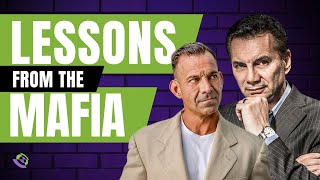
This is a YouTube video titled "Michael Franzese Interview - TOP Business Lessons from THE MAFIA!" featuring an in-depth interview conducted by Rich Schefren with Michael Franzese, a former Mafia member turned entrepreneur. Recorded in April 2021, the conversation explores Franzese's experiences in the Mafia, his business ventures including gasoline tax evasion, car dealerships, and film production, and the lessons he learned about negotiation, leadership, and entrepreneurship that he applies in his current legitimate businesses. The discussion also touches on personal anecdotes and advice for entrepreneurs, making it a rich dialogue blending criminal history with business insights.
I had a guy by the name of Vinnie who was a butcher around me, used to bring me my meat. He's a big guy, you know, scary looking guy. So he comes in, he's carrying a box on his shoulder. And I said, vinny, what are we having a party here? You know, what's with all the meat? He says, it ain't meat, chief. He puts the box down, opens it up. He says, this is. The first week's take in the gas business was $320,000 the first week. From 1979 to 1985, we grew that into eight to $10 million a week.
Hi, I'm Richard Sheffrin, and I'm from Strategic Profits. And today we have a really special guest, Michael Francis. He is the only gentleman who was able to leave the Mafia without ratting or dying, basically, and also the largest earner in Mafia history, as many press and different programs have anointed him based on the gasoline tax evasion that he did. When was it?
It was back in late 70s, early 80s.
Late 70s, early 80s. So we're here, just luck would have it, talking about different things. And I asked Michael if he would be willing to just hop on camera for 15 or 20 minutes and kind of talk about the lessons of the Mafia and how they could be applied to entrepreneurship. And so we were talking a little bit off air about just how people carry themselves, the difference between an earner and a thug, like, you know, in your past life. And so without even maybe asking you a question to start, why don't you take like, a couple minutes just to talk about what your experience is like as far as people who came into the Mafia and really thrived as an earner versus maybe those who didn't. And what you saw as the differences between the types of.
Yeah, and like you said, there were. You know, I'll give you an example. In the Colombo family, which I was a part of, we had 115 maid guys, guys that actually took the oath. We had a lot of associates weren't taking the oath, but they were around. And out of that 115, I think there were 20 of us that were really earners, and the others were, you know, just guys that were doing the work, you know, no show job, whatever. They didn't really have the ability to earn money. And the reason for that is what I noticed, the guys that were earning, they had that ability to begin with. They carried themselves that way. They just learned how to use that life to benefit them in business. And I think that's where I had an advantage, too. I knew how to use that life to benefit me in business and as a result went on to make a significant amount of money. But it's in you already. It's just like learning to know your environment or the tools that you have and be able to put them to work and benefit human business.
And when you say that there was a way of like sizing up a deal that was unique to the mafia or not really?
No, I wouldn't think so. I mean, obviously, you know, we did things with the union, you know, because we had a lot of control in the union. So we knew how to use that union, you know, when we had to deal with contractors, give them sweetheart deals and so on and so forth. But even there, you had to be able to talk to the contractor the right way. You had to be able to use the union in the right way so that it made sense for them, them. And it also benefited us. And, you know, you can't just go in and bully your way in because that doesn't always work. You know, my thing, Rich, and what I noticed from a lot of the people that were successful in that life, they tried to make friends rather than enemies of the people that they were dealing with. And in that life, especially because, you know, you are who you are, you want to make as many friends as you possibly can and even in the business world.
And was there a way to kind of. You said something when we were talking off air about, like when you owned bars or clubs that you had, like a bouncer. But the purpose of a bouncer wasn't really to beat people up. It was to make sure that nobody got beat up so that people would be afraid to act out as opposed to want to interact with the bouncer. Right. And I would imagine that there's a lot of that as it relates to the Mafia. Like, it's more about strength and not having to use it. Right. Than it is about actually. Because when you use your strength now, you might get in trouble. Like, you know, you're exposed as opposed to just the threat or the mystery of what's behind you.
Exactly. You know, two examples of that, again with the bouncer. We used to get the bouncers that looked the part, they were big, you know, they were strong and they carried themselves the right way. And I would tell them, I hired you because of what you look like. If you have to go in and start beating people up and causing a ruckus in my club every night, I don't need you. It's your Presence that's supposed to count, you know, I'll give you an example. We had. I had an agent around me that at one time represented all the big black talent from Marvin Gaye to Dionne Warwick to everybody. And we actually were going to have the Michael Jackson victory tour in 1984. And he had. Michael's agent, didn't want to go along with it, okay. So he had asked me to go out to California to see him down at L. A. So I went out there and he knew who I was walking in the door. I didn't have to go out there and threaten him and say, you're going to do this or else, you know, it was implied, you knew who I was. And basically I said to him, look, there's going to be an advantage of you working with us. It'll be a disadvantage if you don't, you know, see, you understand what I'm saying? Let's try to work this out the right way rather than walking in the door and putting my weight around. He knew who I was, so I didn't have to do that. And you know, for me it was always a better way to work. And the guys that I saw that were business guys in that life, they acted the same way.
And was it as simple as like spotting an opportunity or were there kinds of opportunities that you most like to look for, like in your earning days in the mob?
You know, I mean, because of who I was and you know, I was kind of the go to guy on Long island at the time, I would always have people coming to me with different deals and to a point where I actually had a bar, I called it, it was Michael's, actually, I bought it. It wasn't named after me, I bought it. It just happened to be Michaels. But I said, if you wanted to propose something to me, every Monday night, I'll be in that place and come. And we had a back room and you'd sit and talk. And I think what I learned throughout is I learned how to see what a good deal was and separate it from something that didn't make sense. And that just, you know, I guess it was just experience that, you know, that I developed that talent or whatever you want to call it. But I think you have to be able to recognize, you know, according to the times and everything that's going on, what a good deal is. And it wasn't because I was a mob guy, I was a business guy also.
Right.
You know, but obviously if I thought if it was something in the gambling business and I Thought, well, you know what I mean, this could be helpful because this is what I do on the street. Well, then, yeah, I mean, I might have been drawn to that.
And would you say that it was like, in private equity, they talk about funding the team more than the idea, that the idea might change. But if you have the right team, they'll know when to change it in order to be successful. So they invest more in the people than they are in the idea. Would you say it was the same, or would you say it was actually more the opposite, like it was this?
No, I would definitely say that. You know, I am not one that believes in micromanaging. Not at all. As a matter of fact, if I did that, I'd be a total failure, because there's a lot of things that I don't do well, and I don't want to do them. But I always. My motto was always be, Michael. Do what you do best. Delegate the rest. And what I did is I found the right people. I treated them well, and I managed them well, and they're the ones that built the business. You know, I mean, I did my part, you know, whatever it might be. I recognized. I said, this is going to work. I just got to have the right team. I took good care of them, and I managed them properly. And I think that's the key to almost any business.
Yeah, I would agree that that is the primary key. What would you say that you did best? What was your wheelhouse?
I knew how to select a good opportunity when it came, and I knew how to get the most out of the people. That was it. You know, I got them to work for me. I motivated them. They were happy. They wanted to do the job. They wanted to make me proud. And that's something, you know, you got to treat people the right way.
And is that both in your businesses and then also like in your crew?
Yeah, same way in the crew. Look, in that life, if you don't make them earn money right, you know, people turn on you quick. But I'll give you an example. I had somebody around me. His name was Frankie, and he was in bad shape, and I liked him a lot. And I said, frankie, come here. I was in the gas business. I said, I'm going to give you a job. I want you to go around to all the gas stations and collect money. They're going to give you a bag. Just collect the cash, easy. I'm going to pay you $1,500 a week. That was back in 1981. It was a lot of money. So he did it. Was happy, you know, Best thing that ever happened to him. Well, about four months later, he comes and asks me for a raise. I said, a raise? Do you think you're worth $1,500 a week? But what happened was he started to look at my money, right. And then it got into his head. So that taught me there's got to be a balance. You got to tell them. You got to set things straight right up front with people. You know, you're in. You're not indispensable. I'm doing this for you as a favor. I like you. You're going to earn it. Don't get me wrong. It's not, you know, you're going to earn your money, but just make sure you appreciate what you got.
Yeah.
So. And I've learned that along the way with a lot of people.
Yeah, I've learned that. Kind of making sure that whenever you go above and beyond, you let people know that you're going above and beyond. You haven't reset, like, for new expectations. With the entrepreneurs, I deal with a lot of them. It's a transition process when I'm involved with them, from them being the sole person that's responsible for generating profit, to spreading out that responsibility to more members of the team that as you have a small business, as you have more people who are actually responsible for generating profit, it eases the pressure on the entrepreneur and the business can grow a lot more. And in a way, it's almost similar. I don't know if it is. I'm asking is that the difference between when you're a soldier versus a capo, more of the stuff that you're actually earning is through other people doing the work versus you. One step removed now, and you have a group of people that, well, let.
Me tell you, that would be more the boss.
Okay.
Okay. When you're a copper, like I was, you're almost responsible for having your guys earned on the street because most of them are not going to be hurting.
Got it.
So you're trying to take care of them, but, you know, they always had to put whatever they were doing on record with me. There was times I'd tell them, I don't want you doing that. It's not worth it. They'd come to me for advice, but basically I was making them earn. When it comes to the boss, it's different. You're paying up to him.
Right.
You know, your copper regime. As I was paid up to the boss, you know, when I. When I first got into the gasoline business. And I realized what I had. I went to see my boss, was Persico at the time. And I said, look, called him Junior. I said, junior, I'm going to show you more money than you've ever seen, ever. I don't care what anybody else is doing. And he looked at me immediately and said, we don't do drugs. He says, not drugs. I hate anything to do with drugs. He said, what is it? I said, it's gas. He said, what do you mean? I said, it's tax money. I found a way to defraud the government out of tax. I said, but it's going to be a very involved scheme. I'm going to have a lot to put together. I said, was going to be a lot of money. I said, but here's what you need to do for me. I said, you cannot get anybody else involved. As soon as it gets on the street, everybody's going to want a piece because it's going to be a lot of money. I said, I have to win every argument. Every time we sit down, you got to make me win. I said, don't play politics with the other family. I said, I'm not telling you what to do. You're my boss, but I'm telling you how you going to earn. He looked at me, said, prove it to me as you got it. And I did. Yeah, I never lost an argument, you know. So what did he do? He just managed me to make sure that, you know, the golden goose kids kept producing. So that's what happens at that level. It's not so much their involvement. Unless you're like Paul Castellano, who was. He was a business guy. He was very involved in some of his business, the chicken business, for instance. But I don't know how deep, you know, how involved he was, but I heard he was pretty involved. But most of the time you're just paying up.
And when you were running the gas business, you still had your crew, right?
Yes.
So that was like a second job almost.
Yeah, I put everybody in the. I gave everybody a gas station. That's how you can earn money. You got a station. We had over 350 gas stations we had owned or leased at that time.
And is there an easy way to describe how you were able to bypass the tax?
You know, it was an easy way. There was a lot of accounting involved, you know, so I had accountants on the payroll that I trusted, and basically we had to create a scheme that made it very hard for the government to figure out what we were doing. And basically I had 18 companies that were licensed to collect the tax on every gallon of gasoline. And we had an intricate scheme around every one of those companies that would give me about 10 to 12 months before the government would come down on us and say, hey, where's the tax money? By that time, we just closed shop, moved on to the next license. That's how we were doing it. But, you know, they would audit and monitor you along the way, and we had to be able to put obstacles up so that they couldn't get us.
Wow. And how quickly did it scale up? Like, did it scale up pretty quickly once you started, or was it like.
No, it. Well, when the guy came to me with this idea. So here's another thing. Rich people think. They're under the impression that mob guys sit in their social clubs and they devise all these intricate schemes how to defraud a company 99% of the time. It's not like that. Somebody from their company would come to us say, hey, I got a scheme. Scheme. I need your help. Okay? They figure we'll finance them, we'll protect them. We're not going to snitch on them. That's what happened here. So a guy comes to me with a germ of an idea. And, you know, without getting into all the detail, I said, all right, we're in business together. I said, but I don't want to use your company. I don't know if you owe taxes or whatever. We're going to form a new company, clean. So I put somebody with this guy. I had. I had a guy by the name of Vinnie, who was a butcher around me. He used to bring me my meat. He's a big guy, you know, scary looking guy. And I said, I want you to stay with this guy for two weeks and see what we got. Two weeks. He comes to my house, and every Saturday he would bring me meat. He was a butcher. So he comes in, he's carrying a box on his shoulder. And I said, vinnie, what are we having a party here? You know what. What's with all the meat? He says, it ain't meat, chief. He said, come in the kitchen. I want to show you something. We go in the kitchen. He puts the box down, opens it up. He says, this is the first week's take in the gas business was $320,000 the first week.
Wow.
Over a period of from 1979 to 1985, we grew that into eight to $10 million a week. So it went up pretty quick once I Understood what we had then. It was just a question of expanding it.
And how do you. I know that your partner eventually, like, turned, and that's what got you caught, but how long do you think you would have kept going if he didn't turn?
I think it would have been very difficult. I had two agents come to me at my dealership, and they said, francis, we need to talk to you. We walked two FBI agents, and we walked outside, and they said, look, we know what you're doing, okay, this word. We understand that you're doing something to defraud the government, but we don't know what these are. Two agents. They said, just tell us, and we'll give you a pass. I said, what are you talking about? I said, if you want to buy a car, I'll sell you a car. You know, I wanted that. They got so mad at me. Rich, you're not going to tell us. We're going to. You're going to go to jail for. I said, I don't know what you're talking about. I said, you know, come on. I said, I got a couple of gas stations. They're earning money. Don't worry about it. And that was it. They could not figure it out.
Wow.
I don't. I don't know. If he didn't turn informant, we probably would have had another couple of years, because we were always devising new ways. Like, at one point in time, I bought a terminal from British Petroleum in Oceanside, Long island, and we were storing so much gasoline in there. And that was another way, without getting into the detail, because people ask me all the time, michael, just tell us the scheme. You can't do that. Reform. But that was another way to hold the government off. It was just another accounting issue that they couldn't figure out. So we were always one step ahead of them.
Interesting. And what was the. So we all know that the gas was, like, your number one thing. What was the second thing? What was the, like, second industry that you were in that spurred the most cash to you?
I made a lot of money in the car business.
Car business?
Yeah. I made it because back then, too, you know, we were on recourse with a lot of dealers.
Right.
Where we were able to. I get anybody financed because we were on recourse. Can't do that now with the financing paper. So I put everybody in a car, and we never got stiffed. I mean, I. You know, there were certain cars. When I saw somebody, I would tell them, look, I'm going to get an extra set of Keys. You're going to pay me weekly. If you don't pay me on it's due Monday and you don't pay me Tuesday, the car's gone. That's it. No matter what you paid, it's lost. We never got stiffed on a car. So I was putting everybody and we were selling more cars. I mean, I won more sales contests than you can imagine. We were just selling cars like crazy. And that was a lucrative business. Service was great and I loved it. I mean, I loved what we were doing. Then I got into leasing and we were leasing a lot of cars, so made a lot of money with those two agencies and a leasing company that I had. And. And then I was in the film business and for about. This was early on in the business when we were. We were making movies and I made probably about, I think, 45 or 50 films.
Oh, wow.
And at the time, we had an output deal with Vestron Video.
Okay.
And that output deal and US bicycling 200 to 250 prints around the country at that time, we were able to make a lot of money with B movies. I mean, they were like all horror films, exploitation films were big in the early 80s, and so we kind of saw that niche at that time and we were making a lot of money putting these little films together. Cost us of a lot, nothing. And they're just bicycling them around the country. Output deal with Vestron, we pro. We get just about all our money back just from the video end of it.
Wow.
Yeah.
And so would you say that, I mean, obviously the gas thing, you had to be connected and in the mob for that. Right. But the stuff that you did in the car dealership and in the movie business, legit.
The only thing illegit about the movie business, I was financing with gasoline money.
Yes. You know, and would you say, like, what would you say are the biggest lessons that you took? You know, because now you, you know, you've reformed and now you've got a franchise called Slices and you're doing lots of other things. Like what were some of the biggest lessons that you took from the mob to your, like now everyday life as.
Far as business goes, you know, business is business rich. No matter what. Even if you're doing it illegally, you got to do it right or you're gonna lose money, you know, in the gas business, if we didn't do it right, we would going to lose. If you're a bookmaker, if you're not laying off some of the big bets, you can get killed on a weekend, you got to know what your level is. So no matter what you're doing, it's still business. You got to do it right. So, I mean, that's just something I learned, and I applied that same principle to what I'm doing now. You know, just got to do it right. One thing I always tell people, I used to have people come to me and they say, you know, michael, I want to open up a restaurant. That's okay. What's your plan? Well, I'm going to make good food. I said, okay, well, that's kind of obvious. What else is your plan? Well, I'm going to get a good location. Okay, but what's your plan? Right. So they wouldn't have one. They had no idea. They had no idea whatsoever. So what I used to tell people all the time, what I did for myself is you got to give yourself a written plan. Write it down, explore it, talk to people, have your consulary input in it. Write it down. And so when you're going in, this is your model. This is it. Now, there's times you're going to deviate. You need flexibility, market changes here and there, but that's your plan, and you stick to it going in and make sure it's a good one before you go in. So many people I know don't do that, Rich.
Really?
They don't. They don't. They just go in, I'm going to open up a restaurant of good food. Somebody tells me, there's no other restaurant here. I'm going to be the only one. I said, why would you want to do that? I said, you want to open up a restaurant where there's a lot of restaurants where a lot of people coming down, you got good food, they'll come here, they'll go there. Restaurant row.
Yeah.
Some people think they don't want the competition. They want to be scared of. It's wrong.
And when we were talking offline, also, you said something, and it's. It's very much in line with the way I think, you know, when I design a business, my goal is to try and figure out a way that everybody wins. Everyone wants that business to win, that the customers feel like it's a business they want to do business with. The vendors want to do business with this business so that everyone's rooting for this business to win, as opposed to just the owner. And, like, we should all root for this business to make a lot of money for the owner. And you said something similar to that when we were talking off air about I'm not sure which business it was that we were talking about, but that you wanted to make sure that they had a win. Do you remember what we were talking about?
No, but I'll give you another example. We opened up, you know, I have this pizza franchise now. So there's a store across the street from us. And about a week before we opened, I went in there because a couple of weeks before that, the owner of that business threw my partner out. Called him a spy, threw him out of the place. So I went in there, I wanted to see the menu. They didn't know who I was. We sat in, think. So I walk in the door and the guy sitting behind the counter looks at me like this. I said, oh man, he must arm with that guy's partner. He looks at me and he looks at his phone and he says, michael Francis, I'm looking at you on YouTube right now, right? So he said, I'm your biggest fan. And he, he runs out with a pizza box. And he said, well, you autographed a pizza box. Now I don't have the heart to tell him that that's my place across the street, right? I said, so we talk and talk and talk and I leave. So I went back to him afterwards and I said, look, I don't want to be deceitful. We're in the same community two blocks away. We serve a different kind of pizza. I said, when anybody wants a round pizza, I'm going to send them to you. I said, you know, we're all going to make money. Nobody's trying. My partner wants to put him out of business. You can't do that. You know, this is one community, you know, but you know, look, you're not there to try to put somebody out of business. You know what I mean? You want people to earn money. And I always found it a better way. It's just. That's just my way.
Yeah, I agree. And it's Sicilian pizza, or at least that's what we call it. Like when we see square pizzas, it's Sicilian in.
In shape only.
Oh, in shape only.
But the, the dough is very light and airy versus Sicilian, which is kind of heavy, you know, it's thick. It's actually Roman style pizza.
Ah, yeah, we've had that. And so as this, I don't want to take too much of your time. So I wanted to ask one last question. Just about any advice that anything that I didn't ask you that maybe I should have asked you that relates to being an entrepreneur. I explained to you, like the entrepreneurs that I'm speaking to mostly have gotten past like the startup stage. They're generally somewhere between a half a million and 20 million somewhere in there. And I just, I imagine that a lot of things. It sounds like you had a really strong father. I had a really strong father. I learned a lot in his shadow as he did his business deals. I kind of just watched and learned as a child and I noticed that a lot of my clients don't have that experience, they don't have that knowledge. And so their parents were working nine to five and so they haven't really grasped this idea that it's your business, you make the rules, that you can really kind of determine what the right spot for you, like by leveraging your strengths, making your weaknesses kind of irrelevant in whatever situation you kind of design for yourself. And I just would imagine that you've seen so many people do so many things over the years. Some work out, some don't. Just any words of wisdom to someone who is trying to make their way online in this, in today's world.
Well, you know, my dad did teach me a lot, but he taught me lesson business because I don't think he was a great business guy. My dad's theory was always other people's money. He never wanted to invest in anything. That was my real clash with him because I said, dad, you got to put up money to make money at times, you know, but he was old school in that thinking. So we used to, we used to clash in that way. But he always give in. But you know, he taught me how to navigate that life very well. And as a result, I was able to take what he taught me in that life and apply it to the real world life experiences. You know, one of the things I think is so important is just learning how to deal with people. You know, people ask me all the time about my negotiating skills because in that life you're always negotiating. If you're an active guy like I was, you're always in a sit down, you're always neglected negotiating, whether it be business or maybe somebody's life situation, I mean, it's always a negotiation. You got to know how to read people, you got to have a plan B. You're not always going to win. You got to know what you're going to settle for. And again, I always found it always to try to come out of a negotiation with people saying, okay, it was fair for both of us. And there's some times when I had to make people Think they won because of their ego. But I knew I got what I wanted in the end. So I think in business, you know, and I tell people your whole life is a negotiation. You know, look, I'm married. I negotiate with my wife, my kids, I mean, my next door. Now you're negotiating all the time. How do you read people and how in turn does that benefit you in your business that you're in? And I think it's so important to be an expert in reading people. You don't have to be a psychiatrist, you don't have to be a, you know, therapist. You're going to have to read the people that you're dealing with.
Yeah, no doubt. And would you say that you got better and better with that over time or were you always good at it?
Well, I know I definitely got better in it. You know, in that life you're forced to get better if you're going to be very active. So. Because there's certain techniques in that life, believe it or not, in dealing with people that, you know, if you're in a sit down and you make a mistake and what you see, say you lose an argument whether you're right or wrong. So you really had to be. You had to weigh your words very carefully. You had to knew how to outmaneuver somebody. You couldn't let. I was a younger guy. You couldn't let the old timers put you in a trap, you know, And I found that very, very helpful in negotiating other deals. Even with Phil. Look, I had a deal with Ned Tannen, who was the head of Paramount at one time. I don't know if you know that name. And, and he and I were sitting down, I said, you know, I'm fooling with these small films and I'm making money. I said, I want to get into the big time with you. He said, how much you got? I said, how much you want? You know, he looked at me and he said, for real? I said, yeah, for real. I said, but on my terms. But how much do you want? He said, I need 10 million. I said, you got it. I said, write the deal down. So he writes it on a napkin, like the whole Hollywood thing, you know. And then I went to jail after that. But thank God, I probably would have lost all the money. Probably been a dumb deal at the end of it. But, you know, I knew what Ned wanted at that time and I think, I think had I had the opportunity, I probably would have been part of that studio.
Wow.
You know, I really mean that. But didn't work out because I had legal troubles at the time, but read people, just learn how to deal with them.
I've been watching a lot of your videos, and in watching your videos, I was reminded of my dad in two different places. Not specifically, but just the stories that you told reminded me of stuff. One was right before he passed away. He sat down with me and he said, when I sit down with someone, I'm trying to figure out how to get all the money that's in their pocket into my pocket. You don't seem like that tight. And I'm like, no doubt I'm not that tight. But I heard you say that about somebody.
Well, no, that's what your dad said to you.
Yeah, but my dad said that about himself. That he is. That he didn't see that killer instinct in me.
Well, let me tell you the difference. In the mob, mob guys believe that all the money in your pocket really belongs to us. And we just have to figure out how to get it out of here.
Yeah. So he didn't think it belonged to him, but he wanted it to belong to us.
Mob guys think it really belongs to us.
And then this. They did this one, like, Kim knows this because she's heard this story before. But my dad used to. I used to do a lot of things wrong as a kid, and we.
Have that in common. Yeah.
And my dad would. When my dad found out something, he wouldn't tell me. He'd bring me into his home office and he'd say, okay, here's the deal. Like, I heard something. And if I have to tell you what I heard, the punishment is this. If you tell me what you did, the punishment's like one quarter of that. But I was doing so many things wrong all the time that I could never.
You know, what to tell. Yeah.
I didn't know what to tell him, so I always had to look at him and be like, I have no idea, dad, what you're talking about.
Because you want to tell him something. That would have been a second strike.
Yeah, but it seemed like something that. My dad wasn't in the mafia or anything, but sounds like a mafia kind of question to ask their kid. Well, this has been great. I appreciate you taking the time. Big fan of your work. And I know that you're just going to, like. Based on what I've seen in the last seven months on YouTube, I imagine you're going to be all over the place real shortly. You'll be on Rogan. You'll be all over. So we're trying yeah.
Best of luck. It's a new territory for me, but.
Well, you'll master this like all the other ones, I'm sure. So thank you. Best of luck.
Thank you.
More from Rich





Russell Brunson Reveals Why He Brought Rich Schefren to Funnel Hacking Live (AI Edition)





