Rich Schefren on Avoiding the Traps of Online Entrepreneurship
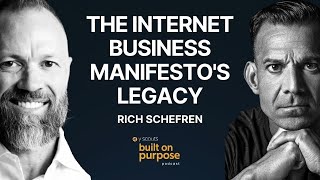
Rich Schefren talks about building scalable businesses without making yourself the bottleneck, the gap between tactics and strategy in marketing, and why most entrepreneurs get trapped chasing the wrong things. He covers ethical marketing, the problems with hustle culture, and how to use AI without losing what makes your business work.
Welcome back to the Built On Purpose Podcast brought to you by Wise Scouts. I'm your host, Max Hanson, the CEO of Wise Scouts, where we find purpose aligned and performance proven leaders. Speaking of today, our guest is the godfather of online business strategy, Rich Chefron. He is the founder of Strategic Profits and one of the original minds behind the digital marketing movement that changed how business is done online. Rich helped scale Agora Inc. To over 1 billion, mentored legends like Russell Brunson and Ryan Dice and created the groundbreaking Internet business manifesto on a report that literally broke servers and reshaped the industry. If you're serious about business growth, strategic leverage and unlocking exponential impact, you're about to get a front row seat to one of the sharpest minds in the game. Rich, welcome to the Built On Purpose Podcast.
Excited to be here, Max, and looking forward to our conversation today.
Yeah, me too. We had a little snafu where we got a couple minutes into the conversation. We're going to move on from it and we're just as ready now as we were before. So we started with, and I want to start with here is we've talked about most entrepreneurs are building cages, not companies. And you've talked a lot about this. What do you mean by that? And how do we know if we're trapped?
Basically, it's, can the business grow without you being there or with you not being there, does it continue to grow and argue to the operations of the business as far as it moving forward? And so, you know, I used to spend a lot of time coaching back in like 20 years ago when I coached like people like Russell and Ryan and all these types. And one of the things that I would do with my clients was map out the whole business model. Like, what is everything that has to be done in this business? And we put it on a mind map and we color code it by team members. And what I would explain to my clients was that the game of business is getting your color off of this map. And when your color's off of this map, then you've built a living, breathing business that no longer needs you to survive. And that's the goal. And so you have this chart and maybe when you're starting, you're starting all by yourself. So that whole mind map is just one color. Right. But incrementally the goal is to get free and also to not be the, you know, the core of the entire business. So a mentor of mine, his name is Mark Ford, he also goes by the name of Michael Masterson. And one of the books That I convinced him to write was Ready, Fire, Aim. And in that book, he talks about something of mine that I taught that about. You know, where are you in the business? Like, a lot of entrepreneurs make the mistake of putting them in the center, right? And everyone's kind of like talking to the center versus on the periphery, on the outside. And that's really where you want to be. Obviously for many people, they can't start there, Right, but that's where you want to move towards. And what we want ultimately is for entrepreneurs to want to spend time in their business, but not need to spend time in their business.
Yeah. When you started your businesses, did you start by designing, knowing that you didn't want to be the center of it, or did you have to learn the lesson? Like, I think a lot of entrepreneurs were there, they kind of build themselves in it. Then they figure out, like, this is great, I can make money, but this is only going to be if I spend my time. Where did you start at?
Yeah, it's funny, I feel as if when it comes to me helping others, right? I'm very good at being able to see they can't see and be able to kind of direct my clients to like, where to kick and where the constraints are and stuff like that. However, with me in my own business, I don't know if I have the ability to plan a business from afar. Like, personally, I don't, I don't know every business that I've ever had, I have rolled up my sleeves and did the beginning work. You know, even my, like when I had my hypnosis centers, like my wife or my girlfriend at the time became my wife, now my ex wife. So all three. But like, you know, we did it together and we played every role in the business. And then as the business grew and grew and grew, like we moved out, right? And I don't know that I could have invented like, how a hypnosis clinic should work and like, and all the processes, like, from afar, like, I had to get dirty and kind of figure out what it was. Because a lot of times I guess the businesses that I've always done are generally unique and different. And because of that, there isn't a model. But I don't even know if I would follow it because I have ADD and I like to do kind of things on my own. But yeah, generally if I can look at like a process map and understand campaigns, I can understand where to kick and how to improve. But designing from scratch, a business that's never been done before, I can't do. I don't know if they're. I assume there are entrepreneurs that can, but that's not my skill set by any stretch. So I guess I've learned the hard way is, I guess to summarize it all.
Yeah, no, no, I think I resonate with that a lot more. In fact, in, you know, ypo, I was an EO before and you had to be a founder, major majority shareholder of a business. And then I went to ypo where there's a group of hired guns and I learned so much for them. But it's hard for me to imagine going that route of taking over somebody's business. I agree in theory you want to design it without you, but I come from a background, I think maybe how my parents raised me, you kind of got to lead by example and, and to the point we're making, sometimes that, you know, kind of hurts you a little bit because you involve yourself more in the business than necessary or in order to really scale it. Um, you know, you've talked about entrepreneurs confusing tactics with strategy. You know, what's the real difference and why is confusion so dangerous, especially when you're talking about online stuff that you've done in the past?
Yeah, well, I guess it depends on the audience, right? So online especially, there are a lot of businesses that have kind of been born during and after Covid really exploded. Right. And so a lot of like high ticket coaching programs, high ticket kind of different things like that, where the marketing campaign and the selling is basically done by advertising to some kind of either conversion device or straight to an application and then a setter, then a closer and a sale. And so that is a very prevalent model in the online marketing space. And the reason it's such a popular model is because it's one of the easiest models to make work. Not necessarily the easiest model, but it's one of the easiest models to make work and make work in a way where you can make decent money and good money. Right. The challenge is that while most of the people who do high ticket think they have a business, they don't. They have a successful promotion. And so why do I say that? I say that because I've seen it time and time again. One companies that built out infrastructure, right, to support sales that are currently going on. Right? But because it's all based on new acquisition and all money is made on new acquisition, right? Then you, you start every month at zero. And if you don't make a lot of sales, then guess what? That month you lost money. And like you go into the next month having lost money, right? Not, not slotted to make any money this month yet, and now you have to sell it to that month, right? And so what ends up happening is generally people build out a bunch of infrastructure around a promotion, not a business, and then when the promotion dies, everything implodes, right? And so that's an example, like that's a meta example of pulling back and saying, like, what happens when you misconstrue a tactic, slash promotion strategy for something other than what it is a business or a strategy. And so, you know, tactics come and go and yet they're incredibly important, right? Because in general, what works best in marketing is a tactic that is somewhat new that many people haven't seen yet or hasn't been around it that long. Now, strategy doesn't really change as much, right? Like, strategy is how we're going to win, what are we going to do and what are we not going to do, right? Like that's, you know, that's the overarching thing, right? Like what are we going to do, what are we not going to do? And then with the tactics, though, the tactics are how we deploy this strategy. And in online marketing, especially online in general, you know, it's kind of like I used to be in retail. That was my first business years and years and years ago. And what's interesting in retail is that new always sells better than like, you know, it's like just, you know, we have a million and a half dollars worth of inventory in the store at all times, but, you know, we turn the store five times a year. So that means every week we're selling 10%. And so every week we're replenishing 10%. And if we look at what sold last week, disproportionate to 10% that came in last week and the week before, right? New. New sells. And it's no different. So that was interesting in the retail world, but it's no different in the marketing world either that new tactics tend to do much better. You know, like you referenced it in my intro, but I wrote one of the very first lead magnets and I. It was called the Internet Business Manifesto. And I didn't do anything that special like promoting it, but it went super viral, downloaded millions upon millions of times. But why was that? Because that was the first lead magnet that, that's why like, like no one had given away a valuable PDF for free for an email address. If I did that today, I would not get millions and millions of people writing about it, talking about it and sharing it and growing my list. So I need a different tactic today than releasing a PDF if I'm expecting similar results. Right. So strategy sets the tone, tactics dictate the actions. But in the online world, there can be a night and day difference between using a new tactic and using a tactic that's been around for two or three years. Yeah.
What a great example. Are there any tactics that you would point to in online marketing today that you think are. I mean, obviously they're changing so quickly.
Evolving. Yeah, it's always evolving and it's always evolving. And, you know, most of the tactics generally right now, I would say, are geared towards ways of either outsmarting the algorithm, like when it comes to advertising, or organic, or, you know, how to leverage AI more in your marketing right now and things like that. That's kind of the gist of what most of the content's been recently.
Got it. And then going back specifically to, you know, to funnels, like marketing funnels. A lot of times you talk about, and I think you might allude to this already, but I want to make sure it's clear because I think it's important because a lot of people are trying to figure this out. But you talk about marketing funnels being doomed before they even go live. What do you mean by that?
I guess it depends, I guess, like when I. Where I said it and who I said it to. But, you know, it's kind of funny, I guess. I don't know if it was in this context, but it's funny. Like my. My girlfriend of the last 13 years, so we've been together quite a while. I just, I'm in my home office here, and this is a separate building from my house, which my house is right in front, like right there, and then there's a pool in between. So it's. This is like the mother in law suite that I converted to my office. And my girlfriend just started to do. She was inspired by my program that I created that is AI kind of AI knows you better than you know yourself. And so she created a version of that for women. Not business owners, just general women. And she comes from private equity world, and now she wants to be an Internet marketer. And. And so she's struggling a little bit with her first webinar. And I came in just right before this podcast and seemed upset. I'm like, are you upset? She's like, oh, it's just so much to do. And I like, I have the webinar in two days and I'm Like, I got to do this and this and this. And, you know, she's telling me the things, and I'm like, you're doing all that? And she's like, yeah. Now, I would assume almost nobody on this podcast knows, but I invented automated webinars. I'm the guy that actually is the creator of it. And so when I would create a webinar, right, the very first time we created automated webinars. Let's talk about that for a second. So, okay, these things didn't exist. And so what we wanted to do was see if we could build it and if it would. So the first thing we did was I just recorded a video like I was doing a presentation, and we sent it to our list, and we asked people to watch it, and some people bought off it. Okay? So the video converts people. Great, right? All right, let's now, like, put a webinar skin around it, right? So that's what we did next. And then after we put a webinar skin around it, right? It's like, why don't we start saving all the comments, right? That this way we could have a master file, and we add all the comments each time. So, like, you know, in a month from now, it'll look like there's 10,000 people on. Because when we, like, you know, and they're all legitimate, real people, right? And we slowly added things, and it was like, you know, this is Ken's first webinar. And what makes automated webinars really powerful when they work and they work well is that, you know, what the disposition is of every single week, right? Like, I invented automated webinars when I got sick of writing those reports, and the reason I got sick of writing those reports was people could download it, but I don't know whether they read it. When someone becomes worth a lot more to me if they consume my message, right? Like, because my message is sticky and it's believable, and it will move them more in my direction. So, you know, I used to have, like, other ways of doing that, like, maybe promise something towards the end of the PDF and then have people, like, come and get it. We would know that they at least clicked on a link at towards the end of the report, right? But, you know, Kim was talking about, like, creating the sequence for the people that didn't show up to come back and watch the replay. She created a sequence, right, for people who showed up but bailed early, right, to come back and watch replay. And in my mind, right, like, we invented the automated webinar to automate something that converts, like, until you know whether it converts or not. Like, what's. Why would you write a whole sequence for people who didn't show up, trying to get them to show up. If you find out that nobody buys off the webinar, right. Like, you're better off not having a replay and just like create a new one. Right? So there's always a way to test a message before you roll it out. And maybe nowadays, like if people are using AI, you can now you can bang out a whole funnel insanely fast. But you'd be better off doing a lot of message testing first. And it's kind of like I was talking about this this morning, so it just happens to be relevant. So I have this other product, Steal Our Winners. And that's like shares Marketing strategies two a week. And my partner was here, business partner now, not Kim. And we were talking about an episode from Steal Our Winners that we might want to use. And it's by Joel Irwin. It's called the Power Offer. And the gist of it is that great webinar, for example, that's an educate, you know, you're way to a sale, right? And the more you educate, the more costly the sale is. That's just the way it works, right. And so Joel, who developed this method, he realized like he had a webinar agency, like they would create webinars for you. This is, you know, five years ago, let's say, and he had a webinar selling people on why you want a webinar and like how to use it, had one and you know, trying to sell his services, right. And that to then ultimately get to an offer. But if you have something. So Joel created what's called the Power Offer, which is basically, let's test the offer because there are some people in the market that don't need to be educated. Right? So it's like if you would like a high converting webinar in 48 hours from now where you didn't have to script any of it, that you didn't have to put the slides together, that you know, was not overly hyperbolic, was in your voice and converted well, would you be interested? Right? And it's like, if so, right, like so. And he's done it in many different markets. And so that's a great way to test out a whole like offer before you put in a lot of work to move people to that message. Right? Because there are going to be some people in the market that already are ready. And if you can't sell them, right. Then what makes you think that educating someone who doesn't even know about webinars so now that they know about webinars to then sell them that same offer, right? Like it doesn't make sense, right? So any way that you can shortcut the interaction with the customer and their opportunity to give you money, the better off you are because it makes it so that you're less likely to go off track. And with everything online being so easy to fix and change, there's really no reason to overly build in the beginning. You know, it's like I'll share this one other story. So there's a really well known guru like in funnels and in conversion. His name is Todd Brown and Todd used to work for me many, many years ago. And before that he won a contest and I coached him and then he was a client and then now he's a guru in his own right. And we were launching this front end product. It's like 47 bucks or something like that. And we then spent this is like maybe 15, 18 years ago. We spent this is before the days of click funnels or anybody, you know, like where it's easy to do upsells and everything. Like this is when we had coders and we're actually creating pages and stuff. And we decided that we needed to build out the upsell sequence and down sell sequence before we went live. And so we spent like three weeks building this like very impressive like chain of upsells and down sells. And then we launched it and the front didn't convert. And so the three weeks behind it were a waste. And I what I learned from that although like so let me the lesson there and then I'll pull it back to the question. The lesson I learned there was never chase phantom profits. Like we didn't want to launch the front because we were afraid lose profits that didn't exist. Right. But could exist if we had sold the front end well and it converted well and those back, those upsells weren't there, right. But we could have saved ourselves three weeks of work had we been willing to sacrifice some sales that aren't even there. Right. Like so that's why they're phantom profits. These are not real profits. But we were so scared of losing them that we wasted three weeks before we went live. And it's kind of the same thing like yeah, you don't want someone going through your funnel maybe and not taking the bump offer. But the bump offer is not the core of it. And if the core doesn't work, then the bump is kind of irrelevant. So why not just actually not waste any time on anything except first get like an indicator of whether the thing that you're trying to sell will sell and then from there build out. Right. And nowadays it is so much easier to validate things, especially with marketing and advertising because you can go so direct that it's kind of a no brainer to do it that way so that you don't risk having many strikeouts.
Yeah, I think, I mean that makes so much sense. But I've seen so many people kind of over market and over engineer these things before just testing it and iterating and you know, kind of going with the flow before you start building too much stuff out. I mean I think that's, I see a lot of that especially working within marketing roles and marketing teams. I feel like they are building stuff way too far out.
They don't want to burst their bubble by having to validate because once they validate or invalidate like it becomes much more real. It's very enjoyable to work on things. Like it's like this pre validation euphoria of thinking how smart you are and how wonderful this is going to work and that all comes smashing down when it's time to actually put it out there. So I could see why many people like to spend a lot more time than necessary in that, you know, that pre validation euphoria. Because it feels good to think that oh, this is going to be amazing and it's oh, I'm going to do this.
Yeah, yeah, totally. In thinking about just marketing in general, you know, I think marketing's about changing belief systems and I think you've coached some of the best. But how do you describe the ethical line between persuasion and exploitation?
I guess it's all basically what your agenda is more so than anything else. So I look at marketing as. Marketing is really all about helping prospects value what it is you offer. Right. And so what that means to me, right, is that every human being in the world walks around with lots of like issues, problems, conflicts in their life right now not all of them are in search of a solution, right. But at some point in time, right. Certain issues, certain problems, certain challenges move from static to now. Like I want to do something about it and when someone wants to do something about it, they're generally going to move in the direction of their beliefs. Right? So marketing is about altering the beliefs as it relates to solving problems. Right. So I want to show like when I've in a lot of marketing, I'VE done right. Is to show people how my solution attaches to their deeper problems that they didn't even realize that they shared with other people, but are very personal to them. Like, oh, my God, he's describing my situation. When I say personal, not, like deeply personal, but just personal. Like, I can describe it. And so that is what I kind of like to do in my marketing, which is basically get people to see a bigger picture and to see how my product actually gets them what they most want in an easier way than they thought possible. So, you know, there's a famous book written Maybe close to 100 years ago, I think, at this point, or maybe like 80 years ago, Gene Schwartz's Breakthrough Advertising. And he talks about that at the very first page that you. You can't create demand for a product, but what you can do is you can channel desire. And desire is about fulfilling, you know, your core issues that make someone a human. Right. And when you show someone a path to achieve, any of those, like, attach to that. Right. That's the beginning of the market process. So I guess there is a very, like, fine line. And I totally get it. I guess people, if you do it and you're not ethical, I think you eventually get found out right away. Eventually get found out by having customers that are unhappy, unhappy, then it's not effective. And all those other things. I think that is probably the bigger difference because, like, you're always trying to persuade. Right. And persuasion. What's the difference between persuasion and manipulation? It's more intent than anything else.
Yeah, I think it's. There's some quote out there that rings in my mind. It's like, sell them what they want, give them what they need, like, type thing. But, you know, as long as you're doing it with the right intent, you know, you're.
What I've always tried to do is get people to want what they need, which isn't easy, but has been effective for me. Right. And I do that by getting them to see that whatever conflict they're struggling with would be resolved faster, better, easier with what? I'm suggesting something that they've never thought of before. Yeah.
What's your take on. It's kind of a random question, but I think since you're roughly the same age with, I think, kids, roughly the same age. What's your take on, you know, kind of the hustle culture, like, mentality? I love to hear people that have actually been successful for long periods of time, which you have. But, like, you know, in some people's opinion, the hustle culture is fading, you know, kind of what replaces it, what's actually sustainable? I have an opinion on it, but I love to hear yours and kind of how you think about work life, kind of balance, if there's such a thing.
You know, first what I would say is, is that, like, yeah, I don't know. Like, I'm not. I kind of get the vibe of the hustle culture, but I would not ever put myself, like, you know, into that group. But what I used to do a lot. And, like, I looked at the way most people operated, and I felt like they operated like they were running a marathon. And I felt like I'm not really wired that way. And so I kind of would do sprints, right? And it worked well for me because, like, especially in marketing, if I'm sprinting and everyone else is just running a marathon pace, then I'm going to, like, rise above the clutter, make it big explosion. Everyone's gonna see me. And then when I'm done running, sprinting, I just kind of go away, right? Like, as opposed to whatever monotony on a daily basis. So I would do these big launches every once in a while and do this big thing, and then after that, coast, right? Like, so I. It was like, very brief, tense periods, right? And then from there, not, you know, really enjoy my life a lot more than be working in my business. I think the world is moving more in that direction anyway. I think, like, I heard this one, I read it, so I don't even know the full context. I heard it in my mind, as I saw, was like, Runway is the new retirement. And I made that mean a whole lot of shit in my head. I don't know, like, what the person meant by it, but it made a lot of sense to me. Everything I made up in my head about, like, not waiting until retirement, that when you have a long enough Runway, maybe that's the time that you consider what's next for you. You know, those kinds of things. Because you have this long Runway. And that makes a lot of sense to me. When I was a child, like, I maybe used to dream dreams like that other people dreamed whatever they were, like being important and special and maybe someone like, one day building a statue. And then as I, like, once I had my midlife crisis, like, kind of realized none of that shit really mattered. And who cares? Like, really, like, who cares if you build a billion dollar company or not? Who cares if you build $100 million company or not? Like, in. As soon as you're dead People are going to start forgetting about you and then within one generation, everyone's forgotten about you. And so because of that, like, to be chasing anything externally as validation seems kind of like, you know, kind of pointless. I kind of think that you live once and that's it. I'm kind of like that kind of person. So with all that said, I think a hustle culture really is, unless you really enjoy it. Like, to me, I hated the four hour workweek. I hated the four hour workweek because of like the subtext of it all. The subtext being that work sucks so you should only want to do it four hours a week. Like, maybe you should change jobs. Like that is maybe what you should do. So maybe it's not even four bad hours a week. Maybe you could have 30 great hours. It's like how to have sex in one second. Like, who wants that, right? Like that, right? So I think that if you love what you're doing, then it doesn't feel like work. Then it's just a question of balance. I think that. I don't think of balance. I guess to be more direct in my answer to your question, like, when it comes to hustle culture, I don't see the purpose of just hustle, hustle, hustle, right? I'm like, I, Gary Vaynerchuk, I brought him, I was the first to bring him on stage when he didn't charge to speak. And even back then, though he'd answer every email, he'd stay up till 3 o' clock in the morning, like, you know, busting his ass, like, you know, I mean, he was willing to put in crazy amounts of hours. And he's got right, you know, to me, like, looking from the side, not worth it. Like many people I'm sure would feel like it was totally worth it. I feel like you have one life and if you're going to spend it hustling, if that's what gets you off, then great. But if it's not, then, you know, you shouldn't be trying to hustle all the time. Right. Like, you know, the. I feel like most people don't fully get the hedonic treadmill goes in both directions. And so, you know, I've been wealthier than I am now and it was exactly the same. I was, I've been a lot poor, A lot, lot poor. I've been a little bit wealthier, but I've been a lot poor. And you know, in the throes of it, you eventually get used to it and then same level of happiness. As before. So I don't believe in hustle culture for hustle purposes. I believe in figuring out what's your gift, what are you great at, what do you, like, lose track of time doing and like, do that. And hopefully you can make a lot of money doing that even better because you'd like to have something that you do that is hard to pull yourself away from as opposed to staring at the clock, waiting like, you know, did I put in my hour of work today? Because I only have to put or whatever. I just thought, like, I've been semi retired a couple times in my life and I was bored. Like, I was bored out of my mind. And nothing good happens when you have too much free time on your hands.
Yeah. 100. Well, one of the things Rich and I had a time to. To talk a couple calls now. One of the things that I was super impressed with was how you were leveraging AI and, and, you know, inside, outside, inside, professionally. And then obviously, you know, we talked more talk about to the extent that you've been using AI and kind of how you've been using it and where it's been helping you. I know this isn't going to be necessarily new for people, but I think it will be new.
I think it'll be new for a lot of people, actually.
For a lot of people. Yeah. Yeah.
And it's really like, I'll just kind of start out by saying this that, like, I had an experience where I had written a report many, many years ago about the mental game of business. I felt like I would actually benefit from reading it because I wasn't, like, feeling really good about myself at that moment in time. And instead of reading it, which I generally don't like consuming my own stuff, I decided to put it into ChatGPT. And that report that I wrote asks a lot of very difficult, confrontational questions. And I answered all of those. And then several months later, I came across a prompt that asked CHAT to reveal some deeper insights that I was not aware of about myself. And when I ran that and I got back the answers, I was kind of blown away by it a lot. And I wasn't even sure, like, how it got those answers. And then I remembered that I had, you know, had a couple of deep conversations with it and I had loaded in that report and I answered those tough questions. But from that amount, what I got was like, oh, my God. So I went basically all in and loaded in everything from my life into AI and found that the more I loaded into it, the better it was able to help me. And so I ended up really improving many different areas of my life, right? Like from my relationships to my business, to just pretty much my health, etc. And at some point I got so much value from it. I asked AI, like, could we develop a program together that got other people's eyes to know them as well as, you know, me. And so we built this course called Zenith, which is exactly that, which each day you answer 25 multiple choice questions and every five answers it's giving you insights about yourself. And it's also doing a lot of deep analysis as well. And because there's a lot of recursive nature in the prompts and the analysis that goes through this, people get some very deep revelations about their behavior, about themselves, about their potential, etc. And the pulling back from all of it, though, the idea of having, you know, everyone I think is aware. Most people, I think, who would be watching this podcast are aware that there's nothing better at pattern recognition than machine learning. That's what AI is, it's pattern recognition. And so when you feed enough information about you in so much so that it could tell you what your Myers Briggs score is, what your Colby score is, what your disc model is, you know, what your enneagram is, what your Colby, you know, name a test, action, logic, spiral dynamics, et cetera, knows everything, knows every single one of those scores for you. It also knows how you see the world, how you perceive it, how you get in your own way, how you, you know, what are you great at, et cetera, et cetera, et cetera. And then with that, it really becomes the ideal work companion to work side by side with. And so that's a big change for most people. Like if their AI really knew them, it would be game changer, the next big. So that's like first step in the process. But it's a huge step because, you know, for me to create stuff is very different than, let's say for you to create stuff, right? Just because AI has everything in mind. So I can say, remember how we did this? I just want to do that, right? And then it will go to town, right? Like it can go look and figure out like how we did it in the past, right? And it can go do it. The next big evolution, though, is not a big one. And now, like you can do it with Claude is really giving AI access to your tools because. And that then becomes a big game changer. Because most people's interactions right now I can kind of describe with AI, you bring Something to AI, right. You either copy and paste it in, you type it in, then it gives you output and you take that output somewhere else. So you're like kind of the assistant somehow. You're bringing and taking, but when it's tied to your computer, that all ends. And now you're just orchestrating. I want you to create a new prompt for my Zenith Mind OS program for lesson three. You can find all the prompts that we already have in lesson three in my Google Drive and make sure to match my prompting style. And when you're finished with that prompt, what I'd like you to do is save it on my desktop. Right. And that's it. Like there was no feeding, there was no taking out, there's no saving, there's not. Right. Like that's already available. It's available in a common tool like Claude. And Claude just increased the number of connections. We use ChatGPT for Zenith. But those are the two big steps that anyone can do that would make a wild difference. And when it knows you really well and it has access to your tools now, it's really game changer, you know.
We'Ll talk about how it gets to know you better. I think we talked about a couple different devices. I think you ended up. Don't you use B or.
Yeah, I use a B computer and also a Limitless, which I'm looking at my desk for right now because sometimes I'm charging it. Yeah. So B computer and Limitless. So these. This is my Limitless. Where is it? There. This records for. I think the battery lasts about 20 hours, so I basically wear it all day and just charge it at night. And this is the beat. And this lasts a week here. There we go. There it is. This lasts a week. And this is kind of like I use as my backup because my Limitless, this one I already have set up where it is every 10 minutes. It is syncing and taking everything off of it, putting it into a notion table. And then ChatGPT summarizes what was said and tags it so I have access to that. Right. So I can ask what were all the commitments made to me yesterday? What were all the things I committed to yesterday? So on and so forth. How do you think I handled that conversation and then get feedback on that. What would have made that conversation go better, you know, Etc. And like when I have these. Right. Not that I. For. I guess for some people they're going to get their panties in a binder. Yeah, I don't. I don't label anyone else except Me, like I'm the only one labeled in this because I'm not really interested in, I don't want other people's stuff in my AI. That's not really what I'm like using AI for. So it records any conversation around me. Right? Every conversation that is being had with me. But no one sees that notion. TABLE. Within a day I'll forget who I was even talking to.
Yeah. So when the audience, people are listening to this and I think this for a lot of people goes to like a privacy type of issue. What's the quickest way for you to persuade and say like it's worth it and get over that route?
I go the other route. I go the route that I think it is worth it. But I tell people that privacy is an illusion and that I can show them a simple way to prove it really fast. But if they want to listen to me for like two minutes, I can overly prove it. So like I did a steal. Our winners with this one company, SimpleCheck, for three bucks a lead, they'll give you four points of data. And those four points of data are your credit score, what the IRS has as your income, what is currently available on all your credit cards. Like how much do you have spending power on, what's available on your credit cards. And one other, your credit score. And if you go to simplecheck.com they have like a little demo section. If you type in your email address and your cell phone, they will text you, confirm that it's you, and then they will text you back the data that they have on you. Now that's just four points of data for three bucks. But fan basis, another company I work with, they will give you 400 points of data for $3. And so much more than just those four that SimpleCheck is giving you. So now how is that possible? Well, I used to own an AI company back in 2018 called Site Visitor, where we would identify people that came to your website for 5 cents a person, whether they ever opt in or not. Not relevant. Right. Like we can identify it, give you their email address, their home address, et cetera. Right. And the way that we are able to do that, we were able to do it. And the way people are able to do it and still do it today is that like there's something called programmatic advertising which is all bid based. Right. And it's all like most of the advertising you see online and if you've ever been retargeted. Right. Like how does that work? Well, they all work the Same way, like if I wanted to have one of my servers hooked up to the Google Ad network, my servers have to respond to a half a million requests a second, right? So 500,000 requests a second. I have to say yes now in my bit. And in order to give a bid, I need some information. I need to know the unique user that's on that page. I need to know what that page is about, and then I can bid, right? So every page, that every person goes on, right? There is a call out. That's how ads get placed on the page, right? That we have this unique identifier as a person on this page about this, what's your bid? And there are enough people out there that have reversed engineered the hash marks, which are those unique IDs, back into email addresses. So every page of a website that you go to that has an ad on it, they are broadcasting out your email address and that it's on a page about this, right? Like, that's the Internet. And so privacy does not exist. And I say this as someone who has leveraged those tools as a marker. Right. You know, it's pretty freaky. Sorry for going. It's pretty freaky to go to this website, simplecheck.com put in your email address and telephone number and see everything being very accurate. Like, you know, I was kind of surprised because I, you know, I lie on pretty much every form about my income. I wanted to see, you know, when I put in, you know, not like publicly. I'm talking about, like when I'm filling out an application. I don't like giving out, like, stuff like that, right. So I was curious, like, what they would have as my income, but they had my real income because it really was the IRS number, which I was like, wow, that's interesting. So, yeah, so that's how I handle it. I don't know if you can. We seem similar in certain ways and I wonder if you can identify with this. Like, I also think that anytime you have a secret, and this isn't a unique idea, like, I read this somewhere a long time ago and I just really identified with it. Anytime you have a secret, what you're also saying is that part of you is you're ashamed of, like, that that's not a good part of you, right? That, like, if you knew this about me, you might think less me and secret, right? Like, I've always been a TMI guy. Like, I always give up too much information, maybe as a defense. Right. Like, I just will, whatever reason. But I find that I Don't really have very many secrets. And I kind of like it that way. And I also think, like, I loaded in my whole, like, I've kept a journal for 29 years, 8,000 pages, right. Like, it's 32 books. While I'd be embarrassed if someone who knew me very well read it, I really could care less if someone who didn't know me read it and they wouldn't be interested in it anyway. Like, I'm not that interesting. Do you know what I mean? I don't know what secrets I have that are so, like, there's no secret I have that's going to totally destroy me and there's no secret I have that, like, I don't know. So I don't like, I don't get the concern. Yeah, I'd rather have ads that are relevant to me than not relevant to me, like in the online world. So I'm also not that concerned about that. I don't like living in an information bubble. But, you know, I can go and like, look for stuff outside of what my opinions are and try to. But yeah, I don't. So privacy to me, like, I feel like this big disconnect with most of the world. I've never been a private person and I've never really suffered because of that. And so, yeah, so I guess that's where it's like, what's. What do you. This big concern.
Yeah, I mean, I think your perspective is. As I'm listening, it's all dead nuts on. I think people are just paranoid. Like, people are going to gather information and use it against them. And to your point, nobody cares about the most people, so what are they afraid of?
To me, it's kind of the same thing as like someone who is afraid to share their business idea because, like, people are going to steal it. Right. Like, you know, to me it's like, that sounds like someone who's never been in business because once you're in business, you realize getting people to listen to your idea and actually, like, it's not. Is actually the hard part. It's not easy. No one just takes your ideas and says, great idea. And now you're like, you know, you're hired. That just generally doesn't work that way. So it's always been interesting, like when people are like, this idea is so good. And you know, yeah, okay, I love that.
I went through that phase, actually, when we started the company that I run now, why Scouts? And then we wrote a book about it and published it and nobody, I mean, they Cared, but you know what I mean? Like, nobody ran off and, like, started a bunch of business models with it. But at the beginning, I'm like, yeah, let's kind of keep this under wraps. So it's kind of funny. Do you mind if I go through a couple. Few more minutes and ask you some, like, shorter questions? And is that okay? I just want to make sure I'm respectful of your time. This is great, though. Like, just in thinking about, like, talk to me, because you and I had a chance to talk. So you've given some examples to talk specifically about using Zenith and that concept. The specific issues that have helped you, that people would be surprised on how much it's helped you. You've alluded to them, but, like, it.
Yeah, like, so on a personal level, it's helped me just, like, in basic stuff, right? Like, helping me understand that I. Because my DNA is this way and I work out, like, that way, that maybe these certain supplements I should take, but these other ones I shouldn't, right? Like, or stuff like that. So there's that kind of stuff. I think I was telling you a story about how I wore this in couples therapy. And the couples therapy was about some issue that, like, is not what I'm bringing up. Here is something else, right? And I just mentioned in passing that I used to write these long romantic cards to my girlfriend 13 years ago, and I don't write them anymore because I don't feel that way still. And I'd like to write those because I know how much, like, when I gave them to her, I felt good about giving it to her. She felt wonderful receiving it and reading it. But I feel like right now, if I did it, I'd be inauthentic. I don't really feel that. And, like, she'd still feel good, but now I'd feel worse, like, because now I'm lying about how I am in the relationship. And so then we moved on to the therapy. And, like, when I fed it into AI, which was really funny, Like, AI summarizes it first and then immediately starts asking me questions, and it asks me why I'm so black and white. Like, why couldn't I just write her a card with, like, one nice thing in it? And it was really funny because the therapist never said that she hadn't said it. Like, I hadn't thought of that. And this was just a way, right? That I was just, in a simple way, could improve my relationship, right? So that's just like, an easy way. But then when it comes to my Business, like, it can create basically anything for me at this point because it knows me so well. So time savings, like, out the wazoo, from writing webinars to creating books to, you know, you name it. So that's been huge. But I would say also that it's also. I thought I knew my patterns really well, right? Better than most, because I've kept the journal for so long, and I would say that I do have, like, a pretty clear understanding of certain patterns that I run. But AI, like, extended that for me. Like, in other words, like, you know, I thought the pattern was like this, you know, but like what AI said, yeah, you run that. But this is part of this bigger pattern. Let me explain this, like, how this whole bigger pattern has dictated your life for the last 30 years. And I'm like, like, and it's. And it's right. Like, it's right. And then that's kind of like a head, right? Like, because, like. Like, I don't know that anyone could have ever told me that. Do you know what I mean? Like, I don't know that you wouldn't even know it all from just reading my journals. But if you read all my journals and you looked at, like, every therapy session I've ever done and you looked at the work that I did on myself and, like, all of that, and you, like, were picking out seeds and really thinking through, you might be able to piece together this elongated process that I run through that's like a cycle of like, 18 months to 24 months that starts by me distancing myself, then feeling sad and lonely, and then intellectualizing. And then from the intellectualization comes some insight. That insight excites me now to create something new. And then I go and do that. And then eventually, like, after I've created something new and then go back to my introverted self, I feel lonely and sad. And then like, this is the pattern, right? Like, I've. I've shortened it a little bit, but, like. And like, I have to now, like, really think about what parts of that do I want to change, right? Like this meta, like, loop that I've been running for many years on a small basis. It's shown me lots of small little things that I've done consistently that are much easier to change, much easier to fix, much easier to decide either to do not do, optimize or not, right? But, like, this big life pattern that's like, one I haven't yet really dissected as much as everything else, because I'm kind of. I'm kind of clearing away the easy shit first. I guess this is like the way I'm looking at, but it's pretty amazing. And so I worked with AI to create this, and it's by far the best thing I've ever created. And I really don't think I created the majority of it. I think AI created the majority of it. And so it works into four phases. And the four phases are just really instrumental in the way, like, it developed. And the first phase is AI gets to know you really well. And at the end of that week, like one week, it will give you this output about some of these deeper issues. And then the second week it takes all of those deeper issues and then builds out like greater context around it, like how this impacts you, where it plays out, how you keep it in place, etc. So this is like, basically, here's all the baggage, max, that you've accumulated over your whole life that is now tying you down and slowing you down and getting in your way. Some of it you realize, some of it you don't realize. Let's take a look at all of it and see how it all kind of fits together. And then what's great about AI is, right? So it has discovered all this stuff about you. And this was like one of the changes that I made with AI, right? So I built this whole course with AI, but it's all in AI as well. And so I'm constantly talking to AI and also trying to make it better, right? So we looked at all the different issues that could be in someone's life, right? It's a lot and thought about, right? At like AI did. What is the best school of psychology for that type of issue? Like, what type of psychology gets the best results for that? Is it internal family systems? Is it cognitive behavioral therapy? Is it, you know, shadow work, inner child work, what have you, right? And so then you take this document, right, that has all your issues, and you put it in this other prompt and it analyzes all your issues and it does the research to know which issues are best dealt with, which type of processes. And then it creates a kind of like prescription plan of this prompt with this process used with that issue, right? And you should work on this issue first, this one, second, this one third. So that's like phase two, AI challenges you. So the first phase is AI knows you. Second phase, AI challenges you. The third phase. And this is probably interested what you think about this, but this is based on certain things that I've been taught personally, but just read and taught, like From Warner Erhard. Stuff that is very autobiographical to me, like, in the way I respond to things and. But it's also applicable in the way I see my clients as well. So I don't know if it applies to everybody, but it certainly applies to me and applies to the clients I've had and etc. And that is that I feel most alive when I'm in pursuit of something that matters. Like, I went through a whole midlife crisis to kind of discover that, right? That it's not about the achievement of the goal that matters. It's not even about, like, pursuing as much as it's pursuing something that matters. That's when I feel most alive. What Werner Erhart said that, you know, you look at a great person and you think, I'm not that. But what you don't realize is that no great person starts great. What makes a man great? When they commit to a cause that's bigger than themselves, that pulls them towards great because it requires it. People don't become great on their own. Like, they commit to something that requires them to be greater than who they are today. That commitment is so strong, it pulls them up, right? Like, forces those decisions to make the decisions that a great person would make, right? So it's like Martin Luther King probably woke up with a headache on certain days, but he still went to work those days because he was committed to a bigger cost, right? So week one, AI knows you. Week two, AI is like, starting to clear away the baggage that you've accumulated. Week two, three, is all about what's possible, because I want people. What I realized about myself when I went through my midlife crisis, like, I didn't even understand why I was going through a midlife crisis because I had filled out, like, that life wheel, you know, like the circle of life. You give yourself a score, like, in every area of life. And I gave myself, like, high scores. And I didn't understand why I was miserable, and yet I was giving myself high scores. So I looked a little bit closer, right? And, like, I had given my marriage, I think, at that time, like an 8.5 or a 9. We got divorced, right? Like, so. So I'm like, ask myself, why do I give myself that an 8.5 or 9? And I said, okay, I gave myself. Let's say it was a 9. And I don't know if it was a 9. It was probably an 8.5. I gave an 8.5. Because we never fight. She lets me come and go as I please. Like, we get along so there's no drama, right? But, like. And I gave myself, like, maybe a 9.5 at work because I wasn't needed there at all. I just, like, was making money, but I wasn't either, right? And I, like, went around, you know, gave my relationship with my kids, like, a high score. And part of the reason was there was nothing, no problems there. Everyone's doing well in school, like, you know, whatever. And what I realized, though, was that, like, okay, let's look at my relationship. Was that really the dream relationship? Like, when I was younger, did I dream about having a wife that just left me alone? Or did I dream about, like, a partner in life where we wanted to do stuff together, where we were really taking on the world and stuff like that? And when I thought about work, did I dream about working with a, like, group of people I really enjoyed working with? Like, and we were doing stuff together, not just like, that I wasn't needed. And so what I really kind of realized about my own dreams and my own goals is that they had kind of gotten smaller as I got older, but not intentionally. Like, I had basically resigned to certain areas of my life, that this was, like, as good as it's going to be and just be happy with that. And that's part of the reason that I was going through crisis, because I closed off so many areas of my life that now I just, you know, there weren't any problems, but there wasn't any excitement. There was nothing. Right? Just there. And so one of the easiest ways for me to get into action is to be excited about doing something that, like, I'm excited about, right? Like, and so I realized about myself that as long as I'm pursuing something that's exciting to me, my life works. You know, I have a reason to get out of bed in the morning. I have a reason to do the things that I'm doing and all that kind of stuff. And so this phase three about seeing what's possible is selling people on a bigger dream than what they've been playing for based on the strengths that they have. And now the clutter that has been getting in their way starting to get removed. And then. So that's phase three, and then phase four is execution. So it's all about taking all of that stuff and then saying, like, what is the best way for this type of person who's doing these types of things, trying to pursue this kind of goal? What's the best way for them to work? And, you know, what's interesting is people can thrive. Most people Find it easier to thrive on a way of working that they've never considered before. I can't even tell them what it is, but that that's uniquely designed around their unique psychology, uniquely designed around what tasks they're doing and uniquely designed around what outcomes they're pursuing. Right. Like, so it's all unique to them. And so the ultimate goal, like the reason why people buy the program is more because of the outcomes that they get in phase four. But in order to get those outcomes in phase four, you got to go through phase one, two, and three, because it's in that process of getting to know you, getting to understand your baggage, getting you to see what's possible, that all of that, while that's going on, AI is learning more and more about you. So, you know, there. Each of these outputs are requiring a bunch of the inputs. And so we're doing this both because it's valuable, but it's also necessary to get to phase four, because for AI to really help you understand you and be able to really help you construct your way of working, your own unique way of working, like, very specific to you. You know, it's like. We will just show you an example here real quick. Kind of make it so that it's a little bit more. Because I just taught this last night. Let's see.
Yeah. While you're finding that we talked about this before, what's blowing my mind. And I don't mean to oversimplify it, but it. It is a system to help people find more meaning in their life.
Yeah.
And really find their purpose, per se. You know, purpose is an overused word, but find their purpose. And a lot of people, what they don't realize is their purpose, you changes, but they don't have a process to figure out.
Yeah.
What they should be through. And this kind of short circuits that entire process.
Yeah. In a very big way. And so, like, in the beginning, you know, I've gone through many cohorts of this already. I think close to 2000 people. Not at 2000 people yet, but close to it. Like maybe 17, 1800 people. And when I first, like, got into execution, it was way too rigid for people, which is the same problem that they probably had trying to follow any other system. Right. And so, like, now we kind of, like, ease into it. So we take, like, you know, they've gone through the first three phases now AI has a ridiculous amount of information about them. Right. And one of the things. Then they run this prompt called the execution bridge, which is now pulling everything that might Be useful based on the last three, you know, phases that would be useful for execution. And so now that's all sitting here. Then like what I found was really useful and this was just something that like I kind of fell into. I don't even know if it's like a way of thinking about stuff is that it's always good to give AI models, right? Like you know, showing it what you want and so created this. Let me see if I can share here. Share screen. All right. And yep, there it is. Oh wow. Hopefully this works. Share. There we go. So in step one in creating someone's execution system is to first get some conceptual agreement at just like the highest level. Before we get into like how you're going to process tasks, what you're going to do on Monday, like all that kind of stuff. Let's just talk about the system itself, like how is it going to work? So here are 17 examples of different execution systems based on different personalities that people might know. So a lot of people have heard of David Goggins, right? Like if we were to classify his execution system, it's called the pain ritual execution system and it's callous. The mind do something that sucks every day. And the elements of his system are daily truth check ins with via brutal honesty discomfort protocol, daily suffering embedded as a non negotiable and cookie jar activities Mental database of past wins to access when breaking the psychological lever is uses shame and past trauma as fuel, not anchors. Right? That's David Goggins. But then there's Cal Newport, right? Like Cal Newport who wrote Deep Work. And so his whole core philosophy is that focus is the new iq. So then his whole like system is about not being interrupted, right? So time block scheduling every hour of the day, pre assigned, zero notification life, no social media, no email outside designated windows. Lead measures writes 1000/plus word sessions per session, right. Tracks academic output. Psychological lever eliminates distraction induced identity drift, right. So each person's right, this is Brian Holidays, Peter Drucker, Kobe Bryant, right? And it's just basic, right? There's like. But we're giving a bunch of different models to AI and saying okay, you now know all this about this person. Come up with as many of these kind of execution system kind of like top level descriptors for this person. And now we're going to generate as many as we can and we're going to look through them all and I want you to pick and choose like different elements of different ones. Like your goal is to have these five pieces kind of laid out for you so that then we take it to the next step. So kind of how we move it, like people are still involved. It doesn't like give you just like, oh, here's exact way you should be. But like having something like this, right. Just makes it what I found so much easier because most people like, when they think of it like, what is the core theme of your execution system? They look at you like you're crazy. Right? What do you mean? So, you know, it's just about like putting down on paper the, the first essential elements and then from there it's like, then we start building out a lot more. But I found that this was really helpful in just getting people to first kind of think about like, what is their execution all about and what are the minimum number of pieces that it would actually make this thing work before we start, like really engineering. Because you can do almost anything, right? Like you can have AI basically greet you every morning on your way to when you sit down at your desk and tell you what to do. But maybe that, that might work for some people and might not work well for people who don't like being told what to do, right. Like so, you know, it's all different for different people. So that's just like one little input that we add to all their stuff that then starts generating versions like that for them. And then from there it's like fully built out. But yeah, so that's kind of the process. And now we just rolled out a beta group for business, so that's much more robust and we're just taking people through it now. So it's too early for me to really talk too intelligently about it, but it's amazing. That's all I can say is that. And I don't think I'm saying anything new when I say the world's going to be totally different. Six months, 18 months. And the biggest, like the big change that's going to happen next is when people's full AI is really integrated into their computer because it is so game changing when that happens.
Yeah. How do you think about like when. So if you go through this process, it has, you know, obviously Ray is going to know you well. One, one application, I think it was Delphi or something was the company. But I started. The first thing I started thinking about was not only for business but like for your kids. Like when you're gone, they could still like ask for your advice because it knows you like, so how are you thinking about this when in relation to like legacy and how you Might share it with, with your daughter that I know that you have at the same age as my son. Like, how do you think about it from that perspective? Because I, you know, everything there's about.
It the other way. I think about it differently than everyone else. It's really interesting. Like, I say that because, like, I've been very much less about having an AI that replicates me and much more about an AI that knows me. And the reason why is that as someone who was like the first online business coach, right, and someone who's gotten my client results, and I'm very proud of it, I couldn't beat AI. Like. Like what AI is capable of knowing about a person is so much more than I could ever hold in my brain. It's like, this is the way I was originally thinking about it, right? Like, I was obviously thinking about, like getting clarity about my own shit and improving my own stuff. But then I also thought like, hey, you know, every AI knows pretty much everything about Steve Jobs. It's read, it has consumed every speech he ever gave, every memo that it ever got his hands on, every book about him, everything about everything, right? It knows everything about Steve Jobs, how he thinks, like, all this kind of stuff. It doesn't know me, but if it knew me, it would be the equivalent of Steve Jobs knowing me that well. So that when I asked for advice, it was as if Steve Jobs knew me better than any person on the planet. And now I'm getting his advice translated to me. If AI doesn't know me, then when I asked for Steve Jobs advice, it's like I'm reading the encyclopedia. But when I really knows me well, now it's catering that advice, which it knows really well right now, to my unique psychology and my unique. And so I've always been much more focused on the other side. Much more. Like, how do I get my daughters to get their AI to know them so well? I can give them really good advice? How do I get my AI to know me so well? Like, you know, and that's what I think ends coaching. I don't think what ends coaching is not the AI knowing everything about everything. It already does, right? The one thing it doesn't know is you. But when it knows you better than any human could, because it knows you better than you even know yourself, then it's going to be able to give you better advice than any human could ever give you. And that's really what I have found to be true, that it can spot things that are going to be a problem way before you will spot them and therefore can help you figure things out. So in the program, right, like in the Zenith course, there's something called the Zenith Mirror score and it ranks, it gives you a score at the end of every day of how well it knows you on a scale of 1 to 100. And once the score is above 80. Right. 81 or better means a 90% accuracy on predictions. So you know when it's giving you those multiple choice questions, right. Your score is going up and down like all the time. Right. Because it's predicting every multiple choice question how you're going to answer it and when you answer it the way it thinks you're answering it. Right. Let's point for it. If you answer it differently, it's taking points off the Zenith score because it doesn't know you as well. So you stay above 80 when it has a 90% certainty of how you'll respond to any question. You know, mine's like a 91 and that's good enough. Like it knows how I'm going to respond.
95%, man, this is, this is blowing my mind. I don't. I'm not sure why we didn't start with this at the beginning. Hopefully the people that have listen to this. So how do people, can people get involved in this program at this point? Are you still beta testing it?
Yeah, we always have different stuff going on for it, which is like the worst thing to say. But they go to my main site, which is strategicprofits.com there's a link right towards the top. Yeah, Zenith Mine. That's where you can find out more about it. And I'm still doing them live. And I think the last, what might be the very last live cohort that I do for a while is July 28th. Got it.
Okay.
I've done like July 28th will be my fifth cohort. So I've taken five groups through this and I've made changes each time, but I'm making less and less changes now. So next time we'll be probably my last time and then I'll move on to doing another program of some sort I think revolved around AI taking it further.
Man. Well, I'm going to start wrapping up, but I'm going to jump in and check this out. Not that I had to buy what you're selling, but like, I mean, it all makes sense. I think anybody listening that has even scratch the surface of AI, there's like you just have a different perspective on it, which I think is amazing. And I think A lot of people will end up with that perspective. That's my opinion. So to kind of hear it first and hear just how clear as day you are about it and kind of how you use it has been just awesome. Awesome to hear. I'm sitting here.
One other. Let me share two other things, please, please. One is never accept the first answer that AI gives you. No matter what, right? No matter what you're having to work on, you can always do better. So I generally ask it to rank, like on a scale of 1 to 10, what it just gave me, you know, it's sometimes generous. It'll give itself like a seven. And I'm like, I would give it a five, like a nine. Generally, like, it just does better. Like, you know, it's like your brain, right? Like it conserves energy. It's not going to give you the most impressive work first. Like, why would it? But the bigger thing that I was going to say was I think that I've been able to do some amazing stuff with AI, I think that other people have not been able to do. And so I've been thinking about that and I've been thinking about what is it, right, that has allowed me to do certain things that are really cool. And I think that I'm a generalist. And it seems to me that there's a big difference between not knowing anything about a subject and knowing what an expert knows. Like not knowing what they know, but knowing how to describe what they know. Like, case in point, right? Like, just like in the first module of Zenith, like phase one, where AI gets to know you, right? I ask it to do something towards the end of that week, which is to give the client, right, give the student Zenith a breakdown of where they stand in every constructive development theory. And here's the thing, right? Like, I just needed to know about constructive development and most entrepreneurs wouldn't, but I knew about it. I was able to. I don't know, I didn't. I don't need to know anything other than that. There's this area of constructive development. I mean, I did know more, but like, there's an area of constructive development. It's how adults mature. Adults mature not by knowing more, but by thinking differently. And this kind of lays out the process of how thinking evolves over time. So that would be useful. I know that. So now I can leverage it. And so there's this different type of knowledge that makes. That gives you superpowers in AI. And it's like just knowing the names, concepts, or just. It's like, yeah. Could you identify what belongs in a book about engineering or a book about CEOs or a book? Like, if you can identify it without knowing it, then you can operate like it. You have to know that there are heuristics to be able to leverage heuristics. You have to know that there are cognitive biases to leverage cognitive biases. But you don't have to be a master of any of those things. You just have to know that there's something called heuristics, there's something called cognitive biases, there's something known as constructive development, there's something known as this. Right. And as long as you know that, like, that minimal level of like, this is a thing and it can be used for that, that's all you need to know. And it's a very different type of. You know what I mean?
Oh, yeah. Yeah. I mean, it kind of goes back to. I think a lot of people are afraid to really know who they are and actually do something with it. But now there's a tool to kind of help them. So I think, you know, it's kind of know thyself and then, you know, that's kind of how you become happier of all time.
Right?
All time. It hasn't change. It's just. Yeah. Now there's just a tool that is. You can remember and critically think so much faster than we ever have before and tie all these points together. I mean, it's absolutely amazing.
Yeah, it knows you better than you know yourself. Like, tell you, like, how I would respond this to that. And. But like, if we ask AI, it would tell you like 90% he's going to do this. You know what I mean? Like, that's insane.
Yeah, yeah, absolutely. Same. Well, I can't wait to jump into Zenith. I'm like, you had my interest peak the first time we talked about it. Now that we've talked more about it, I literally, I've never left a podcast. It's like, so interesting. I have other meetings and I just want to go, like, start working on this instead of like, actually go do my work. So I can honestly say that's never happened. So thanks for coming on the show. You've been listening to the Built on Purpose podcast brought to you by WY Scouts. You can listen to all of our past and Future podcasts@wyscouts.com Rich thanks a lot, man. You're absolutely amazing. I can't wait to continue these conversations and continue to look into Zenith.
My pleasure, man. And look forward to possibly bumping into you at smu?
A hundred percent.
More from Rich





Russell Brunson Reveals Why He Brought Rich Schefren to Funnel Hacking Live (AI Edition)





