
Are Your Recruiting Efforts Average, Good Or Great
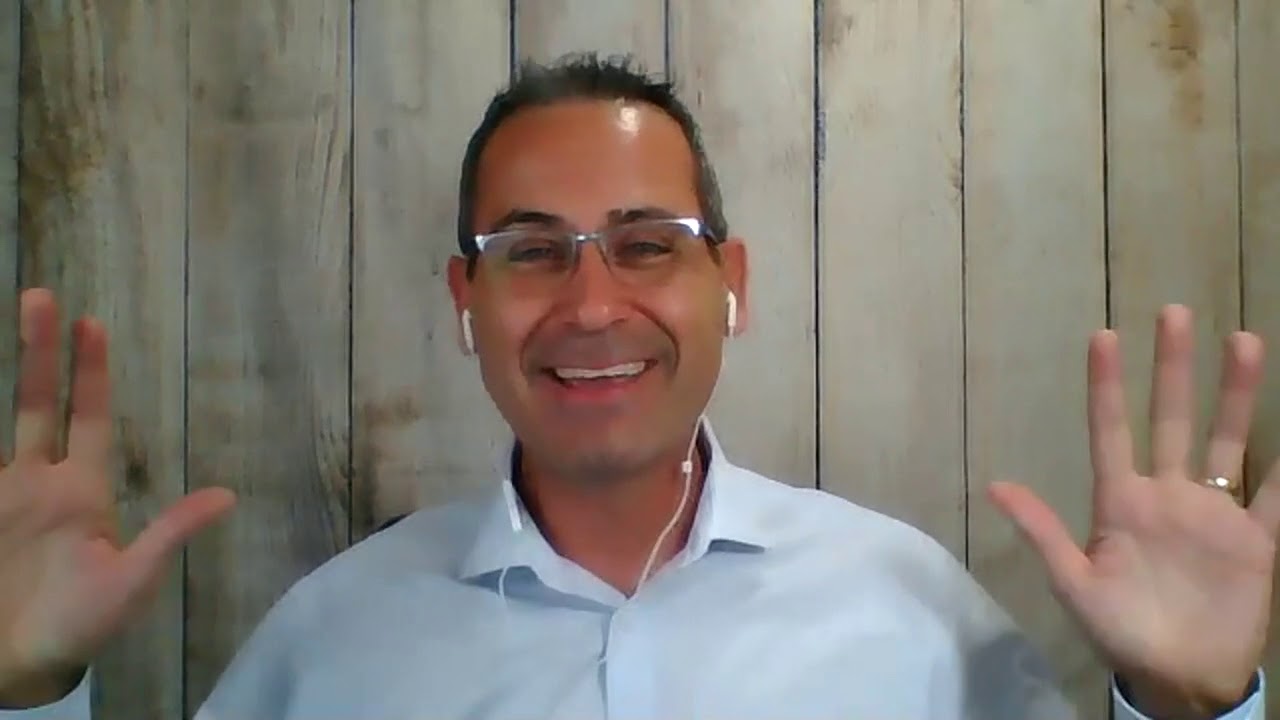
Richard Milligan walks mortgage recruiting leaders through moving from average to great by shifting from selling features to building relationships around vision and values. He emphasizes protecting the first meeting for connection, asking recruits their deeper why, and creating meaning through community service and shared purpose rather than leading with compensation or company perks.
Chapters
Hey gang, let's see, uh, we've got part of our audience here right now. I can see some of you, some of you I can't. What's up, Brian?
Hey Richard, how you doing, man?
I'm good, man. It's T-Shirt Friday.
Dude, it's always T-shirt Friday when it's like 95 degrees out waiting for a tornado.
Oh, man. It's been like 100% humidity and like 100 degrees here, it seems like, for about 2 or 3 weeks. I feel you.
Yeah, it's nuts.
I
figured we'd see Brian from the weight room or something like that trying to inspire us all.
You'd have to get up at probably 4:30 in the morning, right, Brian, for something like that to happen?
Hey, Brian, great post.
Yeah, man, you gotta get up at 5:30. I can't do 4:30.
Thank
you.
Yeah, it was really good. That was really, really good. It's nice to meet you finally face to face, sort of.
I know, it feels like we know each other, but then you, you know, you finally get to connect in live and not just watch the videos of each other.
Yeah, yeah, it's cool. It's cool. I appreciate everything you've done. You've taught me a lot on your videos. I'm grateful to be connected.
Jeff, how are you?
Oh, likewise, man.
I'm doing well, man. Thanks.
Good, good to see you.
Appreciate it.
Let's see, who else do we have on here?
David Stringer.
Hey, David, how are you? Great, how you doing? Good, good.
Al Duova.
Hey, Al, how are you? You dialing today?
It was dialed in after driving.
I gotcha. That's awesome. Well, sometimes you got to be smarter in technology, right? So you gotta— you have to go old-fashioned. Well, cool. Let me— we'll go ahead and get started. I have— let's see, we've got 5 or 6 people on here right now. I have a handful others that will probably show up. We'll see what happens here. Sometimes people have problems with technology. And I'll get an email that says I couldn't connect. But the intent of this session is, is pretty— this is actually really just what I would call more like a mastermind group where my expectations are to teach you some things and to have some conversations with you about some things that I'm seeing inside the, inside the industry and to make some things relevant, but to also have it as a candid, open conversation. I think some of the best ways to learn are through other people inside the industry. And so I'm never going to pretend to know it all, but I know, I know just enough. And so I'm, I'm definitely an information aggregator in that I talked to several hundred mortgage recruiting leaders. In fact, I came off of one yesterday where 110 recruiting leaders all in one session. I'm talking about things. And so as an information aggregator, I really hear the larger noise. And having been in each one of your shoes, one of the things that I know is that you sit in an office by yourself and sometimes it's a, hey, is this a me thing or is everybody else in the same boat thing? And so being able to share some of the experience with people is helpful. So intent today really is to just, I mean, have some open dialogue back and forth. I'll lead it. The thing that I want to lead you through is this concept, this idea that they're in this industry, and this is true about any industry, this doesn't make the mortgage world specific, um, specifically more interesting because this is going on, but this is in any industry. Um, there's always opportunity improvement offers and there's always new opportunities. I think understanding that, um, for me was a very critical, um, piece in my career where I noticed— now I didn't notice this at the time, But I noticed after I left the business and I went back and said, let's dissect why you were winning and why you weren't winning in seasons inside the business. And I reframed myself from this opportunity improvement offer to a new opportunity. Okay, so that framework's really important framework. Look, there are a lot of, especially in our business, opportunity improvements. In fact, most recruiting leaders that I have found, and again, I spend 7 or 8 hours a day in sessions, 1-hour sessions like this, where I'm speaking one-on-one with people. And then I have the opportunity about once or twice a month to stand on stage and talk to hundreds of leaders. But I can tell you, the consistent thing in this business is that your competition, and maybe you, are positioning yourselves as opportunity improvement offers. Okay. What that simply means is this, is that the framework goes along the lines of We're better. Okay, that's it. We're better. We've got a better— we've got a better system. We've got better service. We've got a better toolbox. And look, I get the fact that you may be where you are because you bought into part of that vision. You might have better technology. You might have more foresight looking down the road, and you think you guys are ahead of your competitors. I get those things. Those things have to be there. Those— some of those basic principles have to be there. Um, in order for you to win. Okay, but you can't lead with the improvement offer. Okay, and if this is a trick that we get caught up in, because the way people are taught in this business is to ask the questions about your offerings. Okay, they lead with that. Look, I, I've had hundreds if not thousands of recruiting meetings. That first time you get somebody on the phone, that first time you meet with somebody face to face, They want to know about all your widgets. They want to know about the toolbox. Hey, how do you guys handle this specific deal? Do you use an AMC or an appraisal desk, right? Do you do down to 580 credit scores? How do you underwrite? How does your CRM work? Do you stay in front of the customer with your CRM for 5 years? Or, you know, all these are all the questions that come out of them. So the difficulty is, as a recruiting leader, is making sure that you're not leading— letting them lead you as you recruit, because you immediately put yourself in that position of We're simply nothing more than an opportunity improvement. Okay, what that does for you is that positions you as what I call the left-brain recruiter. Okay, that means this. Look, I went out last weekend. This is a funny story, by the way. We went out last weekend car shopping. I made the mistake— I've got a 16-year-old son, and we weren't shopping for him, but we took the kids along. I've got 4 kids because we're like, the boys need experience. They need to see what it takes to buy a car. You just don't— a car didn't arrive in the driveway one day. So we go to buy a new car. We're at a car dealership. My 5-year-old throws up inside at the car dealership. You can't make this stuff up. But if you've had— if you have kids, you totally get it. And we're like, we're out of here. We didn't buy a car. We'll probably never go back to that dealership again. But that actually, actually happened. But when you're buying a car, you appreciate this. You're all about measuring. You're measuring the price. You're measuring the Blue Book value, the NADA value. You're— it's all left-brain thinking. Okay. Um, you know, if you've ever bought one car, like, I remember the first car I bought, it was an emotional buy. And I— and that— and I thought that I was the only person with a black Ford F-150 that had pinstripes. And the moment I drove off the car lot, I realized that everybody else had a black Ford F-150 short bed with pinstripes, right? So the emotional part. When that— when you engage the emotional or the right brain part in recruiting, you're automatically going to win more recruits. Okay, so the opportunity improvement offer is always left brain recruiting. Okay, so my encouragement to you is, look, you're going to have to have that conversation on, on your offering. Okay, don't lead with it. Okay, don't lead with it. Don't lead with it. And I would— what I'm going to advise you is that first meeting, protect it. Unless somebody says, I got 4 hours, right? And so that happens. Look, I've been in recruiting meetings where it went really well for the first hour and they looked at their watch and said, I'll give you the rest of the afternoon if you want it, right? And I'm like, yeah, like, I'm— this is a pretty good meeting and it's happened. But if most times you're going to have an hour that you block off for it, so my encouragement to you is protect that first hour and make it relationship building. Okay. So I'm going to take you through— let me do a screen share just to give us a format that we can actually go through here. Okay, let me just jump into this. And I'll take you through a formula of why we want to be an— what I call a new opportunity versus an opportunity improvement. Okay, let me start you with this good quote. I'm gonna— I think I memorized it, but I may butcher this up. Newt Gingrich, of all people, had a great quote, and I remember this quote. Newt Gingrich said this: at some point, we all build bridges of excellence to get to our island of success. Okay, I remember those moments in my own career where we were— things were just clicking, things were working, like, and I had this island that was like, yes, this is great, I'm there. Okay, I think we all have been in this business long enough to have that. I have built— have built the bridge of excellence to get the island of success. The second part is where he really got me. The second part of that quote is this. He said, but the lake of mediocrity always gets up on the bridge of excellence and tears it down. So you always have to be building new bridges of excellence to that island of success. Okay, so what does this mean for us as recruiting leaders? This means we always have to be adapting and we always have to be changing. Okay, so we always have to be adapting. Guys, it might be beneficial, at least at this point, if everybody mutes and then we can come back and unmute. And what I'll do in this—
Nothing.
Is I'll pause from time to time and just ask questions and we can kind of Highlight if you're on Zoom itself. Oh, I can mute. I'll mute that person. I'll unmute him here in a second. And then you guys can come back on if you've got questions. But so that statement, we always have to be building new bridges to our island of success, means that we constantly have to be adapting. Okay, so as part of this first, this first piece I'm presenting to you, jump to that second bullet point, which is methods being used from the past 10 years. Okay, what, what the tendency has— what we've, what we've done is problem solved because the last 10 years we've, we created good recruiting models. I look at the names on here, you guys won a lot in that last season of building teams. Okay, but we were problem solvers, and here's why we were problem solvers. That environment was a lot of chaos. It was the most heavily regulated window probably for any industry. Okay, now we're deregulation. Okay, we had these enormous spikes in volume and we had all these hurdles thanks to the CFPB. So things like MSAs had to change, our QC processes had to change, we had more requirements from Fannie and Freddie and from the investors. And so our backend pieces had to be revamped. Companies changed LOSs. Like, you know, when you throw in these interest rates where the bottom comes out from underneath them repeatedly, We saw these spikes in volume, and so we turned into hunters, and our system was a hunting system. We were problem solvers, right? We simply found someone that had an issue, and we knew that if we figured out what the issue was, we brought a solution, we had a deal. Okay, that has been— that worked for 10 years. That doesn't work today. Okay, I'm telling you, I have conversations almost daily with recruiting leaders that say, I had a lot of successes 2 years ago, and I can't seem to recruit somebody today. And the reason why is they're using the same methodology. Okay, so we'll talk about some of that, but this is a reason to hone your recruiting skills right now. The current environment is a big reason for this. So I work with a decent amount of executive-level leaders, and I sign a lot of, a lot of NDAs because I'm helping build recruiting systems and I'm coaching at a high level. And I speak for mortgage companies. I've got 3 events set up over the next 45 days. I signed NDAs just to prepare for those meetings. So I won't, you know, things I can't talk about. The things I can tell you is that as a larger, broader market, there are more conversations than, than you believe going on in terms of consolidation. Okay, you got to understand this. There's a reason why Fannie has said behind closed doors that 50% of companies will consolidate by the end of 2018. Now I think Fannie's projection on that says this: they assume that mortgage companies can come to an agreement and make those deals happen by the end of the year. And they may or may not happen, but I can tell you the next 18 months, if we play this out to 2019, consolidation is going to come in droves. Okay, so there are a lot of opportunities in play with that. That causes people to question everything. Now there's 2 dynamics to that. The dynamic is this, and we'll talk about this here in a second, is that if you don't already have relationship when that happens, you're at like everybody else, you're arriving on the scene. And you can't wait for the trigger event. Okay, so right now, you've got to be in, you've gotta hone your recruiting skills and you've gotta make sure you have a firm process and a firm grip on this and you've gotta move away from this thing that's pulling you back in, which is what we did for 10, 15 years. In fact, if we went back before that, I would dare say our methodology around recruiting was probably not that far removed. We were good salespeople. There's a reason why people have a belief. When people come into my recruiting model, they say this. I'm a bad recruiter. And I'll ask them, why do you think you're a bad recruiter? I'm just not that good of a salesperson. Okay, they'll say that. I'm just not that good of a salesperson. We don't sell when we recruit. We build relationships when we recruit. Okay, so if I ask somebody and I, and I follow it up and I say, okay, you're, you're a bad salesperson, how good are you building relationships? I get answers like, I got into this business because I love building relationships. Right, like if you get me in front of somebody, they'll always love me because I'm great at building relationships. So the truth is this, is that that's a strength. That's why we're here. We're going to lean on that. And the people that are leaning on that right now are winning. Okay, and so we're going to talk about that as part of this. Okay, now as a last bullet point here, here's what will happen if any of you have ever been part of a merger or an acquisition. Okay, and not everybody here has live screens. Jeff and Brian are the only 2 live. If you've ever been part of a merger acquisition, get prepared to want to mute your phone. Okay, because, because I've been there, I've done that, and, and my phone blew up for about 10 days beyond the merger acquisition. Everybody was like— everybody was showing up as EMSA, right? They arrive on the scene. This is a tragic situation. I'm so sorry to hear you guys are going through a consolidation or merger, just got bought. I'm sure you're curious, like, what's gonna happen or what's it gonna look like? And so you have to get in front of the scene of the acquisition, and you start with that today. You start with that now, okay? Because then once the noise increases, you know, the noise increases because there's a false belief inside the industry, and the false belief is this, is that recruiting is a numbers game. Okay, I hate to break this news to you, but recruiting is not a numbers game. Okay, it's a relationship building game. Okay, now the key is like, how many people can you build relationship with? If you can increase that number, then you'll win. So it's not a get on the phone and initiate relationships. It's not a let's get on LinkedIn, connect with as many people and throw right hooks trying to get in front of them. That's not the game. Okay, so this is why right now we're having this conversation, because it's super important to your success over the next 18 months. Okay, so let's just talk about what's average, what's good, and what's great. I will tell you, for the first 10 years, I was average. Okay, so it's pretty easy for me to fill in the blanks with average. I'll just tell you who I was. I always led with the company value proposition. Okay, that's what I led with. That was very easy for me to lead with. I understood our value proposition as a company. Okay, this is the natural tendency when somebody recruits, is to lead with the company value proposition. That makes us a salesperson. So if you ask yourself this question, if in my first meeting that I have with somebody, I spend that entire, that entire session talking about the value of the company, the tools of the company, that's what the average mortgage recruiter does. Okay. The average mortgage recruiter is digging for problems that they can solve. That's the next bullet point there. Okay, so we're kind of poking around. I hear this, I hear this a lot. I'm trying to figure out what the hot buttons are. Okay, 'cause then when I find out the hot buttons, then I'll pursue through the lens of that. Early on in my career, somebody made this statement, and this person, this was a false statement, but I believed it for about 10 years. Richard, there's only 2 situations when you show up with a recruit. They're either trying to move away from pain or they're trying to move towards pleasure. Okay. The more intelligent I became as a leader, And the more emotionally intelligent I became as a leader, I realized that's a false statement. In fact, there's a reason why. Think about this. Simon Sinek went from nobody knowing who he was to almost instantly famous because of his message. His message is counterintuitive to people are only looking for pleasure, people are only looking for pain, right? So if people are really leaning into Simon Sinek's message, which is that there's more to business or there should be more to business than companies protecting companies, it should be individuals protecting individuals. Then what you can take from that is that there's probably a shift going on inside the business, inside every business today, where people want more than just the ability to do something better. Okay, the average mortgage recruiter also presents around numbers. Look, this was, this was me, and this still gets done a lot in this business today. There's a company out there that leads with X number of our of our branch managers have made over seven figures this year. Okay, they lead with that. That's in the initial conversation with the recruiter. I've heard it. Okay, X number of our BMS are making over seven figures. They're presenting. They're leading with the number piece. Okay, now yes, the numbers are important. I'm not I'm not going to say they're not. We all probably operate at some level off of a PNL. Right? So you better understand that numbers are important, but you will never win on numbers. Okay, now here's the deal. Let me take that back. My wife says don't ever say never and always. Okay, you can win on numbers in the short term. You will never win on numbers in the long term. Pursue differently, not through the numbers. If I show up and I decide to write you a 6-figure check to get you here with the sign-on bonus, I will lose you when the next company shows up with a 6-figure check to get you with the sign-on bonus. Okay, so the average mortgage recruiter presents around numbers. We're not going to do that. The average mortgage recruiter shows up post-trigger events. This— hey, look, this was my tendency. The moment I saw something hit mortgage newswires, I was in, right? Like, they just fired the president. Okay, I'll be calling all the people in my market, right? Like, I just saw where they terminated 80 branches. I'm going to show up on the scene. Right, I'm MSA, right? This is the wrong way. Now what I would tell you is this: if you're, if you're, if you take a little bit of time and develop some strategy, you can have a pretty good idea of what's going to happen. Okay, we're just talking about Fannie says less than 10% of mortgage lenders are going to be profitable in 3rd and 4th quarters. Okay, we can't— as independents, I think everybody here is an independent. As independents, you can't operate in that environment. For very long. What I heard yesterday from somebody inside the banking industry at a high level, that the number inside mortgage banks today is they're operating at a deficit of 6% on the mortgage play, on the mortgage fees. Okay, so you and I can, can take a look around our markets and make some assessments. Go to Scotsman's Guide top 75 producer mortgage companies list, look at the bottom 30. You got a pretty good idea where consolidation is going to take place. Okay, now, now I say a pretty good idea. I'm not saying 100%, but I can even look at that data, interpret some of that data, and even come up with some pretty good targets, right? Fixed cost expenses. I'm an entrepreneur outside of the mortgage industry. I'm an entrepreneur. Fixed cost expenses are the death knell of any business. The higher your fixed cost expenses, the easier it is for you to fail. I can look at Scott Smith's guide and I can tell you who has the most fixed cost expenses based off of the number of originators on the platform. Hey, that's on that report. And based off of the number of units being delivered to the table, and that's on that top 70 report, 75 report. If I went through there and I said, who's delivering the most units? Most units to me say you got to have more underwriters, right? So you got to have more underwriters deliver the same amount of volume. And you have a lot of originators on your platform producing low-end numbers. The more originators, that diminishes the number, the amount of volume you have per originator. Those 2 things right there, which is public information, tell me who's, who's a play. Now I could go identify those companies in my markets today and begin building relationships. Okay. That's a really good idea to spend some time doing that. And now go show up on the scene pre-trigger event and and build relationship, and then when the event happens, and for 10 days their phone goes crazy because everybody else is calling, that noise is gonna help you stand out because you will have already built relationship, okay? So this is what the average mortgage recruiter does, and then the average mortgage recruiter recruits to a platform, okay? So this is the average branch manager, and look, I'm not, I am not gonna, I'm not taking a position of arrogance in this when I say this, I did this. And here's the truth about this industry. Um, I don't know how many of you have ever gotten like recruiting training, like good recruiting training inside your organization. There's only a handful of people that are providing any— anything around mortgage recruiting training. You're kind of on your own in this space. So you've done what I've done, which is you've created your own models around this, right? Nobody's really trained you to say, how do you do this correctly? Okay. And so the tendency is, hey, the plot— I'm here because of the platform. I'll recruit the platform. And so that's what the average mortgage recruiter does. Now let's talk about good, because there's a, there's a next level to this. But here's good. Start with relationship building. Okay, that means to protect your first meetings. Don't ever talk about the company. If they really want information about the company, create that as a next step. Okay. Doesn't fall for the problem-solving trap. That's a trap. Look, even, even after I developed a phone script that said, I'm not going to recruit you, And, and I'm not going to talk about my company in the first meeting. Even when I developed a phone script around those 2, those 2 pieces, I would show up and people would still say, hey, let's talk about this. So it's really easy to let them shift that first meeting and dominate it and take it over. You can't fall for that. Now what I would tell you is, as you're building the muscle and the habit around this, you're going to fall for it. You're going to fall into the trap and you're going to go— you're going to leave the meeting and go, darn it, I missed out on an opportunity to build relationships. So it will happen. But good mortgage recruiters, they don't fall into the problem-solving trap. Okay. Yes, we're going to at some point solve a problem, but in the first meeting, we are definitely not going to lead with that, and we're definitely not going to pursue through that. Okay, if you've ever pursued through trying to solve problems, what I can tell you is that Stratmore Group's last study said only 5% of the market's discontent. Then there's 95% of us that are content. So if you're trying to solve problems, you're trying to find— you're excluding yourself to the 5%, and you can win on a limited basis with that 5% number. But 1 out of 11 is going to answer the phone when you call them. That's statistics. Okay, 1 out of 11 will answer it. If you're going to get to the 5 out of 100, you're going to make 55 phone calls to get to the discontent person. There's not a single person in this meeting that has that much time. To make 55 phone calls to set one appointment. Okay, and so you can't— that can't be it. You got to have good, better phone scripts than trying to problem solve, and you got to have a better first meeting than trying to problem solve. The next one is, you know, ask for the why. Good mortgage recruiters always ask for the why. You want to self-evaluate? Ask yourself this question: when I look at my top 20, 30, 50, whatever that list looks like, my top 50 recruits list, How many of the whys do I know of those individuals? That my guess is very few people do. Okay, and, and, and I didn't. I just didn't. So, but good mortgage recruiters ask for the why. There's a next level. We'll talk about great mortgage recruiters. Next, next level is a different context around the why. But good recruiters are saying, hey, what motivates you most? Like, what is it? What is it that's your larger why? Okay, and then good mortgage recruiters show up pre-trigger events. Okay, so we definitely— you have to do that. Otherwise, you're reacting to something instead of being proactive, and we all know that reactive behavior does not lend itself to success. Okay, so here's what great mortgage recruiters do. Relationship capital. Okay, if you ever, ever had a teenager, here's what a wise man once told me. He said, Richard, teenagers don't rebel against a lack of— against authority. They rebel against a lack of relationship. So if you ever have a teenager, you have to build a relationship swimming pool. Because what you're going to find when you have a teenager is they will constantly be dipping out of it. And you got to have a large pool of relationship to lean on to continue to sustain the relationship. In recruiting, you've got to understand When you're good, when you get people, just identify the people that are underneath your umbrella. Okay, you had a pool that you built of relationship capital. Okay, you have to build that starting now. Now, how do you do that? You do it through small touchpoints. Okay, you don't do this in one-hour meeting and suddenly you have a pool of relationship capital. You do it through touchpoints. So you got to have a system, you got to have next steps. And those next steps, here's the tendency: cold recruit specifically. If you get in front of someone because you said, I won't recruit you and, and we're not going to talk about my company, um, if you get in front of someone because of that and you build a good relationship, but at the end of that meeting they say, you know what, I'm happy, I'm content where I'm at, and I appreciate your time today, let's stay in touch, if something changes I'll let you know. Nobody here has ever heard that scripting. I'm making it up. Haha. Everybody here has heard that thousands of times, maybe, right? I'm happy where I'm at. You have to, you have to touch them in a safe place. Okay? That means that you can't lean in with them trying to recruit them. Safety, you have to create this safe zone in terms of building relationship. That means you do crazy things like Send them a text saying, I hope you had a good July, and you don't ask for a meeting. It means you do crazy things like leave a passive voicemail for them that says, hey, I wasn't calling for any other reason but that you crossed my mind. It means you do weird things like take your favorite book and ship it to them and say, hey, I came across this book and I thought of you. Okay, now you're building a relationship pool that you can dip out of. Okay, it's, it's, it's, it's core values are trust. You're building through some core values, through the lens of core values. We'll talk about some of this in just a second, but there's a really good idea concept around this that I began to establish as a basic principle in recruiting. We'll talk about, but you gotta build the relationship pool, okay? And you gotta do it on their terms. If they're cold passive candidates, you do that through very passive communication. We push beyond a recruit shallow why. This is what great recruiters do well. This was some of the secret sauce for me, okay? Um, we wish— if you ask what someone's why is, the tendency is to go shallow. Like, think about it, evaluate your own why. For the first 15 years I was in business, I'd have said success, money, getting to the next level of management. I mean, those were all the things I would answer as my motivation. Um, and, and no one ever challenged me in the space, although I had deeper reasons and deeper motivations. No one ever challenged me in this space. And so how you challenge someone in this space is when someone gives you the shallow answer, you receive it, you acknowledge it, but you got to go deeper than that. Okay. So, you know, it would have been, Richard, I understand the fact that you want to, you want to be more successful, make more money and, and accomplish bigger things in business. Let me just share a story with you. Okay. And then share a story of failure in your own life. Like, I got plenty of those stories, fellas. I think— I don't know if you have any gals on here or not, but I got plenty of those stories of failure. And so I could go back, look, '07 was a brutal year for me. Okay, like if you were in the mortgage business in 2007, 2008, you might have a small story of a little bit of failure in that season. Like I got a pretty mega story of failure in that season. I can take someone back to that season where I built a mortgage, a mortgage broker office where we were doing 50 to 70 transactions a month, and I was on cloud nine. And suddenly, all of a sudden, I figure out one day we've got 50 transactions somewhere in between cleared to close and being funded, and I didn't have a legitimate deal because lenders were closing their doors like hotcakes, right? And so I failed in that season dramatically. One, because I didn't really fully understand the mortgage industry. I'd never done an FHA loan or a VA loan in my life. Until mid-2008, right? So I had to recreate myself. So I can share that story of failure with somebody and just say, look, there were times in '08 where putting my feet on the floor was a feat. It was an accomplishment, right? I was paralyzed by this shadow of failure that was looming over me, and I had a hard time just even getting out of bed at moments. And so in those moments, I got a lot of clarity around like what motivates me most, like what was my why. And I could share that through the lens of my own struggles. So taking someone to a place where you get a very shallow why and understanding how to get the deeper, larger reason for what motivates them is really important, gang. Okay, I just gave you a really good context for that. I challenge you, when you leave your recruiting meetings, ask yourself, did I get to the depth, the very depth of that individual to figure out what motivates them at their heart? Okay, great mortgage recruiters do that. Now, great mortgage recruiters cast big vision and they motivate through it. Okay, here is— I'm going to give you a real-life situation. About 3 weeks ago, somebody that I know in this business that happens to be in a different market, they're out on the West Coast, I've got a good relationship with, called me and said, I am going to start looking for a larger growth opportunity. I know you have— you deal with a lot of high-level leaders. Could you recommend me to somebody? I said, sure, I'll give you the name of somebody. I said, I trust this person's heart. They're extremely authentic. They're very real. I've never coached them, so I don't know. I didn't say that, but I don't know about their recruiting model, their recruiting process, or how they'll recruit. I referred this person. Okay, this person has 10, 11 loan officers, is doing probably around $100 to $120 million in volume per year. I think we would all raise our hand. That would be a win if we could land that individual, right? I simply said, "I'll call the individual. I'll tee it up. When I'm done, I'll shoot a text message and join you guys with your contact info and let you guys talk." They talked. I got phone calls from both individuals, and the individual that I had referred that runs the $100 million plus team said this: "You know what? I'm just not interested. They didn't present a larger opportunity to me." That was that was the context of it. Like this is a person that wants to move, and I even said. They're looking for a growth opportunity. He came back and said this: I felt like like he was recruiting me for the purpose of my team and not recruiting for the purpose of giving me a larger opportunity. What I glean from that is this: that particular leader did not cast a very big vision. Okay, and what I know is because they only had one meeting. What I know was pricing came up in that conversation. I know that that. Compensation came up in that conversation. And if you're coming up— if you're discussing pricing and sending out pricing logins, you're discussing compensation in a 1-hour meeting with somebody, you are definitively not leading with vision. Okay, you never even got to the relationship piece. Okay, and so, and this is— look, the person on the other end was a very legitimate, strong leader, somebody that I've got a lot of confidence and faith in, that if I went— if I worked underneath them, That I'd be pretty happy working in there underneath their leadership, but they don't understand how to recruit. Okay, great mortgage recruiters cast big vision. Here's the truth: I got hired by a company. I won't disclose a lot of information around this, but I want you to understand this. I got hired by a company to come in midstream to a conversation with a big recruit because they were having a hard time getting momentum. So I walk through the steps. I walk through the steps of where have you been and what have you done to get to this place. There was zero vision, gang. There was zero vision at a cast. It was all about the platform. I raised that as a red flag. They said, "I'm not sure how to even do that. How do we lead with vision?" So it I took a window of time and built a visionary presentation for them and gave that to them. It had nothing to do with the platform; had everything to do with growth and opportunity and bigger things like meaning and belonging. Okay. And when we were done, I gave them a presentation they inserted company logos into and they presented to this individual. Okay. And the conversation then became, how do I cast this vision to my team? Okay. They stopped getting hung up on the platform concept and now it's next level. Okay. So big vision, motivate through it. And when I get done with this, open up for questions. You may have some questions around that piece specifically to LOs. We can talk about that. Okay, recruit as a partner versus a platform. Really critical piece. Okay, this means that you're recruiting to your leadership, your core values, to your vision versus the toolbox. Okay, whoops, let's go back. I'm all over, my mouse is really sensitive. Paint clear pictures. Okay, let me give you a really good example of this. I've got somebody in my coaching, about a month ago, this gal went on a vacation for an entire week, so she missed one of our weekly sessions. She came back and I said, how'd your last week go? And she said, Richard, it was amazing. I was on vacation for the entire week. I was like, really? Where did you go? And she said— and she begins to describe this French Polynesian island. I never heard of it. I'm— and I'm at first I'm like, yeah, vacation to an island. I think everybody's pretty much done that in their life, right? Not a big deal. But as she began to describe it, and she really slowed down to describe it, she's talking about the culture of the island. She's talking about the fact that It's so small that every house on the island actually is on the beach. Like, there's no center to the island. She begins to describe like the sea life. Like, every house you're at, you can snorkel immediately off the beach and see the sea life. Like, she's going on and on and on. And I find myself— this actually happened— I'm moving over to my second screen over here and I'm Googling the name of the island and the closest airport to it, right? Because I'm like, how do I get to that island? This is our challenge as recruiting leaders. Your island is your team. Okay, the problem of why nobody's trying to get on your island is because we haven't painted a very clear picture of what it looks like to be on that island. That's a challenge for each one of us. Okay, so the clearer that picture is, the more people are going to want to be on the island that's your team. Okay, you got to paint a very clear picture of that. Great mortgage recruiting leaders do that. Okay, now great recruiting leaders also build epiphany bridges through reframing things. Okay, this is really important. You may have never heard of the terminology epiphany bridge. Okay, most people that you're going to build relationship with are cold. They're over here on the cold island, right? You're trying to move them to the warm island. You get the fact that if I can move them to being even warm, then I can get them to my island, right? So how do you do that? You do that through building these epiphany bridges. You got to get them from being cold to being warm. How do you do that? Reframe ideas. So here's a challenge for you. I went— one of the key things that I did when I was recruiting was I reframed a lot of things and said, how do I present myself uniquely? Again, this goes to a new opportunity versus the opportunity improvement. Let me give you an example. I went back for the intention of recruiting and I, and I changed my process or comp structure. Okay, and we built my process or comp structure around how how quickly we got deals cleared to close and to the closing table over just a bonus per file. Okay, one of the reasons why I did that was, yes, I do wanna motivate the processors in the right way, but what I understood very quickly was the reframing of that to recruits was, we don't do that here, right? I had reframed the idea, the concept of what we were already doing, what was already in the heart of our organization to get deals to the closing table quickly. I just reframed it. In fact, I went next level. At the top of my processor's comp structure was a simple statement, and it said this, and I would talk to you about if I was recruiting, and I was just reframing the idea of getting the deals to the closing table quickly. Loan officers are the lifeblood of our business. We will provide them with a level of support not seen elsewhere. Okay, I haven't copyrighted it. You can steal it. Loan officers are the lifeblood of our business. We will provide them with a level of support not seen elsewhere. Do you know what would happen? I would talk about speed. I would talk about our processors. I would talk about the mindset. I talk about the comp plan that we changed because of what we wanted to accomplish. Everyone would go, oh, that's interesting. Well, that's interesting. When I reframed it through that statement, do you know what would happen? They'd pull out their pen and they would write it down. Almost every time they would write that down. That's so awesome. I love that. What was that again? And they would write it down. It happened again and again and again. What was I doing? I was reframing something in a way that they had never ever heard. Okay, what would happen? Well, because I was reframing it, what was I doing? I was building an epiphany bridge. They were cold, but because I was casting vision as to how we actually did things inside the operations piece and I reframed it for them, it was an epiphany bridge that got them to being warm. Okay, the challenge for you as recruiting leaders is How do you reframe some of the things that you're doing? Okay, I'll give you another reframe as an example, okay, that you, that you could lean into. We're all about growth, right? Every organization is about growth. You grow or you die. We get that, right? Companies that don't grow, they eventually die. So you got to grow. We're all leading with growth. One of the things that I would tell people is in terms of growth, one of the things that we did was we measured organic growth. Okay, I was reframing things for them. Organic growth is if you were here in 2018, how much could you grow? How much could you expect to grow in 2019? Okay, well, I measured that for one of the time was 25 to 32% that you could expect to grow. I was reframing the growth thing for them. Okay, and people would go, wow, I'm a million-dollar producer because I had reframed it. It was an epiphany bridge. It gave them an aha moment. Right. The epiphany bridge was, I'm a million-dollar producer. If I could grow 25 to 32%, at 30%, I would add $300,000 to my production next year. And in 2020, I'd be at $1.6 million. And in 2021, I'd be a $2 million producer. Huh. I've been in this business for 7 years and I haven't seen any growth in like 3 years. I would really like to be a $2 million producer. So I'm just reframing it. Okay. It's important that you frame things that you, as you reframe things that you're already doing, probably already doing. What you're doing is you're creating new opportunities. Okay, what they will do is they'll go back and they'll evaluate. They'll say, I've been at this company for 2 and a half years. 2 and a half years is the average number inside the business that people stay with a mortgage company. I've been with this company for 2 and a half years. I haven't grown at all. Huh, if I was over at Richard's for 2 and a half years, I could expect to be a $2 million producer. Okay, it was just a simple reframing of that. So great mortgage recruiters are constantly reframing things. Okay, and the last, the last one that great mortgage recruiters do is they dream. Okay, think about this. If you're married— I've been married for— this will be 20 years this year that I've been married. Okay, I can, I can still take myself back, back several decades ago and remember that season that Lee and I were dating. We did a lot of dreaming in that season together. Okay, one of the things that they determined, psychologists have determined why marriages actually end in divorce, one of the key components is that the spouses stop dreaming together. Okay, imagine that. Like, you stopped, you stopped thinking about the future together, right? As leaders, let's just pause for a moment, take that marriage back into our leadership. Everyone makes a decision. It's a contract whether they show up or not, right? Inside that contract, are you dreaming with them? Okay, they're, they're there with you. Are you taking time to dream with them? If you're not taking time to dream with them, your people underneath your current leadership are in play for somebody else that shows up with a bigger dream. Okay, so one, you want to retain in this environment, dream with your people. Actually have dream sessions. I encourage you do this. Sit down and just go, I want to have a dream session with everybody next week. Sit down and dream. What do you want to do? What do you want to do in the business? Like, what are some of the dreamy ideas you have in the business? Okay, from a recruiting perspective, if you will do this, this is a very, very practical thing you can do. You get done with your first face-to-face meeting and just say, hey, I just want to pause for a moment and dream with you. If there wasn't any boundaries on you in this business, what would you like to accomplish? Okay, what would you like to do like 5 years from now? Like if, like if you had a sandbox, right? There's no boundaries on it. Like what would you, what would you want to do inside this business? Okay, great mortgage recruiters dream with their recruits. Okay, I encourage you incorporate this. Okay, this might seem a little bit weird at first if you've never done it. You are going to find relationship goes so much faster when you dream. Okay, the cool thing is this. Look, if the dream is not in alignment with what you can accomplish, you'll stop recruiting the individual. Right, like, like that's in— that's in fairness to the individual and fairness to you. The worst people that I ever recruited to my platform when it— when I was calling it the platform was people that weren't in alignment with it. It's just the truth. People that weren't in alignment with me and a lot in alignment with the company, those people always exited painfully. Okay, dream with your recruits. This is— this will make you a great recruiter. Okay, ask yourself that question at the end of every one of your— at the end of every one of your recruiting meetings. Did I dream? If you will dream, you will find that these relationships will go so much further and guess what? You got a powerful lens. Look, if you did a handful of these things, the why piece, the dreaming piece, and painting clear pictures piece and reframing pieces, you would be much better. If the average recruiter in this business would score a 1 or a 2 inside the framework of being a great recruiter, which is probably what I would give most recruiters in this business, a 1 or a 2, if you just incorporate a handful of these, you're already a 5 or a 6 in terms of recruiting. Okay, so these are very actionable things that you can do. Okay, all right, um, I, I'm gonna unmute a couple of these. I'm gonna mute that person again. That was the only person I muted. Uh, do you guys have questions about it? Any questions about this before we, um, get into like the opportunity improvement offer or new opportunity and some of that?
Not yet. Are you gonna leave like 5 minutes? I just kind of have a generic question but not I don't want to interrupt us till the very end, so.
Yeah, absolutely.
Okay.
Yeah, you guys can— this is my— I came off a session with about 30 people on it. From here on, I am done for the day. If you guys want to stay and ask any questions, you're welcome to. But I intended to go about an hour, but I don't have anything bookended on this, so go.
And I apologize, Richard, I'm gonna have a hard stop at 4:00 PM.
Yep, no worries. No worries. I won't be offended when you jump off. Okay.
Gotcha. Thanks.
Any questions around this? You guys want to keep going?
Yeah, keep going. Keep going. I want to plug as much as we can in the next 15 minutes for sure.
Okay. Okay. So let's talk about this. A lot of times we think that we are— when I give this lens, a lot of people go, well, I'm framing this in a new opportunity instead of the opportunity improvement offer. So let me just define what is the opportunity improvement offer. Okay, it's tools, it's service, and it's support. Okay, so let me be clear on that because a lot of times people will say things like, um, maybe I can conjure one up. When we talk about our service or our support, they'll say things like, we're a company where the culture is really thick. And they'll, and they'll say, and so what that means to me is that we're a company where people bleed for the people. Right, sounds like something William Wallace would say, but out of Braveheart, but that's something that I've heard before. Like, our culture is that people bleed for the people. Okay, that's really support to me. And so that to me still is in the opportunity improvement offer arena. So your culture can be a new opportunity, but I want you to challenge yourselves in how you define your culture. Like, is it, is it actually support and service Or am I in the new opportunity lens? And we'll talk about the new opportunity lens here in just a second. But if you are answering the question of— if you answer this question, am I currently presenting through the lens of what we offer in that first session with most recruits? Tools, service, and support typically come up with that. Here's the oddness of this. Things began to get weird for me about 12 years into recruit, into building teams. And it was when I— and in the year that things got weird for me, a couple of things happened. And as I was able to evaluate some things, there were some specific reasons why they happened. One of the weird things is that people began to move very quickly. Okay, I would meet somebody for the first time over the phone and 2 and a half weeks later they were inside my group. Okay, those things began to happen. I'm like, why are these things happening, right? Things would begin to happen. I had over and over again, probably 2 or 3 times a year, I'd have an internal or an external recruiter call me and they would say this. We never met and I wasn't targeting you, but I came across your name because I was talking to somebody else in your market and they said, if I leave my company, the only person I'll go to work for is Richard Milligan. Okay, I'm not saying that to be boastful. What I'm saying is that I, I really began to analyze why are these things happening? What did I do differently? And what I can tell you is for the first decade plus, I led with toolbox. Okay. Um, in the, in the last 4 years I was inside the business, what I led with is a completely different lens. Okay, and that's what I call the new opportunity offer. Now, from a practical standpoint, you all showed up here because my email that I sent to you said new opportunity offers are things like what? Amazon, things like Facebook, things like Google, things like, you know, Starbucks. We could sit here and we could sit and throw out big business names that have won at the highest level. Mm-hmm. Think about the companies that come after them. Think about the companies that came after Google. Bing, never been as successful. Okay, think about the companies that have come off— come after Starbucks. Like Jeff, in your market, Perk Place, you know, it's one of those places, right, that comes to mind. Like there's a lot of like opportunity improvement offers, but the new opportunities that you guys are— that you guys should be in your market are— you're going to build number one purchase market share if you present yourself in this lens and you stay with it. Those are the companies that become number one in purchase market share. They're new, they're, they're new opportunity offers. Okay. So what, what you do is you lead with a vision. Like if you study any of those companies, study, study a Starbucks, like study the idea of their vision. And what you realize is they never started with the coffeehouse idea. They really led with a clear vision what they were trying to accomplish, which had nothing to really do with a cup of coffee. It was what were they trying to provide to the people that they wanted to serve? Vision is the heart of this. Ask yourself the question, how clear is my vision right now? And so what I had to do was assess for myself at one point, what's your vision? Somebody asked me this question, what's your vision? And I was like, I don't really have a vision. And a lot of times we have a vision or some degree of a vision on paper, But we don't have it here and here. Right? You've got to get there with this. Your vision has to, has to be so owned that when somebody challenges it— look, you guys will challenge me on some of these pieces here, maybe at the end, and I would encourage you to challenge me on it. I'll be able to defend these because these all come from the heart of vision. Okay. So when somebody challenges your vision, you're all in, you're all out, right? Enthusiasm, inspiration come from having a clear vision. Right? Inspiring somebody moves them to some other place that they're not currently, and vision does that. Think about it. One of my favorite movies is Braveheart. I've seen Braveheart 8, 10 times, 12 times. I don't know, maybe. You know, I've seen it a lot. Okay? There's a scene in Braveheart that I love to refer to, and it's the first time that William Wallace arrives on the scene. Like, he's kind of been like, you know, he's been hiding out and they've been doing their thing. You know, fighting the enemy, but he's never been on a large battle scene in front of a large audience. Right. And in the movie, there's this one scene, and it's these 2 lords that are in front of a group of thousands of men, and they're casting a very weak vision for them. And these men, the men that are supposed to be there just to support the lords going out and riding in the middle of a battlefield, not even to fight, but just to actually get more titles and negotiate, these men begin to leave that battlefield. And they begin to say, which wasn't even a battlefield, it was a negotiating field. They begin to leave the negotiating field and going, I'm not here for this, right? Like, I'm not here so you can get more stuff. They begin to leave. William Wallace arrives on the scene, right? What does he do? Cast a very clear vision, right? If you remember that part of that movie, part of the vision is he says, I don't know if I'm gonna get this right, but he says, what would you give if you, when you're on your deathbed, right? He fast forwards into the deathbed. When you're on your deathbed, what would you not give to come back to this moment and to fight as free men? Right? So, he cast a very clear vision for them. So, vision is at the heart of this new opportunity offer. Now, vision and core values are kind of woven together. A lot of your visions are going to incorporate your core values. Okay? So, your vision statements can incorporate the core value piece. Your core values are— you don't have to make these up, gang. These are who you are already. Okay, you're— these are already authentically you. You just haven't maybe defined them. Okay, look, like for me, like one of the things that my wife would tell you is like loyalty is a really big deal to Richard. Okay, that's a core value of mine. Like I have a buddy, I don't— if that— I won't say that's last name, but, but he's been a friend of mine for 20 years. Like, and if you met that, you'd be like, how is that a friend of Richard's? Because Like, Thad's the guy that's stuck at 21 years old, right? But Thad and I have been friends for over 20 years. It's because one of my core values is loyalty, and one of his core values is loyalty. There's some alignment there. And so we've just chosen to always stay in touch. Okay, but you can identify through just some of your own behaviors, asking people around you, what do you see as true about me, and identify what's already authentic and real. This is not the fake it till you make it kind of leadership. It's what is in my heart of hearts. What are the things that I believe in? Okay. You define who you are, your island, through the lens of vision and core values. Okay. And then accomplishing the why of the recruit. This is important. We're not recruiting to the platform. The platform is the— if there is a platform in this, the platform is what are we trying to accomplish for the individual? Okay, that's why you have to be a partner. This has to be a partnership. In fact, at one point in my career, I stopped referring to people as employees and I started calling them partners. That was the only word that I would ever use. It's— I'm in that season now with a teenage son who's 16. I no longer call him a boy or a son. I call him young man because he's in a new season, right? I'm identifying the season. So you have to accomplish the why of the recruit, and if you don't understand the why, you will never become the partner. You will always be the platform. You gotta get that. You will always be the platform until you start pursuing people through the lens of helping them accomplish their why. Okay, now the new opportunity also, it, you know, will have a larger meaning. Okay, now what this means is this. Um, you— it's your job as a leader inside your group to articulate larger meaning than the next deal. Articulate larger meaning in the next, next great month. Okay, yes, there is a sales aspect to what we do, and we're going to focus on those numbers and we're going to manage the numbers, right? Larger meaning is this. Look, as a team, one of the things that, that you could just— here are a couple of ideas. If you've got a homeless shelter in your market, go serve one time per quarter as a team. There's larger meaning. And if you want stories, and storytelling is the heart of great recruiting, There you go. That's an easy actionable item you can go do. Go build a HUD home as a team. Okay, have some larger meaning. Look, one of the things, one of the things that I know someone has done in another business is this. They identified the people coming into their team as having homeownership at a very low rate. The majority of the people that they brought on were $10 to $15 an hour people. And so most of those people were renting, not buying. The leader said this: part of my larger meaning of why I want to have people here and retain people— because it was difficult for him to retain people in the $10 to $15 an hour range, they were constantly churning. We said, you know what, part of the mission of our organization is that when people come here, we want to know what you want your next— what you want your first home to look like. We want, we want to know what your next home is going to look like. And part of my larger meaning as a leader is that every person that comes here is going to buy a home. Okay. And what he did was he created a dream board. You would describe the home that you wanted. He'd go find a picture of it. And in his office on a bulletin board was the name of every single person that worked for him and the home that he was going to help them buy. Okay. That's larger meaning, right? The first time that he helped somebody accomplish that, guess what? Immediately his retention rates improved inside the entire organization. Not just kinda. Not from like a, you know, 50%. Like, he went from having like 70-80% turnover every 12 to 18 months to having almost 0% turnover. Why? Because there was now larger meaning inside his organization. You have to— this is not— this is— there's always 2 things in business, gang. And if you've been in my coaching, you know I've said this before. There's either problems to be solved or tensions to be managed. Right. This is a problem you have to solve. What are the larger meaning pieces inside your team? Okay, you got to create those. You got to be intentional. Everybody ends up somewhere. A few people end up somewhere on purpose. This is— this means intentionality. If you will do this, you're now presenting yourself in a new opportunity offer. This is why. If you're recruiting through that lens, you have unlimited stories to tell. Unlimited stories to tell. Okay, and storytelling is great recruiting. Okay. All right, so what are the tools for creating, um, for creating this? And I'm going to go pretty quickly here because somebody's going to jump off at 4. I'll send you guys this presentation so that you have it. A well-defined vision, very clear core values, the ability to share through storytelling, and the ability to figure out your recruit's WHY. Those are your tools. And then prior to inspiring a recruit, I'm going to challenge you to ask these questions just to yourself. Have I built relationship? Do I understand their WHY? Am I casting vision? Is what I am offering dreamy? That means that you've dreamed with them a little bit. And then, is my opportunity larger over better? Okay. So here are your to-dos. Be crystal clear on your vision. Okay, this is an area where a lot of people create it, but they don't go next level. Okay, be able to— be able to share your vision as though you prepared to speak to 10,000 people. That's a challenge, and it will take you a season to get to that. But if you will get to a place where when you cast the vision to recruit, it's as though you perfected it for a stage of 10,000 people, an audience of 10,000 people, people will leave that meeting and then things will happen inside your market. Like you will get phone calls from people that will say, hey, I heard it, I heard your name. Okay, if someone said that they would only go to work for you if they left their company. Recruit through the lens of why. Pursue the BAM zone. That we can talk about that at the end if you got a question around that. Okay, this is a really— this is a true concept. You've got to understand this. There's 2 types of leaders in every single market. There's the pseudo leader. And if you understand pseudo, that word means fake. That's the person that's always posting the meme with the great quote on it. Right, but doesn't actually lead through the same lens. Okay, we have to become surrogate leaders when we recruit. Now, you gotta have some creative ideas around this. If you've got questions around how to become a surrogate leader, I'll answer those questions at the end. Surrogate means in place of. In place of means this. I figured this out. I could actually lead you and you could still be underneath somebody's quote unquote leadership, right? Because I was a partner. I wasn't a platform. And I figured out creatively how to do this. Surrogate leadership is a principle in recruiting. It's not just an idea, guys. It is a key principle in recruiting. If you understand surrogate leadership, you will win in recruiting. Okay? Here are your do-nots. I think this is my last slide. Yeah, your do-nots. Yeah. Do not lead the company— do not lead with your company value propositions. Do not use creative ideas without interpreting the message you are leading with. Okay? Let me tell you a story around this. Somebody came into one of my coaching sessions and said, hey, you'll never believe what I got this week, and they held it up. And it was a box, a box that was literally like 3 feet long and probably about 18 inches wide and about 12 inches deep. And I was like, what in the heck is that? And it said his name on it. He said it was a recruiting ploy by an organization. I said, that's got to be really cool. What's in it? He opens it up and it's a puppet with strings on it that go up through the top of the box that if you pull on the strings, the hands and legs move. And I was like, That's pretty cool. He goes, yeah, they sent it with some scissors. And at the bottom it says, cut the strings that are keeping you from accomplishing something along the lines of what you hope to accomplish. And so I was like, that's a really cool idea. You're probably never going to throw that thing away, are you? And he goes, I will never throw this thing away. It's so cool. When we— as we began to talk about the creative piece, the coolness of it, they had never ever contacted him prior to the box showing up. And they never contacted him afterwards. Okay, now, but here's what happened. About 3 weeks after getting the box, one of their corporate recruiters, um, spam— spammed him on LinkedIn and, and tried to set up a phone call with him, not knowing that they had sent the box to him. So, so the creative idea— a lot of times we get excited as, as, you know, quasi-salespeople about the creative. You really got to work the interpretation all the way through. Okay, that box will sit in his office forever, and he will say every time somebody comes in, where'd that come from? And he'll say, this company. In fact, they sent this pair of scissors with it. And guess what? He will never go to work for that company. And every single person that comes in his office will now be branded not to go to work for a company who doesn't go— who doesn't recruit through core values lens, that recruits through creative tactics. It's never about the individual, only about the So do not use creative ideas without interpreting the message that you're leading with. Do not discuss rates or pricing before you discuss vision and core values. Just don't do it. Pass on the opportunity. Be willing to pass on the opportunity because you will not win in this environment. You guys know this, right? Rates, the rate compression, the margin compression is a real thing, right? Mm-hmm. And so you will not win in this, especially in this environment, leading with rates and pricing. Before vision and core values. Rates and pricing's left brain, core values, vision's right brain. We want to be a right-brain recruiter. And then do not go too fast. Be willing to slow down. Be willing to say, hey, look, I know you're looking for pricing, logins, and that's an important piece to what you're trying to accomplish in your market. I really want to just say, hey, let's slow down and make sure that you and I align in terms of our core values and what you want to accomplish, and maybe do a little bit of dreaming and see where you want to go with this. Before we get to that place. What we focus on expands. That was a quote I used in the email I sent to you, okay? What we focus on expands. What that means is that if you focus on rates and pricing, you will either win or lose on rates and pricing, okay? And then beyond this, you guys are open for questions. My calendar's live. If you want to schedule something outside this with me, you're more than welcome to. I'm not here to try and sell you on anything today. In fact, we ended about 3 months past the hour. I think we may have lost somebody already. But you guys are open to ask any questions you want. I'll stay on as long as you guys want to stay.
Hey, Richard, let me ask you one question. So, we're— I mean, so we're getting to the end of the, you know, not to the end of the year, but as far as recruiting goes, we're basically recruiting for the 4th quarter almost at this point in time. So, where's the— you know, your last point was, you know, slow down. But where would you see a place right now that you could, You know, put a little gas on the fire where you could accelerate, maybe where you could accelerate maybe the relationship building up front to improve your stead maybe, you know, come September, October when it seems like the consolidation and all that is really gonna start to generate.
Yeah. Well, so when you say relationship building, let me just make sure I understand what you're talking about. Let me just, I'm gonna assume, and I'll make sure I'm assuming right, but that you've called the individual And you've at least had a generic phone call with them?
Right, yes.
I mean, this has been like maybe even 5 years?
Or maybe even somebody that I've jabbed a couple of times, but really haven't gotten any response from. So they probably know who I am, but there's not a relationship there.
Okay, let me ask you another question. Are you getting data around the production of the individual to know that you want to pursue them? Or is this just a name you've heard?
Yeah, no, no, no, it's people. There's a group of people that I know exactly who they are, what they do, and they've got a good record.
Okay, what I would encourage you to do is to create a unique opportunity. Okay. So look, the cool thing about social media is that you can stalk people pretty elaborately. Like, if you stalk— here's the things that you could figure out about me. Richard loves the outdoors, constantly taking his kids fishing. They vacation to Colorado, right? Like, these are the things that we do. Like, that's, that's who we are. So if knowing just a few of those nuggets, and if I was on your— and I was one of those people you wanted to pursue, Look, if you're, if you're a month out, like, I can get round-trip tickets on Southwest at times for like $39, $59, $69 to Colorado. Like, you can do some crazy things today that you couldn't do in the past, like creating unique opportunities. You could buy a Colorado Rockies baseball ticket and plane tickets, or be willing to buy those knowing the price point and going, hey, I bought the tickets. I'd love to take you and your wife on a plane ticket. We're simply flying out. on a Friday afternoon, we're flying back Saturday evening. We'd like to extend the invite to you guys, to you to actually be our— to go with us. You and I don't know each other. I'd just love to get to know you better. You can create some unique opportunities. That's a big one.
Right.
But some of the ways that you can do that in your local markets are, you know, you may have a minor league team, hockey team, baseball team, basketball team, whatever. Create a unique experience that says, I'm not recruiting you, And offer those opportunities out.
Okay, okay.
I would do that. And you can even— even look, you're in a market where maybe fly fishing is a big deal, right? Like just even saying, hey, I'm taking Friday off to go fly fishing, I've got a honey hole, I'd love to take you fly fishing with me,
right?
Those are the things people will say yes to over saying yes to a face-to-face. They'll say yes to that a larger percentage over the face-to-face meeting.
Sure, okay, that's a great idea. Okay,
and people will, will respond to that. Look, if you, if you, if you called me, I wouldn't spam that opportunity, meaning that I would never leave that as a voicemail in your inbox never having built relationship. But if you and I knew each other and you called my voicemail and said, hey Richard, look, you've been on my brain for a while, I'd love to get to know you better, I've got an opportunity to go fly fishing, which by the way, Aaron, if you invite me on that, I'll buy the plane ticket. I I've got an opportunity to go fly fishing. I'm gonna take Friday afternoon off. I'd love to sneak out early with you and invite you to that. You know, you can actually leave that as a voicemail for people and people will respond. Like, they are never going to leave you hanging on that opportunity. They may text you. They may not just call you back. I may not call you back, but they'll in the minimum text you in response to something like that.
Right. Okay. That's a great
idea. And remember, we're doing some things. That's, that's a creative idea, Aaron. But go back to the BAM zone. What's the BAM zone? Belonging, Affirming, and Meaning zone. Okay? But we're affirming somebody when we pursue them differently. People would say, nobody's ever offered me a fly fishing opportunity that's a recruiting leader. Like, Aaron's different, right? You affirm them. The belonging piece says that I can already create some narratives. And again, Simon Sinek comes up to mind. People start to go through the filter of, is this guy an emotionally intelligent leader? Like, how is he leading inside his group? He's pursuing— you're pursuing through that lens. People are going to connect the dots on that. So I just encourage you, look out at your calendar and say, how many of these unique opportunities can I create over the next 45 days?
Right.
Because that takes you through the end of August, and now we're into September 1st. And statistically, we all know this, a lot of people think first quarter is the recruiting season. It is not. Like, more people move in second quarter than first quarter. More people move in third quarter than second quarter. And the most people move in fourth quarter. So, right now, if consolidation is going to happen in droves in fourth quarter, like, these— this next 45 days, it's an important window of time for everybody on this meeting.
Okay?
Richard, thank you. I got to run.
See you, Jeff. Thanks, Richard. You got it, buddy. Glad you— glad you were able to attend. There's somebody else here I muted because they were— okay, I had whoever's the 580 number muted. You're unmuted now. Anybody else got questions? Hey, Greg.
Well, this is, this is Al. I just want to make a comment. For a free open meeting, it was really great. There was a lot of substance in there. Appreciate
it. Glad you were able to attend.
Have
a great day and a good weekend.
All
right, you too, Al. Anybody, questions? I'm gonna send the presentation out to you via email. I did not, I did not record this, so But, uh, you'll at least get the, uh, the PDF of the presentation.
Awesome. All right,
gang, great job. Have a good weekend.
Yep, thank you. I appreciate this a lot.
You guys, you got it.
All right, stay home with the baby.
Nice to see you.









