
Blue Ocean Recruiting Data For The Mortgage Industry
Richard Milligan analyzes five mortgage-industry surveys to show why cold-calling loan officers doesn't work. Top producers stay 5-15 years and job-hop across lenders. Only 37% of recruiting effort targets bank branches, where success rates are higher. LinkedIn branding and storytelling about culture beat scripts.
Chapters
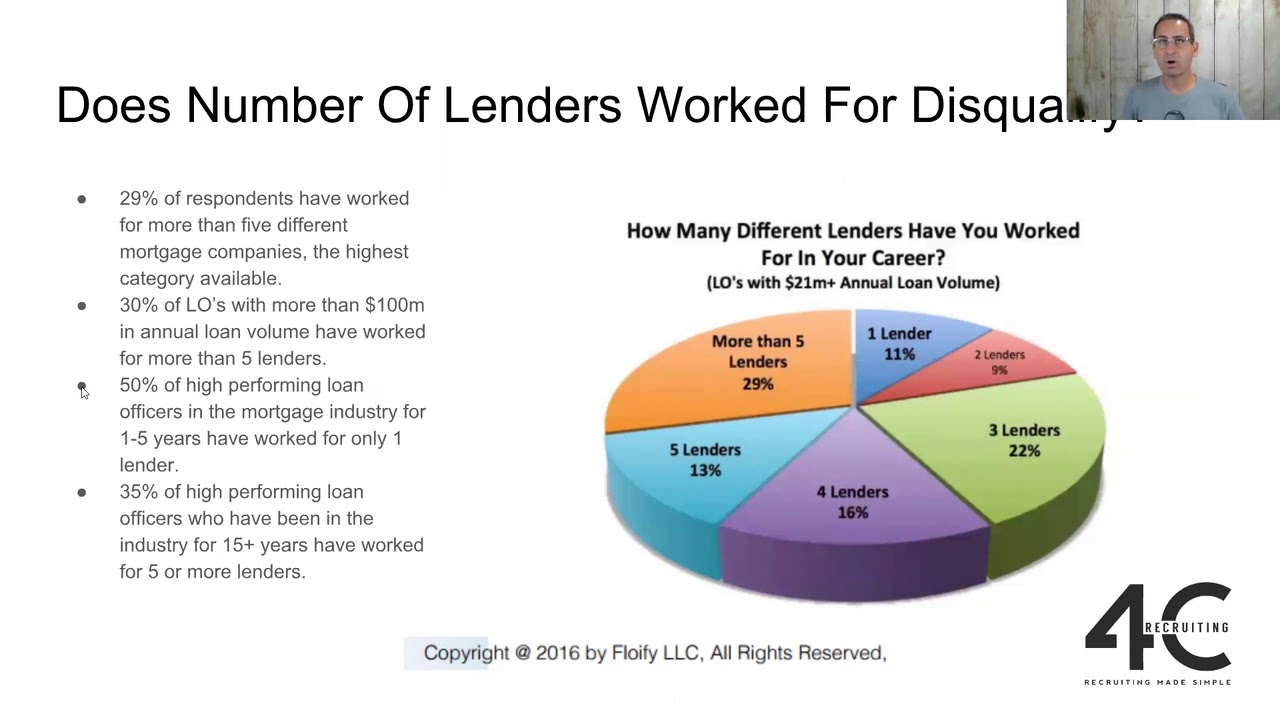
Hey everybody, it's Richard Milligan here with ForC Recruiting, and I'm wearing one of my cool t-shirts. If you'd like one of these, uh, The Recruiting Life, it's got a bunch of quotes on the backside of this that make a lot of sense to those of us who have either worn or wear the recruiting leader hat. And so if you'd like one of these, shoot me an email at rmilligan@forcerecruiting.com. What I'm going to do today in this recording is to go over a blue ocean report. And in this blue ocean report, I'm going to start doing a screen share with you now. In this blue ocean report, we're going to dissect 5 recruiting surveys, one that was done by Flowify, 4 that were done by Stratmore Group. We're going to dissect these surveys and see how we can actually be moving towards blue water. Okay, right now, this is September 2018, interesting time inside the mortgage industry. The noise has really elevated on the recruiting side. A lot of pressure for companies to move towards profitability, to try and sustain all the fixed cost expenses that they have from the operational system platform. And so there's a huge need for growth. What I have seen personally is mortgage companies that are scaling their internal recruiting departments. And so what I have seen and what I've heard is an increase in the noise across the entire industry. So that is— we want to stay away from that bloody water. The idea is that there's got to be some blue water out here, that if we are— if we understand data, that we can move towards this area and be more successful as recruiting leaders. Okay, so the intent here is to bring some value, to challenge you to think outside the box. I've done a lot of thinking outside the box to put this presentation together, so let's dive in. Okay, so this information, um, I said 5, comes from 4 separate studies. Okay, this came over the past 18 months by Stratmore Group and one by Flowify. The Flowify study is an interesting study because they solicited 13,000 mortgage originators And the analysis of that focused on top originators, which were $21 million or more in production. What they were trying to do was to distinguish the needs of high-achieving loan officers, high-production loan officers. So we're gonna pay a lot of attention to that data. Okay, so one of the things that I get asked a lot inside recruiting is, how do I qualify my recruits? You know, a lot of people are buying some of that data today. There's multiple places that you can get production reports, but in my experience, those production reports are not always correct. In fact, I recruit some producing branch managers, and as they pull their own data, I have always heard that that data is incorrect for their own production numbers. So there's variables inside that that just don't allow all of the information to pull through the reporting system. It can depend on what county your production's being done in. It can depend on whether it's, you know, conventional or FHA deals. It can depend on whether there is riders attached to the mortgage and whether that information gets pulled through whatever the automated algorithm is correctly. There are variables behind the scenes that, that impact the data that you're getting. So a cool piece of information that came from a, um, that came from a couple of these studies that we can tell based on tenure alone To a high degree whether people are producing results. Okay, Stratmore Group research shows that, that 60% of loan originators create 93.7% of all production. That's crazy, right? There's 40% that are producing around 6%. Okay, what does that say? Well, right now it says that this industry is going to Prune, right? A lot of those people aren't going to be able to make it in this current environment. And so we're going to see a lot of this— a lot of those people leave the industry, uh, one. But the one thing that we know is that we gotta qualify. Gotta qualify, qualify, qualify. Otherwise I'm wasting my time. If 4 out of 6— I mean, 4 out of 10 are not in my sweet spot, and, um, then I need to figure out how to identify those. Well, one of the ways we identify that that we extract from the Flowify study is that 86% of loan officers who've been in the mortgage industry for 5 to 15 years produce in that range of $21 to $40 million in annual loan volume. Okay, great qualifier. And then I'll go to NMLS, look up the individual, have they been in the business for 5 to 15 years? If they have, then they're, then they're going to, for a high percentage of them, they're going to fit into this range. Okay. We know 70% of loan officers who produce more than $100 million have been in the mortgage industry for 10+ years. Okay, 40%, um, producing, uh, $100 million or more, uh, have been in the industry for 15+ years. So tenure is important. Okay, so takeaways on this: yes, we want to qualify. Time in business is a good qualifier. We're looking for a minimum of 5 years. Ideally, right, more production, 10, 15 years or more. Okay. Does the number of lenders you work for disqualify you? This is a place I see a lot of people disqualify a candidate because they've had 6 employers. Okay, when you look at the data for top originators, this is crazy. More than 5. Okay, that means 6. I don't know why it says more than 5 on the study, but more than 5, um, it would be 6 or greater. Almost 30% of the, of top originators have worked for more than 5. Okay, when we take the categories of 4, 5, 6, or greater, you get a significant portion of originators that have worked that fit into that model. So if I'm going to disqualify you because you've moved from one place to the next, I'm going to miss out on a lot of opportunities. Okay. So as I look at the data, 29% of respondents have worked for 5 or more. That's actually the highest category. 30% of loan officers with more than $100 million annual loan volume have worked for more than 5 lenders. Okay, so we've done our own internal research of Scotsman's Guide's top 300 producers. Okay, what we found in our own research is that those producers have, have worked on an average of 4.1 years. At an organization. So yes, they do stay a little longer than the industry churn of 2.5. They're staying, you know, about 18, 19 months longer than the industry average, but they still turn about every 4 years. The next category, 50% of high-performing loan officers in the mortgage industry for 1 to 5 years have worked for only one lender. Um, so, uh, that qualifier of under 5 years You know, that's a— that's— we're not going to lean out on that. We understand that if you've been new to the business, that this is a trend that you would most likely only have worked for one lender. So this gives me a qualifier to say I need an incubator. Does that— hopefully that makes sense. I need an incubator as I identify new talent coming into the market. There's got to be a sweet spot where we're leaning into them. We may not take— you may not be an organization or a leader. Who's rolling the dice on new hires coming into the industry without any experience. But I am going to be constantly evaluating my markets and seeing on the horizon what's— where— who's the new talent and engaging them in conversations because 50% of high-performing loan officers, um, you know, for 1 to 5 years have only worked for one lender. 35% of high-performing loan officers In the industry have worked for 5 or more lenders. Okay, so again, we've talked about these qualifiers. 42% of $21 million producers have worked for 5 or more. 58% have worked for 4 or more. Let's not disqualify based on tenure. Okay, so how are loan officers finding their next company? Okay, this is where I want to— I want you to slow down and really let this soak in. Because bullseye for most people is picking up the phone and calling. Okay, that's, that's bullseye. Because of that, I see a lot of tactics being used that aren't in alignment with what I would call core values, solid core values, or being an attractive leader. So I see a lot of tricks being used on the phone. You know, when I say tricks, Richard, this is Patrick, give me a call. Okay, and I don't call. Richard, this is Patrick. It's super urgent. Give me a call back. Right? To me, that seems like there's a game being played there. And, and that noise is elevating. Some of the other, other things that are being elevated is really poor scripts, phone scripts. People call and they'll say things like, I was given your name by someone that we have as a mutual contact, and they asked me to reach out to you. And when that person says Who was that individual? Then the response from the recruiter is, I promise to protect their anonymity. I promise not to give their name out. Right. Well, if I'm going to give you someone's name and tell you to call them, doesn't make a lot of sense. I'm gonna say, just don't tell them that I said that, that I gave you their name. Right. So there's just a lot of mistrust going on in our phone scriptings, and the noise in the phone is going up. But that's not bullseye for recruiting anymore, gang. What you and I would think as the peripheral of recruiting has now become bullseye, and this data says that. Okay, so let's dive off into this. So they recruited me. Okay, meaning this is direct point of contact, 25%. I solicited them. Okay, let's just pause. These are top originators. Okay, $21 million or more. Okay, I solicited them. 1 out of 11 says they actually solicit their next lender. That's, that's crazy to me. 1 out of 11 top originators does not even get contact made with them, right? They don't even get referred by somebody. They actually solicit somebody. They actually solicit the company themselves. That doesn't tell you that understanding how to recruit in a unique lens is important. Understanding that your leadership brand is important. Okay, your leadership brand is critical. Let me give you a recent example. Within the last couple months, I got a call from someone in a market. I'm not a recruiter. Okay, but they see that I'm active on LinkedIn. They see that I'm constantly posting around my core values. This person reaches out to me and says, who do you know in my market that's a good leader? And I was really blown away by that situation because I knew that I wasn't going to recruit them, but they were calling me asking me who I knew in their market that was a good leader. To me, that says there's no leader in their market that's representing this attractive leadership with a strong personal brand. Look, the game has changed. Business branding used to be everything. Okay, social media has changed the game. It has taken the power and redistributed that to you and me as leaders. Okay, so the power of your own personal brand. What are your core values? What's your vision for your market? How are you living and acting in alignment with that? We can actually go do and activate every part of that on the platform called LinkedIn. 1 out of 11 will move towards you because of that. That's easy. Okay, like we're thinking hard. We're thinking pound the phone, pound the phone, pound the phone. I'm saying, look, that's not even bullseye anymore. That's only 25%. 75% move through a different lens today. That's bullseye. You've got to think differently than you've ever thought in the new world of recruiting. Okay, a colleague referred me. That is unbelievable. 43% say a colleague referred me. A company merged with another lender. That's something we need to be aware of right now because a lot of consolidation— Fannie says a lot of consolidation is going to take place over the next 18 months. Right, that's going to provide a lot of opportunities for us as recruiting leaders. Okay, so good information there. Again, if there's a bullet point that I want to drill home on this, the bullet point is this: your leadership brand matters. Okay, this is most critical today. Your leadership brand matters. Being absent from social media is no longer okay. Okay, you can't just lean On picking up the phone and calling people to have success inside recruiting. And you need to understand how to build relationships through LinkedIn. You don't build relationships through connecting with somebody and then throwing the right hook, right? The right hook is connecting with somebody and then saying, hey, can we meet? Would you take my phone call? Here are the 10 bullet points of why my organization's winning right now. Or have some cutesy, you know, one-liners like, come join the winning team. This is the stuff that we're seeing on LinkedIn. This is not how you get to the 75%. Okay, internal recruiting departments and/or recruiting leaders only accounts for 1 out of 4 recruits. That's when we're not in what you and I would talk about the peripheral. Okay. All right, how long before deciding if a company is a fit? Why is this important? This is important because With a lot of consolidation coming our way, we need to understand how much time people give before they're willing to make a move. Now here's what happens inside consolidation. I've been through a merger before. Spent 15 years inside the industry as a recruiting leader myself. Okay, in that transition, the noise goes up immensely. Right. Hits the newswires, everybody jumps on LinkedIn, sends a direct message. which then pushes to your email, right? That's, that's some of the secret sauce with LinkedIn is that you're not just DMing them, you're actually getting access to their email inbox as well when you, when you direct message them. Um, the noise goes up, phone rings off the hook, text messages galore. These are the things that they experience. Um, it's important to get in front of that, okay, to build relationship. But let's just say you didn't. Okay, afterwards, there's a season. People don't have— acquisition does not take place, consolidation does not take place, and people go, I'm out of here. Okay. What happens is that there's a window of time that we give the new organization before we determine whether it's a good fit. This— that— look at this data, and what you'll see is that 68% of people will give them up to a year or less than a year before deciding if they're a fit. Okay, what does that mean? You better have a game plan for identifying those opportunities. Okay, and you better have a game plan for staying in front of them. Okay, how do we do that? Well, you can do that through some automation with LinkedIn. You can do that through text messaging. You can do that through, you know, dialing them. I'm going to stay out of the noise zone. And if there's a noise zone, once something hits the newswires, there's a noise zone of probably 30 to 45 days that there's just a huge influx. And people become numb because of the noise. So I'm going to stay out of that zone where I can, and I'm going to work to build relationships in front of that and make sure that I'm staying in front of them all the way through the transition, because a lot of times people will take a full year before they say, this is not for me. Okay, we've talked about those takeaways there. Okay, what's important to LOs? Some good takeaways from this that we're going to go over. All right, if you want a copy of this, of this Blue Ocean Report, just shoot me an email and I'll get you a copy of it. If you want me to present this to your leadership panel or a group of your branch managers and talk about the specifics of it, just reach out to me via email as well, rmilligan@4crecruiting.com. What's important to loan officers? This comes from the Flowify study. Why is this important is because there's some things in here that I saw that you're going to see that are going to jump out at you. Okay, so I'm going to go through this briefly, but if you want more details around it, this, this actual hard document that I have will actually provide that, those additional details for you. 80% of loan officers who exceed $20 million Prioritize a lender's ability to support loan— high loan volumes is very important. I think we get this, right? Um, they rated that as a 5, as of the utmost importance, right? Where we see the entire market, 100%, said that it's important, right? So this has got to be a key component. This is an area that's a great area to storytell around. Now, I don't think we do a good job inside social media of storytelling around it. I don't think we do a good job recruiting storytelling around it. We talk about, you know, the, the 11-day close or the 8-day close, but there's always a story behind that, right? And storytelling correctly is critical. One's fact-based. One factual statement could be, we closed that deal in 11 days. Storytelling would be, what was the larger story of that? Okay, a lot of times that deal came from another lender. A lot of times you've got a stressed-out borrower. Story could be You know, newly married, baby on the way, you know, first home that they've ever bought. I mean, that's a great story to tell. One, one I want to slow down and tell that story because, because 100% of law officers say this is important. 80% say it's of utmost importance. Okay, so if you have an organization that's actually fumbling the ball in this area and your storytelling around it You will win. Okay, next bullet point: 62% prioritize technologies and systems that help them scale their business. They say that that's very important. Okay, we want to storytell around this. Okay, technology— saying we've got great technology and great systems is one thing. Storytelling this, the impact— a great idea would be to actually, you know, take the impact of the technology from the touchpoint of the borrow all the way to the finish line of post-closing. How does that technology impact the transaction? You could take a before and a— a before, you know, or without and a with. And those are 2 great stories that you can tell and the differences between the 2. You gotta storytell. A big proponent of storytelling. Why? Because most people left-brain recruit. Okay, they look at this and they're going, um, they're thinking, right, we've got technology, so we'll talk about technology. We've got support, great support, we'll talk about it. We've got great marketing, we'll talk about it. We've got great culture, we'll talk about it. Most of that is left-brain recruiting. What I want you to do is to move people to right brain. How do we do that? We storytell well inside the organization. Okay, we do some of this face-to-face, we do some of this over the phone, we do some of this in writing, we do some of this through video content. You need to have a comprehensive plan for how you're going to storytell around these important pieces. Okay. Here's a piece that really jumps out at me. Okay. Let me come back into this. This— it's in the middle of the report. So 1, 2, 3, 4, 5 questions down that they asked. One of them was engaged— how important is engaged and responsive executive management? Okay. The majority of people say this is important. 98% almost say that this is important. What I see is there's a big hole inside our industry for this. A lot of executive leaders are whiffing on being seen as responsive and engaged on the platform called LinkedIn. Okay, if you're a market leader, I don't— if you're a branch manager, a lot of times you're a market leader. You have to have a presence on the platform. Being engaged and responsive is critical. Okay, look, LinkedIn is a goldfish bowl. Okay, whether you place yourself in the bowl or not, it doesn't matter because you probably have a profile on the platform. People are going to look at that and they're going to make some— they're going to create their own narrative around that. If you're absent, and a lot of executive-level leaders are just absent on the platform, they've got a profile, but they don't have— they're not writing fresh articles, they're not posting on a daily basis, they're not engaging with their employees. They're not engaging with the people they're connected with. They're definitely not connecting to people. Their profiles are extremely weak. I mean, overall, it's a disaster. When we look at 98% of people saying engaged and responsive executive-level leadership is critical, this is an area we're whiffing on the recruiting side in such a big way. Okay, I could stop here, get on my pedestal, and preach because Because leadership development, I mean leadership branding, okay, who you are as a leader and how you brand yourself inside this, on these social media platforms is of the essence of your success. It's critical to your success inside recruiting, okay? It's critical to your success inside retaining, okay? If people see engaged and responsive executive management as being critical and and we're employees of a company that are saying this right now, and you're not being seen as engaged and responsive in these places like LinkedIn and social media, then you can actually lose people because of this. Okay? They'll look at other people through the attractive leader lens. Okay? They'll see someone else being more attractive. They'll move towards that. They'll move away from you. You will lose them. Okay? That was a— that's a huge takeaway. Again, you want to copy this report, I'll be more than happy to send that to you. Okay, so this is again part of the Flowify study. So you're saying there's a chance. How satisfied are you with your current employer? I'm a bit surprised. This is a trend that's actually, actually has very similar to where we are right now in 2018. How many people are unsatisfied? This is a shift from 2008 to really 2015. Okay, you know, new GFE standards, CFPB guidelines, complete revamping of underwriting and LOS systems and all of the huge hurdles that organizations had to jump over from a QC compliance standpoint, right? The immense amount of volume that was hitting our pipelines while we were still struggling with all of the regulatory pieces that were coming at the industry. So we went through a season where there was a lot of unhappy people. Okay, as we move into 2016 and beyond, it's a deregulatory environment. Okay, we, you know, there's more support available due to the decrease in volume. So we see a lot of companies that are very solidified on the operational piece. We see more talent in the market right now because of layoffs. So the best of the best are the ones that are available and are the ones that are employed. So there's a lot of ways to look at this and say, you know, people are more happy today than they have been over the last decade-plus inside this business. Statistically, 5% would say that they're unsatisfied. Okay, that to me says that we really have to think blue ocean as we're recruiting, because when we come past the last 10, 11 years, the lens that most people have recruited through is through the lens of finding the hot button. Okay, let me figure out where you're disgruntled, where you're unhappy, let me press on that button, and as I press on that button, you'll lean into me and my opportunity, and then I will lead with all of my company value propositions Something in there will stick because you've got some hot buttons of where you're dissatisfied, and then that company value proposition will move you to me. That is not the case today, gang. The case is this, that most people are satisfied where they are. So what do you do when the model has shifted and most people are happy? The only way that you're going to win is if you actually move people through a different, completely different lens, right? How do you move someone? This is the problem to be solved today. How do you move someone that's happy where they're at? Okay, a lot of people are still trying to do it in the lowest forms of human motivation. The lowest forms of human motivation come through safety, security, protection, provision. Okay, that's like if things— I got to have my ability to pay my bills. I got to be secure in my job. If I don't have that, I got to seek that out first. But most people have that when we look at this survey. Okay, so if most people have that. Then we have to be thinking in terms of better forms of recruiting. And in the better forms of communication, better forms of recruiting, I call it the BAM zone. Okay, this is the belonging, the affirming, and the meaning zone. Now, a lot of people don't even understand what that means, you know, or how they would even recruit inside the framework of that. Because for so long we've been in this industry where we're just writing checks, or we're increasing comp. Or we're saying we're better, and those are opportunity improvement offers. Okay, if you're an opportunity improvement offer today, you're in trouble. If you're an opportunity improvement offer where you're primarily trying to drive your recruiting through the phone, you're in trouble. Only 1 out of 11 today will actually answer the phone. We're seeing a shift of people who used to be connected to the phone that now don't answer it as often and are moving into other forms of communication very quickly. Okay, so if you can't adapt in this environment and only 5% are dissatisfied and only 1 out of 11 will answer the phone, then what do we do as an industry? We do what we're doing right now, which is what we— we're elevating the noise around recruiting. That model's broken. You got to figure out a better way. Understanding that most people are satisfied, you have to move cold content talent. How do you do that? How do you solve that problem? Okay, you go to it through a completely different lens, which is the lens of vision. Core values, being clear on that, articulating around that, storytelling that, arming your recruiting leaders with this information. Most of your recruiting leaders in your individual markets, if you are a recruiting leader, you're probably leading with the company value proposition. I did it for 10, 11 years. I get it. There's a better way. Okay, so these are our takeaways. We want to think like a farmer. We plant seeds, right? We work to actually Put— plant that seed in good soil, build the relationship, which is the water, the fertilizing, providing sunshine, understanding that the sowing and the reaping are 2 different seasons. Okay, build out a loan officer recruitment path. Now, I'm not going to spend a lot of time on this because, you know, this is going to be a lengthy video already. We'll just go through this at a very high level. But there are bullet points in this that you can actually dissect to, um, to build a better recruiting pathway. Okay. So number 1, support for high volume and high volumes and fast turn times. Okay. We're going to talk about this. We're going to model talking this in places like social media. Okay. That's— we have to be out there. Um, we're going to create framework for the team to promote simple templates. Okay, and helping them understand how they storytell. Look, this little device right here has changed the game for everybody. Okay, how it's changed the game is that I can storytell powerfully by just clicking a couple of buttons. I can storytell extremely powerfully with a little iPhone, but most people don't understand the framework for it. So if I'm a marketing department, I'm going to create some framework around this so that I can help my my markets understand how they can storytell around these— this idea that we actually support high loan volumes and fast turn times. Second one, scalable technologies and systems. Okay, we want to equip our recruiting leaders with the ability to discuss this or even have a great next step centered around the recruiting process that creates momentum. Okay, if I want to break recruiting down It's all about the next steps, right? It is about what am I going to do next? What's next? What's next? And finding the most powerful thing that I can do in each next step. I, for years, I made mistakes that a lot of people still make today. In fact, the larger market makes these mistakes. We have a great face-to-face meeting with somebody and then we say, I'll send you my presentation with more information on the organization. Okay, and then we email a corporate presentation. Is that a powerful next step? An email with a presentation on it? Nobody ever— okay, nobody ever— I'm going to say this with a lot of confidence, you can prove me wrong— nobody ever got an email with your corporate presentation on it or my corporate presentation on it and just dropped the mic and went, I'm in. Okay, that's powerful. That's a powerful presentation. I didn't realize that, like, this company did this. It's so unique and so different. Like, I'm calling the leader going, hey, What do I need to do to join your company? It just doesn't happen. Okay, so what is the most powerful next step? Well, you know, engaging other people in the recruiting conversation is powerful. And we're talking about technologies and systems. A lot of people in the peripheral of that that actually impact that. Could be a marketing— head of marketing person. It could be, you know, head of IT. It could be someone in a specific branch. It could be one of your loan officers who understands your CRM really well. They got 8 deals last month because the CRM kicked some information out that the people responded to. And now we're storytelling again, right? But, um, that's a powerful next step to engage a recruit with someone who can tell that story. That's a really powerful next step. Okay. So number 3, compensation. Okay. This remains an important criteria. Loan officers with longer tenure attribute more of their success to capturing loan volume. Rather than higher, high commissions. Okay, the tendency is this, um, and, and I know there's someone that's going to see this that's going to want to debate this. I'll invite you onto my podcast, we'll debate this back and forth. It'll be a healthy conversation, um, because I think that I'm right, um, in this area. Um, high commissions attracts— typically attracts— when you look at the percentages, when I go look at companies Okay, and I've done this. Okay, I'm not winging this. I've done this. I've taken the time to go research out companies that are in the higher compensation model. Okay, the tendency is to attract loan officers that produce less. Okay, do yourself a favor like we've done. Okay, we have researched out the entire Scotsman Sky top 200 and top 300+ units list. Okay. Inside that list, you will be blown away. To see that it's very rare to see anyone that's, that's, that's promoting high comp, high comp, high comp that actually has an originator on the platform that's in that top production list. Okay, not saying that there's not a golden unicorn because I found them before. Okay, but for the most part, when we focus on compensation as being the main attractor to what we're doing, what we do is we attract people that are going to produce onesies-twosies units. We'll go back to the data that we looked at from Stratmore Group. 40% of the market only delivers 6% of the volume. If that's what you want to go attract, go do it. You're gonna have to scale your support, okay, in a mega, mega way, because you're gonna put a lot of pressure on them because you're also scaling the number of originators you have to have in order to deliver that loan. Personally, if I'm looking at low-hanging fruit right now, I'm going to Scotsman's Guide. I'm finding companies that have the most originators on their platform with the most units on that platform with the least amount of production. And I'm saying that's got a high fixed cost expense. Okay, I know I went fast there, but I'm giving you a model where you can probably look and say, look, if Fannie expects to have a lot of consolidation over the next 18 to 24 months, then I can go identify targets that I need to be building relationships with their people. Because several things are going to happen. They may go completely out of business because their warehouse line shifts something and they're not able to support the fixed cost infrastructure that they have. They may have to consolidate very quickly because the market shifts and they've got more underwriters, they've got more fixed cost expenses in terms of offices because they're wearing the hat of the high compensation piece with a fewer amount of— with more originators. required to produce the same amount. Okay. Okay. Number 4, engaged executive management. We've talked a bit about this. Here's some steps for you. Okay. You can always pause this video, look at those things. There's some specific steps you can take. Number 5, culture. Everybody wants to be on a team where, um, where there's other successful leaders. Um, you know, um, People are going to evaluate this. They're going to seek out, like, through social media, the people that are on your platform. Okay, social media is a place you've got to engage your teams. Okay, if the message out there is that this is an attractive culture— and think about this— if your company— okay, let's just— let me talk to the company leader for a moment, but we can go micro. That's the macro. The micro would be the branch manager. Okay, if your company or your team is on this platform and everybody is liking, commenting, sharing, responding, talking about why they love working at the company, great stories about things that are happening there, you know, we're representing some things that are core values. Think about it. Teamwork, synergy. We all want to be in an environment where there's a lot of energy, right? You know, loyalty. Connectedness. I mean, there's all kinds of things that we can represent simply because we're pushing people to actually be engaged on the platform. And as an industry, we are whiffing on this. 2016, okay, if we go back to 2016, the average social selling index for our industry, the mortgage industry, out of 100 points was a 19— was an 18. 2017, It went all the way up to 19 out of 100. That's pathetic. Okay. And then in 2018, we're now up to 24. So we're seeing an improvement on this. But I'm going to encourage you to lead this if you're a leader. I'm going to encourage you to model it for your teams and then ask your teams to come on to it because that's how you represent culture. This is where people bleed for people. This is where people are engaged with one another, interacting with one another, and it's something that we all want to belong to. Go back to that BAM zone that I mentioned a few minutes ago, belonging, affirming, and meaning. The belonging piece is how you can actually bring people in, in that 75% model that we talked about that is now today the bullseye of recruiting. 6 is lender reputation. Again, social media, great place to represent this. Number 7, competitive rates and pricing. You've got to have framework for this. You got to have scripting for this that your recruiting leaders can discuss this through. This is a topic that comes up, but in the teams that I built, I was always middle of the road. Okay. I was never even close to being the best. I was never any— you know, I was probably trended in the top, you know, um, third of maybe even being the worst, but I would dare say I was probably middle of the road on rates. Okay. So you've got to help your leaders create a narrative around this. If they— if you don't help them, they'll create their own. And I hear some of the wrong narratives being led out, being, being told to recruits out there. So as a leader, I'm going to work to identify what narrative are we using and, and control that to make sure it's the right narrative. Number 8, diverse loan products. I won't cover that in detail. Number 9, training and mentorship. Look, 51% sees value in this. I'm surprised that number is not higher. But, you know, a lot of loan officers have figured out that they can go get their own training. There's a lot of coaching available out there. So they can move towards that. They don't have to have that from you, but still 51% see value. I would encourage you articulating what your coaching training programs are to the larger market. It's going to be something that's helpful for you. Marketing support. Again, framework for your recruiting leaders to speak to this about. Okay, if you don't give them the framework, they'll create their own. And I hear some bad narratives, wrong narratives being used out there. Okay, so effective recruiting methods. This surprises a lot of people. It doesn't surprise me because in my time inside the industry, you know, 9 out of 10 hires came directly from me. Okay, and I had external recruiters and I had internal recruiting departments, but the internal recruiting departments Typically recruited for the organization. They didn't recruit for my teams. And so this, this came from a Stratmore Group study. They said that branch managers are the most effective method for recruiting. Now, why does this even surprise us though, when we think about it? Okay, the branch manager is recruiting to themselves. They're recruiting to their team, their culture, their mindset, their leadership. Right, their ideas, like all of these things are what they're recruiting to. So buy-in has to happen there first before buy-in can have— can ever get to a place where it can happen at the organization level. If they don't buy into the branch manager and they're not in alignment with them, they will never move towards the organization. Okay, so that's why branch managers are the most effective method for recruiting. Here's where I want to encourage everyone. If you're a branch manager, Okay, you've got to hear this. Stop leading with company value proposition when you are the value proposition. Okay, stop leading with company value proposition. Stop talking about your toolbox as your lead. You will talk about that. Okay, you've got to get clear on your vision, your core values. Okay, over the last year, I have coached several hundred people through a system, and I can speak with integrity and say this. Never out of those several hundred people, never did I have anyone come in and say, here's my vision, here are my core values. I had to always start with, let's get clear on our vision. Let's get clear on our core values because few understand the importance of this. This is what people move towards initially before you ever get to the company value prop. This is how you build relationships. Okay. It's through the lens of core values and vision. So if you want to be most effective, that's how you're going to lead when you're recruiting. What I'm going to encourage C-level executives that might see this— what I'm going to encourage you is invest into your branch managers in this space of recruiting. If you want to grow, you've got an enormous resource here just sitting at your disposal. But as an industry, we have not poured into these people To actually get them recruiting training. Okay, so recruiting training is important. And I'm not talking about tactics training where they need a good phone script or they understand how to present face-to-face. That's important. I'm talking about as a larger system training. The recruiting leader needs to understand and have a system. It's a system, right, that actually creates sustainable growth. Like, you want some short-term growth, I can give you some ideas that'll give you some spurs. But what we want is slow, sustainable growth over extended windows of time. That's how you build a company with a reputation that sustains headwinds. Okay. So if you're the individual leader and your company's not investing into this, here's where I would encourage you, invest into yourself. Okay. If you think about the one area that if you were to get better, that would make the largest impact on your business, I would dare say it's recruiting. Okay, and if you would say, I don't think that that's it, then I would explain to you, you don't fully understand the impact you can have when you have a recruiting system. Okay, it's how I launched 21 teams is by having a system. Okay, so, um, the other part of this is to understand, you know, internal recruiters are important to building. Um, they are the second best resource that you have is the inside recruiter. Um, I have a mindset around that that I believe in. Because I think the inside recruiter should figure out a model for how they recruit for the branch manager. That's where they're gonna be most successful, but I get the fact that internal recruiters are also looking to build into markets where maybe the company doesn't have a presence, and so the approach is different, but at that point, they're not recruiting for the individual recruiting leader or branch manager. They're recruiting for the corporate leader, and so you should not be leading with company value proposition. You should be leading with the value prop of vision and core values. of the organization and that person that is that next step. That might be a COO, it might be a CEO, it might be a president, it might be an executive-level leader. I would encourage you to think about that piece and to stop leading with your left-brain stuff, which is your tools and your tricks, the opportunity improvement offer. Okay? If you work with external recruiters, you're going to get more value through putting them on retainers, and here's why. Because now we're going to just— we're going to treat them like they're an employee. Expectations, if you don't deliver, we'll move on. If you're just simply building relationships with external recruiters and thinking that you're going to win, the truth is that that's the weakest model of the models for recruiting. And yes, you can have success there, but for the most part, your primary pillars are going to be your internal recruiting department and your recruiting leaders, which are your branch managers, area managers, regional managers. Okay. All right. Where's the pressure? 91%, okay, of us say that we're putting our— putting the pressure on the independent loan officer. Okay, so that's where the noise has gone up. 91% of all people say that's what they're focusing on. So imagine being a loan officer in a market. Pick any market. I mean, but let's just choose a major market. Let's go say Dallas-Fort Worth. If you're a loan officer in that market, you're probably getting 5 to 10 calls every single week from a recruiter. That's a lot of noise. Okay, so you're gonna have to figure how to figure out how to be creative in approaching this because that is bloody water. Okay, and especially if you're leaning towards your left brain recruiting pitch, it means that you do have to be the best. If at any level you're not the best, then you will lose that in the left brain vetting process, which is They'll talk to you and they'll talk to somebody else. If that technology piece is better or that support piece is better or the comp piece is better or whatever it is that's better, you will lose out because you left with your left brain recruiting. So right brain recruiting is where you can actually just move towards blue ocean simply with that shift right there. And if you don't understand how to do that, hit up my calendar and I'll walk you through that. It's bookrichardnow.com, just www.bookrichardnow.com. RichardNow.com. I'll walk you through that, but understand that that independent loan officer day is is getting a lot of phone calls. Okay, we know that 58% target entire branches. You know, 79% recruit from bank-owned mortgage companies, and then 37% recruit entire bank mortgage branches. Find some blue ocean in that. Okay, here's where I see blue ocean. Most of the recruiting pressure takes place with the independent LOs at 91%. And then even with the bank LOs at 79%, we see less pressure on recruiting bank branches. Okay, so if I'm an external recruiter, or even if I'm a branch manager, I'm going to try and identify these pockets of bank branches that might be a correspondent lender. That might have 3 or 4 loan officers inside the bank that don't have good systems, they don't have good models, they don't have good support. They definitely don't have a leader leading with vision and core values. They're kind of standalone entities. I can't— I ran— as I began to just kind of realize that there was a market out there like this that existed, what I found is that I had to do a lot of research to find them. But when I found them, they were extremely receptive because they weren't being recruited. So this is a place for you to move towards. Okay, we've seen, you know, if we go back several years, it was very difficult for that bank branch manager to move towards an independent mortgage company because of the licensing piece. We've seen some things change in that that make that transition easier today. So, this would be an area that I would say was blue ocean. Okay, I can give you an example. I had a branch that I actually resided at for almost 15 years that was kind of my hub. About 10, 11 years into being at that hub, I realized that less than a mile away from me as the crow flew, there was a branch, a bank That actually had a correspondent lending branch inside it that had multiple loan officers there. And one of those loan officers was a high-producing loan officer. This was someone doing 15 to 18 units a month. So if you can find those, you're gonna have to do research to find them. Where you can find those, those are great opportunities to move into a less noisy space. Okay. We're going to talk about tenure. We're gonna talk about churn here. Follow this trend line. This trend line with any of these, we've got, you know, total— we got total population, but we've got the independents as the yellow line and the banks as the blue line. Okay, we see tenure increase all the way until we get to about month 16. Okay. So sometime in between year 1 and year 2. 10-year peaks, and then we see a significant fall-off. Now, this makes a lot of sense when we, when we think about how long loan officers give an organization before they decide if they're a good fit, right? A very high percentage of them don't give you a year before they determine you're not a fit. That follows the churn line. Okay. Because at about that, you know, 16, 17, 18-month window, we see significant churn taking place until we see it stable somewhere between year 2 and year 3. So about, about 30 months in, there's some stability that takes place and we see tenure increase again before we see it start to decline again. Okay, the sweet spot for me is going to be around that 18-month window. Okay, but the mindset is also going to be this. Look, if you've been with a company 7, 8 years, you're actually going to become more likely to churn. And so I'm going to stay in front of you. Okay, so, but for me, if there's a sweet spot, I'm gonna, I'm gonna use some of the tools on LinkedIn, specifically Sales Navigator, to identify people that have moved to new companies. You can do that. And then, and then I'm going to work to stay in front of them very consistently, month in and month out, between about that 1-year mark and that 2-year mark, because we're going to see a lot of churn take place. Okay. We— again, this is what we've covered here with volume predictors saying 80%, 86% of loan officers, um, you know, being that 6 to 12 year window. Um, that's a good place to focus building some long-term relationships. Okay. Okay. Success rating for recruiting PONs. This was a part of the survey that's done by mortgage companies where they're talking about their success rate of where they're basically fishing. Okay, where are we fishing? Are we fishing in the independent mortgage space? Are we fishing in the individual branch space? Remember, we were looking at just a second ago the amount of energy that we're putting towards this. So let's look and see where we're winning. What's surprising to me is that 91% of us say that would rate that we're winning, you know, that 3.31 ratio, that doesn't correlate to a lot more success given the amount of energy, right? 91% of us say we're focusing our energy there, but we're getting 3.31 as the survey response for are we winning in that space. When I look at— we're talking about the individual bank branches. When I look at that, if only 37% are putting their efforts and energies there and they're getting 2.39 as the aggregate score for success there, when I look at that, almost a third less energy but only about 30% less results, that to me says, hmm, I'm going to attach that because there's something there with that. There's not as much noise around that particular point. And I can focus my energies there and get a larger reward on the investment of time. Turnover by quarter. This surprises a lot of people. First quarter is the least amount of turnover inside the industry. A lot of people see that and go, what? I thought like that was the window. Like a lot of people talk about, I got to get you, got to get this recruit in January, February, March. That's the slow season. But believe it or not, it's slow season for recruiting. Peak season is going to be that 3rd and 4th quarter. And a big surprise for most people is that in 2nd quarter, a lot of people think that's the busy season and people don't churn, people don't leave in that season, and it's absolutely wrong. In fact, it's not that much less or— it's not that much more in 3rd and 4th quarter than it is in 2nd quarter. Which is the busy season according to most people. So make sure you understand this. There's always a season of the sowing, and then there's always a season of the harvest. When are you going to plant your seeds? Plant a lot of seeds in first quarter. Okay, and, and then, then you will have a larger harvest in second, third, and fourth quarter. A lot of people kind of lean back in that first quarter because it's a slower season. Lean in. People are more likely to respond to you because it's slower. People are more likely to read your messaging, respond to you via text, respond to you via the phone because it's a slower season for them. Plant a lot of seeds, but don't expect to have the larger harvest in that season. Okay? Okay, a couple of takeaways from that. Recruiting is a science. If you're using the same target message for each recruit, we're missing out on opportunities. We want to pay attention to time in business, time with company, as you have data to support how you should approach each individual to increase your opportunities. The other part, want to boost retention. We can look at this last report and I can actually come up with a retention strategy based off of the data here. Okay, so yes, recruit, but if we don't retain, we're constantly trying to just replenish, right? So I always look at retention as reverse recruiting. Okay, so I've got to be reverse engineering how I'm recruiting my own people inside my organization. Well, if people are most likely to leave in 3rd and 4th quarter, and we understand that 2nd quarter and 3rd quarter are probably the most busy— are the busiest of seasons, then I can, I can actually structure comp models where I pay out a bonus structure sometime around March, April, so that we're in the window where people don't leave as much. And now they're getting an incentive to actually stay through to that season. And what I can do is take that— this data, use it to my advantage to reduce my churn. I may pay 5 basis points. I'm just using that as an arbitrary number, but I may pay 5 basis points and pay that bonus out at the end of March of each year as a way for me to actually just continue to give you an incentive to not talk to recruiters or to not engage in conversations during that 3rd and 4th quarter. Quarter window. Okay, okay, turnover by quarter, we just looked at that. Takeaways, okay, what's it going to take to get you? This is an interesting piece of some surveys, okay? Recruiting incentives paid to recruits and even to retain seasoned loan officers. There's 2 pieces of this, so follow this closely. One, one says, are we doing it? And The other one says, is it working? And I think this will surprise you. Okay, almost half of us say that we're doing non-refundable signing or retention bonuses. Um, half of us say we're doing it as a refundable. This to me would probably be it's got strings attached, you've got to stay for a certain window of time. Uh, upfront advances against future commissions— man, a lot of independents are doing that. We're advancing commission. Guaranteed compensation— no surprise to me. Banks tend to lean more towards the guarantee. Independents lean away from that, but still a lot of people doing it. Increased commission scale over a limited amount of time— we're starting to see a reduction here in this. Increased commission scale period— we're seeing, um, a reduction there again. And then here's an interesting category. We'll follow this through on the next slide, this other category. Now what does other mean? It means that they've gotten creative and it doesn't fall into any of these 6 categories. Okay, so could mean a number of things, but what we do know is that there are— we're doing some other compensation models out there that don't fit into these. So some people are getting outside the box, and guess what? It's working. Okay, so we'll look at the data and we'll see. Okay, now this is the cost-effectiveness says, is it working for us? Okay, is there ever a time That this has become more relevant than now, right? Cost-effectiveness of having a, having a solid recruiting compensation strategy. Okay, what we know is that this refundable sign-on bonus and, and this upfront advance against future commissions, um, that it's highly unattractive. Look at these statistics here. It's highly unattractive. Okay, it's even— what's crazy to me is that if we hire someone and it's non-refundable, it's more attractive to not have strings attached to it than it is to have strings attached to it. Okay, I'm not making up the data. This is the larger industry saying that this holds true. Okay, so make sure you understand what's highly attractive. That says what's working. That's unattractive in that first category. What's highly attractive? Look at this: guaranteed comp over a specific window of time. 70% say that's highly attractive. Okay, what are we doing there? We're deleveraging the risk for the individual, right? So to me, saying that's highly attractive means it's working, one, and we're able to retain with that model, two. Increased commission. That's one that's working. But here's the one that jumped out at me. Remember that other category? Okay, that other category, 67% say that that worked for them. Okay, that's an important component. You've got to get outside the box. The industry right now is inside a very tight box when it turns— when it comes to compensation. Get outside the box. Okay, one of the things that I help do is create strategy around this for organizations to get outside the box. I'm not going to share any of that with you here on this right now, but if you want some input on this, you can obviously book me at my Life Calendar at bookrichardnow.com. 3 words, bookrichardnow.com, and we can discuss that. Takeaways. Okay, we've covered these, but there's some good takeaways from that study. Okay. So that's the end of the Blue Ocean Report. I'm hopeful that it brought some value to you. Hopefully, as you were going through this, you're taking down some notes and takeaways and things that you can actually, you know, have value inside your team or inside your organization from understanding the data. If I can ever help in any way, I do ongoing coaching with, with organizations, with entire leadership teams. I do roundtable meetings where we can really Do audits and quantify what are we doing right, what are we doing wrong. I do sales rallies, you know, live speaking events. This is September 2018. I'll have a book published December of 2018 titled The Attractive Leader: Where Recruiting and Leadership Overlap. That'll be a book that's got some really good framework for you on how you go win inside the space of recruiting. So thanks for attending. Appreciate you watching this. And if I can ever do anything to assist, you can always find me on LinkedIn. All the best to you and have a great day. Thanks so much. Bye-bye.









