
Just for Jon Lewis with Axia Mortgage Blue Ocean
In this recorded presentation, Richard Milligan delivers a comprehensive, data‑driven recruiting strategy to Jon Lewis of Axia Mortgage. He begins by critiquing the traditional “three‑step” recruiting model (identify, contact, follow‑up) as outdated, then introduces the concept of moving from a crowded “red‑ocean” (high‑cost sign‑on bonuses, aggressive compensation wars) to a “blue‑ocean” where firms target under‑served talent pools using precise qualifiers. Milligan walks through multiple industry studies (Stratmore and Flowify) covering 13,000 originators, highlighting key metrics such as tenure, production thresholds, number of lenders worked for, referral sources, churn timing, and seasonal patterns. He argues that tenure ≥ 5 years is a strong predictor (86 % chance) of $21 M+ production, and that the number of prior lenders should not disqualify candidates. He stresses the power of referrals (42 % of hires) and internal championing, and proposes a structured “transition‑support” outreach cadence for recent movers. Milligan also outlines core‑value alignment, attractive leadership, and the shift from a hunter mindset to a farmer mindset (sowing and reaping). Compensation insights include the limited effectiveness of non‑refundable sign‑on bonuses, the appeal of tiered commission or early‑year bonus structures, and the benefit of retainer‑based external recruiters. He concludes with actionable next steps, a consulting fee structure, and an invitation to co‑create a recruiting framework tailored to Axia’s market position.
Chapters
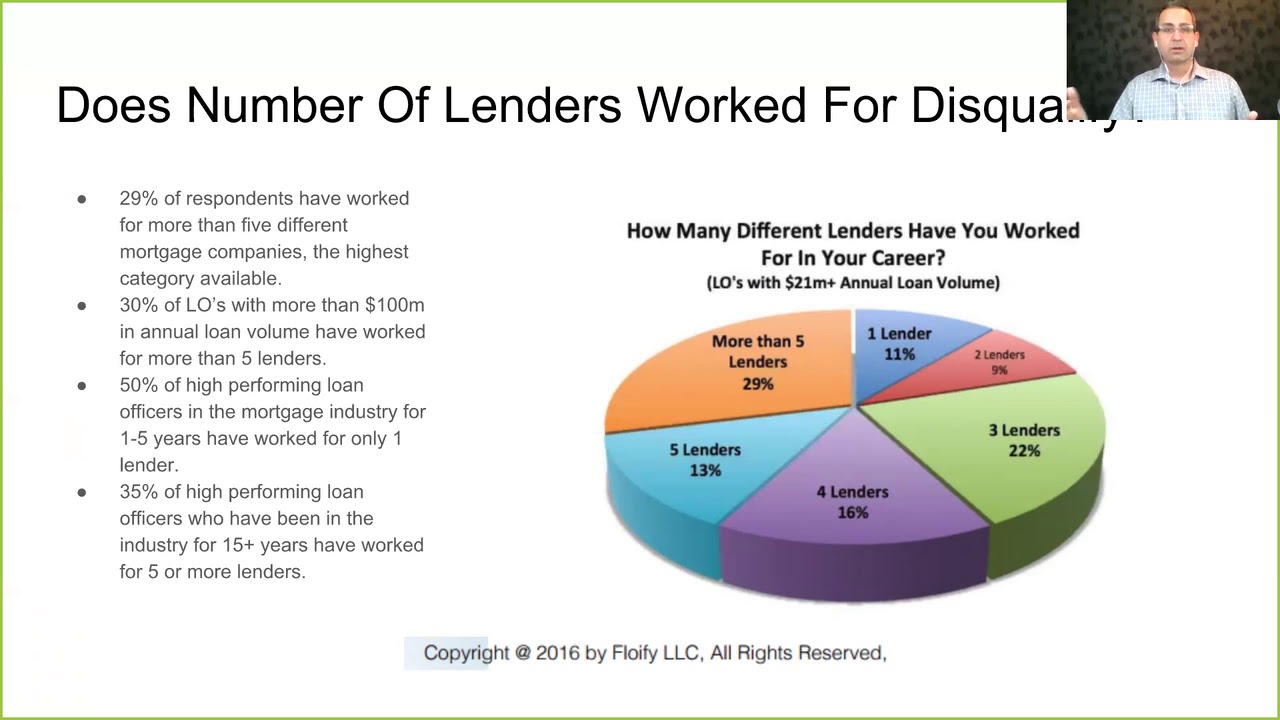
Hey John, it's Richard Milligan. And, uh, let's see, it's been about a week since we talked last. Uh, yeah, I've put, uh, quite a bit of time and effort and energy, um, to, uh, come to some, uh, really cool information that I'm gonna— I want to present to you, uh, through this recording. And then also I'd love to get you back on my calendar for next week. I noticed that, um, you didn't jump on my calendar this week. So, um, I'm sure your life is like mine. It ebbs and flows with, uh, Plum craziness. Uh, but, um, so several pieces of this. One, I'm going to go over a presentation that I've created. I want to show you some high-level data. I think this is going to be really critical to helping your team wrap their mind around recruiting. Uh, there's a great old quote, which is, when the student is ready, the teacher will appear. And a lot of times we, as recruiting leaders, we just kind of go about recruiting as if it's recruiting, not a big deal. It's just one of the hats that we wear. And, and so we really just look at the 3 primary behaviors, which are, you know, this— we need to be identifying talent, we need to be making contact with talent, and then we need to be following up with talent. And we just say, those are the 3 things we know we need to be doing in recruiting. And then I'm going to sell my organization really hard and then hope to win. But the truth is that that model is a, is a failed model, especially today. I had 2 conversations this week, really insightful, intriguing conversations with recruiting leaders. One guy said that he'd hired over 600 loan officers. That's a really big number, directly himself, not under his leadership, but directly himself. The other guy hired over 300 loan officers, and both those guys are losing today in the game of recruiting. And they came across some of my resources, found me on LinkedIn, saw that I was posting some things, doing some video around some things, and suddenly they were on my live calendar asking, how can you help me because I've lost my mojo? The truth is that they're still the same people, but they don't really understand the right formulas to recruit today, and they're trying to problem solve. That's what they're trying to ultimately do. They're trying to find pain points. And then problem solve, and then they're going to rush in with their bag of tools or their widgets and, and sell those to people and hope to move them to the next steps. And that method's not working today. It's not the method that I use. I haven't used that method since 2012, 2011. Um, and that's what I'm teaching your people right now. So with that said, recruiting data is what I want us to look at now. Recruiting data. This would be a great agenda. for the meeting that you and I had talked about for your people. And so we've taken 5 different reports over the last 18 months, some really extensive surveys and studies that were done inside the mortgage business. And what we've tried to do is figure out blue ocean. So I don't know if you've ever heard that terminology before, use blue ocean, but there's red ocean and there's blue ocean. Red ocean is, this is the bloody water over here. This is where we're paying large sign-on bonuses. We only get people if we got better compensation, more products, Better marketing tools, everything. This is, this is the opportunity improvement over here that we're offering. And that's just, that's what everybody's doing. It's really bloody water. It's like we're killing each other inside the mortgage industry trying to land those top loan officers. And so then what we want to do is figure out what I call blue ocean strategies. Blue ocean is this mindset that there's actually water out here that nobody's in. And if we can move to that water, then we will have not only have more success, but it will be easier for us to do it. And so data is a great place to just say, hey, where's the blue ocean? Where's the blue water at? So I'm going to switch now into a screen sharing session. Now at the end of this presentation, this is going to be a high-level overview. So I'm going to go through this quickly, but I'm going to connect some dots for this. So I put some takeaways in here. Would be really cool to take your team through this to get to a place as in what are— what's our immediate application. So when I look at recruiting data, I see it from 2 perspectives. First perspective is what are we going to do to gain an advantage in recruiting? Okay. Second perspective is this, is that reverse recruiting is retention. So we use this information. To figure out how we create stability and structure within the organization so that we're retaining our current employees. Because the easiest model for, for, to attain growth is to just retain your employees. Okay. This idea of constantly churning, you know, where the industry has on average 40% churn year over year. That's crazy. That means that every 2.5 years somebody is leaving. The data that I'm going to show you is going to support all of this. And so this is going to support retention and recruiting all at the same time. Okay. Excuse me, I'm still coughing a bit, but we're going to go into a screen sharing session. And then I'm going to blow this up to the entire screen so that you have a better view of it. Okay, so what we want to do is we want to really develop this idea that we can, we can have a perfect recruiting model, and a lot of this is going to be data-driven. Great book written called The Slight Edge. We're always looking for a slight edge in business, right? It's that mindset, red ocean versus blue ocean. This gives us a slight edge when we look for things in this report that other people are going to miss. I'm going to point some of that out to you. So where did the data come from and when? So this is over the last 18 months. This came from 4 studies done by Stratmore Group, 4 separate studies, and then one study that was completed by Flowify. The Flowify study had 13,000 originators in it, and what they focused on was top-producing loan officers. These are high-achieving loan officers doing $21 million or more, and that's some really cool information coming from that. So, okay, so to start with, this over here— whoops— this over here, um, this shows us, um, the tenure inside the mortgage industry. As it relates to production. Okay, so what are the odds that you're going to produce $21 million or greater if you've been in the business for less than 5 years? So pretty slim. Okay, about 13% of people that have been in the business for less than 5 years exceed $21 million. Now, why FloFi chose $21 million, I don't know, but that's definitely a qualified loan officer, right? When you start to look at these trends, You know, 5, 10, 15+ years. This, this data says that, man, there's a qualifying factor out there immediately for top originators. Okay, think about this. Over here, 86% of loan officers who've been in the industry for 5+ years— okay, this is 5 to 15, there should be a plus on the end of that— 5 to 15+ years produce in the range of $21 to $40 million. So instead of trying to go get a CoreLogix report and sort through MarketTrax, Instead of trying to figure out how do we qualify, how do we find qualified loan officers, tenure is such an easy qualifying factor. You know, if 86% of the people that have been in the business for 5+ years are doing $21 million, that's an easy qualifying factor. I simply want to look at tenure now. Okay. Now what Stratmore Group says is this. This was a study that they did a number of years ago, and they've supported that, this study, since with other, with additional data. And, and the data says this, um, almost 94% of all production— 94% of all production inside the business, it's 93.7%, but we're rounding up here— 94% of all production comes from 60% of the originators. If I invert that, I could say 40% of loan officers produce 6% of originations. That number's crazy. So is qualifying important? Yeah, it's really, really, really important. Tenure and time in the business is a critical component to it. So one of the things that we're seeing is average age of loan officers coming down. Several years ago, it was 52 years of age. Now it's at 46 to 47. And the reason for that is that we're seeing new loan officers come into the business. People see that, and you'll see some of this from this data that I'll show you. People are using that as a recruiting pillar. They're bringing them in, putting them into ZenX, or putting them into whatever program it is, whether that's their own program or somebody else's program, and they're trying to win at that. You know, I see blue ocean as being moving towards the people that are already doing $21 million in volume. And all I gotta do is look at 5— have you been in the business for more than 5 years? Yes. Great. Then I have an 86% chance of being right, that you're a top originator. A 14% chance of being wrong. I like those odds. So takeaways, we want to qualify when we're recruiting. We qualify them with time in business, 15— 5 is a minimum. And ideally, when you look at this report, 15+ years, almost half of those loan officers, almost 45% of those loan officers are doing $21 million or more. Okay, I'm going the wrong direction in our presentation. Here we go. Does number of lenders Does number of lenders that you've worked for disqualify you? And the answer to that is no. Is that a Richard opinion? No, it's a data opinion. Let me tell you why. This is, this is the $21 million or greater producer. If we take they've worked for 4 lenders, 5 lenders, or more than 5 lenders, what we end up here is, is with the largest piece of the pie. Okay. Um, you know, only, I think it's 42%, 42% have worked for 3, 2, or 1 lenders. 58% have worked for 4 or more. So check this out. If you've been in the business for 15 years, almost 29%, almost 30%, 3 out of 10 have worked for more than 5. That's 6 or more. If I say 15 years and you've worked for 6, 2.5 years is the model, right? What does that say? Well, what it says is that the producer who's doing $21 million fully understands Me branding, fully understands that the company doesn't necessarily make me, but that I bring value to the company, right? These are people that understand that their cell phone number is the ATM machine. So they can take the ATM machine, relocate it to some other place, and the ATM machine is still going to produce cash for them, right? That's what this says to me. So really, um, so one of the things that I know that for a season I had was Man, if I looked at your NMLS and you worked for 7 people, I would immediately discredit you and say that you weren't a top originator. This data says that, you know, almost 30% of the markets work for 6, 7, 8, 9, 10, however many lenders. That should not be disqualifying if we're going to go after the top originators, which are $21 million or greater in volume. Fascinating to me. So length of time is a great qualifier. We've already talked about that. 80% of respondents have worked for 3 or more lenders. And, um, and then with 42% having worked for 5 lenders or more, those are the last 2 categories, and 58% having worked for 4 or more, let's not disqualify based on tenure or number of companies that they work for. How are loan officers finding their next company? Um, 1 in 11 says— 1 in 11 says that they will actually solicit their own next opportunity. So, and to prove this, I have a phone call Earlier this week on, on, it was Monday. I get a call from a young lady who's, who's connected with me on LinkedIn, is seeing some of the stuff that I'm doing. She reaches out to me and says, um, do you know someone that's in my market that, um, that has vision? Basically what she was asking is what I teach. I teach how to become an attractive leader because attractive leaders are more successful when they recruit. She's asking who's the attractive leader in my market? Now the exact verbiage she used was, she was asking the question around vision and team culture. And, and so her— the reason why she's calling me, $30 million producer annual production, is calling me is because she said, I'm on an island. I'm 300 miles from the next closest branch. I don't have any real direct leadership, but operations is running crazy smooth. I have no complaints. But I'm recognizing now in this moment that I need synergy. I need to be part of a team, and that from that I can get excited again about the business. I'm just not that excited even though I'm doing great volume. Um, she was the 1 in 11. She's going to solicit her own lender. Okay, how— this is so important to grasp this because being the attractive leader on, on LinkedIn, on Facebook, This, if that helps you not have to recruit people, but to allow people to, you know, to be polarized to you, to be drawn to you. And, and the reason why she was actually calling me is because what I'm doing on LinkedIn is polarizing to her. So whatever I did on LinkedIn, she said she'd read a bunch of my stuff, was seeing my posts, created trust, brought down a barrier. She saw that I, the name of my company is 4C Recruiting. That I use mortgage lingo, and she moved toward me, towards me, thinking that I could help her by representing her and recruiting for her on her behalf. Truth is, I don't. I don't do that, although I do, I do refer people out. And so, um, intriguing. So the other part of this that's intriguing is a colleague referred me. That represents 42% of the entire market. You can take someone who's going to solicit their own lender And someone that's going to be referred, and you wrap up 52.5% of the entire market in that alone. We focus most of our efforts and energies on who are we recruiting, right? And it's just such a small shift to say, I recognize that, that there are things that I need to be doing that actually tee me up to allow others to refer me and to allow other people to find me and to move towards me. 1 in 4 is actually who gets recruited. Okay, so 1 in 11 loan officers solicits their next opportunity. These are our takeaways. Referrals are the biggest opportunity within recruiting. Internal recruiting departments and recruiting leaders only account for 1 in 4 recruits. And then loan officer referral plays a significant role. Let's not miss this. I don't know this about Axia, but this is something for us to talk about. Um, what are we doing to tell our loan officers that them referring other loan officers to us is important? Do we have referral bonuses? Are we, I don't know, paying basis points on first-year production? Are we making it part of the corporate scorecard? Okay, so if you're doing top, top loan officer reports that you're sending out each month and recognizing people, You know, a lot of companies do this— top units, top volume, employee of the month, whatever it is. Why not allow them to win by recognizing who has referred the most people to the company? Okay, we can do it from a comp perspective, but I can actually— I actually know people love playing games. The reason why loan officers love being loan officers is because they love to see their name in lights. They love the aspect of competitiveness and salesmanship and these things. Let's take that, use it to our advantage, and create some sort of game that a loan officer can win. That could be a top award, a president, you know, at President's Club. I don't know, somebody refers 3 loan officers, you referred the most loan officers, you're going to President's Club. You could have your mid-tier loan officers seeing that as a way, as a pathway for them to actually get to President's Club. That's a good one to think about. Excuse me, I'm coughing here in your ear and I apologize for that. Okay, how long before someone decides if a company's a fit? I actually got a call from Don this week and he said one of the recruits he's in front of is someone that's a really good producer. I think it was $24 million of production, if my memory serves me right, and said they'd only been at the current lender for 2 months. And he was concerned because they were moving through his recruiting systems, recruiting process, And he's like, I don't, I don't know, I'm not sure if I want somebody that's been in another company for 2 months. And I get that because I've been there, right? To me, that says job hopper, guarantee, you know, hopper, sign-on bonus hopper. Immediately my antennas go up. But we've already looked at the data here that says that big producing loan officers don't stay at companies historically for more than 2.5 years, right? So We're gonna look at some other pieces of this that are gonna tie it all together. This is a piece of this. Look at this. Almost, it's 9% don't even give the current organization 3 months before they decide whether they're a fit. There's only 32% of the people, it's actually 31%, 31% of the people are gonna give you more than a year. Anyone, anyone, you know, the other, the largest part of the market, 68%, Are going to give you less than a year to determine whether your company is a good fit or not. What does that mean? That means there's a lot of opportunity from a recruiting standpoint when I get this. So what most people do when they're recruiting somebody and they lose them is they immediately go, well, that's 2 to 3 years from now. I'll get back in front of that individual. But the truth is this, is that there should never be more of a time when you're recruiting them than when they've just transitioned. Transitions are hard. Okay, so it would be wise to build out some methodology and to have our people, right, when the student, when the student is ready, the teacher will appear, for our people to actually understand that, that someone leaving to another organization, if you're recruiting them, that could be a win in the short term. So what are we going to do? We're going to pursue them and we'll pursue them differently. How do we pursue them differently? We pursue them differently because while they're transitioning, we understand they're hitting these transition points with the other company, learning a new LOS, getting familiar with the new AMC, seeing what the new support looks like, trying to figure out where all the departments are and where all the phone numbers are and how to get a deal through the system. We would be wise to create a process around that piece. How do we reveal to people our transition? Right. What's our transition look like? Let's lay it out. Let's create a couple of really easy marketing pieces around this. And then when we recognize somebody's just transitioned, why wouldn't we spell out our own transition, right? You're 45 days in. Hey, congrats. I noticed that you're 45 days in at your current— at the new mortgage company you went to. At 45 days, here's something that we do, and I thought it would bring some value to you, so I wanted to let you know. All right. At 60 days, same thing. Hey, you're 2 months in, congratulations. Um, when someone's been here for 60 days, here's where they're at and here's how we handle it, right? Let's build this out. This really could be some secret sauce in the recruiting process that really opens up the door to people who are in transition, probably in some pain points, to where, where you lose them, you don't really lose them. And I'll show you why. No, that's why, why this, this is going to be more important in just a second. Okay, so we talked about both of those. Here's a top 10 list. What's important to loan officers? We need to understand this. Some of this is obvious to us, some of it's not obvious. I'll point out the not obvious. We want to move to blue ocean. What's obvious is this: ability to support high loan volume and fast turn times. It's really important. We all know this. 98+ percent, or it's 98%, say that that's important. We get it. Technologies and systems that help me scale my business. Really important. 92%, um, 91% of those say that that's important. Okay. Um, you know, if we're not showing people that we have systems that help them scale their business, um, let's figure that out because that's a really high priority to top originators. Diverse loan products. Yep, that's important. Competitive rates. Yes, that's important. Get this, engaged and responsive executive management. I was really blown away, one, that this is on the actual survey that they took, two, by the fact that 83% say that this is important and very important to their business. I would have thought that the average loan officer doesn't necessarily see executive management as critical, as a critical component to them delivering a loan to the closing table. This says otherwise. Now, how do we use this to our advantage? One, it's important for executive management to be involved in the recruiting process. A 15-minute conversation can make all the difference in the world. So that's a very powerful next step. You get one of your local recruiting leaders, you've got a nice loan officer that's looking at that, that they've got in the recruiting process. What a nice touch for them to say, hey, I was talking to John about you the other day and And John is part of our executive management team. John actually asked if he could have 15 minutes with you to introduce himself. We're using this statistical information to our advantage. Why not? Right? That's, that's really the question. Why are we not doing this? Let's do it. Comprehensive marketing support. This is interesting. And as part of this, I'll show you on the next page, the higher product— the more production you had, The less interested you were in comprehensive marketing support. Okay, so we put a lot of focus and energy and money, honestly, into comprehensive marketing support, but top producers are savvy enough. They're already investing in themselves. They don't need the company to invest in themselves. They've already taken on their own, you know, options that are outside their own— what the company's doing. They're already doing these things. And the other thing is this. This is a top producer report, right? $21 million or greater. What do we know about those producers? They've been in the business longer, right? We're looking at statistical data that says that. So they're more mature. Their book of business is more mature. They don't have to have all the tricks in their bag in order to be able to attract talent. They probably already own the talent, a good portion of talent anyways. They don't need marketing tricks. They don't need You know, open house flyers or, you know, some cool, you know, product to offer to a real estate agent because the relationship is already there. And, and, and because of that, that they, they say this is not as important. Compensation. Yes, that's important. Team-oriented culture. Okay, this is a, is a really big number. It's almost 80% say that team-oriented culture is important. We have to figure out how to reveal this. If you want some ideas, I've come across some really nice videos from a small lender that's doing a really good job of actually identifying this. And how I came across them is somebody asked me about the lender in LinkedIn and sent me the video and said, hey, I was looking at this company and I came across this. This was hilarious. And they were asking for my input on it. I'll show that information to you. You can check it out. This is really easy to do. This is a way to get people to move to you. It goes to the conversation that I brought up earlier in this recording, which is the lady that called me at the beginning of the week, $30 million producer, wants to have some synergy. She's looking for this team-oriented culture. Training and mentorship. I was, I was really surprised by this. It's— this is middle of the road. This is not— people are saying it's not as important, I think, as what we think it is. Yes, 51% say that it's important, but I would have thought that number would have been much higher than that. And then lender reputation. Here's an easy way to meet this. Those are some really solid numbers there. People say that that's critical. A good way to do this is simply to create the framework and then allow the team to operate in that framework. So let me give you an idea with this. If you had your marketing department create A template, for example, the only thing the loan officer had to do was insert the application date and the signing date or the CD date or whatever date you wanted to use. If there was a template that allowed them just to insert 2 pieces of information and hit a little button and out pops a document that they can share on social media, then they would do it because they know timeline's important to their real estate agents. You could very easily Empower everybody within the organization that's on the sales side to take something like that and to use it. And now you're creating noise and creating reputation. Okay. So you don't have to spend a ton of money doing this. You just simply arm your people and they'll go do it. That's a brilliant idea. Okay. We know most people, number one, most people don't see training mentorship as a big incentive. 82% say engaged and responsive executive management is important. 67% say reputation's important. 78% say team-oriented culture is important. And 98% say fast turn times are important. Now, one of the things I'm teaching your people, one of the things I know is critical, LinkedIn is such, it's really important, okay? I don't know how to overemphasize that. Without overemphasizing that because it is so critical right now. It is that secret bridge of, bridge of excellence that people are building their islands of success on right now. Few, but people are doing it. Think about this. If we look at number 2, number 3, number 4, and number 5, social media can play a critical link in that. Okay, it should, not can it, it really should play a critical link in that. That's easy, it's easy to do. It won't cost you anything. Empower your people to go do it. Okay? All right. Okay, so this is the Dumb and Dumber line in the movie, if you've ever seen that. So you're saying there's a chance. That's where she says that, he asked her, what are my chances, like 1 in a million? She goes, yeah, I'd say that's about right. So you're saying there's a chance. Right now, more so than ever, this is not surprising information to me. The market is content. Okay, deregulatory environment. We have less hurdles to jump over today because we don't have a TRID or a new GFE or the spikes in volume and changes in all the operational structure that we've had to go through over the last decade. We just don't have that now. Operational talent is, is in abundance in the market because people have let go. You want to upgrade your talent, you can. Most companies are to some degree overstaffed at this point. These are all things that lead to good operational models. Companies are now beginning to look long-term versus short-term. Instead of how do we get through the pipeline or how do we get through TRID, they're beginning to talk about things like how do we use new technology. How do we improve on our CRM? What can we do to tie our LOS into our application and to notify the borrower where there are changes in, in the loan process? These are the things that companies are doing. This number says that, that 95% are at least satisfied with their current lender. Okay, still, let's look for blue ocean here. If you take somewhat satisfied And very satisfied, there's approximately 3 out of 10 that are still available, that are still, that are still up for grabs. And here's the other part of this. The thing that I teach in my coaching training is that attractive leadership is everything. I'm not teaching people how to go get hot and warm candidates. What I'm teaching people is how do we go get cold content candidates? How do we do that? We do it through the attractive leader. We're clear on our core values. We're clear on— and this leads to Some of the things, the thing that we talked about last week, right? How do we develop the core values of the organization, create alignment with our key leaders, and then how do we move from stewardship to ownership? That's part of this conversation here, right? Like, if you're going to have success in recruiting, you better, better be very clear on your core values, your convictions, your vision, the direction of the organization. Those things you've got to be You got to be very clear on those. So what we're going to do is we're going to be attractive leaders in our markets. We're going to represent very clearly who we are. And what we do with that is where people are cold candidates, they're content, they don't have any reason to move. But where I show up and I'm clear with those things, it's polarizing. And where I pursue people through the lens of this, if I can get them to believe this one thing, they have to join me. Okay, the one thing is this. If I can get them to believe that me above all leaders in this market, in their market, will help them accomplish their why, then they have to join me. That's the one thing. That's one of the things that I teach. The thing is this, is that when I ask recruiting leaders, what's the why of the people you're recruiting? We go over their pipelines. What's the why? Asked a guy 2 weeks ago. He came into our coaching session and said, I got a question. I've got 5 loan officers right now, and I just have gotten to a place where I feel like I'm in this friend territory. Like, I can't move them. They'll talk to me, they'll text me, they'll go have a drink with me, but I can't move them. And I said, let me ask you a question. What's— can you define the why of those 5 people? And he was like, no. I said, there you have it, right? We pursue people through the lens of their why, not our why, their why. And that's where we build that bridge of excellence. That island of success that we talked about before, right? We do that through core values, core convictions. So the methodologies I'm teaching your people is perfect given the environment because other people are going to lose big time in recruiting. 3 out of 10 officers are somewhat satisfied or very unsatisfied. Um, recruiting models should be designed around building relationships. Okay. Building relationships starts with having alignment around core values. You know, and then number 3, think like a farmer versus a hunter. We'll talk more about that in just a second. But here's the idea of farming versus hunting. For the last decade, people have been able to walk around with their sniper rifle and just pick people off, right? Because of the things that kept the business going through these hills and valleys. Today, you better change your mindset. Yes, there will be opportunities. Yes, there will be opportunities. On the flip side of that, we want to think in terms of farming because there's 2 distinct seasons, sowing and reaping. Okay, sowing and reaping, those are the 2 distinct seasons. So I better till the soil if I'm going to have an opportunity to plant the seed, to water it, to fertilize it, to provide it with sunshine, to actually have a harvest. Okay, so that's what, that's what we want to do right now. Okay, so to keep this short, I'm gonna send you this presentation. There's a lot of things here. Look, there is hours and hours and hours of material to go through. You, you know, you would, you would decide some of the framework around this. I want you to see it. There's a lot of takeaways here that I've come away with that are immediate action items that you can act on, put up for discussion in roundtable meetings. How do we implement and execute? This is not theories. This is not, you know, just creativity. This is actionable stuff. That we can actually go execute on and improve our retention and improve our recruiting around each one of these. Okay, so I'll send this to you. Framework. You'll see me talk about framework several times here when we're talking about competitive rates and pricing. That's a big topic of conversation in the market right now. Compressed margins, little inventory, lots of offers on homes. Leads to consumers having more time to shop, leads to consumers being looking for more competitive options when it comes to interest rates, equals people having to fight for deals. Okay, so creating framework for recruiting leader to converse around that with a, with a new loan officer or a recruit, or with somebody that's even underneath their own umbrella, is going to be important to not losing people, one. but also winning on the recruiting side. Because what the tendency is, is that people just avoid it. Ah, we're weak on rates. I see where other people are beating us on rates. I'll just avoid that. Or they'll create their own, their own, um, you know, narrative around that. So we want to control that. Okay. Uh, yeah. So there, there's that. A lot of issues you'll see is let's create some framework for our people to actually represent this through. Effective recruiting models. Doesn't surprise me at all. The reason why I teach what I teach, the most effective recruiting model you have is your branch manager. That's it. It's the most effective recruiting model. This was a survey done by Stratmore, surveyed lenders and said, what are our most recruiting models? Not surprising either that the inside recruiter that works for the organization is the second best model. If you're going to hire an external recruiter, you better pay them a retainer fee. That they're more successful because of that. If you decide you want to do this, I can give you some insight into that. That's a nice pillar to add, is the external recruiter, where you bring more value by putting them on a retainer versus strictly paying them per hire. Because you can see per hire paid for placement, it drops off, drops off pretty significantly. Now, 0.5 may not seem like a big drop-off, but, you know, when you're, when you're 2.3 and 2.8, You know, you're 15 to 20% less effective by not paying a retainer fee. And then the 1.5, the other, you know, I'm not sure what the other is. Perhaps they're putting jobs on job boards, LinkedIn, these places, and those are effective recruiting methods for them. Okay, where's the pressure? We want to move towards blue ocean, right? 91% recruit originators from Independent mortgage companies. That's who you are. Your people are getting hammered right now. I'm gonna put a cough drop in so I can sustain this presentation to you. Your people are getting hammered, and vice versa, your people are hammering the other independents. That's the big number, 91%. The pressure's also on targeting independent entire branches. That makes sense to me. Um, makes sense to me because that's a huge return on investment. I go get one guy and I get 8. I'll get one gal and I get 5. I'll get, you know, one person, I get more, right? It makes sense. A lot of pressure right there right now. 79% recruit from bank-owned mortgage companies. But this was intriguing to me— only 37% recruit entire bank mortgage branches. Now You've got lenders in your market that are considered mortgage banks. Prime Lending is one of those. Okay, but don't miss this. A lot of the, you know, even the larger communities, but especially the mid-sized communities and small communities, have mortgage departments, correspondent lending groups inside their bank. A lot of times those are 3, 4, 5 producers. The key thing to recognize is this: if you can identify those, they typically lack support, they lack infrastructure, they— the LOS that they're operating on is not on par for the market. And so it's an easy place to go get somebody and to get everybody. Okay. They go get the manager, the leader, and that's a place I'd rather be, I'd rather be in the space of work of 3 to 4 people focusing on them than 9 out of 10 focusing on them. Okay. And so look at this. This is— let me jump ahead. I want to connect these dots for you. Okay. Success rating for recruiting pawns. We'll go back. So is that a success rating for recruiting pawns? Look at this. People say that the independent is one where they have a lot of success. Well, hello, 91% of your efforts are being focused on them, right? So yes, I would expect that number to be big. But when you compare it and look down here to bank mortgage branches, we're only 37%. If you're— if you compare the ratio, the 3.31 at 91% of effort and the 2.39 at 37% of effort, this right here would be a beautiful model for you to develop some recruiting ideas around. To go after them. How do we go get the smaller, or even just the mortgage bank team? How do we go get those? To me, that seems pretty obvious. I don't know, a lot to me, but a lot of people are misconnecting that. They'll say, they'll see this, they'll sit and they'll say, of course people don't recruit entire bank mortgage branches. But, you know, of course they don't. There's just— and the reason why we don't is we jump forward and make you dizzy. Is it because people aren't having success? But success in relationships, the amount of effort, okay, that's, that's, that's something that people are going to miss in this, John. And that's such a— if you can connect the dots on that, you'll win. I like winning. Okay, so tenure numbers. This doesn't surprise me. I'm sure it probably doesn't surprise you. This takes, you know, when do they start tenure increases? Until you get to about month 15, and then it's a significant drop. Okay, so, so why do we stay in front of originators even when they transition? Because we understand that we're farmers now. We're not hunters necessarily as much anymore. And so I'm going to keep planting those seeds because I recognize that month 15, people are going to be again to transition. And between month 15 and month 28, it's the most steep churn percentage. Of any life, of the lifelong life, you know, timeline of a loan officer. Okay, month 15 and month 28, focus a lot of effort there. That's blue ocean. And then look at this. This looks like a similar trend line back over here, uh, as this one right here, but the timeline is completely different. So they— so we compress, we go with this here is that you're around year 6, and this is at year 12. So you can have similar results Over a 6-year window of time versus a 13-month window of time. Let's compress those. This is a great place to focus our energy. Takeaways, it's exactly what I said. There's a steep decline in retention between year 6 and year 12, with volume predictors saying 86% of those loan officers are producing $21 million or greater. Those would be great targets to, to identify. You're gonna have to have a long-term strategy. For staying in front of those. I like the flip side of this and to focus on this first churn curve. Okay, we talked about the recruiting ponds. You know, where, where should we be fishing? Look at this. College grads, people are having success there, and other. This means that people are bringing people in from outside the industry. Now, what we don't see in this is what is the success rate Long-term of this other and college grads. What we do know is that if you're in the business for 5 years or longer, that you're going to be a $21 million producer. It's a high likelihood. So I would rather take my effort and energy and focus on the people that are already in this. It helps me. It's a more direct line to success. There's a high percentage of the other and the college grads that aren't going to work out. Okay, so turnover by quarter. A lot of people that I talk to think that first quarter is where it all goes down. We win or we lose in first quarter. And the truth is that you don't. Okay, so Stratmore made a mistake here. The green actually is banks, not independents, and the tan is the independent mortgage companies. So Q1, not a lot of people churn inside the independents during that window of time. Most people think that's when it happens. But check this out, Q3 and Q4, very, very similar statistics. And, um, and what the study shows is that the more, the larger you, the more, more volume you produce, the more likely you are to churn in 4th quarter over any other quarter. So you could build some lifecycle recruiting models around this to improve your success rates, right? Incremental improvements in each one of these areas that we're identifying really add up. So by the time we get through of looking at all the incremental improvements that we could make, you could have pretty dramatic results in your recruit— in your recruiting model. Okay. And 4th quarter, I said that 4th quarter is the highest, 1st quarter is the least. I was surprised by how many people churn in Q2, right? This is the peak season, right? And you only see a 3% drop-off From 3rd quarter to 2nd quarter, and you only see about— is that 3.5%, 4%, 4.5% drop-off from 4th quarter, which is your peak quarter, over 2nd quarter. People aren't afraid. April, May, June— I'm not afraid, I'll still transition. We've proven this through the fact, over and over again, through the fact that people are willing to leave every 2.5 years. We see the churn rate between month 15 and month 28. We see Going back to the very beginning of this presentation where, you know, the average timeline that somebody's with an organization, it's not uncommon to see big producers leave and have 5+ employers on their resume, right? All of that supports this data. So takeaways: recruiting is science. If we're using the same target message for every recruit, we're probably missing out on opportunities. Pay attention to time in business and time with company. As you have the data support how you should approach each individual to increase your opportunities. I think as an example that 10+ year tenure makes training and mentorship much less appealing. And want to boost retention. Here's a really easy idea around this. If people— if as an independent, fewer of my people would— could possibly churn in Q1, what about having A compensation structure where you're not necessarily paying as much, but you're paying an annualized bonus on production and you're paying it in Q1. What have we done? We have now taken our people out of play in Q3 and Q4, right? Because that's the escalation. People are less likely to shop lenders and to make transitions in Q1. And now if you're getting a check in Q1 for your production for the prior year, You're even less likely to shop. So what a beautiful idea around this to reverse recruit my people with the promise of a payment, some sort of kicker, some sort of, you know, whatever that might be to keep them from shopping lenders during the holiday season. What's it gonna take to get you? I couldn't believe this, this first stat here. Look at how many people are giving away non-refundable sign-on bonuses. This immediately, when I saw this, I was just kind of shaking my head going, that's unbelievable. You're gonna, you're gonna connect the dots on the next slide because people didn't say that was a failing proposition through the statistics. So not wise. It's not wise to do that. So we measure this across, you know, the biggest one, especially for the banks, and it wasn't even much that much less for independents, is most people are paying some sort of guaranteed compensation over a specified timeframe. We know this. I'll give you a 3-month guarantee. Right, you got to transition your pipeline. Most people don't move today unless they have something like that in place. But look at this increased commission scale over a limited time frame. I was— this was a, this was a good number, you know, 60% are giving you more basis points over limited time frames. So as an example, maybe for this, the first 6 months, you pay somebody 25 basis points extra. If you look at the production numbers that we're looking at here, $21 million is the, is the numbers that we've seen a lot through this. 6 months is $10.5 million. I'm gonna try and do some easy math. 25 basis points would be north of $25K. So if you came here and I wrote your comp structure at an additional 25 basis points for the first 6 months for coming on, and I just didn't maybe pay a non-refundable sign-on bonus or, or even a refundable sign-on bonus— A lot of people are structuring like that. That's very common to see that. We want to be competitive. I think this helps us understand the mindset of how do we be competitive. But here's, here's really what we want to know. Is it working? Okay. Is it working? Look at this. Non-refundable signing bonuses. 60% of independents almost say that it's not working. But that was my synopsis immediately. Guaranteed compensation over a specified amount of time. For banks, that works really well. You're not a bank, you're an independent, right? Independents say it doesn't work as well. What does work though is increased commission over a limited time. 61% say that worked well. And this stat down here, 67% say other— I apologize, I'm kind of wallowing this thing in my mouth, but I'm trying to keep from coughing here. 67% say other comp models work. So we kind of generated an idea around, you know, basis points over the course of a year paid in first quarter. That could be another comp model. Right. So the creativity around compensation is going to be really key. And, and, and the key is that creativity not only helps us win because we're— it's different positioning. This is a place, probably a problem to be solved. This is a place that we could win creative compensation. We figured that out. Okay. People are figuring this out and a high percentage of them are saying that it's highly attractive. Okay. Immediate application. This would be what we would want to, what we'd want to come up with. What's the immediate application? Okay, this is also— this presentation is also going to help us as we have the conversations around the other part of this agenda. The other part of this agenda is getting— coming together as a group, as leaders, identifying the core things that we want to represent. It's good for them to see the lens of what top loan officers want, because that can help us identify our core values in alignment with the larger market of good producers. We'll measure that. Then, and then once we've identified those core values and really quantified, you know, how we're going to spell those out, what, what are we going to specifically do because of those core values? Um, then we really talk about the next thing, which is how do we, how do we pass off ownership to our people? Instead of saying, this is the company model, this is the company methodology. What we're going to do is say, everybody has a voice in it. Everybody's a part of this. How do you interpret this? How do you take action on this? What does this actually mean to you? This is not a Richard Milligan or a John Lewis or a Ryan Schaefer or Aaron or Don or Jeff or whoever. This is not our mantra. This is the company mantra. You're a part of the company mantra. The ESOP is a critical piece of that. It says that everybody has a say in this and we allow them to take ownership of it. Okay, so this would be a really cool agenda for us to go over. There's practical things here that you can apply to your business immediately that will help this team continue to go and have success recruiting. And, and I see this. I mean, if you've got 2 teams, if you've got an East and a West team, And your West team is doing some of these things, it can, it'll become pretty apparent very quickly that this is some methodology for success. If you want to compare those kinds of numbers, you can do that. We could bring everybody into this conversation and say, as an organization, it strengthens the organization for all of us to be on the same page and for all of us to be doing this. I think this is money. That's a, that's a line from a movie. That's so money. I think this is money for you guys in the stage that you're in right now. So let's talk about this as I'm here live recording. Let's just talk about this. Here's— everybody has a way they wanna structure fees to have me come and talk and to present and to create stuff like I've created for you here. I've created all this as a value add. Okay? I'm enjoying the guys that I'm working with on the team. Great people, just amazing people. So that's getting to do these things and help you guys is a value add to me. So I appreciate that. From coming out and presenting this agenda over the course of, you know, 4 hours or a day or whatever you get, you decided you want to do, we could— we can drag this out in roundtable meetings as long as you want. And we can condense it and even break this up into 3 or 4 separate venues throughout the year to where maybe the goal for 2018 is We build out a model based on this data by year end. Okay. Here's how typically I get paid. A lot of times it's flat fee. So to come out and to do a half-day roundtable is typically around $5,000. And then they pay my travel expenses. Some companies do it differently, but ultimately ends up almost being the same. Some companies will pay me $750 an hour to come in and to be there in the meeting, you know, 4 or 5 hour meeting, and then $300 an hour for my travel time. By the time we get done, we're around $5,000. So if you'll pick up my travel expenses and then figure out what works for you— I'm present, I'm not saying that that's my fee. You tell me what's in your budget and let's make it work. Okay. You figure out what's in your budget. Let's make it work. You tell me what that number is. I've just told you what is typical. But I want this to be a longstanding relationship. I want to come along for the ride with you guys. That's ultimately what, what, what I would like to do, play a part. I think that I have a lot of experience and practical stuff that you can apply inside the company that's going to bring a lot of value to you. And this is really about— it's probably about 25-30 hours of time that I've spent on this presentation pulling data in, analyzing for you guys to get to a place. You have me as a, as a resource, as, as a consultant or coach or however you want to see me. You have me as that resource. I'm in a, I'm in a special place. I get to see the larger market. I get to work with, um, recruiting leaders across the United States and in a nice mix of independents and banks and, and brokers and correspondent lenders and direct lenders. I get to see what's going on in the market. I'm always going to have a different perspective because of that, because I'm seeing the data I'm hearing the stories. I'm seeing how people are being impacted and how they're responding. And so I think I can bring a very cool, hopeful approach to what you guys want to accomplish within Axia. Okay? So you respond back to me and let me know what you want to do. If you give me a couple of weeks, I can juggle my schedule around. I spend 32 hours a week coaching. So within that, if I've got a couple weeks notice, I can just advise my coaching clients that I'm gonna move them into the other spots, or we're just gonna move one week to the next week. And so, um, if you give me a couple weeks notice, um, I can make that happen. The only time that I can't make that happen is I'm gonna be in, um, Las Vegas, uh, in April presenting to Carl White's Freedom Club. Those are his high-level coaching clients. And, um, that is the weekend of April 13th, 14th, and 15th. So as long as it doesn't impact that, not a big deal. And with that said, I miss you this week. Hope to see you next week, and I hope there's some value in this for you. Okay, I know there is. We'll talk to you soon. See ya.









