How To Legally Become Your Own Bank In 2025
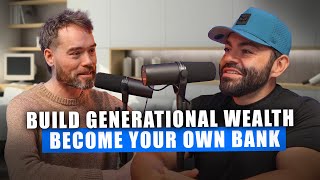
This is a YouTube interview (Rick Pino with guest Terrell Tompkins) introducing the infinite banking concept using cash-value life insurance. The conversation explains how banks invest depositor funds (claim: banks invest ~90% and leave ~10%), contrasts simple vs compound interest, and describes how cash-value policies can grow (examples use round numbers and hypothetical compounding rates, e.g., 10–14% cited verbally). They explain borrowing against cash value (stated up to ~70–80%), using loans to acquire cash-flowing assets or businesses, and estate planning techniques (waterfall method, trusts, rolling death benefit back into cash value). Call-to-action: GoodKingFinancial.com and recommended book 'What Would the Rockefellers Do?'.
Questions this video answers
GoodKingFinancial.com
Up to 70–80% of the cash value.
What Would the Rockefellers Do?
Chapters
What's up, guys? It's Rick Pino here from Get Wisdom. What if I told you that there was a way that you could become your own bank? And not just become your own bank, but you could set it up to where you have infinite banking moving and working for you and your family? Well, guys, I'm excited to introduce you to the man. I'm here with my buddy, Terrell Tompkins. What is up, bro?
What's up?
Good to see you here today, man. Thank you, guys. For those who don't know, Terrell Tompkins here, financial educator, mentor, you're a coach, You've been helping people in this exact area for a number of years now. And I'm just excited to have you here on the podcast, dude.
Oh, man, thanks for having me. I love it. I'm excited, man. I'm excited. Let's.
Come on, bro. Tell us a little bit about your story. I'm sure everyone's like, what? What does that mean? Like, infinite banking? How does that, like, before we jump in there, give us, like, the nutshell version of, like, who you are, what you're. What you're up to right now, where you're from, all that good stuff, and just kind of intro yourself, man.
Yeah, absolute. Absolutely. I'm from Alaska by way of Washington, so currently I'm in Spokane Valley, Washington. But I serve the entire nation, of course. But yeah, just a few years back, I started learning about these things through a mentor of mine. And as I was learning these financial education pieces, man, I'll be honest, I got a little angry, I got a little frustrated.
Realized that I know why.
I know I blew my mind. I was like, you know, I'd sit there and I just shake my head and tell my wife. I'm like, this is insane.
You know, why didn't they teach us this in school? Like, what exactly, Exactly?
Why aren't you teaching that now? Yeah. What is the deal? So as I learned those things, it just became a major passion of mine. And more and more, I just. I just went after it. Wow.
And so that's kind of what started you in the journey. And like, where did it. Where did it begin for you? So it started there. Like a mentor showed you, your eyes were opened. And then like, what was the next step for you? Like, oh, my gosh. Like, did you just dive head on? Was it a slow process? How did it work for you? Like, getting into all this?
Yeah, absolutely. I would say it was a slow process in the sense that as you begin to learn these things, there's such a wide array of opportunities and directions.
It's like coming out of the Matrix, bro. That's what it is. It's literally like you, you take the, what is it, the red pill or whatever?
Yeah, one of the pills.
You take the red pill and you're like come out of the matrix and you're like what?
Exactly.
This is crazy.
Exactly. Your eyes are just popped out of your head and you just walk around like that for a while, for a few years.
And it is interesting because obviously they don't teach us this kind of stuff in school. They don't want us to know this. This is like the infinite banking method is really like a tool that the wealthy use. And my wife and I didn't learn about it until handful of years ago. We're like, what in the, like same thing. Like, this is crazy. What. And so let's, let's slowly get in there. Like what is infinite banking? How does that work? Like is this legal? Is this a scam? Like are we all going to jail? Break it down for us, man. Like what's the concept? How does it all work? Right, Explain it to us.
Absolutely. Well, you know you're going to hear some hot button words here, but I want, what I want the focus to be is it's all about cash value. Now some of you have heard that it's been popular on the Internet for a while now. There's a couple ways you can go after it. But I would say the important thing to understand is that the banks do not operate this way. Banks are, what they're doing is they're taking 90% of what you put in to store your money. They're taking 90% and they're investing. So what they're doing with the 10% is they're leaving that. So obviously you have some access and everything. But the bottom line is they're already doing this. They're taking your money and they're investing into bank owned life insurance. So that's what it's all about. It's all about the investment piece. So basically what you're getting to do is. I don't want to. We'd be here three hours if I went into the details. But, but I'll tell you this, you're now doing what the bank is doing. And not only that, but you're not becoming your own bank, you're becoming your own banker. So it's just a beautiful thing.
So let's break this down a little bit for those who are like what, this is sounding crazy. For instance, if you go to the bank, and let's just use round numbers just for generalization, when you put $100 into the bank, break that down for us. I'm aware, but break that down for us. What are they doing with that hundred dollars and how are they turning that into infinite banking? How are they making money off of us over and over and over and over just by us putting that hundred dollars into the bank? Break that down for us, man.
Right, right. So what they're doing is they're taking out of that hundred dollars, they're taking $90. They're putting that into investments. Now I say investments. Now. You don't want, you don't want to look at life insurance as an official investment because if it was, then you'd be taxed on all of it. So let's not go there. It's not an investment. Don't think that guys. But the bottom line is they are investing into bank owned life insurance.
Insurance policies. Insurance policies, cash value. Insurance policies, cash value.
Absolutely. And what's happening is your $10 that's being left there. They're not giving you compounding interest now. They're making compounding interest off of the $90 that they've invested.
But they are not usually around anywhere from 4 to 6% somewhere in that zone. Right, right.
And exactly.
Value life insurance policy.
Yep. You got it. You got it, Rick. It sounds like you may have a few policies yourself going, but Rick's in on it. So that's the thing, you guys, you need to understand that because once you understand compounding interest and simple interest, as you know, Rick, it is, it's, it's embarrassing once you understand.
Break it down for us, man. What is the difference between compound interest and simple interest? Because I feel like moving forward as we're like bringing this education to the people here. Yeah, it's like, especially if you don't know what this is and how this works, you're like, what, what is the difference between simple interest, compound interests? Because really at the end of the day, like these round numbers, 100 bucks that we're talking about here, like, you know, the bank is literally giving you fractions of a penny. Hey, man, you know, put it in our savings account. And while they're paying you the fractions of the penny, they're investing your money into their own policies and they're making compounded interest over and over and over. And I won't jump too far ahead, but then you can also borrow against your policies. Let's not go there just yet. What's the difference, Terrell, between compounded interest and simple interest? Talk to us, man.
Hey, I hope you're enjoying the training. I wanted to take a few moments real quick to invite you to join me for my upcoming Create and Sell Digital Products five day challenge. Okay. This is a five day live virtual event where I invite entrepreneurs, or would be entrepreneurs just like you to come spend five days with me and get live training on the five moves that anyone can take in order to scale and skyrocket their business and their revenue. Now, the best way to join is as a VIP because VIPs get to spend an extra hour with me every single day and ask your questions live. My most successful students have all been VIPs. That's the best way to join. Listen, you don't want to miss the upcoming Create and sell Digital Products 5 Day Challenge.
It's completely live.
It's coming up right around the corner. Click the link down below in the description. Grab your ticket today.
Now back to the training.
Yeah, so basically, simple interest means they're going to give you interest off of your principal only. So you put that hundred dollars in, they're gonna, we'll just say that they're giving you a full dollar. Now I'm winking here because I'll just tell you it's way less than $. Like you said, fraction of a penny, they're giving you less than 1% off of that. So just if we just paused and said less than 1% off of the money that you have now said here, I'm gonna allow you to keep my money with you in your bank. And let's see what we get back in return. Less than 1%. So simple interest only gives you interest off of the hundred dollars.
And that's, that's only in a savings account. That's not in a checkings account. That's like in a, in a savings account that has interest on it. That's not for every account that you put your $100 into.
Right.
That's like, that's even. They're like, oh, we don't. For some people who deposit the money in there, if you don't ask them to give you even your fraction of a percent, they're like, okay, we won't just hold it here, we'll hold it for you. Whatever you want. Yeah, man, I got you. No worries. Right?
Yeah, exactly. And what compounding interest is, not only is it, I think Einstein said it's the eighth wonder of the world. And what it is, is they're going to give you interest off of your principal. So say they give you a dollar. Now you have $101. Now they're going to give you interest off of that total. And it's going to build and build and build. So that's compounding interest. Now when you're looking at 4 or 6% compounding interest and there's some. I don't want to, I don't want to give exact numbers, but I dealt with one that was pulling back around 14 years or higher. So I'll tell you, it can be depending on how it's set up and if people are setting it up the right way.
So let's, let's, let's go a little bit slower just for the sake of everyone listening and watching and learning. Okay. Again, we're going to use round numbers here. Okay. So let's say in the system that you're talking about, you deposit $100. And let's just say again, like you said, not all of them are this high. Some of them could be. Let's just say there's a compound interest rate of 10%. What does that look like if you invest your hundred dollars into this system instead of the traditional banking system? Break that down for us. Because I think as people are getting some light bulbs going off, I just want to really make it simple for them.
Right, right, right. Yeah. We don't want the light bulbs to be like fireworks and everything starts on fire. So let's not get crazy. But yeah, so that would be, you know, in a compounding interest, if you were looking at 14%, you'd obviously be bringing in four $14 as opposed to the less than 1%. Now you'd be at $114. And now you get interest on that.
So, so real quick, just, just for clarity, in your case, the 14%. Okay, yeah. You put in $100 into the cash value.
Right.
If it were up to 14, which you've seen them that high, sure. Then now you have made $114 because they're paying you interest. But then it compounds.
Yes, sir.
Which means the following year they pay you another 14% on top of the hundred and fourteen.
Correct?
Right.
Yep. And that's how it builds. And you guys, as you move along here, you know the arguments you hear is with the borrowing. Now you brought up the borrowing, so I have to bring that up. A lot of people go, well, why would I want to borrow from my own money? And I'll tell you why. Because cash value is, it remains. It's as if the Account, never lost that money that you borrow off of it. That's the reason you want to borrow off of your own account. Now you would borrow your own money? Yes, it's your money. You would borrow it, you would put it into. I want to be real careful here because a lot of people will go out and spend on, you know, maybe a new car or something. Now it's not that you can't do that, but the important piece here and what I would always suggest, and as I'm coaching people through this, it would be to invest in a cash flowing business of some type.
Some kind of asset. A business.
Exactly.
Real estate, something like that.
Right. Something that's going to bring you back returns. Because now not only do you have something that's moving cash flowing, but you also, like I said, now as you pay that loan back, it expands your ability to borrow more.
Now so let's slow down just for a second because I know everyone's gonna start getting excited. Like wait, I'm excited. I know when you start figuring this stuff out, bro, it is insane. Right? Okay, so let's slow down just a little bit. Okay, so let's, let's give some examples here.
Yeah.
Okay. Let's say, and again, for those who don't know, we're talking about cash value life insurance policies. And by the way, this is a very nuanced, very nuanced thing. Okay? So in this quick training, we're not going to be able to break down all the ins and outs or whatever. We just want to kind of intro you into the possibility.
Right.
This is out there. And then by the end maybe they can connect with you and go from there. But let's give them some examples. Okay?
Right.
Let's say somebody out there. We'll use round numbers again. Okay, Terrell, let's say somebody out there, they have a hundred dollar cash value life insurance policy. And let's say it's compounding at again, round numbers, 10% a year.
Sure.
Okay, so just to hold your hundred dollars in your own cash value life insurance policy, you are getting paid 10% a year on your own money. So you're making money one time right there. Right. But then you can borrow against your cash value not for the full hundred percent.
Right.
But up to 70 to 80% depending on the situation.
Correct.
You can borrow up to 70 to 80% off the cash value. So let's say now you have your hundred dollars in your own cash value account. And you say again, this is just, this is not the real world. But for the sakeness of round numbers and people understanding. Then you say, I want to buy this home that costs whatever, $8. Right. Okay. You could in theory borrow against your cash value.
Correct.
The $8 from the cash value.
Yes.
It does not touch the cash value.
You got it.
You can use the $8, purchase the home.
Right.
That makes whatever $3 a month. Sure. On rent.
Yep. Could be a rental. Yep.
Pay back the loan that you took against yourself.
Sure.
And I don't want to steal the thunder from you, but I just want to make sure people understand the possibilities.
Right.
And you can do this over and over and over again. You can do this more than one time, depending on the situation.
Absolutely.
You take it from there.
Well, and the important piece there is that that $7 house, I think you said it was $7, $8 house. Well, hopefully it's a good house. But what you can do with that is you do not have to pay it back right away.
Right.
You also do not have to pay it back at all. Now that's a little mind blowing.
But you again, there's a lot of nuances.
A lot of nuances.
Sure.
I would, I always suggest that we pay it back, but we know things come up and things, you know, things can happen. But with that $8, as that $8 is out of the cash value your account is building as if that hundred dollars is still there, you're still getting the compounding interest off of the total of cash value. It continues to grow. This is where the insanity comes in. Because as you pay that back, like Rick said, you can do it again and again and again. Now this is foundational. In other words, if you are wealthy, you typically already know about this and you're already using it. A lot of people don't understand this even exists. And what they're doing, you know, they're getting CDs or you know, maybe they have a 401k. That's fine. These are all, you know, things that grow. But I'll tell you, if you want to game the system, this is how you do it. So it's incredible.
I'll put this mention out there. So for those who are watching right now. And you're like, you're like, this sounds crazy. Or maybe you're like, this sounds too good to be true. This is a scam. I completely understand. Because it is. Absolutely. You're coming out of the matrix, man. Right? Oh yeah. There is a book that I recommend people check out when they're first getting into this. And it's called what Would the Rockefellers do?
Oh yeah, right.
And you know about that book of course, right? It's like, it's like the, the bible for this kind or the interest intro to this world. And so for instance, the Rockefellers, the way that the Rockefellers are still one of the wealthiest families in the world, generations later, it's incredible.
Right.
And, and other people who came up like the Carnegie's. Okay, Rockefellers and Carnegie's kind of came up together. They were extremely wealthy in their day. John D. Rockefeller, him and his family began to apply that's called the waterfall principle in a cash value life insurance policy. They begin to apply this to their family. And because the money compounds year after year because you can borrow against yourself.
Right?
Right. You can borrow against yourself and you're still making interest on the money that's still there.
Right.
Then what you borrow, you can invest to other businesses or assets.
Correct.
Dump that money into the life insurance policy, the cash value life insurance policy and this thing snowballs. And it basically the Rockefellers called it the waterfall method. It waterfalls down to generation after generation after generation. It's how people get wealthy and stay wealthy to where the Carnegies, they're not one of the wealthiest families in the world anymore because they did not apply the principles that are available to us in this opportunity. So I know whenever you're first hearing about this you're like this is crazy or this is a scam or like this is too good to be true. Again there's a lot of nuances, right? You have to get very educated on this. And I wouldn't say I'm an expert by any means, but I understand way more now than I did in the beginning. Right, right, right. But if you can get educated on this and build a business that is generating cash flow to where you're taking some or all whatever you desire, some of those profits, dump it into this cash value life insurance policy and let this thing grow over time and then teach your children how this system works so that they can always be like you said, I like the verbiage gaming the system. It's over with, bro.
It's over.
It's over with. So take us deeper into the, the rap. I there's so many matrix like nuances here. Like how deep does the rabbit hole go take us to the next level now? Okay, so like, okay, this is a possibility. Oh my gosh, what happens next, bro? So, so talk to us more about some of the possibilities, how this works. Like continue to educate us here.
Yeah, yeah. Well I would say you know, like I said, I'm a big, big proponent of cash flowing businesses. Cash flow is for cash flowing businesses, or excuse me, cash value is for cash flowing businesses. That's where we want to, I mean, we want to get there. We don't want to go out and purchase some type of cash flowing business that has 300 employees or something like that. We're not going crazy here. You want very few employees and you want this cash flow to be happening now. And I'll tell you this, it is the time to purchase businesses right now. Oh my gosh, there's never been a better time. There are 10,000 baby boomers retiring per day. This is not per week, per month, this is per day. So there are so many businesses out there that are being sold or are simply being shut down because, you know, we are not out here purchasing them. And it's, it's a sad thing because I'll tell you, there is the largest transfer of wealth happening right now. Now forget, you know, whatever's happening in politics, whatever's happening in real estate, whatever's happening across the board right now is the largest transfer ever simply because of the age of these people that are retiring every day, they don't want to run a business anymore. Maybe their kid decided to go be a lawyer instead of run the family business, things like that.
And just for clarity, these are like baby boomers, like you said. They're like, yeah, plumbers and they have AC&H vac companies and whatever. Their, their local car dealership. Just the stuff that they've done for years. And I read online the other day, there's something like $20 trillion being transferred from the baby boomers right now. And if guys like you and I, or people who are watching right now, if they don't jump on this, it's just all going to just fizzle out and it's going to go to whoever takes advantage of the opportunity.
Right? Exactly, exactly. And that's why, you know, I'm not suggesting you just go and go buy a business outright and all this stuff, you know, this piece, the cash, the cash value piece of life insurance, insurance, this is foundational. Now a lot of people are also investing, you know, they'll take their 401k out or something like that and purchase a business. Now that works too. You know, in my opinion, 401ks take a little too long to build. And you know, you, in that sense, you are gambling with what is supposed to be your retirement, supposed to be another foundational piece. So when you go and now risk this. And it's in the market, it's in the secondary market, the stock market as it's just doing this. And you know, we all go, oh, this person's in office now, or that person's in office now. Everything's gonna be good. But you are gambling with a foundational piece which is your retirement. So that's.
I just, I just want to make sure everyone understands what we're talking about here. So when you're talking about this idea, because there's two concepts here. There is the concept of the infinite banking opportunity that is available to us through cash value life insurance policies. Again, it's super nuanced. Go do your homework. Let this be the intro for you into the possibility. And then you're also talking about cash flowing businesses. Whether you start it yourself, it's kind of harder because you're starting from zero. Or whether you purchase one from someone like a baby boomer or someone who already has a cash flow business. Maybe it's like an H VAC company or like I said, the car dealership or their, their car washes or whatever it is. And the family doesn't want to do it anymore. The guy or the gal, they're getting older, maybe they're close to 70 now. Like, I'm done. I just want to get out, want to retire.
Right.
If you can acquire or build some kind of cash flow business, take the cash flow, like I said earlier, and dump it in to the cash value life insurance policy. This thing can grow and grow and grow. Because, Terrell, the examples we're giving on these round numbers is like, okay, if you put in a hundred, what if you were to put in a thousand? What if you were to put in a thousand every month?
Yeah.
What if you put in, you know, and it just continues to compound over and over and over.
Right, right. Well, and that's, you know, that's, there's two ways you can do that now. You can build your cash value over time so you don't have to have a nest egg. You know, we were talking about 401ks there. We're not talking about moving that. So you can build it essentially from zero. Now you can also, if you do have some funds available, you can also move those funds into the cash value. And what that does is that spikes it immediately. There's your cash value. Before you even have to grow it. You can borrow off of it as little as 30 days. But a lot of people's, you know, I want to go there just for a minute. When it comes to people's retirement and things like that, there's also options. Now this is not necessarily cash value, but you can also, you know, there's people out here, here that are using these tools, getting their funds out of the stock market where you're not gambling with it anymore. And they're getting options which are lovingly, lovingly referred to as lifetime income. You know, a guaranteed income at a certain point, things like that. So you can also prepare in a better way. You can also do that through a cash value policy. So there's a lot of different ways you can run it. Just like, just like Rick was saying, there's, there's a lot of nuance to it, but there's so many options out there. And Rick, this is why I get so excited. I'm, I'm just. When you start learning this stuff, it's crazy. It's.
Yeah, it's crazy.
And you get frustrated. Oh, man. So I'll tell you what, they should be teaching it in school. Absolutely. And you know, I've got a couple things in the works where I'm going to be teaching younger families. Single, single moms and dads, things like that.
Yeah.
Just to get these foundational pieces out to these people. So it's incredible.
So let's. You're talking about. Obviously there's a lot of nuance to this. I want to poke the hornet nest a little bit and get into one of the nuances here.
Sure.
Because I'm going to go back to something that you mentioned earlier. Paying it back. Right. Okay. So let's, let's dive into this nuance here.
Yeah.
Round numbers. Okay. You got the hundred bucks and your whole life cash, cash value insurance policy. Okay. It's compounding all that good stuff.
Yeah.
You barred against it. Right. Whatever. That eight dollar house. Something went crazy. You were a bad steward. Oh my gosh. Or times got tough.
Sure.
I couldn't pay it back. Yeah. What happens then?
Well, I don't like to talk about death, but it's just part of the conversation.
So it's really not life insurance. It's death insurance as well. It is.
You know, life insurance is for your life. So when we're talking cash value is for your life.
I'll tell you what, that's why this is different, man.
You get car insurance for your car.
Let's go.
You know, home insurance for your home and life insurance for your life if you do it right. So. Yeah. What we're looking at is towards the end of your life, you didn't pay it back, what happens is it's simply taken out of the death benefit. So this is part of it is that you get to use the cash value life insurance while you're alive, while you're living. That's why it's for your future and your present. And if you were to pass away and never have paid that back. Now, I hope that doesn't happen because we just want everything to roll right for you. But if, if it comes out of the death benefit, your loved ones are not going to have to worry about paying that back.
Yep. So it's a beautiful come off the death benefit, correct?
Yep.
Right. So it's, it is so crazy to even consider that, bro. Right, right. Again, like, let's go back to traditional banking, right? If you take out a loan from the bank and God forbid something crazy happens, oh, God, My, my gosh, I can't pay it back, bruh. That thing's hanging over your head because you didn't borrow your money.
Right.
You borrowed the bank's money.
Exactly right.
But if you borrow against your cash value life insurance policy. Right. You're borrowing from yourself. Correct. You're borrowing from yourself. So if somehow, crazily, I can't pay it back, blah, blah, blah, you basically, you're not owing it back to a bank. You're. You're basically taking it off, like you said. Taking it off of what happens when you pass away instead of just needing to take care of it right there.
Yes.
So it gives you, in my opinion, it gives you almost a longer chance. And again, this is nuance, guys. There's, there's a lot of nuance in this, but it gives you a longer chance to be able to figure it out, pay stuff off.
Right.
Get those assets built strong to where they do cash flow. You can dump the profits back into the policy, grow it over time, balloon it over time. I don't know if you want to go here, man, but the next step to this, where I think it gets real crazy, is you can, you can do multiple policies like this. You can have one on your child, you can have one on your wife, you can have one on your spouse, on yourself.
Right?
And you can do this in all of them, right? Am I speaking correctly?
Exactly. You are. And this is, this is just what you'd spoken about with the rock fellers as well.
So that's, that's how they do it.
That's how they do it. That's that, that's that waterfall method. And you know, important piece of that is, is the Trust piece. Now, you don't need a trust to put these in, to put these moves in action. But that's an important piece when you're looking long term and you're putting them on all your family members and you start to, you start to work that. Because what happens, you know, you were talking about the bank account. You know, all that stuff can go to probate court. Yeah. You can be in probate court for three years. There's a three year backup right now in some states. You could be in there longer too. But, but you know, the trust. And a lot of people go, oh, I've got a will, it's no problem. The will's not going to do it. You can still end up in probate. Yeah. So you got to get that trust that protects you, that protects the family and protects your assets. You know, there's so much going on there. I don't want to go too far down the trust stuff, but. But yeah, absolutely. That's something I teach on too.
Can I take it here and then I just. You educate us on this. Yeah, the crazy. There's so many crazy parts to this. Right? Like we're talking about coming out of the Matrix, dude.
Yeah.
There's so many crazy parts of this. So let's say you do pay everything back. You have had a lifetime of building up your cash value with compound interest. You've borrowed against your cash value multiple times over the course of your life. Your assets are working, they are cash flowing. You're dumping it back in. Right. When you do pass away, you still have the death benefit on the back end that the insurance policy will pay you. What the Rockefellers do, what planning on doing, is taking the death benefit and rolling it back in to the cash value of the policy.
Yes.
And that's where it gets infinite for you and your family. Right. Am I speaking correctly here?
No, you've got it. I mean, there's a few different infinite pieces. You know, when you get to that point and you're just. Everything is just working just the way it should, that will actually, your policy will actually begin to pay for itself. It will pay the premiums after a while. You can do that. You can do that with the cash value you can actually pay.
The compounded interest is just getting bigger and bigger.
Exactly, exactly. So you can let this thing roll and it's just going to keep cooking. And man, I'll tell you what, that piece there, where you pour it back into the cash value, why wouldn't you do that? Because now instead of having One, you know, lump sum. A lot of people, oh, I got to take care of this. I got to take care of that. Put it back into the cash value, you borrow off of it. So your account, your cash value account keeps growing as if that's still there, and you just. It just continues on and on.
It's making compound interest the whole time. When you borrow against it, you're not actually taking money out. You're borrowing against. So you're basically using the cash value of your insurance policy as collateral.
Yep.
Against your. I want to buy an asset or whatever. I want to buy a car or whatever you want to do.
Exactly.
You're not borrowing the bank's money. You're borrowing against your future self, basically. Right, right, right. And if you can't pay it back, it doesn't go off of the cash value, it goes off of the death benefit. And if you do make it to the end of your life, when you do and all your assets are built and you've done this over and over and everything's cash flowing, when it. When you do pass away, it pays you the death benefit. Instead of just going, I'm going to put whatever million bucks in my pocket, I'm going to go split, take that cash that it pays you out because it is an insurance policy.
Yep.
Dump it back in. So now the cash value is even bigger.
Right.
Your borrowing power has now gotten even bigger, even stronger. And this happens over and over and over again, Right?
Yep. You would. You would pour it into the trust.
Yes.
As it comes in. So. Absolutely.
Terrell, where do. Obviously there's a lot of nuances. Like we keep saying, there's a lot of moving pieces to this. It takes a lot of education to get in. That's why people need to connect with people like you.
Yeah.
You're one of the best. But give us, like, just the intro on if somebody's like, okay, this sounds crazy. Like, how do they get started? Like, just. Just give a step one.
Yeah.
On, like, what should they do? I think we've already established some kind of givens. Right. You. You want to have some cash flow happening, because if not, how are you going to build the cash value? How are you going to. If you do borrow against, how you're going to pay stuff yourself back.
Right. So there's.
There's established givens, but, like, where do they go from? Like, okay, this is crazy. I do want to come out of the matrix. What happens now? Like, what do you suggest people do?
If you've made it this far into the training and you're enjoying it. And you still haven't checked out my upcoming five day live virtual challenge. Great. And sell digital products.
What is you doing?
Check out this testimony right here of one of my current students. He took the information that I'm going to be sharing with you in the upcoming five day training to make $15,000 in one single week. Click the link down below. Join as a vip. We'll see you in the challenge. Now back to the training.
Yeah, I mean you can get with a professional. Don't. Don't mess around with people that don't do it.
Do you know any professionals who coach people on this and educate people on this?
I actually, I know a few. I know a few. But yeah, get with someone from my team or myself and I'll walk you through it. It's, you know, the important piece here for, for me is that people understand this and that they are educated. Now a 30 minute YouTube with you and me, we're so excited about it. What I still want to happen is that you get the proper education because the minute you go speak to someone, you don't know what their experience is and all types of things. I want you to get educated. So look at my course. You can also get my ebook for free. If you'd like to do that. Just go to goodkingfinancial.com. check that out. That's a starting point. But reach out to me or someone from my team and we'll get you started.
Good King Financial. Terrell, it's been incredible having you here. Final thoughts, bro. Final thoughts. Like how about this? What's something that you would say to yourself years ago when you started discovering this and you're like, what this is? This is a possibility? Because I'm sure there's a number of people watching right now that like what? Like just like it happens to all of us when you discover this. What? Oh my gosh. What's something you would say to somebody like that as they begin their journey of discovery? Education, awareness in this, in this field, what would you say?
Yeah, I would say the most important thing in everything we do is that action is the currency. Success. If you wait around too long or even if you walk around with your eyes bugging out of your head for a while like I did, that's not going to do it. Action is the currency of success. So get educated and make a move. That's what you got to do. You got to start now, man.
Let's go, man. Well, ladies and gentlemen, there you have it. Terrell TopPkins right here. GoodKingFinancial.com he's got some free resources on there for, for you. You can connect with someone from his team or himself even. He sounds like you've got some educational courses. You've got all kinds of stuff going on. You've helped a ton of people with this. Thank you so much for joining us, bro. This is absolutely incredible, guys. I know it was kind of just like an appetizer to this world, but I'm glad, right? Yeah, I'm glad because now you got to get your appetite built up for this because there's so many possibilities out there for wealth, wealth creation, generational wealth. And I wholeheartedly believe that this opportunity is, is one of the best ways to do it and Terrell is one of the best to teach it. So thank you, bro. Thank you for having us, man. Thanks for being here. Rather, guys, there you have it.
Go check it out.
GoodKingFinancial.com and we'll see everybody on the next episode. Thanks, guys.
Sa.
More from Rick

The Roadmap To Righteous Riches - How Wicked Wealth Transfers To The Righteous