Ep. 77: Ending Limiting Beliefs with Rick Torrison
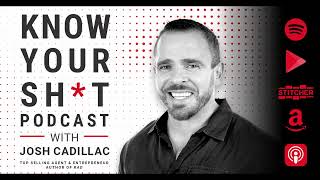
Rick Torrison talks about how limiting beliefs shape who we think we are and how to break free from them. He discusses his book Born Limitless, recommends No More Mr. Nice Guy and Wild at Heart, and shares how childhood trauma and identity work lead to real behavioral change.
Questions this video answers
May 7, 2024
A goal to give $1,000,000 over his lifetime (not yet reached)
About 59 (says 'I'm 59. I'm about to be 60')
Rick Torrison (spoken as 'Rick Torresen' in transcript — possible spelling variation)
Chapters
Hi, I'm Josh Cadillac and welcome to my podcast, Know youw Shit. I've been blessed to see great success as well as seeing the bottom up close and personal in 2008. And if there's one lesson I've learned is that if you want to have success and differentiate yourself from everyone else out there, you need to know your. As a successful real estate and crypto investor and an educator, it drives me insane that people do not immerse themselves in their craft. Everyone is so busy advertising and testing new sales technique, they forget the most important thing, the product. Here I want to talk to the folks that got this right, the most successful people in the world, in every industry, bring them to you and find out what they learned in their business that made it great. When you listen to my podcast, you will know for sure that the topics and experts we have on have one thing in common. They know their shit. Hello everyone and welcome to Know youw Shit podcast, where our knowledge and pride in what we do drives us to be excellent. My name is Josh Kadlak and I will be in the driver's seat once again for what I hope will be another amazing show. And it will be an amazing show because we have Rick Torresen with us. Ray. Rick, thank you so much for being here, man.
It's exciting to be here. Josh, I love your podcast, Love the episodes I've been listening to, man. I'm looking forward to learning from you as well. In fact, I just want to. Can I ask you a quick question just as we get started? I know you're gonna ask a lot of questions, but I'd love to ask you one and learn something from you. So I value your story, your journey, all that you've been through to get where you are today. So I'm asking simple questions, helping me learn what was a limiting belief that you had to overcome to get to the life, the significant life and the impactful life that you're living today? You know my message all about limiting beliefs, right? So I'm curious, we all had to overcome them to get there. What's the number one you think about? Man? This was the biggest limiting hurdle I had to have and get over.
You know, was totally unprepared for the question, but definitely a good one. Always the best to take and rack your brain, right? I think that the one, the self limiting belief for me was that I thought I had figured myself out. I thought I knew. I thought I knew what, who and what I was and I had completely misdiagnosed the patient I thought the things that I'm doing now are things that I thought I would never like and I would never do and never do well. And now I find these are the things that. That help the most people and I get the most enjoyment out of as well. So it's like a win win. So for me, yeah, I just.
I wanted to get something from you before you started asking me all these questions because, man, you've been. You've been beating it up, you've been killing it, and just want to just understand kind of those things that you had to get through to get to where you are. So, man, go ahead.
Good stuff. So, you know what, Rick? I mean, obviously, folks, a little taste, but why don't you tell everybody what it is you do?
Okay? So the simple way to say that is I'm a growth catalyst. So what the crap does that mean? Right? And so what I love doing is I love helping people get from where they are to where they want to be, whether it's individuals, whether it's groups or teams of people, organizations. I do leadership development, communication. I do a lot of speaking. Just got my first book coming out. It's part of why I'm here. I'm excited about that. And really, I love empowering people, man. I love helping them break through limiting beliefs to their limitless mindset that I believe they were created with. And we just, you know, life happens, right? And then things get in the way and we start adopting these thoughts that we're less than. And somewhere along the line, we start settling. And so my passion is to help individuals, organizations, and teams stop settling, really, and understand the roadblocks. Limiting beliefs and breakthrough. That's really. I do that in so many ways, but that's the heart of what I do in everything I do.
I love it, man. I love it. So tell us a little bit about your book before we go any further. I want to forget about that. Tell us a little bit about what you wrote.
Yeah, so Born Limitless, that's the name of the book, right? In the book, the subtitle to Born Limitless is this idea of crushing, limiting beliefs, creating an infinite mindset, and unleashing your true potential. I've created a framework about that because I believe this. And so my life story is built in this book. It's really what I've learned over my life, and the limiting beliefs I've had to overcome because of the circumstances, how I defined those. But I believe this, and it's the framework of the book is that the outcomes we get in our life, the fruit of our life, good or bad. That fruit of our life is typically born from an action, a behavior, something that we do. Right. Our actions result in outcomes. Those behaviors and actions typically 99% of the time come from a belief system that we have, a belief structure. I believe X, so I'm going to act as Y and I'm going to get Z. Right. And then if we really trace that back even farther, those beliefs come from experiences that we have and how we interpret or define those experiences, good or bad. Right. We have a definition of. We put definition to that experience in our lives and the way we define that experience ends up forming a belief. That belief then leads to actions or behaviors that we adopt over our life. Those behaviors then produce outcomes. Here's the thing. If we are getting outcomes in our life that we aren't happy with, we're not satisfied with, what do we typically do? Right? We typically look at the behaviors and we think, hey, let's get a new system, let's get a new process, let's build a new way to do this better. Stop doing what you were doing, do something different. And if you're strong willed like I am, I can do that for a while. But I find myself back where I started. And so what happens is we can't just change the behavior. We've got to identify the belief that drives the behavior. And typically it's a limiting belief, A less than I can't, I won't, I'll never. When we can identify that belief, crush it, replace it, then the behaviors can be sustainably changed and we can get new outcomes. The book is my story and my journey about how to do that and then a process and a framework to accomplish it. And, and so that's really, that's what the book is about.
Gotcha. You know, my father used to say all the time, it was one of his famous lines. It's not what you know that gets you in trouble, it's what you know that isn't so. And so. I love that he was a.
I.
Don'T know what you would call it, a very street smart, I was just a very smart guy, period. But he had these, these very, very clever observations of life. One of the things he used to say to me all the time is he says that stuff that you see and it happens to you as a kid, it sticks with you forever, you know that, that just, it stays, you don't even realize that it's in there. And you know, not, not a psychologist, not a, not A coach or anything like that just had that introspection to realize that that's wisdom.
Man.
He's carrying these bags, you know.
Yeah. And it's in a lot of times. Here's what I've found in that, Josh, is that we have these experiences, and some can be profound. Big trauma. Right. Leaves big marks. But a lot of it is subtle things that someone says to us, you'll never be smart enough. You can't. You won't.
You're bad at math.
Yeah, those kinds of things, that. They're subtle. We don't think there's a big deal, but they. They attach themselves to us and we start ruminating and believing those things and leaving them out until they become normal. And what happens is these limiting beliefs have become normal in our lives, and we act as if that's how it always is and always will be. But my question to people is, what if that normal you're living under isn't normal? What if that's not what it's the best it can be and all it can be. What if there's more? Are you willing to contemplate that? And. And look at that. And if so, the man. Sky's the limit. So your dad's full of wisdom. That's a great perspective and introspection on how we end up in some of the places we do.
Yeah, no, he was. He was good at that. And I mean, it's. It's made me think quite a bit about. About this thing going forward, the idea that there's a better version of us inside of us that we've never seen, and the one standing in the way of us getting there is us. And the biggest loser if we don't get there is also us, because we're stuck with us for the rest of our life. So, I mean, you have the greatest vested interest in not only figuring this stuff out, but figuring out how to get around it of anybody that's involved in the entire equation here. So, like, how do you get you out of your way? Because as turns out, you're both CEO and staff of your operation, and the CEO's job is to take. Is to take and figure out how to get the best out of. How to set the staff up to be successful at the things the CEO was sending in staff out to do every single day. When you. When you break life up into this idea of like, I know what I should be doing and what I want to do, and here's what I actually am able to get myself to do. Yeah, it's your job as the CEO that knows what you're supposed to do to figure out how to get this guy up to that line if possible.
And building the bridges, right, it's, it's bridging those gaps from where we are to where we want to be. And we know where we want to be but what's keeping us from getting there. Right. And how do then we got to build that bridge. That's so good.
Yeah, no, I mean I think that there's, I think a lot of that ties into and it's something I've read quite a bit on is the, the idea of the fallout of all the high self esteem that, that training that's out there, which is it turns people into narcissists and they, they figure out they, they believe that the problem can't be them. It's got to be somebody. It's something else. It's someone else. It's the system, it's. And look, I deal with the city, I deal with, you know, all sorts of systems that make you hate life and wish you could just take and blow things up. I mean like just like how could it be this bad? Right. But I don't blame them for my lack of success. Right. That, that's not it. This is the limiting factor is always going to be me. And so I think that the biggest knock, I think that there really is with all the self is high self esteem training is that it prevents people from being as introspective. It prevents them seeing themselves as the agent for change in their life. Maybe I'm the problem is the last question they run to. What if it's me? They don't ask that question. It's got to be this, it's got to be that. And so yeah, I mean if you believe that you poop ice cream, you're going to have a hard time figuring out where the problems are. I suppose it's just not a good approach.
Try taking a bite of that ice cream and reality check. Right? You know, absolutely see what you've been.
Shoveling out to everybody else.
Seriously. And that's why for, for me and just what I've experienced in my own journey is everything's personal before it's corporate. We want to build wealth and build job and build industry and do all these things, which is fine and it's great to have ambition to do that. But the reason we typically don't get to where we want to be or we have this wake of carnage of people behind us, you know, getting there is because we haven't done the personal work. Right. To deal with ourselves, to set our foundation, to understand what we believe and who we are, not what we can do, but really who we can be. Right. And that's really. This whole thing is identity. If you think about everybody struggling, they're struggling with identities, and they think they're going to find it somewhere out there in the world through achievement, accomplishment, or accolades from somebody else.
And it's.
It's hollow, it's empty.
And actually, it's kind of codependent is really what it is. 100%, you know, one of the best.
Feeding itself.
Totally. One of the best books I ever read is a book whose title I never thought I would be into is a book called no more Mr. Nice Guy. And if you've never read that one, it's really breaking that cycle of codependency. It's written. It's written for men, but it's. That cycle. Codependency just manifests itself in. In different ways. For men, it just tends to be in one way. But the book title always made me think, like, I don't want to be a bad guy.
Right, right. That's not me.
Yeah. No, but realistically, after. After reading it, it was one of the biggest game changers. One of the two biggest personal game changers I've ever read was that one and a book called Wild at Heart.
Oh, yeah. John Eldridge. I've gone through that. I've taken people through that. That is. Yeah, the. The man's heart, man, that desire for adventure. And, you know, just the whole thing that I took my kid, my son through it, so we went through raising Modern Day Nights was part of what he did out of that. And so my son and I went through that journey of those markers in their lives. Right. Of celebrating this passage to manhood. So anyways, yeah, so he's actually getting. He's going to be. He's getting, hopefully getting engaged here pretty quick. But we've talked relationship as being a husband, and I said, you know, what is it that women want? And he remembered what we talked about when he was younger and about what his role as a man was that Eldridge talked about in that thing is, this is who we're called to be rightly positioned for those women, you know, that. That woman that we are going to spend the rest of our life with. So we just had that conversation. So that's why I brought it up as. I love it. It's in there. Yeah, absolutely.
You know, the. The idea of being everybody is looking for the Mr. Or Mrs. Right. The idea of being the kind of person that Mr. And Mrs. Right needs you to be, to be, truly be worthy of Mr. And Mrs. Right is, is a p. People. How do I turn me into what that person is, needs, what they're looking for? How do I be that piece for them? I'm looking for them to be that piece for me. That's selfish. How do I be that piece? How do I make myself into right? That was always one of my. In my single days. That was always one. That was, was, was close at heart. But if you, if you like, if you like Eldridge's book that no more Mr. Nice Guy was a similar. Not as. Definitely not. Not with the non religious bent to that one. So Eldridge.
No, that's great, but definite faith perspective behind it.
I love that about El Drizo's book because, you know, I think that it's, it's get, it's getting right. The base software that we come with right now. Why is the software written? Why is the program running this way? Why do I naturally tend to want to, you know, protect and all these. Where's that coming from?
Yeah, yeah, we could chase a rabbit here real easy. But, you know, we tend to celebrate the wrong things, right? We tend to take that, that man. We're talking about men now, but taking that manhood process away and you know, the, the everybody gets a trophy kind of thing and, and not that we were created to, to, to protect, to serve, to build, to grow, to create, to get our hands dirty, to pick up a stick and make it a sword, you know, I mean, so I don't want to, I don't want to chase that rabbit. But that's so true. And they're so, so here's part of. So if I go back to what we were talking about before, this culture that we have been raised in or that has raised us, has created us with a mindset that we've then owned as truth or reality and started to live out that truth. In my challenge I have with people is what if that truth isn't really truth? What if that's not really the reality that you were created for, that you were called to live? What if your past wasn't meant to define your future? What if it was really meant to inform it and refine it, but not define?
Absolutely. Absolutely it is there for informational purposes only, to avoid making the same dumb mistakes. That's, that's what that past serves to do. It's not supposed to be Fun.
Look, I mean, absolutely.
As you're talking about it, the thing that came to my mind was Shakespeare and the speech I was from one of the Henry's, I believe. You know, these wounds I did receive on crispy and they like pulling up your sleeve and showing the stars. Yeah, Day speech. And the way it ends is just so. I'm going to paraphrase the ending, but basically it's like, where the hell were you when we were doing something great? Right? Because that's what every man wants to be part of something that was impossible, that got done, something that was hard, that got accomplished. And we've taken the hard out of life and wrapped it in bubble wrap and we've insulated them from something hard. That's how men define themselves. It's the hills they conquer. It's the battles they win. It's when they fight all odds and find more inside of themselves than they thought they ever had. And when you take that away, you take away the very things that allow them to feel accomplished and great.
And do you find, Josh, this is true. Like, so if we look at this from business perspective, from the principles of our own personal growth, of our identity, of coming into our strength and our calling and our creativeness and all of that stuff that we have to go through, the lies that we have to deal with, they're similar. The principles are true universally in life, whether men, women, jobs, careers, entrepreneurs, business owners. All of us function and run against a limiting belief at some point in our life that says, hey, you're great over here. Go kill it over here. Hey, not so much you're not so good. You can't. You'll never. You won't. Right? And I just think we have settled for. We started settling in our lives. Work, business, you know, entrepreneurship, what we can do. And we hit a ceiling and think, well, there it is, I've reached the pinnacle. It's as good as it's going to get. And I said, maybe. But what if it's not? What if there's actually something holding you back and there's more. I'm not talking about more stuff. I'm not this person that's going, hey, it's all about prosperity and more money and more position and more title. What if the more that we're called to is influence and impact? What if it's a future and a hope, the ripple of legacy that our life has long after we're gone? And people don't think about that. Young, right? The young. I mean, I'm 59. I'm about to be 60, right? In my 20s, I could care less about my ripple, my legacy. It was all about the throne I was sitting on back then, right? It was like, what's. But as I got older, I started realizing, what does this all matter? What am I actually here for? What am I actually doing? What am I leaving? Is it just about what I can gain? You know? And I realized it wasn't. But I was limited. I couldn't break through places because I had so many beliefs about my ability and myself to. That I had to deal with before I could ever get to that life that I'm living now.
Well, I think that one of the. One of the key things that is a clear indicator of youth is selfishness. You know, when you're little, you take the toy away from your friend, they're crying, and you're happy because you have the toy. You get older and you see a friend over there crying, and you're like, no, here's a toy. I don't want to see you sad because you start to realize more and more that your choices have effects on other people. But I like to turn that to 11, frankly, because I like to look at my life as a reflection of the legacy of those people that poured into me.
Come on.
And then I'm their standard bearer going forward. And so it's bigger than me. I can't.
There's one thing I say in all that I do, it's been kind of a mantra for me, is we limit our future by the way we fail to honor our past.
Sure.
I just think that's so true. And that's what you're just saying. We are all standing on someone else's shoulders, whether we realize we focus so much on the people that hurt us or wronged us or the trauma. But there were people in our lives. Every one of us have someone somewhere in our life who stepped in in a moment that raised us up or spoke life into us or encouraged us. And we stand on those shoulders. And I want to be the shoulders that someone else gets to stand on at this point in my life. That's why I wrote the book. That's why I do the coaching. And everything that I do is I want to be shoulders for somebody. If I can do that and help people get to what they believe and see themselves as they were truly created to be and have the potential to be, then, man, I'm going to be a happy man. When it's all said and done, I will accomplish a good life.
I say it That I just hope that somebody else's life is better off.
For me having so good. And that impacts how you live, doesn't it? So that mindset, that vision ripples into every decision you make, every relationship you engage in, every transaction that you do has to run through that grid. Is it going to empower, lift or serve? Or is it just serving me?
Look, it's every class I make. It's whether I choose to allow myself to be tired or not as I teach it. You know, these folks need something out of me. I need to make it the best that it can be. And if that sucks and there's a bill to pay, I'll pay that one afterwards on my own time. I have to take it. You know, it's. To me, it's like what Joe DiMaggio said. Why do you play so hard every day? It might be the only time some kid ever gets to see me play, right? And so I'm no Joe DiMaggio, but I got to go out there and play with all I got because frankly, I'm cheating myself. I'm cheating everyone if I don't. And once again, when. When life is a little bit less selfish, when life ceases to be how American it's become because America has gone. Has totally rebelled against the family shame culture idea. The idea, you know, like, you're part of a family and you don't take and you don't do stuff to embarrass or hurt the family or make people think. Yeah, yeah, yeah. And, you know, like, everybody just out there flying their own flag, doing their own thing, whatever, if it hurts their feelings, well, I'm being true to me. And look, I get it. You know, like, the extreme is like, you know, you brought shame in the family name. You go kill yourself by committing Harry Carry. I'm not saying for that, but I think somewhere in between to sit here and say, look, I remember my. Who my first boss was, and I remember that guy riding me like a freaking rented mule. And I mean, calling me names. I was a little boy, and this guy's called me stupid. And you don't know what is wrong with you. And you want to know something, Rick? I am so grateful to him for being so mean to me because that is what that chubby, lazy, little fat bastard needed was a good, swift kick in the ass. And he gave it to me. He gave me the kick in the ass that I needed because he knew that I could do more and I wasn't. And he called me on my bullshit for lack Of a better term, he called me on my bullshit and he got me out of it.
That's the powerful part, right? Is having people in our lives who we allow to speak into our lives and to challenge us from a place of not wanting something for their own gain, but for them to really make us better, right? That the people that push. By the way, I did want to just honor you for a second, man. I was going through just getting to know you a little better and saw that you just received an award. Was it Commercial Educator Award something? But. But the reason I say that is because what you just said, anyone who is getting recognized for educating, teaching, doing that's telling me that they care about the investment and adding value to other people. It's not just about what I can bring to myself, but it's about what I can do and provide and give to others from my experience, my knowledge and my wisdom. So, man, well done. I just. I thought that was awesome. I know it's caught you off guard, embarrass you a little bit, but. But that speaks to your character, right? It speaks to what you value and what's important to you. And in all the things that I do and all the work that I do, and in the book a lot is this idea of when you can discover that value, that purpose and realize that life is bigger than you, you're serving something greater than you, right? And it's hard to make that transition because we've got a lot of woundedness. We protect, we build this wall. But when we can be free in our identity of who we are and who we're called to be and what is possible, and crush those limiting beliefs, replace them with limitless ones, then we become a value add to culture and society in the world around us. Not a value suck, right? And that's really what I think we long for. I think internally, whether we know it or not, we long to be a value add, to make a difference, to change a life, to empower somebody. And I think that's created in us. Just the trauma of life has kept.
Us from it totally. It is. The stories of redemption, the stories of life change are the ones if it's a movie or whatever. Always makes me cry because it always. It's always the thing that I find. I will totally admit it. There's a. There's a song my brother sent to me the other day. If you've never got a chance to listen to it, it's. You got to watch the YouTube video. It's a song called Walking Free Walking Free. It's a religious song, but, oh, my gosh. I mean, it gets me. I must have listened to it ten times. I still. I still get misty listening watching the YouTube video.
Okay. I just wrote it down. I took a note, man, I'm gonna. We're off. I'm gonna check it out. So. I love that.
I think you'll really, really enjoy it. The talking about getting free and walking free of. Of bondage. Yeah, it's.
Well, that's what it's all about, really. And that's why I do what I do. I've tried to be a catalyst of freedom because I was bound. I had limiting beliefs, I was suffering. I was. I went through. The trauma in my life, marked me in such a way that was limiting what I ultimately felt. And here's the thing. How about you? Did you ever feel like in the whole journey, I remember telling my mom at 13 years of age, I said, mom, I feel like. And I can remember it as if it was yesterday. I feel like I'm meant for something great, to do something amazing, great, like just big, right? Gonna make a big impact. And we were talking about that. I remember. But the feeling I had inside was it wasn't going to be good. There was a lot of trauma in my life. People walked out of my life. Violence in my life, abuse in my life. And I thought, I'm going to do something great. Great, not meaning, powerful and good. Great meaning. I don't know if it's going to be good. Right. I don't know if I'm going to live past 25. Right. And that was this process that I had growing up until really some people came in my life and repainted and reframed that picture and shifted it to the possibility and potential that was inside of me that I felt. So. Have you ever felt like, man, I know there's got to be more to this than I'm experiencing. I feel like I'm supposed to have a greater impact. There's supposed to be more. My life was meant for more. I just don't know what it is, and I don't see a way through. Have you ever felt that in any of your journey where you just kind of like, man, I don't know. I know there's more, but I don't know what it looks like or how to get there.
I don't know if I would put it in that context. I've always prayed that. I've always prayed, God, help me to accomplish the great things that you created me to do. And I mean that, that might be, you know, being the best garbage man out there. I, I don't know what that's going to be, but just help me to, you know, to really find that thing that I could do with excellence to, to take and give you an ROI and whatever it is you've given me. I, I'm, I'm still figuring unwrapping the package at this point. Public speaker was never the thing that I thought I'd be doing myself. That was, that was in the bag of tricks. I didn't find that one towards my mid-30s that I, you know, like, I never thought in a million years. So I don't know if, I don't even know if there's anything left in the tank at this point.
Right.
I mean, I'm, I'm still taking and trying to unwrap the thing, but there was a lot of criticism and a lot of, a lot of pressure at a young age for me. Yeah. So I, I would say the place that I learned to retreat was just putting my head down and working hard. You know, if you got your head down and you're working hard, they can't yell at you if you're working hard, you know, if you're putting in the hours, you're doing the stuff, if your stuff is done and you're righteous. And so I think that, that for a lot of years was for me, where I ran to, because that was, if you're working hard again, you got a father that's born in 1930, lived through the Great Depression. You know, you take care of your.
Environment that was being fed to you, good, bad or indifferent, that's what you were hearing. So then when things happened, you had nowhere else to go except to those thoughts, those statements, those beliefs, and they served you in that process. Right. That's really powerful because all of us have a story like that. We have this story of what was sown into us, good or bad, that marks us, starts to form our thoughts, our images, our beliefs, how we see things. And then we begin to manifest or live out to reinforce that belief, good or bad. Right. Until it gets shook up. And that was what I was doing. I was living out a less than life because of the abuse and things that had happened to me, and thought, well, this is my fault. This is how my life should be. But something in me said, there's got to be. And I had no faith growing up. I wasn't in the church. It wasn't a part of my life, it wasn't Until I got married, that I was introduced to a relationship with Christianity and Jesus, and that changed everything. But prior to that, in me even not knowing that, I thought, man, something in me is saying, there's more to this. There's better than this. There's. You were sure you were something, and I had no context for it. So then I just absorbed and retreated into the reality that I was living in, which was less than. It took someone to call that out, to say, hey, why do you settle for that? Why do you say that? Why do you accept that? Where did that come. That that's how life has to look? And I was like, well, that is how life has to look. And he said, no, what if it's not? And I was like, I don't know. What if it's not? I don't. I don't know what to do with that. Right.
Yeah.
So that was the process that started to turn it.
There's. There's somebody needs to hold the mirror up at the right time and at the right angle for you to catch a glimpse of just how crazy you're crazy looks from the outside looking in. Otherwise, you know, you just keep doing the thing. As I said, you know, work was the retreat. The day my father passed away, I went in, My mother said, I don't think your father's breathing. I went and I checked. He was cold. So what did I do? I went to work, because that's what I do, what you do, right? And it wasn't until actually, one of the stories I tell, sometimes it's a little thing, but I finished writing the first book, the Road not the American Dream, there. And next girlfriend gave me the COVID of the book as a gift, and I hung it on my wall. But I was talking about how, you know, what the next thing I needed to do, the next thing, and, you know, what's got to happen next. And all this kind of stuff, she's like, you wrote a book. Take a break. Take yourself. Let's go to dinner. Let's do something. And just. And just be. And just be with this. This is. This is a good thing. And what winds up happening is, you know, you got to be careful with this, because there's so many people that give themselves too much carrot. I'm one of those weirdos that just gives himself too much stick all the time, because I know the stick makes the horse run, and I know the horse doesn't get in trouble as long as he's running. So let me just keep beating the horse and, you know, and so that, that balancing act, because I'm going to be honest with you, there's always been that lingering fear of going back to being that fat, lazy kid who wouldn't want to go to. Wouldn't work hard. Right? And that fear is something that I let live in there for a long time. And now I know I'm not that guy anymore. I'm this guy now. And this guy, he can enjoy carrots every once in a while. It's okay, you know. And so it's figuring out really what that balance needs to be. I'm never going to be a person that doesn't use a stick. I need the beatings to keep me in line. I want to outperform everybody else. I want, as a friend of mine used to say, where are you? How are you going to die? He said, in glorious battle with bodies of my enemies strewn about me.
Right about. Yeah, yeah, yeah, yeah.
You know, I. I want to go out there and I want to leave 99 out of 100 people in my dust because they're just not willing to make the choices that I will. That, that's, that's what I enjoy, how you're wired.
It's. It's what drives you and compels you forward to be successful. Right? And that's part of your story, right? That's part of the journey. And it goes from unhealthy. Which part of your story is the beginning is, you know, it wasn't necessarily healthy, the stick. It probably wasn't the best way. It wasn't, you know, for someone to get in my face and tell me this probably wasn't the best way to do that. But for me, in that moment and the way I responded to it, it drove me towards. Right. And so we all have our story, the powerful part of your story, and I think that we have to help people with in their story is taking that journey and saying this journey, whether it's unhealthy or whatever it looked like is a catalyst for your future. What can you take from it? What can you leverage from it that's powerful and good? And then what do you add to it? How do you reshape it and reframe it that's going to catapult you towards that, whatever that is in your life that you're wanting to do and achieve. Success isn't about all the stuff we can gain. Right? I mean, it is, but success dies when we die. Right? It's limited. It's that it's. I'm successful. I checked the Box. What I'm after and what I hear you saying, Josh. I want to live a life of significance. Significance lives beyond me. Right. It's the impact and influence that my life has on the people and world around me. Right. That keeps moving and rippling. Where success is great, we should all want to be successful. I want to be significant. I want to move past just being successful. And I want this life to matter. But it took a whole process of rethinking how I viewed what I truly was capable of and my own value and worth, that I had something to give.
Of course. No, you have to figure out what that is, because otherwise you're just searching. And it's hard to be. It's hard to be as. As much of an agent for change, as much of an agent for redemption. Because, let's be honest, this world needs redemption. Right? Take and make this world a little bit better for our time in it. Let our sand in the hourglass. Make it. Make it a little bit better.
So, yeah, that's it.
What do you think makes you good at what you do?
So that's a great question. I think it's. It's. And people say this when they're trying to figure out their brand or their store. What they're doing, right, is. Is tell the story of where you've been. Your story is the most powerful story. So what makes me good at what I do is the life that I've lived, the experiences that I've had. You know, when I was younger, my mom. It was just me and my mom growing up. She had three children before me in the 60s. I was born in 65. Right. She had three other kids prior to me. The guy she was with at the time, not married to, basically said, me or them. Me or them. Two abortions, one adoption. I'm the fourth one comes in the picture, and she says, I'm going to choose you. Me. And he walks. So now my wife, my mom. My mom. My mom is alone in California. Her family's in Illinois. And she can't go home because in the 60s, you're not. You don't go home unwed. You don't have these. This is not what you do. And so. But her dad was dying. My grandfather was dying of cancer. And so she wanted to bring me home. So she brings me home. Long story short, that process of me being raised by my mother, the journey and the experience that I had to have to grow up quicker than most kids. I was a latchkey kid before there were latch keys. It was this Whole thing. And then I got abused by a babysitter. I share all that because all of those stories marked me and impacted me, and they actually formed limiting beliefs that were causing me to settle for less than how I treated the world. Women, my perspective, what makes me good at what I do is I overcame that. I realized there's a way through that, that you don't have to settle for that, that that doesn't have to be the rest of your story, that we are all authors of our story, and the pages in our future are blank pages. And so when someone helped me understand that and reframe my story, I couldn't change the experiences. They were real, they impacted me. They were powerful, but they didn't have to define me. And then I started living that out and realizing, wow, I'm not the only one that has a story like that. I'm not the only one who is living less than in their lives. And they've lived it so long, like me, where they didn't even realize it was less than. They would never have said that because it became normal. And so I think what makes me good at what I do is one, my passion desire to help people grow and become all that they desire, to be whatever that looks like, helping them walk into that and remove obstacles. But it's my own story that I was able to accomplish it and able to do it and come to the other side and realize, no, that didn't have to define me. That didn't have to be the end of my story. There was still more chapters to be written, and I'm either gonna let the world write them, my circumstances write them, the pain write them, or I'm gonna pick up the pen and start writing it. And I had to make a choice, but I had people around me and people casting that vision that helped me to do that. I want to be one of those to others. The thing. I'll say this last thing with this. The thing I get the most joy out of, Josh, is when I'm working with someone, either it's a company, an owner, a team. Whatever they're doing, they're trying to get to an acquisition objective, and they get it. And the lights go up, the aha. You know, you ever been with someone, they get the aha moment like they've heard it a thousand times. You say it a different way that one time at the right time, and it's like, oh, I get it.
That's what I needed to hear.
I live for that moment when someone goes, I get it. Because that's when information becomes revelation. That leads to transformation. Otherwise, it's just our will trying to work out something because we know it's right. But when the aha comes, that's revelation, man. Now transformation of our life can happen. And that's what I live for. More than money, more than anything else I do. Are those moments either working with individuals, companies, coaching, whatever I'm doing, when I can see them go, oh, now I get it, then everything changes.
You know, I think it's very much what you're saying there. What struck me was the Stranger Than Fiction. If you've ever seen that movie with Will Ferrell, yes, you can have the ghostwriter writing your story, or you can be the author of the story. The ghostwriter just knows who you were. And they're just going to take and continue in that voice going forward.
Wow. Yeah. Yeah.
If you're going to take the pen out of their hand and say, no, we're going to do it differently going forward, I'm going to take control of the story again. It's what needs to happen. We can't just let the ghostwriter continue.
Why do you think we don't let that happen? Why? What's been your. Why do you think we struggle so much to take that pen and be our own authors? What do you think is the biggest thing?
It's the same reason why you don't. Why people don't want to talk politics or religion. Right. Because those things are at the very top of the flowchart. And if I got my. Yes, no. Like, if the. If the engine turns on, you go this way. If the engine doesn't, you go this way. And then there's all these diagnostics. If. If that at the very top, if we got that wrong, it means all the work we've done since then is all wrong, which means we have to rethink everything.
Wow.
And so it really requires us to do a lot of demolition in order to start building. We're basically saying, hey, look, the first 40 floors we built, they're no good. There's a problem in the foundation. We got to tear it all down, fix the problem, and then start building again. And for most people, that's just so daunting. They have so much invested. There's so much invested in the way they've thought that to question it, it's just. It's too big.
The cost to think differently is too high that they're not willing to pay to pay.
Right. Too much sunk cost.
And I think a lot of that too, is at least as I've worked with people, if we had to deconstruct things, either business wise or personally is they're looking through that they don't have a clear vision of what's possible. So if they don't have that vision, that destination that's powerful enough and the motivation, then they're definitely not going to do the work to break anything up. Why? And so I think a lot of people lack clarity of vision and destination of what they ultimately are after and desire to accomplish. Right? The clearer that destination, the more palpable it is, and the more we can understand the internal and external motivations, the more likely we are to do whatever it takes to get there.
Wasn't it Shakespeare also with live talking about lives of quiet desperation? People. People don't realize how much is at stake if they just keep doing it the way that they've done it. Maybe they're not happy with it, but it's familiar. And so it's a familiar discontent. And so as long as they don't change it, it's like saying, look, I don't want to mess with it because the outcome could be worse. Like, I don't like what I order at this restaurant, but I want to try anything else in the menu because it might be worse, but it might be better. They might have something you like way better, too.
Can I share a story real quickly with you about that? So are you a baseball fan at all?
Oh, yeah.
Okay, so I grew up in Chicago, so Cubs fan through and through, right? Went to Houston. I'm in Houston now, so I'm an Astros fan. We've been season ticket holders forever. So we had season tickets for the World Series run and all that, right? So we're sitting at game five of the World Series in Houston against the Dodgers, One of the best baseball games I've ever seen in my life. I mean, just back and forth, high score. And our season tickets are in the visitors section of the families, like the parents, the wives, the kids. So we get to sit with all visiting family. So it's really cool to be around them. So we're in the World Series and the person sitting behind me, so here's the other Tommy Lasorda with six rows in front of me on the end. I got to go meet him and take a picture with him. So anyway, so the guy sitting right behind me, we're talking back and forth, and we're going at this, right? And. And he goes, hey, would you like tickets for game six and seven in la And I was like, well, of course I'd like tickets. I don't really know who he is, but he's important because people kept talking to him. And so he gives me his business cards. If you want tickets, let me know and I'll get you some tickets, all right? I said, okay. So I look at the business card, the game's over. We win. We're going on. And it's VP of Ticketing. He'd been with the company with the Dodgers for 50. He retired the next year. Yeah. So I'm like, holy crud. So my wife and I are in the car, driving back. It's 11 o' clock at midnight somewhere in there. And I'm like, holy crap. Should we go to la? It's like, we'll leave tomorrow. We got to get a plane. It's a hotel. What do we do? You know? And so. So she's going. She's. I'm like, absolutely, let's go. So I call him. He's getting on the plane. I said, this is the couple that was sitting in front of you. We'd like tickets. So he sends me a link to the ticket, I click on it, and I get two tickets behind home plate in Dodger Stadium for game six. Right?
Nice.
So. So here's the thing. We play game six, right? And so we now have to go to a Game 7. We did not get both tickets. We just got game six tickets. I turned to my wife and I said, hey, do we. Do you want to stay? Are we gonna get game six ticket or game seven tickets? You know what our answer was? No, I don't want to stay.
And I looked at.
I said, are you crazy? What do you mean? She goes, I don't want to stay and be here. If we lose, we'll have to be around all these fans.
Yeah.
And I was like. And I was like, time out. What if we win? She opens up her eyes and she looks and goes, oh, well, I didn't think about it like that. Yeah, but you understand, her mindset was, I don't want to stay. Because the fear is if we lose, I got to deal with all these fans. It'll be uncomfortable. It won't be good. It'll be miserable. I said, yeah, but the risk is so worth it because we could win.
And we.
We did. We got. We actually got down on the field. We were. I mean, it was just the most surreal experience. But that reminded me of that story where she was like, no, I don't want to stay for game seven because we could lose.
Absolutely. Absolutely. The fear of failure versus the hope of success.
Yeah.
You know, as a, as a serial entrepreneur, I'm that idiot. Like, I, I, I, and I, I've made some great ones, and I've lost a lot of money in the process as well. Going both ways. Right. I've made a lot of people a lot of money. Thank God. I haven't really lost anybody any money. So that's always been. It's always been my money.
Hey, if you haven't lost anybody any money, I need to, I need to connect with you a little more.
Oh, no. We are the, the line from the Godfather. I've always made my partner's money. Has always been one that, that I've been a big believer. My father told me, you know, you lose your money, that's a shame. You lose somebody else's money, that's unforgivable.
Like, you know, crime.
You only got one name and one reputation. But yeah, it's, it's always been that, that, that addiction to the hope of success. Right. And I mean, that's how I built a successful business. The legacy of my grandfather. The guy went bankrupt like 10 times the last time he started a company that's still in business today from the 1930s. You know, it's. It's that persistence, that willingness to keep trying. So. But let's, let's. Let's shoot to the. Rick, it's been great chatting with you, but I want to get to a little bit more so people get a feel for you A little bit. I know the conversation def up more like a little bit of a lightning round kind of thing. What is the thing that you say in business that you are most proud of?
Say, what are you most proud.
Were you most proud of that you accomplished in business.
Man. So it's the byproduct of the business that I've built. I had a goal to give a million dollars away over my lifetime that I wanted to serve and give no matter what I made. But to give a million, what do you know? You can't just make $500,000, right? To be able to give a million, you have to be successful. So what drove a lot of what I do in business is the opportunity. And I'll be honest, haven't given the million yet, but I'm really close. And I think within the next two years, I will have given a million away to whoever for whatever. Right. Just do giving it away. Not quote the tithe to the church, but I mean, giving it away. And I think I'M going to far exceed it with what's happening in the business. But what I'm most proud of is the integrity and character that I've carried into transforming lives and organizations and businesses, helping to strengthen their culture and their team so that they could be more productive, to generate more revenue. And I've stayed with my clients. I typically embed with a client all my clients. I'm with them for a year or two years. My coaching clients. I've never had a coaching client leave that hadn't had to leave because of career change or somewhere that just couldn't. That life changed because of the investment I make in them and the value that I'm able to give to them for them to be better. That's given me the money to then give away, and that's what I'm passionate about.
Love it. All right, so. Well, if you. Obviously, you don't know if you're ever going to see any of these folks, ever get a chance to talk to them again who are on here, if you could give them one piece of advice, Rick, just one piece of wisdom, what would it be?
Man, that's. That's easy for me. If. If I was able to look all of you in the eye and I was just able to speak life over you, I would tell you this. You were created for more. Not more stuff. Not more things, not more position or titles, but more influence and impact, more future and more hope. I don't know what your more is, but my passion is to help you discover it and to walk it out. Because I believe your past was never meant to define your future, that you are, and you're the author and star of that story. And I want you to know it's okay to pick up that pen and start writing. No matter how shaky, no matter how scary, no matter what it looks like you can, you will, and you are going to accomplish something greater if you just start walking.
You haven't seen your best yet. You got it? I love it, man.
No.
All right, Rick, what one book or one movie would you recommend?
Oh, man. So the book. I'm looking around and I'm looking at stuff I read, but I would probably, because I've got my bookshelf over here just stacked with books. So I'm a. I'm a big communication person. I'm a disc guy. I'm a high I. Here's a problem with high I's. We start a lot of books, we don't finish them all. I got books stacked everywhere, and they're great. And I, you know. But the one that I finished and I read, there's two. I'm going to give you two. One is, everybody knows it in the personal growth word is James Allen. It's As a Man thinks it's powerful book. It's a simple, short read. It's transformational, and I love it. The other book that I read every year is by Andrew Murray, and it's entitled Humility. It's another short, simple book, but I read that every year. That's the start of the year. I put that in my system because it's a call to a posture that is selfless, not selfish. So Humility by Andrew Murray and then James Allen's As a Man thinks it's on the open market. You can get that. I give that away to people who come into my community as a gift to them because I think it's so powerful.
Love it. All right. What one famous person in history would you want to sit down and have lunch with.
Man? Well, you know, I'm a faith guy, so I would say Jesus, but I'm going to probably say Paul from Scripture, because the dude was zealous. He was a killer, man. He would go after it, but he was messed up and jacked up with his perspective, but thought he was righteous, right? He gets knocked down his ass, he gets knocked off the horse, he gets blinded, and he's like, holy crap, what's wrong with me? Some dude speaks to him, this angel, he can't figure it out, says, go over here and I'm gonna talk to you. And he finds out that this thing that he's been persecuting and just crushing people because he's so zealous, he was so passionate, right? And then he realizes the one he was persecuted is the ones who's talking to him and say, hey, I want to switch this. And so what I love about Paul, what I want to know from him is, listen, dude, what was that like to shift? Because he kept the same zeal and passion, but he took it from unrighteousness to righteousness, and he redirected it. I said, what was that like? What was that journey, that encounter that caused you to just totally shift and move that passion from something destructive to. To something eternal, right? Well, what was that? I mean, that's the conversation I'd want to have.
Love it. All right, let me. Let me ask you this, okay? Anybody in the world, who would you want to be stuck in a foxhole taking fire with?
Who, man? I've got a few people in my Personal life that I value greatly and trust with my life. And so I would, I would say a guy named Jason. He's been in my world. Great dude. Trusting with my life. There's probably three or four, but they're local people. They're people who have done life with that. I know that if. And I've had. We didn't get into this. My son went through seven years of suicide attempts and just stuff in his life that he had to go through. And in all of that, as we were wrestling through, there was two or three men that came alongside of me and that whole journey knew everything about it and stood with me. They, they were my Aaron and hers another biblical. They helped hold my arms up. They kept my arms up when I was too exhausted. Those are the guys I'd put in the, the trenches with me.
The ones that get in the. With you and stick it out.
Yeah, they know. They know my. And they're still there.
Yeah. No, that's, that's what people don't. People think intimacy is something different. Intimacy is being known, knowing and being known by people.
Yeah.
And accept it anyway. No, that's good stuff.
Yeah.
All right. What do you do to unwind Rick.
Man, I'm a beach guy. You put my. I just got back from the beach, so you put my feet on the water with the waves rolling in and, and I am, I'm in my happy place. My wife and I have dates every Saturday. So we bike into Houston. We're foodies. So the things I do is I love good food. Any kind of food off the wall food that I can find in little neighborhoods and then go take me to the beach, put my feet on the sand. We're going to have a place there off of 30A in Rosemary, hopefully in the next couple years. We were there already. We had it. We sold in Covid because, you know, I mean, I got off an offer I couldn't refuse, but we just got back yesterday from being there for five days. When I need to rest and breathe, I put my feet in the sand.
Love it. Last question for you. Where could people find you?
Yeah, man, absolutely. I would love to connect with your followers. If they're following you, then I know that we're like minded because just our conversation and what I've heard you say and the people you talk to. So I would love to invest in you and I would say follow me on Instagram if you can put in the show notes, my Instagram handle, which is Rick Torresen. If you'll go to Instagram if you'll DM me on Instagram and I would love for you to DM me and share. Same question I asked you, Josh. Share with me what's one of the greatest limiting beliefs you've had to deal with or dealing with in your life. But direct message me through Instagram. I'll send you some solutions and thoughts about that and get you connected and would love to connect it into the book and different things that I'm doing. It's coming out May 7th. Right. And so I'm excited about that. Really pushing hard to get that book released and get it to as many people as possible.
That's awesome, man. Congratulations.
Yeah, it's cool.
Thank you so much for coming on, for sharing your wisdom with all of our listeners, and for taking your time to to invest in us and this show. I really appreciate it.
Gosh, it's been awesome. Thank you so much again. I love what you're doing. Hopefully we can stay connected.
Sounds like a plan, my friend. We definitely need to make that happen to all of our listeners. Thank you so much for listening. Once again, I wish you great success as you go out there in the world and remind you it is always important to pay the most expensive bill in life. You must pay attention. You gotta know your shit. Till next time, guys. Take care.