Success Wheel Masterclass
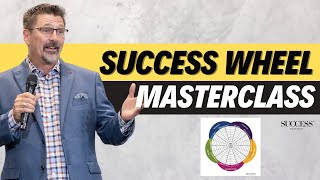
A strategic self-assessment tool called the Success Wheel maps five areas of your life: Purpose, Wellness, Relationships, Social, and Business. Rate yourself 0 to 10 in each to find where you're stuck. The speaker says limited belief and no roadmap are the two things holding most people back.
Chapters
Breaking through barriers to your greatest success. That is really what this success wheel is all about. It is a practical tool. You have gotten it. I am going to walk you through how to use it. And I want to start with a question. I typically start everything I do with a question. Here is my question to you guys. And because we can't interact or I can't necessarily see the chat, I want you to think through this, right? What keeps you from your greatest success? What do you think for you, not anybody else, but not what keeps other people. But what is it that keeps you from your greatest success, your greatest achievement from accomplishing the things you want to do? And you can put those thoughts in the chat. I would love to see those later. I won't be able to comment to them now. But it could be things like complacency or fears. It could be outside influences. Our mindsets are a big part of that and we will talk about that. Maybe we think it has to do with our resources or not enough money or not enough time. Some people fall in that camp and they talk about it as luck. Well, I am just not that lucky, right? I am not in the right place at the right time. And you know, there may be some measure of truth in all of those things that I am sharing with you today, those questions. But do you know what I think the greatest barrier to our success is? And I am going to share two things. There are two things really. I think the first is it is our belief that we can actually break through or achieve it. I think that is one of our greatest barriers. The knowledge of belief in ourselves says, I can accomplish this. There is a lot of noise that goes on in our heads about our own belief system of what we think we are capable of. That is the first thing. The second thing is our lack of a strategy or roadmap that can actually get us to our vision or belief. And I believe this. Without a real good strategy, a vision and belief is only a dream and it never actually becomes a reality. You can have a dream, a vision, a goal. Many of you started this year and some of you are in my mastering your mindset 30 day challenge. And so some of you are going through that and you may be in that. Make sure I got everybody in. I keep getting people jumping in. Sorry, I am going to just pause and make sure I have got everybody that is supposed to be in the room. So I think we do. So the reality is you may have set some goals and visions for this year of what you want to accomplish. It Is one thing to set the vision, but without the strategy to get there, we are not going to end up there. And if we do, it is accidental and, and it may take a lot longer, be a lot harder to get there than if we were intentional about it. Now here is the thing I can't control, number one, I can't control what you believe. I can try to influence your beliefs and help you master your mindset. That is what a lot of you guys are going through in this 30 day mastering your mindset challenge. We have got that a lot of people are going through and a lot of my coaching helps us deal with mindset, my personal coaching, because I first believe you've got to change how you think to and believe so that you can change how you behave so you can get what you desire, so you can get the results, the fruit that you want. So that's why many people are going through that challenge. Your desire to reset your mindset and to identify and crush any limiting beliefs may be the reason why you are here. Right? Because that is part of what we are trying to do. And the truth is if you don't examine and level up what you believe, the best roadmap or strategy is not going to help you get there. So what I am going to share with you today is a tool and a resource that you can use for anything in your life to help you build that roadmap. The first step in building the roadmap is to your greatest success or significance. That first step is setting a baseline or a foundation. Without the first step, you can work really hard and a lot of us do. You can have great vision, but you can spend all of your time driving and never actually arriving. Okay, so it's time to break through. And I believe that in all of our lives, what is the area I want you to think? What is that area you want to break through? And where have you been spinning your tires? Where have you been going year after year saying I'm going to get there, I'm going to write that book, I'm going to take that class, I'm going to start that company, I'm going to level up my business, whatever that looks like that you're going to do, right? This tool is going to be that first step, the foundation to help you get there. So I'm going to ask you guys another question. I can see some of you, how many of you guys have ever used a gps? I can see a lot of your hands. So just give me. So we've all used a gps. And when you think about your gps, what are the two things every GPS needs for it to be successful? It needs two things, right? And I know we can't, I can't hear you. It's going to need your destination, right? A clear picture where you're going. Right? But it's going to need another thing that without this other thing, which we're not typically putting in the GPS because it does it for us already, is it puts in our current location. We don't typically have to put in where we are. It can tell in the GPS where we are. We type in a specific address and then we hit route and it builds a map for us to get there. And then we can choose what we want that map to look like. The fastest route with no tolls, scenic route, we can put stops in there. But we need a clear picture of where we're going. But that's not it. We have to have a clear understanding of where we're starting from. We all understand that and when we know that. And that is really what this is all about. The success wheel is about establishing our current location. It is about an honest assessment. It is that dot on the map that says you are here. And I am going to say this, I am spending time on this because I want you guys to understand the importance of this. Without it, no matter how clear, your destination, your vision, your goals, you are not going to arrive where you want to go, whatever it is in life, unless you know your starting point. Ok, so the quest for work, life, balance. We want to set this up as well. I want to talk about this. Many of you may be familiar with her, have seen a life wheel before. I am looking at your hand. Anyone ever done a life wheel or know what a life wheel is? See if there is anybody. So a life wheel, okay. A life wheel is what a lot of people have used in the past. I have used it a bunch and I found that it was helpful but it was limited in its scope. The premise was to look at a selected areas of our lives and evaluate how we are doing. And you would color it in on a pie graph, like the graph you've got the circle you would color it in in these different areas that you chose in your life. And then you would stand back and look at it and go. And someone would ask you, how balanced does your life look? If this was a tire on your car, what would your ride be? And I looked at it and go, man, my ride would be really bumpy. Right? So it put in that idea to Us that we had to have it all level. It all had to be even, whether it was a 10 or a one. It just, it had to be even for it to be success. We had to have this idea of balance, right? And the point was to help us think that we are out of balance. And then the goal was how do we get our lives in balance? The problem with that, if you are like me when you try to get your life in balance, this work life balance thing, I have always ended up more frustrated and discouraged than anything else because here is what I believe and you may disagree, you may have a different experience, but this process to get to balance, it is a good idea, it creates awareness. But in my opinion it is flawed. I don't really believe in work life balance. Now what does that mean? Do we have to always live in this chaos? And I don't know. I think there is a solution and we are going to talk about that today. So over the last year I partnered with an organization called success magazine and success.com they have been around for over 120 years. And I added a certification with them for my success coaching, which has been tremendous. I have loved working with them. I actually hired one of them to be my coach. So that has been awesome. This is one of the premier coaching organizations across the country. So I have been really blessed to be able to tie in. And I was part of their first certification class a year ago. They just instituted the coaching side of their training and so I was able to go through that with them. And they took this idea of a life wheel and they put it on steroids and they came up with this idea of a success wheel and that is what we are going to talk about today. So success wheels are not about realizing how out of balance we are. It is first about the information needed in the gps. The where am I? We need to get that GPS right. You are here. That is what the success wheel is going to be about. And it is really important. It is about taking an honest assessment and identifying our current reality, our starting point. And it goes through five core areas. It picks the areas that we look at. In the life wheel you would choose things and values or whatever it was that you wanted to measure. This is setting it based on priorities. And we are going to talk about that. So I want to hear you on this. I don't believe there is such thing as balance because balance implies equal time, energy, effort and resource. A balanced life comes from the idea that we can be all things to all people. And I don't know if any of you have ever had that issue where you have like got to be all things to all people, but it is impossible. We can't. Ok, the simple way to say that is how many hours do you spend at work on your job? Typically 8 could be 7, 6 could be 14. So if you just look at the hours you spend at work and then how much time do you spend with your spouse or your family and compared to the number of hours that you spend at work, typically there's no balance there and you'll never bring it into balance until you retire, own your own business or can write your own ticket. So the idea of balance only for me creates more frustration, more challenge in the process. Ok, what it is about and what we are going to talk about and we are going to jump into it here pretty quick is this idea about prioritizing. It is about prioritizing our personal and spiritual life first, the who we are and then moving in order around the wheel towards our financial goals and our businesses. But it always starts with personal before it is corporate. It is ultimately about aligning our priorities. And the reality is different priorities at different times in our life, they come up and we need to give them attention, which is not the same amount of attention or time we will give to other areas. So it is never about balancing it. It is understanding where we need to put energy, grow in that place and then move back into the next thing that we need to do. So I hope you are ready to dig in. You should have your life wheel printed out. I am going to walk through how to complete the wheel first and then we are going to have you actually go through it and build this wheel out and that is how we're going to end. So I am going to, I'm going to take you through at a high level and then we are going to walk back through it and I am going to have you guys actually work through it and we will open the mics up to have some questions and anything that you have got in the process. So as we look at this, growth only happens and I believe this with movement. Typically when we are pursuing balance, we are actually pursuing what is comfortable. We end up being in the status quo. When we are quote, out of balance, we are leaning in a direction. Think about just balance. When you are out of balance, you are leaning and the direction you lean, you begin to fall and you begin to move in that direction. So that out of balance requires or ends up in this idea of movement, in other words, this idea of discomfort right that is when we are out of balance, we are uncomfortable. But in my experience with leadership and training and development, our greatest growth and opportunities for growth comes when we, we are in our greatest discomfort when we are not in the status, when we are not in places of peace. And so if we shift our mindset and look at maybe some of you are in some uncomfortable places right now. Maybe you are in some places where you are like man, how did I get here? I wasn't expecting to be here. This isn't what I thought. I am wrestling with job or boss or transition or whatever it might be that place of discomfort. If you shift your mindset and you begin to set yourself your eyes forward, it becomes the opportunity to for the greatest growth. When we step outside of our comfort zone, we set ourselves up for growth. That is what the success wheel is all about. So I want to help you figure that out where you are out of balance and help you get out of your comfort zone in order to get to where you ultimately want to go in whatever area of your life. So the success wheel is a strategic tool. Ok, we are going to jump in. So here is where you might want to take some notes as we go through. I have given you a download that is instructions. You don't need to look at that now but when you go back and do your actual wheel yourself, those questions and those instructions might help you to help unpack what I am sharing with you today. So this is the success wheel. You have a copy and have it out and you can take notes around it and then you will be given the exercise at the end. So we are going to start, Let me. We are going to start with the outside rings. And you see there are five main areas as you look at the outside that this is talking about. They break each of those into two areas. The outside rings you see five main areas. The first one is purpose. This is about why you were placed here, right? What you were created to do, what gets me out of bed in the morning, that kind of thing and gets me through the hard stuff. What is your purpose? This is your why. Darren Hardy, who is a trainer and a coach, he says that when you have a big enough why it will pull you through any how, right? And so that's really what this is about. Purpose is incredibly important. Success. I'm going to say this success is boring. We think success is this great thing. And here's the thing, this road to success, it's about repetition of what got you to your success. It's repeating the simple little Things over and over and over with consistency. The path to success is boring. It's about repetition day in and day out. You have to figure out purpose before you can do anything else. And you can't get to the rest of this, the rest of the wheel without knowing your purpose. So don't make this complicated. Let's keep it simple. Don't overthink it. The second one quickly is wellness. Wellness is a result. When you think about wellness, wellness is the byproduct of something being skinny, overweight, stressed out, at peace. These are all results of something. Everything is about cause and effect in this area. It is tied to purpose and everything else. Think about the word disease dis ease. It is the root of not being well. Ok? Our bodies were created to heal themselves. Yet look at all the disease dis ease that comes from that, right? Because we don't take care of ourselves, we don't make our health a priority. Wellness has to be a priority in our lives because this is our. I am a man of faith. I believe this is the temple that I have been given, right? And this temple is going to carry my vision, it is going to carry my passions, it is going to carry me to the things I want to do in my life. If this body breaks down, if it doesn't function well, if it is not doing what it is supposed to be, it doesn't matter how great my vision is, I am going to be distracted and have a hard time getting there. So regardless of your belief, the point is that we were created to be in relationship with a. In not relation but in harmony with our body to be health, healthy and our body is created to heal itself. It is a temple, right? That is the second one. So wellness is critical. And these are in order intentionally. We go in this order. We are going clockwise and we are going to have you work through it clockwise because you have to take care of first personal, then your health. Third one is relationships. I believe this. We are created for relationships. My face says I'm created in the image of God. That's my belief. Regardless of what you believe, the point is that you were created to be in relationships with other people. Some of us go, well, I don't like a lot of people. Well, you may not have been created to be in relationship with a ton of people, but we all, we know this through Covid. What we missed was interactions with other human beings. Some of us just missed a few and then some like me who has a lot, I just like man, I need to be in big groups Again, right. I need to be that energy. But we were created to be in relationship. There is energy, support and strength in healthy relationships. That is the third. We are going to go to the fourth one now. Ok. Social. Social is aligned to relationships because the social life, it is all about both our surroundings or environment and we'll talk about this inside of it. The community or the groups and associations that we choose to be part of. Right? So as we go through, we start with our personal right. And then we move from there to purpose. From purpose to wellness, from wellness to relationship, from relationship to social, from social to. The last area then is business. And we like. Here's the thing is we like to start with business. For most of us, we want to start with this. We want to set goals and plans and vision and talk about our finances, how much money we need to make and the things we want to do and build our business. But we usually do that at the peril of the first four. And if we don't take care of the first four and really the first three, this, the last two don't really matter. Business is not going to be sustainable. We might accomplish things in business but we'll find ourselves not being able to sustain where we want to go. We all know about businesses that have failed because the leadership had a failing. Right. Typically a character issue which is developed in step one, understanding our purpose and step two, being physically healthy and in good relationships. Step three. Ok, so the order is intentional. Now we are going to go through the sub areas. I am going to quickly go through those. So I want you to understand each area as we go through. We are going to talk about purpose. Ok, let me check our time. We are in good shape. We are going to talk about purpose. So building this out and adding the subcategories is intentional and is in order of how I would encourage you to go through it and prioritize your growth and what you are going to give energy and attention to. So under purpose we have spirituality. Now this isn't. I know my spirituality. I come from a Christian faith. So that drives me and so that is where my lens is. But this idea of connecting to a higher source, that we are not the center of the universe, we are not the sole authority, we don't sit on the throne. Right. And I'm not trying to put my beliefs on you, but. But this. I believe that we are all spiritual beings. We were all created with a purpose, a future, a destiny, a hope in mind. Right? There's a plan for our lives and for me it's about tapping into the one who created me and his plan for my life and agreeing with him, not trying to do it on my own. So one of the most important parts of purpose is why we are here were not accidents. So when you evaluate this, so what I want you to be thinking about in each of these, from 0 to 10, you will go through and evaluate how you believe, where you believe you are currently in each of these. You don't have to do it yet. We are going to do that in a minute. I want you to hear it all first, and then we are going to come back and have you do it right. But you are going to evaluate your current reality of how you view how you are doing in this category right now. Not where you hope to be, not where you think you are or where you were yesterday. But as you define spirituality in each one of of these, you'll say, well, where am I doing? How am I doing in that? And so in other words, how am I doing and understanding my purpose, my why? How am I tapping into my own spirituality and understanding who I am? Purpose is not what we do, but it's more about who we are. And spirituality is talking about something greater than ourselves, tapping into a source, right, that gives us inspiration and identity, right? That is greater than ourselves. So that is spirituality under purpose. The second one is growth and learning. This is about personal growth. This is about your commitment and what you are doing in your life to add value to yourself being here. You have made a choice to be here today, to set aside an hour and to invest in yourself by being here to hopefully learn something that is going to help you advance where you are, to get to where you desire to be. So this idea under purpose of growth and learning, it is all about self development. What do we need to become different from who we are today to get to where we want to be? It is all about us. This is, what are you doing in learning and growth? What are the things happening? And when you evaluate that, you are asking yourself the question, okay, not necessarily where I want to be first, but where am I? Do I feel like I am doing enough to continue my personal growth, my knowledge, my learning? Am I a constant learner? How am I learning? Where am I learning? Am I satisfied with my personal commitment to my own growth and learning? So you would, you would evaluate that. Remember, we're setting baselines. Okay, I'm going to do one more and then I'm going to open up for questions for just a second. Let me let somebody else in Here. All right, Kendra, welcome in. So I'm going to go through. There we go. I'm going to go through the wellness one. So, right, wellness is the category underneath wellness. The first pie in wellness is health and fitness. This is critical, right? You can define it any way you want. I am not saying you need to be a runner or go to the weights or, you know, whatever that is. But here is what I know. If our body is our temple and our body, we only get one body. And when this body wears out and can't function anymore, it doesn't matter how much our mind is still in it or how much we want to do something, our body is going to going to break that down. So what are you doing to take care of your temple? Remember what I said about dis ease, right? It has everything to do with how we take care of our body, what we put into it, right? We don't give a lot of time or attention to this. Typically we intellectually, it is the first of the year. Everybody is on a diet, everybody is at the gym, everybody is buying memberships. Statistics say that by the 18th of January, which is coming up, my friends, that 87% of everyone's goals they start the new year with are gone by January 18, right? And over 87% of the people don't make it to the end of the month with their New Year's resolutions. So we may have great ideas about what we want to do, but it doesn't mean that we are doing it. Ok, so think about it this way. Get sick and then tell me how important your health is. For the last two and a half years we have all experienced either directly or or indirectly sickness and we have experienced loss in that. I don't want to minimize that. Some things we don't have control over, right? Some sicknesses that come and things that happen, we, once it has happened, we don't have control over that. But there is a lot we can do on the preventative maintenance side of our bodies. And so I am asking you in this one, when you think of health, health and fitness, how do you feel about where you are in terms of taking care of your body, your temple? Ok? It is not first about business and making money. If we are not healthy, none of that matters. The second one under wellness is fun and recreation. Ok, this is again, we underestimate this or we think about it a lot, but some of us are workaholics and we don't spend time there. This is the question, do you enjoy life? Are you enjoying the Life you have or working so hard to get to a life to enjoy somewhere here in the future. Right. This, this is where health and recreation comes in. This is the conversation. Is there a passion in your life? This is often found under this area. Where do we find joy? How do we unwind? This also connects to relationships. So you have to be intentional about fun, joy, laughter, recreation, going for walks. My wife and I started going for bike rides every Saturday when we lived in the city. It was a lot of fun. Now we moved back out of the city and we are like, where do you ride your bike here? And we made a commitment to load our bikes up on our car, drive back into the city to the bayous and areas where they have trails and still ride on Saturdays. Because we one, we wanted to have fun together and we enjoy that. But we are also taking care of our health and fitness. So you have to be intentional about this. Ok, let me do, Let me go one more around. So let's go from wellness to relationships. Okay? And then I'm going to let you guys ask some questions. So let me quickly go through relationships. Remember, that is the big area. The first part of relationships is love. Now when you think of this, I want you to. We are going to try to define this a little bit. This is where we experience love in our lives. Where does that happen? Love is the place of a true and pure relationship. It is not about what we get, but about what we can give. It is this idea of love is this life without conditions, without judgment, doesn't mean without correction, doesn't mean without challenge. But this place of love, where do you get love and where are you giving love? Where do we experience this in our lives? How well do we seek it out? How well are we intentional about receiving and giving? Right? What are we doing? And this isn't. This isn't just a physical idea. When we think of love, we think of marriage, sometimes love. And in this relations thing we'll talk about in a second, sometimes love isn't about a spouse or child or a family member. Love is a is Again, from my faith perspective, the foundation of everything is how well do we love people and how well do we allow people to love us? Right? In a pure sense, there has to be this element of love in our lives, in relationships and the things that we do, both the giving and the receiving. And so when you evaluate where you are, think about where am I with experiencing love in my life personally, for me, receiving it from where, who do I surround myself with and where am I Giving it out. The second one is another really this is really important in our relationships. It is family and friends. That's the place that love often finds its expression. We may. Now here's the thing. We may be born into a family and that family situation you were born into could be positive or it could be negative. We all know stories of where family just isn't. Isn't what it is. Both of my children are adopted so they weren't born into my family. They are not from my flesh, they are not from my wife. Their families had a lot going on in it and so we were able to come in and invite them and adopt them into our family. At birth we are still family. So family isn't just the birth process. Regardless of what we were born into we grow to a place where we have a family and relationships by choice. And so the question is how are you doing in the choosing of those relationships and families? Do they bring love? Right? Do they speak life? What does it look like for your time that you spend the energy you gauge the emotions around having a family and relationships by choice? Who do you choose to be with, engage with and do life with? Ok so I am going to stop there for just a second. We are just going to take a minute. Does anyone have any questions or comments? I can't see everybody and so just unmute yourself. I'm going to be silent for a second. How we doing? Give me. You guys give me a check in with so far and we'll finish up the last two. Any comments? Please feel free to jump in. Do I need to ask you to unmute? I don't know. Raise your hand if you're trying to. Kendra, I see you're unmuted. Do you have something? I just want to apologize for being late. I had some things I had to run and take care of. Is there. I didn't find an email with this chart on it. Did you send us this chart? I did. It's all there. I will try to. Let's see if I can drop while. Since I'm taking a break let me drop it back in the chat because I dropped it in but it only shows up if you're in and so let me put this chart in there. But it was in the email that had the link for this in it. The one I sent yesterday and today. Well then I'm sure I can find it. Rick, it's okay. But I will also drop it in right now. Just if you're there and you want to print it and some other people May need it as well. I just dropped it in the conversation, but any comments, any thoughts, any questions, anything that's confusing to you yet? We're good. I'll keep moving. I'm looking. I can see most of you now. I pulled your faces up just to see. Okay, so let's talk about social media. This is the fourth area, the fourth big area in the success wheel. This is all about the outer world, the world outside of yourself. Social, right? The external. This is first about environment. This is the first one. And here's what I want you to think about when you're evaluating your environment. Where do you choose to live? And how do you choose to surround yourself right with the people, with the place? This is both physical environment, relational environment, spiritual environment. It is the environment that you find yourself in most of the time. A work environment. What is the environment that you choose to live in? How does your environment contribute to your growth and your health? See, everything is tied together. We think about. We tend to just think about, you know, maybe spiritual and business or family and business. And we don't understand that all of these are tied. This is a holistic look at the foundation. That is why I don't talk about balance. Because sometimes there's areas in here that are going to need more attention than other areas. That doesn't mean you're out of balance. It's just understanding, prioritizing, where I need to put energy to bring back strength in that area so that my whole life can stay in strength. So they're all tied together. We've all heard the statement toxic environments and toxic people, right? The surrounding that either brings life or brings death. So when you think about your environment, you're not just thinking about your home. You're thinking about your workplace, your social, you know, the community, which we're going to talk about a little bit more and dig into that a little bit more. How are you doing? How do you feel about your current environment? And how do you feel about how it is giving life to you or taking life from you? Giving energy or taking energy, right? And so you'll evaluate that this is tied to this next area, which in social, which is community. This is more about asking you the question about who do you surround yourselves with? I think it was Zig Ziglar that said this, and I may be wrong. There are a couple people that have said it, but they propose this idea that you are the product of the five people you spend the most time with. And the reality is that is true. Like attracts like. And when we get around certain people and we are spending a lot of time with them. We begin to. I have been married for 31 years now. We begin to take on mannerisms and facial expressions and tones and we begin to become more like that person. So the question you have got to ask yourself in community is who are you surrounding yourself with and what kind of influence are they having on you? Right. What type of community groups? Social groups, civic groups, religious groups? What is the value of the people around you? And when you're around them, do you feel like you are energized and you are gaining life or do you feel like when you walk away from those relationships you are like just exhausted and you need to recharge? My challenge to you is sometimes we need to disassociate with some people and associate with different people. And that's okay. Some of the disassociation may be people we love. It doesn't mean we don't love them. But we realize they're toxic or they are sucking energy or life from us that is keeping us from what we desire to do. And so this can be a real challenging area when we are honest about it. But we have got to look at it. So when you evaluate yourself, you are asking yourself, what does my community look like? Who am I allowing to speak into my life and how do I feel about that? Is it great and I've got great people or not so much? That is what you are going to think about as we talk through that, as you, as you evaluate yourself to set your baseline. So finally the last area and then I am going to put you guys to work the last 15 minutes. OK, so this last area is all about business. This is typically where people want to start. I do a lot of coaching, I do a lot of business development and training and industry and companies. I come in and do strategic plans. We work on team building, communication strategy, conflict resolution. Everybody wants to talk about their work and their business. But this is intentionally last because no matter what you do here, if you don't have the first ones in place, whatever you do here is typically not sustainable. You might hit your mark and you're there, but you can't stay there because other areas are not being addressed and they will bring you down. So we break this into two areas. The first one is work. That which gives us our income. So we're actually talking about what do you do to generate revenue, right? Income streams into your lives. Is our work providing. And this is the kind of the question for us, the resource we need to Live the life we desire and we're created for, right? Because while, you know, you can work and we're just getting by, we might have a poverty mindset, or you might be struggling and just can't. You've got to ask the question, is my work life, where I'm working, does it provide me now and potentially with what I need in order to get to the things that I desire and the things I was created for? This is about work, what you do. Business may begin with a means to. Business may begin with a means to an end, right? You may start a business or work in a business, but what is the means of that business, of what is the end result that you want when this becomes the end and it gives us our means? Like when we look at our business as a means to our end, not the end in itself, then we begin to own the business and what we do, instead of it owning us, we see it as a tool or a resource to get us to where we want to go, not as a taskmaster over us. So we should be driving business, using it to get us to our desired life goals and outcomes. So when you evaluate yourself, you are asking yourself, in my work, where I am making money providing for my family or my life or my future, right? Is it providing for me? Is there a future here? How do I feel about my current work life? And I am not saying you can just go quit tomorrow, but you have got to start thinking about, will it help me accomplish what I desire? Okay, that's what the work part's about. Let's talk about the other one. Now, the other part, work leads to money and finance. It's the final subset. We put this here because this one, the question that must become in this area is how are we stewarding the finances in our lives? So let's say you're working really hard, you're making okay money, but you have a poverty mindset, or you're struggling, or you just. You don't know how to manage your money, or you, you know people, you should invest in this, and you should go do that, and you just get overwhelmed by all that. And do I have a 401k or don't I? Should I up it or take it out because of COVID It's all of these things. We've got to be good stewards of the money that we're bringing in. Money and finance. Do we live with a scarcity mindset? I mentioned that. Maybe it's this idea that we never have enough, or do we steward our Money and finances to work for us and to create opportunities. I'm not really smart, I'm going to be honest. I'm not smart in this area. I've not put a lot of energy and investments and what to do with all that. But I want to steward it because I have great dreams. My wife and I, you know, we're almost 60. She'll turn 60 this next month. I'm 57. We have a desire not 20 years from now, but three years from now. And we're looking at what is this thing we want to do within the next three years that we want to accomplish the place we want to purchase, the beach we want to go to? Right. We're asking those questions. How do I steward my current reality and build my business to allow me to execute that which I want to do? It's never too early to begin to have that conversation. Can we sacrifice now? The now wants to get to the greater desires and passions. Are our behaviors around our finances building strength and leading to our purpose? Or does it feel like it's never enough? So when you evaluate this, you want to go, okay, where am I with my money and find. How am I as a steward with what I've been given? Okay, so that's, that's what we're talking about now. I'm going to come back and if you haven't downloaded it, I want you to grab your success wheel. I'm going to. Actually, we're going to walk through this a little bit and there's a couple of things I want to share with you as I, as, as I want you to actually begin to work this out. These are the areas that we believe make up the foundation of a holistic life. And they are in order intentionally because when you take care of the first one, the purpose, everything else, and you move through it in that order, it begins to fall into place. So a couple things as we begin to have you work on your success with a line that I have got right here. If you see this line, this line is important because we feel that we must complete what is on the right side of the line first. So when you are looking at priorities, where are you going to prioritize your time, energy, growth? Take a look at the right side of the line. The right side is where you really want to make sure you are anchored in, in those areas, because those are the foundational areas. Purpose, physical health and relationships. That is the foundation that then we live outwardly, social and business is external. Purpose, wellness and relationship is internal. We want this Done. Before we get into the business side, this should be how we start our day. When you think about your day and you look at this and you are planning your days and you are thinking about your activity during the day and where you are going and what you are doing, you should look at the lenses of your life and your activity and you are doing through your purpose, your physical right and your relationships. What does that look like? How do you do? You start the day in devotions, right? Someone once said, if you win the morning, you'll win the day. So how do you start your day with your purpose? Do you read a little bit in the day? Do you have a devotion that you do or something you read or a meditation or a scripture or something? As you start your day, what do you do physically? It doesn't mean you have to go run 10 miles, but. So we got a peloton. My wife is nuts about the peloton. She's on it all the time, and she's on all these things and tries to get to certain levels. Me, I get on that thing and I'm like. I'm not even listening. I turn the volume off. I just start pedaling for 20 minutes, and I pedal as hard as I can, just go through, and I'm not doing anything else. And for 20 minutes, I'm on that peloton, and I'm getting. I'm getting my heart rate up. I'm getting some physical exercise. It's not the only thing I do, but I look for ways to do that. While I'm on the peloton, I'm listening to my daily Bible reading. So every day I go. Every year, I go through a Bible reading. I used to read it, and I still read sometimes, but now I listen to it. I love the voice of the person reading it. I am on my peloton. In 20 minutes, I will get my reading done and my physical exercise, and that is how I start every day. And when I miss that, I feel it in the rest of the day, it ripples. I go, man, I realize I don't have as much energy. I am not as focused. And then the love, the relationship side, how I treat my wife and engage those people closest to me. So these are the areas that will set the tone for the rest of your day. The other thing about the wheel is the idea of becoming. It's an intentional process, and it's in this order on purpose. I've said that a bunch. This is the reason I coach, is because for most of us, we want to Skip to just talk about business or our goal or objective, and that's fine. I don't mind doing that. But typically, the reason they're not where they want to be in their business is because something's out of line in their personal life, their mindsets, their beliefs, the relationships. So they run into these walls that don't allow them to achieve everything they want to do. See, we often want the success without going through the process. The problem is that we've not built the disciplines that will give us the strength to not only get to our success, but stay there, right? Think about this. A great example is this. The lottery. Here's the statistics. 78% of the people who win the lottery, millions of dollars, are bankrupt within their first two years. So it doesn't matter how much wealth you get if you don't have the discipline, the foundation, the character, the stuff before it. That thing that you got to think, man, this is my ticket. That ticket is gone. It is used up, and it is used up before we have actually had the ability to accomplish what we desire. So we need to ask ourselves the question, who do I desire to become? What is it I desire to do? Where is it I desire to go? What does it look like to go to get to my greatest success in this moment, in this year? Remember what I said about success being boring? We want to glamorize it. It's not. We see the rich and famous and we desire, you know, and I'm not saying that's you guys, but we typically look at people, man, I wish I and I could. And if I and they have, but we don't realize that most of those people, the way they got there, is through a boring repetition of doing the same thing that got them to where they are over and over and over and over, perfecting what they are doing, their craft, until they become so good at it, right? That it takes them where they desire to go. So for most of us to get to where we want to go, we have got to first understand where we are. That is the question we have got to ask, who do I need to become that will allow me to do what is necessary consistently to get the success I desire? So here is what I want you to do. I want you to take a couple of minutes, and I want you to look at your wheel, okay? And I want you to just go through real quickly each one, and I want you to rate it. I want you to get practical with it. You may not get it all done. That's okay. But we're going to go through each one. So right now I want you to look at purpose. Okay, Pull out your wheel. I'm going to ask you a couple questions and we're going to go through it. Rank it from 0 to 10. The more honest you are, the more and how you see yourself and feel about where you are in the area, the greater opportunity for growth. Okay, so real quick, here we go. Spirituality is the first one. What does it mean to you? What's your growth mean? I want you looking at it. Grab your pen going through it from this context. Rate yourself right now. Where do you see yourself right now? What's the gap? Where's your starting point? Right? And how do you think God or whatever the higher power is? What is wants to meet you or relate to you. Right. And how are you doing in that example is prayer? If it's all about talking to God, well, maybe I need to spend more time listening. Right. And taking time to hear. So based on where you feel you are today, rank yourself right now in that area of spirituality. Okay? Just move, put a mark there. Now let's look at growth and learning. Rank yourself there. This is about your own growth. Where are you? How, how do you feel you are in investing in your own growth and learning? Okay, this is another big area. How are you being, how are you showing up in your life and in your growth? We're called to be forever learners. I believe that. Okay, so as you look at yourself and your own commitment to growth, where are you put it. Put a score down. Okay? And we'll keep moving. Wellness. Under wellness, we have health and fitness, right? Where do you find yourself right now? How do you feel about your own personal commitment to your physical body, your health and fitness? Not just talking about weight. This is overall health. It is a big one because the energy you need comes from your physical body. Right? You need to be healthy to be able to reach your goals. And this is often overlooked. So go ahead and write that right now. Just put a line color in that place that you've got. Okay, Quickly going to fun and recreation. This is about a commitment to regular and consistent experiences for the purpose of fulfillment and fun. Right? This is how do you have fun, man? So I know that Roland on here, if he's still with us, he likes to have a little fun. He likes the water, he likes a little fishing, likes a nice cigar every once in a while, right? I can't hear you, but I can see, right? Are you with me? So what does that look like? How do we become intentional about those things. Right? They offer us recreation and fun. They have to be intentional and consistent, not accidental. You can't rate well, every once in a while I walk and okay, that's great, but what does it look like intentionally? You may not think you are fun, but what would those closest to you say? Right. And so that's the thought of the question to consider. When's the last time you did something for the first time? That's another great question. Right? That's the idea of fun and recreation. All right, we're going to keep moving because I want to get done here on time. Relationship. Are you all so in relationship? We're talking about love and I talked about this already. This has to do with our interaction. First with the love of self. How well do you love yourself? Do you value yourself? And then with others from the place of wholeness. And then it goes to the external world. How well do you love the people, the world, the places that you are? Think about love? Where do you now? Where do you know or feel loved? What are those sources and intentional expressions of love in your life right now? How would you evaluate that in terms of its impact on you? And remember, it's also about giving away love. How well do you love? How well do you love yourself, receive love and how well do you love others? Where are you now? Rate that. Okay, family and friends. This is a big one. Not just talking about blood. Family. We mentioned that this is also the family of choice. So how are you showing up in this area? How well do you feel you're doing with your family? Family by birth or family by choice. And your friend, relationships, who you're surrounding yourself with. When you think of a whole and healthy family, what does that look like? And what do you desire? And then where are you in relation to that? Remember, we are not setting our goals where we want to grow yet we can't set that and build that strategy until we first set our baseline. So go ahead and do that real quick. Ok. Social. We are right on time. We are going to be done just in time. This is first our environment. I am not talking about the green environment or rainforest protection. Right. Environment is about your surroundings, the world you find yourself in. Jim Rome said this. He said we all. We will become the comp. Jim Rome said this. The composite of five people. That's right. Okay. Of the five people we hang around or spend our time around. It's the proximity principle. Right. So who are you hanging around? Are they breathing life into you? Do you have a good social group? Do you have a good spiritual group, you have a good work group. What does that look like for you right now in terms of how well it is contributing to your overall health and growth in your life? Ok, then there is community. This is also your service. Where are you giving away? Where are you volunteering? Right. Where are you engaging in volunteerism, those kinds of things? Because there is energy when we serve other people that brings life to our body and health. So you are asking yourself, this is not the one to one relationships but it's the groups of people that you would call your tribe. What does your tribe look like and how does your tribe speak life into you if you don't have one right now? I know, Alexis, you've moved, you're in a new world. You're looking to reconnect with that tribe. Right? So the intentionality of defining what that tribe needs to be that are going to speak life and build life into you, those are the people you want to make sure that you're seeking out. And it's about serving outside of yourself. It's about how you use your giftedness to give back and impact those around you. That's social. Last one. Okay, we're almost there and then we'll wrap it all up. So let's rate ourselves. In your area of work. How comfortable are you and how satisfied or dissatisfied are you in your current work environment? When you think about your career path and where you are, do you feel like you are in a place that there's opportunity to move or to grow or to get to that next thing? How does your current job add value to you and bring growth? Okay, remember, you're assessing where you are, not where you want to be. And don't think, don't look at this. Oh man, this is terrible. What do I do? Just it's. There's power in understanding where we are. Because when you understand where you are in that foundation, you actually have the opportunity to start building towards something else. Ok. And then the last area, finish up real quickly. This was intentionally put last the money. In finance, we often jump to this conversation. Remember I said that? But I want you to be the last thing you think about. We have to take care of these things that we need, right? Our money and finances, how we steward that. So how well are you stewarding the money that you're making, your finances? When's the last time you looked into your 401k or your retirement? You know, when you really thought about that, maybe we're younger and go, man, I'll worry about that later. Maybe we're later and we're going, man, I wish I worried about that earlier. Right? Who are you talking to? Help look at your investments and see where you are. Well, I don't have that much money. Doesn't matter how much money you have. There's still the stewardship of what you do have. Again, there's a biblical principle there for me, right. That who you know, who has given much and stewards much will be given more. Right. What do you do with what you do have? Whether it's the one talent or. Or the three talents or the ten talents, it's what do you do with it that you have and who do you have? Help speak into you. How well are you stewarding it? Okay, now got a couple of minutes. I'm going to wrap this up. You should have your wheel. If you color it in, you know, this is where you go, well, how balanced is your life? I'm not going to ask you that question. You can look at it and go, man, there are some areas that are. That are a little out of whack. This is not intended to make you depressed. Actually, what this should do. If you have a growth mindset, it should get you a little excited because this information is your launching pad to your greatest growth. There is no growth without a clear picture of where you are. So how can you measure growth if you don't know your starting point? That is why you should go, man, this is good. I am identifying some current realities in these core areas of my life. So as you look at your wheel, let me ask you a final question. Okay. And we won't answer all these now, but it's for reflection for you to go back through in your wheel. It's important to know what led you to assess yourself the way you did in each of these areas. This question begins to reveal what is missing the gap. Right? You want to go back through each of these areas and review and make sure that you have the right starting point. I gave you another document and it is in there. I put it. I will drop it in again. Let me know if you don't have it. They'll ask you some more questions to dig into this a little bit easier. Right? Just to make sure that each of these areas are truly representing where you believe you currently are. This first process is not about identifying what your ideal is or the growth you want to accomplish. It is about setting the foundation. So now I am going to talk to you real briefly about the coaching and what I am going to do and what I want to do for you so you can read this real quickly. I am going to go through this. So what is next? I am offering you a 30 minute coaching session over one of these areas on this wheel that you are looking at and you are going, man, I would love to see growth, I would love to see movement. This is an area I need to work on, right? And so I want you to go through this and I want you to position, kind of position you to move forward and help you choose what you want to talk about in that 30 minutes coaching session. If you choose to do that, you are going to get an email later today or first thing tomorrow with a calendar invite and that calendar invite is going to have a bunch of dates that I am available for a 30 minute coaching session. What I need from you to make it successful is I need you to have an area that you want to work on and I want you to identify that and I want you to identify where your goal is. Where do you want to be in that area? What's the growth you want to have happen and be clear and then what we'll talk about is how do we bridge that gap. That's really what this is all about. So first of all, does this represent you? The second question, I can only grow one area, what would it be? So you look at if I could only do one area in this whole wheel, where would I want to put my energy? Ask yourself that question three times. That is going to give you your top three priorities. Then you need to define your desired growth in each of those priorities. Where do you want to be in comparison to where you are? And then my challenge to you is schedule a 30 minute coaching session with me and we will go through and if you clear where you are, you have an idea where you want to go, I will ask you questions to help you begin the process of building a roadmap that you can use that strategy, this roadmap in every area of your life. That's the foundation of all the coaching I do. So.