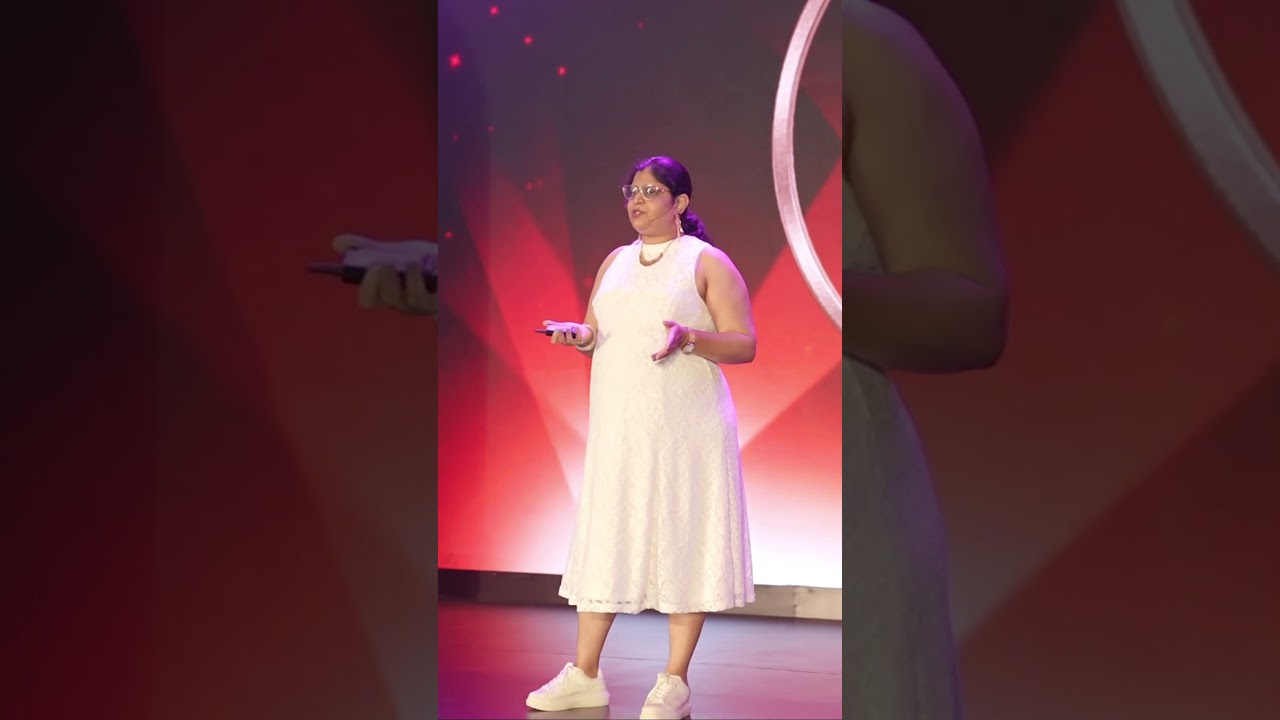
In this coaching video, certified relationship and parenting coach Riddhi Deorah explains why many couples experience a loss of connection after becoming parents and offers concrete strategies to rebuild intimacy. She notes that the shift from being romantic partners to co‑parents often replaces deep, personal conversations with logistical coordination, leading to emotional distance. Citing the Gottman research that 67% of couples see a significant drop in relationship satisfaction within three years of a child’s birth, she emphasizes that love alone isn’t enough; intentional habits are required. Riddhi outlines three key practices of emotionally intelligent couples: staying curious about each other, protecting dedicated relationship time (even just ten minutes a day), and repairing conflicts quickly rather than letting resentment fester. She warns that the biggest mistake is waiting for problems to become severe before addressing them. As a practical step, she suggests a phone‑free, post‑bedtime conversation where each partner asks the other what’s on their mind and listens without trying to fix. The video concludes with an invitation to a free weekly masterclass for mothers and a call to share the video and comment.
Chapters
Most couples in disconnection have stopped being curious. They think they know their partner. They have categorized them. He is like this, she always does that, I know how this conversation is going to go. And that certainty, that assumption of knowing, closes the door to real connection. The couples who come to me in the most pain are almost always couples who knew Something was shifting, and they chose to wait because they were busy, because they thought it would sort itself out, because addressing it felt harder than ignoring it. It never sorts itself out. Distance grows in silence. Resentment builds in silence. Today, let's discuss. Why couples stop connecting after children and what emotionally intelligent couples do differently. Thank you so much for being here today. If you're watching this, then there's a good chance that something in your marriage has shifted since you became parents. Maybe you cannot fully put your finger on it. Maybe you can. Either way, I want you to know that what you're feeling is real. It is very common and it is healable. Today we're going to cover a few questions that are very commonly asked and something that mothers in my community keep asking and something that almost nobody talks about honestly enough. Why do couples stop connecting after children? And what do emotionally intelligent couples do differently? Hi, I'm Riddhi Deorah and I'm a certified relationship parenting coach And I work with mothers from across India, Dubai, UK, US, helping them heal themselves so that they can build emotionally healthy families. I worked with over 20,000 mothers, and I've seen patterns in their relationships that repeat again and again. Today I want to share what I know in a format that feels more like a real conversation. So let's get into it. This is the question I get asked more than almost any other. Why do couples who genuinely love each other stop feeling connected after children? And the honest answer is because love is not enough to sustain connection without intentional attention. Before children, connection happened naturally. You had time, you had space, you had conversations that were about each other. You went on dates, you stayed up late talking about nothing and everything. You were each other's primary focus. After children, all of that changes almost overnight. Suddenly there's a third person in the relationship who needs everything from both of you— your time, your sleep, Your attention, your emotional resources, all of it gets redirected towards this new life. And the relationship, the marriage, quietly moves to the back of the line. Not because you stopped loving each other, because you stopped having the time and the energy to tend to each other. And relationships are just like gardens, cannot survive without tending. What happens then is subtle but devastating. The emotional distance grows slowly. First, you stop having deep conversations. Then you stop having any real conversations at all. Everything becomes logistics. Who is picking up the child? What is there for dinner? Did you pay the bill? Have you spoken to the school? And somewhere in all the logistics, The 2 people who fell in love disappear, and 2 co-managers appear in their place— functional, responsible, but completely disconnected. And continuing to the first question, people ask me, is this normal, or does it mean something is wrong with the marriage? This is extraordinarily normal. And it does not mean something is fundamentally wrong. The research is very clear on this. A landmark study by relationship researchers John and Julie Gottman found that 67% of couples report a significant drop in relationship satisfaction in the first 3 years after having a child. 67%! That is not a minority. That is the majority. And what the Gottmans also found is that the couples who navigate this period well, who come out the other side still connected, are not the couples who had easier time. They are the couples who had specific habits, skills that protected the connection during the most difficult period. So the question is not Is something wrong with my marriage? The question is, do we have the habits and the awareness to protect what we have? The next question that I get asked a lot is, what do emotionally intelligent couples do differently? This is the most important question, and I want to give you real specific answers. The first thing that emotionally intelligent couples do They never stop being curious about each other. Most couples in disconnection have stopped being curious. They think they know their partner. They have categorized them. He is like this, she always does that, I know how this conversation is going to go. And that certainty, that assumption of knowing, closes the door to real connection. Emotionally intelligent couples Stay curious. They ask questions they do not already know the answers to. They treat their partner as someone who is always growing, always changing, someone to be discovered, not just managed. The second thing, they protect time for the relationship. Not when they have energy left over, not when the children are grown. Now, in this moment, intentionally, Even if it is 10 minutes at the end of the day that belongs only to them. Not to discuss the children, not to plan the week, just to be with each other. This sounds small. This is not small. 10 minutes of genuine presence every day adds up to something that sustains a marriage through the hardest years. The third thing, They repair quickly after conflict. Every couple fights. Every couple has moments of disconnection. The difference is not the conflict. It is what happens after the conflict. Emotionally intelligent couples do not let conflicts sit. They come back and they discuss. I see this did not go well. Can we please try again? They do not let pride or exhaustion keep them in disconnection for days. The repair is more important than the fight. Let's go to the next question. What is the biggest mistake couples make during this period? Waiting. Waiting until things get bad enough to address. Waiting until the resentment is so built up that the conversation is already loaded before it starts. Waiting until distance is so large that crossing it feels impossible. The couples who come to me in the most pain are almost always couples who knew something was shifting, and they chose to wait. Because they were busy, because they thought it would sort itself out, because addressing it felt harder than ignoring it. It never sorts itself out. Distance grows in silence. Resentment builds in silence. And by the time it becomes impossible to ignore, there is so much to undo. The most important thing any couple can do is address the small disconnections early, before they become really big ones. Now, before I end this episode today, one last question which I get a lot. What is one thing a couple can do this week, starting today, to begin reconnecting? One thing, just one. Tonight, after the children are asleep, sit together without your phones, without the television, without the next task on your list, and ask your partner one question. Not about the children, not about the home, about them. What has been on your mind lately? What are you feeling these days? What do you need right now that you're not getting? And then just listen. Do not fix. Do not redirect. Do not make it about yourself. Just receive what they share, and then share the same yourself. That one conversation done with genuine presence can begin to bridge a distance that has been growing for months. Connection does not require grand gestures. It requires small, consistent moments of genuine attention. Start tonight. Stop waiting. And if you're still with me, if you are still watching this, I want to congratulate you for being an action taker. This so important. This is you investing in your relationship. This is you choosing to grow your relationship and not just depending on chance to fix everything. If this resonated with you, if you saw yourself or your relationship anywhere in what we discussed today, I want to invite you to go deeper. I have a free masterclass that I run every week exclusively for mothers only. Where we discuss everything about parenting, relationship, love for yourself, setting boundaries. And this is so important for every mother, learning the skill that protects connection even in the hardest seasons. The link is in the description. Please go and register. I would love to see you there. And do not forget, if this video helped you today, share it with one couple who needs it. Drop your thoughts and questions in the comments. Tell me where you are in your relationship right now. I read every comment. If you wish to share something other than relationship regarding your parenting, feel free to do so and I'll create more content around that. Thank you for being here. I'll see you in the next video. Thank you.