Rob Hersov: How Real Leaders Turn Nations Around
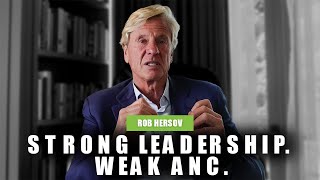
Robert Hersov argues South Africa needs authoritarian-capitalist leadership to fix the ANC's failures in jobs, safety, and growth. He points to Nayib Bukele's mass incarceration in El Salvador, Javier Milei's shock-therapy deregulation in Argentina, and Trump's 2025 efficiency plans as models for rapid transformation.
Chapters
The ANC is a disaster and they have absolutely no idea how to run a country. And they failed us, all the citizens of this country, on every single metric you can imagine. Employment, service delivery, safety, border control, economic growth. I mean, I can go on for hours. They failed on everything. Jacob Zuma was a thief and a gangster supreme. But Cyril Ramaphosa has actually been worse and will be forever known as the president who let the lights go out and was only good at news reading and forming commissions and dialogues that achieved nothing. That's Cyril. There are 5 leaders of other countries in the world that I believe know how to fix a mess that they've inherited and build a successful economy and a successful country all based on capitalism and Judeo-Christian values, unsurprisingly. And decisiveness comes from real leadership. And here are my picks: El Salvador, Argentina, Poland, Hungary, and the United States of America. So let's start with Nayib Bukele of El Salvador. Security and crime reduction. Bukele imposed a comprehensive state of emergency, giving government broad powers. And he implemented massive anti-gang operations using huge military deployment and mass incarceration. Chuck them in prison. The results? Homicide rates reduced from 53 to 1.9 per 100,000 people. On economic policies, Bukele made Bitcoin legal tender in 2021. He was a real pioneer. He introduced a real tech focus with an emphasis on technology parks and digital innovation. What a futurist. And Bukele created 30 farmers' markets called agromercados. He focused on reducing dependency on external debt. And he basically drove food security for the country. He focused on nutrition and food crisis solutions. On governance reform, on constitutional changes, Bukele abolished the presidential term limits, extending his ability to run the country and run it properly. He extended presidential terms from 5 to 6 years, and he concentrated executive authority. In his second term, he shifted from tackling the gang war to corruption, to handling and focusing on fighting corruption. And his political approach was really, he was a technocratic governor. Tech-savvy millennial authoritarianism is one way of describing it. And he's gained huge popular support despite his authoritarian measures. People like the results that he's delivered. And he's denounced traditional political elites. Think ANC. In summary, Nayib Bukele adopted a conservative ideology backed by strong state intervention. And what were Bukele's key characteristics? How can we summarize them? Mano dura, the iron fist approach to crime and governance. Boy, do we need that in South Africa. Rapid implementation, quick, decisive policy execution, no commissions, no national dialogue, Cyril. And military deployment—he had heavy use of security forces to get the job done. And on constitutional reform, Bukele brought fundamental changes to the governing structure. He introduced digital innovation, a big emphasis on technology and modernization. My second hero: Javier "Chainsaw" Milei of Argentina. After decades of destructive socialist policies, Corruption and elites running the show, Javier Milei moved very quickly on his reforms. 1. Economic shock therapy. Inflation control. His primary objective was to combat triple-digit inflation. Fiscal austerity. Aggressive spending cuts to eliminate a budget deficit. And currency policy. His aim was the dollarization of his Argentine economy. On the central bank, he took a critical stance, proposing radical changes. And the results? He stabilised the economy in short order and achieved a balanced budget within the first 18 months. He then focused on deregulation and privatisation. You love that. I love that. He introduced a Ministry of Deregulation, a new ministry, and its full aim was to get rid of red tape. And he brought the deep chainsaw. I love that expression. A massive deregulation of bureaucracy and red tape. And South Africa has way too much red tape. He focused on trade liberalization, removed import licenses for appliances and for clothing. And he eliminated the wasteful buy Argentina protectionist procurement policies that were costing the country a fortune. He pushed privatisation. He ordered the privatisation of electricity companies—think Eskom—as well as rent deregulation, the elimination of rent control laws. And on government restructuring, extraordinary what he did. And he did this all in short order. He created an area of bureaucracy reduction. He dismantled large parts of the federal bureaucracy. Massive public sector layoffs, tens of thousands of government employees were laid off, saving a huge amount of waste. And subsidy cuts, he slashed energy and transportation subsidies. And then on state-owned enterprises, he targeted many of them for privatisation, something we desperately need to do here in South Africa. And to me, one of the favourites, he pursued a libertarian ideology, free market, fundamentalism, radical economic liberalisation. Minimal state, he created a dramatic reduction in the government's role in the economy. And on property rights, he made a strong emphasis on private property protection. Think our disastrous EWC in our country. And on tax reduction, he proposed significant tax cuts and made the tax policy simpler. In regulatory elimination, he removed business regulations and barriers. And his political approach? What was his general approach? Shock doctrine. Rapid, comprehensive implementation of reforms. This is something that all great leaders do. They move quickly. Cyril, are you listening? And built a popular mandate using electoral victory to justify his radical changes. He also was very anti-establishment. He rejected the traditional political class. And technocratic elements, evidence-based policy implementation, highly technocratic. And on international alignment, he realigned Argentina with the United States and free market allies and built a Judeo-Christian base to Argentina. So what were Javier Milei's key characteristics? How can we describe them? Speed of implementation, rapid execution of reforms within his first year. Comprehensive reform. He made simultaneous changes across multiple sectors, completely unafraid of moving fast. And ideological consistency. This was coherent libertarian framework. I love the libertarian angle. And his economic focus was prioritizing economic stabilization and growth. On institutional reform, he made fundamental changes to the government structure. And my favorite European country, Poland. On Poland, and we're talking namely about the Law and Justice, PiS policies, which is 2015 to 2023. On their social and economic policies, they were generous with social spending. Almost 17% of GDP was spent on social policies, and they focused heavily on family support, creating comprehensive family benefit programs, plus child benefits, significant child allowance programs. There were also pension increases, enhanced retirement benefits put in place, and on the minimum wage, substantial increases in the minimum wage. All of this sounds good, yeah. And their conservative social agenda was also introduced. Heavy emphasis on Judeo-Christian, mainly Catholic, and traditional family values. Rings a bell with me. Hope it does with you too. And also a near-total abortion ban, which was implemented. Finally, let's talk about America. Donald Trump and his doge MAGA initiative in the United States. The Department of Government Efficiency, DOGE. Don't you love it? This was created by Donald Trump's executive order in January 2025 and was led by Elon Musk and Vivek Ramaswamy, two extraordinary entrepreneurs. The mission was to bring accountability and transparency to federal spending. And the target was to cut at least $2 trillion from the federal deficit. Now this is underway. It's still work in progress. And their approach was to modernize federal technology, reduce waste, fraud, and abuse. Trump's America First policies were put in place. This was about economic protectionism, prioritizing American economic interests ahead of other countries at long last. And the trade policy of Donald Trump was renegotiating trade deals to rebalance things and favor America and American workers. Makes sense if you're an American. On immigration control, strict border security and immigration enforcement, and focusing on energy independence, domestic energy production, and reducing foreign dependence. Drill, baby, drill. And on manufacturing, bringing manufacturing jobs back to America. He also tackled red tape. Big deregulation agenda, unleashing prosperity through deregulation. Trump's executive order required agencies to repeal regulations. I love this. Red tape, cut it. And regulatory reduction, there was an aggressive deregulatory agenda which saved families thousands of dollars. When you look at it from the business environment, he was removing barriers to private sector growth. Helping businesses, helping economic growth. And when it came to federal oversight, Trump was reducing government interference in business operations. Music to business people's ears. On state versus federal, some states were becoming more aggressive as federal government deregulates. So push decisions down to the states. Ernst Rüth would like that. And on government efficiency, there was a federal website overhaul. Trump brought in tech leaders to modernize government digital infrastructure. Talent brought into government. On bureaucracy reduction, he streamlined federal agencies and operations. And on transparency, there was public access all of a sudden to government spending and receipts. Transparency is a wonderful thing. Can't hide from the sunlight. And private sector engagement. Trump leveraged business expertise for government reform. Wouldn't it be nice to do that in this country? Plus technology modernization. He updated federal systems and processes using technology. So what could we say were Trump's key characteristics? He created a direct connection with working-class voters. A very strong business approach. He applied private sector methods and skills to government, brought business people into government, and rapid implementation. You see that from all the leaders I've mentioned. Quick execution of campaign promises. He told us what he was going to do, he did it. And also anti-establishment. He challenged traditional government operations. Draining the swamp. Wouldn't that be nice? Drain Pretoria. And on economic nationalisation, he prioritised American economic interest globally. It is very easy for us to fix South Africa, and we don't need a benevolent dictator to do it. Although things would happen a lot faster under such a decisive leadership. And this will never happen until we get rid of the ANC and their destructive policies. To put it simply, futsak ANC.
More from Robert

MAGNUS HEYSTEK & ROB HERSOV: How to Protect your Offshore Money from the South African Government



BNC#8: Rob Hersov Q&A - A brutal reality check on leadership, voters, and the economy






South African Scientist Exposes The Scary Truth Behind The National Water Crisis
