ROB HERSOV: Minimalism vs Status: The Financial War No One Admits
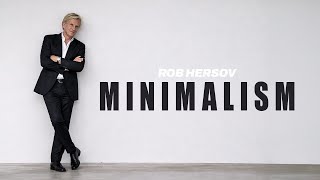
Robert Hersov sold his London house and luxury goods to embrace minimalism, arguing that status-driven consumption is a financial trap. He cites data on credit-card debt and happiness thresholds to show luxury items decline in value while fueling anxiety. Buffett and Epictetus reinforce his case: wealth means fewer wants, not more possessions.
So I want to talk today about being a minimalist, and I am a minimalist. A minimalist is someone who removes all the clutter from their lives, mainly possessions, and simplifies their life so they have clarity of mind, clarity of purpose, and tranquility, and the ability to focus. So you see, no watches, no jewelry, Niente.
Before we get into today's story, Truth Report has launched a Backabuddy initiative called Hold the Line for Warras. This is our R1 million drive to support the 3 sons of Warrick Stock, launched with the full support and consent of the Stock family as the official fundraiser. A trust is being set up for Warras's children through Hanekom Attorneys, who have volunteered their services. If you're able to donate, thank you. If you can't, that's okay too. Sharing the campaign helps a lot. The link is in the description, or you can screenshot this QR code. Thanks for your support. Let's hold the line together. Now let's get back to today's story.
And my wife and I love 3 things, or focus on 3 things, other than family, of course, and that's money or Bitcoin in the bank. Our houses and great experiences, and everything else is really superfluous. And how did I get minimalized? Well, we were living in London. I owned a house there and, um, it was Miliband running against Cameron for the election. And I was convinced Miliband would win. And I said to my wife, I do not want to live in this country under socialist government and a hardcore leftist socialist government. 'Cause I mean, those Milibands were loopy loo lefties. And she said, what does that mean? What does that mean? And I said, well, I think we should sell our house. And she said, all right, if that's what you believe in, let's do it. So I sold my house at the top of the market for the wrong reason, because Cameron got elected. But when we sold our house, we decided we're going to stay in England and we needed to rent. And so we found a place to rent. And when we were packing our stuff up to move, my wife came up to me and said, Why are you moving like 500 of your books that you never read? And I said, well, I love my books. She said, you don't love them enough to look at them or read them. And I said, yeah, but it's sentimental. She said, don't be ridiculous. We're not moving 500 books, which we have to put somewhere. She said, put them into piles, pick up, you know, pick a category, history or autobiographies. You can keep some of them, but let's get rid of the rest. And so I did. And to cut a long story short, from that day forward, I got rid of my wine collection. Why have a big wine collection when we're not big drinkers? We only buy wine that we're actually going to drink. I had beautiful watches. I let my sons, my older sons, choose a couple of them, and I gave away or sold the rest. I gave the books away. And from that day forward, I became a minimalist. And you know, when you think about it, how many pairs of jeans do you actually wear? You know, you've probably got X number of jeans in your cupboard. You've got jackets you don't wear. You've got suits you don't wear. You've got ties you don't wear, especially if you live in South Africa. You know, you need probably 3 or 4 pairs of jeans, 5 or 6 shirts, and I only wear blue and white pretty much. I can pack my life into 4 suitcases and it simplifies your life. I am a minimalist. On my Patrick Bet-David interview, in May last year, I actually said to him that diamonds have to be one of the best shorts in the world, as in my view, the industry is doomed and luxury goods to follow. Here are some punchy facts for you. Global luxury spending hit $1.5 trillion in 2023, but credit card debt in America and Europe rose to record highs of around $1.3 trillion combined. In South Africa, Household debt-to-income ratios are about 63%, while luxury car imports rose 9% last year. That's not prosperity. It's addiction disguised as aspiration. Insurance premiums for luxury watches and jewellery climbed 15% globally in 2024 due to theft surges in London, Paris, and Johannesburg. The resale value of designer handbags has dropped 60 to 80% within a year, faster than most tech stocks go public. Studies show that beyond $75,000 US annual income, more possessions do not increase happiness or life satisfaction. And these aren't vibes. Those are numbers. Numbers don't sparkle. They reveal the truth. So why don't we have a quick reality check? Luxury doesn't elevate you, it anchors you. Each statement piece is a liability that demands insurance, security, maintenance, and mental rent. You gotta think about them all the time. You don't own luxury, it owns you. The winners? The winners are the brands, the brands' owners that sell status. The losers? You. You're the one trading peace of mind for a logo. As Warren Buffett said, if you buy things you don't need, soon you'll have to sell things you do need. And I love to have a sports analogy, and here's a rugby analogy. Owning luxury goods is like trying to score while your own team is tackling you. You lose ground with every possession. Every rand spent on a brand is a rand not invested in something that grows: property, travel, skills, Bitcoin, or freedom. The luxury you own today might glitter, but it decays financially and psychologically. So let me give you the benefits of being a minimalist. And I love being a minimalist. Minimalism isn't deprivation, it's liberation. 1. Financial freedom. By owning less, you instantly cut recurring costs: insurance, maintenance, storage, cleaning, upgrades. The average minimalist saves up to 35% more annually than high-consumption peers. And that translates into earlier retirement, emergency buffers, and choice. Psychological calm. Fewer possessions mean fewer decisions. Neuroscientists at Stanford found that clutter increases cortisol, the stress hormone, by about 30%. A minimalist's home is a calmer brain. Peace, tranquility. And what about time and focus? The less you have to manage, the more you can live. Minimalists reclaim roughly 150 hours a year, time otherwise wasted maintaining or shopping for things. And if you look at safety and security, a simpler life means fewer theft targets, lower insurance costs, and less anxiety about protecting things. You move more freely, and you are sort of unburdened. And what about the environmental and ethical impact? Minimalism isn't just good for you, it's good for the planet. The luxury fashion industry produces 10% of global carbon emissions and wastes millions of tons of unsold goods yearly. Choosing less is a quiet act of rebellion and responsibility. And let's talk about self-identity. When you strip away symbols, you discover substance. You become someone defined not by what you wear, but what you stand for. And as my favorite Stoic philosopher, Epictetus, said, wealth consists not in having great possessions, but in having fewer wants. Why aren't you told this? Why aren't more people talking about minimalism? Because the luxury economy thrives on your insecurity. Ads whisper, "You deserve it." Banks grin, swipe your card and profit twice—once on your purchase, again on your debt. And psychologists now call it prestige anxiety—the stress of maintaining an image you can't afford. And it's rising fastest among professionals aged 25 to 40. But for South Africa, it's more than personal. We import luxury but export capital. While Cartier and Rolex thrive, our saving rate collapses. And for you, every rand you spend on image, is a rand not invested in freedom, in property, travel, or peace of mind. And Will Rogers, famous American, said, too many people spend money they haven't earned to buy things they don't want to impress people they don't like. And my man Epictetus said, wealth consists not in having great possessions, but in having fewer wants. Just love that one, had to repeat it. So my suggestion to you, become a minimalist like me. Sell the status symbols, invest in simplicity. You could build an emergency fund before you buy another logo. And you must ensure only what protects your life, not your vanity. Focus on money in the bank or Bitcoin, not debt, and focus on having the greatest experiences, which I call memories for the rocking chair. Measure it, net worth, not wardrobe. And on governance, apply business logic to personal life. Audit your spending like a CFO. What's my return on investment and what's ego? The upside, less anxiety, more liquidity, better sleep, and fewer locks on your doors. And let's get a business analogy going here. If your life was a company, luxury goods are loss-making divisions. So cut them out, free up your cash flow, basically your time, your peace, and that all rises immediately. And stop renting your self-worth. From brands. You don't need them. They need you. Freedom looks a lot better than diamonds ever will.
More from Robert

MAGNUS HEYSTEK & ROB HERSOV: How to Protect your Offshore Money from the South African Government



BNC#8: Rob Hersov Q&A - A brutal reality check on leadership, voters, and the economy






South African Scientist Exposes The Scary Truth Behind The National Water Crisis
