Rob Hersov: Stellenbosch Mafia, 'GNU', Biznews, Trump, Gayton McKenzie, Zuma & MK Party, Malema, DA
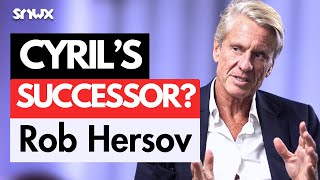
Rob Hersov, a South African businessman with ties to Rupert Murdoch and Goldman Sachs, argues that South Africa needs rapid privatization and deregulation to hit 5% annual growth. He criticizes the GNU for lacking direction, supports Trump's policies, and believes a crisis may be necessary to force reform.
Chapters
I believe that Cyril can stand again. He can. But he doesn't want Paul Mashatile, Lesufi, and I think it was Ronald Lamola who was in the running in those days. He wants to have a female replace him as president. The DA is selling its soul a bit. We need to get behind the GNU only because the alternative is too terrifying to imagine. For Keelen Balula, who I'd call a moron, Rob, I believe you have some grievances we should meet.
Spread the fire! Welcome back to SMWX, where we explore South African politics through interviews and analysis. Help us get to 200,000 subscribers. Today I'm really excited to be joined by a spectacularly successful businessman, an investor, and increasingly an outspoken critic. Rob Herzog, thank you so much for joining us on SMW.
What an honor to be here. I really mean that. I've been looking forward to it, and I'm glad I'm here. And for everyone watching, please hit the thumbs up button and subscribe because we want to get this way through 200,000.
The pleasure is mine. We're going to break the internet with this.
Let's do it.
Your father's life, Basil Herzog, who seems to have been something of a polymath— Air Force, business, academia. He was on the governing body of The Ridge.
Michael House. Ah, was it as well? And Michael House.
Okay, great. Um, tell us about what you, what you learned from, from him as, as one of South Africa's foremost industrialists.
So my father is 99 this year. I saw him yesterday. I'm seeing him this afternoon.
Lovely, lovely.
And he's sharp as a tack.
Wow.
He's also physically in pretty good shape, you know. He was a dinner last night with my mother at 6 o'clock. He's wearing shorts and a t-shirt, and he got up and gave me a hug. It was lovely. But my father, he's— flying has been a passion of his. He caught the last 6 months of the Second World War with South African Air Force, was sent up to Italy, did not see combat. I think he killed a cow on landing once, was the worst he did. But he's always been in love of flying and has stayed involved with the South African Air Force since then. I think he's got— he's owed 5 or 6 Long Service Medals.
Wow. Wow.
And you may not know this, but the Royal Air Force was the first air force ever created, and the South African Air Force the second. And to this day, he's still the honorary colonel of 21 Squadron.
Wow.
Yeah.
Wow.
It's been a passion in his life. And but he's an extraordinary man because he's always a— always was a great public speaker. I remember as a little boy going to, you know, the closing of a mine or opening of a mine, and he'd make brilliant speeches, tell wonderful stories. And he was— he's a charming man, he's an extraordinary man. So that there's this lovely, soft, kind, generous, gentle side to him And then there's this, you know, the business he— obviously he inherited Anglaval. Yeah, along with Clive Menel. Yeah, because Bob Hersov and Slip Menel founded Anglaval, then the two sons took over, and it's down to the third generation, but it's gone.
Yeah, yeah. And, and he clearly seems to— I mean, your grandfather Bob, um, as you say, founded with, with the Menels. And your father took over, but then really in some ways took it to a different level.
Yeah.
And, uh, really cemented Anglo Val as one of the key enterprises in South Africa.
Great adjective, cement, because we owned Anglo Alpha. Sure. And I think what my father did was take the vision of his father Bob out of just mining and ancillary services into fast-moving consumer goods. You know, we at one point went Bakers Biscuits, Bowman's, um, I&J, Five Roses, yeah, Consul Glass, Anglo Alpha, into broad-based mining and industrial business.
Yeah, absolutely. So you had—
that was his mission, right?
Right. You had AVI eventually. Exactly. And then there was the—
there's AngloGold Mining and AngloGold Industries.
Incredible. And are you named after your grandfather?
No, it's funny because when I— when my parents decided to call me Robert, it was on condition I wasn't called Bob. So there we go. Yeah, but I'll tell you a funny story no one knows. Yeah, as kids we were scrambling around in the, you know, in our library at Westfield South and found a book, Naming Your Son, and in the inside cover of Naming Your Son all the combinations of names that got down to Robert Basil Herschel. But you know the name that lost out just before Robert? Digby. Oh my God, imagine if I'd been called Digby. I'd never have lived that down. I'd never have survived Digby.
Well, thank goodness for that. Thank goodness for that. Did you have— did you get to meet your grandfather, and do you have any memories of him, or have you only heard of him?
Right, he died age 57. And he— I think he was the first private owner of an aircraft in South Africa and the first private owner of a, of a yacht, a boat, a privately owned boat. And it was called Zinquazi, and it was made in America, brought out to South Africa. He went down to Cape Town to take delivery of this boat, sailed the afternoon, went back to the Martin Olsen and died. So he was still a young man at 57 when he died.
Yeah, yeah. I was reading Michael Cardo's biography of Harry Oppenheimer and just realizing how central many of those key figures who built the mining industry in South Africa are to, to the economy and, and the country. And in many ways, you can kind of tell the story of our economy through the lives of those figures.
So there was the first generation— Barney Barnato, you know, Ernest Oppenheimer.
Yeah, yeah.
The Randlords.
Yeah.
Then they were followed a decade or two decades later by the next gen— I call it a generation, you know what I mean? And Bob Herschel was one of that. Yeah, was that level. He followed the great Randlords. And actually, there's a beautiful house in Westcliff which used to be our family house called Stonehague.
Okay, lovely. Yeah, lovely. Now, did you, did you ever meet Harry Oppenheimer, by the way?
I did.
Yeah. What were your, what were your impressions of him? I'm quite fascinated in him as a character, looking at his life through this, this biography.
He was kind, gentle, compassionate, generous— some of the adjectives I used about my father. The same about Harry. But remember, he was talking to a young man.
Yeah, sure.
So trying to make my way in life.
Yeah.
And funnily enough, he invited me— he and Clifford Elphick. Clifford was his right hand at the time, and Clifford and I played rugby together. He's a great guy. He owns Gem Diamonds, right? And they invited me to lunch in London because Johann Rupert had just made me an offer to join Richemont. And they were trying to say, maybe you should stay with our tribe and not move to the other tribe. That's when, you know, in South Africa, the sort of Anglos and Jews and everything were actually competitive with the Afrikaners, right? I see. And they, they didn't, you know, they socialized but didn't really socialize together as strongly. As the Afrikaans did with themselves. I think it was quite a shock to Harry Oppenheimer that I was going to join Richemont and not join, you know, Anglo-Vale or Anglo-American.
Yeah, yeah. And you are obviously a formidable business person in your own right. Maybe in some ways we suffer from a similar fate to the extent that people assume that just because you have a successful father, your life is made out for you. And sure, I have no doubt you had various advantages extended to you, many, but you, you stepped into those advantages, and when doors were opened, you walked through them. Uh, what, what was life like as you tried to form yourself into the, the real business person that you eventually would become?
So people always just— people can dismiss me by saying he's a trust fund baby. Yeah, yeah, but my parents are still alive, so I haven't received a trust fund. Um, but I was born extremely lucky and extremely privileged, born into a wealthy, loving family. Parents are still married, still alive, born into great wealth and given every opportunity. But it was interesting, my parents never spoiled us. We weren't given anything along the way other than opportunity. And my father said, look, I, I don't know where this country is going. I don't know where Angloval is going. Don't have expectations that you're going to receive anything, but I will educate you and your siblings. Yeah, to the nth degree. Yeah, so take advantage of that.
And you eventually made your way to Harvard Business School.
I wasn't smart enough to go to Oxford or Cambridge. I had to go to Harvard.
But we, we forgive you. We forgive you that. Yeah.
No, no, but I took my own path.
Sure.
I went to America, Goldman Sachs, Harvard Business School, and then got hired by Rupert Murdoch. So I took a path that my, my father was almost shocked. What is Rob doing?
But yeah, you know, because you've become a famous face speaking about South African politics, people can find any reason to, to dismiss, dismiss that. But you know, when I was reading through your biography, I was actually like Sheesh, you've actually done serious things. Like you say, Goldman Sachs, Harvard Business School, obviously building all these, all these different businesses. And presumably your views come from a place, even though you maybe put them across quite flamboyantly at times, come from a place of research, come from a place of reflection and thought.
Yeah, because I've had incredible access And take Rupert Murdoch working as his right hand, as just one example.
I mean, wow.
In that role for 2 and a half years, I met every single powerful person on the planet.
Wow.
Margaret Thatcher.
Can imagine.
Ronald Reagan. Yeah, yeah, everyone. Because just by being with Rupert, I met those people.
Yeah.
And, you know, I traveled to extraordinary places, analyzed businesses, met really, really incredible politicians on both sides of the spectrum. And just having that access gives you wisdom.
I can imagine. Are there any stories from that time that stand out to you? I mean, you must have met all kinds of people, seen Rupert Murdoch, who, I mean, had already built, but at the time was also building something completely new in media. Any anecdotes that stand out to you from that time?
Funny enough, the main anecdotes are more on the personal level. Yeah, and I remember we went to this cocktail party on Fifth Avenue. It was a beautiful apartment building. I can't remember whose it was. And we went in and Rupert said to me, let me just show you something. Have a look over there. There's some people speaking to the host's children. Those are the people that have made it in life. And these people you're seeing streaming towards me, they're the ones still trying to sell me something.
Wow.
And he treated the waiter, the elevator guy, the taxi driver the same as he'd treat, you know, Ronald Reagan and Margaret Thatcher.
Yeah, yeah.
He was a man of the people, and he was genuinely interested. When he spoke to the elevator guy taking us up, he'd ask him, what newspaper do you read? Why do you read it? Which pages do you read? He was genuinely interested in Wow, that person's opinion. And the thing about Rupert, when you were with him and when he was listening to you or focused on you, you honestly felt like the most important person in the world.
Do you still, um, touch base with, with him?
I haven't kept in touch with him. Sure, sure. But he's still battling away, you know. Oh yeah, he's got his sons fighting against each other now.
Yeah, I know there are lots of legends about him at Oxford where he was, uh, And he's—
and, you know, if he'd been offered a knighthood, he would not have accepted it. He was a bit of a Republican, not a royalist.
Yeah, apparently he was a big Marxist at Oxford.
He was, yeah, yeah, yeah. But you can be cured.
Absolutely, absolutely. So, Rob, you know, you, you've burst onto the scene in recent years making some very brave and bold statements about South African politics. I was watching your MacG interview back where you said 2024, the ANC's falling below 50, it's a certainty. And I think back then people were like, he's crazy. Possible. Yeah. Before we get on to the issues of the day, why did you decide that you would speak out when, when so many people in your position are counseled to you know, keep silent, keep making their money, and, and work, work in the shadows, as it were, if they have political statements to make.
When I moved back to South Africa, 2016, end of 2016, a friend of mine, Marius Barnett, in London said, you're moving back to South Africa, don't put your head above the parapet in any way. Just quietly enjoy yourself, make money. And live the life. Well, I didn't listen to that advice, clearly, but the, the sort of political activism happened by accident. So I've always enjoyed public speaking, and I, and I, I get a buzz from it. And at the BizNews conference, yeah, the day before, we had Jason McCormick and Moosie Maimane speak, and it was just after the KwaZulu-Natal riots. And Jason McCormick gave the most incredible speech where he tracked by the hour his life in response to his shopping malls being burned down and sacked.
Yeah.
And that evening I was really angry with South Africa and upset and feeling like, ah, this country's going nowhere, it's going to fall apart. And as I walked— I was the first speaker the next morning— as I walked into the room I was thinking to myself, do I go hard or not? Yeah, you know, I don't prepare speeches, but they bubble around in my head for months beforehand, and it comes together on the night, on the day. And Warren Wheatley, a friend of mine, and Andrew Jarvie— it's two separate tables— as I was walking up, said, come on, Rob, give it a, give it a rev, hit it.
Yeah.
And so I stood up and said, under the ANC this country is uninvestable. But then I went— then I really went deep. I said, and I might have mentioned one of your relatives, but I said, anyone still voting for the ANC is a moron.
Yeah, yeah.
And then I defined what a moron was— an adult with a mental age of 8 to 12.
Yeah, yeah.
I mean, it was ruthless.
Yeah.
And in those days, business news would wait a week or so before they released the speech. And I was at home thinking, what am I— you know, I was raising money for a technology fund, and I thought, all the other speeches were coming out, and I thought, what did I say? Because when I speak, I go into a bit of a zone. Yeah, I can't really remember what I said, but I really— I remembered being quite aggressive, forceful, bombastic, whatever. And then suddenly my phone rung off the hook. Yeah, people shouting at me, people praising me.
Yeah.
And that's when I became the accidental activist. Two phone calls, though. Franz Kroninger called me.
Okay.
And he said, Rob, you're probably in a maelstrom of hell, in a world that you've never had before, but stay calm. You'll come through it, and everyone you insulted will call you. I said, what do you mean? He said, it's the Soviet playbook. They disarm their enemy. And sure enough, the next day, Fakila Mbalula, who I'd called a moron— 'Rob, I believe you have some grievances. We should meet.' Wow. So France knew what was going to happen.
Yeah, yeah.
The second was a call from my father, and he said, 'Rob, I've never been more proud of you for doing and saying what other people can't afford to do and say.' Half an hour later, my brother called and screamed at me, and I said, let me just tell you what Dad said.
Yeah, yeah.
And that was it. I mean, there was no turning back.
Wow.
And what happens when a white guy stands up and throws a few demon grenades is everyone throws the racist card at him. Sure. And it's very hard for any white guy to go, I'm not a racist, you know. But what happened was Enoch Gonaguana, Musi Maimane, Vusi Thembekwayo, Gaten McKenzie, and others came out publicly and said, you might not like him, you might not like what he's saying, but he's not a racist. Leave him alone. Once you survive the racist attacks non-stop—
and what prompted you to, to keep going after that? Because that, that business, that business conference was, was, was like your, uh, your, your moment of announcing yourself, but Since then, you know, you've, you've remained quite consistent in, in commentating.
And so you— I loved your comment. You said you're an equal opportuni— you equally opportune slammer. What is it? You're gonna slam by everyone now?
Yeah, absolutely.
And I'm an equal opportunity slammer. So I'll give you an example that people go, he just attacks the ANC. Not true. Leon Schreiber has blocked me. He won't take my calls anymore.
Oh wow.
Um, because every time I'd send him something, he'd just send me one message back: PA equals ANC. I said, stop being so childish. Yeah, if you've got a reason why you don't like the PA, tell me what it is. They never give a reason.
You also came out about Gaten. Yeah, people were like, you must be crazy. And then, I mean, now they quite like him. Yeah, he's distinguished himself as one of the biggest politicians on the scene.
He is. And have you— you've had him on your show?
Sadly not on this show. We do want to bring him. I had him on the SABC and it was a different kind of interview, but we're working on it. Yeah, yeah.
So when the Daidata scandal came out, 4 friends of mine, 4 Black friends of mine— Josey Matthews, um, Pumalazi Majogi, and 2 others— said, Rob, so much for your capitalist friends. And that's when I realized I'm going to actually just call them out. So I went on to Biz News, I'd read the judgment, and I gave my view on it.
Yeah.
And it really upset them. They'd been friends of mine, now they don't want to talk to me anymore. I'm getting used to that. I'm sure you are too.
Yeah, yeah, exactly.
You tell the truth, people don't talk to you.
Yeah, we should start a—
and, and so it's not— I'm not just banging on about the ANC.
Yeah, no, that's—
you know, I'm— if, if capitalists step out of line, I'm going to nail them too.
Yeah. Let's come on to what, what you're thinking at the moment, because like many, I think you were maybe quite optimistic about the GNU, but I've noticed, uh, a souring happening, and it seems as if you're quite disenchanted now with the GNU. Is that, is that, is that right?
We need to get behind the GNU only because the alternative is too terrifying to imagine, you know what I mean?
Yeah, yeah.
However, I would have hoped the GNU would have had a mission statement. This is what we're all about. This is where we're going. This is what we believe in. These are the principles. This is what we're going to try and achieve. Yeah, they haven't done that. The only thing that matters in this country now is economic growth. Unless we can get economic growth— we're less than 1%— unless we can get it to 3, 4, 5%.
Yeah.
We're never going to solve the unemployment problem. We're never going to solve any problems. We're just going to drift along as an underperforming country by choice. And it's— listen, I don't have to live here. I've got more than enough money to never work again. I've got more than enough money overseas not to have to put up with any hassle. I could just go and live in— Florida, wherever. Yeah, but I love this country and I believe in it and I am a patriot and I never want to leave. I do this because I actually care.
Yeah, yeah.
And we may not agree on, you know, my hard capitalist free market beliefs. You know, you may have a different angle on that, or you may want to have a welfare element to capitalism or softer side to it. But I think we do agree we need economic growth. And in the GNU, not one of the ministries that can dictate or create economic growth is held by— is held outside of the ANC. And you've got the people who've been screwing things up for 30 years still in power and running, and running the ministries that matter.
Absolutely.
So yeah, I mean, where are we going to go? We're not going to get economic growth out of this GNU.
That's why I'm I mean, I've been— I was quite shocked at, at how much the ANC was able to retain. Yeah, I mean, they basically got everything and the DA contented.
I don't want to play poker against them. They'll clean— yeah, no, they'll clean me up.
Yeah, yeah, absolutely. When it comes to negotiating power, the ANC, they did an amazing job. Sadly, when it comes to the governing, not so good. Yeah, but, but really, I mean, the ANC runs the show and, and, uh, I don't think many South Africans have actually appreciated that because they assume that, well, they must— I think there's a DA minister somewhere and, and it's, it's called a the ANU. The ANC cleaned up in the negotiations, if you ask me.
Full-time, 100%.
Yeah.
And what worries me more is that, you know, take Home Affairs. Yeah, Leon Schreiber. Sure. He went in there, there were 40,000, um, forms that hadn't been approved. He cleaned that up in 3 months. Yeah, they all got turned down or approved. Done. So what did Aaron Motsaledi do for the 3 years he was in there? I mean, did he just sit smoking a cigarette looking out of the window? Probably yes. He is incompetent and he's still the minister. He's now Minister of Health pushing NHI forward, which we know is going to bankrupt the country. Hmm. You know, Guaidó, $20 billion went to other countries because of Guaidó's crazy mining charter and his inability to process mining applications. He now says he's going to have a transparent process to allow people to see where their mining applications are in the process. But why didn't he do that before? Why is he doing it now? Because the GNU is in place. So things are being fixed within the GNU.
Yeah.
But I use this expression, it's just putting lipstick on a pig.
Yeah. Yeah.
I'm very worried about South Africa. And you did the fabulous interview with Prince Marcello.
Yeah.
And he said, '10 more years of this.' Mm-hmm. You know, by the way, that interview— usually I, when I like an interview, I agree with most things and disagree with some things.
Yeah.
There wasn't a thing I could disagree with. He is— what an extraordinary guy.
Yeah, I know. He definitely came out swinging. And I agree, I agree. My biggest fear is that South Africans love to put Band-Aids on the problem and then ride out the short term, and then we'll think about the long term later. And President Ramaphosa has been brilliant at this because every few weeks he says, 'I've got a nice new Band-Aid for you.' Yeah, but what's going to happen if, if nothing happens? And we've invested— firstly, we invested all this hope in Ramaphoria. Yeah, I wasn't one of them, but, but many people did. Yeah, I recall. In fact, I think you burst the bubble in many ways.
Thank you.
Uh, but then President Ramaphosa brilliantly was able to create a new kind of euphoria around the GNU. And I, I fear that you may disagree. I fear that we're going to be so anesthetized by this new euphoria that we're going to wake up at the end of this term and yes, yeah, a few things here and there, the DA ministers and some Some ANC, I think, yeah, exactly, of course. And I think Ramaphosa has done a good job in electricity as well, but the core won't, won't have changed, and we'll be back to square one.
And NDR is still moving forward, RET is still moving forward, and they are destructive, um, vehicles— if they are vehicles, they're destructive narratives. And nobody talks about investment and growth.
Yeah, yeah, yeah.
I'm very, very frustrated. So what is the— what is the option? There isn't an option. You know, if I had a private meeting with Cyril, yeah, he would tell me, yes, we're going to focus on economic growth and I'm going to make the ministers, you know, blah blah. And then the next guy comes in, he'll tell them whatever they want to hear. And nothing will happen.
What do you make of the DA? Because look, they're in government, as you say. Some of their ministers seem to be doing good things, but at the same time, I've seen some of their supporters criticizing them for being co-opted, for, for not speaking out as loudly as they used to. What are your, what are your thoughts around that?
So I think they and Gaten and Encarta and are trying to make the best of it. I really, I really do think they're trying to give it a, give it a full whack, and I respect them for that. You know, Gaten said to me, Rob, we've got to get everyone behind the G&E. We've got to try and make it work. I get that. Yeah, I believe in that. But I do think the DA is selling its soul a bit, you know. I, I just— the principles of the DA— free speech, free markets, liberal, you know, Gladstonian liberalism— is being put by the wayside somewhat in this journey.
I think the ANC may have figured out that the DA will be able to take a lot more than, than they might have initially thought. And I think this Bella thing has been a case in point, right?
Great. Yeah, great example.
Yeah, the ANC has actually realized, hold on a second, I think we can push this even further than we realize, and they're going to stick around pretty much no matter what. Yeah, yeah, yeah.
But they were right not to walk out of the door on Bella. Sure, you know, you're gonna have to wait for a much bigger, more crucial crossroads for the DA to walk out.
Fam, before we get back to the episode, we just want to let you know we have a big goal on this channel to build this community to 1,000 members. That means we have two new levels of SMWX membership. The first level gives you exclusive access to content, discounts on merch, but the second level, in addition to various other perks, gives you access to me. We're going to have meetups, online sessions, you're going to get discount on our live events. So if you want to deepen your SMWX community experience. Help us get to that 1,000-member level. Look forward to seeing you there. So you're someone who knows a lot about what's happening in South African politics, uh, someone who, who gets information from diverse places, and people probably be quite surprised with who you know and, and, and have on WhatsApp. Uh, anything, anything that you're able to share with us that you think might be happening?
I do. So everyone knows that 2026, 2027, the municipals, which by the way are going to happen in February 2027.
Interesting.
Everyone's saying it's 2026, it's February 2027.
I learned that one from you actually with Alec. Yeah, yeah, yeah, because the, the law allows it to go beyond 90 days, which would be February 27th, or up to—
and the other thing in 2027 is the ANC elective conference.
It's going to be a big year here.
Now, I believe that Cyril can stand again. He can. Did you know that?
Yeah, he can. Yeah, yeah, yeah, he can. Yeah, but as ANC president?
Yes, correct. But he doesn't want Paul Mashatile, Lesotho, and I think it was Ronald Lamola who was in the running in those. He wants to have a female replace him as president. And he has two ladies in mind. Wow. And I don't know their names yet, but I'm gonna find out.
My goodness. I think I— something tells me Kumbudzo Ntshaveni is one of them because she's in the presidency.
Probably. That's a very good guess.
I'm hearing an increasingly powerful figure as well because she, uh, runs intelligence as well. So that— and, and she was a big part of his campaign. If I were to guess, that would be one of the names. Wow. So, so the, the succession planning is, is well underway. 2027 is going to be a massive year for our country then because we're going to have an election at the beginning and the ANC conference at the end.
And that's what I say to people. I say we're okay till then.
Yeah, yeah.
But who knows, the abyss reappears. Yeah, yeah.
So MK and the EFF.
Yeah.
You've obviously come out swinging quite strongly against them. Um, have you met— have you met— I know you've met my—
I met Julius.
You met Julius in London, right?
I hosted his first ever lunch in London. Yeah, I think there's this photograph of, uh, Lord Robin Renwick, who died a month ago.
Yeah, yeah.
My dad, me, and Julius Malema.
Yes.
Yeah, we're just having lunch.
Yeah.
And there were 20 other people there, and that picture's been flying around. Pauli van Wyk, when I first moved back to South Africa, journalist for Daily Maverick.
Yes. Yeah.
Comes up to me and says, I'm doing an article on you funding the EFF. I went, where do you get this from? She said, this photograph. I said, you, you, so you extrapolate a lunch photograph to me funding the EFF? I mean, come on, do proper work.
Yeah, yeah. So you did.
So I met Julius and he was very impressive. He's highly intelligent, he plays to the audience. I tried to get him to put his red cap on for a photograph. He said no. He knew this was London, the City of London. These are the big beasts of the financial sector, and he was going to do the right thing. And my father, after 20 minutes of Julius speaking, people was nodding their heads because 90% of what he says you could actually agree with. The rest is the Looney Tunes. And My father put his hand up and he said, Julius, how can you speak to all of us in an intelligent, sensible way, and yet you go to a football stadium, it's, you know, kill the Boers? And Julius said, I play to the audience. Straight like that. Wow.
Wow.
So I think he's going to have a hard time remaining relevant. He's lost his top lieutenants. Yeah, and the EFF, just the crazy guys, you know, they're gone from my perspective. They're— yeah, they are not relevant anymore.
You reckon they can't come back from this?
No.
And Zuma, did you ever have any, any dealings with him?
I spoke to him on the phone and he was as charming as I was told he would be. Couldn't be nicer. Yeah, and I know why he's so popular. He's a charming, popular guy, but you know There's Father Christmas, jolly man handing out presents. That is Jacob Zuma, the disastrous president. Terrible that he was even in power for this country, but people liked him. So I think when he goes, MK is going to have a hard time finding who the real leader is.
Yeah.
And keeping its direction. I mean, are they a Marxist-Leninist populist? What are they? I don't think they've worked it out yet.
Yeah, well, to be fair, I think the ANC is also still working it out.
Yeah, exactly. I think it's true. And the GNU, for that matter.
Maybe even the DA. So on, on the RET, he has another perspective, and I'd be interested in what, what you would think about this. Either South Africa needs— well, let me start, let me start here. Something needs to change for sure, right? And I think maybe part of the problem with where we are right now, at least from my perspective, is the ANC keeps trying to do the same thing and call it something different.
Correct.
And what we really need, in my view, is a decisive government. One that says, we're doing this, you're not going to like it, or a crisis, sure, that forces the decisive— quite frankly, yes, so that out of that crisis we can be reborn, you know. And would, would an RET, um, MK EFF government really be such a bad thing to the extent that either, you know, the ANC would really go to the left and implement left policies, and then we'd get to see what they looked like. And if they work, they work, and if they don't, they don't work.
Yeah, sure, they don't work.
We'd have a crisis. Or South Africa really needs to go to the right and actually just do, do the thing properly, you know, and have a proper free market economy. And again, if it works, it works, and if it doesn't and we have a crisis, then we do. Um, isn't that what we need? And therefore, this— absolutely, the boogeyman of, of the RET government. I understand why certain people are worried about it, but I would prefer if the government wasn't this middle muddle fiddle faddle, to quote me too. Jacob Rees-Mogg.
Me too. Yeah, I agree with you. Yeah, we're sort of becoming Argentina. 50 years of socialism destroyed their economy, destroyed everything. And Malay just came in with it with his hacksaw. Yeah, but do we really want to go through another 10, 20 years of underperforming in every sector, destroying what's left of the state-owned enterprises, just breaking and stealing? Sure. Maybe I'm in your camp. We need a revolution or a crisis or something that precipitates. Yeah, this is where we got to go.
Absolutely.
But you know that it's I don't think there'll ever be a coup d'état in this country.
Why?
The army is pathetically weak. The police are a joke. The real strength militarily are private security companies.
Absolutely.
And middle-class people that have guns and know how to use them.
That's actually where military power lies.
Correct.
Yeah.
I have a friend who's very senior in the firearms side of the police. Okay. He said that the police only have budget for the police to go to the training range once a year and shoot at a fixed target, whereas the middle-class South Africans, yeah, who have guns, are very well trained, have very good ammunition and weapons, and know how to use them, whereas the police don't. So I don't think there'll ever be a coup d'état. And who would do it anywhere? I don't think it's the EFF. They're only in Pumalanga, you know. In KZN, the Zulus— I'm saying the Zulus generically, um, whoever was behind the riots gave it a crack and failed. You know, there's no dominant and universal across South Africa group that could create that crisis. Yeah, with some sort of coup.
Yeah.
And so we're probably just gonna, you know, if there's a coup in KZN, people in the Cape look, what the hell are they doing? You know, they just look with— so I think that's a good thing in some ways, but how are we going to get to the crisis you and I want? Yeah, that's the question.
Yeah.
And if we have a collapse, an economic collapse, say the rand goes to 100 to the dollar Sure. I mean, that would be a complete collapse.
10-year bond yields.
Exactly, exactly.
Above 20.
So that would create a huge— that would create an economic collapse. Would it be enough to force people onto the streets? Because the wealthier, the wealthy, the taxpayers just leave the country, just get up and leave. Yeah. Which they're doing in droves.
Yeah.
It really upsets me, you know, when I'm driving around and people are begging on the streets. It shouldn't be like that. I know it's way worse elsewhere in the poorer areas of South Africa, and I don't really drive around there, but I mean, it just shouldn't be like that. It's just not fair. It— I could in 12 months deliver 5% economic growth in this country. Easily.
What would you do?
Sell all the state-owned enterprises as quickly as possible, deregulate like crazy, kick the unions to touch. Um, I would make South Africa investable again. Make South Africa— no, there's no acronym there.
I was going to say—
and it's very easy to do. Yeah, if you go to the IRR, Institute of Race Relations, um, the Free Market Foundation, David and Sarah, they've written down all the ways to easily turn this country around. Hans Ottling, a Swedish friend, and I wrote an open letter to Cyril and the government on how to fix this country and create economic growth.
Okay.
And I sent it to a few people—Moletsi and Becky and Moosie—my man needs to read. Yeah. And Moosie called me back and said, brilliant letter, 100% correct, I wouldn't bother. I said, why not? He said, they're not even going to read it, they don't care. Meaning Cyril and the cabinet, of course. They don't care. No response? No, they don't care. They actually don't care about economic growth. Yeah. And the US State Department asked to meet me. The senior member of the State Department asked me a question. We had a chat. It was more friendly than anything else. Sure. Don't worry, I'm not CIA. Neither am I. I'm South Africa first. And he asked me a question. He said, when it comes to AGOA and the fisheries agreement, it just seems like they can't get the act together to fill out the forms. Do you think, Robert, it's malevolence or incompetence? It's such a good question. Malevolence or incompetence? Yeah. And I think it's mainly incompetence, but the RETNDR is malevolence.
You know, I heard a similar thing Um, I was speaking to an ambassador from a Middle Eastern country, and he said, we came to the investment conference and we took it seriously, and we, we have $10 billion to invest, to invest, and we can't get people to, to move.
I would have dive tackled them, not let them leave the room.
To myself, I mean, it's so easy. Like, we talk about what can we do and how do we come up with a different economy, and there's $10 billion that, that we don't seem to be— this is from the mouth of an ambassador— that, that we just don't seem— and now you, you say that there's a similar thing happening with the US. Like, is there something wrong with just the urgency in this? Are people not getting how urgent the situation is?
Okay, you ask everyone at the end of the podcast what is the greatest thing they can do, and generally the answer is education. Yeah, one of the worst legacies of apartheid was the education system. At its worst, white kids were getting 18 times more education investment than black kids. Yeah, it's a travesty, but it's continued with the ANC. Our results are disaster, big budget disaster. Absolutely. And this takes a generation to fix. This is not something you can fix overnight. The economy, I you and I could fix overnight or in 12 months, but education takes a generation. Yeah. And think about the cabinet ministers who are part of the liberation struggle. Where did they get educated? Soviet Union. And they're sitting in our cabinet. I mean, communism doesn't work. Socialism doesn't work either. But I know many of The people that follow this podcast say capitalism needs a socialist element, and I'm sure that's what South Africa is doing. But we have people in our cabinet— yeah, Gwede Mantashe is a communist, it's part of the Communist Party— and I'm not surprised nothing gets done, because if you are a communist and believe in communism, we have a real problem.
So in terms of the economy Rob, I think this is a really important conversation because so seldom do people in our country sit across from each other with maybe some different views. Yep. And just have a healthy conversation about it. You know, there's so—
you and I have agreed on many of the things. Economic growth, we have. Maybe we need a crisis, we have. We have— you're not going nowhere.
Absolutely. And there's so much name-calling that I feel that people get put into boxes and then we can't have a proper conversation when in many cases we, we all want the same thing. Yes, you know, and here's my, my honest question to you about, you know, hook, line, and sinker going for a full free market approach in South Africa is I get worried about the structural problems in our economy, you know, the structural, the structural racism that I see in our economy, or people being left behind. Absolutely. And I feel like if there isn't, uh, some kind of centralized investment in addressing that, it might take too long for the free market to, to actually, uh, bring about that kind of equality, not necessarily of outcomes, but at least of opportunity. So my, my feeling is that we've, we've had so much state intervention into our economy in the apartheid years that it's kind of Ingrained. Exactly. It's almost deformed our economy. So when you, when you unleash a free market onto a deformed economy, don't you just get a deformed free market? No.
I'll give you one, one example. Yeah, the aviation business in South Africa.
Sure, something I'm sure you know a lot about given your businesses.
South African Airways was the number one airline in Africa. Yeah, by every measure. And it's now disappeared. It basically got bankrupted by the ANC. Sure, destroyed like all the other SOEs. Yeah. What has happened is private enterprises jumped into the breach. Airlink, FlySafair are doing a perfectly good job flying people around. We don't need South African Airways. We don't need a state-owned airline. Now the same will happen in every other sector that we have that we have a state-owned enterprise. The private sector will step in when there's an opportunity and an incentive, and you're not overregulated. Money sees the opportunity and it happens very fast. So the only way forward is free enterprise. And the beautiful example that's taking place right now is Argentina. Watch what happens there. In one year, he's taken inflation from 28,000% to 2.8% a month in one year. The beauty— you know, I was on Biz News a week ago with Gerard Pappenfuss. Yeah, I saw that, discussing ArcelorMittal. Yeah. And there are so many rules and regulations for employers in this country. These are the people you have to hire, these are the people you can't fire. I mean, it goes on and on and on. It's like, why would I even bother investing in this country. They're going to invest somewhere else. So even though they're well-meaning in trying to resolve, you know, inequity— yeah, I think in their minds they think, you know, we need to get these people employed, too many of those are employed already. But that sort of central thinking doesn't work. The free market will get us to 5% growth. The country will lift foreigners will start investing and we'll be rock and rolling once again. But yeah, people who think they can make decisions on our behalf in government will always screw things up.
Yeah, no, look, I, I hear you on the, the impossibility of a central authority being able to see the whole economy. Correct. Um, the road to serfdom comes to mind. Yeah, yeah. Um, and, you know, I think they're really important interventions that have been made by free market economists, just to say like, look, even back in the 1950s, economies were so complicated that to expect any government to understand them is, is just impossible.
Anyone to understand? Sure, sure.
But on the other hand, I just look at South Africa and I think it's so broken. It's so, so broken that that if, if you don't have some kind of massive coordinated effort that maybe involves both the state and the private sector, I don't see how we dig ourselves out of townships and out of rural areas.
And in seconds, it'll happen so fast your head will spin. If MK and EFF get into power, foreign investment has gone, and guys like me will not invest in this country. So there's only one path for that, and that's into the abyss. Economy destroyed, everybody impoverished. Sure. So why not try free enterprise? Why not try it? Let's have the courage to be decisive. More words: be radical and implement free market, the free market for this country. It'll— this country will fly. Yeah. We will be the country we deserve to be.
One other thing on this, and I appreciate this conversation because I think it's, it's going to be useful for those who are on different sides of this to watch and actually just see two people actually talking like normal human beings about this. Yeah, I, I worry that a radical free market approach would, would create a lot of social unrest. And so even if in theory, let's assume that the, the free market benefits would flow, in practice I fear you'd have— you may reignite the union movement. They might come back, back out and, and really put a lot of people on the street.
But you don't have to do everything at once. I hear you, I hear you. Yeah, you know, sell off the state-owned enterprises that cost the country a fortune. They're not delivering the services they were supposed to deliver. Sure. Get rid of them. Sell them. Let the private sector do what it likes. 2, deregulate. We've got so many damn laws that business people don't even know where to look. And they go, well, why bother? Yeah. And on your show, I think I might be the first wealth creator. Yeah, quite right. Sure. You know, you've got a lot of bureaucrats politicians, uh, regulators. Yeah, opinion formers.
Exactly.
And I think I'll help you do it, get more investors and business people.
No, we're excited.
People that are actually putting their money at risk. Yeah, on the show, so your audience can actually hear from them. No, listen, I was born rich, okay? Sure. I'm a different animal. I was born rich and given every opportunity, and I've made tons of money on my own. And will inherit a lot of money too. Sure. So don't ever feel sorry for me. Yeah.
And always make me buy your lunch. The trust fund is coming some—
at some point. Yeah. My dad might live forever, and my mom. Yeah. So I'm in a different category to an Adrian Gore. Sure. You built up a business from nothing, is a national hero, and you should get him on the show.
No, would love to. And that's, you know, that's why I'm so glad we have you, because I agree there's a segment of South Africans and the economy where we need to have these conversations.
And I'll tell you what, we should get you to speak to Nady Kirsch, Martin Michel. You know, there are 35 South African dollar billionaires overseas.
It's amazing, actually. 35 or 38.
Yeah, you know, there's a guy called Pierre Naudière, right? No one's heard of him. Yeah, he's probably worth 600, 700, 800 million dollars. Sheesh. He's built a cloud based banking business. So all the banks sign up his enCino, enCino, right, cloud banking business. He listed on NASDAQ for €8 billion, €8 billion, and he owns 10%. Wow. I mean, one thing— South Africans everywhere but not here.
So true. Elon Musk. Elon, yeah, yeah.
The two richest guys in LA, number one and two, are South African.
Elon Musk, yeah, Patrick Soon-Shiong. It's amazing. You know, if we could harness— and I know you've done some work towards this and probably thought more about it than I have— but if we could harness our diaspora, like the dollar billionaires, that's my— the millionaires, even just the young professionals who go out of— I mean, that diaspora is probably just as powerful as the remaining South Africa.
It's way more powerful and it's way richer and way bigger. Yeah, sure. But I think what would be a first step is to get one or two of those people on your show. To tell us why they're not investing in South Africa.
Why have they cut South Africa off? And are they checked out? They're checked out. Yeah.
You know, when I worked for Rupert Murdoch, I kept trying to get him to come and build businesses in South Africa and he couldn't be bothered. Hmm. He wanted a big market, he wanted America and Britain. This is a tiny market here. And there are too many laws and it's too difficult, it's a pain in the neck to come and invest here. But let's get some of those guys on the show first. For sure. Why aren't they investing here?
Yeah, we're all about putting different perspectives to our audience, and I think that perspective is important. So we'd be more than happy to.
I mean, if Cyril stood up and said, we are— the GNU is going to aim at economic growth, I would applaud him saying that. I mean, he wouldn't have the detail on how to do it. I'd have to do that, or you'd have to do that.
Yeah, well, the SONA—
wouldn't that be nice?
The SONA is coming up. Maybe we'll get a shocker. Maybe we'll get a decisive of Atlantis. I mean, we don't even know how this government is making decisions. I mean, we don't have a— we don't have a one-pager which says this is our mission statement and, and this is how we make decisions.
And there are 32 ministers and 43 deputy ministers. 75 ministers. It's actually— Norway has 9. Why do we need 75 ministers?
What do they do? Abomination.
What does the Ministry of Women do? What do they actually do?
Yeah. And why do we have— what does any deputy minister— and we have two deputy ministers in some places.
I mean, well, in finance, I met David Massondo. He called me out of the blue at the introduction of a Nigerian friend of mine. Okay. And I said, David, aren't I the Satan? Aren't I this devil? Why are you calling me? And he laughed. He said, no, Rob, you're a patriot.
He's such an impressive guy. Yeah, he is actually.
Yeah, but Enoch is too as well. Listen, give credit where credit is due.
Yeah, who do you think is the real deal?
Parks Tower, I think, is actually doing a good job. Sure, um, the head of electricity, Ramahopa. Ramahopa, excellent show. Um, you know, uh, Enoch Gonaiguana, David Msonda, excellent job. There's some very good people in there. Yeah, I mean, I do pick a few and nail them all the time, like Fred Ann. Sure.
Aaron Mazzoletti, whack, whack, whack, has, has But there's some very good people at the top of the ANC and they do an excellent job. Has Minister Mantashe called you?
He did. We actually call each other often. When he stood up and said we need more nuclear power plants and we need more coal-fired stations in South Africa using our own coal, yeah, I called him and said, 'Gwede, I agree with you on both of those. Well done.' And he called me back and said, 'Well, what's the 'What's the press statement going to look like?' And I said, 'Two patriots committing to save this country.' Yeah. And he laughed. No, I like that. No, he's a good guy. I just wish he'd ditch the Communist Party.
Sure. So Trump's election, uh, has rocked the world today. Yeah, we speak on the day of his inauguration. Look, I mean, Trump irks a lot of people in South Africa, but you, you've been someone who's who's been quite supportive of this Trump presidency.
I'm not mad about the man. Okay, yeah, you know what, what is— I'm not mad about the man, sure, but I, but I, I'm mad about his policies. Okay, that's— I love his team that he's put together. That puts me at ease.
Yeah, yeah, yeah. What about his policy?
On the flip side, yeah, sure, I thought Obama was the most presidential, but his policies and team were dreadful. Sure. So there we go, that's a flip of Trump.
Absolutely. What do you think his presidency will, will mean for the world as someone who invests and works across the two countries and many others?
There's a massive swing away from, yeah, woke ideology, um, identity politics, to what I call the norm, the, you know, back to normal. It got completely out of control. Even my friends who were Democrats were like, we've got all the lunatics in our stable. Yeah. And we don't like them all. So the world is swinging back. The pendulum has swung too far. Yeah. The world's swinging back into a good order. Yeah. All we have to do is kick out Kirsten, that dreadful Trudeau, and that— I can't remember— Albanese in Australia, and that's a full sweep.
Oh my goodness. But you had the Tories for long enough, so— and they did nothing.
And they did nothing. Yeah, they were dreadful.
That's interesting, you know.
So I think the world is in a very good place right now, and it's, uh, good things are going to happen.
You might be shocked to hear this, but to some extent I agree with you on the, the extremes, the curious extremes to which identity politics actually went. Yeah, I mean, for a time I was in Roads Must Fall in Oxford. I know. Yeah, I'm sure you were just loving my hand grenades. Yeah. Exactly. Um, and, and look, I think there were important things that were said about, about the legacy of, of Rhodes.
Look, you were right to challenge. Yeah, sure, you were right to challenge. Sure, sure. But I think it did get a bit out of control. But look, moving on.
No, no, no, within, within those movements, and especially I would say the South African movement was its own thing, but in the UK you did start to realize that things are going a bit far here. Like, like there would be these internal fights inside Rhodes Must Fall, for example, that like the Black woman didn't like the Black men, and then the Black men, you know, said that. And then there was this, there was this like race to the bottom of, of who could win the—
beautifully described.
Yeah, yeah, who could win the Oppression Olympics. And I do think that things got a bit went, went too far. I think the pendulum is going to swing too far the other way now. Always does. Yeah. And everyone's going to say that identity doesn't matter, it's all about— and, and then there'll be, there'll be a reversion back. But, but I, you know, funnily enough, I agree with you. I, I do see that there, there must be some limits to identity politics. Yeah. Um, And I think that's fair to—
Look, I think on the international order, he's going to create a lot of friction, tension, and maybe good results because he is so unconventional. Yeah, yeah, yeah. Out of the blue, we should buy Greenland. Yeah. Initially you go, he's nuts. But then you think about it, actually, it's a brilliant move. I mean, The US bought the Louisiana Purchase, the whole of Louisiana. California was bought from Mexico. Alaska was bought from the Russians. These are genius moves. Why not buy Greenland and Panama?
It's nice to have a decisive—
I mean, yeah, he is decisive, isn't he?
Yeah, I think that's kind of partly what, what got him over the line is that people are like, he's crazy but he'll do something. Yeah, you know, whereas you get these politicians—
and on that note I'm gonna give you your Bitcoin hat. Okay. 'Cause Bitcoin to the moon.
Thank you very much, thank you.
I'm a big believer in Bitcoin. Really?
And I know Trump is too, so. You know, you may not know this, but I worked as a management consultant just before I went to Oxford. I did know that. Yeah. And my boss at the time, shout out to him, Mark Wilson, this was 2012, said you've gotta watch this.
Do you know Bitcoin was only really invented in 2009? Yeah, absolutely. Wow.
And I thought, no ways, like this is just another. And every time I've seen Bitcoin, you know, taking over as a real thing.
It's $104,000.
Yeah, so you think it's the real deal then?
Because it was created as a completely uncorrelated system to the monetary world. Yeah. 21 million Bitcoin will only ever be produced. Yeah. There's no human being involved in it. No human being involves equity and then could do stupid things like print more Bitcoin. It's a thing called proof of work. It's the most beautiful economic system ever designed. Now I have friends who go, but what's the utility? Yeah, forget it, it's rubbish. But I think, almost think it's the next gold standard.
Wow, well, coming from a family—
yeah, exactly, exactly. Standard actually meant something serious. I said to Dad last night, have you seen Bitcoin's price?
He goes, yeah, no, but— oh, he's— he doesn't believe—
he's a gold— he's a gold bug.
I was reading a biography, unsanctioned, of Patrice Motsepe, and they said he doesn't have a bad thing to say about your family. Um, of course, Angloval eventually, um, I don't know if it was a full merger or takeover, but, but, uh, African Rainbow Minerals effectively took over Anglo as well. Anglo Mining. Anglo Mining, right? Not AVI and the industrial side. Um, so I tell you how it happened, please, because I think it's such a fascinating—
Bob Hersov and Slip Minel founded Anglo. Yeah. Next generation, Basil Hersov. Yeah, your father. And Clive Minel. Yeah, yeah, yeah. Basil CEO. Clive as his deputy, right? And I got a call when I was working for Murdoch in 1986 from my father. Actually, he sent me a letter. Rob, if you ever have any ambition to come and run Angoville, you need to come home now. Wow. Because Rick Menel— yeah, my equivalent, yeah, 6 years older than me Okay, had come back and he had deep mining experience, deep financial experience, older than me. Yeah. And my dad was basically saying, if you don't come back now, Rick's going to run the business. But Rick had one problem: my father was still CEO. So Rick kept agitating, agitating, agitating. I mean, I don't blame him. Sure, sure. And so the families then decided to split mining and Industries. Ah, so that's— and the Herschel's kept industry, all of it, and the minerals took mining, but we still had a minority stake.
I see.
We did a better deal because they were more desperate. No, I'm just kidding. And, and when Rick took over AngloGold Mining, he made a conscious decision to bring Patrice in, and that's how it happened. So You know, Dad was very friendly to Patrice, Patrice to Dad. Yeah, the family's gotten on very well, but we didn't end up working with Patrice on Africa Rainbow Minerals. We had a tiny, small minority stake. Yeah, yeah, it's always easy to stay friends when you don't have to fight over— yeah, anything to fight over. Yeah, for sure. But he's an extraordinary man. A shout out to Patrice. He is actually— he was the first person in Africa to sign The Giving Pledge, to give away a third of his wealth when he dies to charity. Yeah.
So yeah, and that generation of, of new Black, um, industrial successes, yeah, uh, is also part of that, that story and that generation. That's why this biography is so interesting. Yeah. Uncle Patrice doesn't, doesn't do a lot of interviews, but I think his story is— get him on here. Yeah, no, definitely.
Patrice, you've got to get on this show. Yeah, absolutely. See, He's nice to me, he'll be nice to you.
Yeah, but reading that biography, you realize how important that story is in the transition. We were having a political transition, but there's also something of an economic transition, maybe an unfinished economic transition that, that still needs to happen in South Africa.
So I think we should be building statues and praising business people. You know, Mohsen Gosheng and I had a bit of a fight, so we don't talk to each other, but he's built or pulled together quite a substantial business no one ever knows about. Shouldn't we laud that sort of thing? Shouldn't we praise it? Simshabalala, what an incredible— absolutely. You know, Dan Marikana and Mteteniati at Eskom. Yeah, rock star heroes. Save the country. Absolutely. Shouldn't we be praising these people, praising these people? Nobody knows anything about them. And you know, everybody, and your show included, sure, talks to the politicians, the Julius Malemas, Tony, again, and those sort of people. But you really need to have the Patrices, the Mtetonyatis, yeah, and the Christovises on the show.
Yeah, absolutely.
We need to make business people the heroes they deserve to be.
That's my dream, to be honest, for the show, is, is to bring a diverse set of perspectives that never come together but can at least meet in this one place. I'll help you do it, you know, um, without capturing you.
Oh yeah, no, no, by all means, capture away.
Yeah, yeah. The Stellenbosch mafia, do you think, do you think there's such a thing? No.
Johan Rupp and Christo Wiese don't speak to each other. They fight actively. Koos Beckers bugged off with his money to build hotels around the world. Sure. GT Ferreira is retired. Dippenaar is not well, but his family have built a very successful investment firm. They don't sit around, you know, smoking cigars, sit around a table and agree on how South Africa is going to be run. It doesn't happen. Yeah, they're competing with each other business-wise. Some of them are friends, but it's nothing more than that.
It's interesting because conspiracy theories, I mean, they infect— they infect media they infect politicians, but politicians can speak back. Business people often don't speak back, and so the conspiracies that, that circle around them kind of take on a life of their own in a different kind of—
you know, people always say the Rothschilds control the world. I mean, that is 100 years out of date. Yeah, yeah, exactly.
You know what I mean? Yeah, yeah.
There's so many Rothschilds now. Sure, sure. And they don't control the world. Yeah, yeah, yeah. No one really listens to them anymore because all they're doing is investing their own money. At one point, the Oppenheimers didn't control South Africa, but they were the dominant— sure— business and financial animal. Now, do you even know what the name of the next generation of Oppenheimers— we don't even know who they are. Sure, sure. What do they do? Don't know. Gone.
Yeah, yeah. I think it's Jonathan, but yeah, it is Jonathan.
I was just testing you. Yeah, he went to Harrow. Did he go to Oxford or Cambridge? Yeah, I think—
I don't know where he went for university. Yeah, but yeah, quite right. And there'll be a new generation and new sectors, and then there'll be the—
yeah, who knows what. Yeah, absolutely.
So Rob, as we conclude, some of your personal thoughts, because I'm interested in someone who's as spectacularly wealthy as you are, who's not materialistic, who doesn't flaunt his wealth. I didn't even wear socks. Yeah, well, you might be taking it a bit far. Yeah, exactly. But, um, yeah, where does that come from? And, uh, was that— is that something that, that comes out of a religious conviction? Is it philosophical? Um, were you always like that, or, or have you seen so much wealth that you've kind of renounced?
I think all of those answers. Yeah. And my wife. And, you know, we are Stoics, and I like to present this beautiful book It's just very much every day there's a beautiful reading. Appreciate it. And regardless of what religion you are, yeah, if you don't have a religion, yeah, these are just wise and beautiful things to read. No, thanks so much. Gift from me to you. I appreciate it.
I was saying, can I give you my reading? Uh, Orion, another holiday at the moment. So there we go. I've now got one.
Here's something that I'd like to find a solution for. Yeah, every day I get young people, mostly young Black males, asking me if I would mentor them. It's a cry for help, but it's also— I'm very grateful they ask me. I just don't have the time to mentor hundreds of individuals. Yeah, there are some people, Jabu Mkuba, who you'll meet, and others that I've— I adore, that I'm helping. Yeah. But how do we give these dynamic, young, extraordinary people a chance of a step up? Sure. How do we do that? And I think your show is a very good example. Getting a broad range of people, getting your audience through 300,000, 400,000 is one way of doing it. Yeah, yeah, absolutely. Because I wish I could help everyone that asked me. I can't, haven't got the time. Yeah, yeah, for sure.
And Stoicism, how did you become interested in the philosophy? My wife. Really?
She made me a minimalist. She made me a Stoic. Wow.
So we must— we have Katie to thank.
She's the most extraordinary woman. She's— she is my life. Yeah.
Did you see spectacular and flamboyant displays of wealth Was there a time in your life where— because I think one conversation— I've seen it all.
I bet, I bet. I'll give you an example. Please. This friend of mine, Saudi billionaire who's now dead— oh my— invited me and 30 other people on a private boat down the Nile, and we went and saw pyramids, halls that no one has ever been allowed into. Because he was so influential.
No ways. No. Gee, that's, uh, that's—
how do you give someone like that a thank you? We formed a band called the Coptic Shock. It was a fake band. We didn't really play any music, and we entertained everyone on the boat down the trip. But I've been— I've been to almost every country in the world. I've been to some of the most incredible parties ever thrown. I've seen, you know, wealth well-deployed, wasted, thrown away, burned. And I've seen it all, and I've, you know, I've had— I've been able to have every watch I've ever wanted. I don't want watches. I've been able to have every brand name. I don't want brand names. What matters in life are good, great experiences, memories for the rocking chair.
What's your definition of wealth then?
Having enough money to fly business class, having enough money to educate your children to the nth degree, having enough money to eat at a restaurant breakfast, lunch, and dinner if you want to. You wouldn't want to. Um, and go on holiday with your family whenever you want to. That's it. It's probably $40 million in cash. Yeah, give it— you don't need a billion given inflation. Exactly. Yeah, dollars, not rand, right? Okay, then that's probably it.
I, I had a, I had a figure in my life of 30 million rand, so you said dollars. Okay, yeah, because I, I once went through this exercise where I was like, it's good to do that. Yeah, if I could do everything that I— if, if I could send my kids to a good school and, and I could travel Once a year.
And if you go overnight, you've got to be on a flatbed.
Oh yeah, no, I'm, I'm with you on that. And that's it. What else do you need? Yeah, and it's much less than you, than you think. What, what happens?
Yeah, one luxury good that does change your life. Yeah, there's a private jet. Okay, that's the only— okay, now, Robert, now every time Katie and I—
I wish I could identify, but well Try.
Every time Katie and I sell a business or buy a business or start a business, we look at each other and say, is this the PJ? Private jet.
Nice. Why? Just out of curiosity, like, what?
Because why does it make— neither she nor I need to ever work again, but she's launching a new business and you need to ask her to tell you what it is. It's genius. This time she's not letting me invest in it. Okay. And I'm working on two massive projects. Yeah. Both are binary. If we sign a contract, I'll make trillions. If we don't, it doesn't happen. Yeah, two at the same time. My two and her one are the PJs.
Yeah, feel free to capture SMWX at any time.
You can come flying with me whenever you want.
Rob, it's been great to have you and get insight into who you are. Hopefully it's not the last time, but it's been a joy to listen.
I think what you're doing is fabulous.
It's good for everyone. Thank you, appreciate it. Yeah, and we'll see where this wonderful and terrifying country of ours takes us.
I know, I love this place.
Yeah, thanks, Rob. Thank you. Thank you. Like, share, subscribe, become a member of SMWX. We're having a meetup on the 30th of January. If you remember that, you can be there, so check out the details when you become a member and help us get to 200 1000 subscribers.
¡Ayé!
More from Robert

MAGNUS HEYSTEK & ROB HERSOV: How to Protect your Offshore Money from the South African Government



BNC#8: Rob Hersov Q&A - A brutal reality check on leadership, voters, and the economy






South African Scientist Exposes The Scary Truth Behind The National Water Crisis
