ROB & SMWX: The GNU Experiment Is Failing What Comes Next
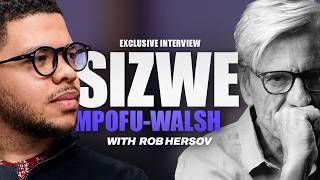
Robert Basil Hersov interviews South African commentator Sizwe Mpofu-Walsh about the failing GNU coalition government. They argue the country is stagnating under misleading narratives, that neither the ANC nor DA can lead decisively, and that South Africa needs an outsider technocrat with concrete targets like 4% growth and measurable education outcomes.
Chapters
We're stagnating, but we keep deluding ourselves that we're moving forward. And I think that's a very dangerous place to be because it's a place of complacency while you're in a crisis.
I understand the DA joining the GNU. They were told to by their donors to join the GNU at any cost.
As you say, most people see me through the lens of the most powerful and famous person in my life, who's my father, in case anyone didn't know. Advocate Dalin Bofu. I think the DA is going to be the biggest party in Joburg this election, and I think Helen Zille is going to do very well because the ANC has made it abundantly easy for her.
15 minutes later, he called me and said, Rob, why are you insulting me? I said, Gwede, yeah, what did I insult you? He said, the article. I said, no, Gwede, those are facts.
We got sold this dummy of Ramaphosa. 9 years later, we're still turning the corner.
I'm so glad you said it so I don't have to say it.
Yeah, there's another crazy idea I've had before, which is if you actually want to run South Africa, what you really need is—
I'm very, very honored, privileged to have Sizwe Mpofu-Walsh on the Truth Report show. And I'm sure all of you do know who Sizwe is and his extraordinary podcast, Es Sizwe Mpofu-Walsh X, correct? Sizwe, welcome. Welcome to Cape Town.
Thank you so much. You very graciously came on my podcast last year, so I thought I'd return the favor. Thank you for the invite.
I really appreciate that because, you know, you really have positioned yourself, I reckon, as the number one podcast in this country. You might not have the number one numbers yet, but how long have you been going for on your podcast? Not even a year or just two years?
Well, actually, it's closer to six, but the first four years were Experimental. Exactly. And, you know, it's testament to the fact that especially with digital media, it takes 3 or 4 years of consistent work until you finally start getting recognized. So I would say last year or the year before that, we started hitting bigger numbers and becoming a force to be reckoned with. But I actually started it in 2019, if you can believe that.
It is a force to be reckoned with. I think when I was on your show, you were just shy of 100,000.
Yep. Yep. Now you've done nearly 400 now.
So in a year.
Yeah. And I think we're in an exciting time for digital media in South Africa as well, because we are at an inflection point. Platforms like ours are able to truly influence, uh, probably in a bigger way than mainstream platforms now. And, you know, that gives us great responsibility, but also great influence.
You certainly have a responsibility and you certainly have huge influence. How would you describe your audience if you can?
It's the most fascinating audience because it's got very old people, very young people. It's got, actually since our interview, a lot more white South Africans.
Do you think that was me?
I think you are.
Or do you think it was Christo Wiese?
You may have played a role and Christo only, and then Helen Ziller just was the final push, but It's a really diverse audience. And that's something that gives me great joy. Age range, gender-wise, race-wise. But I would say the core is really concerned, informed, relatively young Black South Africans. But I mean, everyone's on there.
Interesting. Because I think Truth Reporters were at 115,000 in 8 months.
Wow. Okay.
Which I think has been pretty good.
You're not allowed to cross.
But we're not just one. Seeswell or one Rob. We're a broader range of commentators.
You're not allowed to beat us, by the way. You must stop.
I don't think we will. There's no chance. And who have you been your big hit interviews?
Oh, there was this Rob Hershoff guy.
No, not him.
Yeah. I mean, that was what, that's on over 600.
Did you capture him or did he capture you?
Yeah, no, I think we captured each other. Apparently.
Something like that.
What I loved about that interview is it, and I suspect this will do the same, it confused so many people because I think we, We're thought of on different ends of the South African extreme.
Yeah.
But the number of people who watch that, because it just cut across, it's very rare that you get media in South Africa that cuts across such a wide spectrum of the population. So that one was quite a breakthrough for us because it cast the podcast in a different light. I loved Christo Wiese, who you know, sometimes you sit down with someone and you just realize that they are what you hope they would be.
Beautifully said.
Yeah.
He is that person.
Exactly. And when you meet many, many well-known people, you don't always get that impression, sadly. But Christo was, I think a big one for us last year was the Malaysian Prime Minister because he came for the G20. It was a head of state. I'd never interviewed a head of state before. And to have that kind of stamp of approval from someone who's leading a country, sitting head of state, was a massive moment. But there've been so many. The Gayton interview was big.
Prince Mosele.
Prince Mosele. The first 1 million views. Was that your first million? Yeah, that was the first million. I've interviewed Jacob Zuma.
Who haven't you? Who haven't you interviewed? Who won't come on your show?
You know what's really interesting is for a long time I was called an EFF propagandist.
I didn't see you that way.
Yeah, exactly. And I'm used to this obviously because of the identity of my father and people identify. I don't know if you've ever had this feeling, right? But people identify you with your father. People thought I was an EFF propagandist. So for the first 5 years, people wouldn't come on my show because I was an EFF podcast. And interestingly, the one person I've never had on the podcast or who's never come on the podcast is Julius.
Have you invited him?
I have many, many times. And so I find that odd and sad, but I suspect he'll come one day. I have interviewed him on the SABC as well.
So I want you to tell the Truth Report viewers a little bit about your background because you made some hints at it. I watched a fabulous interview that you did with your mum.
Yeah. Yeah.
I'd had the impression about you that many people did because, you know, the Mpofu last name.
Yeah.
The roads must fall. History and other stuff. And I said, he's gotta be a bad guy. He's gotta be a bad guy. And then I, you know, a lot of my friends, Penn and others said, no, he's a really good guy. You'll like him. They said the same about Dudu Dizane Zuma, who I haven't met yet.
Yeah.
I mean, they said, Rob, you'll actually like him. I'm like, yeah.
Yeah.
But, and I felt the same about you. And then I watched it. I followed some of your shows, really enjoyed them. Then I watched the one with you and your mom and I said, okay, I like this guy. 'cause you said a few things that really resonated with me and I enjoyed it and learned so much about you. But if you tell our viewers a little bit about growing up and the mom and the dad and school, do you wanna give a 5-minute crazy?
And I mean, I think the first thing is that, as you say, most people see me through the lens of the most powerful and famous person in my life, who's my father, in case anyone didn't know, Advocate Dalim Bofu. And the interesting thing is that my upbringing is completely the contrary to what most people would expect. The first thing, of course, is that my parents were never married. And so I was actually raised by my mother.
And do you have siblings from that pairing?
No. So I'm the only child between—
Of the two.
Of the two, but the two have children. So I've got white brothers, I've got black siblings. So my family's a gathering of the United—
A real South African family.
Yeah, exactly. It's like the General Assembly gathering when we have family events.
And they're Walshes and Poffus.
Exactly.
You're the M'Poffu Walsh.
Born and raised in Joburg. And my mother was the warden of a university residence. And so the first place I ever lived was actually the Wits University campus where I now work and was an infant raised there. And then, you know, Throughout my life. So my father's like still training to be a lawyer at this time. He's far from a high-flying advocate. And my mother's a university lecturer back then. So, I mean, I wasn't poor, but my parents weren't rich at the time either. But luckily for me, throughout my life, they both kind of built themselves as I was continuing to grow. And so, um, I first went to a school that was, it was a private school, but not necessarily one of the elite private schools.
Junior school.
Yeah, yeah.
So not a Reg or Prudhoe.
Exactly. Yeah. Sacred Heart.
Like me, really. Yeah.
Well, hey, yeah, exactly. Exactly. So Sacred Heart was a wonderful place at that time because a lot of the struggle heroes sent their grandkids and their kids there.
Where's Sacred Heart?
It's in Observatory in Johannesburg. And so at that time—
Boys and girls.
Yeah, exactly. And a really, one of the first uniquely diverse environments in a South African school where, you know, a lot of these struggle, struggles. It was like struggle families sent their kids.
Yeah. Yeah.
And then over time went to St. John's and then my parents, you know, were really starting to do quite well for themselves and stayed there. Loved soccer. That was my first love. Loved music. I was in a hip hop and a rap group. One of the members of that group was AKA, who sadly was—
Really? You were in the same group?
Yeah.
What instrument or were you a singer?
I was a rapper.
You were a rapper?
Yeah.
Wow.
So there's some music videos out there.
Yeah.
Some music videos out there.
From St. John's, you went to Rhodes University?
I went to UCT.
UCT first. Okay.
Yeah. I spent a year in the rural Eastern Cape, underwent Xhosa initiation. Then I went to UCT, studied politics, philosophy, and economics, PPE.
Yep.
And then, then I went over to Oxford.
So did you do PPE at Oxford?
No, I did my master's in international relations. Okay. Master's at Oxford. And then PhD in international relations. International Relations. Yeah. So upbringing and parent-wise, although I never grew up with my father, I also had, it was paradoxical because we had a loving relationship. So it wasn't as if I never saw him or kind of we had, we had a distant relationship, but I just was never raised by him.
So we actually never lived together under the same roof.
Yeah, exactly.
So he was there when you needed him.
He was there. I think the most important thing that parents can give their children is the knowledge that they love them. And I never doubted that. So that kind of got me through the early years of not necessarily having a father around. But yes, I was raised by my mother. So it's always interesting to me when people are like, oh yeah, that's Dali Mbawfu's son. And I'm like, well, if you want to know where my views really come from, you should probably look at my mother because she's the person who raised me.
And your mom was an activist?
She was an activist. She was an ANC branch chair. She actually beat my father to that position in the early '90s. For which apparently he never forgave her. And yes, yeah, she was an activist, she was an academic and someone I'm very proud of, went on to build a business as well.
Your mom did?
Yeah, yeah, yeah. She has a business which is like a change management business, which is 30 years old now.
And when you left Oxford with your master's, what was your, did you come straight back to South Africa?
So it was interesting because, um, the first 2 years at Oxford where I did the master's, I was, I was largely there. And then when I started the PhD, I started coming back home, going back to Oxford. And then over time I ended up actually finishing my PhD, but living back in South Africa. So there was this slow transition where I kind of slowly moved back to SA. And you may have felt this, cause I know you also lived in the UK for a while, but I just felt that there was so much more to build here and that there were so many unsettled questions. You know, I remember going to, like, watching the House of Lords one day and there was this debate about badgers and I was like, I love this. Yeah.
Like, what is this thing?
Seriously? And it was like a big political issue about like badgers in the countryside. And I was like, we're still, we're still in the early stages of building this democracy and what it means and what it looks like. And there's just more at stake. And so, even though it's more comfortable there, there's, it means more to be here.
It's so vibrant living in South Africa. It's dangerous. It's exciting. It's an adventure every single day. So tell me, where is South Africa today? And I, let me ask you from a, you've spoken to so many extraordinary people with the broadest and diverse and deepest and new views in South Africa of all backgrounds, you know, from a Christo Wiese to whomever.
Yeah.
You hear it all. You ask the insightful questions. Where do you see South Africa today, politically and economically?
I must say, I have a rather grim outlook on where South Africa is right now.
Are you 4 out of 10?
I'm somewhere between 3 and 4, I would say.
I'm at a 4.
I agree with you. Well, and I think we're in the minority. And the thing is that we're in such a position of stagnation that when we move one inch, people start celebrating as if it's something.
Green shoots.
Oh, please. I mean, the amount of times we've had green shoots.
I know.
I mean, how long are these green shoots? These green shoots take 8 years to grow.
Correct.
I heard the president saying we're turning the corner. I'm like, how long is this corner? How big is this corner?
I think it's a circular corner.
8-year corner.
Yeah.
We are stagnating, but we keep deluding ourselves that we're moving forward. And I think that's a very dangerous place to be because it's a place of complacency while you're in a crisis, rather than either urgency to get yourself out of the crisis or ideally not being in a crisis. So I think we have a, a twofold dilemma, which is number one, people have not woken up. And I think particularly powerful business people, Even politicians have not woken up to the scale of the crisis.
And interfaith community, the church is also silent.
Absolutely. Everyone thinks we're kind of fine and we'll muddle through and somewhere in some distant future, we're going to be fine. And I just keep wanting to ring the alarm to say, we're not going to be fine unless something fundamental shifts. Now, what that is, is something like we just said, we all need to collectively build. We all share this political community. No one's going away. So somehow we need to come together to find what that future looks like and have a pretty fundamental conversation about remaking this country. But, you know, under Jacob Zuma, under Cyril Ramaphosa, and I dare say under some future GNU arrangement, I don't see any fundamental shift that is going to set us on a new trajectory.
I'd agree with you. And I think the basis of that, I mean, I'm not speaking on your behalf, but I'm saying I 100% concur.
100%.
We cannot move this forward under the current ANC. Yeah, no, absolutely. I mean, they are— if they're going to lead the next coalition, we are not going to make it.
And I think your contribution on that is a profound one to the extent that you were one of the first people to stand up within the business community, white South African, to actually say, I'm not going to be quiet about the governance crisis in the country. And many people may disagree about social issues and other international relations, we all have different perspectives, but I do think we can all agree that the ANC government has put us in an unimaginable chaotic crisis and we need to, they need to pay for that.
We have a political dynamic which everyone seems to be adhering to.
Yeah.
You know, it was extraordinary that the ANC after 30 years fell from majority to, you know, lead minority and accepted it broadly.
Sure.
I mean, there were outliers of the Gauteng community saying, we're not going to listen. We're going to keep running this as we did before, but that could change within the political dynamic. You know, we have the GNU partners.
Yeah.
And I would say, I understand the DA joining the GNU. They were told to by their donors to join the GNU at any cost.
Wow.
The main donors.
Yeah.
Because of MK and EFF being the alternative.
Sure, sure.
And so the DA joined the GNU at any cost and you can see the result.
Yeah, exactly.
They don't have their hands on the important levers of power.
Yeah.
All the main levers are still run by the ANC and ANC is still instituting its policy.
Yeah, absolutely.
Which I think has ground us into the dust economically. For that to change, you need a new leader of the GNU. And is the DA positioned to do that? I have my doubts. I really do. What's your view?
I also have my doubts. And we have an economic crisis. And I think if you stagnate for so long, it becomes a crisis. That's where we are. We also have a political crisis to the extent that we don't have, and this is one of the things that I do see with the people that I speak to, we've got no one who's able to capture the imagination of the country and get people excited about the future.
Other than you and me.
Well, and also capture, yeah, I suppose we also capture a lot of hatred on either side as well. So, but, and so it feels like we've got these huge crises that we can all see governance. I mean, water in Joburg is actually becoming becoming, you know, desperate, desperate.
Yeah.
The economy. And yet no one can fashion some collection of policies and aspirations that maybe borrow from left and right that can tell us how for this specific context we're going to move forward in the future. And so more and more parties, and yet it feels like fewer and fewer options. And I don't see that leadership coming from the ANC. I don't see it coming from the DA. And I also don't see it coming from the EFF or MK. I'd agree. And so one's left in this position where you just don't know what to believe in unless something new is built. But of course that takes time, could take 20 years, could take, you know, a lot of money as well. So this is why I'm at a 3 or a 4 because I just don't know how we dig ourselves out of this rut.
It is a gridlock.
Yeah, absolutely.
There's no question.
Absolutely.
And I think, you know, for the, take the DA just because they're the largest minority partner after the ANC, if they threw their toys out of the cot and said, we're walking out because nothing's happening, I'm not sure that's a solution either.
No, I agree. I agree. And I think, I think they should have pushed harder.
I agree. I think Cyril on certain issues. Yeah.
Yeah. Cyril gave them crumbs and I think they, they took the crumbs. I mean, to have 6 ministries. Is very tough from—
And not particularly—
I know. And then he fires Andrew Whitfield and just, you know, they do nothing. And it's interesting you bring out the donor angle because clearly, you know, they were—
They were scared.
Yeah, I can imagine. I still, I mean, if I'm the DA, I still think I can push for more even now, you know, and I'm thinking with this leadership transition, I would be, I'd probably wait to the local government elections where I actually think the DA is going to do quite well.
Agreed.
And then use that leverage to say the national picture also has to change. Otherwise we're not giving you things in Joburg or whatever. But hey, I'm not a DA strategist, so.
No, I don't want to put you on the spot with this question, but Prince Michele, in an extraordinary, I mean, one of your best.
Oh my goodness. Yeah.
Said he grudgingly would back Helen Zille for Joburg. Yeah. And I get that, you know, emotion and belief. Would you? Do you agree with him on that? Do you think there isn't really an option? Let Helen do it, give her a shot.
I wouldn't publicly endorse any candidate. And I think probably from my position, it's not a good idea to do that. But what I will say about Helen Zille in terms of a perspective of analysis is that I think she's going to do very well in Joburg. And I think that the ANC will only have itself to blame because I know what's going to happen after the election. The ANC is going to blame the voters and say, how could you vote for Helen Zille? And they're going to talk about the struggle and liberation history. And the fact of the matter is that with all that capital that they had in the bank, they squandered people's allegiance. And the dire service delivery situation has put people in a position where they are prepared to try some crazy experiments for them.
Which would be Helen Zille.
Which would be Helen Zille. Yeah. So I have consistently said, I think the DA is going to be the biggest party in Joburg this election. And I think Helen Zille is going to do very well because The ANC has made it abundantly easy for her. I mean, all you have to do is walk around and point out the breakdown. So, you know, I interviewed Helen. I've said to Helen what I disagree with her about, what I think the DA has done well. I wouldn't endorse her, but do I think she's going to do well? I think she's going to do very well in Joburg.
Cyril Ramaphosa has to stand down as head of the ANC. Who will replace him? Because it's not an easy— there's not There's no great bench there either.
True. I've got something for you on this. Cause I was on the—
Cause you asked me when we interviewed me and I said, I think it's one of two women, but I haven't got the names yet. One's the speaker, but I don't know who the other one is.
I think I might surprise you cause I was on the ground at the NGC speaking to a lot of people, a lot of family, friends. Um, and it's quite interesting going back to ANC events. I think Mbhalula is the front runner. By a mile, actually.
Okay. Why? Popularity?
So based on what the people offline said to me at the NGC, and remember, you've got regional leaders, you've got national leaders there. You've got, um, you've got the biggest gathering of the party outside the NEC. So the whole party comes together and then you can get the temp. And of course, those are the people who elect the leader. So you've got the temperature of the ANC there based on what they said. Number 2. In the buildup to the 2007 Polokwane Conference, the 2005 NGC was a kind of barometer. And there was this thing that has now become legendary called the singing test at the NGC. So when Zuma stood up, the entire hall of all the leaders of the ANC stood up and sang. And then, you know, Mbeki, not as much. This time it happened to Mbalula, to everyone's shock. As soon as he got up on the podium, I mean, it was quite a groundswell. And even Mashatile, I mean, I was very shocked to see Paul Mashatile got a very lukewarm response. And a lot of people were saying, look, he's been a leader in the party for a long time, but we're concerned what would happen electorally if Mashatile took over. So based on my conversations with people on the ground offline, but also based on the temperature of the room. When all the leaders were there, it was kind of like a singing poll. Mbhalula looks, looks strong right now, I must say.
Do you think there's any chance at all of a Patrice Motsepe throwing his hat in the ring?
I don't know. And I think only Uncle Patrice knows that. But if he does, he'd be a formidable candidate. And I think that's the one thing that could tip the scales.
I agree.
Yeah. Uh, but I think really He's the one who needs to decide. I think he probably is choosing between possibly president of FIFA.
Which would you choose?
I would definitely choose president of FIFA.
Yeah. Who's your football team, by the way? South African and international.
I'm a big Liverpool fan.
And here?
It's weird because I played for the Pirates Academy, but my family supports Chiefs. So I don't know. I'm Switzerland when it comes to— Is it?
Why are you called the Chiefs? Oh, maybe that came later.
There you go. There you go.
Yeah.
So, I mean, what I'd like to see in the short term is a true GNU. Crazy idea, but what is a true GNU? Hear me out on this, right? So the parties in parliament come together and they elect a president from outside politics, right? Maybe a Patrice or someone who they—
Prince Michele.
Well, yeah, that—
he's outside of politics.
That's true. That's true. Um, but a figure who commands respect across the aisle.
Right.
And they agree it'll be an outsider, but they will vote that outsider in. And then you, uh, you have all the parties proportionally represented in cabinet, in a smaller cabinet.
I love what you're saying.
Yeah. And, and, and then for 5 years, heads down, petty politics aside, let's govern together and then we'll pick up petty politics after that. That for me would be a true G&U.
Here's the only thing missing in my view as a businessman.
Sure, sure.
You merged, let's say, 3 businesses together, 'cause we're talking about more than 2. Mm-hmm. The key job of the chairman or the CEO in creating the merger is set a mission statement on day 1. And what this current G&U hasn't had is a mission statement.
Absolutely.
So, you know, ANC with its, in my view, antique mad leftist pre-Soviet ideology, and you have the DA with its kind of American Democrat liberal approach to life. I'm a Republican, by the way, as you probably know. I think the DA's a bit lefty for me.
Wow.
But they don't have a mission statement. Absolutely. You know, the international Durco side is captured, my count, captured by Islamists. My view. And then the, you know, pox tar, I don't know, is he a capitalist? Is he a communist? I have no idea. There's no mission statement to this GNU. It's like, try and get on without throwing our toys in the cot and bumble along and it's not working. For your GNU, which I absolutely love, they would have to have some sort of mission statement.
I agree with you. And that is an improvement on the idea because I fully agree with you. I can't believe— how long are we into this GNU now? It's much more than a year.
It's nearly 2, right? 2 years and 3 months.
Yeah, sure. And no mission statement, no vision, no policy, no, these are our goals by this time. It's just sailing along and letting the oceans drift and we drift with the oceans and there's no pressure really, apart from voices like ours.
So, Frans Prunier says an interesting thing. He says it's actually a very good thing for South Africa. Democracy's working and the DA strategy is smarter than one thinks. Here's his argument. He says, for the average voter who are kind of disillusioned with the ANC, have left the ANC, but not joined another party or are ready to leave, but What's the alternative? A lot of people in that camp.
Yeah.
He thinks two-thirds of the ANC would leave voters. They look at the DA and beforehand they might have thought, why come, you know, take us back to apartheid. You know, we'll lose our job. We'll lose our social grants. They're now looking at the DA well-behaved in the GNU, pushed back on VAT, not much else. And they're saying, well, actually, maybe they are could be quite good. They're behaving well. They're good at governance. They're not going crazy. They're not going to reintroduce apartheid. And the DA is kind of playing a longer game saying we are a sensible option. That's France's view. And I can buy into that in some ways. I mean, I don't know the electorate well enough, but yeah, for your GNU, there'd have to be a lot more. They'd have to set a mission statement and stick to it.
Absolutely.
Which means foreign policy where they have to be unaligned. They have to.
And let's go further than a mission statement, a set of achievable outcomes, which if they don't achieve, we all agree they failed and they must resign.
As ministers.
Exactly. You know, we will reach 4% growth by the end of year 5.
We will educate our children.
Exactly.
Maths results have got to improve. They've got to read for meaning, whatever it is.
Exactly.
Yeah.
Otherwise we all resign, you know, right now. And France's point is, is, is probably correct from a DA perspective to the extent that I think they will be the winners of the GNU because for the same logic.
In 2029.
I think they're going to be the winners. Yeah. And even now in 2026, I think they're going to be rewarded. Um, like I say, in Joburg, I think a lot of people have started coming over, but for the country, I still just don't think It's going to go anywhere. Yeah, this GNU is producing and I really take issue with this green shoots argument, which I see coming back again.
Me too.
I couldn't agree with you more. I mean, we've been here before. How many times are we going to fall for the green shoots?
I'll give you some green shoots that aren't green shoots. Our rand has strengthened.
Yeah.
But that's because the dollar's weakened.
Yeah, they're two currencies. So now we give ourselves credit because one of them— no, it just doesn't make sense.
Foreign direct investment is showing interest.
Oh my God.
But they— nothing's happened.
Yeah, exactly.
You know, the stock markets and the bond markets have never been stronger. That currency, you know, the commodities have gone through the roof. Exactly. Benefit.
Sure.
There are no real green shoots.
Absolutely.
These are fake green shoots.
And green shoots for me would be, okay, unemployment has shown consistent downward—
quarter on quarter.
Yeah. Trajectory over a year. Growth is at an agreed level.
2% plus.
Exactly. I think the president said in his 2025 SONA speech that growth should be at 3%. And now I see people celebrating 1.5%. So I'm like, well, what is the goal?
That is growth.
Yeah.
Because our population growth is 1.5%.
Exactly. So, and really 3%, this country should be growing at 6%, 7%. So, you know, an agreed target. And I feel that would excite people, you know, a government that actually said, This is what we're doing. And if we don't do it, we failed. But right now it feels like middle muddle, fiddle faddle.
And let's talk about unions for a bit. Cause, you know, it's part of the tripartite axis of evil in my view, but alliance in other people's view. Are they a force for good or are they holding the country back? And there are different unions. I think the teachers union is by far the worst in this country. And that's But give me your view on the unions, not theoretical, practical.
Yeah, probably, probably somewhere in between those two. I do think unions have done good things, even, even in the recent past. I do believe in workers' rights. I do believe in, you know, I do too. Yeah. People getting decent wages. And, um, so I think unions have continued to push for those things and that's a good thing. But I think the union movement lost its way when it confused its reason for being with political power. And I think the ANC's failures have in large part become the union movement's failures. So where I criticize the union movement most is for actually being a shield for the ANC, whereas workers in South Africa should be one of the primary stress points for the ANC.
And should stand alone.
Exactly. And the ANC government has made life worse for the poorest South Africans, those who earn low wages. And the union movement, instead of shouting about it, has actually, you know, allowed the ANC to get away with it, cabinet positions. So I do think some kind of massive decoupling would have served the union movement, but look, COSATU is in quite a crisis. All the unions linked to the ANC have been in this legitimacy crisis because they have, you know, not spoken out enough about government failure. And that's where I fault them.
Like, we ask about the communists. To me, it's mind-boggling that anyone can still truly believe in communism in this day and age. I mean, I'm mind-boggled. I think you— I won't say what I really think about someone that believes in communism. Do you think South Africans' communists are really communists or is it just political expediency and sounds like, you know, wear a good t-shirt and a hat and it's your club, but they don't really understand what it is and don't believe in it.
I don't know. I mean, I just don't know.
I don't know either.
Yeah. You know, I think communism as it exists today is probably, probably some variation of like market capitalism meets state intervention.
So I think you're absolutely right. It's just a bloke and a witch, you know?
Yeah, exactly. And I would say, Rob, I will grant you that I think we need to, I don't know, there's a danger maybe of getting out of these labels, but I do think South Africa needs some combination. I don't know what the combination is. But it probably needs some combination of free market logic in some places where there isn't enough market, but down the line, maybe state where there isn't state at the moment. And, you know, I was, um, protection at the basic level.
Exactly. Agreed.
And I feel that we've, we've become so bogged down in our, in our ideological, um, positions that we're not seeing the opportunities and other countries. Are freer and they do state intervention that no one has ever seen before and it works, or they liberalize the market in a way that no one's ever seen and it works. And we're missing those, those new interventions, you know, um, I was just in Doha recently. I don't know if you've traveled there, but I was just blown away by what's possible, you know, and they've got a mix of state intervention, but it's, it's, it's 21st century. State intervention.
Plus a lot of countries like that.
Absolutely. You know what they've done with, um, you know, their gas resources. Um, I truly believe that there are a lot of assets in the South African balance sheet that we can consolidate in wise ways, which we haven't done before. And we can draw, uh, from international experience about, you know, how we put those assets together. I was looking at our property portfolio, which I've been talking about for a decade. You know, what do we do with our property assets as a country? And how do we sweat those assets in a way that maybe brings revenue and increases, you know, our, our, uh, or improves our revenue position as a country? So I think the state can do interesting things. Does that mean we need to continue to own the SABC as a state? Probably not, because maybe we can do other cooler things as a state. So I just feel like the whole, the problem is. The old model for me, rather than any specific ideological—
and the old model was also inherited from the National Party in the previous era. I mean, they centralized everything in Pretoria, created the state-owned enterprises.
And we keep funding the same National Party state-owned enterprises. Yeah.
When it comes to the economy, there are some easy fixes in my view. So let's take mining. We've gone from one of the top 5 mining countries in the world to in the 20s and 30s simply because of ideology. And much as I like Guaidó and much as he takes my calls and we call each other, he needs to go.
I'd love to hear those calls.
Well, I wrote an article saying, dear Guaidó, open letter, 6 weeks ago saying you've destroyed the mining industry. We haven't— tell me when last, when a mine opened in this country.
Yeah, no, absolutely.
And it's a disaster. And our employment, it's gone. We've halved the number of people in mining.
Yeah.
And it's Guedes' antique ideology. And he called me, I sent him the article 15 minutes later. So I think he did read it for meaning. 15 minutes later, he called me and said, Rob, why are you insulting me? I said, Guedes, what did I insult you? He said, the article. I said, no, Guedes, those are facts. He said, well, we're never going to agree on ideology. I said, it's not ideology, it's facts. You're Madala, I'm Madala. It's time for us to step back.
Yeah.
You got quite upset.
No, it's true. And I would love to see a situation in which we found a way to use our natural resources better. Exactly. Because I do believe we can create a utopia in this country if we find the right formula. And other countries have done it. It's not impossible.
And it's not difficult.
Indeed. Indeed.
Yeah.
And yeah, how do we use our resources? I don't, I'm agnostic on the model, but I'd like to see our resources benefit the community.
I think what you want is a mixed model.
Yeah.
And I think that mixed model would definitely get us to 3, easily 3, 4% economic growth.
Yeah, absolutely.
I think the economy's fixable. I think even though a lot of infrastructure has been broken, it's not beyond repair.
Yeah.
You know, you can see in the Western Cape as an example, the rail network. There's this blue train that runs from Cape Town to Simon's Town on time, clean, efficient. It can be done. The Metropolitie are doing an excellent job. Do you think the argument for decentralization, um, not cultural decentralization, which I think Ernst Roots and others are asking for, but decision-making down to the municipalities, to the provinces makes a lot of sense. So remove a lot of decision-making from Pretoria?
I'm not sure. I think what would probably happen is that it would create other problems. And for me, so actually I don't think it's a question of centralization or decentralization. I think it's a question of effective governance. So, um, both levels. Exactly.
Yeah.
So part of the reason why decentralization has been good in Cape Town is because the DA has governed well in certain areas. And you just can't dispute that, you know, and I sound like a DA spokesperson. No, not at all.
But you're practical.
You know, people say to me, and I fully agree with them, you know, there's still an intensity of poverty in the Western Cape and it, it, there is, there's no doubt. Yeah, exactly. And, um, you know, people travel far distances. We haven't done anything about apartheid spatial planning.
True.
But there are pockets of excellent governance. The problem in a place like Joburg is that even the places that are supposed to be governed with excellence even aren't, don't have excellent governance.
Like Sandton.
Exactly. So you don't even have like an island of excellence anymore. There's just nothing, nothing there. So, so the question is not to say, so the solution for me is not necessarily, um, decentralizing. Cause if you decentralize, in fact, the ANC, might actually get more power in the decentralized areas. Um, and they would be governed even worse. I think it's just making sure those areas are governed well. I'm not, again, ideologically opposed to decentralization or centralization, but I don't think it would kind of be a panacea. Yeah. But I am opposed to, uh, the siloing of cultural communities.
Me too. Yeah.
Which I think is, is a very dangerous—
I think that just exacerbates problems that are happening. In other parts of the world.
Yeah. I think that's a dangerous idea.
Let's talk briefly about foreign policy. So I don't want to know if you're pro-Israel, anti-Israel. I'm not interested. Just where should South Africa's foreign policy— at the moment, it's the ANC's foreign policy. It's not South Africa's foreign policy. It's sort of anti-West and pro-lunatic regimes, my view. Where should it be?
I fear we, we, this, this may be one area where we, we probably disagree, but I actually, I think it should be roughly, roughly where it is.
So BRICS, BRICS direction.
I don't see us as BRICS only. I think we do retain strong relations with, I think we've got a balance. For me, there's no doubt that there is a power shift going on in the world right now. I do think the US is still the most powerful and important country, but I don't think it's the only game in town as it used to be after 1989, for example. China has to be reckoned with. India has to be reckoned with. Russia has to be reckoned with militarily, if not economically. So I think we need to play a game of balancing against these different power blocs and getting the best deal for ourselves.
So unaligned in a way.
Yeah. Yeah. Now that is the strategic thrust of South Africa's foreign policy. In practice, there may be issues where we get it right or wrong. But for me, it would be not throwing our entire lot in only with the US and Europe or with BRICS, but playing a game of what the Indians call multi-alignment. I think the best foreign minister in the world right now is Jaishankar of India.
I agree. Yeah.
And they—
I agree.
Absolutely.
And the last few days, they've said to Russia, we're going to start buying oil and gas from America.
Sure.
The Russians couldn't believe it.
Absolutely.
They're taking a better deal.
They are smart. They are. And they continue because at some point they were taking oil from Russia, as you say, and they said to the Americans, if you can give us a better deal, great. But if not, we're going to keep doing it.
And it's happened.
And they got the better deal. So for me, we should be doing that. We should be doing that. And I don't think, I feel, I don't feel we've done that right. We may posture. In ways that give the broader population, you know, these fuzzy feelings, but are we getting the best deal for South Africa? I'm not sure.
I'll take an example. So I'd agree with you on China, India, Russia, but it makes no sense whatsoever to have any alignment with Iran in my view. All it does is upsets America, our second biggest trading partner to the nth degree, and we get nothing for it. Now, I fundamentally believe Iran is bribing members of the ANC, my opinion, and they're just following the money individually. But it makes no sense for South Africa. There is no real trade between Iran and South Africa, whereas America can bring us huge value. So that to me is ideological idiocy. But I do agree with you on the Russia, China, and India side. Less Russia, because I think that— particularly weak. We have a big trade deficit with those countries.
Yeah.
And we have a trade surplus with America. Sure. So it makes no sense to me. We can get, we can, we can get a way better deal from America. So why not take it?
Yeah, I agree. And certainly right now, obviously what America takes a lot of our minerals and, um, what is it? Automotive that goes that way. So, um, But I do think there's a question about what the future economy looks like as well. So we can't, we shouldn't be trading in such a way that we benefit in the present without losing the possible future.
Where do you think the economy should be in the future? And I'll just throw something in. We are de-industrializing. If you look at our, if you look at the news every other day, smelters, turbines, you know, TransAlloys and ArcelorMittal are closing factories. Because we can't make them work.
Yeah.
Our electricity is too expensive. The unions are intransigent. And I think it's really bad news that we're deindustrializing.
No, it is.
Where should we be in 20 years' time? We can't be a services economy only because we, we can't, we won't employ enough people.
I fear that that question is beyond my intellectual pay grade at this point.
I'm not sure I could answer that.
Yeah, exactly. Um, it feels like this economy is trying to do all things. And be all things to all people. We don't have a specific focus. Um, and the, the examples are out there, you know, if this economy is really going to punch above its weight, we have to be giving things to the world that they want that only we have. Obviously we have these mineral, uh, endowments that put us at an advantage, but then we don't know what to do with them.
Agriculture.
Agriculture. I mean, one would think, and to be fair, I think that's going relatively well right now compared to what it was, but it's nowhere near where it needs to be. So I fully agree. We need to industrialize. We need to find industries. I was going to say labor intensive, but we don't know where the future is going to be of labor either. But finding what South Africa's unique selling point is to the rest of the world and really doubling down on that rather than just being all things to all people and trying to please every domestic and international audience.
On the corporate community in South Africa, I mean, you've said, and I've said that, you know, they really don't have a voice. Or it doesn't feel like they're speaking up. I've said that I feel they've been co-opted by the ANC. You know, everybody was, you know, wah-wah, CR17.
Oh my goodness.
We love Cyril. He's a businessman.
Yeah.
And look where that's taken us.
Yeah. Nowhere.
It's taken us to limbo.
Yeah.
Do you think the corporate community is failing in its duty to stand up and give direction, for example?
Yes. And I would go one step further, Rob. I would say the New Dawn and the Ramaphoria moment was the single biggest scam we have seen in democratic history in South Africa.
Other than Al Gore and The Inconvenient Truth.
Exactly. And it was a conspiracy, I'm afraid to say.
Couldn't agree with you more.
It was a conspiracy of business, of media, and of politics all at once. And that's an unbeatable combination when you get media, big politics, and big business singing to the same tune, you can drown out the entire population. And that's what happened. We got sold this dummy of Ramaphoria and, you know, 9 years later, we're still turning the corner.
I'm so glad you said it so I don't have to say it.
Yeah. Yeah.
I couldn't agree more.
And I agree with you as well. I think corporate leaders have allowed themselves to be captured. I think what happened in the Zuma years is that the state got captured by big business.
Really?
I think in the Ramaphosa years, big business got captured by the state. Interesting. Yeah. And the Ramaphosa agenda captured corporate headquarters. It captured media headquarters and they all started singing to the state's tune. Where their role was to push back against the state.
Let me just push you a little bit on the, on the Zoomer one. Yeah. I understand the Guptas took advantage of, of Zoomer to a trillion-dollar degree.
Yeah. Yeah.
But which other corporate?
Because, well, that's, that's probably fair.
Yeah. I mean, I was, I mean, it was Bain and yeah, I was SAP and things like that.
Yeah, exactly. I mean, I think the Gupta Empire, yeah. Yeah. You know, in a well-documented way, played the piper. Yeah.
So the corporate community has failed us. I mean, I really have. There are very few business people, I can count them on one hand, that have stood up and called out the ANC and called out Cyril. The rest basically jump how high, you know? Cyril's got his favorite 5 or 6, and I won't mention names. He says, please, will you travel to America and work out a deal? Or, you know, will you handle my COVID relief fund for me? It's the same people.
Okay. Wow.
Wow. All went to private schools.
We'll chat offline.
We could chat offline. But I don't see them standing up again. I don't see them doing anything this time around. Yeah. The faith, the interfaith community also has been silent. In 1985, the Engierkerk stood up and said, we cannot stand up and support apartheid anymore. We cannot hide behind the National Party. and we believe it's unsustainable. And that was one of the cracks in 1985 that, you know, was the beginning of the end.
Yeah.
The rapid beginning of the end.
Yeah.
Where's the faith community now? I don't hear anyone speaking up.
Yeah, it feels very, um, divided, very, uh, factionalized. And yeah, I, I just don't see it really speaking about any specific issues with one voice, bringing different faiths together and then pushing government in, in a specific direction. So that's sad to see, because as you say, there's a proud history. I mean, in the '80s as well, you know, faith communities pushed the anti-apartheid struggle. So yes, we find ourselves—
and internationally.
Indeed. Indeed. And so we find ourselves in this rut again, which we keep coming back to. And it's such a difficult place to be because no single individual can pull us out of this rut. And that's, that's Couldn't agree more. That's why I'm here, because if we don't have these conversations and bring people from different parts of South Africa together, then we're going to stay in the rut.
So do you think, and would you join a group of extraordinary South Africans? Let's say hypothetically, you've got to have an undergraduate degree. You cannot have been in politics before. So you can't bring a moosie or a, yeah. Yeah. Bontu Holomisen.
Yeah.
Or a Gaitan or an anyone or an ACDP, a group of extraordinary people. Let's call it your cabinet of 16 cabinet ministers. Let's go half.
Yeah.
And you identify, you know, Cesar and Pofu Walsh, head of foreign affairs, you know, Prince Michel, head of whatever.
Yeah.
Do you think that could be a new Momentum, a new Pol, a new political party? That people would subscribe to, technocratic with a mission statement.
Yeah, I'd love to see that. I'd love to see that.
And pulling behind it the political parties that would survive 2029.
That's interesting.
Would you join it?
I don't know if I would join it because I'm still loving this media work. And I do believe in the separation of church and state. Yeah. When it comes to media and politics, but I would, I would, I would support it through my, through my platform, but also offline. I mean, I'm always interested in conversations. I think we should all be open to those conversations as South Africans, ready to speak across different aisles, speak creatively about the future. I'm always open to do that as well. There's another crazy idea I've had before, which is if you actually want to run South Africa, what you really need is 200 people in parliament.
Right.
That's pretty much it. Okay. Right. Because—
So half the size.
Exactly. Because cabinet is picked from parliament except for 2 seats. So it has to come from parliament. So all you need is a parliamentary majority. So what you could then do is just say, South Africa, here are the 200 people, put them in parliament, whatever it is, if it's a party or into 200, some collection and back these 200. And if those 200 got into parliament, then you've got your majority.
I love this idea. I love it. I love it, love it, love it. What we should do is pull a few people together and put the 200 names up and see what it looks like and just say to South Africa, what if these people were your parliament? And from them, you choose the cabinet and from the cabinet you choose the president. Do it the other way around. Love this idea. Yeah.
Who are the 200?
I could throw in a few names there.
Yeah, indeed.
I wouldn't want to be there. I'm telling you right now, but I'd want you to be there. How about that?
I appreciate that.
Tell me quickly about home life.
I suspect many people would be shocked, but hey.
You or me?
I don't know.
See, tell me about home life. You're married to a beautiful Muslim.
I am.
Daddy.
I'm married, yeah.
Children?
Yeah, I've got a second on the way. Second boy. Lovely. He's due in April. So, father of soon to be two boys, hopefully. Yeah, I've been married for 14 years now. I met my wife at UCT. She's a wonderful woman. She currently works at the Nelson Mandela Foundation. And we actually were on the SRC together at UCT.
I was SRC as well. Really? Yeah.
Oh, I should have looked for you in those pictures. Wow.
I was there with Gareth Ackerman, Gary Bull. I can remember some of the people there.
Interesting.
I was the least activist person on the SRC.
Really?
I sort of represented the, you'll be embarrassed to hear this, but I stood on a position of ordinary students, rugby, and nobody liked me, but I got elected.
There we go.
By a man, big mandate.
Really?
Yeah. Wow.
That's something I'd love to—
And those are the days of like storming on the streets and, you know, anti-apartheid was quite active. So you were SRC, you met her there. She was in the SRC.
Yeah, we were on the SRC.
Fell in love.
Fell in love.
University sweetheart.
Indeed. Uh, got married and we've been, we've been married ever since.
Are you a man of faith? Do you—
I am a man of faith. Um, I grew up Christian, similar to my life in many different ways. I've seen lots of different sides of things. I currently subscribe to the Islamic faith, but I grew up Christian as well and started to see a lot of the intersections between those two religions. The more I read into Islam after I'd met Samer, So I'm not puritanical about my faith. I'm not trying to, you know, shove it down people's throats, but I do believe in a spiritual life and I do believe people should pursue spiritual thinking, spiritual thought. I think it's a key part of the human condition, even if that's agnostic thought or even atheist thought, you know, just thinking about things that are, that transcend the physical.
Do you know why I love the word faith?
Yeah.
Is because if God and religion was proven, factual proven, beyond doubt, you wouldn't need faith.
Exactly. That's the whole idea.
That's why faith is a beautiful word and a beautiful thing. That's why I asked, are you a man of faith?
Yeah. And I believe there's a lot of beauty in many and all faiths. There's beauty in the Christian faith, you know, which I've seen. There's beauty in the Islamic faith. There's beauty in the Jewish faith, from which those two other faiths in many ways spring. Hinduism has, you know, fascinating thoughts. You know, I've read the Bhagavad Gita and it's just an incredible text, which is even older than all the other texts. So, and South Africa uniquely brings those faiths together in a way that, you know, is very unique. So I am, I'm a man of faith.
Are you a man of sport? You love your football. Do you follow rugby?
Well, football is my faith. So Liverpool is my ultimate faith. But you are a Springbok fan? Yeah, no, of course. No, big Springbok fan, big Bafana Bafana fan, um, Liverpool fan. And yeah, I just can't decide on Chiefs versus Pirates for earlier reasons.
You know, I'm the guy that converted Gaten McKenzie from being an All Black fan to being a Springbok fan. Really? Yeah, this is before, before it was probably 5 years ago before. And I invited him, we were at down in Camps Bay watching rugby. He was there and I said, Gaten, I've got you a present. Bought you a Springbok, quite a large one.
He's quite big.
I got you a Springbok rugby shirt. You're now a Springbok fan. He said, you're 100% right. I'm now Springbok. That was the day.
Look at that.
Because a lot of colored people and others in South Africa still support the All Blacks.
Yeah. My dad used to say to me, he's also a big Springbok fan now, but I remember him saying to me like, this is why people used to support the All Blacks.
Yeah, I understand that. I get it.
Funnily enough.
But not anymore.
Just exactly. Just on the meeting people, I must say, when, when Gaten came for his interview, I've never seen a more consummate politician.
Like, he is a natural.
Everyone was eating out of the palm of his hand, laughing, like the crew, the, the, my producer, everyone. Sorry to throw you under the bus, but just like, he's chomping. I was like, Ah, now I see what people mean. Just in terms of political skill, raw political skill. I was like, in terms of everyone I've interviewed, I would say he's the person who stood out.
He's a character and he's extraordinary. And there are always things that surprise me. He'll quote, he'll throw a quote out and I go, that's Ryan Holiday, a Stoic. You know, he's got poems, he's got quotes. He's well-read. He's an extraordinary human being. Are you a singer or a dancer?
I'm a rapper, as I've told you.
You're a singer. Okay, good.
Yeah, there we go. Yeah.
See, the final thing, what question should I have asked you that I didn't? Is there one?
That was a pretty good one. Yeah.
That was a pretty good one.
I love that question and I feel it—
I should have prepared you for that. It was a little bit unfair to throw it at you.
No, no. You should have sent me that question and I would have had a brilliant answer for you.
I should have. I only thought about it now.
Yeah. I like, you should ask that to everyone. That's a great one.
Um, I mean, is there a hobby or a, or something, you know, when you're quiet and on your own that you dream about, think about something?
Yeah.
Is there a passion that we don't know about?
I think music, music is a big one. I'm currently making an album for my wife. So that's something people don't know. So, uh, I was a rapper, music producer, made a lot of music and I've always made it, but I've just been too busy to to really do anything with it. But I've always harbored the passion. So I have written this album, which I'm currently making, and I want to produce it as a gift to her, but also as a way to kind of still carry on the musical passion.
And you're going to release it?
Yeah, I'm going to.
Okay, good.
I'm going to.
Good. So it's not just for her. We can enjoy it.
Yeah. Do you, do you have any?
I write poetry.
Okay. Yeah. Yeah.
I tried cartooning, but I found I'm not skilled enough. By the way, I'm reading a book about Leonardo da Vinci. Uh, from Walter Isaacson. Have you read that one?
I've heard Isaacson speak about it. I love Isaacson.
I'm reading it right now. Really?
Wow.
It's absolutely wonderful.
He's such a great biographer. Yeah.
It's a beautiful book.
I read the Elon biography that he did.
Do you know he had ADHD? He was left-handed. He was gay. He was a vegan. Um, he couldn't really finish projects. He is an extraordinary human being.
A polymath if there ever was one.
A polymath. Exactly.
Yeah.
Yeah. What book are you reading at the moment?
That, that's what gets me out of bed, by the way, like combining multiple different fields.
Science and art.
Exactly. At any given time.
What book are you reading or books?
I brought, I brought Nausea by Sartre with me, um, here on this trip to Cape Town. There's a great book called Entangled Life by Merlin Sheldrake. It's about these biological structures that are neither plants nor animals. But are everywhere in nature and how they work. It's just mind-blowing and brilliantly written, like on, uh, I think it got shortlisted for a prize. So that's also a very good one. Um, there's an interesting book on Jan Smuts by Bongani Molunga, who's a professor at UJ, which kind of looks at Smuts and reinterprets him for the present, but in a very, very careful way. So I'd also recommend That, which I finished late last year.
Sizwe, thank you for everything you're doing. I mean, tell everyone how best, please subscribe to Sizwe's incredible SMWX YouTube channel. Let's get him through 500,000?
400,000?
400,000?
390,000 now.
Yeah, 390,000. Let's get him through 400,000.
Come on, guys. Thank you.
And Sizwe, thanks for everything you do. It's a hell of a appear on it. And I really appreciate you coming on board here. And I hope to see you in a position of influence, relevance, compassion, and intellect helping to fix this country.
Thanks so much, Rob. The pleasure was mine.
Yeah. Enjoy Cape Town.
Good to see you again.
More from Robert

MAGNUS HEYSTEK & ROB HERSOV: How to Protect your Offshore Money from the South African Government



BNC#8: Rob Hersov Q&A - A brutal reality check on leadership, voters, and the economy






South African Scientist Exposes The Scary Truth Behind The National Water Crisis
