TONY LEON: The Future of the DA After Steenhuisen
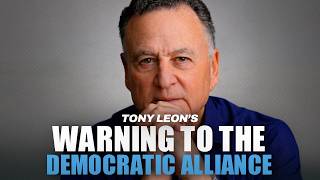
Tony Leon, former DA leader, warns that the party's GNU participation has muted opposition while internal rivalries between Steenhuisen and George weaken it. He won't seek a third term and urges the DA to focus on policy over personal attacks, arguing it could capture 26-27% of the vote by 2029 if it clarifies what it stands for.
Chapters
Has the DA voice been muzzled by its participation in the GNU?
Will the DA, regardless of what percentage it gets, in 2029 be the largest party in your view?
Gaten McKenzie, he is doing some significant damage to the DA in rural areas in the Western Cape, Northern Cape. This idea that somehow you can redistribute as the ANC does without economic growth. Is economically illiterate.
Are there two DAs? The Cape-based DA and a sort of upcountry DA? Or is that a fallacy? What's going on in the DA right now? It's the, what I call, handbags at dawn. Dion George, John Steenhuisen, because in the scheme of things, in the big picture, The fight that they're having is so tiny and irrelevant. People are diving onto it because they want to see the DA's nose rubbed in the dirt. I get it. But in reality, the ANC have broken our economy. They break so they can steal. The amount of fraud and corruption is in the hundreds of billions, even trillions of rand. And yet, John Steenhuisen is being accused of misusing his credit card for an Uber and a Deliveroo, well, you know, or whatever the accusation is.
The situation has become intolerable. I'm being pushed out and it is no longer feasible for me to remain in the party. I cannot remain in a party that has, through the actions of its current leader, John Steenhuisen, been captured by the African National Congress and other criminal interests.
Is this a schism in the DA? Will the phoenix rise out of the ashes with a new leader? What's going on?
So I don't know, except what I read, the same tea leaves that you're looking at. And I certainly haven't involved myself in it, nor am I going to. And I'm very wary of, you know, I was the leader for 13 years, so sitting and passing comment and judgment on my successes is not my shtick. Having said that, and I really don't want to get into all the—
But who's said who?
Well, I also think the personal attacks at Dion George level against John Steenhuisen Really odd.
Off the piste.
Off piste.
Dion Azn's personal financial vulnerabilities leaves the DA with a leader who cannot challenge the ANC in the GNU, who is willing to throw countless loyal, hardworking DA leaders like me to the wolves.
But more materially, and I'm not saying this about Dion George as a person, I'm just saying as an objective fact.
You just shouldn't do it.
I always treat with caution and circumspection. The exit interview of a departing or defecting politician, because always going to say something to justify the position that they've taken. That's the first thing. The second, if you leave out what I really think was a scurrilous ad hominem attack that he made on John, there is one question that he asks, which I think the party should use its congress to answer, and that is, has the DA voice been muzzled by its participation in the GNU? Now, that's a fair question if you ask it stripping out all the personal attacks.
That's the key question. Yeah.
And if it has been, how can we amplify our voice? They need to both ask the question and answer it. That should be what a leadership contest or position, if there's no contest, is about. I today announce that I will not seek re-election for a third term as the DA federal leader at the party's upcoming federal congress. And, you know, people say, oh, there's a problem. And the I say, good. Well, you're having a congress in April. Don't ventilate or wash your dirty laundry in public. Work it out there. Go and have an honest debate, not about allegations about personal behavior, but about policy. Because leadership issues, I've discovered, well, I was involved in many myself, Rob, are not just about personalities, they're also about positioning. And there are 3 positioning issues the DA and any other party has to ask. Number 1, what does the party stand for? Never mind that it's propping up the ANC in government. What is its actual value proposition? What does it stand for? How are we projecting what we stand for? And can people tell the difference between us and our competitors? Those to me are 3 questions. That go to the heart of leadership. And they're not about person X or person Y, they're about your positioning.
Party and policy.
Party and policy and what your values are.
Three great questions.
Yeah. So let them answer that at their congress and they'll reposition themselves.
So let me throw two poll-type questions at you. What percentage of the national vote will the DA get in 2029?
It depends. It depends on so many things.
I agree. Give us your flyer.
Well, I don't know. Look, I thought the DA would do a bit better in the last election than it did. It got 21.8%. But actually, that 21.8% proved the fundamental ticket into the government for the first time in its 25-year streak. So it doesn't just depend on how the DA does. It depends on how the others do, primarily A and C. So it's not just an absolute number, although that's important. It's a relative number to the others. And look, there are a lot of imponderables we don't know. You're a big mate of Gayton McKenzie. He is doing some significant damage to the DA in rural areas in the Western Cape, Northern Cape. And I don't know how that's going to play out. And that's going to sustain itself. I don't know what the answer to that is. So there are a lot of issues we don't know where the NK has crested. Or it's on a downhill slope. I mean, it's done nothing to justify all those votes it got because it barely performs in parliament, but maybe it has some other—
let me ask you it a different way. Will the DA, regardless of what percentage it gets in 2029, be the largest party in your view? In my view, the answer is yes, with 26, 27%. That's my view.
Well, let me say this, um, and I'm not being overcautious here. The answer is possibly, but even to answer that as a possibility is remarkable because if I was having this conversation with you even 5 years ago, it would've been a third question. Now it's a question that it's possible to suggest might have an answer, as you indicated.
And do you think a new party is in the works?
Well, look, I mean, you know, there's the, let me, I can only speak from the DA. I mean, I started off life in the Progressive Party, long forgotten. Progs. Progs, yes, the young Progs, led by Bobby Godsell in Durban, I have to say, in the 1970s. So I started in a party called Progressives, disappeared. It went through a whole lot of changes until it became the DA. I mean, the DA today caused me a lot of grief from all the liberals at the time, is a consequence of a merger between the Democratic Party and the New National Party. I mean, that's what it is.
Correct.
And Louis Leit's party stayed for a while. So we created a unified opposition, and that was the purpose. So it's absolutely conceivable that the DA can become something else. And you know what we used to do, and wasn't just an excuse line, it was a fact. We used to say, and my colleague and dear friend who died sadly last year, the year before, James Self, who was the executive chairman, he said, look, it doesn't matter what our name is, it matters what we're standing for. And if we can change the name and change the party to better get what we stand for and get more people behind it, we must do it.
Are there two DAs? The Cape-based DA and a sort of upcountry DA, or is that a fallacy?
I don't really know. Look, when I became the leader, I was determined to— the party got most of its votes out of Joburg, but most of the power seemed to rest in the Cape, and I tried to change that. In a number of ways to get it more— what I tried to do was to get the DA's voting delegates, I don't know if it's still the case, assigned to the DA areas that produced the most votes for the party because I thought the outcomes of that would then say that the party leadership had the confidence of place, not just where the party had members, but it's very easy to become a membership farmer in politics. You know, you go around signing up people, doesn't mean that you're doing anything else except what they used to call binnepolitik, which is not very helpful to the cause, but actually who votes for the party. And still, I mean, I think Cape Town's very important. Jordan's a great mayor, Allan's a great premier, and we actually have power here. So that does tend to distort things, but still most of the party votes still come from Gauteng. So, and I think one of the reasons Helen is now camped out in Joburg is evidence of that fact that only with a heavy hitter—
Good for Helen.
Good for her. I mean, she's 7 years older than me and she's doing that. I find just doing an interview with you strenuous in a day's activity.
What does the DA stand for?
Well, I think its fundamental proposition, and sometimes this is a bit blurred and sometimes it's trampled on, is the concept of individual freedom. I think individual freedom is an absolute cornerstone. I think the second proposition is that in most circumstances, the The party would believe that the private sector must be used and the state should only be a default, not the first position of any policy or government programme. So, and then of course it does believe in a concept that we call very broadly social justice. And that means you do not just say in a completely libertarian way, devil takes the hindmost, you do concern yourself about the hindmost, but you can only do that which probably goes to proposition 4, by having maximum rates of economic growth. And you use the proceeds of that growth in order to achieve your other objectives. But this idea that somehow you can redistribute, as the ANC does, without economic growth, is economically illiterate. I also think the party, and this is a very broad thing, stands for constitutionalism and the rule of law. It does stand for that, which basically says And we have your friend, Mr. Trump, disproving it in this current administration, uh, basically says that the rule of law is more important than the rule of man. And that the presidents do not have, or any other executive, unlimited power. They are contained and constrained by a set of rules and arrangements, and that's called the Constitution. So, and that you can adjudicate that in an independent and competent court of law. So, and look, embedded in all that, I mean, I'll probably give you more than 5, is the concept of private property because you can't have a, you can't have a high growth economy, even China, without actually having basic protection of private property. I mean, when China had no protection of private property, it had no growth.
More from Robert

MAGNUS HEYSTEK & ROB HERSOV: How to Protect your Offshore Money from the South African Government



BNC#8: Rob Hersov Q&A - A brutal reality check on leadership, voters, and the economy






South African Scientist Exposes The Scary Truth Behind The National Water Crisis
