The 1B Pismo Playbook How Brazilian Startups Beat Silicon Valley
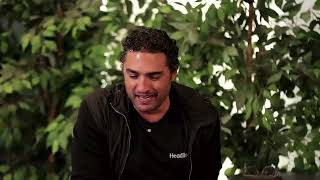
Roundtable recorded live in São Paulo about how Brazilian startups scale globally, featuring Romero Rodrigues, Daniela Binatti (Pismo), and Carlos Costa (Valor Capital). Participants trace Brazil’s ecosystem evolution, argue that global scale is a strategic choice (bond vs optionality framework), and surface two playbooks—local-first (prove in Brazil then fund global bets) and day-one global (API/SaaS products). Pismo’s architectural choices, its Citibank 78-country deal and the Visa $1B cash acquisition are discussed as examples of compounding and leverage.
Questions this video answers
$1 billion in cash.
78 countries.
First term sheet arrived in 2022; signed June 2023; acquisition closed January 2024.
800,000 users.
35 million uniques per month.
Chapters
Welcome to this very special episode of the J Curve, recorded live in Sao Paulo and co hosted with aws. This one's different. It's a rare roundtable conversation with three people who have actually done it, built, backed and scaled some of the most important tech companies to come out of Latin America. You'll hear from Daniela Binacci, founder of Pismo, acquired by Visa for $1 billion in cash Homer Rodriguez, founder of Buscape, an early investor in Pismo and Wellhub and Carlos Costa, managing partner at Valor Capital, the cross border VC firm behind breakout companies like Cloudwalk, Pismo and Wellhub. Before we jump into the recording, which begins with Romero answering my question on why now is the time to build global and how the market has changed since he started buscap. I want to share a few personal reflections from the session and the first one is this thought that Brazil has entered a new era of consistent global scale outcomes. Romero said something that reframed the entire arc of Brazil's tech ecosystem for me, we now have a real market. When Buscape launched, the total addressable market for Internet users in Brazil was under a million. Today it's over 150 million active users and nearly every global platform is treating Brazil not as an expansion market, but as a core growth engine. The numbers tell the story. WhatsApp reaches 98% of smartphone users who have the app installed in Brazil, making it one of Meta's most entrenched assets anywhere in the world. Nubank has become one of the most valuable digital banks globally, serving over 100 million customers across Latam with Brazil as its operational core. And exits aren't rare anymore, they're compounding iFood recently acquired a 20% stake in CRM Bonus structured with an option to acquire full ownership in the future for up to 10 billion AIs or about $2 billion. Process acquired Despair for $1.7 billion in cash and one of the largest Latam linked tech exes globally. In 2023, Visa acquired Pismo for $1 billion in cash, marking it one of the largest fintech exits out of Latam that year. Behind these giants is a new cohort of Brazil's infrastructure companies including Wellhub and Cloudwalk that position themselves as IPO ready or high impact acquisition targets. Brazil has evolved into a market where complex platforms can pressure test against regulatory, operational and wax friction. Early founders can raise local capital and build real products, not just pitch decks. And most importantly, success at home now translates to global validation. My lesson number two is that global scale is a strategic choice not a marketing narrative. There is a persistent myth in Latin America that if you're a startup based in Brazil or anywhere in the region, your natural next step is to expand across neighboring countries. Argentina, Chile, Colombia, Mexico. That's the default playbook. But here's the truth. LatAm to LatAm expansion often demands the same level of effort as global expansion, but with far less upside. Romero put it bluntly. When Buscape expanded into other LATAM countries, they won Chile. They owned the market, but the impact on valuation was negligible. The operational drag was real, and in the hindsight they would have been better off going straight to Indonesia or Turkey markets that could have actually moved the needle. That's why the most successful LATAM companies today are skipping the regional maze and going straight for global scale. But they're doing it the hard way, the right way. Real commitment means burning the ships. Cesar Carvalho from wellhub moved to New York with his family. Joo, his partner, spent years crisscrossing Europe, setting up operations, rebuilding sales teams, winning trust market by market. Pismo didn't test the US. They brought in Vishal, a former McKinsey partner with deep credibility in banking, to lead the charge and land a 78 country contract with Citibank. These weren't brand plays. They were full stack operational commitments that mapped TAM regulatory complexity, customer readiness and localized go to market strategy, not proximity. The real lesson for LATAM founders here is is don't mistake adjacency for strategy. Don't burn energy on fragmented markets that won't move valuation. If you're going to do the work anyway, do it where the upside is exponential. Global doesn't happen on the sides. You earn it by burning the ships. Third lesson, the bond versus Options framework for global expansion. Carlos Costa reframed the global expansion decisions through the lens of Portfolio Theory Framework 1 startup scales in Brazil. It often starts to resemble a bond, a predictable cash generating business that can be forecasted and optimized. But if the ambition is to build a breakout company, the real value comes not from predictability but from optionality. That's why Companies like Cloudwalk, WellHub and Pismo use their stable local businesses to fund global growth. Not because it was safe, but because it was asymmetric. They bet aggressively on new markets with a hedge cash flow from Brazil. Carlos described how Cloudwalk, after reaching millions of merchants and billion plus revenue in Brazil, began launching call options in the US and beyond. Each one is a chance to unlock a new exponential curve. The mindset shift for Latin American founders is Brazil can be your cash engine. Global can be your optionality. The smartest companies use one to fund the other. Optionality doesn't happen by default, it happens by design. But here's the exception. What happens when your business model doesn't need a bond at all? When your product has no geographical constraints and no local mode to protect it? For API first platforms, dev tools, B2B SaaS and lightweight infra products, waiting too long to go global is actually a liability, not a milestone. Because these categories are borderless by nature and competition moves too fast to wait. Two different playbooks emerged from our conversation. The local first path, Proof unit, Economics and product market fit in Brazil, then expand with leverage, which is wellhub Cloudwalk. The global Day one path built for global scale immediately. Pipify positioned as a US startup from Curitiba. Even Pismo, with deep local roots, built global scalable infrastructure from day one before they had declines to justify it. The key insight here is that timing isn't about traction, it's about terrain. In the most replicable categories, staying local too long might be your riskiest move. Now the real value lives in the compounding years this was the most sobering insight from our session. As Romero put it, it took Danny and the Pismo team 25 years to go from zero to a billion dollars, but probably only three or four years more to get to $5 billion. And this wasn't unique to Pismo. Carlos added that cloudwalk is now entering the same phase with solid foundation, growth is just beginning. Here's what compounding actually looks like in practice. Compounding isn't just a math function. It's a trust function. It takes years to build trust with customers, regulators and global partners, especially starting from laptop. But once you have it, everything accelerates. Sales cycles shorten, margins improve, strategic buyers take you seriously. Expansion becomes execution, not experimentation. The Visa acquisition proves this point perfectly. Dani shared that Pismo wasn't for sale when Visa first approached them. When she told Visa they weren't looking to sell, their response was telling if you were for sale, we wouldn't want to buy you. That's leverage. Visa didn't want just tech. They wanted a globally deployable infrastructure platform that had already proven itself with ITAU and Citibank. The founder takeaway here is this. You don't win in year one to three. You earn your leverage in years 10 to 15. Compounding doesn't kick until the market and your product are finally ready to scale together. Are you exiting at the end of the curve or the beginning of exponential return if you enjoyed today's conversation, please rate us on Spotify, subscribe to our weekly newsletter@blog.thejcurve.com and follow us on YouTube @thejcurve podcast or Instagram. Olgamoslikova with KH let's get into it.
So when we started, our first business plan was forecasting the most optimistic number for Internet users in Brazil in the next year. And it was 800,000 users. So that was our tam, like if everybody's accessing and now we have like 50 million. When I left Buscapel we were having 35 million uniques per month. So just. And it was 10 years ago. So I think first of all we truly have a market now. We have a developed ecosystem of investors. Back then when we raised our seed round, we got eight term sheets ranging from angels, to incubators, to funds and to banks that were used to do mezzanine rounds pre ipo. So it was a mess. Now we have investors that are focused in each one of the stages, each one of the pains, so on and so forth. And also there was no raw material, there was no talent, no people to hire. You would have to develop from scratch. In our case we used a lot of interns for several reasons. One, they come fresh, hungry, they are cheap and you don't pay taxes on top of it. So basically the first and second layer of management at Buscatel were girls and guys and boys that started as interns in the company. So completely different. We were so heavy on the internship thing that if you were a great intern for two years in a row, you'd get an intern for yourself. So we have this figure of an intern of an intern. So like an intern manager. But anyways, HR was crazy at the time with us as well as legal. But I think probably what produces a great material of companies, Brazilian companies that could expand internationally. The size of the Brazilian market creates the opportunity for the startup to do a two step expansion. Meaning if you are born and raised in Israel, you only have the global way, you go global since day one or it's over in Brazil, you can attack the local market like Pismo did, like WellHub did. And then once you realize you are winning in the local market, you go overseas and. And because we have a decent size local market, I think we can prove the unit economics in a decent market, raise around with a decent valuation, a series B, a series C, whatever it is, and then attack the international markets better prepared.
So based on all of this like infrastructure that you have right now, and.
All that you have right now.
I'm very curious. So if you were launching companies today or whatever, pick your battle today with the resources and the mindset that we now see companies like Isma for example or I don't know, you just mentioned.
Well Hub Ifood by the way also.
Which is not the global company but the mobile grade company. What would you do differently besides interns? Because I think they are confusing more intern.
So I think first of all I would go after big, big problems in big markets. I think the number one reason for a no in my series A was all the comparison shopping market. The price comparison market is tiny and was what we're talking about. This is not a comparison shopping market. I'm talking about retail and E commerce and even the comparison shopping market search for products would be huge in 10 years and it was very hard for investors to understand that although it was tiny today in 10 years would be huge. So I would probably attack already a big market or a market that is easy to explain that is gonna be a one billion dollar market in Sam some for you in in terms of revenue in 10 years. So that's for sure. The only thing I would always go back to first principles and and try to understand one is the pain you're solving. Connect this to the culture and to the mission and basically try to solve the bottlenecks and don't get distracted with too many things. So when we launched buscap, the original plan was to launch four different websites. One for price buscap, one for merchant certification which was called this confiometro which was killed by a bit later and we had to buy a bit later one that was kind of a cnet for product reviews. And the fourth one that we never launched, we ended up acquiring a company 10 years later which was for payments like a PayPal. So the vision was the same when day zero and 10 years after that. But the way we built that vision was probably not the best way to do it. And I see many startups probably the number one or number two maybe cap table sometimes is number one but number two reason of a pass in our case is a startup that the founder is not realizing he's building two startups in one and by doing that he's reducing the chances of success instead of increasing.
It's so interesting because you mentioned about focus when we see about even bigger companies like I was looking at the public equities portfolio of one of the family offices here yesterday. It's so interesting to see how great companies get punished for pursuing Too many initiatives or doing too many M and as all at the same time. So this is like not the problem that is related just to an early stage startup. This is on average a problem of growth. Right when you are growing and things start working out, you are going after all of those different things and you are deviating from the whatever makes your beer taste better. In the words of Jeff Bezos. I want to actually talk to Danny a little bit because in the early stage of Pismo I remember and I have a benefit of interviewing Danny on the podcast. So I know a lot about the early days of Pismo, but I want to think like it's very interesting because we are talking about 2016, right?
Yeah.
Was your multi country API first architecture a foundational belief from day one? Or did the market pressure or investors pressure or any other form of pressure pushed you towards building the company as a global company?
Initially we were dinosaur founders. That's the difference because we were like the four of us, we were in our 40s, early 40s and we already had worked for 16 years in the industry. So actually Red Point seed investment happened in late 16, but we were scratching the company like at least one year prior to that to the moment where we decided to fundraise. And so those were like first principles. And the reason was because we built another platform working and providing services in Brazil and we could see how hard it was. Sometimes there were opportunities outside of the country and it's really hard when you already have a system up and running. Especially by that time we were talking about monolith and things running on prem. So to change, you probably heard already for a company who was providing for example credit card for consumers if they want to launch to companies or corporate cards, it's a total different animal. So we spent literally one year saying what were the problems that we had in the previous company and how we would do it differently this time. And I really believe we were a very privileged group because we had the chance to build a platform like that from scratch twice. The second time of course was from experience. My focus before was technology, infrastructure, cyber architecture, but we had Marcelo as head of development, Julie product and Ricardo in finance and commerce. So we could cover pretty much all the aspects. So there was like tons of papers and flip charts where we were addressing and then we came up with what would be the non negotiables. So that would be a SaaS platform, multi country, multi currency, multi language. From scratch we would be open to instead of looking only to credit cards, we decided to build in A way where we could identify a customer whether he or she was using like a credit card. It could be a document number, it could be like a cell phone. It could be like pretty much as it is peaks now. So we built a layer, an infrastructure layer of a very kind of basic layer that we call primitives. And then we could address in a very abstract way all the non negotiables that we would probably have to face sometime. Of course we would start from Brazil. We knew the market here we were not thinking about from day one and selling to other countries or doing something other language. But actually we set the stage to make sure at the right time we could actually just plug and build on top of that.
So Romero, what made you believe that Pismo could pull it off? Because like you were just talking about the focus a little bit. But we are talking about in grand endeavor in 2016, before the 1920 wave of venture capital flowing into the market. Like what made you believe that they can do it?
Yeah, so in the end of the day, the founders. But before, before double clicking on the founders. If you think about what I said before, like a big pay, a big market and focus, like payment processing was a huge market, a huge pain. In my previous life at Buscape, we had a payment system and it was tough to do acquiring. So we knew that some investment in infrastructure and pumbling, like financial pumbling to fix things would be necessary. And when I saw the pitch of Pismo became pretty clear. But again, also focus. If you think about it, one way to see Pismos and Daniela story is she. She has been so focused on the problem, so passionate about the problem that it took two companies to fix it. Right. Because when you started Pismo, you already had like 10, 12 years of experience in payment process, 16 years of payment processing. And. And I would say Daniela can say it better, but. But I would say from my perspective that the problem with the previous company was although it was a great technology, was client server way better than mainframe. The market was not in need of that technology. So the big incumbents, the big financial institutions were not looking for to move to client server. But when the new banks started in 2012-2013, the big banks had to reply to response. And then they had to think about changing all the technological stacks. So it looked like the right solution, the right time. But in the end of the day it was about the team was about 20,000 hours that each one of the four founders already had in this space. And look, almost all the business models we invested changed so even Pismo, when we started we knew it would change, but was the first clients were in the health space, not in the financial space. WellHub when I invested was selling a daily passes, B2C. Daily passes was not B2B was not monthly membership. It's going to change for sure. So you, you got to bet on the founders.
Carlos, it feels like your portfolio points a clear thesis. Cloudwalk, for example is reshaping payments infrastructure globally. Right.
WellHub is tackling HR infrastructure globally.
And Pipfi is redefining workflow automation also globally. Is infrastructure Latin America's best kept weapon for global expansion? And if so, what do you think makes those businesses defensible across the borders?
For those who don't know, we are cross border funds. So investing across the Americas, let's say, right. We have headquarters in New York, our investing major of the capital in Brazil, but also doing Spanish speaking. And if you go back and see our investment memo of Coinbase for instance.
Right.
Super early company doing $10 million in revenue. I think not even the founder was expecting Coinbase to be a $100 billion company. Right. If you look at our projections, I think best case scenario maybe Coinbase would be a, I don't know, $3 billion company and winning exits in 202122 ish.
I think which was a good time to exit, right?
Yeah.
I don't know.
Close to 100 billion. Right. So sometimes you're going to be flexible to be able to change course and try to build something very big. But you got to raise the level of ambitions. You're playing a wrong jig path and wealth habits. It's where investors like very close to Romero at the time confidence need to see and then the beginning is repeating itself to your question specifically Cloudblock is a good example, right? Cloudblock is. I mean we're serving 4 million merchants in Brazil billion plus dollars revenue. I think we didn't expect our Cloudblock to be that successful. So fast in the company has been operated for 10 years. And what you see is that if you look at cloudblock in Brazil only actually if you give me one step back our jobs and investors is usually invest in a bond. Should I invest in a company? It's a company that's going to produce cash flows in some kind of more predictable fashion or invest in an option to some extent Founder is shooting for the move is taking a lot of risks and try to be new J curves so that the company compounds much more. If you look at Cloudlock in Brazil order growing still very Fast, high double digit rates, but resembles more like a bond, right? In which you can forecast Cloudwalk in five, 10 years out of the future. Also there is fix, there are several regulatory innovations, but you kind of have a high degree of confidence on how to think about the company. The point is that Luis wants to build several call options for himself. And then when you think about the US markets, we actually have been working on it for the past two years, but we really launched the company in the past three to six months. Early results have been very promising, but it's still early. But what I feel is that assuming we succeed as we expect to succeed, then there will be a third market, a fourth market and then there will be several call options being used. Right? Because I think one thing that we truly fundamentally believe, I think is very important for all founders is that the ecosystem is very, it's very young, right? So I think when you're starting, when we started here 15 years ago, there was maybe $10 million ABC Capital per month. But at the end of the day, lots of companies, lots of be built for the next 40 years, for the next 50 years, for the next 100 years, right? And then the global expansion is a fundamental step in it. But I think the ambition is very, very high. So I think we want to build a lot of the modes and visibility to your point, based on all the learnings that we had in Brazil, but try to truly understand the dynamics of the US market, right? The way you do anti FR is different the way you do the banking partnerships with JFRON, etc. But the good thing is that now we have something that's fairly stable in Brazil that produces a lot of cash flow that gave us enough confidence to go very aggressive globally because you got to focus, right? It's very hard to do global on the side in the case of we all have same thing. Actually we started maybe a little bit less conscious than cloud walk in a way that a client that was operating multi region to some extent helped take us to Spanish speaking of town and then from there say hey, maybe we can do something low here, right? And then I went to Europe and then on the United States growing super fast. But I think it's a combination of these multiple elements, right? One ambition estimate is very, very high and second, you win, you're kind of your local market and then you can expand globally and try to build all the feasibilities, et cetera. But with the mindset that you actually build something that should compound from the very, very long term.
It is interesting not very often you hear that Brazil is like a safe haven from cash perspective for companies, right? Like it's not a common narrative around Brazil. But you are right, all the companies, because Pismo also initially rolled out in Brazil, right? Like figured out the Brazil actually changed mindset, shifted, did a lot of education, right? Because when you started there was no SaaS, right? In government, like in financial sector, in government sector, everything was on premise and you drove the change in perception that SaaS is not safe, right? That it's just the alternative way of running and storing information.
Especially the big banks, they were not used to outsource this kind of processing, but outsourced to a startup running in public cloud. So it was like most of my first meetings were pretty much with lawyers and legal departments, other clients. And you know what, like I was like a couple weeks ago, I was reviewing some documents, some pictures, like PowerPoint pitches that we used back when we started the company. They are still valid for other places like especially the US like we are now having to work the same kind of education and evangelism that we like made in the past. We are doing pretty much the same now because when you see of course aws, it's a big player and you see like it's been a while since we see like big banks saying we are shutting down data centers, we are moving everything to the cloud. But when you go to see like actually the Rails, the payment rails and the core banking pieces, they are still running on prem.
And in your perspective, what are the elements of successful market education and evangelism that you could qualifies your playbook, you know, because you've done that across multiple markets at this point it changed a.
Little bit of course, because like when we first signed it in 2018, when we signed the contract with Itau, we were a 19 people company. So imagine like how would be like the relationship of a startup of that size outsourcing the payments processing for a bank like itau. So it was a different conversation at that point. Like we were, we could leverage most of the AWS resources in place and actually the investors that were connected with like Silicon Valley and other companies outside that could actually we could bring all those resources to kind of make the offer a little bit stronger. And we were building and piloting and actually going to the point of solving, showing them that we could solve the problems that we knew they had. So not every time the banks, they kind of publicize the problems that they have, but because of our prior experience, we knew like how they were struggling And I could see so how we can build something that is a fetchless system, how we can provide real time events streaming so they know what is happening. So we knew that the legacy systems couldn't provide those things. And again, it was a moment in time. Like the last experience that we had in the previous company was when Nubank was launching and Brazil Nubank was launching and processing on top of the previous company, the previous platform that we built. And then we could realize how hard it was for a product that was designed to be fully digital to rely on a legacy system. So after a couple of fundraising rounds, Nubank decided to build their own processing platform. And so in that moment in time we saw like there's something here, like we could see outside, like there was Mozo Starling, many banks outside and if they had enough funding, they were building their own processing systems. If they didn't, they were relying on legacy systems. So we said there's something here, we should bring that same innovation to what is under the hood. So that's when we started kind of building Pismo.
It feels like you were reading a lot of those market signals that were not necessarily available for everybody else because you can understood the problem of what your customers face and you saw that across the legacy type of customers. And then the new digital entrants like Nubank it feels like goes back to the fundamentals. Like you said, the first principle thinking like you really need to have an in depth understanding of the problem. I want to follow up with what Carlos said on the bonds and optionality. I'm wondering what are the other elements of the playbook of successful expansion that you see both in the examples of your portfolio companies and maybe on the examples of just the successful companies that you're seeing.
I think it, it actually does depend on your business model. Right. So if you are B2B company enterprise or B2B company more product led, growth driven or if you're more kind of B2C company, I think the playbook changes, changes. But some of the first principles are the same. Right. So the next market might become your core markets. I think it would be very intentional about it. Right. So you're talking about well Hub, I think that was maybe right after series B or seriously with General Atlantic that Cesar moved to New York and actually he moved with his whole family and then beat something from there. Like it takes a lot of time. I think in the case of clouddog we're scaling there now, founders spending increasing more time there much to expect to see something more similar in A way where you go very, very intentional. Actually it's not a portfolio company of ours, but I'm on the board of the company, a company called Motul here in Brazil. That's totally different.
Right?
Because it's a B2C credit driven with heavy logistics and operations. And then I don't know, it's been four months since the founder stepped in Brazil because he's studying markets and they launched in Mexico or something. Very patient. It's a combination of patience and a lot of optionality. But I think business models are changing as well. If you go back to the U.S. for instance, I think the U.S. venture capital landscape there is obviously much older than Brazil. But the model we see is maybe 56 year old. First wave was like let's invest in hardware companies. So Cisco, Apple and others. Second wave is more the tools second, that type of stuff. And that after 2010 was the moment where was more like let's rebuild something from scratch. Right? It's not a tax dispatch software company, it's Uber that does it all. It's not a software for bed and breakfast and hotels. It's Airbnb that does it all. Tesla, same thing. It's not an EV type of platform from commerce going to rebate from scratch. So I think that's what we're seeing with these three examples that I gave. Right. So we'll expand. You go first principles. You go very focused and try to build it all. So you can have real moats. Right. Otherwise can be a problem or even distraction.
Same page. So I would summarize in three things. One is business model. 100% agree. I think if your business model has local elements. So gym Pass, you need local gyms and local companies. So it's not a global business model, it's a local business model. Expand. And that's what they did. They went to Europe and then UK and then US. I think the second one is real commitment to the expansion and I think you mentioned. Right. So it's not a side thing. At Buscape I tried to be a side thing. I was trying to expand to Latin America. It was like 10% of my bandwidth, 10% of my budget and less than 10% of my results, of course. And when you take again, well, Jim Pass as an example, they really burned the ships. So Joel moved to Netherlands and then he moved to Germany and then he moved to France and he moved to Italy and Cesar moved to New York with the whole family and they are still there out of Brazil. So it is a real commitment to make it work. And. And I think this also changes how the whole organization sees that move. And I think the third thing is to try to understand what is the right framework for your expansion. So back then in 2000, when we first started BusCap in Argentina, Mexico, Chile, I think probably because my mindset was playing at war. Risky. You know the game risky and you have the map and you attack countries that you have borders with. We expanded to LatAm, but, you know, we won Chile. We were like the monopoly of price comparison in Chile. In Chile meant nothing in our valuation in the end of the day. And the effort we put on Chile, we should have put on Indonesia or Turkey, which would double our valuation. It was the same amount of effort. You think it's easier because it's Spanish or because it's closer? It's not. And I think what WellHub did super well was also trying to understand where to expand to. So they had. The first clients were Procter and Gamble, Unilever and Banco Hell. Those three guys said, look, we want you in Mexico and Argentina. We have operations there. And by the way, Unilever and png, they were talking to the Miami office because back then LATAM was all based in Miami. And they were brave enough to say no thanks, thanks, but no thanks. Because I want to understand what is my agenda as a company. I'm not following. My clients could be one way. But they decided not to follow their client's agenda. So they mapped what were the drivers and the features, the characteristics of a market for genepass to be successful. So of course population gdp, but also is there benefits to employees or not? And how fragmented are the gym market? Because US and UK you have big chains, so it's not that fragmented. But in Europe, in Germany, for example, you have a lot of small gyms and there was already a benefit in the law for wellness. And the companies didn't have a product to give, so they would be. They were giving money. So for genepads was really easy to sell to companies. Look, you are giving them $200 voucher to Olga. You don't need to. You can give genepass now. It's better for everyone. So instead of going to Latin America, as everybody does, or used to do, which I think it's wrong because most of the times is not the best way to go. I see now founders trying to understand the strategy in aiming larger markets and going more to us as well.
Is there any rule of thumb in terms of how the founders, with the global application of their business model, should.
Think about expansion, it's really tied to more to strategy than to growth because it's going to be destructive. And I think that if we can create some kind of a heuristic would be if you really have a business model that is global, there's no need of local approvals or government licenses or local marketplaces or things that that are on the land. You probably should consider that it's harder for you in Brazil to raise capital. Your cost of capital is larger than us or Europe or Asia. And you better get global early because your competitors, if they are sitting in another region, they are probably better equipped in terms of financial markets to support them. On the other hand, if you are super local, it probably shouldn't happen before a series B in my opinion. So until after series A, you are still growing your sales machine or growth machine, you are proving those unit economics. And once you are comfortable and you have trust among the investors that you can distract a little bit because nobody's going to steal your cheese, then is probably the moment when you raise a new round. If you need a new round, eventually you have cash and you start testing other markets.
I don't think there's silver bullet. So I'm not answering your question. I'm telling you what happened to Pismo. I think that yes, the investors, they were all pushing us to first stay in Brazil before going outside, especially because in our case we needed local presence. And I say that when you are working with VCs, you need to be humble enough to listen to them. And we had to pivot many times listening to these guys feedbacks. But sometimes you need to go with your convictions, let's say I remember you telling us, when you insist on something, if you prove yourself right, you are resilient. If you prove yourself wrong, you are stubborn. So yeah, there's a risk involved. But we had these conversations like we started when we raised this Series Z actually when right before the pandemic, actually we were already in Chile. Brazil, Chile. With the seed investment. It was a lot. At some point they were. And every time there was like a fundraising, so new investors would come and then it was, the conversation would start all over again. Why don't you stop investing somewhere? Or again, sometimes you need to go with your gut and actually just adding one last thing that in our case it takes a lot of time. It's a business that has no churn. So it's not easy for a bank to replace core banking processing. And so especially when the pandemic started, there was kind of an open Window of opportunity because all of them understood that they would have to change the solutions if we were not there. A new competitor would come and then it would take already 10, 20, 30 years for them to actually want to replace. So it was kind of, we couldn't lose that window of opportunity at that moment in time. So even against their pressure to stay here, we decided to move 1 billion in cash.
How much this scalability and being present across all this different. What just Homero was talking about, the premium of successful global expansion contributed to.
That factor a lot. It was probably one of the main factors, in my view. It was a moment in time when they were looking to, if you look to like Brian's like, statements about the acquisition, they have been investing what they call value added services because there's a lot of things around the world that are kind of threatening a little bit physical cards or credit cards or debit cards. And we had not only the infrastructure for payments processing, but also core banking components built on top of the same platform. So what I think was the fact that we could deploy everywhere in the world, of course, was a premium because especially when you think about a company that it's been relying on physical data centers, it's not easy if there's a need. Like regulation has been evolving. So what happens now is that most of the countries or the regions that we are going, they don't allow like solutions to store data outside of the country or outside of the region. The fact that we have so a strong infrastructure foundation built on top of infrastructure as code, we can click a couple of buttons and launch a new installation in anywhere where there's a kind of a public cloud AWS region available. And also the fact that we could tackle different currencies, different, different languages, different countries in a way. Like, we built the platform in a way and we knew of course that there was like. There are some aspects that are what we call like localization. Every, every time we go to a specific new place, we need to understand what are the Rails where we have to connect, what are the, what's the compliance or certifications that will need to be there. And so we built the whole system as a set of APIs in a way where 98% of the solution is common across every region. And then we can plug new blocks like they're building blocks. We build specifics for one country like to tackle localization and then we just plug in the platform. So it's pretty easy to move over. And to Homero's point, like every new fundraising or Every time we were talking to investors, the conversation was the same because sometimes people look at Latin America as a block. But actually the work that you have to kind of deploy in Chile or Argentina, it's pretty much the same that you have to deploy in India, Europe or any other because it's a new country that are like to process payments in Mexico, like for MasterCard you need to connect to a specific last mile that is specific to Mexico or that are things that are particular to Argentina. So it takes the same work. I remember like we started at the same time expanding to Argentina and Southeast Asia. And Southeast Asia was ready like before Argentina because again so and again of course we were looking to expand in places where we had like English, Spanish or Portuguese speaking language. But the work is the same.
I'm actually interested in all of you guys opinion from the operator's perspective, from the investor's perspective. How do you know when it's the right time to scale before you won your local market? Brazil is a massive domestic market like you said. And most successful companies, they first became a bond in Brazil and then explored optionality outside of Brazil. What are the things that you're thinking about analyzing type of questions you ask the founders when they decide to scale so early in their life cycle?
In our case, it relates a lot with business model because Pipefire is an example or did you or any other example that expanded early. Usually you don't have huge barriers in terms of a competitor coming into Brazil and neither you have differentiation. So pretty much a company in Asia, Europe or US could be developing something very similar and there is nothing local in the land that can protect you. So if that's the case, it doesn't matter why you would stay only in Brazil. Pipfi, there is no local component to the business model. It's a process management tool, no code, super easy to set up. So they decided to position themselves as a US startup selling to US startups with offices in Kurichiba and that's where they back themselves. Why? Because if they didn't do it probably would be harder for them to sell to American startups as a Brazilian company as well. And I don't know how much prejudice for being Brazilian pismo sufferer, but there is like really Brazil, I don't know. Well, there's the Embraer, but what else? So I think that's one thing that we look at. The other thing is try to understand especially if you're not a global business model, if you're a local business model, you don't need to be profitable in Brazil. But you need to be very, very comfortable with your unit economics and your pace, your momentum to decide to raise a new round or to use your cash proceeds to expand and back to lhub. Because probably the company that expanded that was closer. The Brazilian business was not profitable when they went to Europe. But the unit economics were amazing. When they started the expansion, they were still like doubling tripling in Brazil. Beautiful unit economics. And I remember by that time I was always joking. I used to meet Cesar, Joao and Vinny once a month and I never saw this number until today, to be honest. But they were never able to measure lifetime value ever because by that time they never had a single churn. So it was still infinite lifetime. So you are doubling tripling, your lifetime is infinite. Sounds like you are doing something right and probably someone will cop you in another market. So you should move fast and make sure you walk by the spaces.
I think it depends on the kind of business. I'm a Pipify client and it's a very low touch kind of relationship. From a client provider perspective. The. The business that we provide is a high touch. Like it takes a life until you start like conversations to. To the point where we actually sign something. We signed with Citibank to launch corporate cards and corporate banking in 78 countries. And this was announced before we signed the Visa. So of course this was something that actually helped to. To your previous question to the valuation and to negotiations with them. But I think that the way that we were addressing that. So we were old, we're older now, but we were many kids, all of us. We were not actually. It wouldn't be an easy move for us to leave Brazil as Cesar and the other founders. So we tried to find a way to establish kind of the global presence and hire someone. That was the point where we hired like Vishal Dala. Vishal was a senior partner at McKinsey responsible for core banking implementation. So we were looking for someone who had like the points of contact with sea level in the banks. It is hard for especially in the US It's a very kind of. They really look to local providers. Sometimes they don't even want to talk to us. We always needed someone to open the door and then we could go there and actually explain what we were talking about. Then of course the fact that we had Itau Fortune 500 bank moving and announcing that they were moving all the portfolio to Pismo. It's something that it helped a lot because at some moment in time we had some competitors, but usually the clients they look for are you already proven at scale. And we could prove because of the numbers that we had here in Brazil and that's why we went to kind of Latin America and then Southeast Asia and then like we were kind of going around before in the US was the. The last. It's very hard. So if you don't have an office, if you don't have people working there, if you know Rodrigo, I remember we were discussing, I said no, but, but this guy, this Rodrigo guy, he's so good. Let's put in. He said he's not called Michael. Michael or Jason or Jack. Rodrigo. They won't answer a Rodrigo there.
Maybe just to compliment. You have some examples where the global expansion is go to market expansion in a new market. You have some examples as a go to market. But it also builds kind of the local regulatory infrastructure. But also in some cases the new layer is when you build all of this plus the local existing assets infrastructure. And I think depending on the business models it gets easier or harder. I think the local for instance and banks, they kind of were more and more like global by nature because now they don't have to necessarily invest a lot in fiscal assets infrastructure to expand in a new market. But if you look at the other way around of global companies expanding to Brazil, I mean there's a reason why for instance it took May to first several years to expand and outside of China. Right. Because we have to beat all the layers and, and the localization to get there.
Right.
So I think it's truly understand is important. One thing that I wanted to reinforce is I totally agree. Right. Tom is several animals, several different animals within the same umbrella sometimes. But I mean we're opening an office in Mexico next month and the past five years I went there multiple times and it's, it's just a different animal. Right. So effects if you tell me they're expanding to Mexico, if you're going to spend to Indonesia, I think I'm going to feel the same in terms of, let's face it as a, as a big challenge because the markets are structurally so different. Right.
I want to break a little bit the VC return map and also the premium again like Carlos. And I'll ask you to kind of break this down a little bit because most founders, they don't think about VC returns. They think about, you know, the narrative is we're building generational companies, but as investors you guys need to exit within 10, 12 years. So how early do you start talking to the founders about the exit paths and how do you frame it without killing their ambitions?
It's a great question. Does depend on your, on your cost of capital, right? So if you have very, very big institutions, that would be okay with a 12, 15, 18% net return in dollars, or it's more of a fragmented non institutional base where the demand is 25% given the duration of the asset class, returns change completely. But assuming that you want to do a 3,4x net, you know how much ownership you have in the beginning or how much you're going to get diluted, let's say that on average you end up with 10% of a company. If you have a $250 million type of fund, you need 4x debt for you to deliver Forex, you need 1 billion in exits. If you have 10% on average, you need $10 billion of combined equity value being created. Right. And that can come in multiple forms, but usually you're going to have a power law dynamic where you have a few miners that are going to be very, very successful.
Right.
And within this framework, I think it's just very hard to start talking about access too early with founders. Actually one question that we ask ourselves very often, I think everyone asks themselves during the initial investments, which is what is the exit path here? But quite frankly, I spent very little time on this question. I think what I'm more interested about is can this company be $100 million net income company in 20, 30 years? And if the answer yes, then I know that assets might not be a problem. And one thing that's important for that is I think that sometimes feels like 10, 12, 14 years in terms of fund cycles seems very short term because every company is almost like a balance sheet, right? So have whatever the company is building as the assets and hopefully the company can build something for 30, 40, 50 years. But then I have the VCs on the right hand side of the balance sheet is your liabilities that have a 1012 year time horizon, right? So it might be an asset class where it's born with an asset liability mismatch. Right. And one thing that we always say is that founders should be building their companies for the next 30, 40, 50 years and we adjust ourselves to this cycle.
Right.
And the reason for that is once the company is building for 10, 12, 14 years and then after this 10, 12, 14 years, it's already a very successful company. I guarantee you that finding an exit would not be a problem. Right? So I think if you try to exit GenePass, if you try to exit Circle, Circle now is Just went public. But I've tried to exit Cloudwalk, try to exit all the successful cases after 10 years. I think secondary market can offer you this. And sometimes the worst thing that you can do is have the founders building their companies to meet the requirements and the restrictions of the Metro fund. Right. Something that I always say is build your company for 30, 40 years. Be very focused. Try to have a company that has $100 million net income. Might take 20 years. And in the process, by the way, I'll find a solution for myself. But I don't want to be the one pushing this asset liability mismatch down their throats because there have been something that's much bigger than a 10 year fund cycle.
Right.
Daniel, was a decision to sell Pismo for $1 billion in cash. And easy decisions for you.
Well, I can, I can, I can, I can, Can I say Latin? Because you can think we're crazy, but we, we truly discuss if it. What we should do. And, and I would say probably that from. I can talk about all but many of the investors involved. I was probably one of the ones more inclined not to and to, and to double it down because if you. And my math was, and my logic was pretty simple, it's pretty much impossible to build something from scratch that gets to one billion dollar valuation. It's, it's close to impossible. But funny enough, it's not that difficult to move from 1 billion to 5 billion. Especially if you are more than doubling, especially if you just signed with Citibank for 78 countries. So it is a tough decision because imagine it took 16 years plus eight years at Pismo, or let's make 25 years working on the same pain, on the same problem to go from 0 to 1 billion. So you created 1 billion in value, but you need another two or three years to create an additional 4 billion in revenue. So we are usually similar to Valor. We are usually the type of investors that say, no, you should, you should plan to build this company as a legacy for your children, grandchildren. Let's have a succession problem, Succession TV series problem in the future. That's the best problem. Antitrust problems are the good problems we want to have one day. What really worries me is the other way. Well, what if the company is going well and the founder receives a proposal, he can cash out $5 million and back to succession. There is one episode that the cousin that is poor makes 5 million. And then the billionaire said, oh no, that's the worst because 5 million, you're not poor, but you are not Rich, you are in the middle. So that's what we don't want to see. Early exit. It's pretty easy to de invest from a successful company. You're going to see investors lining up for continuation funds which mean somebody buys the LP of the fund and continues with the asset. So it's not a problem. So Red Point Fund 1 in US first fund of Red Pint from 1998 was Series A. And Series B investors in Netflix, Netflix, they still have the position and the LPs are super happy, as you may.
Imagine from a founder perspective. Like I'm not kidding, when we received the first term sheet, I started to cry because I was like, oh my God, my founders, maybe they want to sell. I don't want to sell. Like I don't want to sell. It's not the time. It was right after the Series B fundraising. So we were not. It wasn't no solicit listed offer. We were not expecting.
Actually we were expecting a partnership agreement.
Yes.
And then you received the term sheets.
Yeah. And I remember when they came here and they were like, yeah, I want to buy the company. The guy told me, I said, but we are not for sale. And Sally, if you were for sale, I wouldn't want to buy. Can you listen at least? And then like actually they were serious, they said, but I think there were some aspects why we decided to move forward. And it took like I think one year probably like in conversations every single day.
It's a long process. It's not someone writing a $50 million check that you get the price per share and you multiply by the total number of shares and you get to 1 billion is literally a wire transfer of $1 billion. It's different because one is paper money, daughter is.
So why did you decide to take 1 billion in cash.
By the way? There was a bunch of investors involved. It's not the case. But I think that the main reason was it was back to your point about Brazilian companies. It was really tough, the conversation between a Brazilian company and the bank, like an incumbent like Citibank, every time we could like discuss contracts and other stuff. It's too asymmetric the relationship. And those are the big clients. Those like the money was there and it was hard. And then I said, maybe being backed by the biggest fintech in the world will give us a little bit of more credibility and it's going to be easier to conversation with the big banks, especially the American ones. And actually in a way where so there's a lot of conversations around how this would play out about brand. So if you, if you look to the acquired companies, I think we are the only one who we don't have in the logo. Like, it's Pismo. It's not Pismo. A Visa solution. It's not Pismo accompanied by Visa because we are agnostic processors. So we could build in a way where we are keeping the brand, we keep the office, we're keeping the team. And actually the idea is how we can leverage the resources that they have and actually help them in the transformation and many other things that they need. So we don't have. Because of some neutrality rules, most of people think that we have any relationship with Visa Brazil. We actually can't. So I have a budget that can access every Visa office in the world but Brazil because of this neutrality thing. So we are also MasterCard processors. We cannot have any joint offer or any conversations here. So all the negotiations, everything was with Visa us, Visa Inc. And it was a really long.
From the first offer to final closing was one year more.
It was like the first time sheet came in 22, was signed in June 23 and closed in January 24. One year and a half.
And just a fun fact here, Gabriel is here and he went with me to Pismo's office, actually, to speak with one of your partners, Ricardo. We have always been big fans of Pismo, and when they announced the rounds right before the acquisition, we're like, yeah, we should have knocked on their doors earlier. And then the conversation was obviously incredible, but Ricardo was like, yeah, me, but probably already negotiation with Visa, right? Yeah, maybe not. And then when you heard about the acquisition, I mean, obviously incredible milestone to the region, but we're like, yeah, next time we should do better. Exactly. But to your point, which is kind of funny and obviously, I mean, I don't feel sorry for this one being on our exit, but it's really true because you have those two elements where when you carry the company for 10 years, it's so much work, right? Obviously, the founders doing all the heavy work that you built something incredible. But then after the next 10 years, then that's when compounding works just insanely, right? Because sometimes we forget that if you compound 20% in two and a half, four years, you double the size of the company. But if you compile 20% in 20 years, you grow 40 times.
Right?
And if compiled 20% in 40 years, that's 1,000 times. Obviously, you've got to have a big enough market, but same thing of Cloud Walker. I Invest out of 2017 vintage. So next year we start year 10 of the fund. But to me, I'd love to have the company for another 20 years, because if the market's big enough and the compound only on average at a 20% CAGR, then it's a $40 billion revenue type of company, right? And then I just let it run, just let it play.
That is true. I mean, when you look at the returns of all Amazons and all of this, like bigger tech companies in the us, the key returns, like the key value was generated like 20 plus plus plus years right after the companies were started, like way beyond the VC cycle. We got to wrap up. I have enough for like another hour.
But it's already been hour.
And I think there are a couple of questions that I want to close. In your perspective, each of you, I'm curious, where do you think is the biggest opportunity for Brazilian companies to produce this type of $1 billion cash exits in the next 10, 15 years in terms of industry or like whatever. Like, how do you think about this type of outliers and breakout companies? And I want to start with Dani, actually. I'm curious what she thinks.
I think that we have some things that are super particular of the region. And I think I learned this as we expanded to other countries. I think the market, it's super open. We have the connections we have, we can actually really tackle and solve hard problems in a different way. So. And I think that's why when people ask me, like, I think one of the things that most proud of is we are expanding supporting core technology. It's not a copycat. It's kind of like it's really, really foundational infrastructure for we are already like running hundreds of billions of dollars in money processing on top of the system. And I think the fact that we could realize this because when we discuss with local banks, they are open and they are also trying to solve the local problems. They are open to test, they are open to work together, they are open to build together. In a way we can not only solve the problem, but also solve and prove at scale with a group of people. Because this credibility is something that, especially for core business like Bismo, it's super important for us today. Like, we are a Visa now, part of Visa. We are at a moment in time where big banks are negotiating with Visa and out of Pismo. But guess what? They are coming down to Brazil to speak to it all. And so I think that this credibility is something that it's super important for us. So if we can find some hard Problem because easy problems that probably won't get to evaluation in this moment in time, in this period of time. If we can tackle hard problems, partner with local players that actually are willing to build. I think this is one of the most important things for us to actually be credible and show that we actually understand what we are saying. When you are tied, Carlos?
Well, I think one sector that we are very excited now is healthcare. Actually I think AI is going to change the game and historically has been a very tough sector to invest. But I think it's going to be the generational opportunity in our view, be it on the way you can serve doctors in west. You're seeing several companies from Open Evidence to Ambiance and Free and others. But also on the way the hospitals manage operations, revenue cycle management, patient management, et cetera. And at the end of the day I think it's going to be a massive opportunity.
It's very similar by the way, like we always say, it's very the problem in healthcare and insurance is really close to the problem in financial services sector.
By the way, I just invested in a company doing this. I need to connect to the founder with you. You learn a lot. No, but the jokes aside, I mean the system, there's no interoperability, there are no standardization. And the way you do this revenue cycle management from the moment the patient gets in all the way into the billings and then you have the glauses and then the reconciliation is 600 health plans in Brazil. That's why you have hundreds of thousands of people actually working on it manually. Right. I think it completely changes it. And once you have the data layer on top of it, because most of this data is sitting on prem actually it's very defensible. Right. I don't think that's something where the foundational models can just add one layer and try to tackle it. That's one area we are very excited about and I think one area that we're continuing to be very excited is financial services in Brazil. Especially the combination of loss of the money movement and credit moving from banks into capital markets. I think open finance and AI, I think the combination of those things can create several infrastructure companies or even on the application layer that can build something that's very agnostic.
Right.
I think if open finance delivers its promise, I think the role of custody of a bank changes a little bit. UX becomes a little bit more important and you know, combine the AI layer on top of it, I think that's very important. And obviously the layers of decentralization of finance and whatever can come out of Drax. But actually there is lots of areas for excitement. But I would say the healthcare is one where I'm looking forward to seeing more things happening.
Yeah, so there's a saying in venture that if we knew what is going to be big, we didn't have to invest in 20 companies per vintage. So we don't have fucking idea, but you stole my thunder. So our current fund, we have 15 announced investments. Five are in health. We just announced one yesterday, which is. It is a global play. So the company started in US and Brazil at the same time doing AI on top of EEGs. So electroencephalograms, which makes complete sense because until today the only evolution we had on this is instead of printing on paper, it prints on screen. But there is no markers. You need someone to analyze for 2, 3 hours to understand if there is epilepsy or whatever it is great founders, super young, super ambitious. So I agree with you and I think AI is going to solve a lot of the pains in the health space. We have been looking deeply into AI. I would say it's very tough to invest in AI right now. I don't know your opinion, but where you position meaning, of course hardware, meaning chips or hyperscalers, it's not going to happen in Brazil. Basic models, like horizontal models, it's very hard to be competitive in Brazil as well. Eventually companies that hold proprietary data that could train models in a way that could differentiate themselves from competition is one of the angles we are looking at. Or also companies that already have a distribution. Because in the end of the day it's quite Easy to do AI wrapping and wrap a solution using OpenAI to be a CS copilot or whatever copilot we want to invent. But if that's a play, whoever already has the distribution is probably going to have a better and more efficient go to market. So we have been looking at interesting things in AI, but it's usually AI combined to a bigger market like fintech or Health. Like the example of Neurogram, which is the company we just announced the investment. But having said that, we are super agnostic. I personally love to be a contrarian investor. I remember my first check at Red Point Ventures was in a space that was toxic at the time because a lot of funds that invested before invested in vertical E Commerce, delivering products for baby, for pets, for whatever they got burned. So nobody wanted to touch E Commerce. And in my first check was in O list which was a seed check like $1 million for basically the Stake we have until today at the company, but we usually aim for 20% stakes. That was, it's. It's in the news. That was our stake at the time. Then of course it worked. Even when we invested in Pismo, nobody was talking about infrastructure that much. What was sexy was the neo banks could be neon, could be new bank, could be inter, whatever the flavor. So personally, I think if you have the right founders, the pain is big enough. Sometimes the business model that is the dirtiest is probably the most interesting, lucrative, not necessarily the same.
And it's great that we are in all this together as well.
So we are in a lot of companies together.
A very high correlation here. So hope we both do fine. But on the.
You invested in same round as us in August.
Yeah, I think.
Or no one after.
I think was one up there.
But GPAs was the same.
Yeah, yeah, zero pps is better. No, but to your point around AI actually there is one step back. There's macro themes that we like. But I fully agree the best opportunities come from the left fields. Even this healthcare one we kind of, we had a thesis on what could it be. But then the angle that the founder brings is totally different. And then I said that's very exciting, right? And one task is usually if you take AI out of the deck, does the thesis still make sense? And if it does, then probably as a test, like the laws of physics are the laws of physics and the laws of great businesses are the laws of great businesses. Actually this founder, they're investing. Like why are you doing this? And the founder said, just because when I go to bed, that's the last thing that I think about is this thesis. And when I wake up, that's the first thing that I think about in the morning as well. So that's usually the best test out of it. And then being contrarian, being high conviction, that's so important, right? I think I remember when Michael Moritz invested in Instacart, right? People are like at that earlier you just lost so much money webvan, right? And I was like, okay, they seem similar, but they're so different. But let me show you how this, this thing's going to work. And then he placed a very contrarian bet. And then in stock cards became what it became. So sometimes you got to be, be willing to, to make this contrarian bets. And, and, and hope you're right. Some, some instances.
How do you differentiate yourself in the red ocean of every company that has AI as a rapper on top of that, how do you differentiate between sustainable Businesses or just like the next hot thing on the block.
I think it's the same question we ask ourselves in this era, right? When you see X company scale to $10 million in six weeks, that actually is very scary, right? To some extent because on one hand it shows the ability of growth, but also the question is what about durability? And durability that's key for long term success in all sorts of cases. I think you have to be able to answer the question is what makes you different, right. And why your solution is so much better. You got to understand where your moats can come from. Sometimes it's going to be when you grow and get the supply side type of modes. When you grow, network effects gives you the demand side type of loads. But I think the question that needs to be answered is why my solution and platform can be much better for the long term. Otherwise if it's in a space where it's red ocean. Yeah, it's just very hard to place a bet in the beginning.
I agree. When you're competing with AI wrappers for now what we are looking is who is going to get the best go to market and if you already have a distribution because of another product, you already have a platform that is in the client's screen and then you just upsell the AI wrapper it might work out.
Which is the case of lovable, right? And the Reddit distribution.
Yeah, exactly. So I would probably try to think about that instead going to the traditional sales machine, maybe more old school biz dev and try to cut a deal with someone that is already talking to your client even if it's a high equity deal. Also we need to put in perspective that in AI age we are probably, if you compare AI and Internet, we are probably at that moment when Netscape 1 Mosaic was launched and you would access Louvre FR and you get a homepage with something written like this is the image of the Louvre museum. There was no image, was just hml. I don't know who was there. I was there. I'm that old.
I don't know.
You are younger than me. I'm that old. I saw Mosaic one handering, nothing but text. So now you look and you imagine this is the Playboy cover. Very hard to imagine. So if you put in perspective in AI aging terms, you are pretty much in that moment. And I remember back then that people when, when. When images started to be rendered, when 3D are solutions for 3D were being created on top of the browser, a lot of people were discussing that this would probably kill the travel business because nobody would need to travel to the roof again to see the Mona Lisa. And it didn't happen. But at the same time, we have a lot of information in our pockets. We have watches that look like Jetsons and flying cars, etc. Etc. Etc. So it's still the first generation of business models on top of AI And I'm pretty sure they're going to evolve a lot, and probably not to the direction everybody's thinking they will, because there is still a huge line to see the Mona Lisa.
All right, guys, on that note, we're gonna close. Thank you so much. And let's give it up to the panel.
Thank you.
I just want to say that it's so incredible, this opportunity to learn from the experiences. You guys been doing that for so long. And it's funny because we always think about a lot of people say, oh, you have a Brazil venture capital, no exit, blah, blah, blah. But when you think that it's only like 20 years, 25 years, and the market went from no infrastructure intern hiring intern to $1 billion acquisition in cash by one of the most valuable financial service companies in the world. So the progress and the richness of experience that that progress brought is absolutely fascinating. And thank you so much for spending time and sharing that experience with the community. Thank you so much.
Thank you.
More from Romero






COMO CONSTRUIR UMA EMPRESA DE BILHÕES (SEGUNDO O CRIADOR DO BUSCAPÉ) | Second Level #07