Bill Wilson, M.D. Exposes Nutrition Myths: Who Can You Really Trust for Diet Advice?
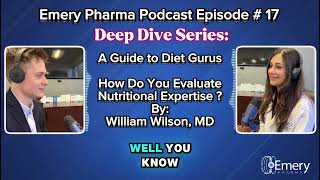
Bill Wilson lays out five criteria for spotting trustworthy nutrition experts: open-mindedness and intelligence, formal training, ability to read science, clinical experience, and skin in the game. The conversation tests this framework against popular diets like keto, Mediterranean, and intermittent fasting.
Chapters
Okay, so you sent this article over evaluating nutritional expertise.
And a Guide to Diet Guru.
A Guide to Diet Gurus. Yeah. And I've got to say, the title alone, it was.
It grabs you.
Yeah, it grabs you. I was like, what are we going to be, like nutrition detectives or something?
Well, in a way, yeah. I mean, it's written by William Wilson and it's really about figuring out who to trust in this very crowded field of nutrition because, you know, experts.
Yeah, it's like a jungle out there. Right. Like, it can be so confusing. Like one minute something is a superfood and the next minute it's like public enemy number one.
Exactly. And, and this article really gets down to how do you cut through all that noise? And there's a very practical framework he presents for evaluating anybody who claims to be a nutrition expert.
Okay, so what is this framework?
He calls me the Fabulous Five Criteria.
I love it.
And it's really like, it's catchy. A set of lenses through which you can look at anyone and say, okay, how credible are they?
Okay, so what are the fabulous five?
Well, the first one he focuses on is a blend of personal qualities. Open mindedness, intelligence, wisdom and communication skills.
So like anybody.
Right, well, you would think, right. Any expert should have that. But his point is that it's not just about having the knowledge, it's also about being able to communicate.
Right. Because you can be the most brilliant scientist in the world, but if you can't explain what you're doing to anybody, exactly. What good is it? Yeah, it's like the tree falling in the forest.
Nobody hears it.
Exactly.
So, yes, that's the first one.
Okay.
The second one is formal education and training.
Okay.
And here he really emphasizes, you know, credentials, degrees in nutrition, biology, medicine, you know, things that are related to this field.
Right.
So it's not just, you know, so.
It'S not enough to be passionate about it.
Exactly. You need to have the background.
You need to have the background, the science background. Got it. Okay. What's number three?
Number three is the ability to understand and utilize the scientific literature. And what he's talking about here is, you know, not just reading the headlines of, you know, whatever's coming out.
Right.
But to actually understand research methodology, be able to, you know, critically evaluate studies and keep abreast of all the latest findings.
Basically, you eat, breathe and sleep science.
That's it. He even says that in the article, think and Breathe Science.
There you go.
And ideally, you know, these people are also contributing to the scientific conversation by publishing their own research. And peer reviewed journals, of course.
Okay, so that's three. What about number four?
Number four is clinical exposure and observation.
So not just book smarts, but like real world experience.
Exactly. And that's because working with patients and clients allows these, you know, experts to see how different approaches play out in real life.
Okay.
You know, there are just nuances there that you might not get just from reading a textbook.
Of course. Okay, we're on a roll here. We got four. What about the fifth one?
The fifth one he calls Skin in the game.
Ooh. Okay.
And what he means by that is that he believes the best experts are those who are invested in the outcomes of their advice.
Right.
They have something to lose.
Yeah.
If their recommendations prove to be ineffective or harmful.
So they're not just talking the talk.
Right.
They're walking the walk.
Exactly.
I'm like that. Okay, so now I'm dying to know, how does this play out with some real world examples. So, like, did he rank people?
He did. He actually ranks quite a few people. And it's really interesting, some of the rankings. For example, he ranks Gary Taubes.
Okay.
The author of why We Get Fat.
Yeah. Surprisingly low.
Really? Why is that?
He's like one out of five. Wow.
And you know, the main reason for that is he says even though he's a very successful science writer, you know, he lacks formal education in nutrition.
Interesting.
So his interpretation of the research might.
Be skewed because he didn't have that.
Base without that foundational knowledge.
Yeah, yeah.
So that's an example of somebody who's ranked low.
Okay, that's really interesting. So who are some people who he ranked high?
Well, on the high end, we have people like Dr. David Katz, who's well known for his work in lifestyle medicine.
Okay.
And then Another one is Dr. Richard Johnson, who's done a lot of research on fructose metabolism.
Oh, yeah, I've heard him speak.
And its impact on, like, online. Yeah, he's great.
He's great. He's really good at explaining that stuff.
He really is. And then Dr. Robert Lustig, he's an endocrinologist. He's really brought a lot of attention to the dangers of added sugar.
Dr. Lig? Yeah, he's incredible.
I mean, he is.
He's so passionate about educating people about this stuff.
Exactly. And speaking of that, I think it's worth mentioning Emory Pharma and their commitment to science and transparency because they actually have a lot of interviews.
Really.
And seminars on their website.
Wow.
With Dr. Lustig and Dr. Johnson and even Dr. Wilson. So if anybody wants to sort of.
Yeah, I've heard of them.
Go straight to the source.
They're really good about like making this information.
Yeah. They're committed to it accessible.
I'll have to check that out.
Yeah.
Okay, so we've got the Fabulous Five. We've got some examples of who ranks where. So how do we actually use this in our daily lives?
Yeah, that's the question. Right. Because we're bombarded with information constantly.
Constantly.
It's like drinking from a fire hose.
It is.
But that's where the Fabulous Five really come in. You can think of them as a filter.
Okay.
For sifting through all that noise and identifying the sources that are really worth your time and attention. So it's like you have this mental checklist.
I like that.
Okay, Right.
So let's put it to the test. Let's say I'm curious about the ketogenic diet. Everybody's talking about keto.
Right.
How can I tell if the people who are promoting it are legit?
Okay, so let's apply the Fabulous Five. First, communication skills. There are definitely keto proponents out there who are incredibly articulate and engaging.
Right.
You know, they write best selling books, they host podcasts, they have a huge.
Online presence, so they check that box. What about formal education and training? Are they actually qualified to give this advice?
That's where it gets a little interesting.
Okay.
Some of the leading keto voices do have backgrounds, you know, in medicine or nutrition, but there are also plenty who don't.
So it's a mixed bag.
It is a mixed bag. And so that's where doing a little digging can be helpful.
Look at their bios, look at their bios.
Check their credentials.
Okay.
Are they citing research from reputable sources or are they mostly relying on an anecdotes and personal experiences?
Okay, makes sense. What about the scientific literature itself? Is there solid research to support these claims being made about keto?
There's a good amount of research on keto. Some studies have shown promising results for weight loss and certain metabolic markers. But as with any diet, the research isn't conclusive.
Of course.
And there can be long term effects that we don't fully understand yet.
Yeah, it's not a magic bullet. Right. And so this is where I guess that critical thinking piece comes in too. Like, just because a study shows a positive result doesn't mean that it's the right approach for every single person.
Right. And you always have to look at who funded the research.
Of course. Yeah.
And you know, are there conflicts of interest and all of that.
Absolutely. Okay, what about clinical exposure and observation?
Yeah.
Has keto been around long enough for experts to see what its long term effects are?
That's a good question. On people, it seems like it sort of exploded onto the scene.
It did. Right.
A few years ago. And while, you know, some clinicians have incorporated it into their practice, it's still a relatively new approach compared to say Mediterranean diet.
Right. Which has been around forever, which has.
Been studied for decades.
Yeah.
So that long term data is still being gathered.
So I guess a little less skin in the game just because it's so new.
Yeah, you could say that. It's not a deal breaker, but it's something to consider.
Sure.
You know.
Okay, so how about something like the Mediterranean diet then?
Yeah. So the Mediterranean diet scores very high.
Yeah.
Everybody loves the Mediterranean diet on all of Wilson's criteria.
Give me the olive oil, the fresh produce, it's delicious. The fish.
It is. And it has this really solid foundation of research, you know, behind it that supports the claims about its benefits.
What about the clinical exposure part of it?
Oh, huge.
Yeah.
Because this way of eating has been practiced for centuries in the regions bordering the Mediterranean Sea. So doctors and researchers have been able to observe its effects on populations over.
A long period of time.
Yeah, over very long periods of time.
So it's got that long term data that's been collected sort of naturally.
Yes, exactly. And it's not just about the latest scientific study. It's about that collective wisdom that's been accumulated over time.
So that's where that skin in the game is really there. Right.
Because it's like huge thing in the game.
Yeah. It's culturally, it's historically.
Yeah. It's been intertwined with.
It's a way of life.
Exactly.
It's not just a diet, it's a way of life.
Yeah. That's a great way to put it.
Okay, so we talked about keto, which is like a very specific diet plan.
Right.
We talked about the Mediterranean diet, which is more like a way of eating.
More of a pattern.
Yeah. What about something like intermittent fasting?
Yeah.
It's not what you eat, it's when you eat.
Right.
How does that fit in?
That's a really interesting one.
Yeah.
In terms of communication, you know, intermittent fasting definitely has some charismatic proponents who have popularized it very effectively. And there's definitely a growing body of research that's explored its potential benefits.
But it still feels like there's a lot we don't know.
There is a lot we don't Know, it's a relatively new area of research. Long term studies are still underway. So while it might show promise that skin in the game element is not as strong as it is for more established dietary approaches.
Okay. I'm starting to see how these Fabulous Five could really help us like wade through all this. It's like a superpower or something.
It is, yeah.
Okay, so let's keep going. What about veganism? Veganism, that's a hot topic, right?
It is a hot topic. And when we apply the Fabulous Five, you know, we see both strengths and areas where maybe more critical thinking is needed.
Okay.
On the plus side, you know, there are many well educated and articulate advocates for veganism who are very effectively communicating the ethical and environmental aspects of it.
Right. And there's also a lot of research coming out about the health benefits of a plant based diet.
Absolutely. Studies have shown that, you know, vegan diets can be very beneficial for heart health, blood sugar control, even reducing the risk of certain chronic diseases. But it's not without its challenges.
What would some of those be?
Well, you know, meeting certain nutritional needs on a vegan diet requires very careful planning.
Sure.
Nutrients like vitamin B12, iron, omega 3 fatty acids can be harder to obtain from plant sources alone.
So it's not just as simple as cutting out all animal products. You have to think about it.
You have to be mindful. You gotta really do your research and potentially consider supplementation.
Yeah. Okay. What about gluten free diets? Yeah, gluten free, that's another one that's just exploded in popularity.
Yes. And this is where the Fabulous five can be really helpful because they can really help separate fact from fiction.
Okay.
So, you know, for people with celiac's disease, obviously a gluten free diet is a medical necessity.
Right.
It's not a choice, of course, but for those without celiac disease, going gluten free is a bit more nuanced.
Yeah. Because I've heard people say they feel better when they cut out gluten even if they don't have celiac.
Right. And there's a condition called non celiac gluten sensitivity where individuals do experience symptoms like bloating and digestive discomfort after consuming gluten, but the scientific understanding of this condition is still evolving.
So it's not as clear cut.
It's not as clear cut as celiac as celiac disease. No. And that's why it's really important to consult with, with a healthcare professional.
Okay.
If you, if you think you have.
An issue, you might have a Gluten sensitivity.
Okay.
So they can really help you determine if a gluten free diet is truly necessary.
Okay. So I guess the bottom line is just because a diet is trendy or has some potential benefits.
Yeah.
Doesn't mean it's right for everyone.
Right.
It's about really understanding the nuances and making informed decisions.
Exactly. And that's the beauty of the Fabulous Five.
Yeah.
It's not about telling you what to eat.
Right.
It's about giving you the tools to critically evaluate the information out there.
I like it. Okay, so we covered keto, Mediterranean, intermittent fasting, vegan, gluten free. What else is out there?
Well, there's one that's been gaining popularity for its focus on what our ancestor void.
Oh, the Paleo diet.
The Paleo diet, yeah.
Caveman diet. Exactly. So meat, nuts, berries.
Yeah.
You know, anything our hunter gatherer ancestors.
Would have eaten back in the day.
And it does have some compelling aspects.
Okay.
You know, it encourages eating whole unprocessed foods, similar to the Mediterranean diet.
Okay.
But it also eliminates entire food groups.
Okay. Like what?
Like grains and dairy.
Really? Which raises some questions because those provide important nutrients, right?
They do. And that's where the Fabulous Five can help us dig a little deeper.
Okay.
You know, does the scientific literature really support eliminating those food groups? For most people, yeah. Are there potential long term risks or nutrient deficiencies that need to be considered? And how much skin in the game do the proponents of Paleo.
So it's not just about like, I heard this is good. I'm gonna try it. It's about really thinking, critically, asking those questions about all this stuff. Okay. What about low carb diets?
Yeah, low carb.
It's been around forever.
It's been around a long time.
Atkins, south beach, all that stuff, all.
The iterations, you know, Atkins, South Beach. And while they can be effective for weight loss in the short term, the Fabulous Five remind us to consider the bigger picture.
Okay.
You know, are these diets sustainable over the. What are the potential effects on metabolic health, nutrient intake? And who are the experts behind these claims? What are their credentials?
So many questions. It's amazing how this is making me think about all this.
That's great.
That's what we want, like in a totally different way.
Yeah. You want to empower yourself to make these decisions.
Totally.
Now, there's another concept that's less about specific rules and more about a mindful approach to eating.
Oh, I like that.
And it's called intuitive eating.
Intuitive eating?
Yeah.
Okay, tell me more.
So it Encourages tuning into your body's natural hunger and fullness cues.
Okay.
And making peace with food.
Okay. But can you really trust your intuition when it comes to food?
That's a great question.
Well, what about cravings and emotional eating and all that?
Yeah, those are all addressed in the intuitive eating approach. It's not about, you know, ignoring your crayons or pretending they don't exist. It's about learning to understand them. You know, to differentiate between physical hunger and emotional hunger and to make choices that nourish your body and your mind.
It's like retraining your brain to have a healthier relationship with food.
Exactly. And there's a growing body of research that suggests that intuitive eating can be very effective for improving body image, reducing disordered eating patterns, and just promoting overall well being.
I love that. Okay, so much great information. We've covered a lot of ground today. We've explored all these different diets. We've got our Fabulous Five criteria. What are some of the key takeaways we can leave our listeners with?
Well, I think the most important takeaway is that there's no one size fits all approach to nutrition.
Right.
You know, what works for one person might not be right for another.
It's about bio individuality.
Exactly. It's about finding what works best for your individual needs.
Right.
Your preferences, your lifestyle.
Exactly.
And just as importantly, it's about being a critical consumer of information.
Yeah.
You know, we're bombarded with messages about what to eat all the time, constantly. We need to be able to sift through all that noise.
That's where the Fabulous Five come in.
That's it.
They're like our.
Your secret weapon for navigating this world.
This has been so eye opening. I feel like I have a whole new perspective.
I'm glad to hear that on this stuff. And remember, this is just the beginning of your journey. There's always more to learn when it comes to food and health.
Okay, so what's next?
Well, I think it's time to move beyond specific diets and delve into some broader concepts that can help us make sense of this ever evolving world of nutrition.
Sounds good to me. I'm ready.
Okay, great. Let's start by exploring the concept of bio individuality.
Bio individuality. Okay, I like the sound of that. Yeah, it kind of goes hand in hand with everything we've been talking about.
It does. It challenges the notion of a one size fits all approach to nutrition and it encourages us to really tune into our bodies and discover what truly nourishes Us as individuals.
Individuals. I'm intrigued. Let's dive in. So bio individuality. It's like the anti diet, right?
It really is.
I love it.
It's a whole different way of looking at things.
Yeah. So how do we do that? How do we tap into that and figure out what works for us?
Well, it starts with paying attention.
Okay.
You know, notice how different foods make you feel, and not just physically, but also mentally and emotionally.
So it's not just like, did this give me a stomach ache? But did this make me feel good?
Did it give you energy? Did it make you feel slow?
Did it make me want to take a nap?
Exactly. So tuning into those subtle cues, recognizing that your body is giving you feedback all the time.
My body's talking to me.
It is.
Okay, got it. So paying attention, that's step one. What else?
Experiment. Don't be afraid to try different foods and see how your body responds. Keep a food journal. Track your energy levels, your mood, your digestion. Look for patterns.
So I'm like a scientist in my own kitchen.
I love that.
That's awesome.
And as you gather data, you'll start to see which foods really nourish you and which ones might not be serving you as.
It's so cool. I love this idea of, like, taking control.
It's empowering. And it's important to remember that bio individuality extends beyond food. It also includes things like, you know, sleep, stress management, movement, even our social connections.
So it's really taking a whole distance.
A holistic view of health.
Exactly.
So as we wrap up this deep dive, I want to leave you with a few questions.
Okay.
Hit me to ponder. Okay.
Okay.
If you were to create your own personal Fabulous Five criteria for evaluating health advice, what would they be?
I love that question. I'm gonna have to think about that.
Yeah. And how has this deep dive changed the way you think about nutrition and your own personal health journey?
I mean, honestly, it's been a game changer.
That's great.
I feel like I've gone from feeling, like, really overwhelmed by all this information to having this, like, framework to make sense of it all.
That's fantastic.
And I love this idea of bio individuality. It's so.
It's empowering.
Empowering.
It is.
It's awesome. Okay, well, thank you so much for this deep dive. This has been really incred.
Thanks for having me.
And to our listeners, thank you so much for joining us.
Yes.
And remember, your health is your greatest asset.
Absolutely.
And you have the power to make informed choices.
You do that.
Support your well being.
That's right.
Until next time, stay curious, stay informed.
And stay nourished.
And stay nourished.
More from Dr.

Hippocrates said, let thy food be thy medicine #obesity #metabolicsyndrome #lustig #shorts #health



Bill Wilson, MD: Why GLP-1 Drugs Are Overpriced—and How Compounding and Competition Could Fix It

Nitrosamine in Pharmaceutical Products? A Deep Dive into Risk Management by Ron Najafi, Ph.D.

The Subcellular Processes That Belie All Chronic Disease. The Hateful (or Grateful) Eight #lustig

Bill Wilson, MD: GLPs May Reverse Carb Syndrome—Helping Patients Reach Zero and Sustain with Diet

Why Everything You Knew About Obesity Is Wrong | Dr. Robert Lustig on Sugar & Metabolic Syndrome

Robert Lustig, MD: How Fructose Fuels Fatty Liver, Oxidative Stress, and Metabolic Disease #fructose

Robert Lustig, MD: The 3 Types of Fat Fueling Insulin Resistance and Disease #insulin resistance

Bill Wilson, MD: GLPs May Reverse CARB Syndrome. Helping Patients Reach Zero and Sustain with Diet