Medicinal Synthetic Chemistry at Emery Pharma
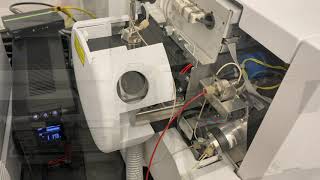
A recorded presentation by Dr. Katie Guggenheim (Director of Synthetic and Analytical Chemistry) describing Emory Pharma’s contract research services in synthetic and medicinal chemistry. Covers capabilities, project workflow (literature search → feasibility → scale-up → purification → characterization), analytical platforms (400 MHz NMR, multiple LC–MS, prep HPLC, GC–MS), and a case study separating regioisomers to >98% purity. Emphasis on client collaboration, confidentiality, scale (mg → tens of grams), and support for regulatory submissions.
Chapters
Hi everyone, My name is Dr. Katie Guggenheim and I am the Director of Synthetic and Analytical Chemistry here at Emory Pharma. So a little bit of background about myself. I did my PhD at UC Davis in synthetic Organic Chemistry and then I did a postdoc also at UC Davis in the field of enzyme engineering. Today I will give you a brief overview of our company focusing on the services we offer in synthetic and medicinal chemistry. I will be going over our various capabilities and how we would conduct a synthetic project from start to finish by walking through a typical example or case study. I will also show some detailed videos of how our analytical instruments work and how we utilize them to conduct synthetic chemistry projects. Emory Pharma is a contract research organization servicing a wide variety of clients in biotech, pharmaceuticals, veterinary medicine, food science, materials chemistry and more. We have a bioanalytical department specializing in method development for quantitating analytes of interest in complex biological matrices such as blood plasma, urine and other biological tissues. Our analytical department also develops HPLC and LC Ms. Based methods for drug substance, drug product and raw materials release testing and stability studies. What I will focus on in this presentation is the Synthetic and Medicinal Chemistry Department which offers custom synthesis services to pharmaceutical, biotechnology and consumer product companies as well as academic institutions. Collaborating with companies and institutions in this way can help them to mitigate the rising cost of general R and D and drug development by using our equipment and labor exclusively when needed, reducing upfront capital investments for these expenditures. In the Medicinal Chemistry Department, we assist and support clients and collaborators to develop novel, safe and effective drug like molecules. We are able to characterize all resulting molecules rapidly in house with our analytical instrumentation including our Bruker 400 MHz NMR capable of analyzing different nuclei including but not limited to proton, carbon 13, fluorine 19 and phosphorus 31. Running 2D experiments is also an option including COSI, NOSY, HMBC, HSQC and more. We also have multiple LC Ms. Instruments available in house to identify and confirm the mass of the compounds and also assess purity of the material by uv. We are also able to assist in impurity identification and elucidation arising from your API formulation or other steps in the synthetic or drug manufacturing process. In many cases, after elucidation has been performed on the impurity of interest, synthesis of the impurity is requested for the necessary toxicity studies which we of course can also support. We also have capabilities in nitrosamines testing such as NDMA as we have been the key petitioner that resulted in the removal of ranitidine from the market. We are also able to assist your team in patent strategies to ensure the most complete patent coverage. Working closely with our patent consultants and attorneys in our Synthetic and Medicinal Chemistry department, we can support a wide range of research and development and pre clinical projects, all conducted on a fully confidential basis. Depending on the client's needs, we can agree to an hourly or full time employee contract. Our team prides itself on providing reliable and high quality chemistry service with on time delivery of compounds. If we start with an unknown synthetic route or issues happen to arise in precedented synthetic procedures, the client is always kept abreast of any changes that will need to be made in the timeline of compound production. Our team is committed to troubleshooting any issues that arise to get back on track for successful completion of the desired product. Our medicinal chemistry team has expertise in anti cancer, antibacterial metabolic disorder and glycosidase inhibitor therapeutics development and with our state of the art facilities can support your efforts to develop new drugs in our Medicinal Chemistry department. Specifically, our chemists have expertise in HIT identification, HIT to lead optimization and development of clinical candidates in support of INDS, NDAs, ANDAs, ANDSS and MAAS for regulatory submissions. We are also able to scale up synthesis of a chosen candidate for pre clinical studies on a scale of upwards of 50 grams. Members of our team have led projects in Big Pharma biotech and successfully moved compounds into development of clinical candidates. We have experience with interfacing with biologists and have an understanding of the biological data to help explore structure activity relationships to aid in the design of drug like molecules. We also extend this understanding into improving pharmacokinetic, pharmacodynamic and toxicity profiles in the development of these candidates. On the synthetic chemistry side of things, specifically, our chemists have experience in multi step routes for the synthesis of key building blocks, reference compounds, impurities and metabolites in milligram to gram quantities. We are capable of conducting projects involving asymmetric synthesis, peptide chemistry including on bead couplings, oligosaccharide synthesis, heterocyclic synthesis and many more types of chemistries that I'm not listing here. We have in house instrumentation for purification including a prep HPLC and combi flash and characterization including multiple LC Ms. Instruments, a GCMS and a 400 MHz NMR. We have experience in hard to separate mixtures and have been able to deliver high purity compounds to our clients. In the next few slides I will walk through how we would handle a synthetic project from beginning to End, the client typically inquires with a specific structure of interest. We then initiate the project by doing a literature search for for all synthetic procedures that could be useful to the compound of interest. In some cases, the exact compounds have been synthesized before and there is literature, precedent or procedures available, either provided by the client or found by our team. In other cases the compound of interest has not been synthesized, in which case a hypothetical synthetic route will be developed by either the client or our team, exploiting the literature for any relevant reactions. Once a procedural plan is in hand, we embark on the synthesis in the lab, typically with a feasibility study. A feasibility study is a pilot run which is done on a very small scale. It could be as little as a few mgs to assess the success of the planned procedures. Once the study is complete, the client can then choose whether or not they would like to move forward with a full synthetic scale up in the amount desired. For instance, if the plan procedures failed and more R and D synthetic development is needed, the client can choose at this point whether or not they want to move forward with this type of work. Our team never shies away from a challenge, of course with the client's approval to move forward. So in the old days you would typically assess the success of reactions by thin layer chromatography or TLC if the compounds were not UV active. Using TLC stains is an option such as iodine, Potassium Permanganate, PMA, Ninhydrin, etc. Of course, with the advent of LC Ms. We now have a much more detailed and thorough picture of what is going on in the flask. A crude NMR can also be taken and our NMR here is shown on the right. Although if the mixture is complex, the resulting compounds may be hard to differentiate from each other. So now I'm going to show a video which is a walkthrough of how we would set up our LC Ms. To conduct such an analysis. We have three triple quad LCMS Ms. Instruments in house. When doing a general assessment of synthetic success, only a single quad is really needed. However, the triple quad instruments would help with differentiating structural isomers if needed. Triple through fragmentation patterns. We mostly use our tandem Ms. Capabilities for bioanalytical quantitation work. Shown here is the acquisition window of our Agilent system. First we toggle to the method editor where we set up the parameters such as the mobile phases and gradient program for reaction monitoring. A typical reverse phase gradient from high aqueous to high organic, then back to aqueous is sufficient with a standard C18 column. You can then set up your column compartment parameters. In this case, we would probably keep the column at room temperature for initial studies. The DAD parameters are then set in monitoring multiple wavelengths as possible if the wavelength of maximum absorbance is not known for the Compounds of interest, 254nm is typically used in organic synthesis. If this does not work, literature searching on similar compounds may help pinpoint this down. We can also run a quick scan on our in house spectrophotometers to find the wavelength of max absorbance. If necessary, we would then go to the triple quad tab and set up the parameters for the mass spec. In this case, we would do an MS.2 scan starting from an M Z from maybe 70 to 500 in positive mode. Of course, if the mass of the compound of interest does not fall in this range, this will need to be adjusted if certain side products are hypothesized. The masses of these may also need to be considered in choosing this range. Also, if the compounds are thought to be more amenable to negative mode, this can also be changed. Lastly, we would set up the work list describing the sample and data file. This will be saved as and then from here press play which starts the sequence. This is showing the injection of the sample in the needle wash which is typically done three times. The needle wash is done to prevent carryover of compounds from sample to sample. The module shown here in the video is the binary pump which is like the heart of the instrument delivering the mobile phase carrier. A good starting point for mobile phase choice is water with a formic acid modifier and acetonitrile or methanol as the organic phase. The binary pump head has the advantage of high pressure mixing delivering a very precise gradient. The module shown here is the column compartment which has heating capabilities. The column is responsible for separation of the resulting reaction mixture and a standard C18 column is a good starting point choice as the stationary phase. From the column the compounds travel to the DAD detector or diode array detector. This compartment has a visible lamp and UV lamp. This is responsible for affording the UV chromatogram result from the did. The compounds travel to the mass spec detector which contains an ESI source or electrospray ionization source and quadrupole mass analyzer. This is responsible for the total ion chromatogram result output showing you the masses of the compounds contained in the mixture. Now you can see the overall instrument setup containing all aforementioned modules. The video is now in the data analysis software showing a resulting tic chromatogram or total ion chromatogram above and the UV trace below. The total ion chromatogram contains all of the masses found throughout the entire run. If you double click on the TIC as you see here, the mass spectrum will appear at the retention time of interest, which you can now see at the bottom of your screen. In this case, the major mass shown at the retention time that corresponds to the height of the peak in the tic is 164, giving a mass of the compound to be 163 when in positive mode. Since this is the major mass that appears in the mass spectrum at this retention time, this peak is likely pure164. You can walk through the whole run to see the mass spectrum at each time if desired. If 163 is your compound of interest, this would then be good news. There's also another peak in the spermatogram to assess as well, which could possibly be a side product, starting material or other possible isomers of your compound. So, to reiterate here on the next slide, say we are looking for a product with the m over z of 164. This shows that the reaction generally worked in our favor as given by this chromatogram. If this were the final compound that the client wanted, we could then scale up this process and develop a purification method. We have capabilities of scaling up your synthetic process ranging from a few mgs to tens of grams. Our synthetic team has capabilities in handling air and moisture sensitive compounds. We are also capable of handling nuanced mixtures of structural regio and stereoisomers. In this example, the client had requested synthesis and purification of these regioisomers with the general structures shown here. Of course full structures are protected by the NDA we have signed with our client. We initially had success in synthesizing these compounds using literature precedents. The crude LC Ms. Shown on the right was the result suggesting this success, which actually looked pretty clean for an unpurified mixture. From here we scaled the reaction up to about 25 grams as the client had requested 10 to 15 grams of purified material with this larger scale crude material in which we recovered about 20 grams after workup. We set out to develop the method for purification of the two regioisomers on our in house preparatory HPLC shown on the next slide. We also have a combi flash shown on the left for normal phase purification and can run a silica gel hand column shown on the right, necessary in the case of these two regioisomers which were very polar. We chose a reverse phase purification system on the PrEP HPLC. For the separation of these two regioisomers, we chose a unique biphenyl chemistry stationary phase in the column. Biphenyl stationary phase is known for greater retention and selectivity of polar aromatic compounds such as these regioisomers and this column chemistry is shown here. Of course, this column choice was also facilitated facilitated by trial and error on an analytical scale with a smaller column of the same chemistry. The video here shows the setup of Our Waters Preparatory HPLC150. The first screen shows where you would choose your mobile phase gradient and flow rate, much like the analytical version. All of these parameters are highly important features that can make the difference between separation or no separation. The next tab contains the fraction collection program settings. If we do not know which peak is resulting from the compound of interest, we we can set this to collect all peaks that occur above a certain absorbance threshold at the wavelength of max absorbance. Also, we have had cases in which the compounds are not UV active and therefore have collected fractions based on time segments. The colors you see here are separate fractions that have been collected in a previous chromatogram. This tab is where we would set up the sample sequence including the location of the material, the data file name and injection volume. From here you add the sequence once complete to the queue and hit the play button. Here we see the collection of fractions which as mentioned before, is time or absorbance based. You can see how it moves from one test tube to the next. The next module is the UV VIS detector with a preparatory flow cell giving the resulting chromatogram for the mixture. In this case you can see it is set at a wavelength of 210nm. Of course the wavelength is customizable and is capable of dual monitoring or two wavelengths at a time. This module is the binary pump that delivers the mobile phase. It is capable of flows ranging from 0.5 to 150 mils per minute. We also have the capability of using an inert gas sparge, in this case helium which degasses the solvents, especially useful when running low flow rates or dealing with air sensitive compounds. We can then see here the real time resulting UV trace in which we can watch the compounds eluting. You can see the two colors that indicate the fractions. Click Collected. In this particular case we were not sure where the compounds were going to come out, so we collected based upon time segments. Going back to our case study of two regioisomers. This is an example chromatogram in which we used the 30 x 250 millimeter biphenyl column from Phenomenx to achieve this separation. Unfortunately, many of the underlying impurities that we did not see in the analytical chromatograms appeared in the PREP system. As you can see here, since the client had requested 10 to 15 grams of material, we decided to overload the column with 300mgs of material each injection. While we do not see great separation at this loading, we can pick and choose the fractions by setting up a time segmented collection to obtain pure material. The fractions shown in green were found to be pure regioisomer 1 and fraction 5 in pink pure regioisomer 2. With multiple injections on the order of 50 to 100, we were able to achieve greater than 98% purity of both regioisomers in the the amount that the client had requested. As you can see here, these are the analytical runs of the purified material achieving 98% purity for Regioisomer 2 shown below in pink and greater than 98% purity for Regioisomers 1 shown above in green. The next step is to combine the necessary fractions and dry down the material with erotavap. Once the material has been dried down with erotavap, we confirm that the purified material is our desired compound by obtaining a proton and carbon NMR with our in house 400 MHz NMR. As mentioned previously, our NMR is capable of detecting multiple different nuclei, doing 2D experiments, solvent suppression experiments, temperature controlled experiments and much more. Now I will show a video of the full NMR setup and go through the process of running an NMR. This is the 400 MHz NMR with Ultrashield. We first start by using the nitrogen lift to introduce our sample to the magnetic field. Here you can see the sample being added and lowered. The next step is to lock the signal on the deuterated solvent the sample is dissolved in to compensate for drifting resonance frequencies. Here you can see the program's process for locking which is necessary to acquire reliable data. The next step is shimming which adjusts the smaller magnets in the instrument to obtain a homogeneous magnetic field. This is fortunately done automatically in the program. However, if data is collected and when the shims are obviously off, you can also go back and do a manual adjustment. If assessing a nuclei differing from the previously ran sample. The instrument's probe then needs to be tuned to the nuclei of interest frequency as shown here in the video. This is necessary to optimize the sensitivity of the instrument. From here we decide the number of scans in the acquisition amongst many other parameters that I won't go into now. After acquisition of the fid or free induction decay spectrum, we then command the program to do a Fourier transform on the data to obtain the resulting spectrum. Depending on the chemical environment that each independent nuclei resides in, the decay frequency will differ, giving us the chemical shift in the spectrum in parts per million or ppm. We can then do an automatic phasing of the peaks and automatic baseline correction which gives you the program's integration results shown here. This integration tells you the number of protons in this case relatively that is accounted for by each peak. Shown here is an example at. Mr. From our earlier case study. From analyzing this data, you can either confirm or reject the hypothetical structure. We can also assess purity by the cleanliness of the data we obtain. Of course, we always run purity by lcms as well on the final material and provide all of this data in a certificate of analysis with the deliverable compound to the client. Speaking of our nmr, we have multiple additional capabilities for our clients. This includes release testing by identification and in which we basically make sure that the compound is the correct structure. By preset NMR chemical shift and integration specifications, including impurity analysis, we can do release testing by average degree of substitution determination. For example, cyclodextrin excipients typically have a poly dispersed degree of substitution units on the polysaccharide ring. We can determine this number by calculating the ratio of two specific peaks for ultimate release of the product. This idea can also be applied to antibody drug conjugates, determining how many drug payload units are displayed on the antibody carrier. We also have the capability of determining quantitative purity by NMR using an internal standard such as maleic acid, ethylene carbonate or dimethyl sulfone, which we readily have in house. All of these tests can be conducted in an R and D or GLP CGMP manner using our qualified 400 MHz NMR in house. As you can see on the right hand side of this slide, this concludes the steps taken to complete an example synthetic project here at Emory Pharma with a little extra information about our additional capabilities in the analytical and bioanalytical departments. So we hope you enjoyed the presentation today. If you have any questions at all, please reach out to us by phone or email@inforypharma.com we'd love to hear about your projects and we hope we can collaborate with you soon. Thank you.
More from Dr.

Hippocrates said, let thy food be thy medicine #obesity #metabolicsyndrome #lustig #shorts #health



Bill Wilson, MD: Why GLP-1 Drugs Are Overpriced—and How Compounding and Competition Could Fix It

Nitrosamine in Pharmaceutical Products? A Deep Dive into Risk Management by Ron Najafi, Ph.D.

The Subcellular Processes That Belie All Chronic Disease. The Hateful (or Grateful) Eight #lustig

Bill Wilson, MD: GLPs May Reverse Carb Syndrome—Helping Patients Reach Zero and Sustain with Diet

Why Everything You Knew About Obesity Is Wrong | Dr. Robert Lustig on Sugar & Metabolic Syndrome

Robert Lustig, MD: How Fructose Fuels Fatty Liver, Oxidative Stress, and Metabolic Disease #fructose

Robert Lustig, MD: The 3 Types of Fat Fueling Insulin Resistance and Disease #insulin resistance

Bill Wilson, MD: GLPs May Reverse CARB Syndrome. Helping Patients Reach Zero and Sustain with Diet