Non-Alcoholic Fatty Liver Disease and its Link to Chronic Illnesses, Unraveling the Hidden Epidemic.
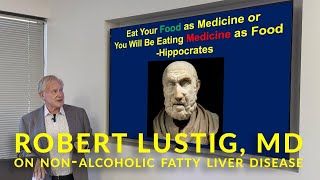
Recorded Emory Pharma seminar in which Dr. Robert Lustig (UCSF pediatric endocrinology) argues that non-alcoholic fatty liver disease (NAFLD) is a widespread, often-silent driver of metabolic disease (including type 2 diabetes) and that the primary causal substrate is dietary sugar—particularly fructose—rather than obesity per se. He reviews epidemiology (rising diabetes including in lean individuals), explains why BMI/subcutaneous fat are poor individual predictors, defines three fat depots (subcutaneous, visceral, hepatic), and presents a three-hit model for NAFLD: (1) fructose-driven mitochondrial dysfunction and increased de novo lipogenesis (DNL), (2) reactive oxygen species (Maillard reactions/oxidative stress) causing inflammation and gut-liver translocation, and (3) impaired hepatic export due to deficiencies (choline/methionine) and ultra-processed foods. He cites a UCSF isocaloric fructose-restriction trial in children that reduced liver fat (~22%), DNL (~46%), VLDL (~49%) and improved insulin dynamics without weight loss, and argues clinical management should target dietary substrate quality (reducing added sugars) rather than focusing solely on weight loss.
Chapters
Welcome to Emory Pharma speaker series, everybody. My name is Ana Najafi. I'm the head of Strategic Pharmaceutical development here at Emory Pharma. It's an honor to welcome professor lustig here today. Dr. Lustig is a professor of pediatric endocrinology at UCSF. He comes from my alma mater. Professor Lustig has authored multiple books such as Sugar, the Bitter Truth. I encourage all of you to pick up one of his books. They're very interesting. He's an advocate for responsible nutrition and food. He's a firm believer in you are not what you eat, you are what you metabolize. He's got a very interesting presentation here for us today. I hope you all stay tuned until the end. And with that, I'll hand it over to Dr. Lustig.
Thank you, Anna, and thank you, Ron, and thank all of you for inviting me back. I appreciate it very much. Last time we talked, in the midst of an atmospheric river of information, you may remember, we talked about what I commonly referred to then as the hateful or grateful 8. Remember the subcellular pathologies that belike chronic disease. So today what we're going to do is we're going to build on that and talk about one of those chronic diseases, the one that everyone has and don't know that they have and what havoc that is wreaking. And that is this phenomenon called non alcoholic fatty liver disease, which now affects 45% of all Americans and 25% of the world. And they don't know they have it. Like hypertension, silent killer. You don't know you have it till you've had a stroke or you're dead. Same thing with fatty liver. And so understanding the pathogenesis of this is extraordinarily important. Even more so because this is a new disease. Prior to 1980, if you saw fatty liver under the microscope, that patient was an alcoholic. But today, 25% of children in the United States have fatty liver and they don't drink alcohol. So what's the cause, what's the exposure? And that's what we're talking about today. So, as I mentioned, type 2 diabetes is ultimately the manifestation of fatty liver disease. And I'll show you how. This is a paper that came out in 2001 based on 2000 data. And at that time, you can see that there were 151 million people walking the earth with diabetes. And what was projected for a decade later, 2010, was that we would be up to 221 million. That would be a 46% increase over the decade or an annualized inflation rate, as the actuaries do it, of 3.88% per year. That is not what we saw. What we actually saw was that was 285 million by 2010. That's, in fact, an annualized inflation rate of 6.55%, a doubling over what was anticipated. By 2014, we were up to 422 million. That's an increase, an annualized inflation rate of 10.3%, a tripling over what was anticipated. And remember, this is while we're all focused on the obesity epidemic and gym memberships and, you know, fen phen and all sorts of, you know, other medications to try to deal with the obesity epidemic, by 2021, we were up to 537 million. What is now projected is that for 2030. So seven years from now, we will be up to 568 million. And most recently, just last week, I saw a projection that by 2045, we would be up to 760,000 3 million people with diabetes. How do you explain that? Well, the myth is that this is due to the obesity pandemic, that obesity drives metabolic disease, that obesity is the cause. And as we get more obese, we get more diabetes. Is that true? Well, not really. And I'll show you why this came out just like a month ago. And what we're looking at here is trends in the prevalence of lean diabetes, people with type 2 diabetes who are not overweight, who have BMIs less than 30. And you'll notice that for the overweight adults, the increase is small, but for the lean adults, it's enormous. So this is the combination of the two. So this is what everyone reports out. But in fact, it's actually going up more in people who are normal weight. And children get type 2 diabetes as well. Now, type 2 diabetes was always an adult disease. Type 2 diabetes was always in the disease of alcohol. Well, children don't drink alcohol and children are not adults. But children get type 2 diabetes. And it doesn't matter which demographic group you want to choose. It's going up in all of them, from 2001 and blue to 2017 in orange. And guess what? Meta analysis shows that 25% of the children with type 2 diabetes are normal weight. So everyone thinks this is about obesity. Wrong. It is not. Yes, it is true that the obese get more. I don't argue that that is true. Obesity is a risk factor. I don't argue that that is true. But just because something is a risk factor does not mean that it is a cause Those are two different things. So, yes, obesity is a risk factor. No argument. But if it was a cause, that means that if you could stop obesity, you could stop diabetes. Guess what? Thin people get it too. And in high amounts. So this is the way to think about this. And I believe I showed you this last time, and I'll do it again because it's so important. This is a Venn diagram of the entire US adult population. 260 million adults, 42.4% obese, BMI over 30, 57.6% normal weight, BMI under 30. So two mutually exclusive circles. Everyone in this room is in one of the two circles. You know who you are, okay? The standard mantra is those 80% of 42.4% of 260 million. Those 86 million people right there, they're sick. They're fat and they're sick. And they're sick because they're fat. And if they would only just diet and exercise, we could solve this problem. That's what everyone says. Doctors, the nutritionists, the Institute of Medicine, the Surgeon General, the National Institutes of Health, the White House, Congress, food industry. It's these guys right here. Everybody. It's their damn fault. Not true. Number one, it is true that 80% of 42.4% are metabolically ill. I don't argue that that that is true, but that means 20% are not. They're metabolically healthy. We have a name for them. Mho. Metabolically Healthy, Obese. They will live a completely normal life. Diet a completely normal age, not cost the taxpayer a dime. They're just fat. They have increased subcutaneous fat, but they don't necessarily have increased visceral or liver fat, which is actually where the damage caused. Conversely, and this is the important part, 60% of the normal weight population, 60% of 57.6% of 260 million. These 90 million people here, they get the same diseases as these guys over here. Normal weight people get type 2 diabetes, hypertension, dyslipidemia, cardiovascular disease, cancer, dementia, fatty liver disease, polycystic ovarian disease. Also. Now they get it at a lower BMI. Yes, they get it at a BMI under 30. True. Okay. And it is true that 80% is higher than 60%. So obesity is a risk factor. I don't argue that it is for sure. But if normal weight people get it too, then obesity can't be a cause. Not the same. Everybody got that? Everybody understand the difference between risk factor and cause. They are not the same, okay? And when you do the math, they're actually more thin sick people. Calling the fat sick people the problem. And when you do the math on the two of them together, that's way more than half the US Population. And that's what makes us a public health crisis, because normal weight people get it, too. And here's an example, and I think I showed you this last time as well. Okay, here we have two equally weighted adults. Notice trunk fat 12.8. 12.8. See, one's healthy, one's sick. Which one's sick, A or B? B. B is sick. A. He's just got big love handles. Increased subcutaneous fat. Cosmetically undesirable. Metabolically inert. This is not a problem. This guy's got fat all around his organs. Intra abdominal fat. We have a name for this. Tofi. Tofi. Thin on the outside, fat on the inside. Real medical term, 1500 Medline citations. Coined by Dr. Jimmy Bell, University College London. So my question to you sitting here right now, all of you, are you a tofi? How would you know? How could you know? Does your doctor know? If your doctor knows, why didn't your doctor tell you? And if your doctor did know, what would you do about it? Anyway, this is the question. These are the questions that have to be answered in order for us to be able to fix health care. Because if you don't know you have a problem, how the hell are you going to fix it? Okay, so myth number two. Remember, this is called mythbusters. Myth number two. Chronic disease is due to the fat you measure on the scale. You stand on the scale. Oh, I'm fat. Okay. Is that true? Let's see here. We have a group of patients that, as a pediatric endocrinologist, I would take care of. They are known as the little women of Loja. They are a founder effect growth hormone receptor mutation in Ecuador. Okay? They have laron dwarfism. They have a defect in the growth hormone receptor. So they have high growth hormones and low IGF1s. Okay? And so they are all very short and they are all very obese. And here they are 30 years later, exact same women. And guess what? They're still obese. So some of them must have gotten sick. Some of them must have died. Wrong. None of them are sick and none of them died. They're all just fine. In fact, their relatives have gotten sick and died. Not them. The cancer rate in the relatives is high. The cancer rate in the patients is zero. The cancer, the ob. The diabetes rate in the relatives is high. The diabetes rate in the relatives is zero. Okay? Everybody see that? Now here's their insulins. Now if you're fat, your insulin's high, right? You have insulin resistance. And here are their relatives, all with insulin resistance. They have low insulins, they're obese, but they have low insulins. And there's their homework. So how do you explain that? How do you explain that they're fat but healthier than their relatives? Because it's not the fat you can see that counts. So if you take a look now, so here's their percent fat, here's the control 41. Here's the patient 48. Okay? Here's their fasting insulin. The relative 14. The patient 4. But the patient is fat, so the patient should have high insulin. The patient has one third the the level of insulin, okay? Same for the homa. And when you look at the lipids, here's their ldl. Notice their LDL is higher. Now the LDL should give them heart disease. And the reason is because their triglyceride is lower.158. 100. Okay. Conversely, here's another genetic defect. This patient has too little fat. This patient has a disease called lipodystrophy. Notice thinned arms and legs. You can see the veins in the legs right here. See them? Okay? Because there's no fat on his limbs. This patient has metabolic syndrome. To beat the band. He's not fat, but he's got acanthosis because he's got insulin resistance and he's got diabetes. And he needs hundreds and hundreds of units of insulin every day to bring his blood sugar down because he has massive insulin resistance, not because he has too much fat, but because he has too little fat. So the way to think about this is that each of us really has three fat depots. Three, okay? The first one, subcutaneous fat. The does this bathing suit make me look fat fat, by the way? Never answer that question, okay? That is a non starter. Say no, right? Never answer that question. No, no, no is not a good answer, okay? Never answer the question. Just ignore the question. So this is what medical students are taught. This is how we learn this concept. You get fat, you eat too much, you exercise too little, you get fat. And because you get fat, the fat makes cytokines, TNF, alpha, IL6. Those circulate in the bloodstream, go to the liver, cause the liver to become insulin resistant. That increases hepatic glucose output, okay? So you get increased hepatic gluconeogenesis. This raises blood glucose. This causes the islet cells to have to over release insulin. And so the Further, hyperinsulinemia drives even more fat. And so you have this vicious cycle. But it started here with the adipose tissue. This is the adipocentric view of insulin resistance. This is what every medical student is taught. This was what I was taught. This is what everyone is taught. And then the muscle. Sorry. Comes along for the ride. That's what everyone is taught. The question is, is it true? Is it true? Well, we have some data that says it's not true. Here's an example. Here we have a relationship between bmi, obesity, subcutaneous fat and insulin sensitivity. And you'll notice a hyperbolic relationship. Appropriately, this is Bergman's disposition index from 1986, basically, you know, plotted out. And what you can see is that at any given bmi, insulin sensitivity goes down. That's true. As the BMI goes up. That is true. However, at any given bmi, no matter where that BMI is, there are some patients who are insulin sensitive and there are some patients who are insulin resistant. Yes. As a whole, as a population, higher bmi, more insulin resistance. True, but at any given bmi, you don't know where you are. Which is another reason why BMI is a lousy predictor of morbidity per patient. It's great for populations, lousy for patients, for individuals. Okay. Because there is this continuum. Okay? Now if you take a look at diabetes or heart disease, doesn't matter. It's the insulin sensitivity versus the insulin resistance that determines the fate of the patient, not the bmi. So the bmi. Yes, as the BMI goes up. Yes. Incidence goes up. Sure. As the BMI goes up, incidence goes up. Agreed. I know. Yes, because obesity is a risk factor. Yes, I got that. But it's the degree of insulin sensitivity versus resistance that is the true arbiter of morbidity for both diabetes and also for heart disease. And you can see that here with the Kaplan Meier curve, in terms of survival, who dies? Do the obese die? Well, the obese insulin sensitive person actually lives the longest. See, it's the. And yes, the obese insulin resistant person lives the shortest. Agreed. Okay. But no, the non obesity, non obese, it's the insulin resistant person who lives the shortest, no matter what the weight. So it's actually the biochemistry, not the weight that matters. It's whether or not you're insulin resistant. So that's what subq fat means. Nothing. It means nothing. So the question is, how many kilos of subcutaneous fat do you have to gain before you get sick? Anyone? Median 10 kilos, 22 pounds of subcutaneous fat. Okay, remember that number, 22 pounds. Now we're going to go to the second Fat Depot, visceral fat, belly fat. Now this belly fat is very metabolically active. It is very releasable. When you lose weight, you lose belly fat first. That's why your waist circumference goes down. And everyone knows that if you just lose 5% of your weight, you will improve your metabolic health. That's been shown 50 ways from Sunday because the fat you're releasing is your visceral fat. Everybody got that? Now everybody also knows that fat, visceral fat is responsive to adrenergic stimulation. So you have acute stress, whether it be exercise or English test, doesn't matter, you get increased norepinephrine. The norepinephrine binds to the beta 3 adrenergic receptor on the fat cell, which causes lipolysis because it activates hormone sensitive lipase, which causes triglyceride to break up into free fatty acids plus glycerol. And then that lipolysis leads to free fatty acids entering the bloodstream which then go to the liver. And the liver can turn those into ketones. So this is actually a component of weight loss. In addition, the norepinephrine will also bind to the beta 3 adrenergic receptor on the brown adipose tissue and actually increase thermogenesis. So you will get heat flow formation. The bottom line is all of this leads to burning fat and losing weight acutely. The problem is we're not acutely stressed, we're chronically stressed. And chronic stress does something else. What chronic stress does that's absolutely different is it releases the second cofactor in those adrenergic neurons. It releases neurons, neuropeptide Y. So every place in the body where there's neuropeptide Y, there's norepinephrine. And every place in the body where there's norepinephrine, there's neuropeptide y. They are 100% CO localized. And it turns out that neuropeptide Y is there for a reason. It's the brake on the adrenergic nervous system. It causes the adrenergic nervous system to stop. So you get some, shall we say, bang for the buck out of your immediate acute stress response. But then your chronic stress response goes in the exact opposite direction. Hans Sely showed this back in 1951, that the acute stress response and the chronic stress response were completely different. And the reason is because of neuropeptide because what neuropeptide Y does, it gets co secreted with the norepine. And what happens is it binds to the Y2 receptor on that adipocyte and actually causes pre adipocyte proliferation and differentiation of pre adipocytes to adipocytes and actually leads to lipid storage. It actually undoes the effect of the adrenergic nervous system and you can't have one without the other. So the chronic stress response is different from the acute stress response. Plus, the chronic stress response also releases cortisol and cortisol increases visceral fat accumulation and appetite. So you end up causing more lipogenesis. And then. Oh, and by the way, before we go further, how many pounds of visceral fat do you have to gain before you get sick? About 5 pounds, 6 pounds maybe. Okay, so 22 pounds of subcutaneous fat equals 5 to 6 pounds of visceral fat. Now why, if they're both fat? The reason is because the visceral fat drains into the portal vein and go straight to the liver. The subcutaneous fat drains into the systemic circulation, goes into the inferior vena cava. There's a larger volume of distribution, right? You have the systemic circulation, which is 6 liters of blood compared to the portal system, which is about 750cc's of blood. So a little cytokine in the portal system will raise the concentration a lot more and the liver will see that. Everybody got that, because they're not the same. Because subcutaneous fat and visceral fat are not the same because they drain differently. And then finally, the one, we're going to talk the rest of the day about, the liver fat, okay? So we're going to talk about that. So here we have normal liver, okay? So you can see the sinusoids, the bile canaliculi, the Kupfer cells right here, okay? Nicely ordered. All good, right? And here, over here we have fatty liver disease. And you can see the fat vacuoles and you can see the macrophages, and you can see the lymphocyte infiltration, and you can see the beginning of scarring right here. Everybody see that? The problem is, if you look at this under the microscope, what caused it? Prior to 1980, if you saw that under the microscope, that was alcohol. But now five year olds have it and they don't drink alcohol. In fact, alcoholic fatty liver disease and non alcoholic fatty liver disease look exactly the same under the microscope. Because they are exactly the same. The same. The only difference is the substrate that caused it. So yes, alcohol is bad, but there is another substrate that 5 year olds are exposed to that also causes it exactly the same way and for the exact same reason. And does anybody know what that substrate is called? Coca Cola and Pepsi. Sugar. Sugar. Of which Coca Cola and Pepsi are the primary delivery vehicles. Correct. In fact, non alcoholic fatty liver disease is a silent killer, just like hypertension. Okay? And in fact, non alcoholic fatty liver disease is now the leading cause of liver transplant in the United States, having overtaken hepatitis C. Right. And non alcoholic fatty liver disease is not an American disease. Yes, we have the most. I don't argue that. But it's everywhere. Pick your. Pick your country. It's everywhere. Okay? And you'll notice here's bmi greater than 25, here's BMI less than 25. Okay? Okay. Yes, the obese have more. I agree. Obesity is a risk factor. Yes, yes, yes, I agree. But there's still plenty signal even in the normal weight population, isn't there? So take a look at this one. Here we have BMI binned on the x axis versus hazard risk ratio for fatty liver disease on the Y axis. And what you can see is yes, the obese have more. I agree. But take a look in the overweight. Even in the normal weight, you can still see the signal. And for diabetes, take a look at that. Look at the signal in the overweight and the normal weight people. Bottom line, if you have fatty liver disease, you are 3.5 times more likely to develop type 2 diabetes in your lifetime than if you don't have fatty liver disease. Because fatty liver disease is a precursor to that type 2 diabetes. If you develop type 2 diabetes, it's because you had fatty liver and because that fatty liver caused insulin resistance and then your beta cell burned out. So it is the precursor to the diabetes. And that's why we're talking about it. That's why I spent so much time talking about diabetes on the front end. So here's what I want you to remember. I think I showed you these pictures last time. Here we have an obese person. Notice the love handles on the sides. Okay. But take a look at this guy's liver. Notice 2.6% fat. Dark. Okay, this is fine. This is metabolically healthy obesity. Mho, this guy will outlive you. This guy, he's got obesity. But take a look at his liver. 24% liver fat, that's fatty liver disease. That's metabolic syndrome that's waiting to die. Now take a look at this guy here. Notice, no obesity to speak of normal amounts of subcute fat. But take a look at his liver. 23% liver fat, thin, sick fat, sick fat, healthy. So it's not the fat you can see that counts, it's the fat you can't see. Now, it just so happens that a lot of people whose fat you can see also have fat you can't see too. That's true. I don't argue that. Okay? But it's not the fat you can see that's causing the problem. Not the medical problem. Maybe the bathing suit problem, but not the medical problem. Everybody got that thin, sick fat, sick fat, healthy. Everybody see it, okay? And if you have nafld, your risk as an adolescent, this is for adolescents. Your risk for type 2 diabetes goes up 2.6% in America. Everybody got it, okay? Now the question, of course, is where'd that fat come from? How'd you get that fat? And we sort of hinted at it just a minute ago, but now we're going to get delve deeper. So this is a study that came out in 2009. As soon as three Tesla scanners were available. Before 2009, we only had 1.5 Tesla scanners. And they were small. Basically, it'd fit around your leg so we could look at the muscle fat in your leg. This was the first study that was done where you could actually put an abdomen in a Tesla and. Sorry, in a 3 Tesla scanner. And so you could measure liver fat. And so what was done? This was Fabrini at all. This was from Sam Klein's group at Washoe St. Louis. What they did was they said, we don't care about the sub Q fat. Which is more important, the visceral fat or the liver fat? Okay. This was the first study to ask that question. Which is more important for disease, the visceral fat or the liver fat? And so they measured both. And what they did was they did a multivariate linear regression analysis, holding the liver fat constant and looking at liver visceral fat constant and looking at liver fat, or looking. Holding liver fat constant and looking at visceral fat. Everybody see it? Okay. And what they showed was that the insulin dynamics here on the Y axis had no relation to the visceral fat. In fact, the difference was always about the liver fat. It was the liver fat that dictated the insulin resistance, not the visceral fat. Visceral fat was along for the ride. So, okay, this liver fat matters. Where did the liver fat come from? That's over here. Notice high liver fat, gray Non systemic fatty acids. Non systemic. Now we know where systemic fatty acids come from. They come from diet, where they come from, lipolysis of peripheral adipose tissue. But non systemic fatty acids, where do they come from? They come from being made right there in the liver through a process called de novo lipogenesis. New fat making. Okay, that's dnl. That's how where they come from. So DNL is driving this phenomenon. Okay, now how does it work? How does the whole thing get put together with this fatty liver disease? This paper reviewed the concept called the two hit theory that there were two hits to the liver that led to fatty liver disease. I'm here to tell you that is wrong. In fact, there are three hits, and I will show you all three hits and how this works. The first hit is de novo lipogenesis because of mitochondrial dysfunction. Remember, I said I would relate it back to the last talk. Remember, mitochondrial dysfunction was one of the hateful eight. Okay, well, here it is. Okay, so let's talk about it. Fatty liver disease. I am a pediatrician. I only saw fatty liver disease in one disease. Syndrome, Rye syndrome. And they were the absolute worst patients to take care of. And they all died, okay? They were the hardest patients to take care of, and they all died. They all died of this acute fatty liver infiltration, okay? These were normal children, 5 year olds or lower, and they all ended up with this. And they all died. I hated them. I hated them. I hated this disease. The question was, what caused it? And then in 1984, 85, after I was a resident, too late for me to benefit from the knowledge, we learned that, that virtually every patient with Rise syndrome, that that came to our ICU and died, they'd all been exposed to aspirin. And this is why we do not give aspirin to children anymore. This all happened in the 19, early mid-1980s. Okay? Everybody knows that you don't give aspirin to children, right? This is why, for this, okay? It turns out that patients with Rey syndrome, they have mitochondrial dysfunction because aspirin caused mitochondrial dysfunction. It caused changes in hepatic lipids and changes in hepatic triglyceride because it caused their mitochondria not to work. Salicylic acid is a mitochondrial toxin. So these patients had a viral syndrome. And then because they had a virus, they had runny nose and fever, their parents gave them aspirin and that caused their mitochondria to shut down. And that's what caused the Reye syndrome. It's why every kid had it and why every kid died from it looking just like that. Because of the problem of salicylic acid causing mitochondrial dysfunction. What it caused was a defect in the long chain hydroxyacyl COA dehydrogenase enzyme known as acad L. ACAD L, A, C, A, D, L, Acyl COA dehydrogenase, long chain. Remember acad. L? Okay, we're going to come back to that in a minute. Okay? That's the enzyme that aspirin affects. And the effect is permanent. No, no, it's a. It's a. It's transient. But if you die, it's permanent. Okay. All right. Now, we were not interested in aspirin. We were interested in sugar. Right? So the work we did at ucsf, which was chronicled in the New York Times Magazine by Gary Taubes. Is sugar toxic from 2011? This was our work at UCSF. And then we wrote this nature comment several months later called the Toxic Truth About Sugar that I wrote with my colleagues from the Institute for Health Policy Studies at ucsf. The point is, we found that sugar was a mitochondrial toxin. Now, when glucose enters the liver, virtually almost all of it ends up as glycogen. Glycogen is, for lack of a better word, non toxic. This is what your liver wants to do with. Excess energy is deposited as glycogen. This is why marathoners carb load before a race. All right, Everybody got it? Okay, Anybody ever seen a patient with Von Geerke's disease? Glycogen storage disease type 1a? They have a defect in. A genetic defect in glucose 6 phosphatase, so they can't turn glycogen back into glucose. That enzyme is broken. So they can store glycogen, but they can't release glycogen. So they have glycogen basically completely overtaking their entire liver. Their liver's down to their friggin knees. Okay? They are hypoglycemic, like all get out. They have blood sugars a 10 or 5. Okay? But they don't get liver failure because glycogen, for lack of a better word, is safe. It's not dangerous to the liver. You can store as much glycogen as you need to, okay? But fructose, the sweet molecule, and sugar is a different story. Do you see glycogen anywhere? The glycogen doesn't go to glycogen. What happens is it comes down to the mitochondria overwhelms the mitochondria's capability to be able to metabolize. It into carbon dioxide and ATP. Okay? We'll throw off the excess as citrate because you've basically exceeded the TCA cycle vmax, that extra excess citrate will exit the mitochondria through a process known as the citrate shuttle. Now it is cytoplasmic citrate and then these. There are three enzymes that will take it from citrate to acetyl COA to malonyl COA and then finally to free fatty acid. And then it will be packaged with microsomal transfer protein with APOB100 to form VLDL, very low density lipos proteins. And this is how your liver gets rid of excess sugar, is by turning it into fat and exporting it out. This right here is DNL de novo lipogenesis. This is what we are talking about, okay? And it turns out that when you supply fructose in excess of the TCA cycle vmax, the rest of the ends up like this. Everybody with me so far. Now, just so happens that some of it won't make it out of triglycerides. Some of it will precipitate as a lipid droplet. And now you've got fatty liver. And when that happens, now you have insulin resistance. When that happens, now your pancreas has to make more insulin to make the liver do its job. And when that happens, you get fat, number one. And number two, the insulin blocks leptin and so you keep eating because insulin blocks leptin signaling. So remember that enzyme I told you to remember? ACAD L, acyl COA dehydrogenase long chain, the one that aspirin effect? Well, fructose inhibits three enzymes in the liver. It affects AMP kinase, the fuel gauge on the liver cell. It inhibits ACAD L ACYL CoA dehydrogenase long chain, the one we just talked about, the one that aspirin affects. And it also affects this guy over here, CPT1a, carnitine pulmidol transferase 1a, the enzyme that regenerates carnitine, which is necessary as the shuttle mechanism for getting fatty acids into the mitochondria for beta oxidation in the first place. Now, notice, glucose activates two enzymes that increase beta oxidation. So glucose, for lack of a better word, is good. But fructose, for lack of a better word, is not. Fructose inhibits beta oxidation. The whole goal is to increase mitochondrial beta oxidation. Fructose inhibits it. Got it? Sugar is a mitochondrial toxin. Ron Khan, chairman head of diabetes at Joslin, said about this study. The most important Takeaway of the study is that high fructose in the diet is bad. It's not bad because it's more calories, but because it has effects on liver metabolism to make it worse at burning fat. Right. As a result, adding fructose to the diet makes the liver store more fat. And this is bad for the diet and bad for whole body metabolism. Exactly right. We are sugaring our mitochondria into submission. What we did, and I think I presented this last time, what we did in our clinic, in our CRC at UCSF, we took 43 children with metabolic syndrome with obesity, plus at least one comorbidity, Latino and African American. And what we did was we gave that, we studied them on their home diet, okay? And what we did was we substituted complex carbohydrate glucose for sugar, fructose. We did a glucose for fructose exchange, keeping their weight Constant throughout the 10 days of the study. So we did an isocaloric fructose restriction, a glucose for fructose exchange. In the vernacular. We took the pastries out, we put the bagels in, we took the sweetened yogurt out, we put the baked potato chips in, we took the chicken teriyaki out, we put the turkey hot dogs in. So we didn't give them good food, we gave them crappy food. We gave them ultra processed food, but we gave them kid food, food kids would eat, but it was no added sugar food. We took their percent calories as added sugar, from 28% of calories to 10% of calories. Everybody got that. Now if you do that, you're going to lose 350 to 400 calories a day out of the diet. If you do that for 10 days, you might lose weight. We didn't want them to lose weight because if we did that and they lost weight and they got better, people say, well, of course they got better. They lost weight. We didn't want to lose weight. We wanted them to stay the same weight so people couldn't assail the study based on weight loss. So we had to give them extra. Something else. We gave them extra starch. We did a starch for sugar exchange. Everybody got it, no weight loss. And we studied them on their home diet, day zero and 10 days later on diet, we gave them, by the way, it was Safeway food. It wasn't like funky food. It wasn't like lab grown food. It was Safeway food was just chosen to have the same fat, protein and carbohydrate content, except within carbohydrate it was all glucose, no fructose, instead of the other way around. Okay, that's it. Here are their baseline labs. And they all got better. They all got better. Notice blood pressure down five points. Okay, Blood glucose down five points. Wherever it is, it's in there somewhere. This is important for you guys. These kids had a lactate level at baseline. Now, you're not supposed to have a lactate level at baseline. If you have a lactate level at baseline, you either are post exercise or you have cancer or you have mitochondrial encephalomyopathy. These kids had a lactate level at baseline and it went down when we switched their diet. The reason? Because they had a mitochondrial encephalomyopathy, because they were on sugar, because ACAD L was being inhibited by the fructose in the same way aspirin would. Okay, lye syndrome lite, if you will. Okay. Their ALT got better. Their fasting triglyceride went down. You can see, everything got better. Here's their glucose tolerance test. So here's before we switch their diet. And here's after we switch their diet. Remember we gave them more glucose, they should have a higher glucose, right? Wrong. They have a lower glucose. Why? Because they're more insulin sensitive. And here's their insulin response. Here's before notice insulin resistance, it doesn't go down, they plateau. And here's after a lower response and better clearance because their livers are working better. We wanted to see what their livers were doing to de novo lipogenesis. So what we did was we gave them C13 labeled acetate and that C13 labeled acetate would get incorporated into into new palmitate so we could measure that. And it turned out that their fraction of the noble lipogenesis went from 50 to 25%. We cut it in half. And most importantly, fat depots. Now here's the change in subcutaneous fat. 0. Because we didn't let them lose weight. So they're just as fat as they were to start with. But here's their visceral fat down 7%. And here's their liver fat down 22%. And it turned out that the change in liver fat predicted the improvement in their pancreatic insulin response. In other words, we fixed their metabolic syndrome at their pancreas by getting rid of the liver fat which was causing the insulin resistance in the first place. So in cartoon form, here's baseline fatty liver, lots of triglyceride, lots of VLDL. Nine days of isocaloric fructose restriction. Liver fat down 22%. DNL down 46%. VLDL down 49%. Visceral fat down 7%. And most importantly, their pancreas has started working properly. We reversed their metabolic syndrome. We with no change in calories and no change in weight, just by taking away the offending substrate, which happens to be sugar. This has now been recapitulated by another group at Emory and UC San Diego showing the same thing. Okay, that's hit number one. So that explains the liver fat, but it doesn't explain the inflammation because fatty liver disease is fat plus inflammation. So we have to talk about the inflammation. Well, that has to do with reactive oxygen species, which you guys are expert at. So here we have five pictures of food. They all share one thing in common. What is it? They're all brown. Exactly right. Thank you, Rodney. They're all brown. It is the Maillard reaction. So you can roast your meat at 375 degrees for an hour or you can roast your meat at 98.6 degrees for 75 years. The answer is the same. We're all browning. And here's proof, because here's newborn rib cartilage, nice and brown. And here's an 88 year old cartilage, nice and Sorry, Nice and white. Nice and brown. Okay, you are browning as we speak. It is part of life. The only way to stop it is to be dead. That is it. Okay, but you can slow it down. You can't stop it, but you can slow it down. And the slower it goes, the longer you live. It's just that simple. Now why does it happen? The epsilon amino group of lysine at position 1 binds to the aldehyde at position 1 of glucose forms the shift base which spontaneously decomposes to form this covalent linkage which which then has to be cleared by the spleen three months later. This is hemoglobin A1C. Everybody is well aware of this. Okay, well the point is fructose does this seven times faster and here's why. So here's glucose in the linear form. Here's glucose in the ring form. Here's the space occupying model. Now notice six membered ring. This hydroxymethyl group is sitting up here not bothering anybody. So this is a happy compound. At pH 7.4 37 degrees, 99.2% of the glucose in your body is in the ring form. 0.8% is in the linear form where it can basically do this aldehyde damage. Conversely, here's fructose linear form, ring form, space Occupying model. Notice ring form. Five membered ring. Right. Increased ionic strain. Two hydroxymethyl groups axially. Button heads, allosteric interaction driving the ring apart. So at pH 7.4 37 degrees, 97% of the fructose is in the ring form, 3% is in the linear form where this reactive keto group here is just as reactive as this reactive aldehyde group here and can form the same reaction with a delta heat of formation of -19 kcal per millimole. In other words, it's an exothermic reaction. In other words, it, it's going to happen and it's going to happen seven times faster because there's seven times more of it, okay? And every time it happens, you are going to get a reactive oxygen species. You're going to get an oxygen radical, you're going to get a peroxide because that's the, that's the nature of the reaction. And it will happen with glucose or it will happen with fructose. Ultimately, if it's not quenched by an antioxidant, you will get cell dysfunction and death from those reactive oxygen species. And if you don't believe me, here's how fast the reaction goes with glucose. Here's how fast the reaction goes with fructose. 7 times faster, 100 times the number of carbonyls reactive oxygen species. So fructose is inherently and increased oxidative stress compared to glucose because of its stereochemistry. Now this is proof of that in the dish. I love this study. What they did, this is Lee et al from Harvard. What they did was they took primary hepatocytes in culture liver cells living in the dish. And what they did was they threw fructose, glucose and two aldehydes on these cells and looked at the ED50, the concentration at which 50% of the cells died. Notice that the aldehydes cause cell death. You expect that fructose and glucose did not. But then they took these same cells and what they did was they treated them, pre treated them with just enough hydrogen peroxide to get rid of the antioxidants, to quench the antioxidants, but without killing the cell. And then they threw the same compounds on. And now of course the aldehydes are very toxic, clearly. But now fructose is toxic too. Glucose is not. So fructose is a cellular toxin in vulnerable cells. It's not a toxin in, well, nourished cells. But if you render those cells vulnerable by getting rid of the antioxidants or by not supplying the antioxidants in the first place. Now, fructose is dangerous. Everybody see that? And this could be reversed by doing something to get to clear the enioc, to clear the oxidative radicals. Okay, well, we know that fructose nitrates, tight junction proteins, when it does, it causes translocation of bacteria and lipopolysaccharides into the liver, which then end up in the intestine, which is end up in the liver and cause oxidative damage. So that's the second hit. And then finally the third hit. Remember we talked about the fact that the fat has to exit, it has to be cleared out of the liver. And how does it do? Gets conglomerated with microsomal transfer protein and APOB100 to form VLDL. Right? Except not. So that's where this is going. So in order to make glutathione, which is an oxidative, which is the ox, the reducing agent in the liver, okay, you need methionine, right? Because methionine provides the methyl group for glutathione. Okay? So methionine deficiency will lead to fatty liver because you don't have enough glutathione. And choline deficiency will mean less phosphatidylcholine, which is necessary for APOB 100. So if you deprive a rat of methionine and choline, you will end up with the MCD rat, the methionine choline deficient ratio. Now, it's not the McDonald's rat, but it might as well be because it does the same thing, and that is it basically makes the fat and doesn't allow it to emigrate out of the liver. So it is the fastest model to fatty liver disease of any animal model. So my colleague Michael Pickens, when he was a fellow at UCSF working in Jackie Marr's lab at San Francisco General, did this study. And what they did was they took MCD rats, sorry, methionine, choline, sufficient or deficient rats, and exposed them to either starch, glucose or sucrose, fructose. Now, notice, if they were sufficient, no problem. But if they were deficient, big problem. Starch, no problem. Sugar, big problem. Everybody see that? Here is the tunnel staining for the dead cells only in the deficient sugar treated group. We were interested in this. We were wondering whether or not our patients, the one, the 43 children, had this problem too, and whether this explained their liver problems. So what we did was we looked at export versus storage and sure enough, the more export, the less more export, the less storage. And you can see that here. Okay, more fat, less storage, inverse relationship. Now, when we looked at our patients, we looked at, because we were doing mrs, we're doing magnetic resonance spectration microscopy, we knew how much choline was in the liver. We could measure it because there's a nice peak for choline in the liver. And so the high choline patients are here, the low choline patients are down here. And sure enough, okay, the high choline had more fat export because they had APOB 100 so they could get rid of it. So they didn't have storage. The low choline patients couldn't export exported out because they didn't have APOB 100. And so it precipitated in the liver as fat. And we did that in adults and we also did it in kids and we showed the same relationship. So three hits, not two, three. The first hit, mitochondrial dysfunction due to Gl to, due to fructose and acadel leading to de novo lipogenesis, second ROS generation due to fructose's effect on the Maillard reaction and inflammation. And lastly, malnutrition due to ultra processed food and defective, defective transport, packaging and transport. There are your three hits, not the two hit hypothesis, the three hit hypothesis. So we know that sugar is causative. When I say causative, I mean primary data demonstrating causation in randomized controlled trials. Causation for diabetes, for heart disease, for fatty liver disease, and of course for tooth decay. We have correlation, we have association, we do not have direct data yet. We're working on it. For sugar and cancer and sugar and dementia. Maybe sometime you'll invite me back to talk about both of those. Because I'm very interested in both of them. So here's how we should think about this. Remember, it was the adipocentric view of insulin resistance. You get fat first. No, your liver gets fat first. Because your liver gets fat first. You get the insulin resistance. Because you get the insulin resistance, your beta cells have to respond and that's what drives it. But it matters. It's the same vicious cycle. But if the problem starts here, it's weight loss. If the problem starts here, it's fix the substrate, not the same. And then of course the muscles along for the right. Now, just so you don't think I'm fructosentric, there are actually four things in our food supply that are handled the same way as fructose. Trans fats are handled the same way. Branched chain Amino acids, leucine, isoleucine, valine are handled the same way. Alcohol is handled the same way. And frank dose is handled the same way. All of these cause fatty liver disease. All of these cause insulin resistance. All of these are associated with diabetes. All of these. And the reason is because these three things are all true. The liver is the only site for energy metabolism. No other organ can do it. It's not insulin regulated. This does not involve the insulin receptor. And there's no glycogen pop off. If there was, then you get increased glycogen, but no, you get increased fat because the mitochondria are overwhelmed. And because the mitochondria overwhelmed, the citrate that exits the mitochondria acts as the substrate, the nitus for de novo lipogenesis and fat formation. So a schema if you will. Fructose enters the cell. Here's the myard reaction leading to Ross. Okay. In addition, okay, you have inflammatory cytokines coming from the peripheral visceral fat activating NADPH oxidase leading to Ross. And of course just mitochondria function in general will also lead to Ross. So you have this ROS pool sitting there in your cytosol that's going to do damage unless it is quenched by an antioxidant. And the antioxidants are glutathione or vitamin E and they're living in the peroxisomes. And so the peroxisomes are where the Ross go to die. And that's good, that's what you want. But if you don't have capacity because you eat processed food, the Ross are able to roam free. They go to the endoplasmic reticulum and they cause what's known as the unfolded protein response or er, stress. Endoplasmic retro reticulum stress. This is work of Peter Walter and Feroz Papa and many other people at ucsf. And what happens is you don't fold your insulin chains, right? So you end up with insulin deficiency or you don't fold your insulin receptor, right? So you end up with insulin resistance. Bottom line is you end up with cell metabolic dysfunction, cell death. In addition, you have lots of acyl COA coming out, right, because of the de novo lipogenesis. So you end up with either a lipid droplet or insulin resistance because of defects of post translational signaling at the level of the insulin receptor. Okay, everybody got it? So take a look at that schema that I just showed you. Where's the drug target? There is none no drug target. There's no place to fix that. The only thing you can do is you can reduce the substrate availability. That's get rid of the sugar, reduce the hepatic flux. That can happen in the intestine with fiber, reducing how much sugar goes to the liver, improve the transport choline and increase the clearance. That's called exercise. Diet and exercise. Ha ha. We just got there through a different way, that's all. But there are no other options. The point is, it's not just weight loss. Diet that's the mistake. So that leads us. There are no medicines for any of this problem. And that leads us to the last myth, that weight loss is the treatment. Now take a look at this clinical practice guideline from the American association of Clinical Endocrinologists. Ace. What did they say? Here's what they said. While no US FDA approved medications to treat NAFLD are currently available, management can include lifestyle changes that promote an energy deficit leading to to weight loss. Doesn't happen. Can't happen. Because that's not the problem. That's the mistake. It's the substrate. It's not the quantity, it's the quality of the food. And the reason is because you have to get this down. You have to get the FFAs down. Where's it coming from? Yeah, some of it's coming from the circulating free fatty acids, but you're not going to do anything about those. Okay. This is where the action is. We've just shown it. This is where it is. Did Nova Lipogenesis fix that? You fix the problem. Okay. And that's what leads to the reduction in hepatic steatosis. But did they say that this is the myth. You can't fix this problem with weight loss. I mean, you could if you could accomplish it. You just can't. Because we've got 50 years of trying and it ain't gonna happen. Everybody got it. This is the problem. So Hippocrates famously said, let thy food be by thy medicine. Yeah. But Hippocrates never met McDonald's. If he had, he might have rethought his statement. He might have said, good food is medicine. Bad food needs medicine. Because bad food is not food, it is poison because it causes mitochondrial dysfunction. And no food that is medicine would do that. So with that, thank all my colleagues at UCSF in our obesity clinic, the WATCH Clinic, Weight Assessment and Child Health, my colleagues at Utoro University, Children's Oakland, San Francisco General, the CTSI at ucsf, my colleagues at Stanford and also Children's National Questions.
What do you think about the rise of drugs like GLP1s becoming ubiquitous in society?
And everybody wants to know. So I'm on record on this. You can look up. I gave a everybody familiar with Stat News. It's an independent research unit out of the Boston Globe, and they do health reporting, so you should know about them. They had the Stat Breakthrough Summit in San Francisco at the Commonwealth Club just a month ago. And I was asked to speak on this so near and dear to my heart. It's online if you want to look for it. So the short answer is, do they work? Yeah, they work. That's good. I'm not saying that's bad. It's good. But. There's a big but. The but is huge. So they will, in six months, reduce total weight by 16%. And that's good. However, if you look at the weight that's lost, what is it? It's half fat, half muscle. Now, is it good to lose muscle? It's good to lose fat. But is it good to lose muscle? Not so good. In fact, losing muscle is what kills old people. Sarcopenia. That's not what you want to do. In fact, losing fat and muscle together is what starvation does. That's not what you really want to do. You want to lose fat and preserve muscle. It's not doing that. That's the first problem. Second problem, what those medicines are doing is they're going to the brain stem and they're telling your brain, you've eaten now, that's good because everyone's overeating. Agreed. And so this is basically like turning up the volume. And that's good. Except then when you do try to eat, you get nauseated, you get. You start vomiting, you get pancreatitis, you might get pancreatic cancer, and you might get thyroid cancer, too. So there are lots of complications from these medicines, and people do not actually like the feeling of being on them. They've been reporting. If you read the clinical stuff that's in New York magazine and whatever else, you know, the anecdotal studies that, you know, the company didn't necessarily collect. Okay, that's a number two problem. Number three problem is that, in fact, these medicines, if we actually deployed them to everybody who needed them, would. So everybody who qualified for them got them, that would be $2.1 trillion to the health care budget. You could do as well. And by the way, our healthcare budget is 4.1 trillion for the whole country. So that would basically explode the health care budget by another 50%. You could do as well in terms of weight loss. And you could increase the suppression of type 2 diabetes and fatty liver disease and heart disease, okay, by 77%. If we could just roll the sugar consumption in this country back to USDA guidelines and we would save $3.9 trillion instead of spending $2.1 trillion. And perhaps penultimately, every patient who goes on these GLP1 analogs, they lose weight, then they stop, and then as soon as you take it away, all the way comes back. So this is basically just band aiding the problem. It's not actually dealing with the problem or fixing the problem. And perhaps most severely, especially here in San Francisco, where we sort of give a shit, okay? Only the rich will get it. The poor, who are the ones who need it the most, they won't get it. So there's problems of access, there's problems of inequity, there's problems of mechanism, there's problems of durability, there's problems of cost that are basically all rolled up into that. All of which say this is not a great idea. So for any individual patient, you know, if there's nothing else that works, you know, I'm a doctor, but as a, you know, somebody who cares about, you know, healthcare and somebody who cares about science and who cares about doing the right thing, okay, this is not the best way to do this. Fixing the food is much smarter. And if you fix the food, you wouldn't need these medicines. Most of the work is focus on the like, bile acid manipulation of the bile acid, biosynthetic synthesis. Bile acid in the body, Bile acids, yes. As well as some of the agonists of the sub nuclear receptor. Do you think those kind of target is useful? Are we talking about for liver disease? Fatty liver disease, yeah. So there are a lot of people working on LXR agonists, etc. FXR. FXR agonists, yes. Okay, maybe those will end up working. Here we are. And there are several in phase two. They may help with the inflammation. But I will tell you what helps better with the inflammation is not developing the steatosis in the first place. If you don't develop the steatosis, then you won't get the inflammation. So in fatty liver disease, I didn't discuss this, but there are three stages, right? Stage zero, you're normal. Stage one is steatosis, that is fatty liver, no inflammation. Stage two is fatty liver plus inflammation. Stage three is fatty liver plus cirrhosis. You can't go to stage two without having gone through stage one. And you can't go to stage two if you have no fat in your liver. So if you prevent the fat in the liver, there won't be any inflammation, there won't be any need for those anti inflammatory drugs that work on FXR and lxr, which aren't here yet. So fix stage one and you won't have to worry about stage two. Does that make sense? Yeah. What are the particular. Trying to simulate the expression of the FZF 17 or 19. Yep. They work in animal models and I haven't seen no data in humans yet. There are a lot of. And by the way, the question is, what caused the fatty liver in those animal models? Not glucose and fructose. No, they could be white. Yeah, exactly. So they're. So there are different models. So we don't know if they'll work yet. Maybe. Maybe they will, but they're going to be a long time off. They're not coming soon. But. But you. But. I mean, yes, there are people working on this. I agree. You know, there's in the general education that we get by reading newspapers they talk about or the emphasize lean meats versus fatty meats garbage. Right. Total, complete, more myth, more myth. There's nothing to that. Absolutely nothing to that. Because it's not the fat and the meat that matters. What matters. And this has been shown. So I could actually pull up a different slide set and we could talk about cardiovascular disease, which is where all of this information comes from. It is true that red meat has a hazard risk ratio. You know, increased consumption of red meat has a hazard risk ratio for cardiovascular disease and for diabetes of 1.24. That is true. So there is a risk to red meat consumption and heart disease and diabetes. That is true. The question is why everyone assumed it's the saturated fat. Uh, it's not the saturated fat, it's the heme. It's the iron. Because the iron is an oxidative stress. When you factor the iron out, that number goes down to 1.13 instead of 1.24. And there's also the choline, because the choline gets turned into trimethylamine by microbiome in the intestine. Then that trimethylamine gets absorbed from the intestine, goes to the liver, the liver oxidizes that TMA to tmao, Trimethylamine oxide. This is the work of Stanley Hazen at the Cleveland Clinic. And TMAO turns out to be the stickiest substance that the body makes. So it lines your liver, lines your arteries and causes insulin resistance. All by itself. And that's going to happen no matter what the fat in the meat is, because it's from the muscle, not the fat fat. So when you factor out the heme and the tmao, turns out the saturated fat in the meat played no role in the heart disease or in the diabetes. So I'm not saying red meat's good for you. Notice I did not say that red meat's not great for you. That's true, but it's not because of the saturated fat in turn. In fact, there are two.
More from Dr.

Hippocrates said, let thy food be thy medicine #obesity #metabolicsyndrome #lustig #shorts #health



Bill Wilson, MD: Why GLP-1 Drugs Are Overpriced—and How Compounding and Competition Could Fix It

Nitrosamine in Pharmaceutical Products? A Deep Dive into Risk Management by Ron Najafi, Ph.D.

The Subcellular Processes That Belie All Chronic Disease. The Hateful (or Grateful) Eight #lustig

Bill Wilson, MD: GLPs May Reverse Carb Syndrome—Helping Patients Reach Zero and Sustain with Diet

Why Everything You Knew About Obesity Is Wrong | Dr. Robert Lustig on Sugar & Metabolic Syndrome

Robert Lustig, MD: How Fructose Fuels Fatty Liver, Oxidative Stress, and Metabolic Disease #fructose

Robert Lustig, MD: The 3 Types of Fat Fueling Insulin Resistance and Disease #insulin resistance

Bill Wilson, MD: GLPs May Reverse CARB Syndrome. Helping Patients Reach Zero and Sustain with Diet