Oncology Drug Modalities: A New Era in Oncology Drug Development
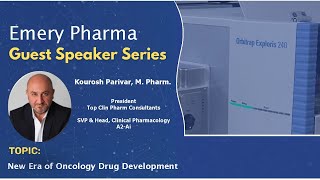
Kourosh Parivar, former head of clinical pharmacology at Pfizer Oncology, traces 80 years of cancer drug development from chemotherapy to CAR-T cells. He breaks down how each modality works, their side effects, and why the FDA now pushes for testing multiple doses and finding the biological optimal dose instead of just the maximum tolerated dose.
Chapters
It is my pleasure to introduce our speaker for today, Kourosh Parivar. We're honored to have Kourosh here today. We're going to learn a lot about oncology drug development. He'll be speaking from a clinical pharmacology perspective, which is near and dear to my heart. Kourosh has a master's in pharmacology and he's completed a fellowship in pharmacokinetics from UCSF. He spent the last 30 years working at Pfizer in various roles, his most recent being the vice president of clinical pharmacology for the oncology division. He recently left Pfizer to start his own consulting firm. It's called Top Clin Pharm Associates, where he's currently the president. He's also the senior vice president and head of clinical pharmacology at A2AI with a specific focus on supporting pre IPO and early phase oncology companies. I know you'll all enjoy his presentation. Today he's going to be discussing the new era of oncology drug development. There are definitely a lot of clinical pearls in there, so make sure you stay tuned until the end. With that, I'll hand it over to Kourosh.
Thanks Anna. I appreciate your introduction. My name is Kurosh Parivar. As Anna said, I'm a clinical pharmacologist by training and I've spent my past 20 years as the head of clinical pharmacology of Pfizer's oncology division and in charge of a portfolio of upper on probably 40 products. And during my tenure we introduced about 14 to 15 oncology NMEs to the market with probably an additional 1415 supplemental NDAs and BLAs. So my focus today will be a brief introduction of where the treatment of oncology started about 80 years ago. And there we are going today as it comes to the new era of oncology treatment. Going back 80 years, around 1940, there was a finding that the antifolates were effective in the setting of illness. Dana Farber managed to kind of manufacture a few folate analogs, more or less folate antagonists. One of them today is known as metotrexate. And when they were introduced to kids, children in a pediatric setting with all they could induce remission, while the remission was pretty short lasting. It was the new era of the way of oncology drug development that we know of today. With that in our background, we can take a look at the chemotherapy which came with that introduction. Needless to say, chemotherapy has been around for the past 80 years. These are Type of treatments which are designed to damage the DNA of the tumor cells by the way of that mechanism action at the same time do damage the healthy cells too. Let's take a look quickly at the number of chemotherapies which have been around. This list is not by any means an exhaustive list of assets. I just wanted to bring to attention a few of the products which have been used throughout the years. As we discussed right now in about 1948 we started with antifolates and around 53 we came to 6 MPs, 6 Merkel captopurine and then then to 5 FU around 1958. As we all know, 5 FU has been very successful even to this day being used for treatment of colorectal cancer. Followed to 1961 we went to vinca alkaloids like vincristine which is still being used. And then coming to 1987 even to taxanes like paclitaxel which is very readily being used today for multiple different indications and tumor types. And then followed to 1989 where platinums got introduced like cisplatin. Carboplatin and platinums are readily used products even today for many tumor types, like pancreatic cancer for instance, where cisplatin is being very readily used to be followed with topoisomerases in 1996 such as Ironitican, followed with nitro ureas and then eventually with topoisomerase twos like anthracyclines. Again, this list is not exhaustive. There are tons of different chemotherapies and they are being administered through either IV rod or perioral administration. They target the different type of tumor types. Yeah. And they are being used either as monotherapy or in combination with other assets. And the problem with chemotherapies is, as we discussed very briefly, is that these agents are pretty non specific, meaning that not only they damage the target cell, which is the tumor cell, but also they damage any other cells which are fast replicating. And because of that one they induced have been inducing and still induce a lot of unwanted. And we can take a look at those side effects and why. There have been a huge attempt throughout the years to go away as much as we can from chemotherapies to new different modality of treatment of oncology which do have lesser side effects with better safety profile. So the typical side effects of chemo is which I've been alluding to is because it's non targeted, it damages any type of cell which is fast replicating throughout our body. Of course we have tons of different cells which are fast replicating. A few of them to mention is blood forming cells in bone marrow. Neutrophils are a few of those which protect us against infections. And lots of lots of side effects of the chemotherapies do cause severe neutropenia and thereby infections come secondary to that one. The people patients lose their hair follicles because again hair follicles do also fast replicate. Skin fast replicates cells in the mouse digestive tract, reproductive system, all of them replicate pretty fast and thereby you get a lot of GI side effects with tons of these chemotherapies. Diarrhea, vomiting and nausea are pretty usual in this setting. Some chemo is needless to say they do damage pretty major organs such as heart. Cardiomyopathy is one of those. They damage kidneys, bladder, lungs, nervous system. You have peripheral neuropathy, you have axonal damage. So the list of the damage that chemotherapies do to non target tissues is long and thereby they cause a lot of side effects while they do at the same time of course target their target, which would be the cancer cells. So because of this non targeted nature of chemotherapies, we have as a drug industry, as healthcare system, been trying in the past many years, past 30 years, 40 years, trying to go away from chemotherapies to more targeted agents. I'm going to pretty quickly go through a few of these targeted agents that I personally worked with in the past 25 years. The list of targeted agents, needless to say, are a lot longer than the ones I've listed here. I just tried to attempt to list a few bigger targets that we have seen in the past 25 years. Tyrosine kinase inhibitors, TKIs are one of those targeted therapies, the MOA of that one, cyclin dependent kinases, CDK is another one. Monoclonal antibodies are also very readily available then antibody drug conjugates ADCs have had their turn of being very popular for many years. They become unpopular and today they are super popular again in my current business consulting pre IPO and post IPO companies. Today probably 80% of my clients are are actually working on large molecules such as ADCs. Peptide drug conjugates have become popular too. Products such as Melflufen for multiple myeloma for instance, is one of the products that I've been working on. Plus a few other PDCs. Peptide drug conjugates is more or less like an ADC, but of course much simpler because you're talking about the small peptide connected to a payload. Then you have. Bispecifics have become super popular in the past five to seven years. And we can indulge discussing a bit of any of every each of these targets. And I'm going to give you a bit more information about the type of products and type of tumor types that these type of products are being used for. Bite by specific T cell engagers also is coming pretty strong these days. And then to finish up the list of the targeted therapies, I'm going to talk a bit about chimeric antigen receptors cars. So again, the list is not exhaustive, just I picked a few which are larger and then I see a lot more of these products coming to my business for consultation. The TKIs. These products have been around for past good 30 years. They are inhibitors. They inhibit the tyrosine kinases or enzymes responsible for activation of many proteins by signal transduction cascade. More or less these proteins are activated by adding a phosphate to the protein phosphorylation and a TKI more or less just kind of antagonizes it. Inhibit that phosphorylation and it stops the process downstream. So I put a schematic here, a very simple one which is more or less kind of highlights two pathways for you. There are tons more pathways, but I just focused on the PI 3K AKT MTOR pathway on the right hand side, the pink one, and on the left hand left side the yellow one is a RAF pathway, the MAPK pathway. And, and as you see that there are a number of downstream kind of enzymes. You go from raf, you start from RAF for both of them. On the left side you go From RAF to MEK to ERK, and the right hand side you go from Pi3k to AKT to MTOR. Both of them kind of converge in the end through cell proliferation and differentiation and the gene expression, of course. And if you look at the current market from different companies and different type of research being done in academia and industry, you see that more or less for every single of these kind of molecules or enzymes, you have a number of inhibitors on the market or under investigation. You have pi3k inhibitors, you have oral and IV form of that one, you have AKT inhibitors, you have MTOR inhibitors, and similarly you have MEK inhibitors and ERK inhibitors and so forth. So everybody has been trying to somewhere in this downstream cycle to inhibit the progression of the cycle from cell surface from up here towards the gene expression. So if you look at the targets that have been Used for this tki, some of which me and my team and Pfizer for instance work with is like for gist, gastrointestinal stromal tumors, which are sarcomas in your stomach and the kidney cancer for RCC or for cll, for chronic lymphocytic leukemia or for CML or for breast cancer. A few of the products that I personally worked with my team work with, like Sutent, like Enlaita, like others are TKIs. They have been registered the market for gist, peanut, for RCC. As you see, they are readily on the market. These products are. This pathway is a very significant pathway that many companies in the past 25, 30 years have been working with. A bit newer kind of pathway since say 2015 or so has been the cycling dependent Kinase CDK. And more or less is about cell cycle. We have four distinct segments of cell cycle. It starts with the GAP one, goes to synthesis, goes to GAP two and go to mitosis. So that's how cell cycle looks like. The progression from G1 to S to G2 to M is being controlled by a series of complex cyclins and cyclin dependent kinases. Their job is more or less to phosphorylate rb retinoblastoma. So in unphosphorylated form is inactive. But when it gets phosphorylated and as you see in the below, it becomes active and it just kind of then starts to churn from G1 to S and so forth. So majority of the cyclin CDK inhibitors, that being either CDK4, CDK6 or CDK2, their job is to inhibit this phosphorylation. There are tons of products on the market right now. There are three of them on a market. One of them is from my former company Palbocyclib, which was for metastatic breast cancer. That product, the CDK4.6 inhibitor. But there is now a variety of companies working on either single agent or like CDK4 as a single inhibitor, CDK2 as single inhibitor. Nobody's going definitely after CDK6 as a single agent because the belief is that CDK6 is responsible for majority of the safety issues we see with this type of products. Nevertheless, these agents are being worked on as their own or in combination. Like combining CDK2 plus CDK4 and how you combine them will give you different safety profile. Of course, if you look at as I was alluding to the indications that CDK inhibitors are being used for right now, we have palbocycline from PFIZER Ribocicline from Novartis and Abimacycline from Eli Lilly with different type of adverse event profile on the market. Some of them have more GI side effects and some of them like Pablocyclib has more neutropenia as a side effect. The only thing to mention is that the neutropenia that you see for instance with the cdk 4 or 46 is very different type of neutropenia that you see with the chemotherapy. Because actually it's put in stasis, it doesn't kill the cells in your bone marrow, it just arrests them at the G1 to S. So as soon as you stop your treatment of the patients, the phosphorylation starts rebounding again and you get again, you reach a nadir. And after that one, your neutrophils come back to normal within say about 21 day or so is the nadir. And after that you rebound to your baseline. So it's a very different nature of neutropenia you see with these agents and, and then some of them have less neutropenia, has more GI side effects, for instance. So you can combine them or treat patients with different type of CDK inhibitors based on what type of patient you have, how they are feeling and then what is the type of side effects or issues they have to start with. Another very popular MOA mechanism of action today is monoclonal antibodies. Needless to say, these are of course laboratory made antibodies. In our own body naturally we have antibodies produced in order to help our immune system to tag and protect us against the antigen, germs, viruses, bacteria. So somehow these agents where antibodies will help our immune system to recognize them and destruct them. So a monoclonal antibody, which is a laboratory based antibody is, does the similar thing. It's more or less like as you see here, it binds to a target. It's like a laser guided missile. In military they use to kind of paint and target your target with this laser. And a missile goes exactly follows that one and actually destroys the target. So same is happening here that you can actually bind a monoclonal antibody to a certain cell based receptor. It could be a tumor associated antigen and there are many of them. You can target your molecular antibody against that target and then your immune system will identify that one, will destroy that one. In the next slide I will go through a series of different ways molecular antibodies work. But one of the most relevant one of them is this targeting and painting the system. A good example of that one is rituximab for instance, it binds to a protein called CD20 which is present on the B cells and some cancer cells and then becomes causing the immune system to go and kill them. I listed about probably nine or 10 different ways that a monoclonal antibody works. The first one was exactly that we were speaking about right now. Flagging cancer cells for the immune system to destruct them. But the bigger ones in my opinion are like the lower end of this list would be like delivering radiation treatment to the cancer cells. It's almost like an armed antibody but instead of having a chemo, you have a radiation radiopharmacy connected to it more or less, or delivering chemotherapies. As we talked about the armed antibodies, we'll be talking about armed antibodies. This type of monoclonal antibodies could be loaded with a payload. The payload could be a chemotherapy, the payload could be even be a dye. I've seen examples of that one that these are loaded with dyes and the dye could be eventually kind of activated with laser with light superficially from outside. So as you see, there are multiple different ways that we could use monoclonal antibodies in order to attack the cancer cells and target against them ADCs if we're just talking about that one. It's one of the ways that monoclonal antibodies could be used. It's an armed antibody as you see here on the right hand side. It's a schematic of an antibody with Fc fraction down here and then you have the fabs up here. But you see that these linkers, the green ones are actually connected to payloads. These payloads are usually cytotoxic drugs, but not necessarily. You can connect dyes, you can connect radiopharmacy to that or you can connect to a series of different things which eventually going to get released inside the cancer tumor cells. What happens is that this portion of the ADC is targeted against a certain tumor associated antigen. And it could be the list is long for those. And ADC will find its target will dock, it gets the whole complex gets internalized within the cell. And that's very the linker will releases the payload and the payload makes a damage internally within the cell leading to apoptosis and cell destruction. The idea has been and still is that by this type of strategy of targeting you will limit the side effects of cytotoxics. Because the ADC is going around and finding the target and reading that target tumor cell will explode and thereby leaving the healthy cells kind of free. This is on a paper great strategy throughout the years I've seen lots of ADCs. I've killed more ADCs that I've put on a market. Being honest with you, mostly the older ADCs. Their problem was they had shedding of the payload and those led to lots of off target toxicity such as cardiotoxin aches. The newer type of ADCs which I'm going to touch a bit more on, are a lot more stable when it comes to the linker kind of technology and why they are back again and very heavily in the market. A few examples of ADCs that you guys have all seen in HER2 which targets HER2 and by virtue of that one is used for breast cancer and gastric cancer. You have trudelvi which targets trop2 and it works on triple negative breast cancer and you see and Pad SEV which targets nectin 4 and that's for treatment of UC. As you see they are targeting different type of receptors, different targets. Different tumor types have over exaggeration and of different receptors on the surface which then makes the game fairly easy. Meaning that you can actually then you know which target or which tumor type is overexpressed. Then you can target that ADC against that specific target. Thereby you will have different ADCs for different tumor types. Well, differentiation factor for ADCs. I was trying a bit telling you guys that when it comes to ADCs more of them have died that made it to the market. Mostly they were because of the payloads. There are three items for differentiating ADCs. The type of the monoclonal antibody that is used as a base and it could be a different IGGS, IGG1 and IGG4. They are the most usual ones. The differentiate on the payload that they are using. A few examples could be calciumycin or topoisomerase and the linker stability. And the main area of differentiation between poor ADCs and good ADCs has been the linker stability in my opinion. There are a few different linkers have been used in past then mclinkers, a millimeter linker, a VC linker, valine citrulline linker. And the new linker strategy which I was alluding to is a tire bridge strategy or platform where a company in North Carolina called Abzeena has been working on very readily. And this is a kind of a covalent binding kind of platform of the payload to the to the antibody. And it has virtually very small, close to zero sharing of the Data I've seen for a few of my clients. One more thing would be that one, it has a very stable DAR drug to antibody ratio. It keeps that one around three to four. You don't really want to go lower than two because it becomes ineffective. And if you go to darts around six and such, the shedding increases. So everybody wants to have a very stable dart around three to four. And with this new kind of platform you can actually control that one very, very nicely. One more target that is fairly similar to ADC is a peptide drug conjugate. Similar strategy, but now instead of a large antibody you have a small peptide. So you have your peptide connected to a drug with a linker and what happens is that of course it finds your receptor. Again, whatever receptor you are looking for is usually an overexpressed receptor. For certain tumor type, the peptide part will target that receptor and then it gets internalized through endocytosis and makes its way to endosome where you can have a cleavage of the drug, recycling of the actual receptor to the surface and the release of the drug and eventually a destruction of the cell. So it works, it's an easier product to make. Let me just kind of a bit touch based on advantages of PDC to adc because people will be asking why. Peptides, as we all know are very short half life products. Within minutes they get chopped down by peptidesis and other products in your blood system. So these are not long lasting like ADCs. And IGG1 and IGG4 will be around half life of a 21 days or 25 days. That's not the case for PDCs. PDCs are short half life. They find a target, they get bound to that one very quickly within say 15 to 20 minutes. They get internalized and are inside the cell and they make their damage, they are much quicker. There are smaller molecules, smaller molecular weight, they have a strong tumor penetration. As I was telling you, because they're much smaller, they do have much lower immunogenicity as compared to ADCs. In addition, they are much easier to produce and cheaper and faster. So there are tons of advantages for a pdc. The only disadvantage is a shorter half life. And then there are people who are trying to apply different type of methods to make these PDCs longer lasting. I'm not going to indulge in that one. But there are different ways of making that happen. Bispecifics, which have had a huge surge in the past five to six, seven years, specifically for hematologic malignancies such as Multiple myeloma have been very successful in treating them. Again, it's an entity which has two different kind of receptors reading the same antibody more or less. It binds to two different things. For instance, if you look here in this schematic, this is for multiple myeloma. It targets on one end the BCMA tumor target for multiple myeloma. And the other end it binds to T cell through a CD3 which is a typical type of T cell target for majority of the products. And by virtue of that you have the complex binding to each other, it activates the T cell, you get cytokine cytolytic enzyme release and thereby it damages the multiple myeloma cell and destructs them. It is very effective for treatment of multiple myeloma. It has certain side effects such as cytokine release syndrome and X and Y, which I'm not going to talk much about right now today. But there are ways of actually managing that one by step up dosing, meaning that you actually give a lower dose from the BE for a few days and then you go for second dose and third dose. You usually are able to manage that one by either one step or two step up dosing to manage your cytokine release syndrome at grade two or below. There are examples of biospecifics, I'm going to kind of mention two of them. Teclistamab from Janssen for multiple myeloma. It got registered sometime by middle of last year, it got registered by the US fda and the last product which I personally and my team put it on market for registration before I left was in last December, two, three months ago we managed to submit to the US FDA a product Elonatomab for multiple myeloma, which is also a BCMA type of bispecific. One more type of A mechanism of action for these type of products is bite. Sorry, these products are actually quite attractive. So what has happened is more or less you have gotten rid of the FC part of an antibody and you take the single chain variable fraction of the two of them, bind them together and one of the side of that one, as you see here in the lower part piece, goes and gets connected to your immune system, in this case CD3 and the other side of the SCFB gets connected to your tumor site. It's very attractive because it doesn't really require MHC for introduction of the tumor to the T cell. By virtue of that one is very laser focused, it's a lot easier to work with and it's very effective for treatment of the different tumor types that bites are being introduced for, there are exemplifying of them. There are a few of them around. I just took three of them. Belanutumab as you may know it again goes for CD19 receptor. It gets registered by the US FDA for acute lymphoblastic leukemia. Solitumab for instance again is links to T cell to EPCAM antigen. And it's for colon and gastric and prostate cancer. A bunch of different types of type of cancers are effective, including potentially pancreatic cancer which has been a graveyard for drug development so far. The last example is again this one is a bite targeting the HLA 80201 positive adult patients for unresectable metastatic uveal melanoma. So these are very effective agents. They are growing in the number as I'm seeing from different research companies are working on this on the T cell engagers. And the last kind of modality I'm going to quickly touch upon is chimeric antigen receptor Car Ts. Car Ts were introduced some 10 years ago. Two companies called June and Kite start working on them. At the time it was lukewarm because this product, despite the fact that they were very effective, they actually led to mismanagement of their side effects. Unfortunately, few patients during drug development time the passed away due to their side effects. Mostly crs, kind of higher grade crs. Throughout the years we have managed to learn a lot more about Car Ts and how to manage them. These products are a part of manipulation of your T cells. Your T cells get collected from your system. It gets kind of separated from rest of the cells which gets reintroduced to you. This T cell then is manipulated by transfection. Here's a quick schematic where you get to how you add the cell receptors. The surface receptors that you want are being added to the T cell. And you see here where you got to integration and transcription and protein expression. You incubate them, you increase the number of cards and then you pretreat your patients by lymphodepletion and conditioning before reintroducing the huge number of these cells back to the patient by lymphodepletion and conditioning. You actually are opening space for the CAR ts to be reintroduced to the patients and then you monitor them. Of course, properly managed, the CAR ts have shown to be super effective and to the level of curative for hematologic malignancies. Now there is a huge drive to go away from not only hematologic malignancies, but also I'M seeing clients who are working on the solid tumor side. Not only you are seeing a lot more work on New York CAR T's coming for hematologic malignancies. You are seeing them to be introduced for solid tumors too. A few examples of CAR ts currently approved include Tisacel, Axisel, Lysocell, Ide Cel and Cilta Cel. Different ones. And again, all of these assets have shown to be enormously effective for heme malignancies. Their safety profile, we just talked about those. The two bigger problems with these assets are the CRS cytokine release syndrome. It can flood the system. By virtue of that one, it can lead to a number of really nasty side effects. High fever, trouble with breathing, severe nausea, vomiting and diarrhea, headaches, your heartbeat going to go up, muscle and joint pain. Of course in the CNS side you can have headaches, changes to consciousness, confusion, agitation, seizures, unfortunately loss of balance and X and Y. We have as an industry learned how to deal with these days, majority of these side effects are kept at grade 2 CRS or lower. The US FDA has shown a huge amount of focus on this thing in past. You could come with grade three or above and you potentially could get your products to the market. These days, even grade 2 at frequencies of above 40% is something that the FDA is not going to accept. They're going to push back on that one. They're going to ask you to go back and redesign your dosing strategy so that you can keep that grade two below 40%. So we just leave the chemos and the newer modalities behind us. Now I'm going to start at the clinical end of that one. A bit focused about where we started 80 years ago with dosing chemos and how these dose finding strategies stuck with us too until very recently. So chemos were developed in a way of a traditional three, three design, which meant that the very quickly that they put three patients on a dose, they gave the one dose to three patients. And if the patient did not have a dlt, a dose limiting toxicity and these toxicities were predefined in their protocols. So if you didn't have zero of the three patients didn't have a dlt, that dose was identified as safe and what happened, you went to the next dose level and the next dose level. However, if more than two of the three patients had an issue with that dose, the dose was identified as not safe. If this happened at get go, the sponsor needed to go back, redesign the protocol and start testing lower doses. But if you had one of the three patients coming down with a dlt. What happened? Three more patients were added and that's the name of three plus three. You started with three, you add another three, becomes a total of six. And then you'd made the same assessment again. This time do you have less than one out of the six? If you do, the dose is safe, you go to the next. If you had two out of the six, which is 33% coming down with the DLT, the dose was unsafe. So it's a very quick and dirty and crude system for a dose identification, a maximum tolerated dose. So they went up from dose level one to two and three and eventually ended up by many many doses, probably six or seven or eight dose steps and eventually ended up somewhere with the maximum tolerated dose above which you all had ret, meaning that you couldn't go up. And this MTD was then taken as the go forward dose for the rest of the lifecycle of the product. While this made a lot of sense for chemotherapies at the time, because in chemo more or less safety and efficacy as superimposed, more or less, you need to hit certain side effects and they could be a biomarker of efficacy. However, this is not a very good way for developing targeted agents. This approach made sense for chemos, it doesn't make sense for, for the targeted therapies. Some of the shortcomings of this method is that it just looks at the dose limiting toxicities during one cycle only. And the issue is that it usually underestimates the safety profile and issues of an asset because a lot of side effects are temporal, meaning that they actually build from cycle one and to cycle two and cycle three. It just accumulates. Many of these could be of different natures. One of them as an example could be for instance peripheral neuropathy. Pn, which goes from cycle to cycle, it builds. You may not capture that one after 28 days. However, sometime down the road, after three cycles or four cycles, your patients are coming down with PN, which means that those you identified your first cycle is not an appropriate dose for longer term therapies. So again, I mean I just alluded a bit here. I'm saying that the majority of the newer targeted therapies are enzyme inhibitors. They follow what we called an emax exposure response, meaning that eventually your efficacy going to plateau out. And going above a certain level in dose and concentration doesn't really buy you more efficacy. The only thing that buys you is more safety issues about say two and a half years ago, in October 2021, FDA caught up on this issue and made a total 360 in their development kind of paradigm. Until then, FDA was okay with using mtd. They were very lenient working with the sponsors, they had a high tolerance for side effects and then suddenly two and a half, three years ago, they changed their mind and became more fell in line with other therapeutic areas as it comes to drug development. Meaning that they were requiring more kind of elaboration of the dose response, testing more doses to identify a proper dose for the for longer term treatment. This slide kind of explains why the FDA started that one. Because FDA started thinking that incorrect doses have been used for majority of the products. And by virtue of that one, a lot of products were inducing severe toxicities and high rate of dose reductions and then disruptions. What Project Optimus is more or less prescribing is that in order to identify the most optimal dose of an oncology asset, two or three different doses need to be tested. A minimum of two doses bear in mind for other therapeutic areas such as diabetes and other assets, you usually test about five different doses, if not more. Here at least the FDA put the minimum to be two doses. Those two doses usually is the MTD and a lower dose which is identified as the biological optimal dose OBD. And these two doses, I mean MTD is easy to identify as we described before, the OBD is a bit more difficult. You need to identify that one based on your preclinical studies using your TGI data. Maybe you're the NHP kind of type of studies in your venue doing your GLP studies, you can get lead from at which concentrations these animals are showing a potential efficacy and use a translation of that concentration to human setting and come up with an idea of where potentially you would be expecting to see efficacy in human setting. So and then of course at the same time, the FDA wants to see the MTD and OBD to be separated from each other kinetically. A lot of people choose these too close to each other with having the kinetic variability overlapping which at the end of testing the two doses your results will be non conclusive. You can't take a decision very good to which dose is better. So you need to choose two doses separate enough from each other that the PK variability is not overlapping. So also the exposure response analysis in this setting, the exposure response analysis is an integral part of identification of recommended phase 3 dose. FDA is almost categorically sending 70, 80% of sponsors back today with a lecture to them that they haven't done proper dose identification and their emphasis is actually on exposure response modeling. They're asking the sponsors to perform not only the categorical analysis of looking at the correlation of the dose with side effects and X and Y and z, but also they're asking the sponsors to look at the concentrations at those levels and correlate that one with efficacy and with safety and try to identify the therapeutic index and thereby those in between which is safe enough with maximum efficacy, of course. And in doing so, they're asking people to do use biomarkers and clinical endpoints and safety endpoints to pinpoint this optimal dose. The general consensus from the OCE Oncology center of Excellence in a discussion that they kept with them a few years ago, was that they are under certain belief that 70% of the current oncology products on the market which are being used by patients are being overdosed to the patients and thereby they want to categorically decrease that burden on the patients. I was talking a bit about exposure response, about the Emax kind of relationship and majority of these enzyme inhibitors, which are typical for most of the new MOAs. And in this setting you have an efficacy parameter which is defined by the EMAX model here, the green. And you have the similar type of Emax model for toxicity. Usually for good products such as the newer products, these two curves are separating from each other. Usually you hit the efficacy on the left hand side first and then eventually you hit the toxicity. If you can follow my marker, if you see that eventually the efficacy will plateau out. So in past you have gone to mtd, meaning that you have gone farther and farther and farther here across the exposure level, which is done here. Of course, if you increase the dose more and more to the right, you get more and more concentrations. But at the same time you don't buy more efficacy because you're already maxed out in efficacy. What you buy is more toxicity because the toxicity curve, it falls right to the efficacy curve. By increasing exposure, while you don't buy more efficacy, you're actually buying more toxicity. That's what an ER exposure response modeling is actually able to quantify for you, the relationship between efficacy and safety. For chemotherapies. If you look at this curve, that separation was very narrow or even not there. You could be in a situation that you actually hit the toxicity curve prior to efficacy curve, or if you had a separation, it was a very narrow separation, as you see, between the tumor control and damage to normal tissue with that small TI therapeutic index, which is very narrow. These type of drugs are super difficult to kind of to develop. And this is the huge advantage between old style chemotherapy to a newer kind of mechanism of action which separates the efficacy and toxicity from each other. In performing all these exposure response modeling that I've been talking about, we look at different efficacy endpoint. Of course in oncology the efficacy endpoints are very well established, published by the fda. You know which efficacy endpoint for which tumor type is accepted by the US fda. You could potentially use biomarkers like CTC and CTDNA for internal decision taking within your own company as a go no go. Sometimes if you get lucky and your biomarker is validated, you can even use that form for your registration. But usually that's not the case. The other clinical validated efficacy endpoints are ORR objective response rate, the clinical benefit ratio, which is a hybrid of partial response, complete response, stable disease for at least one cycle. You can put them together, call them cbr, or you can have event free survival, pfs, progression free survival, and at last the pretty golden standard of all kind of endpoints, overall survival, meaning that when the patient duration from the treatment to the time the patient actually expires. So we effectively use this different type of efficacy markers for our exposure response modeling. On the flip side, we need to do the same for exposure response for safety. And we use different kind of safety endpoints. They could be neutropenia, thrombocytopenia, GI side effects such as diarrhea, nausea and vomiting, fatigue symptoms.
More from Dr.

Hippocrates said, let thy food be thy medicine #obesity #metabolicsyndrome #lustig #shorts #health



Bill Wilson, MD: Why GLP-1 Drugs Are Overpriced—and How Compounding and Competition Could Fix It

Nitrosamine in Pharmaceutical Products? A Deep Dive into Risk Management by Ron Najafi, Ph.D.

The Subcellular Processes That Belie All Chronic Disease. The Hateful (or Grateful) Eight #lustig

Bill Wilson, MD: GLPs May Reverse Carb Syndrome—Helping Patients Reach Zero and Sustain with Diet

Why Everything You Knew About Obesity Is Wrong | Dr. Robert Lustig on Sugar & Metabolic Syndrome

Robert Lustig, MD: How Fructose Fuels Fatty Liver, Oxidative Stress, and Metabolic Disease #fructose

Robert Lustig, MD: The 3 Types of Fat Fueling Insulin Resistance and Disease #insulin resistance

Bill Wilson, MD: GLPs May Reverse CARB Syndrome. Helping Patients Reach Zero and Sustain with Diet