Revolutionizing Antibiotic Testing: MIC, MBC & Time-Kill Assays Explained | Emery Pharma #antibiotic
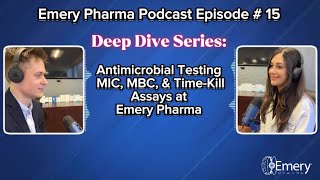
A conversational deep-dive (YouTube) explaining how antimicrobial effectiveness is measured. The transcript defines minimum inhibitory concentration (MIC) as the lowest concentration that prevents visible growth, and contrasts it with minimum bactericidal/fungicidal concentrations (MBC/MFC) that achieve ~99.9% kill. It reviews lab methods (broth microdilution for MIC, MBC testing, time-kill assays), alternatives (disk diffusion/Kirby-Bauer, agar dilution), and why MIC matters for dosing and preventing resistance. The discussion highlights 'escape pathogens' (a list of clinically important resistant bacteria), Emory Pharma's role testing new candidates and clinical isolates, and public-health implications (stewardship, agriculture, education).
Chapters
Welcome to the deep dive. Today we're going to be tackling something you might have thought about, but not really, you know, consciously. How do scientists figure out how strong an antibiotic needs to be? We're talking antimicrobial effectiveness. And our main source for this deep dive is Emory Pharma and their guide on something called minimum inhibitory concentration, or MIC for short.
Right.
Don't worry, we'll make it crystal clear. Even if you haven't looked at a science textbook in years.
What I think is so interesting about this is that we kind of just think about, like, killing germs or, you know, whatever, but there's this whole world of precision behind it, figuring out exactly how strong something needs to be.
And that precision is what we're after today. You know, it's like you see those labels saying, a cleaner kills 99.9% of bacteria. But how do they know that?
Right.
Our expert is here to break down the science behind those claims.
Yeah.
Starting with some key terms. We've got mic, NBC, mfc, Alphabet soup. I know, I know, but they each tell us something important.
Yeah, they do. So you can imagine, like a petri dish teeming with bacteria and you're trying to build a wall to keep them from spreading. That's essentially what MIC is, the minimum inhibitory concentration.
Okay.
It's the weakest concentration of an antimicrobial that can stop those microbes from visibly multiplying. So that could be an antibiotic, an antifungal, or even a disinfectant.
So it's not necessarily a massacre, but more like setting up a strong border patrol.
Exactly. Containment, not total eradication. Okay, now, if you want to wipe out those microbes, you're talking about mbec, minimum bactericidal concentration for bacteria, and mfc, minimum fungicidal concentration for fungi. These are the levels that achieve a 99.9% kill rate. Like that cleaner label you mentioned.
Okay, I'm getting the picture. MIC is the hold the line level, while mbc, MFC are the take no prisoners levels. But hold on. Emory Pharma mentioned some particularly tough customers. Escape pathogens. What makes them so different from regular bacteria?
Yeah, escape pathogens are kind of like the master escape artists of the bacterial world. We're talking Endococcus fascium, Staphylococcus aureus, Klebsiella pneumonia, Acinetobacter balmani, Pseudomonas aeruginosa, and Enterobacter cloacae. They've evolved to resist many of our commonly used antibiotics.
That sounds Like a major problem.
It is.
Especially if they're causing infections.
It is, unfortunately, yeah. They are a significant concern in hospitals where pat are often more vulnerable and they pose a growing threat worldwide. Finding ways to combat these escape pathogens is like a constant arms race between science and these superbugs.
Knowing all this makes you appreciate the work scientists do to figure out these mics, NBC's and MFCs, right? Yeah. But I'm still curious. How did they actually determine these concentrations in the lab? It sounds super complicated.
It's surprisingly elegant in its simplicity.
Okay.
Although it does require meticulous technique. Okay, lets break down the MIC process since often the starting point. Imagine you have several test tubes, each containing a slightly weaker concentration of the antimicrobial agent. You introduce the same amount of bacteria into each tube, kind of like planting seeds in different strengths of fertilizer.
So you're basically setting up a series of control mini environments to see what happens.
Precisely. After a set incubation period. You check which tubes show visible bacterial growth. The tube with the lowest concentration of the antimicrobial that stopped the growth. That's your mic.
It's like finding the exact point where the microbes say, nope, can't grow here.
That's a great way to put it. Emory Pharma follows strict guidelines from the Clinical and Laboratory Standards Institute, or clsi, to ensure their results are accurate and consistent. And those results have some serious implications, especially when it comes to treating infections.
You've piqued my curiosity. Why does this seemingly simple number, the mic, matter so much in the real world? We'll find out right after. Just kidding. We're diving straight into part two. Stay with us.
All right, so we've got this MIC number, the bare minimum to stop microbial growth. Yeah, but why should you care about this seemingly obscure lab result?
Well, that's where the rubber really meets the road.
Yeah.
MIC values are like a doctor's cheat sheet.
Okay.
For choosing the right antibiotic and dosage. You see, if the concentration of an antibiotic in your body is below the mic, it's like sending a toddler to fight a heavyweight boxer. It's just not going to be effective.
So knowing the MIC helps doctors make sure they're packing enough punch to knock out the infection.
Exactly. But it's not just about hitting hard. It's also about hitting smart. If the concentration is too high, you risk unwanted side effects. You know, it's like using a sledgehammer to crack a nut.
Yeah.
Knowing the MIC allows doctors to strike that delicate balance Wiping out the bacteria without harming you in the process. This makes me think about the whole issue of antibiotic resistance. It's something I hear about all the time. But I'll admit I don't fully understand how it happens.
It's a huge problem, and MIC plays a crucial role in understanding it. Imagine you keep exposing bacteria to just enough antibiotic to slow them down, but not enough to kill them off completely. What do you think happens?
Well, it sounds like you're basically training those bacteria to become tougher, like they're hitting the gym and getting stronger with each other. Sublethal dose.
You get it? That's how resistance develops. Bacteria are incredibly adaptable.
Wow.
And they can evolve to survive in the presence of antibiotics. But if doctors know the mic, they can prescribe a dosage that's high enough to wipe out the bacteria before they have a chance to develop resistance. It's about delivering a knockout punch, not a series of jabs that just make them stronger.
So completing your full course of antibiotics, even if you start feeling better early, isn't just about making sure you're fully recovered. It's also about preventing those back bacteria from staging a comeback as antibiotic resistant supervillains.
Absolutely. And it's not just about individual responsibility. It's also about how we use antibiotics on a larger scale.
Okay.
Overuse and misuse of antibiotics in agriculture and other industries also contribute to the problem.
Wow. I'm realizing this MIC business is way more important than I initially thought. It's connected to so many aspects of public health.
It really is.
Yeah. Emory Pharma mentioned they work with hundreds of bacterial strains, including something called multidrug resistant clinical isolates. Can you explain explain what that means?
So think of clinical isolates as bacteria caught red handed at the scene of the crime. They're taken directly from infected patients, so they represent the real world challenges doctors face. And multi drug resistant isolates? Well, they're the hardened criminals of the bacterial world. They've developed resistance to multiple antibiotics, making them extremely difficult to treat.
That sounds like a nightmarish scenario for doctors. What weapons do they have left to fight these superbugs?
It's a constant battle, and researchers are working tirelessly on new strategies. One approach is to hunt for entirely new antibiotics that target these resistant strains.
Exploiting weaknesses that haven't been exploited before. Another strategy is combination therapy. Think of it as a tag team match where two or more antibiotics work together to overcome the bacteria's defenses.
And I bet a company like Emery Pharma is crucial in this process helping to test the effectiveness of those new strategies. Can you walk us through how they might approach a project like that? Let's say a research team has developed a promising new antibiotic candidate. What happens next?
Well, you can bet MIC testing is going to be one of the first steps. Emory Pharma would use the techniques we discussed earlier to determine the new drugs MIC against a panel of those tough, multidrug resistant bacteria, including the escape pathogens.
So it's like creating a profile of the new drug's strengths and weaknesses against different opponents.
Precisely. But MIC is just the first clue. They might also conduct MBC testing. Remember, that's the eradication level, to determine how much is needed to completely eliminate the bacteria.
So it's not just about finding the minimum to stop them, but also figuring out how to deliver a fatal blow if needed. Exactly. They might even use what's called a time kill assay to see how quickly the new antibiotic takes those bacteria down. It's all about getting a complete picture of how the drug interacts with those microbes. But it's not just about the drug, is it? You also have to consider the bacteria themselves.
That's right. You were saying earlier how bacteria are incredibly adaptable and they have all these tricks up their sleeves to evade antibiotics.
They're masters of disguise and evasion.
Oh, wow.
So Emory Pharma might also delve into the mechanisms of resistance. How are those bacteria managing to survive? Are they breaking down the antibiotics, pumping it out of their cells? Understanding these tactics helps researchers design drugs or combination therapies that can outsmart those bacterial defenses.
It's like a never ending chess match with scientists constantly trying to anticipate the bacteria's next move.
That's a great analogy. It's this dynamic interplay that makes antimicrobial research so fascinating. And it's why companies like Emory Pharma are so vital. They have the knowledge and experience to navigate this complex landscape and provide those crucial insights that can help us win this microbial arms race.
It's amazing to think about all the work that goes on behind the scenes to protect us from these tiny but powerful threats. Before we wrap up, I'm curious, are there any other ways Emery Pharma tackles this challenge besides MIC testing? Didn't they mention some alternative methods? You're right, they did mention a couple of other methods. I'm curious to learn more about those. What can you tell us about them?
Well, aside from the broth microdilution method we've been discussing, for mic, there's also disc diffusion and agar dilution. Okay. Each method has its own strengths and weaknesses. Kind of like choosing the right tool for the job.
Okay, I'm intrigued. Let's start with disk diffusion. What's the story there?
So imagine you're setting up a tiny battle arena on a petri dish. That's essentially what disc diffusion, also known as the Kirby Bauer test, is all about. You start with an agar plate, which is like a nutrient rich jelly, and spread the bacteria you want to test all over it. Then you place small discs, each containing a different antibiotic, onto the surface.
So it's like strategically deploying your antibiotic troops.
Exactly. As the antibiotic diffuses from the disk into the surrounding agar, it creates a concentration gradient. If the bacteria are susceptible to the antibiotic, you'll see a clear zone of inhibition around the disc. A no man's land where the bacteria couldn't grow.
So the bigger the clear zone, the more effective the antibiotic.
That's the general idea. It's a visual way to assess how susceptible the bacteria are to different antibiotics.
Okay.
But it doesn't give you a precise number like mic. It's more of a qualitative assessment.
Makes sense. Now, what about agar dilution? How does that one work?
Agar dilution is a bit closer to broth microdilution, but instead of using liquid broth, the antibiotic is incorporated directly into those agar plates at various concentrations. Then you spread the bacteria on the plates and see which concentration stops their growth.
So it's like setting up a series of obstacle courses for the bacteria, with each lane containing a different level of antibiotic challenge.
That's a great analogy. And the lowest concentration, where you don't see any growth, that's your mic.
Fascinating. So with all these different methods at their disposal, it sounds like Emory Pharma has a pretty impressive arsenal for tackling these microbial challenges.
They definitely do. And their expertise is crucial, not just for developing new drugs, but also for making sure we're using existing antibiotics effectively.
You know, this deep dive has really opened my eyes to the complexities of antimicrobial effectiveness. I used to think of antibiotics as simple magic bullets, but now I understand how much science goes into understanding how they work, measuring their potency, and making sure they stay effective.
It's easy to take them for granted, especially when they've been so successful in treating infections for decades. But the threat of antibiotic resistance is very real, and it requires a multifaceted approach to ensure these life saving drugs remain effective for future generations.
Speaking of antibiotic resistance, you mentioned earlier that it's not just about individual actions like finishing your full course of antibiotics.
Right.
What are some other things we can do on a larger scale to tackle this problem?
That's a great question. You're right. It's a collective responsibility. We need to be more mindful about how we use antibiotics, not just in health care, but also in agriculture and other industries. Reducing unnecessary use, promoting responsible prescribing practices and investing in research for new antibiotics and alternative therapies are all crucial.
So it's about being good stewards of these precious resources. We need to use them wisely and protect their effectiveness, because who knows what kind of superbugs we might face in the future.
Exactly. And education is a key part of this. The more people understand about antibiotic resistance, the more likely they are to make informed decisions and support efforts to combat it.
This deep dive has certainly been an education for me. I feel like I have a much better understanding of how scientists measure antimicrobial effectiveness, the challenges of antibiotic resistance, and the crucial role that companies like Emory Pharma play in this ongoing battle.
It's been a pleasure sharing this journey with you. And remember, if you're curious to learn more or have any questions about Emery Pharma's work, their website is a great resource. They even have a contact form where you can connect with their team of experts directly.
Great advice. Well listeners, we've reached the end of our deep dive into the fascinating world of antimicrobial effectiveness. We hope you've enjoyed exploring this important topic with us.
Remember, even small actions can make a difference. Wash your hands frequently, stay up to date on your vaccinations, and use antibiotics responsibly. Together we can help preserve these life saving drugs for generations to come.
Thanks for joining us on the Deep Dive. Until next time, keep exploring, keep learning and keep asking those insightful questions.
More from Dr.

Hippocrates said, let thy food be thy medicine #obesity #metabolicsyndrome #lustig #shorts #health



Bill Wilson, MD: Why GLP-1 Drugs Are Overpriced—and How Compounding and Competition Could Fix It

Nitrosamine in Pharmaceutical Products? A Deep Dive into Risk Management by Ron Najafi, Ph.D.

The Subcellular Processes That Belie All Chronic Disease. The Hateful (or Grateful) Eight #lustig

Bill Wilson, MD: GLPs May Reverse Carb Syndrome—Helping Patients Reach Zero and Sustain with Diet

Why Everything You Knew About Obesity Is Wrong | Dr. Robert Lustig on Sugar & Metabolic Syndrome

Robert Lustig, MD: How Fructose Fuels Fatty Liver, Oxidative Stress, and Metabolic Disease #fructose

Robert Lustig, MD: The 3 Types of Fat Fueling Insulin Resistance and Disease #insulin resistance

Bill Wilson, MD: GLPs May Reverse CARB Syndrome. Helping Patients Reach Zero and Sustain with Diet