Top Bioanalysis Questions Answered: LC-MS/MS, PK/PD, Orbitrap, ADA, NMR & More at Emery Pharma
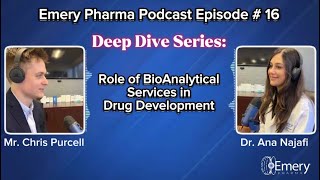
Emery Pharma explains how bioanalysis tracks drugs through the body to determine dosing and safety. They cover LC-MS/MS, antidrug antibodies, and mass spectrometry methods that meet regulatory standards for drug development.
Chapters
Welcome back, everybody, for another deep dive. This time, we're going super, super small to the world of bioanalysis.
Oh, wow.
Which is a field that's, you know, really key to making new medicine safe and effective for all of us.
It is.
And think of it as like the detective work behind your medications, making sure that they actually do what they're supposed to and don't cause, you know, any harm.
Right.
And today we're diving deep into this world using insights from Emery Pharma's website.
Excellent.
So. So get ready for a fascinating journey into a world of tiny molecules and cutting edge science.
It's amazing how much actually goes on behind the scenes before a drug even gets into your medicine cabinet. Bioanalysis really helps us understand a drug's journey through the body from the moment it's absorbed to how it spreads, how it's broken down, and how it's eventually eliminated. It's like tracking a tiny but very powerful package through this incredibly complex delivery system.
Yeah, yeah. And that tracking is crucial. Right. Because Emory Pharma really emphasizes how bioanalysis helps determine the right dosage of a drug to make sure it's both effective and safe for patients.
For sure.
Like, imagine if you're taking a blood thinner and the dosage wasn't quite right. Bioanalysis plays a role in preventing those kinds of dangerous scenarios.
Oh, absolutely. Determining the right dosage is one of the most critical steps in drug development. Too much and you risk those nasty side effects too. Too little, and it just won't be effective at all.
Right.
Bioanalysis helps us find that sweet spot where the medication actually reaches its target in the body at just the right concentration.
It's fascinating. And it seems like Emery Pharma is at the forefront of all this with their use of mass spectrometry.
Oh, yeah.
It sounds like a superpowered microscope, one that can analyze even the tiniest traces of a drug in biological samples.
It is. It really is. Think of mass spectrometry as a molecular fingerprint scanner.
Okay.
It can identify and even quantify the smallest amount of a drug and its metabolites, you know, those byproducts your body makes as it breaks down the medication. And this level of precision is crucial for understanding how a drug really behaves in the body.
Yeah.
What's interesting is that Emory Pharma works with both small molecule drugs and biologics, which are larger and more complex. It's like having the expertise to decipher fingerprints from individuals and then entire families.
Oh, that's a great way to put it. It's not just about identifying the drug itself, but understanding all the transformations it undergoes within the body.
Exactly.
Speaking of ensuring safety, it seems like bioanalysis goes beyond just measuring drug levels. Right. I'm curious about how it tackles issues like bioavailability.
Okay.
And even the body's immune response to a new medication.
You're absolutely right. Bioanalysis plays a huge role in many different aspects of drug development. Bioavailability, for example, refers to how much of the drug actually makes it into your system and reaches its target. It's like making sure your package arrives at the right address, not just somewhere in the right city. And that can actually vary quite a bit depending on how the drug is taken.
Right. Like if it's a pill, an injection, or even a topical cream.
Exactly. The route of administration can significantly impact how much of the drug gets absorbed into the bloodstream.
Okay.
Bioanalysis helps us understand these nuances, making sure that medications are delivered effectively regardless of how they're taken.
So. Fascinating.
Yeah.
And what about the body's immune response? I remember reading on Emory Pharma's website about something called antidrug antibody assays.
Right.
Sounds pretty complex.
It is a complex area, but crucial for patient safety. Because sometimes the body's immune system can see a new drug as, like a foreign invader. Right, right. And it starts producing antibodies against it.
Oh, wow.
These anti drug antibodies can then interfere with how well the drug works or even cause really serious safe defects.
That's scary.
It's like the delivery system rejecting the package instead of delivering it.
Got it. So these assays basically help researchers identify these potential immune reactions early on. Right. Like during the development process.
Exactly. By understanding how the immune system might react to a new drug, scientists can take steps to minimize the risk of those adverse events.
Makes sense. It's like a preemptive strike to ensure the medication is safe and effective in the long run.
Exactly.
It all sounds very intricate, like piecing together a puzzle with both scientific and medical expertise.
Yeah.
Emory Pharma mentions some of the challenges involved in bioanalysis, like needing incredibly robust methods, dealing with those unpredictable biological samples, and making sure everything aligns with strict guidelines.
Right. It definitely requires a very high level of expertise that bet biological samples are inherently complex and variable. You know, it's kind of like trying to solve a puzzle where the pieces keep changing shape.
Oh, that's a good analogy.
So you need really sophisticated equipment, rigorous methods, and a deep understanding of the science to get accurate and reliable results.
They mentioned GLP guidelines, good laboratory practice. What's the significance of those in the world of bioanalysis.
Oh. GLP guidelines are essentially the rule book for ensuring quality and reliability in any lab setting. You know, they provide a framework for everything for from how samples are handled and stored to the documentation and validation of those analytical methods.
So it's all about maintaining consistency, traceability, and transparency throughout the entire process.
Absolutely. Think of it as building trust in the data generated by a lab.
So it's about ensuring that the results are accurate and can be relied upon by researchers and regulatory agencies.
Precisely. GLP compliance is essential for any lab involved in drug development because the data generated from bioanalysis plays a crucial role in regulatory submission and ultimately in getting a new drug approved for use in patients.
Makes sense. It's all about building a strong foundation of reliable data to support the safety and effectiveness of new medications.
Exactly. It's about building that bridge of trust between the scientific community, regulatory agencies, and ultimately the patients who will benefit from these new treatments.
Speaking of regulatory agencies, I imagine they play a big role in the bioanalytical process as well.
They absolutely do. Regulatory bodies like the FDA in the United States or the EMA in Europe set very stringent standards for bioanalytical studies to ensure data quality and reliability. They want to be sure that the methods used are sensitive, specific and accurate, and that the data generated is trustworthy.
So it sounds like a complex dance between the scientific advancements in bioanalysis and the regulatory oversight that ensures patient safety.
It is. It's a crucial partnership. The scientists are pushing the boundaries of what's possible with new technologies and techniques.
Right.
While the regulators are providing the guardrails to ensure that those advancements are used responsibly and ethically. It's all about striking that balance between innovation and safeguarding public health.
So all of this intricate work with tiny molecules and sophisticated equipment ultimately boils down to one thing. Making sure that the medications we rely on are safe and effective.
That's the heart of it. Bioanalysis might seem like this hidden world, but it's a critical part of modern medicine. It helps us translate scientific discoveries into real world treatments that actually improve people's lives.
And it's fascinating to see how this field is constantly evolving. Like Emory Pharma talks about their commitment to staying at the forefront of bioanalytical technology.
For sure.
Especially with those advanced mass spectrometers you mentioned earlier.
Yes, the technology is absolutely evolving at an incredible pace. And that's allowing us to really delve deeper into the complexities of how drugs interact with the body. I See, like, for example, triple quadrupole mass spectrometers. They offer just incredible sensitivity and selectivity, enabling researchers to detect and quantify substances at extremely low concentrations, even amidst all that complex biological stuff.
So it's not just about identifying what's there, but also measuring it with incredible precision.
Precisely.
Even if it's just a tiny trace amount.
Exactly. This level of precision is absolutely crucial for understanding drug metabolism, pharmacokinetics, and even potential drug interactions.
Right.
It's like having a magnifying glass that can zoom in on the molecular level and reveal details that were previously completely invisible.
It sounds like Emory Pharma plays a pretty vital role in helping pharmaceutical companies navigate this whole complex landscape of bioanalysis.
Yeah, they do. They provide a wide range of services, from method development and validation to sample analysis and regulatory support.
Okay.
Think of them as a scientific partner working alongside drug developers to generate the data needed to move a new drug from the lab to the clinic, and ultimately to patients.
And with all this advanced technology and expertise, it seems like the future of bioanalysis is full of exciting possibilities.
Absolutely. As our understanding of biology grows and technology continues to advance, we can definitely expect even more sophisticated and personalized approaches to medicine. Like, imagine a future where treatments are tailored to your unique genetic makeup and how your body actually metabolizes drugs.
That would be amazing.
Bioanalysis will play a key role in making that vision a reality.
It's incredible. So as we wrap up our deep dive into the world of bioanalysis, what's the key takeaway you hope our listeners walk away with today?
Well, I think the most important thing to remember is that bioanalysis is about more than just numbers and data. Right. It's about connecting the dots between scientific discovery and patient well being.
Yeah.
Like every experiment, every measurement, it ultimately contributes to developing safer, more effective and more personalized treatments that actually improve people's lives.
That's a really powerful reminder that behind all the science and technology, there's a human element driving this field forward.
There is.
It's been incredibly insightful. A journey into a world I knew very little about. And I'm sure our listeners will be fascinated by all we've uncovered today.
I think so. It's a field that definitely deserves more recognition for its contributions to advancing medicine and improving human health.
Absolutely. And if anyone wants to learn more about Emory Pharma and the incredible work they do in bioanalysis, I highly recommend visiting their website.
Great idea.
You'll find a wealth of information there about their services, expertise, and the latest advancements in the field.
Yes. And if you have a project in mind, don't hesitate to reach out to them. They're really passionate about making this complex world of bioanalysis more accessible to everyone.
That's fantastic. Well, thanks for joining us today on the Deep Dive.
More from Dr.

Hippocrates said, let thy food be thy medicine #obesity #metabolicsyndrome #lustig #shorts #health



Bill Wilson, MD: Why GLP-1 Drugs Are Overpriced—and How Compounding and Competition Could Fix It

Nitrosamine in Pharmaceutical Products? A Deep Dive into Risk Management by Ron Najafi, Ph.D.

The Subcellular Processes That Belie All Chronic Disease. The Hateful (or Grateful) Eight #lustig

Bill Wilson, MD: GLPs May Reverse Carb Syndrome—Helping Patients Reach Zero and Sustain with Diet

Why Everything You Knew About Obesity Is Wrong | Dr. Robert Lustig on Sugar & Metabolic Syndrome

Robert Lustig, MD: How Fructose Fuels Fatty Liver, Oxidative Stress, and Metabolic Disease #fructose

Robert Lustig, MD: The 3 Types of Fat Fueling Insulin Resistance and Disease #insulin resistance

Bill Wilson, MD: GLPs May Reverse CARB Syndrome. Helping Patients Reach Zero and Sustain with Diet