E917 Five9 CEO RowanTrollope: cloud-based contact ctr, AI, future of jobs, customer success, culture
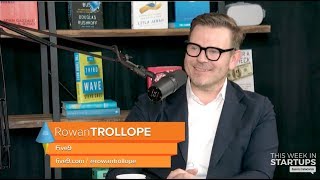
Rowan Trollope, CEO of Five9, discusses why startups should build on cloud-based contact centers rather than on-premise systems. He recommends a tech stack of Zendesk, Five9, and Gainsight, and emphasizes a culture of "hard work, effortlessly, with joy and humor."
Chapters
This Week in Startups is brought to you by Hello Monday, a new podcast from LinkedIn's editorial team. Host Jesse Hempel sits down with featured guests to investigate the role work plays in our lives and how to make it work for us. Find Hello Monday on Apple Podcasts or wherever you listen to podcasts. Pendo, a product cloud that helps digital product teams understand and guide their users. Enabling them to build software experiences customers love. Visit pendo.io/twist for 2 months of Pendo free. And Salesforce Essentials. Jumpstart sales and support by leveraging the world's number one CRM at a startup price point at just $25 a month per user. Go to salesforce.com/twist for an additional 50% off and a free onboarding call.
Hey everybody, welcome to This Week in Startups. This is the show where we talk to founders, CEOs, investors, pundits about the technology industry and startups and entrepreneurship. We do it twice a week and we've been doing it for 10 effing years. Where have you been? If this is your first episode, go to the archives, thisweekinstartups.com, and get your MBA for free by watching over 900 episodes. I'm gonna be going on the road in a couple of weeks for angel.university. Yes, there is a.university subdomain or top-level domain, TLD, like.com. If you go to angel.university, DC, Boston, Columbus, Miami, New York, we're just gonna hit 5 cities, and then Sydney and San Francisco for Angel University. So 7 Angel Universities on the books. I teach a course myself and Mike Savino It's a 4-hour course, a lot of fun for 50 people, trying to get you to understand if you're an accredited investor how to invest in startups. We're going to invest in 100 startups this year. We did 55 last year. As you know, we've done over 200 investments, 7 of which have become unicorns. And it's been a pretty good run and it's a lot of fun to be an angel investor. One of my oldest friends in the industry started his career when he was 18 years old. He got recruited into a little company, Symantec McAfee.
Peter Norton.
Peter Norton, correct, in Santa Monica.
He was the arch rival to McAfee.
Yeah, arch rival to McAfee, Peter Norton. And his name is Rowan Trollope, and he also then went on to Cisco and had, I don't know, 5,000 or 10,000 people reporting into him.
Yeah, yeah, a few.
And then he's recently got recruited into Five9, F-I-V-E-9, which he is the CEO of. You finally, after 25 years of trying, now are in the CEO slot.
That's right.
Welcome back to the program, Rowan.
Thanks, Jason.
What does Five9 do? It's a publicly traded company. I know that. Yeah, I know you have 40 customers paying over $1 million a year each. $3 billion market cap.
Yeah.
What does this company do and what drove you to join it?
Yeah. Yeah. So it's a cloud-based contact center. Okay. So for anyone who doesn't know what a contact center is, if you ever call in or send an email or a text message into a company and you get bad service, which most people would say, that's usually a painful experience, right? Well, that's usually because they're using legacy old hardware and software-based systems that are out of date to manage all that traffic. We're a totally new, born-in-the-cloud, web-based thing. So there's no phones, there's no nothing. It's all basically through the, through the cloud. And we power some of the largest contact centers in the world.
And a contact center is synonymous with call center?
It's like a call center.
Customer support?
Customer support, customer service.
Why did they change it to contact center?
Because people don't want to call as much. They want to send text messages or emails or contact in any, any way, shape, or form. Essentially, it's both. Customer service and support on the inbound as well as, and then in sales on the outbound. So there's a lot of like outbound sales organizations that use, that use the platform as well.
And why did you take the job? Why? I mean, you had a pretty sweet gig at Cisco.
I was having a lot of fun at Cisco, but, uh, this was in a space, the contact center was a space that I thought was overlooked. And it's right at the beginning. If you think about, let me back up. If you look at all of the SaaS enterprise SaaS companies that have been out there, there's been a wave of, you know, the NetSuits and the, you know, Salesforces of the world that kind of move most of the back office systems to the cloud. We're actually multiple years behind that in the communications industry because communication is harder. Yeah. Like real-time, doing real-time stuff on the internet was just way harder. So we're sort of right at the front end of moving all these legacy systems from premises-based software and hardware to the cloud. And, uh, and so where could you find, I mean, that's just not happening in every place. It's definitely happening in the contact center. That's number one. Number two, I think we're now in a world where I was spending a lot of time at Cisco listening to C-level people at big companies, and almost every single one of them came in and said, we— our customer experience sucks. Like, our customers don't love us, and there's some new disruptor in our category. Like, for GM, it was Tesla. And it wasn't just that Tesla has an awesome car, okay? Or for, uh, for Verifone, this— the credit card, you know, hardware company, it was, it was, it was Square. And the problem is that it's not just that they have a better product, it's that the end-to-end experience is better. You know, you get an email from Jack when you get a Square, and, you know, they— somebody proactively reaches out out to you? Well, these legacy companies have terrible end-to-end customer experiences.
They looked at customer support as an afterthought and a cost center and something to make painful so that people didn't call.
Exactly. Most, most companies do.
What a colossal idiotic approach to building relationships.
I mean, exactly.
Legacy companies. It's a reason why legacy companies get displaced because of this stupid thinking. It's like when a person buys your product, and they're in need and they're frustrated.
And they wanna call you. And they wanna talk to you.
Let's not talk to our customer. Let's send them, no offense to India, to another country with somebody with a thick accent, no offense, right? If it was an American accent versus a Japanese one, whatever it is, who is going to frustrate the person by reading them a script.
Exactly.
And you're like, I already did the FAQ. I have the manual. And they're like, okay, step 7 in the manual is this. And you're like, you're reading me the manual. I've done this already.
So I experienced this and you mentioned my first job, 18, right? Working at Peter Norton. So the first job I had was working in support. So I was, I took 8,000 phone calls.
Okay.
That took me 8 months, 50 calls a day. And after doing that for 8 months, I got super bored of it and they said, hey, you're a really good rep now. Like, so I, it's kind of 3 things happened after taking 8,000 phone calls. One, I got really good at, I knew all the answers. The customer, you know, brain's a good pattern matching, right? Somebody calls in and says, I'm having a problem with— and you're like, I bet, I bet you it's this. Let me pause it right there. Right. And you can— and when you do that and you know all the answers because you've taken all the calls, customers really like that because you're good at your job. And then the next thing that happens, and it's the third thing, is you want to leave because it's boring. You've heard all the calls. Yeah, you know all the answers. This is the biggest problem in call centers that people sit through these, you know, people get trained, they eventually like get to a place of competence and then they're like, I'm doing the same thing over and over again. I want to get the heck out of here.
Definition of insanity.
And the funny thing was the company—
The worst, it's like the worst, it's the best position and the worst position to be in because you ramp up so quickly being on the front line, which is why some companies, I forgot who it was, might've been Southwest or JetBlue, it was JetBlue. They really thought through like moving the call centers to America, having Americans in a specific city be very personable on the phone.
T-Mobile did this recently.
T-Mobile did it recently as well. They insourced it, I guess is what they would say. Instead of outsourcing it. And they— and Tony Hsieh, I guess, was the other really influential person.
Absolutely.
Was like, you could stay on the phone as long as you want. And they had like a record phone call of like 3 hours, and they would play that phone call for other people, like, listen to this 3-hour call and do whatever it takes to delight the customer.
So, but it's a back— I remember this really well. On the 12th floor, 1 Ocean Avenue in Santa Monica, sure, was where the building was. And it was crazy, had a beach view. First job out of school, first job out of 18. Yeah. As a support rep. Okay. With a beach view. This is— I was like, this is heaven. I'm in heaven here. And but we started getting a lot of calls and, you know, it was like they basically told us, like, you guys are a call center. Like when, when somebody calls us about Norton Utilities or antivirus, we lose money. You guys pick up the phone, we lose money. So you know what? They actually hired someone to hide the phone number. That was that person's job was to literally hide the phone number, right?
Make it impossible to call.
Yes. Now, One floor above, okay, wasn't the 13th, it was a 14th, was a whole floor of people in sales who were trying to get ahold of customers and customers were like running away from them as fast as they could.
Right.
So you had like this. And I remember thinking to myself, this is super weird. It's like we're trying to run away from customers, our sales, the customers are running away from us. This is insane. And of course now we know there's a way better way to do this, right? It's like, hey, it turns out if you have a subscription business, talking to your customers is a really good idea because they'll pay you more money. They'll get more successful, blah, blah, blah. So—
Lowers your churn, increases your ARPU, average revenue per—
Exactly.
User.
User. Average revenue per user, yeah.
Yeah.
So, and it's a huge category. It's a $24 billion spend category.
$24 billion a year?
$24 billion are spent in contact center software per year. So that's huge. And it's only 10% penetrated. Huh. Okay, to the, you know, move to the cloud. Really, it's just at the front.
Recording all of these calls and doing AI on top of them. That's right. Yeah, see, that seems to me to be the holy grail.
That's what we're doing. That's the intent. We just hired a guy named Jonathan Rosenberg, who's one of the top 5 most published authors for internet protocols, and he has been making his name, and he's an MIT Columbia guy who's been making his— he actually invented voice on the internet, this guy Jonathan Rosenberg. So he has joined us as our CTO and head of AI, and the idea that we have is It actually goes back to sort of one of my experiences, which is when I took all those calls and I knew all the answers, I would— what they— they're like, good, now you can be the supervisor. So I was like, okay. So I sat next down, next down to next to this lady named Valerie, and I plugged in my headset on mute and I listened to her taking a call. And she's, she's really personable, right? But she's like, I can just— she's floundering. Like, the caller comes back and she's like, I'm sorry you're having this problem, sir. We're going to get that taken care of for you right away. Meanwhile, she's flipping through her papers. I'm sitting on the side going crazy. I'm like, mute Valerie. Let me tell you what the problem is here. Yeah, I just put those papers away. Tell the customer this. This is the problem. That's what you're going to do, right? She goes, okay. She did it and it resolved the call. Here was the problem. I couldn't scale that. No, I couldn't do that. Me sitting with every single agent. So here's what we figured out. We can do that with software. Yeah, so it's like a sidekick or, you know, we haven't officially named this yet, but it's something that sits on the side of the agent. It's listening in real time to the conversation using AI in real time. We're partnering with Google on this. We're translating the voice to text. We're taking taking the text in real time, applying natural language processing to it, and basically it's like a real-time recommendation engine for the agents.
Yeah, it's fucking— it's awesome. Oh, sorry, watch it. I'm here. Take it easy. I'm so excited. Wow. No, it does seem to be the Holy Grail because those— if you think about the poor execution of that, it was those decision trees. Thank you for calling Hewlett-Packard. Yeah, if you need support with your printer, press 1, and then it's like Do you have the HP1? Do you have the HP2? And you're just like, I have the HP7, can you just get to it?
And that's what bots have become, if you've noticed. I've been trying to use bots as much as I can just to see what comes.
You mean text box going back and forth?
Text box on websites.
Yeah, oh.
Okay, they are the new interact, they're the new version of that. They're annoying. And so my first question now that I ask when I hit those bots is, are you human? And if it's not a human, I'm not gonna sit there dinking around talking to a bot that's gonna run me through some script, et cetera. All right.
When we get back from this break, I want to hear your George Clooney story.
Okay.
Because I know he's involved in this somehow.
And no, he's not. But okay.
Okay.
I'll tell you the story.
Okay. When we get back, more on George Clooney and customer support with Rowan Trollope from Five9. Oh my Lord. If I could go back in time and give baby Jake some advice, what advice would I give myself during those first 2 or 3 jobs? One, don't fight with the boss. Number two, start a company. God, so many things I would have told myself earlier on. Well, here's a podcast for you. It's called Hello Monday and it's filled with amazing advice. And each week host Jessi Hempel sits down with a featured guest and it comes from your friends over at LinkedIn's editorial team. Yes, that's right. LinkedIn has their own podcast called Hello Monday, and she's had some killer guests. Emmy Award-winning producer Jackie, what's going on here? She's got IDEO CEO Tim Brown. He's never been on my podcast, huh? And Tim Brown from IDEO, you know, the people who make all these incredible products and the design studio, on where ideas come from and how to test them. She also had the author of Eat, Pray, Love, Elizabeth Gilbert, on talking about the distinctions between a hobby, job, career, and vocation. Amazing. And Seth Meyers on the writer's room and keeping talented people motivated. This is good work. It's a great compliment to This Week in Startups. So I want you to go search for Hello Monday on Apple Podcasts or wherever you listen to podcasts. It's okay if you use another app. Search for Hello Monday, download it, listen to This Week in Startups, listen to Hello Monday, listen to This Week in Startups, and go back and forth. Work on that personal improvement, work on your startup, and write them a review too. That always helps. People love to get reviews, especially on iTunes. It moves you up the charts, I understand. So thanks again to our friends at LinkedIn What an amazing service. We use it all the time. And congrats to the editorial team over there on their latest and greatest Hello Monday. It is full of awesome advice that you can use. Okay, let's get back to this amazing episode. All right. Thanks to our partner sponsors for making all things possible here at This Week in Startups. With me again, you've been on the podcast once or twice?
Once.
Just once before?
Yeah, I think maybe.
Yeah. So once every 450 episodes. You gotta increase that a little bit. Hey, uh, well, how do you know? We should do the news roundtable because I know you have a lot of opinions.
Uh, Rowan, uh, is is at FiveNine.
I assume you're Five, the number 9, dot com.
Number 9 dot com.
You got it. There you go. Five Nine. And he's doing contact—
cloud contact center.
A contact center.
Software as a service.
How is this flipped over? Is it 50% phone calls, 50% email and text?
Roughly. Roughly in terms of the total volume of contacts, yeah. The calls tend to be longer, obviously. They're for the more complex situations and et cetera, et cetera. But I think increasingly, we've seen that. We did a survey recently and basically millennials or anyone kind of, their preference is about half the time to use the phone.
Do young people want to call on the phone?
Sometimes, yeah. This was the survey we did with young people. It's like, it depends on the scenario. So like, I'll give you an example. This morning I woke up, my TV wasn't working. I am rushing out the door. I don't really give a shit that my TV is not working. I can't watch whatever I was going to watch, but it's sort of back on the list.
That's, by the way, for those counting, $40 in the swear jar. Sorry, in the swear jar.
So I text— this isn't your house— so I text, uh, exactly, referring to a poker game that didn't occur. I text, uh, Comcast like, my TV's out, fix it please. And if they text me back in 4 hours, I'm cool. Okay, take the same condition, which is my TV's not working, but now it's the middle of the Super Bowl and I got 10 friends over. Do you really think I'm going to be okay texting and being like, get, get back to me whenever? No way. I want to call and I need someone to calm me down. I need someone to say like, we're really sorry, sir. We know what's going on. We're all over it right now. I'll stay on the phone with you until it's up, like that kind of thing. So you could have the same exact situation, but depending on sort of the urgency or how much empathy and connection you need with a human, you actually do want to call in those cases.
You know what's amazing? I just realized, technology builds. We've been in this space for 3 decades now. All these waves of technology build on each other. And one of the things that's text-to-speech and speech-to-text has existed since Dragon Dictate and all these things. What, like the '80s?
Yeah. Yeah.
And people would buy Dragon Dictate for $600 and get a headset and sit there.
Doctors would use that a lot, right?
Yeah. Or theoretically it was always like more promising.
Right.
Uh, and then people just got better at predictive text and whatever on their smartphones. But now I realize, cause we wanted to transcribe the archive of This Week in Startups, it used to cost us a dollar or $2 a minute to do a transcript. So you'd have to think like, okay, hmm, yeah, 90-minute podcast, I'm going to spend $200 on this, probably not worth it, whatever, who cares. Now—
Penny a minute.
A penny a minute.
Google.
With Google, and it's fairly accurate or scary accurate.
It's as, it's human level accuracy now.
Which is crazy.
This is the key insight that was one of the exciting things to me.
Oh, 100, wait, 200 times, sorry to interrupt, that's 200 times cheaper or whatever.
And more effective. So Microsoft was the first to publish their deep learning version that exceeded human-level accuracy on a given test set, which was 95%.
What happened that made it so accurate?
Deep learning.
Yeah. And what is— explain that to somebody who wouldn't know what that means.
So that's sort of like, uh, artificial intelligence. So next generation, what you do is you hand it a whole bunch of utterances, so like words, like the word house, and you can feed the system the word house a million times, and it listens to it, and it recognizes, and it Deep learning essentially learns by listening to the word house a million times. It goes, okay, I think I can recognize that word in the future now. Right. You feed it a bunch of words that aren't house, like car, dog, cat, boat, and you tag them so the computer goes, okay, when I heard dog, that wasn't house. When I heard house, that was house.
Right.
Sort of like if you remember in Silicon Valley episode where they had hot dog, no hot dog.
Yeah.
Simple concept. Right.
So you're training it what's the not scenario as much as what is the scenario.
Exactly.
And then it's also now becoming contextual. So if you fed it the corpus of human email, chicken breast speech would be different than the other kind of breast. Yeah. And what you would know after chicken comes chicken parm, chicken breast, chicken thigh, chicken wings. Like, yeah, it's, it's now that's, I guess, informing that AI or machine learning, whatever it is, deep learning, is now doing predictive text. So now when you're typing I guess Gmail now shows you the next word and you're just like, okay, well, this is getting ridiculous.
Yeah, yeah.
Soon it's gonna be like, you're just like, okay, okay, okay, I'm waiting for it to get the next sentence.
Yeah, right.
It was great seeing you last night, uh, tough beat at poker. And then it guesses next, the next sentence. Would you like to come again? Yeah, we have a seat open for you. But it's gonna eventually get to the second seat.
And that sounds like a text you've sent me before.
Exactly. Wow, that was a bad beat last night. Oh God, sorry, lost all your money. Please come back next week, it'll go better next time.
Uh, yeah, exactly.
Uh, but it's sort of like the, uh, um, the precogs in Minority Report.
Exactly.
What was that? What year was Minority Report? I think it was 2003.
It was, it was longer, it was further ago than you think. It was like way, way, way back.
Was it before?
I think it was in the 2000s. I don't really remember.
I think it was after 9/11, but I could be wrong. It might be '99, 2002. That's— I knew it was after 9/11. My whole world— it's so weird how PTSD, yeah, kind of like impacts the human brain. I had such hardcore PTSD after 9/11. I was there, my brother's a firefighter, that almost everything in the world before then, I can judge if it was before or after that one date.
Wow.
So when I just thought of Minority Report, I was just like, yeah, that was after 9/11. Isn't that weird?
That is weird.
Super weird. Or like I guess for most people, after college or before.
Yeah. Yeah.
And it sort of dovetails into all this, like, which is predicting the future should not be that hard of a task.
Uh-huh.
You could actually know based on— I bet you're going to eventually know at Five9 based on the area code somebody's calling from, the tone of their voice, the time of day they're calling. You're probably gonna know maybe even gender or age. Can we do age by voice yet? I know we can do age obviously by super accurate by video. I wonder if we can do age by voice.
Yeah, I haven't seen that.
But anyway, taking all those signals that you wouldn't even think of using, we're gonna be able, you're gonna be able to predict what the top 3 questions are in order that that person is calling about. And then the menu could be instead of what's your problem, it could be if you're having a problem with your toner, A paper jam or drivers, press 1.
Yeah, we don't even do that.
Anything else, press 2.
We're already at the point where we just say, tell us what problem you're having. I always think about call— I talked about the spend here. It's $25 billion in technology, but the worst problem is just $250 billion spent in labor in call centers per year globally. Yes. It's 16.9 million people do this job.
In the world or in the United States? In the world.
In the world. In the world. It's like 6 million or so in the US. It's a big job. It's a lot of people doing it.
It's almost 2%. It is 2% of the adult population. It's 1 out of 50 work— because there are 330 million people.
Yeah, 6 million in the US. So 2%.
70 million or 80 million are under the age of 18.
In most product companies, you'll see between 5 to 15% of the workforce by headcount actually are people that sit in the call center or contact center interacting with customers. It's a shockingly high number. And so, but here's the, here's the crazy thing. So think about a quarter of a trillion dollars is being spent to deliver an experience that basically no one likes. That's crazy.
That is pretty extraordinary.
And so I think that 10, 20, McKinsey says 30% of that work that's being done could be easily automated in the next 3 to 5 years.
30%. 30%.
So that's $75 billion.
Yeah.
That could be replaced of labor that could replace with software. And my sense is like, okay, so then the question is, what do those people go do?
Right.
Well, I think frankly, it's like I don't think contact centers are going to want to spend less money so they could put those people on to being like being more proactive. Like if I'm calling you about a problem, why am I calling you in the first place? Shouldn't you have known this was going to be a problem? Like predict this? So there's a lot of other things. Customer success, a whole new trend. And what you see the guys at Gainsight doing—
what is customer success versus customer support? Everybody's heard of customer support. Most people probably haven't heard of customer success. What's the difference? Yeah, it's a different job function. Yes, a different pay scale.
Yeah, so it's totally new. It came about with the innovation of software as a service and subscription-based companies who recognize that, hey, when we sell you some software, that's kind of like the starting place. When we sell you the service and you start using it, that's the starting place. And so it kind of came originally out of Salesforce and other companies who sort of pioneered— and NetSuite, who pioneered software as a service. And they recognized it's not— you can't just wait for the customer to call in and then sort of help them with their problem. It's way better to be proactive because you can increase their lifetime value. So customer success today is a separate function usually. In SaaS companies and tech companies. And it's about once you sign up a customer, that person is your rep. They call you or they email you and they say, hey, we want to make sure you can get the most out of our software. Uh, did you know about this function, that function? There's a company called Gainsight, uh, Nick Meta. Gainsight. They're a great company. They are a customer success platform. Oh. So yeah, we use Gainsight. A lot of companies use Gainsight. And that is like, it's a basic platform for tracking things like, when is this customer, like, is this customer a churn risk? Should we be like more proactively reaching out to them? Explain what churn risk is to people who don't know. Like, uh, a A customer who is gonna leave your service.
Got it.
Because they're unhappy. They're gonna quit. Or they're gonna quit, or maybe the price is too high.
So if you were Equinox charging people $200, I hate that company, but.
You got some churn risk on your hands.
No, I just hate them 'cause they were just like always like unsubscribe. This is my definition. Let me see what you think of this. I don't, this is like Jason's rule.
Yeah, yeah.
Jason's product rule. I'm trying to get it to define it. I tweeted it. Jackie, Emmy Award-winning producer Jackie, pull this up from my Twitter. It was my, one of my greatest tweets of all time in terms of retweets and hearts, and that's saying something. You can tell the quality of a product. I saw this by how easy it is to unsubscribe or return it, right?
The 3.5-inch index card in the mail to the address, that whole nonsense that used to be the case. Remember that?
What is that?
You know, like, uh, if you want to get a refund, send a postcard of this size to this address. It's like the modern version of that.
The Wall Street Journal. This is a message to @RupertMurdoch. I know that you're a genius and you're brilliant, but to the publisher and customer support people at the Wall Street Journal, you are the most frustrating, unethical idiots in the world. Please clip this and send it to @WallStreetJournal. To take my money over the web and then force me to call you on the phone to cancel. And then you know what they said to me when I challenged them on this?
What's that?
They said, well, the reason we don't do that is security, Jason. And I said to the woman, I said, listen, I know that you're a frontline person and I know that I'm being a jerk.
Yeah, you can't be.
But if I may, please let your manager know that to take my credit card is a much higher risk than to stop charging it.
Or to delete it. Yeah.
To delete it. Exactly. Yeah. Even much better. So where were you? You should have put your headset on mute and I should have let you handle this goddamn call.
You should have had an AI version of me doing that.
But it's just like, I— there— it is amazing to me how stupid legacy people— then Strateture, Ben Thompson's awesome newsletter, is $10 a month. He sends you your bill every month and it's not hidden.
That's right.
And then this is a message to Tim Cook.
And I thought it was Strateture. I call it Strateture. It's a great—
it's the worst name of any newsletter name and it's the best newsletter you can imagine.
Content—
it's incredible. Yeah, kids, kids smart.
Um, maybe Apple News. Well, if you get your WSJ subscription through Apple News now.
That, that's— I'm literally— that's what I'm literally going to do is I'm going to cancel, or I should say my assistant call and cancel, and I am going to sign up that way to just not deal with this BS.
And I, you know, Apple's pretty good about that stuff. I've canceled all kinds of subscriptions. I, my kids bought like a bunch of stuff on iOS for something.
Did you email the support?
I called and they said, oh, we're really sorry, and they reversed all the charges.
Easy. Two great Examples. One, Apple is now emailing you what you have subscriptions to with a link to unsubscribe, which is super nice. That's the way it should work. So every month I see it and I can cancel. Second, Audible. Oh, Audible. How do I love audible.com/twist? They haven't sponsored in 2 years, but I still love them.
They're awesome.
Oh, Audible. I'm starting to sound like Trump.
I don't like the credits things. I don't understand the credits.
Oh, the credits are the way to go.
Yeah, but I love buying Audible books.
You can return any Audible book at any time for any reason. So right now, go through your list and return— pick the 3 that you didn't finish and say, I didn't enjoy it, and they'll give you 3 credits. It's awesome. Wow. Because I'm super permissive. Okay, when it comes to—
say more.
I buy the Platinum, which is like 20 bucks or something, maybe twice a year. I spend maybe 5.
Where do the credits come from? That's what I don't understand. They keep showing up and I don't know where. Is it because I bought a subscription?
You, you're probably on the monthly subscription where you get one a month, but I think if you pay for 20, then what happens is there are some books that are $39 and there are some that are $6.
Mm-hmm.
And when I ran out of credit one time, I was like, wait a second, $49 for $39 for this audiobook? What happened? I was a credit. A credit's $12. You just charged me triple. And I figured it out. Oh, they smooth that out. The publisher pricing when you buy the platinum, everybody get the platinum. All right. When we get back, from this break. I want to know what it's like to— we didn't get to the George Clooney story. We'll get to that. But what is it like to go from being like the director, EVP, you know, top-level lieutenant?
Yeah.
Versus being the CEO of— finally, you're the CEO of a publicly traded company. And I know that you were in line. You didn't say this, but people said, because I knew people who sold their companies to Cisco, that you were in line at Cisco. There's a line. You were somewhere in line. And when we get back, you'll tell us if it's true or not true on This Week in Startups.
Thank you, Jason.
Do you build or manage a SaaS product? Well, I have something for you. It's called Pendo, P-E-N-D-O. And if you install it in your app, it's going to give you a rich set of application-level data. That means you put in a little code And then you find out what your users are doing. And maybe there's something very frustrating for them in your app that you can fix, or maybe there's something that's delighting them, or a feature that you've been arguing in your staff meetings about what people are doing with the app. And you find out they're not using feature A, but they're using feature B twice as much as you thought. This is the kind of actionable insight that companies like OpenTable, Zendesk, Glassdoor, Instacart, Marketo, and two of my investments, 15Five and Lead Genius. These are the companies using Pendo to quickly understand user behavior in their apps so they can make better products. And that's what you want to do. If you get rid of some features nobody's using, you can take all of that maintenance time and developer time and simplify your code base and product and then put it into the features that are being used. Well, Sprinklr, which I'm a shareholder in, they're using it to do onboarding of new users. And to convert their free trials to paid trials. You get all these like very nuanced user flows. Well, they're doing that to guide the legacy customers into adopting the new digital platforms and reducing support tickets while improving NPS, Net Promoter Score. Critical for any great startup. And the best part is no engineering resources are needed. So here is your call to action. Pendo.io, pendo.io/twist. Again, pendo.io/twist, and you will get not one but two, two free months of Pendo. That's right. Also, Pendo's Product Craft community is producing a great event for product teams, and that event is taking place at the Palace of Fine Arts in San Francisco on May 9th. You can learn more and snag a discount code at pendo.io/twist. Okay, let's get back to this amazing episode. Hey everybody, welcome back to This Week in Startups. One of my favorite people, founders, tech thinkers, Rowan Trollope is with us. You can follow him on Twitter @RowanTrollope. He is now the CEO of Five9, f-i-v-e-9.com. He left Cisco back in May and we left our hero Aside from this George Clooney note I have here from probably your PR team or something, dropping big names here, how close were you? Because somebody told me that you were like top 5 in line to get to the CEO slot at Cisco. Is that true?
No, no, no, no, no, no. It was Chuck. So Chuck, who's the CEO now?
Yeah.
Replaced John Chambers, as everyone knows.
The legend.
The legend.
John Chambers still comes to work though, right?
What's that?
He still comes to work once in a while, John Chambers?
No, no, no. He's not on the board anymore.
He's not even on the board?
No. Now he's running his own venture fund, JC2. JC2 Ventures. He is in the startup world. He is helping. Yes, seriously, he's doing a talk. Yeah, yeah, yeah, yeah.
I want to get him on the pod.
Can you get him on the pod? I'll ask him.
Ask him, let's come on the pod.
Yeah, I bet you'd love to do that.
Talk about his portfolio companies. And he's actually—
he's got some great companies, actually.
And also what a career. I mean, I don't— he's, he's press shy. He always—
no, he's not.
No, no. Oh, you know what it is? He's not Silicon Valley kind of—
he was back in the day. He was, but he was more— it was more, you know, this was like in the '90s. He was like a Zuckerberg of the '90s. Like, he was the biggest name in Silicon Valley. And, you know, but, but amazing. Like, he built a— where he built that company to $50 billion. He's— he lives in down south in the peninsula.
Oh, he does. Oh, he's on the— has no excuse because he goes to the Warriors game. So where were you? You top 5?
I know.
So when you think—
when he was replaced, it was pretty clear it was going to be, you know, there was 3 candidates essentially. I didn't join Cisco to go be the CEO. And so when Chuck became the CEO, I reported to him for the last 2 years. And, you know, that was like a big— it was, you know, sort of my job was trying to help lead that transformation effort towards software as a service and cloud.
Yeah.
So we acquired AppDynamics, we acquired Jasper Wireless, we acquired some software assets. And I think that's— they— since then, I'm— look, I'm still a big shareholder in Cisco. I think they've done a phenomenal job. Yeah. And, you know, the network is really clicking again. And at the end of the day, they are the world leader in networking and the internet is powered on Cisco gear. Like, that's not going to change anytime soon. So it's— yeah.
What do you think of this Huawei issue? Would you as an American be comfortable with those routers being on American soil? Yes or no?
On American soil doing what? Like in critical infrastructure or in like—
Infrastructure.
You're speaking startups?
Yeah, I don't know. To your house, to your office, having a Huawei router, having your data on it, your company's data. That's a long pause. I'll take it as a no.
Yeah, I don't know.
It's a good question. That's a strong no.
For people at home who play poker, if I say, do you have a set?
I would buy Cisco. Here we go. If I say, do you have a set, Rowan?
I would buy Cisco routers.
And there's that big long pause.
Buy American, my friend.
I can tell, I know, I mean, it is pretty scary when you think about it. And it, would you, do you think that 5G, the new fast speed, we've heard talk about maybe the government sets up that infrastructure. Would you be in favor of the gov— I mean, obviously we don't want China owning that infrastructure, nor do they want us to own their infrastructure, by the way. It's not a xenophobic issue, it's a national security issue. Are you in favor of the government doing, um, you know, infrastructure project where they own the network?
No, no way.
Why?
Just because I'm a free market person. I don't think that would like lead to— I mean, like, I already have problems with Comcast keeping my internet up. Like, really, I'm gonna trust the government to keep the internet up? I don't think so. Like, okay, so who pay— who powers our infrastructure today? AT&T, like telcos. I mean, these big companies, Equinix, you know. So I would— no.
You would rather have a competitive landscape.
I'd rather have an open market. Yeah, I think that would be better for everyone. Much better.
What's the George Clooney drop in here?
We, so we mentioned we, we have over 40 customers now paying. So we're an enterprise software company. We're $250+ million of ARR per year on the way to $1 billion, growing at 30%, 29% last year. So it's growing fast, accelerating growth, and we're moving up into the enterprise. So we've been signing up all these really big accounts. Estée Lauder is one of those. DoorDash is one. We're one of DoorDash's, you know, we power the DoorDash contact center. Those guys, it's interesting, they, they actually got all of their agents onto our platform. They have thousands of agents, by the way, in 13 days.
Wow.
Like, powering a contact center is no, it's complex. There's a lot of work to make that happen. The fact that we can stand them up because it's all internet-based.
Yeah.
Is awesome. Uh, the story with George Clooney is really simple. We signed up Estée Lauder as a customer and they wanted to have a VIP hotline for, you know, you go to those, uh, red carpet things and they have the swag bags. Well, Estée Lauder's got all their like super high-end products.
So, George, gifting suite—
they call it— while we were there, it's from your LA days. Uh, while we were there, Clooney's people calling in to get support on the gift bag. Wow, that was it. Yeah, that's hilarious.
Hi, I'd like to get some— that's Mr. Clooney.
Close to— we get us to celebrity here in Silicon Valley.
They call the call center, the gifting suite. It's just More reasons to hate the 1 point—
the 0.01%.
Like, it is—
we didn't need more reasons.
It's like you get famous and you make money and they're just like, can we give you free stuff? And I was like, well, I don't need the free stuff now. People offer me free stuff all the time. I'm like, please don't give me anything for free because there's nothing for free in this world. It's gonna require me taking a picture with it at some point. No thank you, I do not want anything.
Influencer economy, man.
It is a— it's It's problematic in one way.
Do people reaching out to you to be an influencer, quote unquote?
Yeah, I don't— I— yes.
And have you ever done it?
No, I was— I did do it one time. I did, um, I did— I was a— for poker, I was a Full Tilt Red Pro.
Oh, okay.
So what they did was Full Tilt had, um, myself, Don Cheadle, Kevin Pollak, you know, like people in the LA poker scene who were notable or had a following. This is when Twitter first came out or blogs were big, and they would— it was pretty dope. You would just wear some gear. They would give you a bunch of gear. The gear was nice, uh, and Full Tilt was the number one brand. So it'd be like sort of like being sponsored by Apple. They would pay when you were on TV, or when you're—
oh, they'd pay your buy-in. Oh wow.
So I could— so WSOP, I could play any tournament as long as you wore their hat.
As long as I wore their logo and you would tweet about my blazer or whatever. Did they ask you to do like, you have to do X number of things?
Not for me.
Because they do that now.
Yeah, I think at that time they didn't want to be overbearing about it. They were just like, Don Cheadle, Kalikannis, Kevin Pollak, whoever.
Good company.
They're— yeah, you know, they're at the World Series main event and it's better they'd be wearing ours than somebody else's. And, you know, they probably had 50 players there for $10K each. Wow. When you think about it, it's a big thing. And but it was kind of nice for me.
Is that online gambling? Full Tilt? What is that?
Full Tilt was online at the time when it was legal. Now it's coming legal again. But I also had an e-cigarette company that wanted to do it, and I was like, this is the beginning of e-cigarettes.
So like, do you smoke e-cigarettes? No, I didn't think so.
Uh, not, not e-cigarettes. Listen, I'm not anti-vaporizer, if that's what you're asking.
I see. Okay.
But I am anti-e-cigarette.
Yeah, I agree.
But I do think vaporizing They're trying to pass a rosemary or other herbs would probably be—
they're trying to pass a law that allows certain kinds of vaporizer— vaporized products in public parks, but not cigarettes. Do you know that?
Yeah, no, I don't.
It doesn't make sense to me, but it doesn't make any sense.
The government does stuff.
It generally doesn't— weed in the park.
Yeah, I—
if you're not gonna allow smoke, you shouldn't allow smoke.
This was 10 years ago, and I was like, you know what, I see the people who are smoking these things and I'm watching them at poker tables blowing, pouring the oil. These were the— this is the old days when they were giant devices and they would be pouring oil.
Is that because they could smoke them inside?
I guess because you can smoke them inside. So at casinos you would have somebody and they're just like blowing blueberry in your face. I'm like, God, I'm trying to play. I just want to play cards. I'm just here to play 8 hours of cards. I didn't come here to smell Papa Smurf farting at the table for a fucking— sorry, no offense— for a goddamn hour. And these guys blowing, one's got kiwi, the other one's got vanilla blueberry. I'm like, what am I, Baskin-Robbins over here? It's driving me crazy. Finally, they banned them at casinos, but I wouldn't do that one. That to me was like a bridge too far on the sponsorship thing. Hey, when I left, I was going to ask you, how's life changed? I mean, when you were—
Oh yeah.
Because what were you, a VP or EVP? What was the title you had?
So I reported to the CEO. I was a senior vice president, but general manager is the key.
Ah, GM is over there with it. What's the difference between, you know, sitting in the throne versus, you know, be on the right hand of the throne, so to speak?
There's no one. There's no one. You know, it's like one of the biggest differences is there's no decision you can't make. And, you know, when you're, when you're number 2 at a Cisco or a Microsoft or, you know, any of these big companies, you don't define the culture. I mean, you work for the CEO. The CEO defines culture. That is like, make no mistake. And if you, if you get that wrong, it's like bad things happen, right? Because you can't have 2 people setting culture or 3 people setting culture. So that's like the hugest difference. My company now, I said, you know, the culture comes from me and, you know, that— so there's no one that can tell me no, which is nice. Uh, there's— you didn't— I didn't have to check in with anyone, uh, at my new— in my new job. The last job, you know, um, well, there's downsides of being a much smaller company, but there's also a lot of upsides to it. So there's this dimension of size. A thousand.
1,000. Oh wow, so you, you took over the top slot and lost 80% of your staff.
Staff, yeah, it's much nicer. It's— I don't— it's less work for me.
You still can't know everybody, but you can know a lot of people.
I can know a lot of people.
Maybe 300 people, 400 people.
Yeah, I have a, I have a channel on Slack that I created, all 1,000 people ask me anything 24/7. I'll answer them instantly.
I did— I— there's literally an Ask Jason on inside Slack where I just said, listen, just If you got a question, just ask it. F it. Like, we're— that's like the kind of the new culture of business, which is like, stop looking at the CEO as the god queen or god king because they're not. Yeah, you probably know the answer to your own question.
Exactly.
You're probably just scared of being fired and that's why you're not just making a goddamn decision.
And I encourage people to post up there and I will answer directly, unpolished. It's— there's no comms people typing my answers. There's none of that, right? Just direct.
Facebook in trouble. Like, Facebook is so inauthentic that you're like—
you mean in the culture? The culture, in their company culture, education. Okay, I haven't seen it.
It was very insular, like every— it's us versus the world.
Yeah, yeah.
Which was really good. Like, that's a, that's a neat culture to— it's a very effective culture if you want to beat everybody, is to just have that crazy, like, competitive— yeah, Uber, I think, had a circle of wagons mentality at times. It's fierce, but then it also leads to a blind spot, which is anytime criticism comes in, you're just like, well, that's just people who are trying to take us down, take us down. So we should ignore it. And in both companies, if you look at it, ignoring the critics was great for focus. It was really bad for self-correcting unforced errors, I guess would be the way I would say it. You know what's interesting? You said something I think very profound, which just zipped by. And that's one of the reasons I love doing this podcast is I get 2 times a week to talk to really, really, really smart people who are in the field. You said you can't have more than one culture, and I realized, oh, there is a word for having more than one culture inside a company.
Silos or tribalism. Tribalism. Yeah.
And it's the worst effing thing you could ever—
That's why acquisitions are so hard. You're buying a culture. Yeah, you can't. But, you know, I've been through so many of those. You, you can't change that. You bring it in, it is what it is. And that's why so many acquisitions don't work.
All right, let me get back from this quick commercial break. I want you to go through the best practices because I know you bought a bunch of companies. What works, what doesn't, sure. And what is the state of the art in 2019 for buying a company? Is it integration or is it isolation in the case of YouTube? When we get back on This Week in Startups. Customer support is the number one thing that startups need. You need to nail customer support, and Salesforce is the world's number one customer relationship management platform. And with Salesforce Essentials, founders can get up and running instantly with an easy out-of-the-box tool and support at a great price. Yes, sometimes people think Salesforce, isn't that for a big company? Au contraire, mon frère. You can get into Salesforce for 50% off if you're a startup listening to This Week in Startups. That's why Salesforce is here supporting the program, the podcast, because they want you to get into Salesforce Essentials for 50% off by going to salesforce.com/twist. And it's very simple. You can instantly set it up, and you're going to have a full cycle customer support process. That means You can automatically connect all your different support channels into one place, and you just get rid of all that busywork and repetitive customer support, and everything is on one screen. You can track emails, you track clicks, you can do meetings in your inbox, get those meetings from your inbox into Salesforce. It's a perfect way to scale your sales team, and it's a full-stack solution. You're going to wind up on Salesforce anyway. Everybody knows that. You might as well start doing it right from the beginning. And Salesforce is engaging the startup community with Salesforce Essentials. I talked to the team over there. They are super committed to even the smallest startup— 2, 3 people, 20 people, 30 people. It's time for you to get on Salesforce. salesforce.com/twist. It is the world's number one CRM, and now at a cost for startups. They understand that startups are on a budget and they want to meet you where you are. And grow with you. So I've met with the Salesforce team, and they're really dedicated to the space, and it's really great to have them back on This Week in Startups. Please go to salesforce.com/twist and get that 50% discount right now. That's with an annual contract and a free onboarding training session. Thanks again to our friends at Salesforce for supporting independent media like This Week in Startups and supporting the founder and startup community. Speaking of which, Let's get back to this amazing episode. Welcome back to This Week in Startups, where Emmy Award-winning producer Jackie and Sir Charles, our producer, put together amazing shows for you twice a week, 100 times a year. And a big announcement that season 3 of Angel Podcast is coming. Go to angelpodcast.com and subscribe on iTunes, etc. And we've already booked half the guests and we've got some great partners for the Angel Podcast and We've got a 10-part series coming up on This Week in Startup called Scaling Your Startup, and it's going to be me and my 4 lieutenants, which we call internally the Fantastic Four, taking all the knowledge we've had after 200+ investments, 7 of which became unicorns. I'm not sure if I mentioned that, uh, 18 times in this episode, but there were— yeah, it's, you know, it's like 1 out of every 30 companies, and it's just math, people. Um, we're doing How to Scale Your Startup, and we're going through all 10 of the most critical pieces. It's going to be 30, 40 minutes per episode, and it's really going to be like a course on how to scale your company. So look forward to that in May. My guest today is Rowan Trollope from Five9, F-I-V-E, the number 9,.com.
That means 5 nines of reliability, by the way.
That's what that is. I was going to guess that.
They're the most reliable.
You have a contact center, you want it to work. Yes. 1,000 people working for you, and it's an intelligent cloud contact center. Makes total sense. Let's talk about acquisitions.
Yeah, yeah.
What makes for a great acquisition? Because Cisco, are they the most acquisitive of all companies?
They've done almost 400 acquisitions.
It's incredible.
Yeah. Over whatever, 20-some years.
Which one, which, which one are considered the most successful?
I think Meraki is probably the biggest and most successful one that, you know, they bought it, I think it was $100 million and, uh, it's now doing over a billion in revenue. That's, I think, rough and tough. And that was, I don't know, 4 years ago.
Wow.
In that case, it was like strong channel synergy. So, so Cisco is a go-to-market machine and they've got the world blanketed with their channel. Uh, and so you bring in a company that has a brand new awesome router that's, you know, powered by the cloud, which is Meraki. And it was like, okay, that was just went right through the Cisco channel.
All these integrators and value-added resellers and channel that installs the Cisco equipment.
Exactly.
Now just has another item on the menu.
Exactly.
So it works really well. It's like adding like a beer or a new dessert to a menu of a packed restaurant. Yeah, it's like, yeah, this is going to do okay.
High margin, high recurring revenue. So that one did really well from a, from a performance perspective. You know, the thing I always think about when it comes to acquisitions is the culture that you're buying. And the— Joni Ives used to have this saying, like, he was asked— I don't know if it was a saying, I read it once. He was asked, why doesn't Apple do more acquisitions? And he said, well, it's one thing to build a product, but it's way harder to build a team that builds great products. And when you buy a company, you're buying a team and you're getting what you get, what you get from a cultural perspective. So when I would do acquisitions, big or small, would really be thinking about the cultural aspect. It's great at the company I'm at now. It's completely organic. We don't— we haven't done acquisitions.
So it's— but you also—
one cohesive culture. Yeah.
So did you have to reset the culture of Five9 or did you have to— it was good.
Oh, it was already good. And that was the— that was the— I got very lucky in that sense and actually was one of the choosing factors for me. It's one of the deciding factors for me was, you know, I don't have to fix a broken culture here. This is a great culture already. You know, if you look in Glassdoor or any of the review sites, amazing culture. People love working there. I would— I was hiring executives, bringing them in, and they're at the end of the day after they were done, they're kind of like, I've never seen something like this. This company culture is weird. Like, this is not what I was used to. And so I love that about the place. Um, I would say that's one of the biggest, uh, struggles with, with acquisitions. An example of, you know, Symantec back in the day did the largest software acquisition in history, which was Veritas. It was 10— I think it was $10 billion at the time. And they were totally different cultures. It was online back— or as backup, a backup and storage company, which was Veritas, and Symantec, which was security. And John Thompson, who was the CEO at the time, who's now the chairman of the board at Microsoft, you know, uh, and they eventually spun it out, by the way, recently, but they, they never integrated the cultures. And the cultures are so radically different that it just kind of never really worked and clicked. So now they're spun out years later.
It's interesting when you think about it. What are the cultures that are attractive for acquisition? What would you say the characteristics of those are? I mean, obviously dysfunctional culture is dysfunctional culture, so you don't want that.
Yeah.
You don't want too aggressive of a culture coming into a—
Exactly. It's more about getting the match. I mean, you know, you could look at Silicon Valley companies and like some places are very sharp-elbowed. And so if you're a sharp-elbowed culture, you're probably going to fit in well there. If you're not, you're going to get pushed around. You're never going to get anything done. So it's about sort of understanding your own company and what you're buying. And will these people actually just like working here?
Oh, it goes the other way too. Yeah, you're right. I'm just thinking about how Twitter just had like a really promising M&A start and then it turned into a disaster. They bought Vine, they bought Periscope.
That's right.
And they had bought TweetDeck and one or two other really like cool companies. They might've bought Nip or did they buy the other one, Datasift? I can't remember. But anyway, they bought like all these great companies, and then Twitter had no culture, or a weird quirky culture. And Vine got shut down. Periscope seems to have been the slowest iteration.
They wounded it, they didn't kill it.
It's almost like they shackled it. They're just like, yeah, you can fly, Periscope, but we're just like only to 1,000 feet. Yeah, it's almost like you— I think Periscope would be 10x larger now if it wasn't part of Twitter.
Well, what Facebook Live, didn't that really—
Well, I just think also Facebook knows how to do these integrations where they're just like, if we bought you, we're gonna send you to a community.
I mean, it was like a pixel for pixel copy of Periscope.
Of course, yeah, no, that's what their specialty is. Like sell to us or die. Or we're gonna try to kill you. But if you just think about what they did with Instagram and WhatsApp, it was like, let's just take all the friction out of this and get everybody who has friends on Facebook to find their friends easier on Instagram.
Oh, now there's Instagram TV, right? Is that what it is? The live broadcast?
IGTV.
IGTV.
I guess they're competitor to TikTok? But they have a TikTok competitor too. So IGTV might be a YouTube competitor, I think. They wanted to get YouTube stars, but the fatal flaw of Facebook is their greed and that circle the wagon mentality, which is they don't take criticism. They don't reflect inwardly like in the way they should. And they don't share revenue because they're so self-centered. Can you imagine if they took a Google YouTube approach and they're like, we'll give 30% where 45% they give— YouTube gives 55% of the revenue to creators. Apple gives 70%.
So they on, on their podcast or apps and apps.
Yeah.
What about on podcasts? They don't have a monetization. They don't have it yet because you're on there, right?
We're on there for free. I do think YouTube now has a Patreon competitor where you can subscribe.
Oh.
Yeah, Patreon.
YouTube is one of the great acquisitions of all time.
For sure the best.
As much as it's cited that way.
I would say Android.
LinkedIn, maybe?
LinkedIn's up there, but too soon to tell if it's going to 10x from here. But if you just look at it on market cap, YouTube was $1.6 billion. Independently, what do you think YouTube would be worth with— it's got to have $30 billion in revenue. And what do you think it'd be worth on the market?
I don't know, $6— what are they growing? What are they growing? Do you have any idea?
I got to think.
—so 5 to 10x multiple.
Yeah, it's got to be a $200 billion company.
Yeah, it's big.
Yeah, $150 to $250 billion on the open market.
That's what a great acquisition— Instagram was cited as a great acquisition.
It would be worth now $200 billion now. So that's a 200x. I would say both of those are 100, 200x.
What's consistent in both of those is they left them alone. Correct. Until they didn't. Yeah.
And actually, YouTube is still left alone.
Instagram wasn't. Most acquisitions are not done like that, right? They're done with the idea of, oh, you've got to justify it with synergies, cost synergies, revenue synergies. And you know, if you don't— and it's like, there's enough cases where if you don't integrate it, it causes problems. So I don't know what the right answer is, to be honest.
Yeah, it's a tough one. Yeah, it does seem—
I like building stuff. I don't like, like, I don't like buying stuff. So if I could build it, I'll build it.
Yeah, that's Apple's position. And the one thing you miss with that—
except for they didn't buy Netflix, right? They missed out on that one. Was it you saying they should buy Netflix? Yeah, of course.
I, I thought Netflix— oh, Stratechery. Ben Thompson was saying— I was saying they should have bought Netflix and Tesla when they were $10 billion companies because I would just include Netflix. See, I think Apple should have Apple Prime. Mm-hmm. Because they've been saying that they can put 5 things together and charge $19.95 a month for a terabyte of iCloud, Netflix, and their latest announcement, it was all à la carte, which is kind of weird, and no pricing.
That's like, okay, it needs to be all together, right?
It's $10 a month for news. I think they didn't say what Arcade is, they didn't say what TV Plus is, but News Plus is $10. So if you just go through it, News Plus is $10, Music is $10, iCloud 1TB or 2TB, $10. Yeah, I think it's $6 per phone. So if you have 2 or 3 phones or device, maybe 3 devices at home, that's another $20. Yeah, so you're looking at— they probably have $80 a month, they probably have $1,000 a year in subscriptions you could do with them when these other ones come out. If they just charge $500 a year flat rate for all your family, 5 devices, gets everything. It would crush it.
Yeah, look what Amazon's done. I mean, I don't use half of what I get with Prime, but seems like, uh, I use the main thing, which is free shipping.
What should, uh, what should— when should founders start architecting their contact centers? Okay, um, like you're talking about, because you— yeah, you've got all these million-dollar-plus clients. What should they be doing when they have 10, —total staff that we have.
We have lots that have 10, by the way. So some of our million-dollar-plus started with 10. Really? Oh, yeah. Yeah, we grow with companies. So what should they be doing right out of the gate? Yeah, what do you think they should do? What's the best practice? Well, number 1, they should be— well, first, start out on the cloud. Like, don't go buying software and deploying it and having data centers and nonsense. Yeah, total nonsense. So start off on the cloud. So Five9.com, they can do that. We can support 2 agents if you have 2 agents. I would say, number 1, And this is probably controversial, but like you should always try and talk to your customers. So you should have as many people as it takes to answer those questions. And you can now get really great platforms. I mean, we're one of them. Zendesk is another great platform, big partner of ours. You know, provide as much self-help as you can, self-service. People want that. Provide all of the channels. If I want to text you or email you or call you, like you really have to be flexible from that perspective to support whatever channel the customer wants to use. I think thinking about proactivity right up in the very beginning is super important. So like it's fine to do self-help, but that's kind of waiting for the customer to pull. Every time I call or have to contact a company that I do business with, my first question in my mind is like, why am I calling you? You should be calling me. You should be proactively notifying me about this stuff. So, so thinking about that, right, is like— and people love that kind of stuff. We mentioned earlier, like Apple sending out a list of all your subscriptions. It's like, that's proactive. I don't have to like wait until I'm pissed off that they've been billing me for 6 months. I forgot. Something I forgot about and then call them and then they have to calm me down or whatever. So it's just proactivity is, I think, I'm thinking about it. What's the word I've been using lately? Not proactive, but like anticipatory. Yeah. Anticipate what your customers are going to want and then proactively engage with them through whatever their sort of preferred channels are. But signing up early, getting a, you know, getting a, uh, for, for subscription companies, any software or SaaS companies that are out there, definitely be looking into customer success. So look at Gainsight is another one. You know, I think between Zendesk for your sort of CRM for a small company, us for your contact center, Five9, and then as you, as you start to perform and do customer success at scale, Gainsight. So there's a handful of companies out there that can sort of like really get you best-in-class capabilities. Gainsight public already?
No, not yet. Oh, that's interesting. Yeah, they're growing. Speaking of M&A, hmm, that's interesting. Hmm. Hmm, buy or build? Hmm. All right, well, listen, Rowan, it's great to have you on the pod again.
The pod? Is that the new— yeah, we call it the new show. The cast? It's not the cast.
Yeah, it sounds weird. The pod. I like to say the pod.
The pod. I like it. It's a podcast.
Um, and, uh, if you want to use—
pod with a twist.
It's a pod with a twist. If you want to, uh, use Five9, Rowan will give you a free seat on me. He doesn't know that, but that's it. Do you do like a startup program for people?
You got like that? Uh, well, you haven't done that yet. Uh, well, we can. Any startups that want to sign up on our platform, please call us and tell us that you heard about us on TWiST, and we will do a— we will make you a deal you can't refuse. Do—
I always think the first seat free for the first year for startups, or 2 seats free for the first year, is the best way to go because you— well, that's what— when people sponsor the show, they're always like, what should you do? I'm just like, whatever it costs for the first year figure out what that dollar amount is because what is it like $50 a seat or something? What do you guys rack rate for?
For a small company? Yeah, $100, $100. But that includes your $100, $150 includes telephony. We often bundle the telephony in.
So you got the phones all.
Yeah, you pick a phone number on our service. You don't have to have a separate.
So under $2,000 a year to get going. Yeah. So what I always suggest is just tell them $1,000 towards your first year. There you go. And then they're like, okay, I get $1,000. That's the best way to do an offer. People always say 2 months free, 1 month free, whatever, you're just like, then they're going to slam me with something. When you give them a dollar amount, the actual value of it, it actually works so much better, I think. Just advice for people who are doing advertising. Hey, everybody, I'll see you on the tour. Angel.University is coming up. I'll be in D.C., I'll be in Boston, I'll be in New York City, Columbus, and Miami. And of course, it wouldn't be a J-Cal road tour if we weren't going to dinner and having awesome food. So we'll be going to amazing restaurants after the Angel University in DC, Boston, New York, Columbus, and Miami. I'm looking for recommendations of either like the best Michelin-starred places or the converse of that, like the best down-home awesome ethnic, you know, Peking duck pizza, chicken parm, cheese, you know, the good stuff.
Yeah.
But I'll go high-end too. Yeah, that's me.
I mix it up. High and low.
I was eating in Hong Kong.
I was eating the French Laundry of cheesesteaks, wherever that is. Yeah, no, I was eating like these street dumplings.
We went to street dumpling place and in Hong Kong, in Hong Kong, it's kind of like soup dumplings, but then they burn the bottom of them in this big cast iron tray. And one of them had truffle in it and it was like truffle pork. And just wildly good. I'm sitting there, we're like pounding these things on the side of the street. And then we went to like a 2 Michelin star Italian place in Hong Kong.
Which did you like better?
That's a good question.
Where would you— if you had to pick one you could go back to, but only one of those?
Well, if I went to all three, I would go back to the Peking duck place. Okay. We went to a Peking duck place, and man, I, I am having a love affair with Peking duck right now.
Like, you cooking it at home?
No, Peking duck is like a 2 or 3 day process and I just want to show up and eat 12 slices.
Mission Chinese probably would have that. You've been there?
I haven't been to Mission Chinese, but I hear it's amazing.
Super good. It's super— it's like the mix of what you just said. It's the low-end kind of feel, but it's really amazing food.
Yeah, I'm into the high-low. It's high-low. High-low is my kind of situation. I want to have like the highest—
go to Mission Chinese.
I mean, I don't know if they have Peking duck, but what's amazing in Hong Kong is you have to call 2 or 3 days before for a street vendor. No, for a Peking duck. So any of the places that are good that have like an amazing Peking duck, you got to order it 2 days in advance. And then I take my whole team to Sydney. They all know I love Peking duck, but they set up all these dinners with sponsors and whatnot. And my team starts taking pictures from Mr. Wong and having the Peking duck, and they're basically trolling me. That they're having the Peking duck and I've got to go to this other— and I'm like, that's good culture.
They control that. So, yeah, I think, you know what my culture is? If you control the CEO, that's probably a good culture.
My culture is hard work done effortlessly with a sense of joy and humor. Nice. I just realized it. That's good.
Everybody just works hard. Write that down and put on the wall. Effortlessly. Hard work. Effortlessly. Done effortlessly with a sense of joy and humor.
Yeah, joy and fun. I love it. It's just people take this stuff too seriously. If you're all hardworking, like I've been on like some hardworking teams and like the hardworking teams, like they're just like, yeah, well, of course we're working hard. Like that's what we do. The problem is when you get somebody on your team who doesn't have that hard work ethic, then all of a sudden the joy and the fun of it becomes complaining about how hard they have to work.
Yeah, that has to be the baseline.
If you're a hard worker, you don't complain about hard work. You're like, yeah, I love hard work. That's what I live for.
This is what— have you read AI Superpower? No. Kai-Fu Lee.
I play cards with Kai-Fu, actually. Dude, that book is— why is Kai-Fu not on the podcast yet? Emmy Award-winning jacket. We've been talking about this.
But the beginning is all about Chinese entrepreneurial culture and about how brutally competitive they are. And when you read that and then think about your, your, your thoughts about your own culture, it kind of actually reminds me of Facebook. That's like brutal copying of whatever it is that they have to copy. And it's like, that's, that's just par for the course in China.
That's where you start. You start with destroying your competitors any way possible. Exactly. This is why the people in the West—
like, copying is like, of course you're going to copy it. It's like it's open source as far as they're concerned.
Everything's open source. They're like, wow, that's—
you got to read that book. It's really— the beginning is really fascinating. Yeah, I gotta, I gotta—
he gave me a signed copy of it.
Worrying. I worry how are like Can we compete? Can our Silicon Valley style of innovation compete with that if we go up against it head to head? I don't know. It's not clear in the book. He doesn't sort of say. He makes you worry.
It's interesting because when you think about it, one system has the, as an example, eminent domain ability. They can say, "This is super important. Alibaba has to win." As opposed to Elizabeth Warren, who's like, We have to ankle Amazon. This is what I think about a lot with the New Socialist Party. Mm-hmm. And I'm not a Republican alt-right conservative, as everybody who knows me, but that also means I am not an Elizabeth Warren, let's take the greatest success stories in the history of our country that are competing on a global stage and ankle them without deep consideration. It's very easy to draw—
without deep— that's the key. That's what Roger McNamee was saying about that, right? He was like, she has some reasonable ideas in there, I think is what he was saying. I don't really know, I haven't studied her platform, like about the fact that we essentially have no regulation on tech. And so there probably should be some regulation. Yeah, but it has to be thoughtful.
Well, think about this, like her key issue is you can't be the marketplace and be a participant in the marketplace. Okay, seems reasonable. I've talked about this, but then I was thinking On even a more abstract level, not just competition in the United States, but competition on a global basis. If you say to Amazon, you can't make an Amazon Basic cable that drives the price down to zero or whatever, 1% profitability, well then if Alibaba can do Alibaba Basics, they'll destroy Amazon on a global basis. Mm-hmm. So do we want to make the United States more competitive in our little sandbox, or do we want to dominate on a global basis? Mm-hmm. That's the decision we have to make. And I feel like Elizabeth Warren's platform might have great intent, and there could be some good things in there. You have to parse each one. But you also have to think about, well, we have to win on a global stage. We can't afford to lose on a global stage.
We're a 300— yeah, million— no doubt—
population country that's fighting well above our weight. And does the free capitalism market and work against a rigged market with government support. And the government support would in some ways— like the socialist European way of government support, I believe, handicaps founders because they become dependent on getting their grant, right? That's why you don't see huge companies coming out of Europe all that much anymore. Because those founders are like, "Please, sir, may I have another grant?" Yeah, how do we get grants, grants, grants? They train their entrepreneurs to be beggars from the government as opposed to building a solution and putting it in market. So that's an example of downside. But picking a winner, the analogy would be the government of France saying, "This company will win. This company is going to get money from us. This company is going to be deregulated." We're going to take out all the friction for this company to win it all. Right.
And that's what China is doing.
That's what China is doing. Yeah. They're picking the winners.
Let some get rich. Right. And well, I mean, if you're going to do what you were suggesting earlier, it would apply to Walmart too, wouldn't it? Like they've been doing Amazon Basics, the Walmart Target products. Yeah. I mean, come on. Target has house labels.
365 at Whole Foods. Yeah. Oh wait, that's part of Amazon. Oops. But, you know, it does, it does equal Fluidity and removing friction equals customer delight. The harder problem—
the, the, the problem I have with the, the approaches that they're doing now is they're essentially locking in the gains of the large companies that are— because they implement the, the regs that are coming out for the Googles or the Facebooks or whatever. They've, they've— this, I think, forget, this was a couple years ago. GRPU, GDPR, GDPR, all this was like, okay, you will never be able to create an at-scale competitor to Facebook and Google because now we have regulations, but they're already there, so they're grandfathered in. It's like, great. Yeah, do it all you want.
They were like, Facebook, go ahead and take any oil fields you can find west of the Mississippi. Now they're like, if you want to drill oil west of the Mississippi and you want a plot of land, yeah, file these papers with the government, and we might allow you after we inspect your drill to let you do a drill. And it's like, but didn't those guys just take half the oil? It's like, yep, and they still have it. It is interesting. It's very weird for me to watch this anti-capitalism thing when— yeah, it's crazy.
Well, that's the, that's the thing. Elizabeth Warren, like, it just when she's saying billionaire freeloaders, it's like, well, hold on a second. Like, I think the billionaires that I know in Silicon Valley have created lots of jobs, and that doesn't feel like a freeloader to me. So no, not, not to say that her whole platform is whatever, but I don't know it. But that's something I think you'd sort of discredit. And it's frankly, it's just stoking up these class division sort of problems that we already have. I don't think we need that.
Yeah, it's like this whole AOC chasing Amazon out of Queens. Oh, right. Yeah. And she doesn't understand the difference between a federal or a local grant of $3 billion and a tax cut of $3 billion.
The tax cut is on— well, not understanding how the government works is bipartisan. Yeah, problem of politicians. No, in fairness, she owns it.
I thought it was pretty charming. She was like, last year I was a waitress serving tacos in Lower Manhattan. 'Now I'm here.' And I was like, 'And it shows.' And that is no surprise.
But they're trying to get Amazon to come back, right? You think that's going to work to Queens?
If you were Jeff Bezos, are you going back into that shit show?
I don't know.
Are you going to go back and put a Target and have AOC and her loony anti-capitalist socialists start the hashtag boycott Amazon? You want to risk that? Would you rather go to Detroit or Philly or Pittsburgh where they're like, 'Oh my God, Jeff Bezos, you say, will wear— everybody who works for the government will wear a Jeff Bezos t-shirt, an Amazon t-shirt, for one year if you come here. Like, literally, that's what I would have done. I would have— if Mayor Jason was running for Amazon HQ, mayorjason.com would literally— big announcement coming in October, um, October 1st, book it now.
Um, everyone wears Mayor Jason shirts for the first year.
No, I would literally say to Bezos Everybody in San Francisco who works for the government, bus drivers, everybody, if you bring Amazon, we don't want any more people in this city, but let's say I was the mayor of St. Louis, Abispo or Pittsburgh, my other favorite city. Beautiful. If I was the mayor of Pittsburgh, Mayor Jason, and then it's not a threat to the people of Pittsburgh, by the way. I know I should hashtag trigger warning.
It's not a promise.
It's not a promise or a threat. But if I did become the mayor of Pittsburgh.
Yeah, then what would you do?
Every bus driver, every school teacher, everybody will wear an Amazon.com t-shirt or lapel pin or a logo for the next year. And we will buy everything for the government through the Amazon portal.
You get good prices.
Amazon.com. There you go. We'll buy 100% of procurement will go through Amazon. Okay. For the year, if you bring it here. All right. That's what I would do. Really get those 25,000 high-paying jobs to my favorite city, Pittsburgh.
Require, uh, as part of getting your driver's license, have a check mark for Amazon Prime on the form.
I would have— there you go. Every time you got pulled over by a cop and you got a ticket, it would say instant checkout. No, you would have at the bottom, take a picture of this ticket with your Amazon app, and if you're a Prime member half off, half off your ticket. You're going 20 miles over the speed limit, just 10. There you go. $200 ticket, $100. With app for Amazon Prime members can park on the street.
That and more amazing public policy advice at mayorjason.com. No conflict, no interest.
I am literally— I would, I would put the Amazon logo on the foot of the Statue of Liberty.
There you go. For the year, a banner. Bring us— How about change her face to Bezos's face? No, no, no. That's too much. A little too much. Okay, we're going too far now.
There is a little base there. I've been there. Yeah, yeah. On the base of the— Bring us your tired, your wretched, bring us your tired, your poor, your hungry, long and masses, and get free shipping. That's what I would do.
There you go. Staten Island.
That's my position. Staten Island Ferry. Here it is. Amazon.
Is now the Prime Ferry. The Prime Ferry.
You can take it if you have Amazon Prime. If you don't, you got to bike to Manhattan. That's it. Amazon Prime, you get on the Staten Island Ferry for free. I love it. I think it's free already. All right, listen, Rowan, I could sit here for an hour. Thanks, buddy. And have you play the straight man too, which is what we do when we play cards. That's true. Rowan just serves them up. And me lose money.
Knock him out of park.
Woo! Daddy didn't have a good night the other night. 3 wins in a row and then 1 win to wipe it all out.
I haven't played since that game at your house. Oh, really? I don't know. How's therapy going about that? It stung, man. It stung for a few weeks.
For a few weeks. Months. It is one of the great things about—
Don't play those crazy twoser wild BS. I don't play that stuff. No, you were there.
That happened at your house. I know, and I should not have allowed it.
You shouldn't have allowed it.
And I don't allow it anymore. Although I do have a new innovation.
That's a good lesson for me.
I have a new innovation I've been playing.
Turns out pocket kings Not that good. Not that good.
Listen, you're learning.
I'm learning how to play deuces wild.
No, you're just— you're learning crazy variance. You understand what 80% good means. Like, when they said— anybody who's a poker player, when they said Trump had a 15-20% chance of winning, we're like, oh boy, can we run it twice? Yeah, yeah, you're literally like, I've seen 20% win so many times, and I've seen people storm away from the table when they were 80%. 80% is like death. Yeah, you just know that it's coming. Call it a bink. But here's my new innovation. Bake? Bink. Oh, bink, bink, bink. But it's my new innovation. Whenever like there's like 2 cards left in the deck, yeah, if I want it to go the other way, I just go bink and it works. It works almost every time. Not— it doesn't work when I'm in the hand, but I bink people all the time now. I'm like, oh, put a queen out there, bink. And then aces get cracked, set of queens. But I came up with a new innovation which I'll have you play when we have our next game. Okay, 3 blinds, $5,100, $200.
So like a straddle?
Yes, but because you have— so it's a 4-straddle? It's, it's a 4-straddle basically, but I— but it's just $5,100, $200. What happens is now you've got $350 in there. We usually play 7-handed, 6-handed. So now you've got 3 people who are kind of incented to see the flop. Totally. The action went at least up 20-30%.
What you don't understand is I, I don't need more action at your table. That's true. That's too much action for me already.
It is too much action. All right, listen, this week in poker is, uh, brought to you by Acme Vape Pens. If you want to ruin your lungs with vanilla blueberry, Papa Smurf fart flavored, that'd be pretty interesting if they did fart flavored. No, I was just thinking They make that stuff for cigarettes.
You eat the gum and then it makes cigarettes taste bad.
Oh, that's interesting. It's like one of the— no, I just had this really good dystopian Black Mirror episode. What if Disney Corporation was led by like a Trump-like person, took over, and at Disneyland they sold vape pens based on the IP?
So you could have the Lion King vape pen, you could have like, like a, like a Taste of Africa or something. No, it'd be more like have your Pixar character, get the Wall-E, get the— would it be the flavor, like the Wall-E flavor?
Whatever. Yeah.
Oh, it's like the character. Blueberry. Oh, like the characters.
But it's the character. Oh yeah, that's good. Like, can you imagine anything more evil?
That's very dystopian. It's super dystopian. Yeah.
What if that dystopian Disneyland— what else would be in dystopian Disneyland? Like, it would be like shots, do shots and then go on the rides. Like tequila shots, 2-for-1 tequila shots. On Space Mountain, on Mr.
Hog's Wild— Mr. Toad's Wild Ride.
Yeah, like on the teacups you could do like psychedelics. You're kids. This has been This Week in Dystopian Ideas. We'll see. It's Friday, people. I'm sorry I'm going off on tangents. Rowan's my friend. It just winds up being— people love the tangents on the show.
Yeah, they're just like, oh, I love the tangents.
All right, uh, thank you Emmy Award-winning producer Jackie. Thank you, Sir Charles Master Nick. Great job. And to Grant and Matt for ringing the register. Thank you. We are, uh, I think we're sold out through May or June for the pod. It's doing so good. We've been investing in the technology, investing in the marketing of the pod, doing extra episodes. Just got 6 people working full-time on the pod. Wow. And it's getting better and better. We'll see you all next time. And go try out Five9, okay? It's my boy's new company, Five9, f-i-v-e-9.com. Go ahead and try it out and let me know how you did. We'll see you next time on This Week in Startups. Bye-bye.
More from Rowan

95% Prompt Cache Hit Rate: How LLM Cost Reduction Actually Works in Production


Office Hours with Guy: Building an external memory store with Redis CEO Rowan Trollope





Helpful Cost-Effective Customer Service Solutions for Every Industry With Rowan Trollope, CEO, Five9


Patrick Moorhead & Daniel Newman talk with Rowan Trollope, Five9 CEO for a Six Five INSIDER!
