Five9 CEO: Call Centers in the Cloud | Mad Money | CNBC
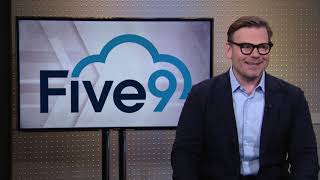
Rowan Trollope, CEO of Five9, explains why the cloud-based call center software company has outperformed the market. Five9's platform scales instantly for clients like DoorDash without requiring hardware purchases, and uses AI trained on millions of calls to give agents real-time suggestions on what to do next.
Chapters
I spend a lot of time talking about the cloud, especially the booming cloud-based enterprise software market, because that's where the money is. But this industry has grown to the point where I can't always keep track of the players anymore. Case in point, nearly 2 months ago, Jeff in California called in to ask about Five9. That's F-I-V-E-N for all you home gamers. And because I wasn't familiar with the company, I said I got to go back to some homework. Five9 is the leading purveyor of cloud-based software for contact centers. Their platform helps companies cut costs and improve customer engagement. Can't beat that, right? Stock's been totally on fire, which is why I was hesitant to just recommend it without doing more research. I don't like to cuff things. This is an intriguing story. So let's dig deeper with, with Rowan Trollope. He's the CEO of Five9 to learn more about his company and what's driving its recent outperformance, which has just been stellar. Mr. Trollope, welcome to Mad Money. Good to see you, Rowan. How are you? Thank you for having me on. Okay, now I have to tell you, I hate it when someone calls me and I don't know the stock. And you know I try to be true to the show. Obviously, I guess you were watching.
Yeah.
So why don't you answer the viewer about what you do?
Well, have you ever had a bad experience when calling up a company or texting or emailing and you just are sort of left wanting? Well, that's really because they're using legacy on-premises systems that are hardware-based and they're just not able to keep up with businesses as they want to deliver a great experience to their customers. Right. So we are born in the cloud, you know, all software-based system, all web-based. And so it is a totally radical departure from what has been done in the past. And what we enable those companies to do is to deliver a great experience whenever you call or email or text every single time.
Okay, so let's say I call. Why don't we start with DoorDash? DoorDash. Okay. Which I'm talking about tonight and earlier in the show talking about maybe we have too many of these companies, but they're so— they got to be so customer-focused.
They do.
Yeah.
And DoorDash is a great example. They're one of our larger customers. They were able to put their— they have huge spikes in their volume, right, around dinnertime or lunch, right? I know you're a little bit in that business. So they drive up into these spikes, and we can scale up and scale down very versatile because we're all in the cloud. I know.
I mean, that's like— there's a hit. I know from our business, between 6:30 and 7:15, we're dead.
Yeah, well, our systems, because we handle well over 100,000 agents from thousands of enterprises, we're able to sort of absorb all of that load in the cloud. So if a company tried to do this on their own, they would have to buy as much hardware and phones and infrastructure as they would need for their peaks. And we can sort of average that out and do a great job.
Okay, but how do you know? I mean, for instance, I was trying to order from Chipotle on Thursday, and sure enough, they said it was at 48th Street in Manhattan. I live in Brooklyn, and there was no customer help at all. I mean, what's that?
Well, that's one of the big problems that customers face is when they— we don't do the people side, we only do the software, right?
Okay, but they obviously didn't have it right.
A lot of times they can't forecast that right, or they get a spike in volume and so on. And so what they try to do is they'll They'll try to intelligently get you to, if you're trying to call, they'll try and intelligently push you off and say, "Oh, we'll call you back when we're available." Okay. Or we'll, if you're a VIP, maybe you'll get through to an agent, but if you're not, maybe you get put into a queue for a callback or they'll send you a text or something else. And we integrate all of those together, text, email.
Okay, well let's talk about something that's text, speech to text. Now that's something that's in your conference call that sounded interesting.
Yeah, that's a huge deal for us. So 18 years, when I was 18 years old, I got my first job in the call center. And I took 8,000 phone calls, okay, over 8 months.
Really?
And I learned 3—
I mean like, hi, how can I help you?
Literally, yes.
I'm Rowan Trollope, can I help you?
Yes, yes. So what I learned is 3 things. First, after you take 8,000 calls, your brain is really good at predicting what people are gonna ask you, 'cause it's the same calls over and over and over again. So the customer says 3 things, you know where they're going, okay. The second thing I learned is that you can be really good after you take 8,000 calls. Calls because that's what customers want. They want someone who is an expert, who knows the problems, who understands it, can just jump, jump you right through the hoops. Right. And the third thing I learned is that you want to leave the call center after you've taken 8,000 phone calls because that was the last thing I wanted to do was stay there, right, dealing with this.
I knew somebody who used to work at the call center for a major credit card company and it drove her batty.
Exactly. So, and that's one of the biggest problems in the call centers. And it's one of the underlying causes of why you get bad customer experience because you're talking to people who have only been there for a short period of time.
Right.
They're not great at that. And what we have found is that AI, we can use AI—
Artificial intelligence.
To train, yeah, artificial intelligence to train the computer, actually not just listen to 8,000 calls, but we can actually have the computer listen to millions of calls and take all of those calls and learn basically what it hears and then sort of sit over the shoulder of the agent and provide like an expert assistant, right? Almost like superpowers in real time. This is what the caller is asking about, this is what you should say. So give them the next best action. What should they say next?
Okay, so we had live person on recently. Do they integrate with you at all?
They're doing something similar to this, but they're doing it purely in the area of text messaging. Text and messaging, and mainly for very large enterprises. We're in the enterprise space as well. It's what's driving our growth.
Small to medium, but you're getting bigger and bigger.
We're getting bigger and bigger.
Okay, so how about last night we had Pegasystems on. So you work with them. What do you do?
Yeah, we work with all of the CRM companies to deliver this experience. So digitization is the wave and the trend that's sort of pushing this forward, obviously with companies like Salesforce at the head of that. So we integrate with all of those CRM companies so that the agent who's on the other end not only can sort of get the call in or the message or the email, but also can basically see in real time who are you and when was the last time you called. And that's all coming from the customer relationship management system. So we work hand in glove with Salesforce, Oracle, Microsoft, Pega.
OK, this is an existential question. OK. Why do you think that I had not heard of you? I have a theory. OK. You guys are really good at kind of white label. People don't know who you are. You integrate perfectly. But how are we supposed to know from the stock perspective who, when it's you and when it's not?
Yeah, well, that's why we're on the show. We want people to know about us, Jim. Thanks for helping. You know, we actually, we're totally comfortable in an enterprise environment being in the background and helping that customer deliver great experience. I'm not.
I want people in your stock because it's been such a great performer. I want to thank, that's Rowan Trollope, CEO of Five9. The symbol once again is FIVN. I want to thank a viewer for bringing it to my attention. And Mad Money's back after the break. Booyah! Jim Cramer here from Mad Money. Thanks for watching CNBC on YouTube. Click here to subscribe and get the jump on my exclusives with CEOs, plus market news, investing advice, and a whole lot more.
More from Rowan

95% Prompt Cache Hit Rate: How LLM Cost Reduction Actually Works in Production


Office Hours with Guy: Building an external memory store with Redis CEO Rowan Trollope





Helpful Cost-Effective Customer Service Solutions for Every Industry With Rowan Trollope, CEO, Five9


Patrick Moorhead & Daniel Newman talk with Rowan Trollope, Five9 CEO for a Six Five INSIDER!
