How To Protect Your Business With Intellectual Property | ROY SERIES 15
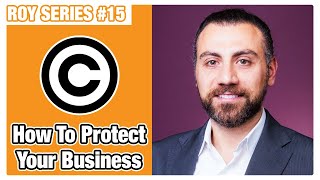
Patent attorney Jeff explains how patents create a 20-year competitive advantage and why investors demand strong IP portfolios. Three mistakes kill startups: filing too late, disclosing before patenting, and misunderstanding what patents actually protect. The conversation covers the full IP toolkit: patents, trade secrets, trademarks, and copyrights.
Chapters
So you don't care about a million views, you care about those who view your content are actually gonna be buying. Let me introduce you to one of my very good friends who used to live in Washington, Jeff. He's a very successful lawyer. He works in patent law. We're going to be basically discussing the common mistakes in patent and then some advice for any business entrepreneur. How would you explain patent for people? What is a patent?
A patent is an agreement between an inventor and the government where the inventor discloses his invention in written form in a patent application, and in exchange for that disclosure of an invention, the government will grant a 20-year exclusivity period to that person, which means that that person can take their patent and prevent somebody else from doing what their invention claims.
And why is that important for businesses in tech?
Because in business you need to have some kind of competitive moat that distinguishes you and prevents competitors from just outright copying whatever idea you have. And it varies by technology and business area. For instance, in a lot of the high-tech areas, one single patent may not be the important. Could be important though to have a large group of patents, whereas in pharmaceuticals, the patent for the particular compound that's being developed, for instance, is absolutely critical to the company's business.
Is that something investors look at when you're trying to go for funding? And is it important to have patents before you go for your round of investing?
Yes, investors are always interested in seeing whether you have something patented. And in the pharma space, it's absolutely critical. And not only will they ask you whether you have patents, they'll will look at them in depth and have other patent attorneys criticize the patents to try to figure out whether there's holes in them.
3 common mistakes that people make when it comes to patent, what are those 3 common mistakes you would say?
I think one thing is just misunderstanding how the patents are going to work for their business. A lot of people go on and they'll get a patent application and they'll file a patent when in fact their business model is flawed in another way and they end up focusing a lot on the patent. The patent doesn't solve all their problems. So that's probably the the number one problem that I see. The other problem I see is people wait too long to file for their patent application. So they have some idea and they try to develop the invention and they take it too far without actually getting their patent application on file. That's critical because if somebody else comes in and files an application on the same idea, well then it's going to prevent them from getting their patent.
So those are two common mistakes.
Yeah.
I mean, one is just waiting too long and the other one is— Even telling other people without filing?
Well, that was the third thing, which is basically I see a lot of times people will end up in discussions with third parties about their invention before they have something on file.
I mean, I may still make that mistake. What's the difference between patent, intellectual property, and trademark?
Right.
So I think we get them all mixed.
Exactly. So there's a broad field which we call intellectual property, and within that field you have patents, trade secrets, You have trademarks and you have copyrights. Now, at a high level, I already talked about what patents are. It's an exchange of an invention for exclusivity with the government. Well, if you don't disclose your invention with a patent, what you can do is you can keep it as a trade secret. But if you keep it as a trade secret, there's no protection on somebody else independently coming up with that idea. So that's one big problem with trade secrets. And then the other problem with trade secrets is sometimes it's hard to keep things secret. And some things are not even possible to keep a secret once you've disclosed them. Then you get into other areas of IP that you were talking about. Sometimes we call them soft IP, but it's trademarks and copyrights. In trademarks, what you're doing is trying to protect your brand. So you come up with the name of your company, for instance, and you'll try to get a name that is something that you can file a trademark on. It has to be— can't be generic. You can't sell apples and say my name is, you know, Red Apples, although it's a kind of funny thing. A little bit of a counterexample there with Red Delicious apples. They were able to get away with it, but you won't be able to do that. You gotta come up with a more suggestive possibly, or just arbitrary or fanciful name.
You know, like baby steps internally how to do it, but I would love at some point you help us with kind of think of the broad pictures because we've developed some internal trade secrets, I would call them, the way we do community management, the way we kind of like handle our client operations from ABCDF And I don't think any other— I kind of came up with them after being 10 years in the industry, so I kind of developed certain practices. So those could be protected?
Well, those would be— sounds like trade secret protection, and you need to make sure that you put in place mechanisms to keep that information secret and you have agreements with employees that make sure that they maintain the secrecy and so forth.
It's more important than to get a lot of views, but to get the relevant views that kind of drive revenue and money and make the money, right? So you don't care about a million views, you care about those who view your content are actually going to be buying, they're actually going to become clients. So increasing your personal brand is essential in terms of building that content, that touchpoint, because a lot of the concepts that you work on with are very abstract for a lot of people. So the fact that you start basically putting content about defining what is the patent law, what is an IP, what is that, what is this, those are becoming touch points that's going to increase your personal brand and also increase your point of like becoming an expert, more of an expert in that area. So those people who are trying to hire you, they're building relationship with you through that content before even buying you, buying from you.
If I wanted to use like a new media format you know, video, for instance, which I haven't been using. What would you recommend? How would you recommend getting started in that area?
I would, I would first recommend looking at basically making sure that you prepare a little content calendar for your videos, right? Think about the most common questions that people ask you when they come to you, right? And those common questions could be like, what is a patent? What is this?
What is that?
The pain points in your clients. Prepare those in a little content calendar. So have like 10 pieces, 10 ideas for videos. Write them up, and then start basically put a camera and record those answers for those videos. The second piece of advice I would focus on, email is not dead. As much as you can collect emails, because outside of sending a newsletter, you could take those emails and upload them to Facebook and LinkedIn and target people with your content on those platforms. So you basically use the database to put it on Facebook and tell Facebook, hey, show those updates for those people when they're on Facebook. Does that make sense? Yeah. So this way you can start building that, and even not only that, you can take that email list and build something called lookalike audience. You could tell Facebook and LinkedIn, hey, get me people who look like those people, act like those people in that same space. So what's gonna happen if those people find your content important, other people are gonna find it important as well.
Interesting. What are the big mistakes that you see people make when they first start out on video blogging?
I think when you start coming up with content marketing, they're not thoughtful about the content and the mapping the content like 10 steps ahead. People just put a video and put it out. I think thinking about having the video having a purpose, like you're solving a problem for a client, that kind of content, and having multiple of them. So this way when you put one piece of content, you're just not— those don't disappear. You gotta become a regular. So think about multiple videos production, like reaching multiple of them. Then think about ongoing regularity of content, then think about engagement. Because most people just produce a video and put it up. They forget that it's social media. There's a social part, right? You just did the media piece. The social aspect is going in and engaging with people. Hey, I put up a little video about intellectual property. Tell me what you think about it. Is this the common question that you guys get? Engaging with the audience could create so much brand equity and brand value for you as a lawyer in the space that he— not only he knows what he's talking about, he's actually actively helping the world understand that practice.
Can you give me some tips for engagement in terms of, for instance, on the LinkedIn platform?
I would say on LinkedIn, whenever you're writing, for instance, when you put a piece of video, the update, the text update, I would break it down to become conversational and do like multiple stories in it and ask the question on there. What do you think about that? Do you think of any other question? Do you think of any other questions that you should have in this this video? Is this a common practice you have? Having open-ended question is gonna generate engagement directly under the video. Most people think— people, everyone reads, everyone's online, everyone's consuming. So, but if you don't ask any questions, you're not gonna get any engagement. But if you ask a question, you're more likely gonna get one piece of engagement that you can respond to with further information.