Liberty + Leadership Podcast Episode 34 - Roy Abdo on His Journey to the American Dream
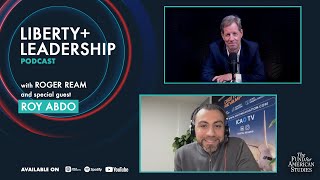
In this episode of the Liberty and Leadership Podcast, host Roger Ream interviews Roy Abdo, a three‑time TFAS alumnus and CEO of Digital Revamp. Roy recounts how the 2006 Lebanon‑Israel conflict stranded him in Crete during a TFAS summer program, leading to an extended stay and a cascade of TFAS‑facilitated opportunities. Through the TFAS network, he secured a scholarship and plane ticket to William Jewell College in Missouri, later raising $35,000 via a crowdfunding campaign to fund his undergraduate tuition. After graduating, he leveraged a TFAS internship to land a job at Voice of America, then used proactive outreach to join Gallup. While pursuing an MBA at Johns Hopkins, he turned class projects into paid consulting work, which funded his studies and seeded his own firm, Digital Revamp, in 2013. Roy explains his company’s storytelling‑centric branding methodology, its expansion into Dubai and Lebanon, and how it creates jobs for Lebanese talent. He reflects on the American Dream, emphasizing the rule of law, infrastructure, and personal agency, and offers a realistic yet hopeful view of Lebanon’s untapped potential. The conversation concludes with Roy’s advice to young leaders about self‑awareness, embracing failure, building courage, and the importance of networking and taking decisive action.
Chapters
Hello and welcome. I'm Roger Ream, and this is the Liberty and Leadership Podcast, a conversation with TFAS alumni, supporters, faculty, and friends who are making a real impact in public policy, business, philanthropy, law, and journalism. Today I welcome Roy Abdo to the show. Roy is a 3-time TFAS alumnus. Having participated in the TFAS program in Greece in 2006, then our Capital Semester in Washington, D.C., and the Public Policy Fellowship Program. Roy is currently the CEO of Digital Revamp, a marketing and advertising agency helping organizations reach customers through digital marketing and thought leadership. But defining Roy only by what he does today would miss an incredible story that led him to the United States. Roy left his home country of Lebanon in 2006 to study abroad at a TFAS program on the island of Crete in Greece. What was going to be a 3-week-long summer experience was what I would describe as stranger than fiction. It is my pleasure to welcome Roy Abdo to the Liberty and Leadership Podcast. To share details of his journey from Lebanon to the US and a range of other fascinating topics. Roy, welcome to the show.
Thank you so much, Roger. And I, I'm honored and I'm blessed and I'm excited to be speaking with you. And one of the best things that's ever happened to me was being part of the TFAS family. So I'm excited to be here sharing my experience with you and, you know, going through this journey of this podcast today.
Well, we're proud to call you a TFAS alum. And I think since I teased the story, we should get right into that. You know, I've got to begin with this. You left Lebanon, the country of your birth, came to Crete to attend a summer program we sponsored there. And obviously, you had a previous life growing up in Lebanon that was formative in shaping your character. But the events of 2006 were profound. In terms of who you are today. So please talk about what happened that summer.
So the story happened, I was at the Lebanese American University in Lebanon, and a friend of mine told me about this program in Greece, a leadership program and, you know, a conflict resolution program where you bring in 70 people from all over the world to study about conflict resolution and, you know, liberty and all those good stuff. And I remember to myself, wow, this is really cool. So I applied and I got in, and next thing you know, I got on a flight with my other friends who are also in the program. I land in Athens, I take a boat to go to Crete, which is about, you know, 3 hours, I think, if I recall correctly. 3, 4 hours.
High-speed boat would get you there in 3 hours.
No, probably like 6 hours. Yeah, yeah, it's true. And I get to Crete, I walk into the program, and Michelle, who's the program director, tells me, Roy, I hope your family's okay. I'm like, why? She goes, the war. I'm like, what war? The civil war ended 30 years ago. Lebanon had a civil war for a long time, but it was quite, it was like a peaceful area after that. And then what happens is I realized that we were one of the last planes to leave Lebanon before Israel bombed the airport and Hezbollah bombed Israel and the capturing of soldiers and all sorts of things. And I had no idea that all of that is going on as I was landing and I was, as I was walking into Crete and I was at that point turning 21 years old. So imagine leaving your home country and landing in a place and realizing, oh my God, there's no airport to come back to. So, and the story goes on where because of the TFAS program, this is when I had one of the most profound, I would say, educational experience I've had in my life. An example of from the classes we took on there, the interaction we've had with all people from all sort of nationalities, and that pretty much shaped my character and made me aware there's so much more going on outside of my home country. There's so much more geopolitics, politics, conversations, opportunities. And what happens is the story, every, you know, the program ended after 3 weeks. Everybody left except us who are from Lebanon because there's no airport to go back to.
Yeah, it's not like you could fly to Tel Aviv or even Damascus when a war is going on and take a bus. Exactly.
Yeah, pretty much. So I couldn't go anywhere. So I stayed another week in Crete. On the program and then through the help of the partners that TFAS has and TFAS was a tremendous help, you know, kind of arranging us a place to stay or helping connecting us with people who could help us places to stay. So I stayed another week in Crete, then I got on a boat and I went to Athens thinking maybe if I go to the Lebanese embassy, they would help us somehow get somewhere. I went to the embassy, they're like, yeah, you know, maybe we can build you a tent outside and sleep in it. I'm like, What? You know, so, so, you know, I was lucky that TIFAS alums, they're Greek, and I was sleeping on their couches from one couch to another. And then what happens at that point, TIFAS was doing its best, and you, you know, Michelle, the program director, arranged for a couple of us the scholarship to go do the capital semester, the fall semester at that point in Washington.
That's in Washington, DC.
Washington, D.C., correct. So I was like, this is exciting. But the problem was I had to figure out how to pay my flight and the rest of the scholarship. So I told Michelle, like, listen, this would be great, but I cannot do it. While two other Lebanese, or two other Lebanese were able to do it. So they got on it and did the program. In my case, I stayed in Greece for another two weeks after that. But through Michelle was, you know, on her way to Hong Kong, and she met another TIFAS alum, his name is Anthony Shop. So I give him a big shout out because of him, a lot of the story happened. So he's also a TIFAS alum. So Michelle, the program director, shared my story with Anthony, who was also an alum of TIFAS, and she told him, I have like one Lebanese student who's stuck in Athens and he can't go home and he doesn't have enough money to go on a capital semester. He's like, let me do something about it. Apparently he calls the college president of a school in Missouri called William Jewell College and he tells them my situation. They arranged a scholarship and plane ticket for me to get there, and I had no idea. So I got a call from Michelle. She goes, hey, Roy, I spoke to alumni of TFAS and they got you a full scholarship and plane ticket to go to school in Missouri. Are you interested? I'm like, sure.
So, and what about— did you have an issue in terms of visa in order to do that?
So what happens is I had enough money to— they mailed me the I-20, which is a form you have to get when you're traveling to America to study. They mailed me the I-20. I looked how much money I had. I barely had enough money to pay all those fees. I ran to the American embassy. I applied for everything. I got my visa. I went back home. I packed the one bag I had, and I got on a flight. I remember I had $30 in cash, and I had the address, and I knew they arranged me a host family or someone to pick me up, but I wasn't sure. There's no smartphone. You're talking 2006. I had a Nokia phone, if anybody remembers. So as I land, I land, and I had the longest flight. I land in Missouri, I'm walking out of the airport, and I see a sign, Welcome Roy. I'm like, this is definitely not for me. But it turns out I had a host family to pick me up, and people from the school, from the student affairs office, went and picked me up and took me to my dorm in Missouri at William Jewell College. So that story went on. I did one semester there, and I did a fundraising campaign because I already had the semester with TFAS on this spring semester. You know, I deferred my, uh, capital semester to the spring. I raised some money, and I was able to do the capital semester. I flew to DC on a buddy flight. I did the capital semester, and also thanks to TFAS, I had an internship in DC. An internship was also paid internship, which That also was another experience where I always recommend for anyone who's trying to, you know, be connected, get in a place where you, there's people around you where you're becoming helpful for, useful for. And TIFAS gave me that opportunity because I was interning at an international organization and, you know, getting paid for it. So I was able to afford life in DC and meet people and do the work that I want to do. And then what happens is after I finished the Capital Semester, I made a decision that I want to graduate from the US. Because if you graduate from the US, it enables you to get a work visa, which enables you to get a green card at some point. So I looked on the situation that I have is I can't get loans because I'm not a US citizen. I can't get a scholarship because I was senior at that point. So I had to figure out a way to pay for my school. So back then, through the help of Anthony Shop, who's the same person that TIFAS, you know, TIFAS alum who connected me for a scholarship, we were discussing, he's like, why don't we just do a fundraising campaign and raise your undergraduate tuition and, you know, get you to school? Also in parallel, what I did, I did a blog with my story and I put a PayPal account and I'll start like emailing people. Anthony's connecting with people, Michelle, the program director, connecting people with the help of everyone collectively. And people from Missouri were helping me come back to Missouri, to the William Jewell College in Missouri. Through everyone's collectively, we were able to raise $35,000 that we used to pay for my undergraduate. So I was able to get a degree, which enables me to get at some point a work visa. Long story short, we raised the money, which is a crazy story to think about, like 21 years old, figuring out how to get all of these pieces. And then I went back to Missouri, I graduated, and I finished in 2008. Remember what happened in 2008?
Yes, I certainly do. It wasn't a great environment for coming out of college into, right?
Pretty much. And not only I want a job, I want a job that sponsors my visa. It's like an H-1B, which is very difficult because you have to justify it.
Yeah.
So at that point, you know, I met someone who told me this sentence: people don't hire resumes, they hire people. So figure out a way to meet more people. I'm like, I don't know a lot of people. And yes, I did one semester in DC, but how can I, you know, get something through this? So I start email, and I went on LinkedIn, and I sent about 1,000 LinkedIn message or emails to different people. And I was lucky because someone I interned with, she was the HR director of this other organization. She got an email from me and she connected with me. And the next thing you know, because she knew my name when I was interning at T-FAST, she was like, oh, I see you're looking for a job and you speak Arabic, French, and English, and we could hire you at, you know, it's called Voice of America. It's the Middle East broadcasting networks. So next thing you know, I got a job with them.
Just to pause for a minute, it was through Anthony Shop, a TFAS connection, TFAS alum, and Michelle Lay of our TFAS staff that you were able to land at William Jewell College. And then it was through your TFAS internship that you got your first job out of college.
Correct.
And that was just almost by chance there that someone who was at your internship that summer had, yeah, had it, had it, was in a position to hire you at a And a different role. Yeah, yeah. And you were— your Arabic, French, and English obviously helped. You studied those. I know most people in Lebanon probably speak Arabic and French, I'm guessing.
Correct.
English is something you studied in school?
In school, and I was at the American University, so I was very intentional about going to the American system, you know, an American college. So I had to improve my English with that.
It must have been— maybe culture shock's too big a word for it, but suddenly you've gone from being in college in Lebanon to being in college in Missouri at William Jewell College. Could you just say a few things about that summer experience or the academic experience there, the cultural experience you had at William Jewell?
Yeah, like, I'm a very positive person, so let's start with that. Even at the hardest time in my life, I think about it as an opportunity. And there's like a really famous quote I've loved from a long time ago is like you ask for growth and God gives you challenges to overcome. So you're not gonna get the growth without the challenges. So the way I look at it is I landed in Missouri, I didn't know anyone, I didn't know what the culture was like. I had no idea, like from simple stupid little things, like as simple as in the US, you can, like it's gonna sound gross, but you can flush the toilet paper in the toilet and you don't know it because in a third world country, you cannot do those kind of stuff because of, you know, like the piping is small or something. You can drink a tap water out of the, you know, the faucet directly. Like, so, so many small things, you know, people take for granted. For me, it was a whole different, uh, experience that I was, you know, going through. And, and it was amazing. Like, you can open up a tab and drink, and, and some people just don't think of them. Even like calling 911 and they show up, you know, not that I ever called them, but seeing them around you was like a big deal.
Americans take all those things for granted, right?
Yeah. And even like, I left Lebanon, trash was not being collected. There's safety issues. And we don't have electricity 24/7. We don't have, you know, it barely comes in 2 hours. And I remember one day I was in the dorms and somehow the electricity went off. I just kept working because I'm used to power outages like nothing, you know? And I was like, and I saw everyone freaking out. I'm like, what's the big deal? You know, like, yeah, the power went off. I'm like, So very basic things that— and then for me, that's one of the reasons I love the US, because it's an ecosystem that enables you to create opportunities and work hard to build better things and serve the world in general. But overall, going back to the experience, people at William Jewell College were very welcoming and very understanding of where I was coming from and the cultural differences that I was going through. And growing into them, from even hosting me at different homes. I remember my professor, like a lot of professors were, became fam, they became family to me because I literally had no one in Missouri. So I had a host family, I had professors hosting me at their homes. I had the whole student body kind of understanding that I'm just not, I didn't grow up in the US. So some things I might be saying or doing, or they might just, I didn't mean to be intentionally, you know, offending or embracing something like I tend to wink, for example, is something in Lebanon, like, hey, we do it, it could be perceived differently. The college, the education that I received was great. The professor was phenomenal. And that set me up to success when I went back to Washington because I learned a lot of it. I learned the critical thinking aspect of it. And I also learned a lot when I did the TFAS semester, from the summer one or the capital semester, a lot about the free market, how to think in a way to create opportunity, what it's like to be in a free world, what it's like to be in those ideas of freedom that some people take for granted, but I was literally living every single one of them.
Well, we had a professor from William Jewell who taught for a number of years in our Washington, D.C. program in the summers. That's Professor Armstrong, Gary Armstrong. No doubt you got to know him at William Jewell.
Yeah, he was my professor of political science and he loved T-Fest and he knew my story walking in and he picked up on me even in like some of those exercises. But I mean, thinking about it, like, that's why I, if anyone's listening to this, it's going to T-Fest and being part of the T-Fest is, it will be one of the best decisions you've ever done in your life. Because not only the network, it's the learning. Not only the learning is the opportunities and the growth and the network you're part of, you gain yourself a family. That you put into and, you know, it gives you back and, and it's like a mutual, you know, beneficial relationship.
Yeah, well, we— I know, uh, we've, we've benefited greatly by having the ability to recruit professors such as Gary Armstrong to teach in our program and, uh, have such an influence on students. Well, you've, you've now been here in this country for 16 years, uh, roughly, uh, you've, uh been in the working world, the business world. You've started a company that's been since 2013 very active in the digital space and marketing and helping companies. That's Digital Revamp, your business.
Correct.
I want to talk a little about that, but first, you know, many question today whether the American dream is still possible. You've seem to me from your story to have been successful in achieving an American dream. Talk a little bit about, about the American dream and whether it's possible.
I think it's more possible than ever. And I think it's even more possible in today's world. There's some people trying to steal the American dream, I feel, by what I discovered, what I described sometimes, you know, people playing some victim mentality or not going out and putting their weight and pushing the best version of themselves every day. Like for me, the way I look at it from a high-level perspective, if someone like Obama was able to become president and someone like Trump was able to become president and someone like Biden was able to become president, it gives you the opportunity to dream big. And there's someone who's Black who made it. And then we work with a lot of executive leaders from different colors, different races that are at the highest level of positions because they took one commitment on themselves, which is becoming better every single day. And for me, one of the reasons why the American dream is possible, because there's an infrastructure and there's a rule of law. And when there's a rule of law, everybody's under the law. It enables you to have your right protected. You can start a company, you can provide service to the society, and the society values it, gives you money for it, and that money is protected. So you can build the life that you achieve from owning a business, owning a house, serving other people, knowing your right protected. So the way I look at it is, Whenever people say, oh, there's no more American dream, yeah, because you're trying to not work as hard as people worked. Because if you think about anyone who lived the American dream, he didn't just work hard, he worked hard and smart and was able to provide value to others. So that's why for me, I am a big believer of like the Constitution, our founding fathers. Even one of the most things, one of the things that read that we read at TIFAS and touched me the most was Tocqueville. If nobody— if you guys haven't read Tocqueville and his journey on America and his fascination from the printing press, the freedom of right, to the American way of doing business, uh, or the American way even living a life, to me that's like all are the fabric of what the American dream is about.
Okay, yeah, well, thank you. That's, uh, well, very well said. I, I can't take issue with what you said there, and I'm glad your reading of Tocqueville and your other courses with TFAS.
I did the reading, Roger.
Because I know a lot of that came from your experience too, and you did it through your own hard work. Not, you know, you didn't have to have— obviously you had people supporting you along the way, helping you along the way, but you didn't come— you know, it wasn't a victim mentality where, hey, you have to give things to me because I can't do it on my own. You did it with your hard work and your your sweat. So tell us how you got to this, build this company, Digital Revamp.
So, so after, after I worked at Voice of America in broadcast and media for about 7 years, it turns out if you have an undergraduate and you apply for a green card, it takes you 3 to 5 years to get a green card. If you have a master's, it takes you 1 year. I'm like, okay, I need to go get a master's. I applied, I get into Johns Hopkins, but obviously I can't afford to pay Johns Hopkins because it's like so expensive. So I had this idea, let me take my class project, turn them to consulting project, and then help small businesses with them. Next thing you know, I saw something about a company called Lyft, but no, everybody knows Lyft today. But if you thought about Lyft 7 years ago, you know, you're gonna get in someone else's car, he's gonna drive you around, he's not a cab driver. Like, why would you do that, right?
[Speaker] Right, right.
[Speaker] So, but I thought to myself, this could be a great opportunity because the internet is a great equalizer. So I did a proposal for Lyft in sense of like, here's how you help launch a marketplace. And I sent it to them. Next thing you know, I was working with Lyft on their launch in DC. And then from Lyft, I was able to take the money. And then pretty much the model that I had in mind is when you do an MBA, they give you a lot of case studies and class projects. I'm like, what's the point of those? Let me take those, turn them to consulting project, sell them to businesses, and take the project, go back to class, present it as my class project. I talked to a bunch of professors, they agreed to it. Some of them didn't, but those who agreed, I was literally using some live case studies to help businesses and things to fund my education.
So that's brilliant, brilliant strategy.
You know, thinking again, like no other place in the world, you know, maybe you could do it in other places, but the ability to start a business or be part of a business or help another business or have a consulting, like you can start a business in the US with literally going online, for half an hour, register an LLC.
That's a brilliant strategy to get. And you got your master's at Johns Hopkins then?
Correct. An MBA at Johns Hopkins. And with that MBA, what happens is I got my green card. At that point, I saw a company called Gallup, the Gallup Poll. They were hiring. So I thought to myself, I want to be part of something bigger and do something at that level. So I literally also, instead of applying, I sent them an email of what's going on and how the improvement they could be doing on their website, on their media and their work. And next thing you know, I was hired. You know, they reached out to them, I went through the process and I was hired by Gallup to help them with their digital work. And after I did the consulting work with them, I thought to myself, after 2.5, 3 years, I'm like, you know what, I can do this for a lot of other clients outside of Gallup. So I went to the CEO, I'm like, hey, listen, I'm thinking about starting my own company and doing digital advising, digital consulting. He's like, well, this is great. We can be one of your first clients. I'm like, this is great. So next thing you know, I was helping those small businesses I was initially working with at phase one. And then next thing you know, I was working with SHRM, which is the largest association in the world. And what I realized, what my God-given talent to me is the ability to strategize and tell stories.
What are some of the secrets that you provide organizations, individuals who want to promote their brand and reach a bigger market that make their stories powerful?
That's the part that I'm really good at. And how I got good at it is I understood the power of storytelling and changing someone's emotionally because everyone on the planet would like to move emotionally from one state to another. So the best way for brands to engage an audience is to help that audience move from one place to another by empowering them on what they could be doing. So anytime I looked at the framework from any brand is I see, are you able to move your customer from point A to point B? And if not moving your customer, also you have to think about the positioning of the company. Most companies talk about themselves, Companies that succeed talk what they could do to the customer. They become a guide in the customer's life. So those are like my two kind of pillars of building brands. So right now we work a lot with executives on their executive branding. So we turn the executive into a thought leader by taking his content, his ideas, his vision, and transcribing into content, into graphics, into visual to help to post it on LinkedIn, to build him a following. And all of our content is, Useful advice for the world, helpful ways for companies to grow, helpful ways for HR professionals in our case to be the best HR professionals of themselves. And the second thing is knowing your customer so well and knowing the problems that they're having and putting content on how your products, your solution, your company is the guide to help them get better. So, and doing it consistently, that's the recipe to grow a following and that's how we help our clients.
And as I recall, you've mentioned that your company is now not just working here in the United States, but you've got some work you do in Lebanon. Are you becoming a global company?
We, I mean, because of my background, I was receiving a lot of inquiries for some work to be done in Dubai and Lebanon. So we actually right now have an office in Dubai and we work with Ras Al Khaimah, which is one of the Emirates in Dubai. We do work for them and we also work with— we have an office in Lebanon because part of my commitment was I had a very hard life to build the dream that I want to live and had to leave my family, my home, and gain another home, which was great too. But also some people don't want to have that experience. So now we're able to help people get jobs in Lebanon because we're able to open up opportunities for them and create work for them that we bring in from other countries because of the lack of, you know, the high unemployment in here.
Well, if you don't mind, Roy, let's talk for a few minutes about Lebanon. It's a beautiful country, has a terrific climate, wonderful people, but it's been enmeshed in conflict for decades. It's had leadership struggles, government dysfunction and corruption, war, you know, terrorism. You had that awful warehouse explosion that destroyed your port just a couple of years ago. It's contributed, you know, these factors have all contributed to very difficult times for that country. You know, is there hope that things can improve and Lebanon can be, I mean, it could be just a very rich, rich country with lots of opportunities for people if it could overcome these problems, but where do you see things today?
It's very difficult seeing how a country like America runs and coming back to Lebanon and see how things run. You notice how much disconnect there is and how far are we from actually being a nation. And what I love about America, how much Americans love their country and they love their nation and they put it first among everything else and they love to serve. And I think the challenge we have in Lebanon, there's different political parties. And they're not all, not all of them are aligned on this definition of what Lebanon could be and would be. So there's a group, you know, the nature-wise, we have a lot of beautiful resorts, a lot of beautiful, like one of the most beautiful nature sceneries I've ever seen and across all my 24 countries that I've traveled to. Part of it also, I wouldn't talk about it, Roger, is I became a speaker for the State Department and they flew me to like Tajikistan, Morocco, where I gave presentations on how to use digital to change your life, how to use digital to grow a business or actually enable you to get opportunities outside of your home country. So when I look at Lebanon, going back to that, to your initial question, we have a lot of, God gave us a lot of things, but humans here are not set to make the most out of them to make the country successful because there's Hezbollah and their own agenda, the other parties have their own agenda, there's no defined agenda of, Lebanon nationalism, like Lebanon as a nation, what could it be in our structure? And we don't— we don't— like, Lebanon does not have, uh, you know, uh, Washington or Jefferson or Madison, or like those people who love their country more than their own interests. Like, thinking about Jefferson, even if you think— if you know about Virginia, a governor of Virginia cannot run for two consecutive terms because they're so set on not being a monarchy. So someone for me at that highest level of thinking put their, you know, put the country's interest, the state interest above their interest. And unfortunately, I don't see that in Lebanon happening as far as, you know, there's some aspect of it beginning, but it's also thinking about it. Lebanon is about 100 years old as a country. So it's not like an old country, but also on the other side, it's a young country with lack of centralized leadership and vision, which is, could be very difficult to grow. I mean, I don't want to sound pessimistic, but I'm also realistic. So things are better a little bit in the sense of like, there's more the political— the last election, things got a little better in terms of there's new people, there's new faces, but we're still very far from the untapped potential of this country. Like, not seeing someone— seeing a country like Singapore, seeing a country like Dubai, seeing all those countries like Dubai is 50, 60 years old and look how far they've come along, or even Qatar, like thinking how young that country is and how far they come to host the World Cup. To me, that's a, it's a pride to be part of, you know, an Arab nation, Arab-speaking nation hosting that kind of level of sophistication.
I think you captured it with those two words, untapped potential. It's got great untapped potential, great location in the world in many ways, while at the same time it's surrounded by a lot of you know, difficult conflict that hampers, that infects Lebanon. But your family's still there, is that right?
Correct. My family's still here. All my cousins and stuff, they in Lebanon. And I mean, they already have their green card approval and they could go and get it and everything. But also part of it is, you like, in my case, I became more American than Lebanese. It's kind of like you have a dual identity where you love both places, but I'm a big believer of what America is about and the American dream. And I hope one day we're going to have something called a Lebanese dream, which I do, but it's very far from where it could be going, you know?
Well, I recall in 2018 you became a US citizen. Correct. You posted about it. And what was that like?
It took me, I think, 13 years to get to that, to become a citizen. So I went on and posted on LinkedIn. My story, how I came to Greece and the whole struggle and process. And I posted and I just went to bed. I woke up, the post had 1.5 million views or 1.3 million views. Wow. Over 200, 300 comments. So many people writing, this is what the American— and for me, it shows you that when you put up the best version of yourself every single day and you tell your story authentically and you're true to yourself, every day you'll be surprised what the world will show you, but you gotta take action. And I see so many people every single day, they have dreams, they have visions, but they're not putting into motion by taking action on it and their dreams go untapped. So that post exploded on LinkedIn and it opened up so many opportunities for me, not only in business, but also like the speakers bureau from the State Department reached out to me to be on their speakers list. And also like it brought a lot of positive, I would say, feelings or hope and aspiration. So many people wrote me, I've been in the immigration struggle for X amount of years. Your post gave me hope. Because I mean, think of it this way, the reason why I didn't lose, because I never stopped trying. And I think the recipe for people, if you stop If you don't stop trying, you could never lose because you're always trying to be successful.
Well, uh, before we run out of time, I do want to ask you a little bit about advice you might offer to young people today. First, to young people who are in our program, whether they're American or not, uh, you know, they're trying to sort out options for their careers, what direction to take. how to, you know, find success in their lives. Can, can you tell me a little bit of what the kind of advice you've, you've shared some things already as we've gone through this discussion, but share some advice you might offer some young person who comes into your office and says, Roy, you know, I'm, I'm kind of at a crossroads in my career. I'm not sure what to do when I got out of college. Uh, how should I, you know, find focus?
Yeah, I would say like one of the best thing advice that I gave, and I'll give it back instead of, always be obsessed of what you want to do. Be obsessed of what you don't want to do, because you never know what you like until you try something. So keep trying things and keep growing in things, but also keep in mind taking your natural talent as a key element of success. Like, start to get to know yourself. And the key thing is, because you grew up in a certain way, you take what you grew up with for granted and don't leverage it to the highest potential. Like, I grew up not never feeling stages. Public speaking. I've always loved talking. I've always loved strategy. So I thought everyone has that ability of doing what I do best every day, you know, thinking, oh, that's easy, I can do it. So I'd say one of the biggest lessons learned was self-awareness, knowing what makes you unique and makes you special, even though you grew up with it, and taking that and complementing yourself with those who could help you with places that you're not that good at them. So don't try to be everything for everyone. Be useful for a certain amount of people for a certain amount of tasks. That would help you push further than anyone else. And the common thing that got me is you have to free yourself from— it's okay to fail. Fail is another lesson. And you never fail if you keep on trying things. So I would say, you know, knowing yourself, it's okay to fail. Fail is another lesson. Keep moving, keep trying. And surround yourself with people that you trust and they give you an honest feedback and honest, you know, have an honest conversation with them, whether it's a mentor, whether it's a coach, whether it's, you know, your circles, your ex-boss, there's, everyone around you is not, you know, the best fit for you, you know, it's not like your greatest mentor, but think about there's a certain amount of people that you are, they're already successful, they could give you that 1% tip to move you further in your life and read a lot. Like I read a lot, I make a point to show up in places, even though if I'm tired, even though if I'm like, you know, for example, the happy hours or the gatherings you guys host, sometimes I'll be so tired, but I still show up and I still meet, you know, great people because your success is a factor of the people you meet. You have to be useful for people. And if you're sitting at home watching Netflix, you're not useful except to the person who had their dream of making Netflix. You're useful for them because you're watching their dream getting happened on the screen. While you're sitting on the couch wishing that it was you, you know? Yeah.
Well, you mentioned earlier that people don't hire resumes, they hire people. Uh, and, uh, you know, I want to go back to that story you mentioned about Gallup because I found that fascinating. And there's a lesson there about the fact that you didn't wait to find a job opening at Gallup that you fit and that you could apply for. You went and looked at their website, looked at their digital media, what they do, and you found things you thought could be improved and sent them a memo about it and they hired you. That's a very creative approach you took.
And I would say, like, think of it this way: you're— you'll never be fired from a place you're useful for, though, and you'll always be hired for a place you can add value for. So, and you might be asking yourself, okay, I'm a young 21-year-old, 22 years old, I cannot be— no, you're actually very wrong. You could be useful because the skill set you have at 21 is not something people have at 35 or 36 or 37. One of my favorite quotes is, the older I get, the younger my mentors are.
I hadn't heard that. That's a good one.
Because, you know, because think of it like, no one knows TikTok better than a 21-year-old, right? So if Gallup wants to be relevant in the next 5 years, TikTok is on the rise. You could be going for them and finding you something useful where you could be useful for them, you know.
I got to write that down. The older I get, the younger my mentors are. Roy Abdo. Okay. We're going to get that into some book of quotations and attribute it to you. The, you know, one thing we did a new strategic plan at TFAS just 2 years ago, and we looked at our mission statement in the process, and we just made one kind of minor tweak to the mission statement, which is always said, we What we're doing is developing leaders. And we added the word courageous, developing courageous leaders, because we just thought in so many instances, being a leader requires courage. And it could be anything from being in a, I'll say a woke environment today, speaking up sometimes can lead to censorship or pay a cost for speaking your mind about something. But it also takes courage to do the kinds of things you did. Your life, you know, it was forced on you to some extent by external circumstances, but to be a 21-year-old suddenly in a city like Athens, unable to return home, you turned that into a courageous journey that has led to great success in life and adding value to the businesses and lives of so many others now here in the United States and and outside the US. So do you have any thoughts about that? About when, you know, you must have had times where you were scared or frightened and you had to summon up that kind of courage. I'd love to hear you say something about that.
I love the word courage. And like, I'm afraid all the time. Like, it's normal to be afraid. If you're not afraid, if you're not anxious, it means you don't care.
Or you aren't taking any kind of risks, right?
Exactly. Like, your life is just not, where you could be. So for me, one of the things I loved is something from Jeff Bezos. He calls it the minimum regret framework. So when he had this idea of Amazon, he went to his boss and he told him, and his boss tells him, okay, that's a good idea for someone who doesn't have a great job on Wall Street like you, Jeff. So Jeff goes home and he sits down and he thinks, what would I regret when I'm 90? Not starting Amazon or not quitting my job? He's like, not starting Amazon. So he went and quit and started Amazon. I think every single day in my life is, what would I regret more? Not starting Digital Revamp or not quitting my job? Or like, kind of, I want to reduce the amount of regrets. And for you to reduce the amount of regrets, you got to have the courage to take decisions that are outside of your comfort zone and step into places where you've never stepped in. And guess what? It's going to be painful, it's going to be ugly, like, you know, but the That's where you surround yourself with people who are smarter than you to reduce the amount of errors. Not taking action is wrong. Taking action is less, it reduces the amount of wrongness you're doing. For example, like there's no bad, like not making decision is the wrong decision, but making decision could be the fractionally wrong decision, but the more decisions you make, the better you get at it. So I would say like, it's okay to take a decision and it's okay to change that decision. So having the courage to make decision is one of the qualities of a leader. And I always look for people who are in that position or are okay with being wrong and they admittedly say I'm wrong. Even like I work with the, one of our clients, he advises executive of Fortune 500 companies. He makes predictions all the time. And part of being, making predictions is it's okay if some of them are wrong, but at least you're trying to make sense of the world, you know? I love when you added the word courage in there. And sometimes when I think about it, you're only forced in certain places. Like, for example, the only time I was forced to do something was when I was in Greece. But every single decision I've taken, I've understood that there's two things in life. There's fear and danger. And we all tend to mix them up. Danger is real. There's a lion outside. There's a shooting outside. It's a real thing out there. Fear is a factor of it. It's an emotional thing. It's an imagination. It's a feeling. And we tend not to make decisions based on fear, while in reality we created fear in our head. And that creation is disabling us from being true to ourselves, from living our full potential. So making distinction between fear and danger was one of the best things that helped me get more courage that I'm creating this thing on there. I can just muscle through it and go on.
Well, you reminded me of hearing from Jeff Bezos' father once about when his son called him to say, "I want to leave this job I have on Wall Street and start a new business. Will you loan me money?" And he asked Jeff Bezos, "Well, what is the business idea you have?" And he said, "It's to sell books over the internet." His father thought, "Why are people going to buy books from you rather than from bookstores in their neighborhood?" You know, but—
Yeah.
But you know, that was certainly a concept that was chock-full of risk and fear and questions. And as you said, you know, you got to take action, motion, and move forward. And we see where it led to today. Well, my guest today has been Roy Abdu. Roy is a shining example of courageous leadership, of entrepreneurship, of success, success, and we're pleased at the Fund for American Studies to claim at least a little bit of credit for helping Roy get to where he is today by adding value to his life and having transformational programs that have enabled him to become someone who's transformational in the world and adding value to his clients. So thank you so much, Roy. It's a pleasure to talk with you today. Best wishes Wishes for continued success.
Thank you for having me and thank you for this great podcast, and I look forward to see you at the TFS headquarters.
Sounds great. The deal. Thank you. Thank you for listening to the Liberty and Leadership Podcast. Please don't forget to subscribe, download, like, or share the show on Apple, Spotify, or YouTube, or wherever you listen to your podcasts. If you like this episode, I ask you to rate and review it. And if you have a comment or question for the show, please drop us an email at podcast@tfas.org. The Liberty and Leadership Podcast is produced at K Global Studios in Washington, DC. I'm your host, Roger Ream, and until next time, show courage in things large and small.