What is the future of news? | GMU Keynote | ROY SERIES 6
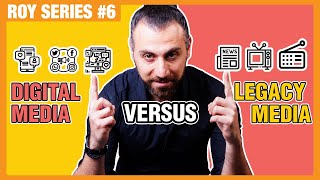
In this George Mason University keynote, Roy Abdo shares his personal journey from a scholarship‑bound student in Beirut to a digital media entrepreneur who raised $35,000 via a blog to fund his U.S. education. He describes the transformation of news delivery, noting how legacy outlets like the New York Times and Fox are losing audience to influencers and social platforms such as Snapchat, Instagram, and Medium. Abdo argues that the web’s lack of regulation creates both opportunities for unfiltered truth and challenges for verification. He emphasizes that today’s journalists must become the new distribution channels, building personal brands, leveraging multiple platforms, and producing hands‑on projects to stand out. He cites declining trust in mass media (≈32% in the U.S.) and urges students to combine traditional reporting with influencer‑style, real‑time content, while remaining skeptical and cross‑checking sources. The talk concludes with practical advice on personal branding, content amplification, and cultivating a hustle mindset to secure employment in the evolving media landscape.
Chapters
If you don't put the hustle, if you don't put the work, no one's going to hire you. We are going to George Mason University, and the question is fake news or real news? We're on a panel discussing the whole difference about fake news and real news and what could you do to help it. The audience are students who are studying communication or journalism. Whoa, that was my exit. Almost missed it. So with that being said, thank you for watching. Please go out and be more optimistic.
Roy, over to my far left, and Roy is a real hero because until 24 hours ago he didn't know that he was going to be here. And something to talk about group therapy, you know. I made it, right?
My journey with media started in 2008. What happens is, long story short, I was a student in Beirut and I went to Greece and then the war happened. And then from that, I was able to get a scholarship to go to school here. I land in Missouri, and I was supposed to be there for one semester doing a scholarship for one semester. And at that point, I realized I want to stay in the States, and I would like to basically figure out a way to pay for it. And with that got me thinking. I couldn't get loans. I couldn't get scholarship to do something about it. So back in 2007, the blogging industry was booming, and things were happening. And I've always been like a fan of digital because growing up with the internet. So at that point, I started my own blog. I wrote my story up, put a PayPal account on there. And I started emailing people my story. And with that email, I was able to raise about $35,000 online that I used to pay off my undergrad. And from that day, I realized the world we live in is changing whether we like it or not. Technology is dragging everybody down. So it's up to you to figure out how to start riding those waves and move with it. And with that, basically, the first thing, once I graduated, I got a job in television. And I was helping the TV transition from being this broadcaster to become this interest bucket that people follow. For instance, once you're on TV, you just follow everything. Once you go on the web, you want something specific to you. And then you go on this whole disruption that happened in the content. The content became different on each platform. I kind of witnessed this transition, and it's awesome to be a practitioner in it and moving it around from one place to another, kind of like the content on different platforms. First, I want to do a little polling. Uh, how many of you in the audience follow an influencer that you get your news out of from, and you know what's going on with them? You guys follow influencers to get what you— what the updates? Or you follow, like, for instance, even, uh, Snapchat? When you zoom in, you can see the stories when things are happening, and you zoom in on the map so you can see what's going on in that particular area. You guys know what I'm talking about? So this is the world you're going to be living in. And the world— the media is transitioning and the big companies are in trouble, like basically Fox, New York Times, Washington Post. They're all in trouble because they used to be the controllers of this medium. Right. And what's going on? We're all— younger generation are turning to places, to influencers, to those— the actual fact versus the reported story. And that transition is what you will be leading on. You are the new channels. You're the new channels of the new generation. It's not them. It's not us. It's basically the truth is now becoming less filtered with those layers of editing. And what's going on, it used to be where all those regulations were on television, on radio, they had those regulations. On the web, there's no regulation. And that's the beauty of it. You get the facts as it is. You want things as real as possible. And the way I think about it is, we used to go to the Washington Post, the New York Times to get the updates, to get the real truth. What's more true than opening up Snapchat or Insta Stories, going to the actual location of the story happening, and see what's going on, real feed from real people? I'm getting the real fact. And that's the duty that you have to take on to build on that brand of yours, to be the journalist, to be the voice reporting the truth of, with the new generation of technology. So the way I think about it, if you're not thinking about those stuff, if you're still thinking about, you know, going on an article, reporting it like it used to be, yes, it's awesome, it's a good fact check for some generations, but 60% of young people get their news from Facebook and Instagram and Snapchat. So whether you like it or not, things are changing, and it's up to you to make that distinction and stand out and start creating those stories to be— I mean, even on CNN, I don't even go on the website. I follow the reporter on his Instagram stories to get what's going on. And even like the way he puts his stories on Instagram is different than the website. Because the way I consume media on Instagram is much different than the way I consume media on a website, on an article. On Instagram, I want to be tapping, I want to be swiping. I don't want to be scrolling all the time. I want to see visuals. And that's the thing where if the government gets into that section of start regulating the web, that's going to be a whole different monster that I would say it will just limit that freedom we have. Because the fact that I can just tap into a map and see what I want to see from who I want to see, which are the people, which are the new channels of distribution, to me that gives me the freedom to make my own choices, which at the end of the day, fake news or real news, it's up to you to make the story. And like the old saying is, there's for every, for every, for every, for every, for every story, there's three versions. There's the truth. There's your version and there's my version. So it's up to you to pick up the truth from those three versions.
I understand your point about there's the— your version, the facts, and then, you know, someone else's version. And those are all open to interpretation, but they're not edited. They're not filtered.
I don't want to be edited.
I know you don't. I understand you don't want it to be edited.
We grew up in a generation, we want the real things and we don't want things to go through filters and to basically become your version. I want the truth.
But that's not always the truth.
That's the truth that I'm seeing in front of me. If I open up a filter and the camera on Instagram and I can see an actual location of the Texas thing, of the Vegas thing, what happened, to me that's the truth. That's more true to me than going on an article. I mean, I know it's like—
No, I understand what you're saying.
I'm hurting someone's feelings here. I didn't say—
No, you're not hurting anyone's feelings. You're not hurting anyone's feelings. I understand what you're— But people make their lives look much more glamorous on Facebook. I'm not talking about Facebook anymore.
But what social media? I mean, the younger generation moved out of Facebook.
Well, okay.
They're all on Snapchat.
So Snapchat's not any different?
Snapchat is as real as it can get.
There will be an ultimate cage fighting event just after this.
No, I mean, I'm struggling to understand your point.
They know what I'm talking about. They're all young. They're all on their phones.
Well, that's nice, but that doesn't mean they're getting the truth.
Are you guys getting the truth? I mean, what I also have to clarify, like, we— I'm not saying just getting the whole truth, but also a lot of us here in this room, the younger crowd, we just follow certain influencers and we start trusting and building relationships with them. And those people have a following. We've been following for a while, you know, you know they're truthful. You build that trust with them more than— and if they're on the ground, you're basically trusting them more than, you know, another, another source of alternative. I'm not saying just basically every person is trustworthy. I'm just saying we're a generation where the influencers, which are basically a bunch of people online, have a following, and we build relationship with them. We kind of trust them for the truth more than the traditional media sets because we're getting from them the firsthand experience. It's up to you to basically understand all those metrics, but now we have more information, which is, to me, that's the whole democratization and the whole web democratization, the fact that I can just go on Snapchat, get some stories, go on Instagram, get some stories, then go maybe read the Washington Post or NPR for the other version, the more in-depth version. I have a better picture of what the truth is than just them, the editor's lens. And this influencer lens only. So combine those two, I'm actually making a full picture of what's going on in that world.
I'm so glad that in the definition of the truth you mentioned NPR, so we're in good shape now. You know, Shabnam, Roy, did you want to practice giving him a withering glance first or?
Is anyone on Medium in the audience? Anyone watch on Medium? Okay, so for those who don't know, Medium is like this new platform where people can just blog directly on there. It's also another unfiltered truth. So what I'm trying to tell you here, there's this movement going on, and people are moving from one platform to another. So you could have regulation on Facebook today, but another platform's gonna emerge tomorrow. And it's up to you to keep basically chasing that wave because we, again, we wanna get the truth as close to it as possible, as real as possible, as unfiltered as possible. You might disagree with me, I know, but the way I think about it, we grew up with the technology. We grew up with different distribution channels. Facebook is one distribution channel. TV was distribution channel. Now, Medium and Instagram, all those are different distribution channels. It's all going to go back to the amplification process that you put in in every distribution channel. What do I mean by amplification? It's the time you spend on each channel building that audience for yourself to become an influencer on that platform, to become an authority on that platform. So for you young audiences, for you like people who want to be in journalism, if you want to be known in the next, you know, 5, 10 years as a journalist, look at those platforms. 'Cause you could pretty much go in, build an audience for yourself, and by the time regulation happens on Facebook, you're already blogging and talking about on this platform when no one else has done this yet, and you're known for it. Does that make sense? So it's kind of like this trend moving, and it's older generations trying to chase it while the younger ones are building new platforms every single day for different type of niche audiences. And at the end of the day, we all follow what we like and what we trust based on what we know in the world. We make decisions based on basically what our preference is. So whether we like it or not, we're just falling in that bucket. And it's up to us to start kind of opening our eyes. Oh, this is a different point of view for that, you know, from that journalist. Or this influencer talk about something else. Let me check this news source. And those platforms are going to keep changing and the trend is going to keep changing. And it's up to us to kind of like be there first to make a presence for ourselves or just ignore it and pretend things— the world is fine. You know, newspapers are awesome. You know, it's up to you to make that choice, you know. Trust in mass media has dropped to about 32% amongst the American populace, the lowest it's been in over 20 years. So I was wondering what can be done to repair that trust?
Roy, I know you've been very reluctant to state your views today, but could you— do you see some paths for regaining trust that you might recommend?
Is it still working?
Uh-huh.
Yeah. So that— by the way, thank you for quoting Gallup data. That makes me feel good. So that gap, that 20% gap, and I think it dropped into about 20 years ago, keep going down. To me, that's an alert for anyone who's in the media industry to kind of think of what's going on and keep their eyes open in terms of like what I'm talking about. This transition of audiences, they're moving to different places to consume their media because they're not trusting it. So that alone gives you room, future journalists, to basically be in that space where there's more trust and there's more credibility and there's more, you know, closer, less filters that they've built throughout the whole process of editorial process. And it's your room to basically create that ground and rebuild that trust because we're consuming content online whether we like it or not. So it's up to you to kind of figure out how to tell that story and rebuild that trust through the channels that you're going to create yourself and be the person who's trusted for that content that you're going to put out.
OK, Roy, over to the left, do you have a question?
Hi, my name is Sydney Small, and I'm from Lake Braddock Secondary School. And my question is, how can you be sure that social media is currently delivering the truth to the people without editing? You can't. It's up to you to make that decision. And pretty much, they're telling you their own version of the story. And it's up to you, the beauty of social media, the ease to get other type of content from another person, it takes you 3 seconds to swipe right. You know, less than 3 seconds. And that's the beauty of digital where you can pretty much get different type of feeds from different type of people to make your own decision. So do you think that is an accurate analogy, excuse me, an accurate analogy to compare traditional media to a textbook and social media to just the next script? So here's how I think about it. So the reason you go to school, to pretty much compensate for the lack of experience you have. So once you go to the workforce, you pretty much know that, you know, they think that you know what you're talking about, right? But what's going on is school, when school was constructed as a whole concept, is pretty much to get you ready for that world. But you're coming up to a world where the rules have changed already by the time you graduated. So it's up to you to kind of combine what I call, I mean, as a GaryVee style, talk about it a lot, is this whole thing of art and science meeting at the same time. So the book is the old traditional way, but the new way of doing things is more video, is more interactive, is more kind of consumption, like the way to keep your attention hooked from the first 3 seconds to the next 3 seconds to the next 3 seconds to the next 3 seconds. So it's up to the educators, it's up to those who are constructing that learning experience for you to figure out that your learning style is more on the interactive side, is more on the hands-on side, is more on the practical side. So by the time you come out of here, you already kind of like have learned in different mediums. The textbook is a great way, I call it, to have a structured learning, but it's up to you to engage deeper and create your learning experience throughout your school process. And I mean, think about it. You have like a huge audience here. You have a network you can build on. The school has a media library you can build on multiple interactive things. You can create your own stories. It's up to you to figure out how to start using and leveraging those resources with the structural learning that's offering you to be ready for the world that you're going to be walking into once you graduate. Again, going on, there's learning and there's knowledge. You can acquire knowledge from anywhere. But the way you think about it, learning can happen on your own and in school. And there's one thing also— by the way, I went to Hopkins. So when I—
I think you were in my class.
It's so good to see the relationship growing.
But when I also teach I teach part-time at VIU, Virginia International University, and the way I structure my class is once I walk in, it's a marketing class, I tell them, okay, tell me a dream you have. Tell me a vision you want to build. Tell me a company you want to start, and that's your class project pretty much. And instead of talking about turning the whole, you know, talk about branding, what it's like to do branding, or do another class project or an exercise from the textbook, I actually make you go out and do your own branding for your own company. Write that copy, create that logo, create that, you know, call to action. Pick up the phone and call 5 people who already have that kind of business and go out and talk to them and learn from them. So this way, you know more about it, and this way, by the time you graduate, you get out of the world, you have that little case study, that little project you worked on, which is very hands-on experience, and it kind of combined the textbook and combined the learning. So pick up a project and actually go out and help someone execute it. Does that make sense? The way I think about it, I'm more practitioner, so The reason you get hired, because you bring in value to someone, you save them time. So figure out what value you want to bring into someone and how are you going to save them time doing it. I mean, that's one of the whole key things about Uber, save you time, all this kind of stuff, save you time. So think where do you fit in their life story and what you're learning here, what value you can bring to someone's life to get their life better and make them do something different. Our new age of media and the usage of multiple media platforms, where does this leave millennials in terms of getting their foot in the door to become a journalist or to become a broadcaster or to work within news and media? My advice to you is pick what you're good at and become great at it. And if you're good in storytelling, if you're good in video editing, become the great, the best and the great at video editing. If you're good at writing, pick up and be, I mean, kind of drill down to be laser focused on what you're good at, so become great at it. So by the time you get into someone's desk, You can just say, you know what, my writing is kick-ass. My writing can just get me anywhere because I've spent so many hours to develop it. And the second thing I would focus on is personal brand is huge. Because I'll give you an example right now. If two people walk in the door right now, they're both graduated from Mason. One has a personal blog and he has done awesome writing. He has a couple followers online. And one doesn't have a blog, doesn't have a personal brand, doesn't have a LinkedIn account. Once I look them up on Google, which one do you think I'm going to hire? Going with the account. Get it? Yeah. It's that simple. Start building up your personal brand every step of the way and document the journey. That's like, that's the thing I recommend on you. If you're already a journalist student, you're probably writing a lot of papers, you're probably doing a lot of research, you're probably going to keep those research and papers submitted to your professor and forget about them. My recommendation: take those papers and transform them into articles, into blogs, into videos, whatever that thing is that you do well. And if you're not that good at it, go to Fiverr, go to Upwork, figure out someone who can help you tell that story differently in a way that no one else has seen it before, and start posting that content and build the following. And of course you're going to tell me, "Hey, I have zero followers right now." Guess what? Everybody starts with zero followers, and you're going to build it up one after the other because you're able to speak the language of each platform. For instance, if you're posting on Instagram, make sure you use hashtags. If you're on Twitter, start mentioning people. If you're on LinkedIn, send messages to those people who you want to be like one day. You got to do the work. You cannot just basically do the, "Hey, I'm a millennial, what should I do?" I mean, if you don't put the hustle, if you don't put the work, no one's going to hire you. And the fact that people want to like the easy way out, there's no easy way out. You got to send 100 messages to get 10 responses to get one actually person retweeting you. If you don't do that math, you're never going to get noticed. And also focus on quality versus quantity. So pick up 2, 3 pieces that you do well, and put more effort into amplifying them by sending those messages, by getting in touch with those people who actually could find this valuable, it's going to help them somewhere in their life. That's the piece of advice that I would give you that's going to get you noticed once you get out of here because it's about you documenting the journey how you got here and building me a trust that I could trust you, you're able to deliver what I'm going to hire you for. My question is about how you determine the validity of facts when taking them from the media or even television. Let's put it this way, everyone has an agenda. Whether you like it or not, they have an agenda. Whoever you're following, they have an agenda to basically tell you the story from their own version. So the way I always go back to, again, it's up to you. It's up to you to become a self-aware person, to equip yourself with different sources, different ideas, different places to get information from, to make the best and the right judgment. And also, it's going to go back to think about those who are publishing, what's in their best interest, and where they're trying to take you. And if you do that for every single source you do it, you might have a better idea and better version of the story you're trying to construct in your mind.
I would agree with that. I think you need to check multiple sources.
Let me thank the panel. Great job.
Thank you so much. Start planning that, you know, and that's the strategic thinking. And if you don't spend here, you're gonna— your goal is to pretty much try to get other people to do what's important but not urgent, what's urgent but not important, you know. Ask your brother to do something for your mom. Does that make sense? That's a cool theory, right? So spend your time, try to make your time between— spend more time here on what's urgent and what's important but not urgent. What's important and not urgent is going to give you a good strategic plan that could help you get where you're trying to go. And be thoughtful, be mindful, like start thinking, start observing, figure out— like, you know, he figured out I was going to do video, right? And what he did is he's like, hey, want me to help you with videos? Next thing you know, we're working together, right? And if you figure out someone wants writing, hey, do you— I can write you maybe 5, 1 blog a month, would you be interested in that? Of course I'll be interested, I need more writing. You know, you just have to figure out who needs help and be there for them, so they're going to give you recommendations to get further where you're trying to go. You know, it's up to you to wake up and do something about your life. So there's two options right now I could have done. I could be sleeping in my bed doing nothing and wake up and do the same thing that I did yesterday. Get out of bed, shower, get ready, and go to George Mason and speak to those students about journalism and media. And maybe I can meet more people, and then I'll grow my network, and I'll be helping other people, right? It's the fact that you gotta wake up, engage in life, and do things rather than just be passive and wait for things to happen. Just quit, stand up, and do shit versus sleep and do nothing.